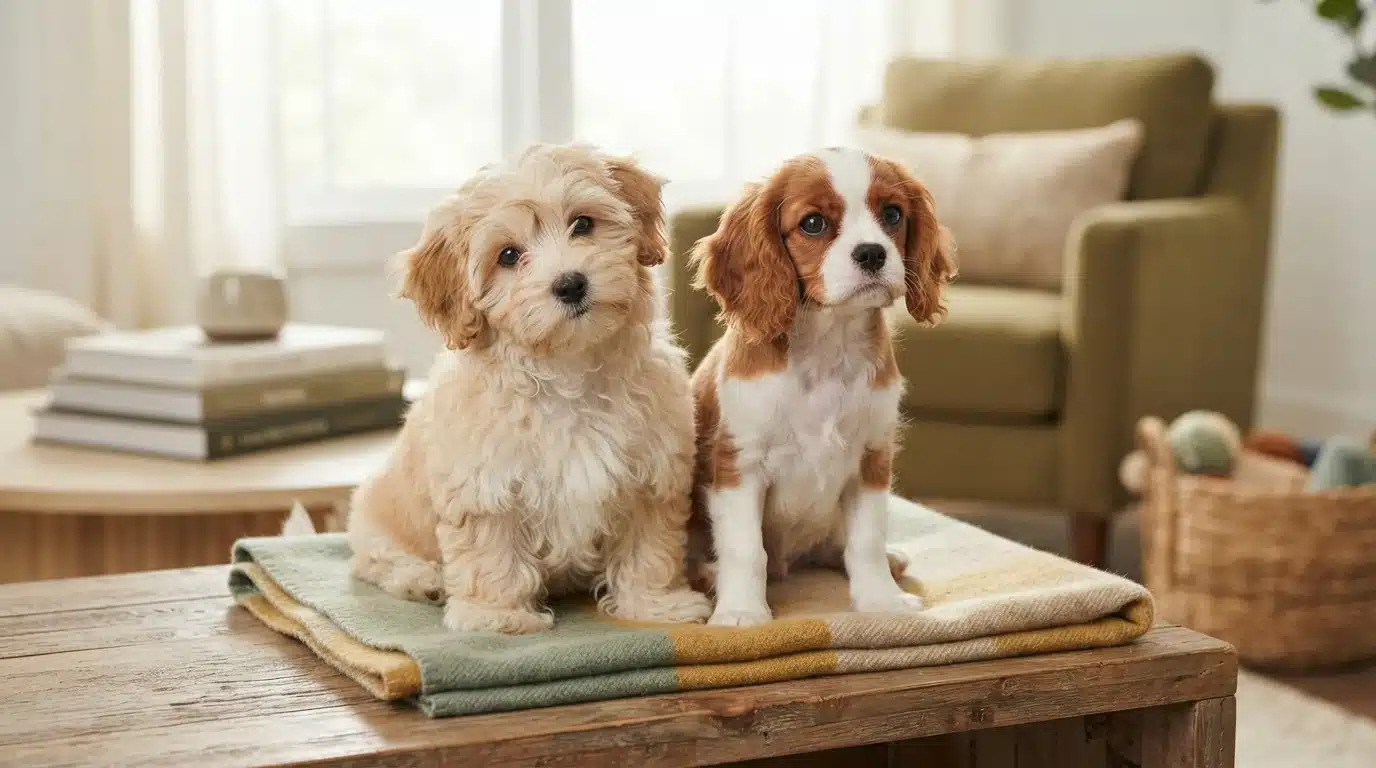
Quick Summary: Cavapoo generation labels, F1, F1B, and F2, describe how much Poodle and Cavalier King Charles Spaniel each puppy carries, and that mix directly shapes coat type, shedding, and temperament. F1s are a balanced 50/50 cross with classic teddy-bear looks, F1Bs are roughly 75 percent Poodle and lean toward low-shedding, curlier coats and sharper trainability, while F2s come from two F1 parents and vary the most from pup to pup. No generation is truly hypoallergenic, so the article recommends matching the label to your household (F1B for allergy-sensitive homes, F1 for first-time owners) and verifying parent breeds and health records in writing before paying any deposit. Sage Puppies in South Jordan, Utah is highlighted as the breeder behind the guide, with an emphasis on leading with health paperwork rather than generation claims.
Two breeders list Cavapoo puppies from the same litter. One pup is labeled F1, another F1B, yet the coats look identical and the photos show the same parents. That puzzle catches nearly every first-time buyer, and it is exactly what Cavapoo generations explained properly can clear up in a few minutes.
The labels describe how far each puppy sits from its purebred Cavalier and Poodle ancestors, and that distance shapes coat, shedding, and size. This guide walks through F1, F1B, and F2 puppies, matches each one to a household profile, and shows how to verify a breeder’s claims before you pay a deposit.
At Sage Puppies in South Jordan, Utah, we breed Cavapoos and counsel families on these choices every week, so the advice here comes from real placements, not guesswork.
To see Cavapoo generations explained clearly, you only need one piece of breeding shorthand. The F numbers describe how the puppy’s parents relate to the original two breeds: a Cavalier King Charles Spaniel and a Poodle.
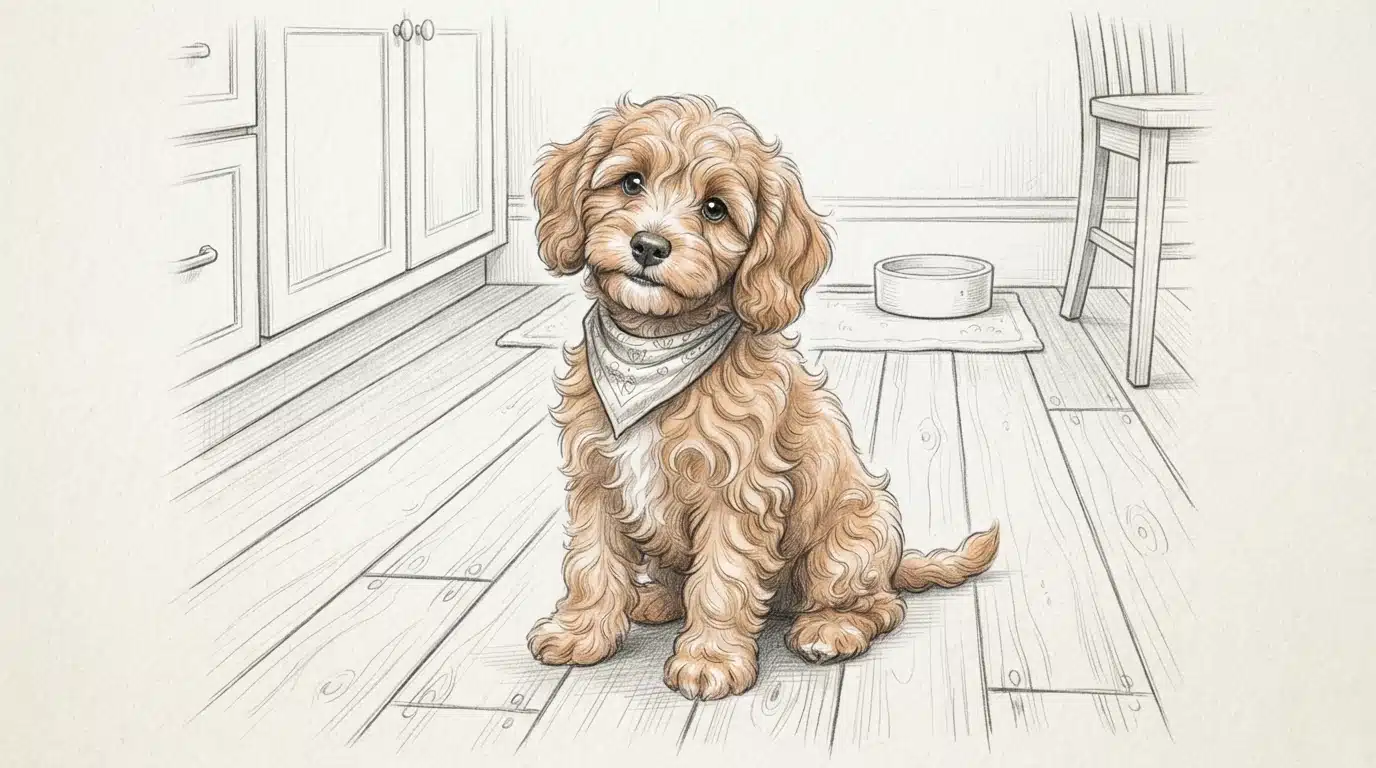
The F1 Cavapoo: First Cross, 50/50 Mix
An F1 Cavapoo has one purebred Cavalier parent and one purebred Poodle parent. The name stands for “first filial,” the first cross between the two breeds. This makes the puppy a true 50/50 blend, so you often see straighter, scruffy, or loose-wave coats and more variation between littermates. F1s usually keep more Cavalier traits in body shape and face, and many families like that classic teddy-bear look. Predictable in type, less predictable in coat, an F1 suits households that care more about temperament than a specific curl or fleece texture.
The F1B Cavapoo: Backcross to a Poodle
An F1B Cavapoo comes from breeding an F1 back to a Poodle, usually a Toy or Miniature. That’s what the B means: backcross. The result is roughly 75 percent Poodle and 25 percent Cavalier, which tilts the odds toward the low-shedding, wavy or curly coats that allergy-sensitive homes ask about most. It’s worth reading our Cavapoo Hypoallergenic Coat Guide for Allergy Sufferers before assuming any generation is fully non-shedding, because no breeder can promise that. F1B coats are more consistent within a litter, though the puppies can look and act a bit more Poodle.
The F2 Cavapoo: Two F1 Parents
An F2 Cavapoo has two F1 Cavapoo parents, so the puppy stays a 50/50 genetic mix. The catch is predictability: genes shuffle again, so one litter can hold straight coats, wavy coats, and curls side by side. F2s are the least common generation breeders offer, and honest programs explain that coat variation openly rather than promising uniformity. Ask which parent is which, and ask to see both.
How Coat and Shedding Actually Differ by Generation
Coat is where the Cavapoo generations explained here really part ways. Every generation can produce a lovely companion, but the odds of getting a truly low-shedding coat shift with each pairing. Here is what to expect from each one.
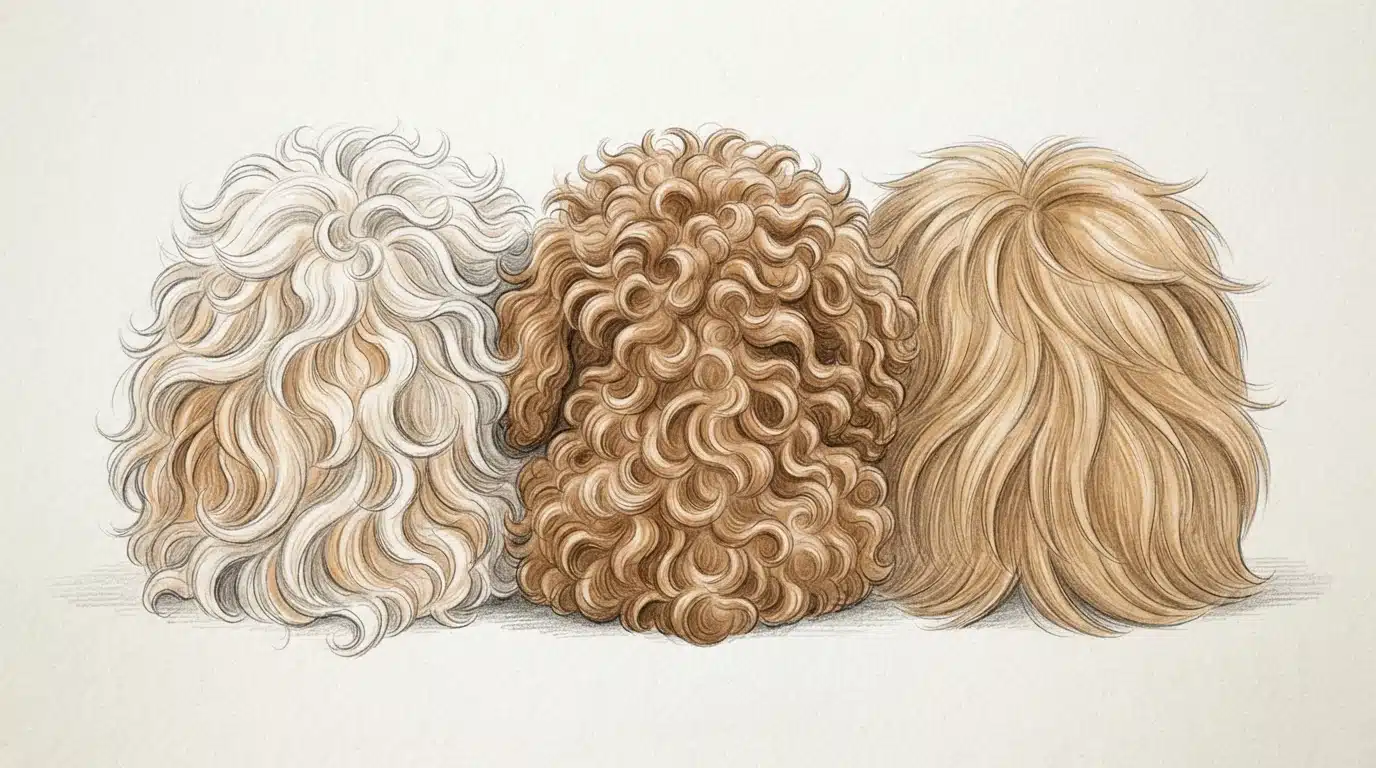
Wavy Coats in F1 Cavapoos
An F1 pup inherits genes from both sides of the family tree. Since the Cavalier is a moderate shedder and the Poodle is not, the result is usually a loose wave, a scruffy fleece texture, or occasionally a straighter coat with visible shedding. Most F1s shed lightly, but a few shed like their Cavalier parent. Families with mild dander sensitivity often do fine with an F1. Households with diagnosed allergies should be more careful, because the coat lottery is wider in this generation than any other.
Curlier F1B Coats and Allergy Households
The F1B is the generation allergy-conscious families usually land on. Because the puppy is roughly 75 percent Poodle, the odds favor a dense, curly or wavy coat that traps loose hair instead of dropping it around the house. F1B litters are also more consistent, so what you meet at eight weeks is a good preview of the adult coat. No breeder can promise a dog is truly hypoallergenic, since reactions vary by person and by dog, but the F1B gives you the best statistical starting point. Sage Puppies walks each allergy-sensitive family through coat expectations before a deposit, rather than overpromising.
F2 Litter Variability You Should Plan For
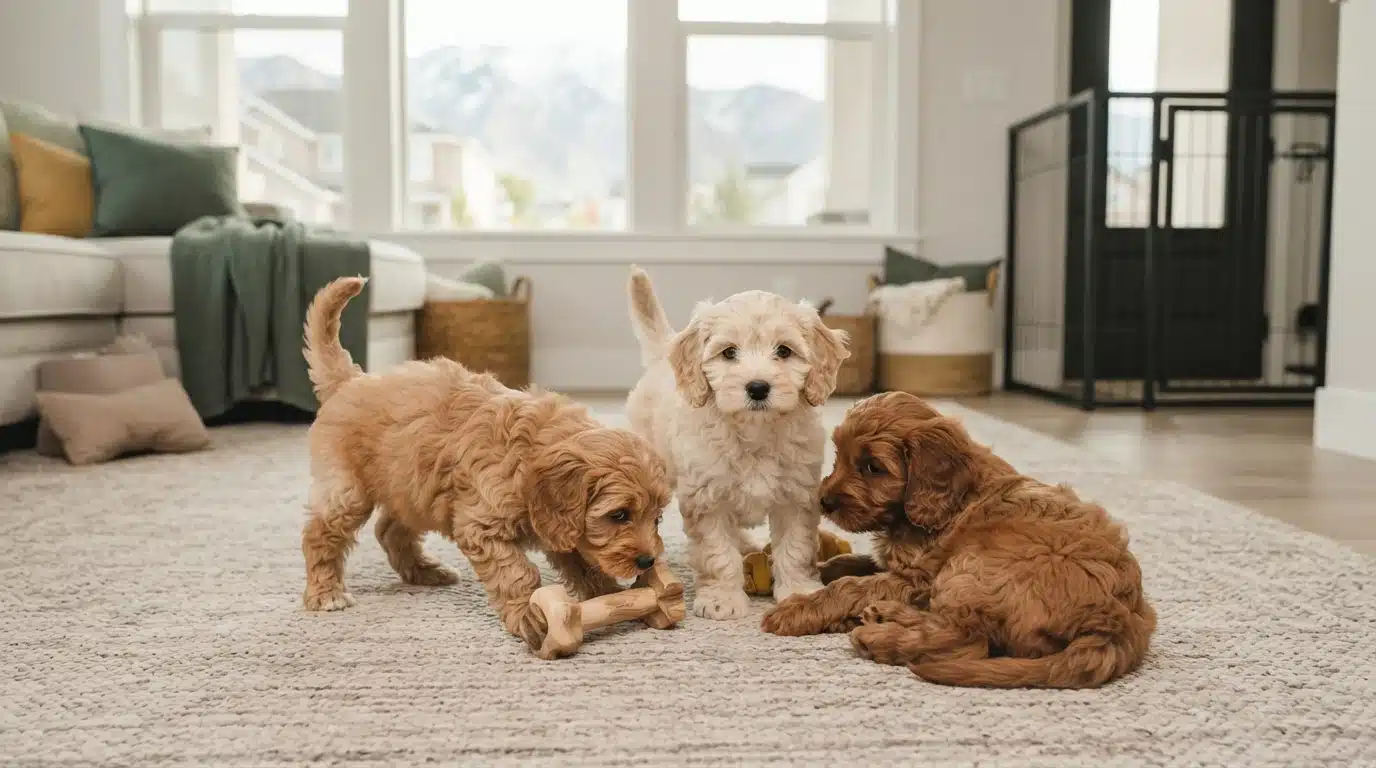
F2 litters are the wild card. With two F1 parents, the genetics reshuffle, and a single litter can hold tightly curled pups, soft wavy ones, and straight-coated shedders that favor the Cavalier side. Ask the breeder which traits showed up in past F2 litters, and plan to meet puppies in person if coat matters to you.
Temperament follows the same genetic math as coat, but it shows up earlier and in different ways. Each generation leans toward a distinct energy level and learning style, and knowing the tilt helps you pick a puppy that fits your daily rhythm. Coats matter for allergies, but temperament decides how the dog fits your household. Our Cavapoo temperament overview covers how the breed’s two parent lines shape both coat and character, so you can weigh each side before choosing a generation.
F1 Temperament: Balanced and Steady
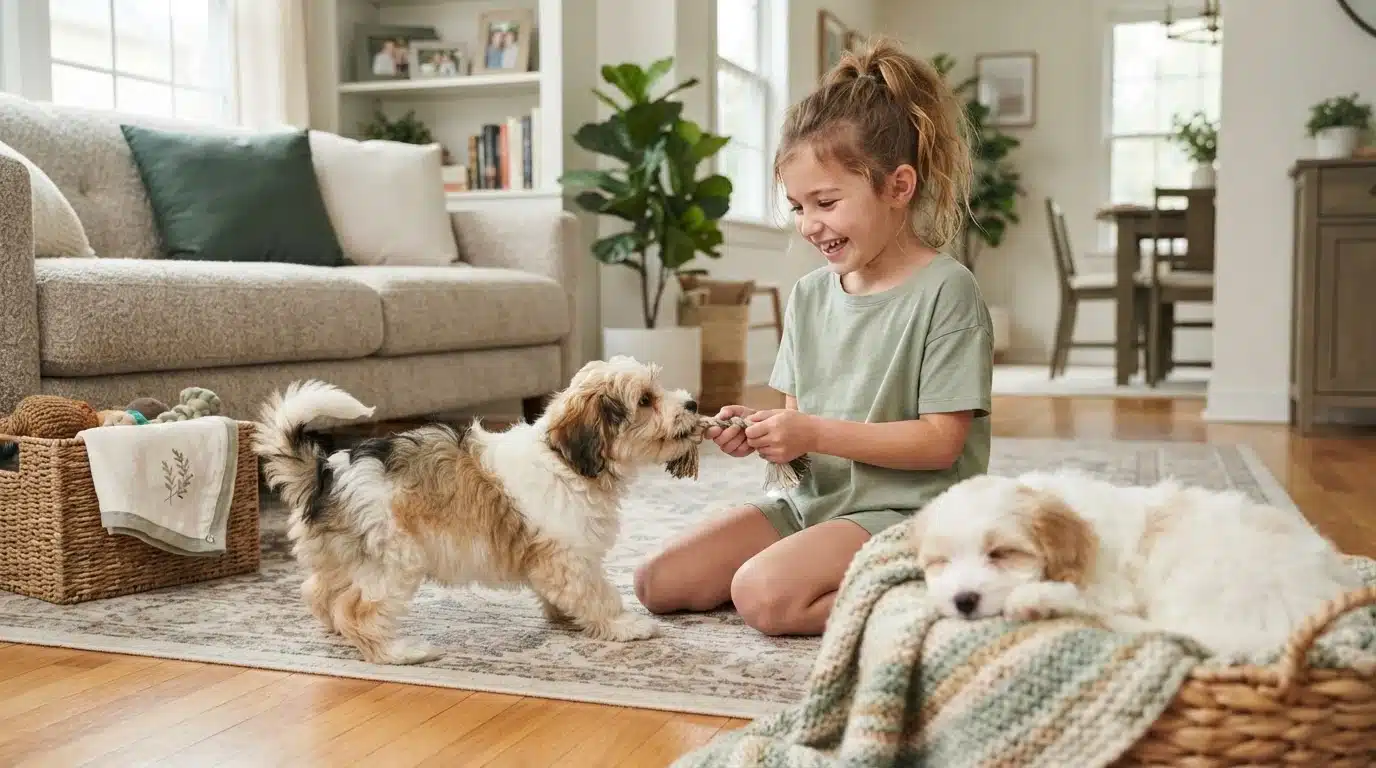
F1 Cavapoos blend Cavalier sweetness with Poodle smarts in near-equal parts. Most are soft, people-focused companions that want to be where the family is, and they settle more easily than high-drive breeds. Energy is moderate: a daily walk, some play, and interaction keep them content. Trainability is solid, especially for food and praise, though some pups carry a Cavalier’s slight stubborn streak. This balance suits first-time owners and families with kids who want an easy, affectionate dog rather than a working-level athlete.
F1B Temperament: Alert, Smart, Higher Drive
Because an F1B is roughly 75 percent Poodle, temperament tilts that way too. These pups are usually quicker to learn, more alert to their surroundings, and a bit more demanding of mental work. They pick up commands fast, which cuts both ways: they also learn habits quickly, so consistent training from week one pays off. Expect more energy and a stronger need for games, puzzles, and short training sessions. Active households and owners who enjoy training tend to thrive with an F1B.
F2 Temperament: Mixed and Harder to Predict
F2 puppies draw from two Cavapoo parents, so personality traits reshuffle much like coat traits do. Within one litter you might find a laid-back shadow and a bouncy explorer. Temperament leans Cavalier or Poodle depending on which genes each pup inherits, and responsible breeders match puppies to homes rather than promising a type. Ask the breeder how each pup has acted in daily handling, then meet the litter yourself. With F2s, observing the individual puppy matters more than reading the generation label.
Health, Hybrid Vigor, and Why the Label Is Not a Guarantee
What Hybrid Vigor Means for an F1 Cavapoo
Hybrid vigor, or heterosis, means first-cross puppies often show better hardiness than the average of their two parent breeds. The effect is strongest in the F1 generation, where two unrelated genetic lines meet. That matters for Cavaliers and Poodles, because each breed carries its own set of inherited risks, such as heart disease on the Cavalier side.
But vigor is a tendency, not a promise. A review in veterinary genetics concluded that useful hybrid vigor likely exists in dogs, yet it never erases the health problems both parent breeds can pass on. The puppy still inherits half its genes from each side, so weak screening on either side shows up in the litter.
F1B and F2 Health Considerations
An F1B keeps some of that first-cross advantage, though less of it, because the mix shifts to roughly 75 percent Poodle. The bigger variable here is which parents the breeder chose. A Poodle with clear heart, eye, and hip testing adds more than any label does.
F2 litters carry the least built-in vigor of the three. When both parents are F1s, the same genes can pair up again, which is how recessive problems resurface. Responsible F2 programs know this and test harder, not softer, before breeding.
Health Records to Request at Any Generation
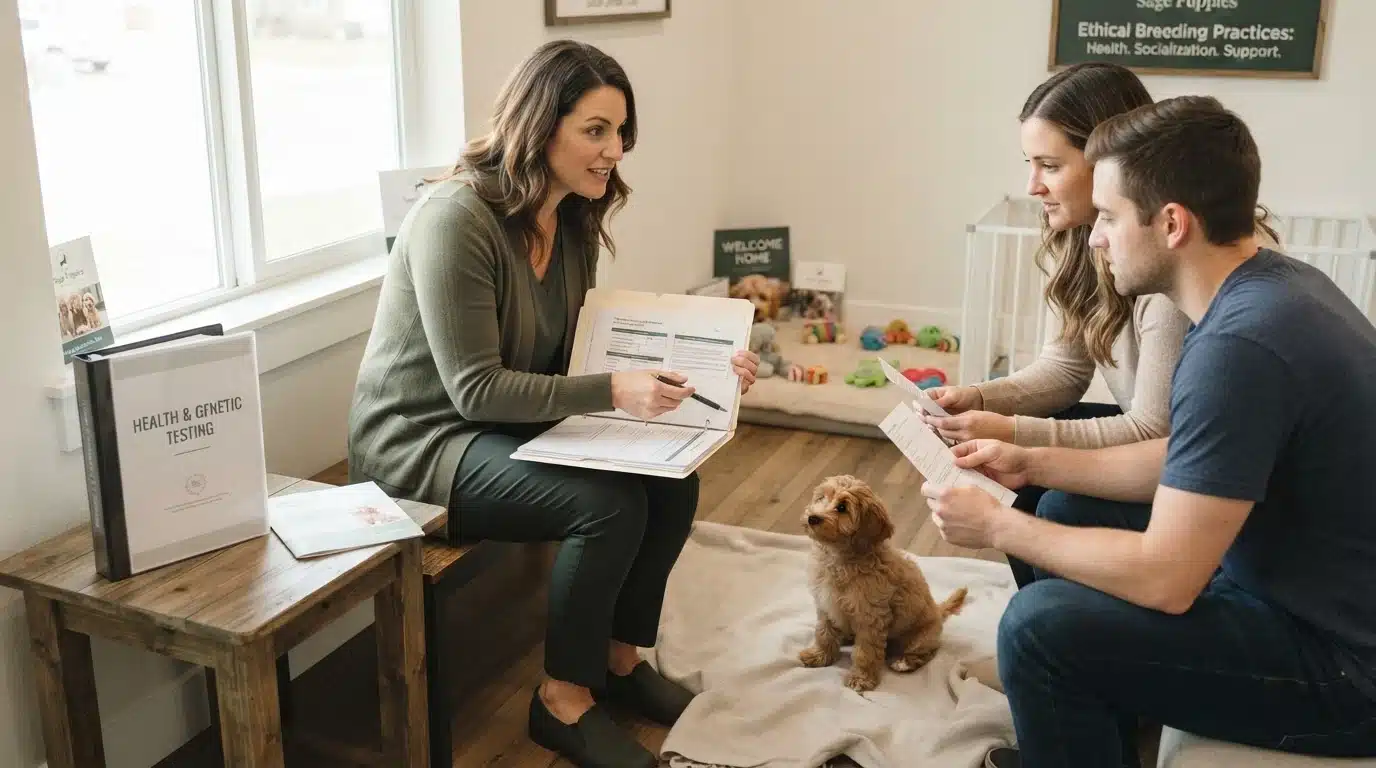
Whatever the label says, ask for proof. You want parent health certificates for the heart, eyes, hips, and patellas, plus results you can verify in an open registry. Our guide to Cavapoo puppy health records walks through each document line by line. A breeder who shares paperwork freely is worth more than any generation claim.
Matching the Generation to Your Home
Coat genetics only matter once you know what your household actually needs. A retired couple with dust allergies wants a different puppy than a busy family with three kids and a fenced yard. Match the generation to your life first, then worry about curl and color.
Best Fit for Allergy-Sensitive Homes
Start with an F1B. At roughly 75 percent Poodle, the odds favor a dense, low-shedding coat, and the litter tends to be consistent enough that an eight-week puppy previews the adult coat. Spend time with the specific puppy before you commit, because no breeder can promise a truly hypoallergenic dog. If someone in the home reacts only to heavy shedding, a straighter-coated F1 may still work with honest testing.
Best Fit for First-Time Owners and Families
The F1 is the easiest all-around choice. The 50/50 blend of Cavalier and Poodle usually produces that classic teddy-bear face, an easygoing temperament, and a puppy that forgives beginner mistakes. First-time owners rarely care whether the coat curls, so the F1’s coat variation costs them little. Kids get a sturdy, social companion, and the breed’s gentle reputation holds across the whole spectrum of an F1 litter.
Best Fit for Active Households That Want Predictability
Households with strong routines often do best with an F1B, too. The extra Poodle influence brings more drive and trainability, which suits families planning puppy classes, daily walks, and puzzle toys. You give up a little of the Cavalier calm, but you gain a coat and energy level you can forecast. An F2 fits active homes that value variety and meet breeders who explain coat odds openly. For a deeper look at daily life with any generation, the guide to a Cavapoo’s first 30 days at home walks through the settling-in period.
Ask any breeder you contact to explain why they matched you to a generation, not just what generation they have available.
Verifying the Generation When You Read a Listing
Ask for Both Parents and Their Pedigrees
Generation labels only mean something when the parents back them up. Ask the breeder to identify each parent by breed and generation, in writing. A true F1 should show a purebred Cavalier King Charles Spaniel on one side and a purebred Poodle on the other. An F1B should show an F1 Cavapoo dam or sire bred to a Poodle. Ask for registration papers, pedigree printouts, or at minimum the sire and dam’s documented lineage through a reputable registry. Photos of both parents help, but paper matters more, because lookalike mixes can pass a casual glance. A breeder who documents their breeding dogs openly, the way our available puppies listings do, makes this step easy.
Watch for Mislabeling and Red Flags
Some listings call every curly puppy an F1B, or stretch “multigen” to hide unclear ancestry. Treat vague answers as information. If a seller cannot name each parent’s breed, changes the story when asked twice, or claims a generation “guarantees” a non-shedding coat, keep looking. Other warning signs: no health testing on the parents, litters always “ready now,” and pressure to place a deposit before you see paperwork. Ask specifically whether the F1B parent is backcrossed to a Poodle or to another F1, since those produce different dogs. Honest breeders welcome the question and answer it plainly, because verifying ancestry protects both of you.
Common Mistakes to Avoid When Choosing a Generation
Chasing a Label Instead of a Health Record
The F1B tag tells you about parentage, not health. Two breeders can offer F1B puppies with very different outcomes. Ask for the parents’ heart, eye, and patella clearances, and proof that both lines were tested. A generation label without paperwork is just marketing. Responsible programs, including ours, lead with health records and let the labels follow the facts.
Assuming Any Generation Is Fully Hypoallergenic
No generation is completely allergy-proof. An F1B tilts the odds toward a low-shedding coat, but reactions vary by person and by dog. Spend time with adult dogs from the line before you commit, especially if a family member has asthma or severe dander allergies. Ask the breeder which littermates shed more and whether they will share adult photos of past litters. The honest answer is always “lower shedding,” never “hypoallergenic,” and a breeder who promises otherwise is telling you something.

Still weighing an F1, F1B, or F2 for your home? Sage Puppies helps you match the right generation to your family through an honest application and owner-managed process. Visit sagepuppies.com to start your application and meet available Cavapoo puppies.
Frequently Asked Questions
Q1: differences between cavapoo f1 f1b and f2
An F1 is 50/50 Cavalier and Poodle, an F1B is about 75% Poodle, and an F2 has two F1 parents. The label shapes coat, shedding, and predictability, but it never replaces health testing.
Q2: Which Cavapoo generation sheds the least?
The F1B usually sheds least, since the heavier Poodle mix favors curly, low-shedding coats. No generation is truly non-shedding, so spend time with the puppy first.
Q3: Are F2 Cavapoos healthy?
They carry the least hybrid vigor, but tested, well-chosen parents matter more than the label. Ask for heart, eye, hip, and patella clearances on both parents.
Q4: Is an F1 or F1B better for first-time owners?
An F1 usually fits best. Its balanced temperament and easygoing nature forgive beginner mistakes, and coat variation rarely bothers new owners.
Q5: How do I verify a breeder’s generation claim?
Ask for both parents’ breeds and pedigrees in writing. A real F1 shows purebred parents; an F1B shows an F1 bred back to a Poodle.
A Calm Way to Pick the Right Cavapoo Generation
The generation label tells you how much Poodle and Cavalier each puppy carries, and that shapes coat, shedding, and temperament. F1s offer balance and that teddy-bear look, F1Bs tilt toward low-shedding coats and sharper minds, and F2s bring the most variation of all. None of it replaces paperwork: parent health testing matters more than any F number. Match the generation to your household first, verify both parents in writing, and treat anyone promising a “hypoallergenic” puppy as a warning sign. Do those three things and the choice gets much simpler.