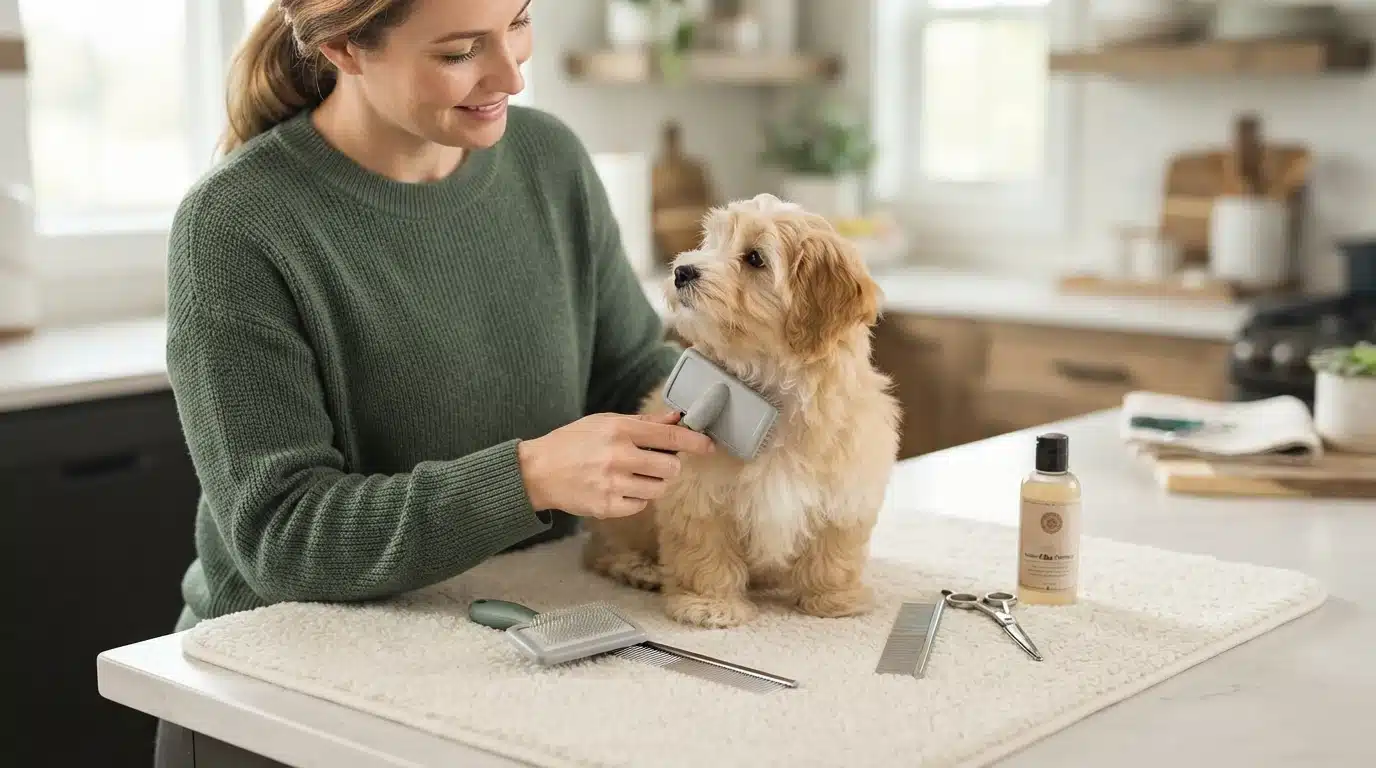
Quick Summary: Neither Cavapoos nor Cockapoos are hypoallergenic because both carry the same Can f 1 allergens in dander and saliva. The individual puppy’s coat, skin and ear health matter more than its cross, with curly coats shedding the least, while Cavapoos generally suit calmer homes and Cockapoos fit more active families. Choose based on the specific puppy, maintain a strict grooming and cleaning routine, and ask breeders for coat details, health records and written terms instead of relying on allergy claims.
If someone in your house sneezes the moment a puppy walks in, here is the honest short answer to the cavapoo cockapoo allergy question: a Cockapoo with a tight curly coat often sheds less loose hair than a wavy-coated Cavapoo, while a Cavapoo is usually smaller and calmer. Neither cross is hypoallergenic, because both carry the same allergen protein in their dander and saliva. The puppy’s own coat, not the name on the paperwork, decides how your household feels six months in.
Most allergy-prone families compare two nearly identical puppies with two nearly identical breed descriptions. They are trying to solve a medical concern with a marketing label, and they also want a puppy that fits their time, energy and budget.
This guide compares the two through an allergy lens: cockapoo shedding and coat types, what actually triggers the reaction, grooming demands, size and energy, and the breeder questions to get answered in writing before you reserve.
Cavapoo vs Cockapoo for Allergy-Prone Families: Side-by-Side
| Cavapoo | Cockapoo | Sage Puppies | |
|---|---|---|---|
| Coat and shedding | Wavy to soft curly, sometimes straight in places; low to moderate shedding that varies puppy to puppy | Tight curly, loose wavy or straight; curly coats shed least, straighter coats shed the most | Cavapoos with wavy to curly, low-shedding coats, plus Havanese and Havapoo lines for the lowest-shedding options |
| Allergy reality check | Not hypoallergenic. Same Can f 1 dander and saliva allergens as any dog, so coat texture and skin health matter most | Not hypoallergenic. A curly-coated individual can release less loose hair, but the allergens are identical | Makes no hypoallergenic or allergy-free claims; advises talking with your allergist and managing allergens at home |
| Adult size | Typically around 9 to 18 pounds as a small Poodle cross | Typically around 12 to 25 pounds, with larger examples from Standard Poodle lines | Small breeds only, Havanese, Havapoo and Cavapoo, sized for compact homes |
| Energy and temperament | Moderate and people-focused, content with a daily walk and lots of company | Moderate to high, with a flushing and working spaniel’s drive and a need for a job | Companion temperament matched to family routines through a matching process |
| Grooming commitment | Brush several times a week, professional trim roughly every 6 to 8 weeks, regular ear care | Several brushings a week plus trims every 6 to 8 weeks, with more attention to ears and feathering | Coat and grooming guidance for each breed, with links to existing Sage grooming and first-week guides |
| Best fit | Calm homes, first-time owners, apartments and allergy households that want a settled companion | Active households with a committed exercise routine and a strict grooming habit | Utah families open to local pickup and families nationwide open to delivery, with a general Sage purchase range of $3,500 to $4,500 |
How Cavapoo and Cockapoo Compare
Cavapoo
A Cavalier King Charles Spaniel and Poodle cross, usually small and calm with a soft, wavy coat. It suits first-time owners and allergy households that want a settled companion. Allergy outcomes hinge on the individual puppy’s coat type, not the breed label.
Cockapoo
A Cocker Spaniel and Poodle cross, sturdier and busier, with coat types ranging from tight curl to straighter, flatter fur. It fits active homes with a strict grooming and exercise routine. Cockapoo coat shedding varies a lot by individual.
Sage Puppies
A boutique puppy program in South Jordan, Utah, founded in 2025, placing Cavapoo, Havapoo and Havanese puppies through an application-based process. It does not breed Cockapoos and makes no allergy-free claims, so talk with your allergist first.

Are Cavapoos or Cockapoos Better for Allergy-Prone Families?
Neither breed is reliably better. Both cross the same Poodle with a shedding spaniel, so both can trigger a cavapoo cockapoo allergy in a sensitive home. What actually decides the outcome:
- The individual puppy’s coat type. Curly coats shed less than wavy or straight ones.
- Dander and skin health. Dry, itchy skin flings more allergen around than healthy skin.
- Your household plan. Grooming, cleaning, and bedroom rules do most of the work.
The short answer, in one paragraph
A curly-coated Cavapoo or Cockapoo from low-shedding parents is usually the safer pick for allergies. But no puppy is truly hypoallergenic. Both crosses carry the same Can f 1 dander and saliva allergens as any dog, so a mild reaction in one puppy tells you little about a littermate. Meet the specific puppy before you commit.
Why the puppy in front of you matters more than the cross name
Coat genetics in a first-generation cross are a coin flip. Some puppies in the same litter come out curly, some wavy, and some straight, and a straight coat will shed like the spaniel side of the family. Ask the breeder which parents have already produced low-shedding adults, and spend time with the puppy you would actually take home. Scratch exposure, then wait a day for a delayed reaction. When you are comparing litters, tracking Cavapoo puppy milestones by month also helps you judge coat changes, since puppy coats often soften into the adult texture around the first blowout.
What a realistic allergy plan looks like
Set the rules before the puppy arrives. Keep the bedroom off limits, wash hands after play, and run a HEPA filter in main rooms. Brush the coat several times a week outdoors, and book professional trims every 6 to 8 weeks so loose hair and dander never build up. Steam clean carpets and wash bedding weekly. Small habits, repeated, beat any breed label.
Cockapoo Shedding and Cavapoo Shedding, Compared Coat by Coat
How much hair each cross actually releases
Neither breed sheds much, but the amounts are not identical. Cavapoos lean on the low-shedding Poodle side and usually release less loose hair than Cockapoos, because the Cavalier parent sheds more lightly than the Cocker Spaniel. A curly-coated puppy of either cross may leave almost nothing on your sofa, while a straight-coated one will shed like the spaniel behind it. Judge the puppy’s coat, not the breed label.
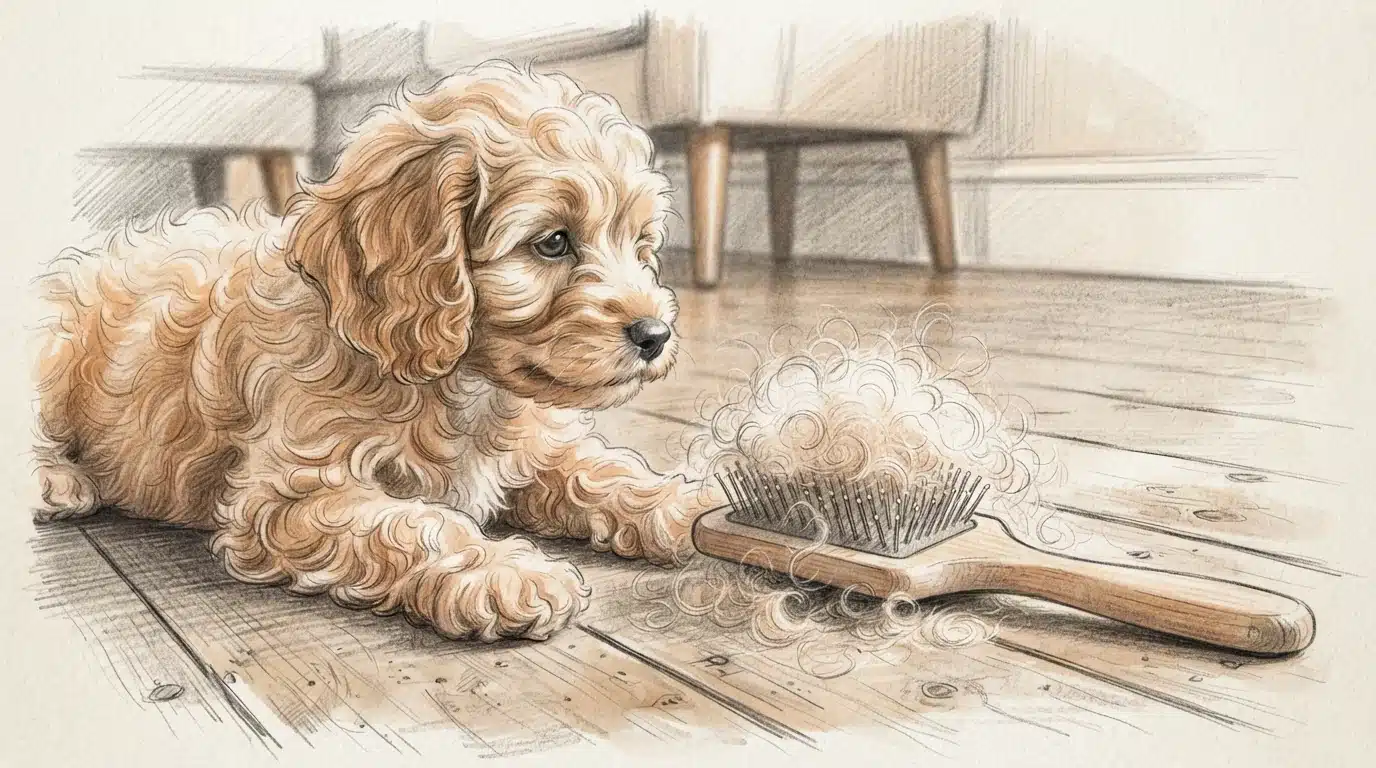
Curly, wavy and straight coats compared
| Coat type | Shedding level | Allergy note |
|---|---|---|
| Curly | Lowest, hair stays in the coat | Best odds, needs daily brushing |
| Wavy | Low to moderate | Most common; a mild shedder |
| Straight | Highest, closest to the spaniel parent | Most likely to trigger reactions |
Ask the breeder which coat type a puppy shows at several weeks old. A simple weekly brushing routine keeps loose hair and dander trapped before it spreads through your home.
Age, seasons and coat blowouts
Puppy coats change. Around 6 to 12 months, many Cavapoos and Cockapoos blow their soft baby coat as adult fur grows in, which temporarily increases shedding. Seasonal shifts add another wave each spring and fall. Expect these phases rather than treating them as a failed allergy test, and brush more often during them.
Dander, Saliva and Can f 1: What Is Actually Making You Sneeze
The protein behind most dog allergies is Can f 1. Dogs produce it in the tongue and skin, and it shows up in saliva and dander. Every breed makes it, including Cavapoos and Cockapoos.

Hair is the delivery system, not the allergen
Fur itself causes nothing. Hair carries dander and dried saliva through your house, so shedding rate decides how much allergen lands on your sofa. A curly, low-shedding coat traps loose hair near the skin until you brush it out, which is why coat care matters more than the breed label. A Dutch study found no real difference in Can f 1 levels between “hypoallergenic” and regular breeds.
Skin and ear health change your allergy load
Dry, flaky or itchy skin sheds more dander, and ear infections add allergen-rich debris. A puppy with healthy skin spreads less of the problem around your home. Good breeders screen for skin and ear issues early, and we check coats and ears before any puppy leaves our program. Keep up with simple coat and ear care at home to hold that line.
Where breed claims go too far
No dog is hypoallergenic. The AAAAI states that all dogs produce the same allergenic proteins. Can f 1 levels also vary between individual dogs of the same litter, so breed promises oversimplify. Judge the puppy in front of you.
Grooming Load and Your Weekly Time Budget
A Cavapoo or Cockapoo needs brushing several times a week, a professional trim every 6 to 8 weeks, and quick daily face care. Plan on roughly two hours of brushing spread across the week plus about $60 to $100 per groomer visit, depending on your area.
The weekly brushing reality for both crosses
- Brush two or three sessions weekly, 20 to 30 minutes each, working down to the skin so mats never start.
- Wipe the face and eyes daily with a damp cloth.
- Check ears twice a week for wax or odor.
Both crosses shed very little, but loose hair stays trapped in the coat, so brushing removes it along with dander.
Trims, tear staining and the grooming budget
Book a full professional trim every 6 to 8 weeks. Most groomers charge more for doodle crosses because the coat needs scissoring, not clipper-only work. Tear staining shows up on lighter faces in both breeds; keep the hair around the eyes short and wipe daily. Cockapoos from larger Cocker lines often grow a denser coat, so expect the higher end of trim pricing.
Ears, eyes and face
Those floppy Cocker and Cavalier ears trap moisture, so clean weekly with a vet-approved solution and dry after baths. Skip plucking unless your vet recommends it. Trim nail tips monthly and keep face hair clipped short between grooms.
If grooming time worries you, ask a breeder how each puppy’s coat type will mature. Curly coats need the most brushing; straighter, wavy coats need less.
Budget your time before you budget for the puppy.
Size, Energy and Temperament: Which One Fits Your Household
Size differences and small-space living
Cavapoos stay smaller because Cavaliers are the smaller parent. Most land around 9 to 18 pounds, while Cockapoos often reach 12 to 25 pounds or more with Standard Poodle lines. Both manage in apartments, but a smaller dog is easier to carry, travel with and fit beside you on a sofa. Measure your space honestly, including elevator trips and car rides.

The spaniel half decides the daily rhythm
Both crosses get their personality from the spaniel parent, and those personalities differ. Cavaliers were bred as companion dogs, so Cavapoos tend toward calm affection and shorter play bursts. Cockers were bred as hunting dogs, so Cockapoos carry more drive and need real exercise, not just yard time. The AKC notes Cavaliers have a moderate energy level, and cocker lines generally ask for more. Match the dog to your actual weekday schedule.
Kids, noise and how much time you actually have
Cockapoos usually handle rough, lively households better. Cavapoos suit quieter homes, first-time owners and families who want a lap dog rather than a jogging partner. Be honest about your hours: an under-exercised Cockapoo invents its own games, and you will not enjoy them. Pick the temperament that fits your real life, not the cuter puppy photo.
What to Ask a Breeder When Allergies Are the Reason You Are Here
Bring these questions to any breeder you contact. A good one answers them plainly, in writing when you ask.
Questions about coat type and the parents
Ask which coat type each puppy in the litter has: curly, wavy, or straight. Curly coats usually shed the least, so that detail matters for your home. Then ask to meet or see photos of both parents, since coat texture comes from them. Also ask whether the breeder can describe how each puppy’s coat differed from its littermates. A breeder who knows each puppy individually is the one you want.
Health records and the 72-hour exam
Request the puppy’s vaccination and deworming records, plus the date and results of a veterinary health check. Ask whether the puppy saw a licensed veterinarian, not just a breeder-run checklist. Many breeders offer a window where you take the puppy to your own vet within 72 hours of going home. Confirm that window exists, what it covers, and what happens if your vet finds a problem. Skin issues matter here: ask if any puppy has flaky skin, scratching, or ear problems, because irritated skin sheds more dander.
Deposit, contract and written terms
Ask what the deposit covers, whether it transfers to a future litter, and under which conditions it is refundable. Get the health terms in writing and read them before you pay. Skip any breeder promising an allergy-free dog; no honest program can, and a written “hypoallergenic guarantee” is a red flag, not a comfort.
Which Should You Choose: Cavapoo or Cockapoo?
After all the coat tests and grooming math, the choice usually comes down to lifestyle, not allergies. Both crosses shed lightly and produce the same Can f 1 allergens, so pick the dog that fits your home and energy level.
Choose a Cavapoo if
Your home runs calm. Cavapoos usually stay smaller, around 9 to 18 pounds, which helps in apartments and with young kids. They tend to bond closely with their people and settle quickly after play. If you are a first-time owner who wants a gentle companion more than a jogging partner, this cross fits better.
Choose a Cockapoo if
Your household is busier. Cockapoos often reach 12 to 25 pounds or more, and they bring the Cocker Spaniel’s playful, curious streak with them. They need a solid daily walk and a family that keeps up with grooming appointments. If you have the time and space for an energetic dog, the extra size and drive are a plus.
When a third low-shedding breed is the better answer
Some allergy-prone families do better stepping outside this matchup entirely. The Havanese sheds very little and has a silky single coat, while the Havapoo blends that trait with Poodle genetics. If neither cross feels right, consider Cavapoo vs Cockapoo temperament and size alternatives like these, since the right match matters more than the label.

If allergy-friendly matters to your family, choose a puppy by coat, dander health and honest breeder answers, not breed hype. The team at Sage Puppies raises Cavapoo puppies with owner-managed matching, so ask your questions early and start with their application to reserve the right fit.
Frequently Asked Questions
Q1: Are Cavapoos or Cockapoos better for allergy-prone families?
Neither breed wins outright. Both carry the same Can f 1 allergens, so the individual puppy’s coat type, skin health, and your household management plan decide the outcome.
Q2: Which Poodle mix sheds less, a Cavapoo or a Cockapoo?
Cavapoos usually shed slightly less because Cavaliers shed lighter than Cocker Spaniels. Still, a curly-coated Cockapoo can outperform a straight-coated Cavapoo, so judge each puppy.
Q3: What coat type is best for a family with dog allergies?
Curly coats shed the least because loose hair stays trapped until brushing. Wavy is a mild middle ground, and straight coats shed most and trigger reactions most often.
Q4: Do Cavapoo puppies shed more when they grow up?
Many blow their soft puppy coat between 6 and 12 months, temporarily increasing shedding. Brush more often during this phase instead of treating it as a failed allergy test.
Q5: Can I meet a puppy before reserving if allergies are the concern?
Ask any breeder to spend time with the specific puppy, scratch exposure included, then wait a day for delayed reactions. Littermates can differ, so meet the one you would take home.
Conclusion
The cavapoo cockapoo allergy question has no breed-label answer. Both crosses produce the same Can f 1 allergens, so the puppy in front of you decides the outcome: its coat type, its skin and ear health, and the household plan you set before it arrives. Curly coats shed the least, straight coats shed most, and littermates can differ. Cavapoos fit calmer homes at 9 to 18 pounds; Cockapoos suit active families at 12 to 25 pounds. Ask breeders about coats, health checks and written terms, and skip anyone promising a hypoallergenic dog. If neither cross fits, a Havanese or Havapoo offers another low-shedding path.