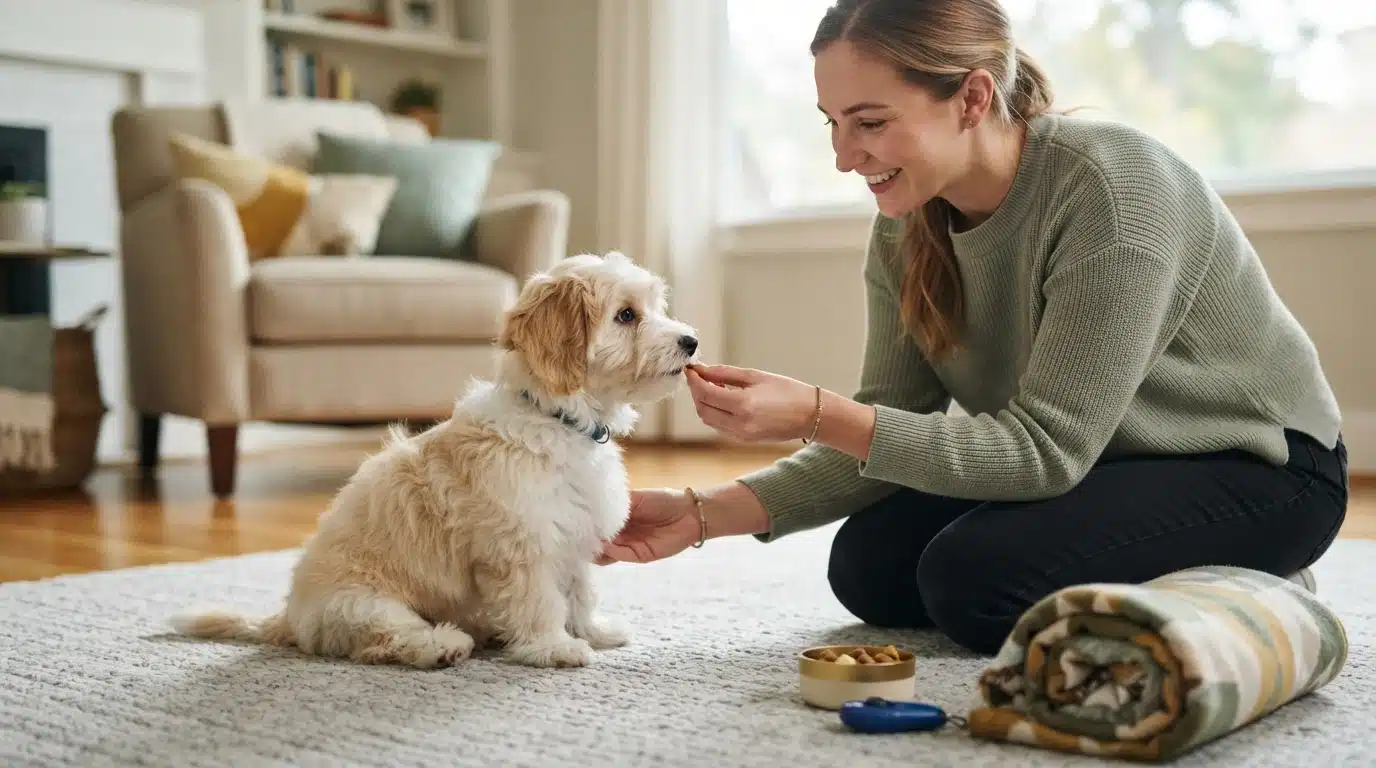
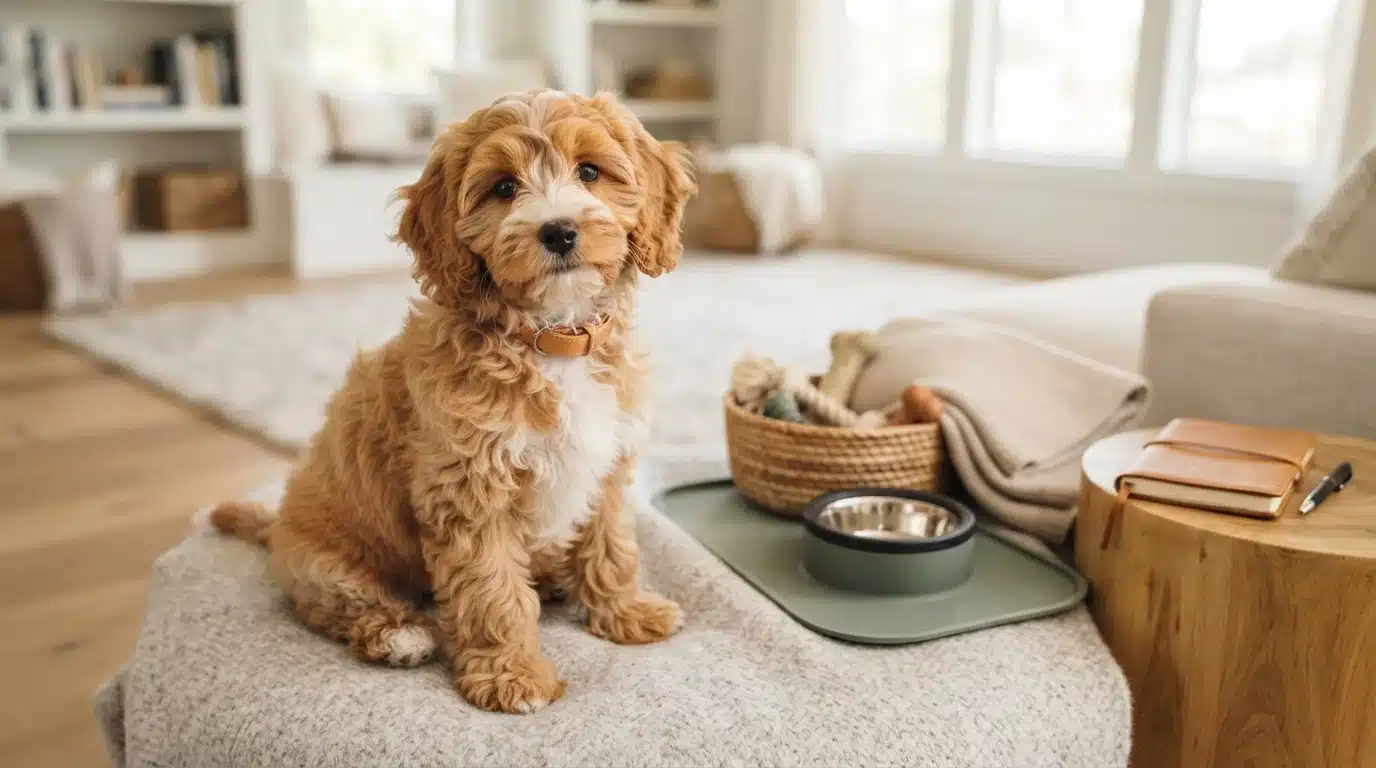
Quick Summary: Train Havapoo puppies in a sensible order: establish a marker word and name response first, then teach sit, down, stay, come, housetraining, crate comfort, loose-leash walking, and mat settling. Keep sessions to two or three minutes, reward within a second, use positive reinforcement, and adjust for your puppy’s attention, bladder, comfort, and temperament rather than a fixed calendar. Socialize gradually without forcing scary experiences, redirect biting and barking, and trade for guarded items instead of punishing warnings; seek a reward-based trainer if fear, crate panic, or resource guarding persists. Sage Puppies says its Havapoos begin with a starter plan before going home.
A Havapoo puppy can hold a cue for about four seconds on a good day and longer on a bad one. Most first-week plans fail in that gap, because owners expect the good day to be the normal one. The real challenge is knowing what a young puppy can actually do, then building habits that fit short attention spans and small bladders. This guide walks through Havapoo training basics in the order that works: a marker word and name response first, then housetraining, crate routines, and gentle leash and mat work. We flag where research is solid, like positive reinforcement and socialization guidance from AVSAB, and where your individual puppy’s temperament matters more than any schedule. At Sage Puppies in South Jordan, Utah, we raise Havanese, Havapoo, and Cavapoo puppies and send each one home with a training starter plan, so the steps below continue what your puppy has already begun.
Step 1: How to Start Basic Training with a Havapoo
Start Havapoo training basics the week your puppy comes home. Begin with a marker word, then build name response, and keep every session short. Most Havapoos are food-motivated and eager to please, so positive reinforcement works well from day one.
Build the marker word first
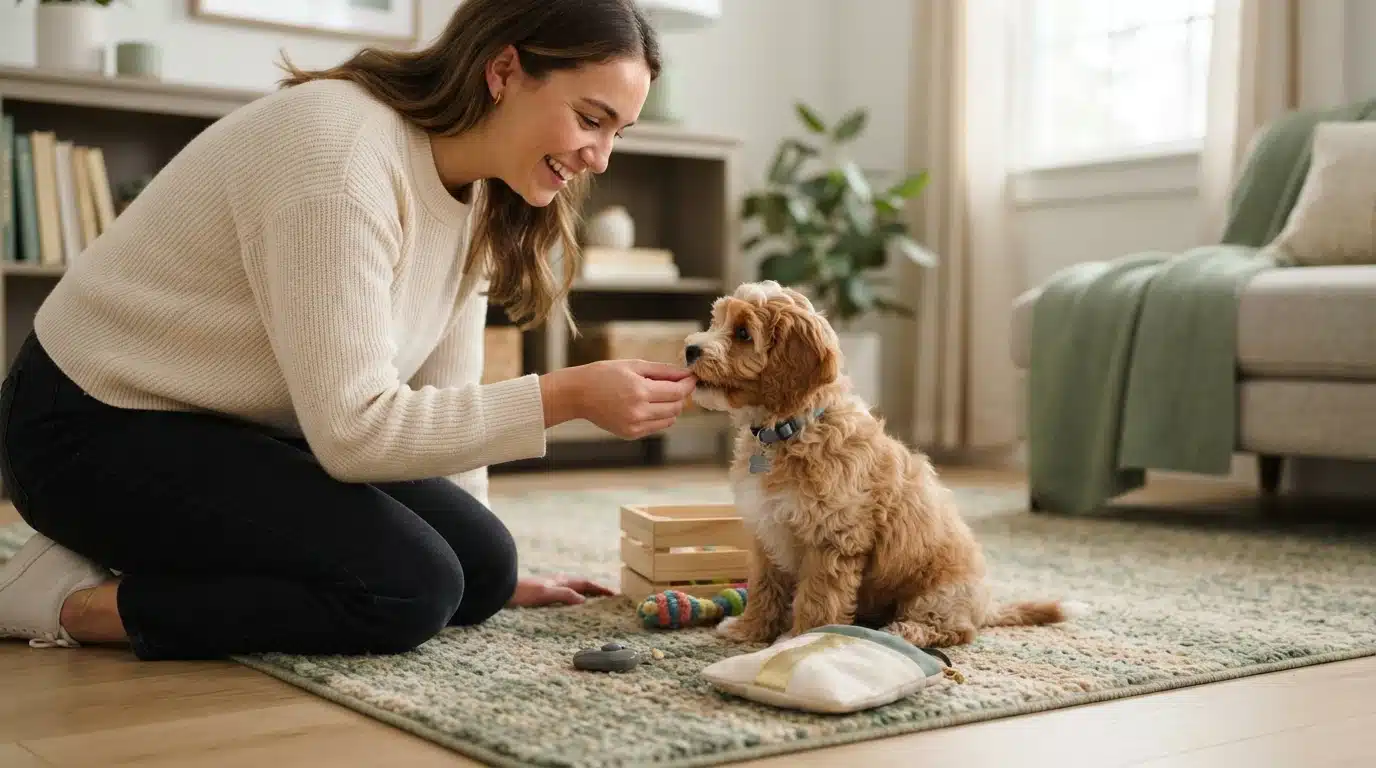
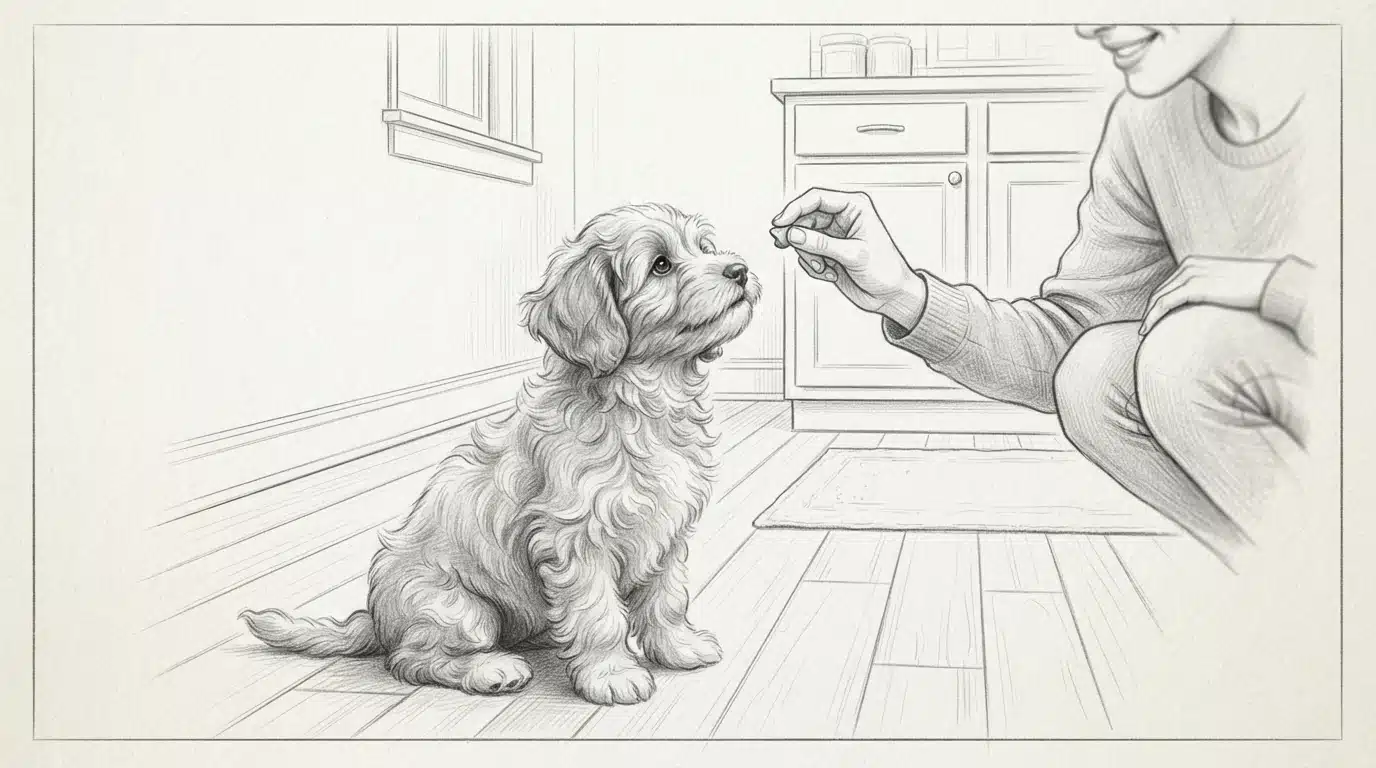
Pick one word, such as “yes,” and say it at the exact moment your puppy does something right. Then deliver a treat within a second or two. Repeat this pairing dozens of times over a few days. Once your puppy hears the marker and immediately looks for food, it has become a bridge that tells them precisely which behavior earned the reward. This timing skill underpins everything you teach later, from sit to loose-leash walking.
Turn the name into a cue
Say your puppy’s name once, in a happy tone, and mark the instant their eyes find yours. Reward, then release them. Practice this five or six times per session, and never repeat the name if they ignore you. Repeating it teaches your puppy the name is background noise. When name response is solid indoors, your recall work has a foundation to grow on.
Structure short, frequent sessions
Keep each session to two or three minutes, several times a day. A young puppy’s focus fades fast, so end while they still want more. Train before meals when treats carry more value, and skip sessions entirely if your puppy seems tired, distracted, or overwhelmed. Three focused minutes beat fifteen frustrated ones every time, and short sessions build the habit without draining your puppy.
Step 2: Teach the Core Cues One at a Time
Havapoo training basics start with four cues: sit, down, stay, and come. Teach one at a time in short sessions, two to three minutes each, before meals when your puppy is motivated. Mark the instant your puppy gets it right, then pay. Once a cue is solid in the kitchen, practice it in the yard, then on walks.
Sit, down, and stay without luring
Luring with a treat over the head teaches sit fast, but many puppies end up following the hand instead of learning the word. A cleaner route is shaping: wait, and mark any glance up, then any weight shift back, until your puppy offers a full sit. For stay, start with half a second. Mark and reward before your puppy moves, then build duration slowly.
Recall with a long line
Teaching a Havapoo to come when called works like this:
- Clip a 15- to 20-foot long line in a quiet yard.
- Say your puppy’s name once, then “come.”
- Run back a few steps as you call.
- Mark the moment your puppy turns toward you.
- Reward generously and release with “free.”
Never call your puppy to do something unpleasant, like a nail trim, or the word loses value.
Trade and drop, the everyday safety cues
Puppies pick up socks, crumbs, and worse. Teach “trade” early: offer a better treat as you swap for whatever your puppy holds. Add “drop” once trading feels routine. These two cues prevent swallowing hazards and reduce guarding, because your puppy learns that your approach means good things arrive, not that prized items vanish.
Step 3: Build a Housetraining and Crate Routine That Does Not Punish
A supervision schedule built around the puppy
Housetraining works on timing, not talent. Take your Havapoo out after waking, eating, drinking, playing, and before naps, and go to the same spot each time. Reward the moment they finish, not back inside. A young puppy can only hold it about an hour per month of age, so watch for sniffing, circling, or wandering off, and carry them out if you catch those signs.
Introduce the crate as a good place
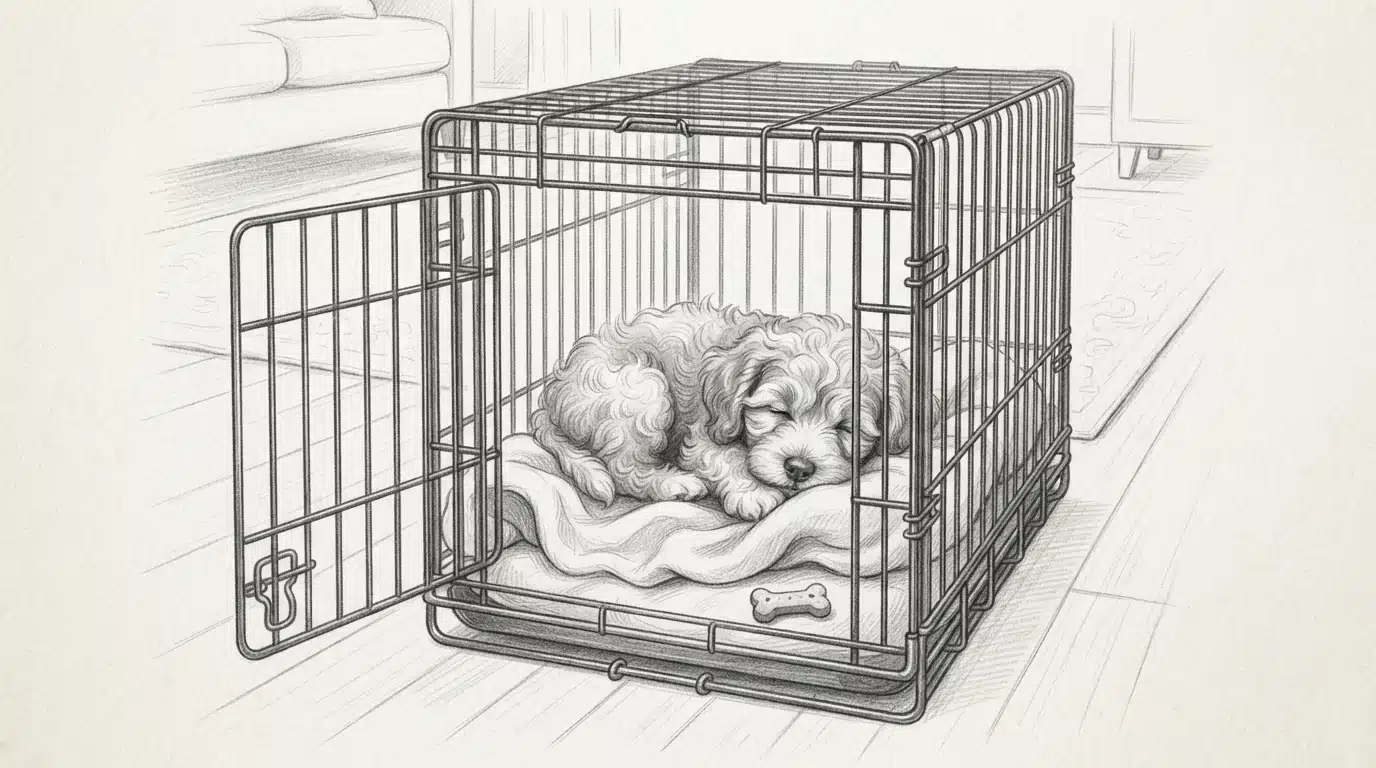
The crate taps into a dog’s natural wish for a den, but only if it stays a good place. Feed meals inside, toss treats in, and leave the door open at first. Build up slowly to short, calm naps with you nearby. Never use the crate as a timeout or punishment, because that turns a safe space into something to fear.
When accidents happen
If you catch your puppy mid-accident, interrupt with a clap, carry them outside, and reward them for finishing there. If you find a mess later, say nothing and simply clean it with an enzymatic cleaner so no scent remains. Rubbing a puppy’s nose in it or scolding after the fact only teaches them to hide, not to hold it.
Step 4: Leash Skills and Settling on a Mat
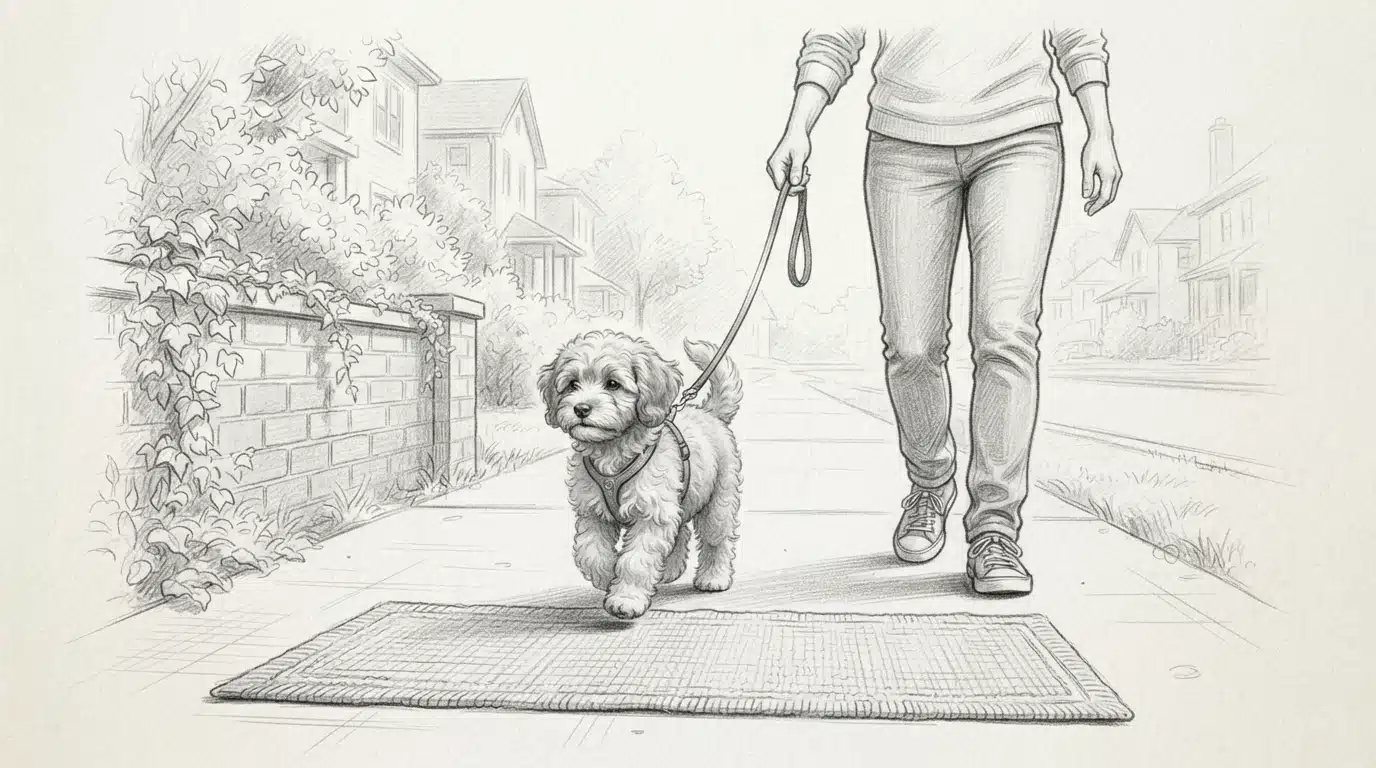
A Havapoo puppy pulling on the leash is normal at first. The collar still feels strange, and the whole world smells interesting. Your job in week four or so is to make walking next to you and lying on a mat both feel worth doing.
Fit the gear before the walk
Start with a flat, snug-fitting harness instead of a collar. A Havapoo’s neck is small, and leash pressure there is easy to misuse. Let your puppy wear the harness around the house for short stretches with treats, so it predicts good things rather than a struggle. Clip on a light leash indoors and let her drag it under your watch. Once that is boring, you are ready to practice outside.
Reward the walk you want
Keep early sessions short and reward position, not speed. Every time the leash hangs loose and your puppy is near your leg, mark and feed at your side. If she pulls, stop and wait. When she looks back or drifts toward you, mark again and move. Puppies learn quickly that a tight leash makes the walk pause and a loose one makes it flow. Remember the long-line work from earlier: a 15- to 20-foot line in a quiet yard is still your best tool for recall between reps.
Mat training as an off-switch
Small dogs travel well, so a portable mat becomes your settling cue anywhere. Lay a mat down, toss a treat on it, and mark the moment all four paws land. Build duration slowly: a few seconds, then longer stretches, then mild distractions. Because positive reinforcement makes the mat a safe spot, most Havapoos learn to settle there within a few weeks of short daily sessions.
Step 5: Socialization as a Training Process
What socialization actually means
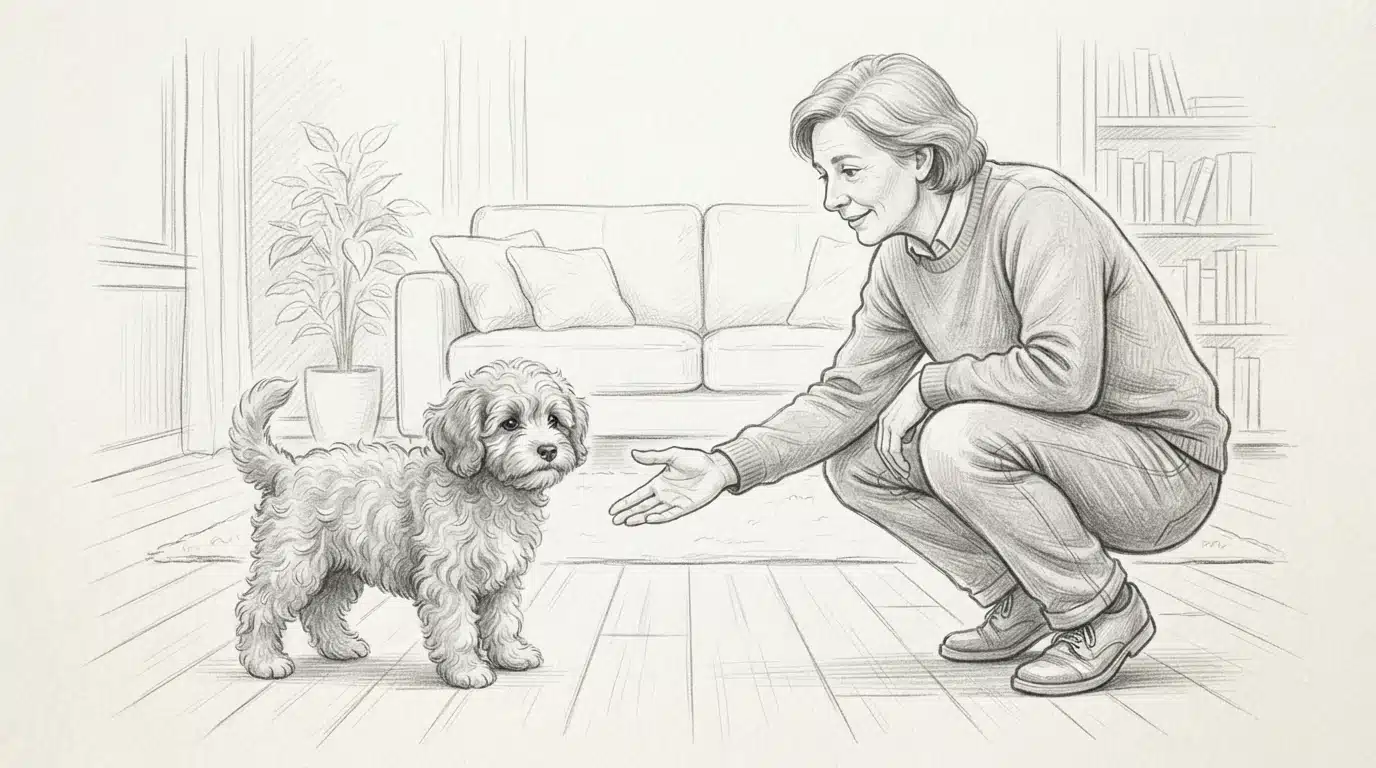
Socialization is not a single class or a checklist of strange objects. It is the ongoing process of teaching your Havapoo that new people, sounds, surfaces, and handling are safe. Done well, each new experience ends with your puppy calm and slightly rewarded. Done poorly, one scary event can teach the opposite lesson.
Health risk and class timing
When can a puppy start socialization classes? According to the AVSAB position statement, puppies can begin as early as 7 to 8 weeks, before vaccinations are finished, as long as they have had at least one vaccine set and a deworming. Classes should use careful hygiene, sick-puppy screening, and positive methods. The behavioral benefit of early exposure outweighs the small infection risk in a well-run class, which is why waiting until every shot is done wastes the most sensitive learning window.
Read stress signals and back off
Exposure only helps if your puppy stays comfortable. Watch for tucked tails, flattened ears, yawning, lip licking, freezing, or trying to hide. Any of these means the experience is too intense.
If your puppy shows distress, increase distance instead of pushing closer. Let her watch from farther away, then reward calm behavior.
Confidence builds in small steps. A short, easy success today beats a big, scary session you will both regret.
Step 6: Manage Biting, Barking, and Resource Guarding Without Punishment
Most complaints from small breed puppy owners fall into three buckets: nipping hands, barking at everything, and growling over food or toys. All three respond to the same principle. You either redirect the behavior onto something acceptable, or you change what the puppy feels the need to protect. Punishment does neither.
Redirect mouthing and nipping
To stop a puppy from biting your hands:
- Freeze your hand and stop the fun the instant teeth touch skin
- Redirect the mouth to a chew toy or tug toy instead
- Reward calm licking or gentle mouthing with attention and treats
This is how you teach bite inhibition, meaning a softer mouth, not a silent one. Havapoos are mouthy as pups because they’re a poodle cross, and sharp puppy teeth are normal until adult teeth arrive around six months. Guidance from UC Davis veterinary school supports redirecting to chew items and rewarding acceptable behavior rather than scolding. If your hands stay exciting, biting stays rewarding.
Understand barking before silencing it
Barking is information before it’s a problem. Note what triggers it: the doorbell, a passing dog, being left alone, or wanting your attention. Each cause needs a different fix. A bark at the window is a vigilance habit you can manage by limiting the view. Attention barking stops when you reward quiet moments instead. The AKC notes that teaching an incompatible behavior, such as going to a mat on cue, gives your puppy something better to do than bark. Punishing barking often adds stress without removing the trigger.
Trade rather than confront guarding
Resource guarding means a puppy stiffens, freezes, growls, or snaps when someone approaches food, a chew, or a stolen sock. It’s an instinct, not dominance, and it responds well to prevention. Practice the trade game early: walk past while your puppy eats and drop a piece of chicken near the bowl. Repeat with toys. Your puppy learns that a human nearby predicts better things, never worse things.
Never grab items away or punish a growl. A growl is a warning you want to keep, because dogs punished into silence may escalate straight to snapping. If guarding already involves stiffening or snapping over food, get help from a certified positive reinforcement trainer rather than pushing through it yourself.
Step 7: Troubleshoot Stalls and Know When to Get Help
If your Havapoo stops learning, run this five-point diagnostic before blaming the puppy:
- Are the rewards valuable enough for this setting?
- Is your timing under one second after the behavior?
- Are distractions too high for the current step?
- Are sessions too long, so the puppy tires out?
- Is the cue being repeated so often it loses meaning?
One of these usually explains the stall. Fix it, then retry the same skill at the easier level where your puppy last succeeded.
Common mistakes and how to correct them
Most stalls come from moving too fast. If you proofed a “sit” indoors and expect it at the park next day, drop back three steps and rebuild with distance, then duration, then distraction. Vague cues cause trouble too: say each word once, and reward a quick response rather than repeating “sit, sit, sit.” Also check your own mood. Frustration changes your tone and your timing, so end a flat session early on a win and try again later.
When to bring in a professional
Some signs call for help beyond training basics. Watch for freezing, growling over food or toys, panic in the crate, or fear that grows instead of fading. A vet should rule out pain first, since discomfort often looks like stubbornness. Then find a reward-based trainer; the AVSAB position statement on choosing a trainer recommends humane, science-based methods and credentials you can verify. Havapoo puppy training costs vary, so budget for a class or two if early progress stalls. Getting help early is cheaper than undoing a problem later.

Ready to start with a well-bred Havapoo? Sage Puppies raises Havanese, Havapoo and Cavapoo puppies with care in South Jordan, Utah, and matches each one to the right family. Start your application today, and bring home a puppy set up to learn.
Frequently Asked Questions
Q1: How do I start basic training with a Havapoo?
Start the week your puppy comes home. Build a marker word first, then name response, and keep sessions to two or three minutes before meals.
Q2: How long can a Havapoo puppy hold its bladder?
About one hour per month of age, so a two-month-old needs a potty break roughly every two hours, plus after waking, eating, and playing.
Q3: When should socialization classes start?
AVSAB guidance allows classes from 7 to 8 weeks, before shots finish, as long as your puppy has one vaccine set and a deworming.
Q4: How do I stop my Havapoo from biting?
Freeze your hand when teeth touch skin, redirect to a chew toy, and reward gentle mouthing.
Q5: What treats work best for training?
Small, soft, high-value pieces your puppy rarely gets otherwise, about pea-sized so frequent rewards don’t upset a small stomach.
Q6: How long does housetraining take?
Most puppies improve within weeks with consistent timing, though small bladders mean full reliability often takes several months of steady supervision.
Q7: When should I hire a trainer?
Get help if you see food guarding, crate panic, or fear that grows instead of fading, and have a vet rule out pain first.
Conclusion
Havapoo training basics come down to order and patience: marker word and name response first, then core cues, housetraining and crate routines, leash and mat work, steady socialization, and redirect-based fixes for biting, barking, and guarding. Keep sessions short, reward within a second, and let evidence from sources like AVSAB guide the timing, while your own puppy’s temperament sets the pace. Progress rarely follows a fixed calendar, so when a stall appears, drop back a step instead of pushing harder. The habits you build in these first weeks shape how your Havapoo behaves for years, and small, consistent wins beat any shortcut. Families wanting a head start can see how our puppies begin training before they come home.