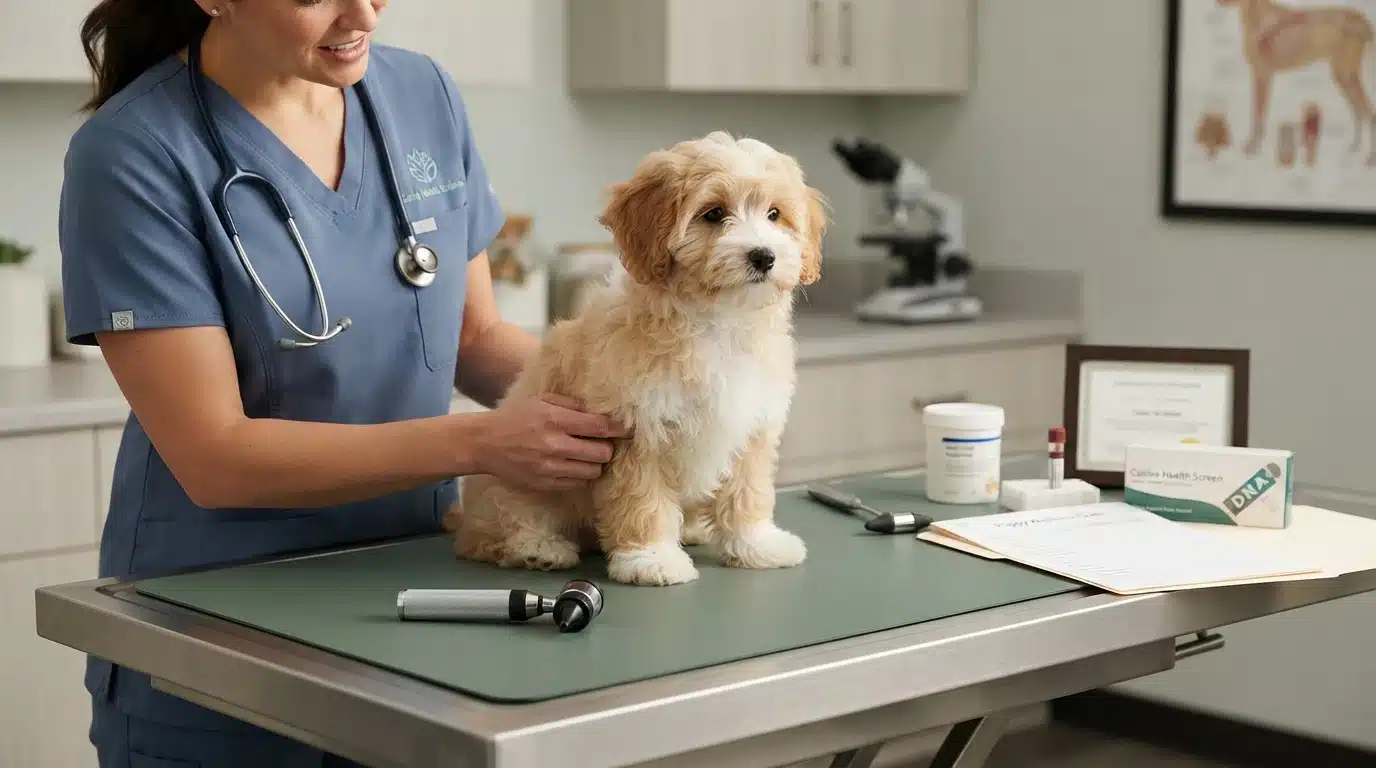
Quick Summary: Before buying a Cavapoo puppy, check its eyes, ears, skin, gait, breathing, digestion, weight, teeth, and energy in person, because photos and verbal reassurance cannot reveal problems such as heart murmurs, limps, or skin irritation. Confirm parent health clearances and the puppy’s vaccination and deworming records, then arrange an independent veterinary exam before paying a deposit, a step Sage Puppies supports through documented health checks. Treat labored breathing, pale gums, collapse, seizures, a painful bloated belly, or repeated bloody vomiting as emergencies, while monitoring appetite, stool, weight, and gait daily for the first 30 days.
Two Cavapoo puppies can look identical in a listing photo, yet one may be carrying a subtle limp, a faint heart murmur, or the early skin irritation both parent breeds are prone to. None of that shows up on a screen. That gap is the problem for buyers: the clearest cavapoo puppy health signs need eyes, hands and a few quiet minutes with the pup.
This guide walks you through what to look for and what each sign might mean. You will see which issues come from the Cavalier side, which come from the Poodle side, and which ones need a vet today versus a simple watch-and-wait note. At Sage Puppies in South Jordan, Utah, we raise Cavapoos and walk families through these checks in person before any deposit is paid, so this checklist reflects the questions real buyers ask most.
The Health Signs to Check on a Cavapoo Puppy in Person
Watch seven areas: eyes, ears, nose, coat and skin, movement, breathing and heart, digestion, then weight, teeth, and energy. Each one maps to an inherited condition from the Cavalier or Poodle side, so a normal finding tells you as much as a warning one. Bring this checklist to the visit and go through it in order.
Eyes, Ears, and Nose: What Normal Looks Like
Clear, bright eyes with no discharge are the goal. Cloudiness, redness, or a third eyelid that stays visible can point to eye problems Cavapoos inherit. Ears should smell clean and look pale pink, with no head shaking or scratching. The nose can be damp or dry, but crusty discharge or constant sneezing deserves a question.
Coat and Skin: Watch for the Pattern, Not One Spot
Part the curls in a few places. You want even coat coverage and skin that looks pink and clean. One flake means little. Scratching all over, red patches, or bald spots in a pattern suggest allergies, mange, or a skin infection. A dull, sparse coat can also hint at poor nutrition, so ask what the puppy eats.
Movement and Gait: The Knees and Hips
Watch the puppy walk, trot, and turn. Both back legs should push evenly. Patellar luxation, a slipping kneecap common in small breeds, often shows as a skipped step or a leg held up for a stride, then back to normal. Bunny-hopping, wobbling, or reluctance to climb a step warrants a closer look before you commit.
Breathing, Heart Sounds, and Coughing
A resting puppy should breathe quietly through its nose with no coughing. Cavalier lines carry a risk of mitral valve disease, and a vet may hear a murmur, an extra whooshing sound between beats, during a pre-purchase veterinary exam. Is a heart murmur in a Cavapoo puppy serious? Some are innocent and fade with age, but only a vet can tell the difference, so ask whether the litter has been listened to and get any murmur confirmed in writing.
Stool, Appetite, and Digestion
Ask to see or hear about the last stool. Firm, formed stool is the target; runny, bloody, or mucus-covered stool points to parasites or an upset gut, which are common in puppies but need treatment. A good puppy eats eagerly and has a rounded but not bloated belly. A hard, drum-tight belly with discomfort needs a vet same day.
Weight, Teeth, and Energy Level
You should feel ribs under a light fat layer but not see them sharply. Check the mouth: a scissor bite, pink gums, and no retained baby teeth beside adult ones. Energy matters most. A healthy puppy runs in bursts, then crashes hard for a nap. Lethargy that lasts, or a puppy that never engages with littermates, is a red flag no clean coat can offset. For breeder-side records to request alongside this checklist, see Sage’s guide to choosing a healthy Cavapoo puppy.
Why the Signs Matter: Inherited Risk From Both Parent Breeds
A Cavapoo inherits genes from both sides of the family tree. That matters when you read the cavapoo puppy health signs in front of you, because the same symptom can trace back to different parent breeds. A limp points to the Poodle line. A cough after play points to the Cavalier line. Knowing which parent contributed which risk helps you ask sharper questions before you pay a deposit.
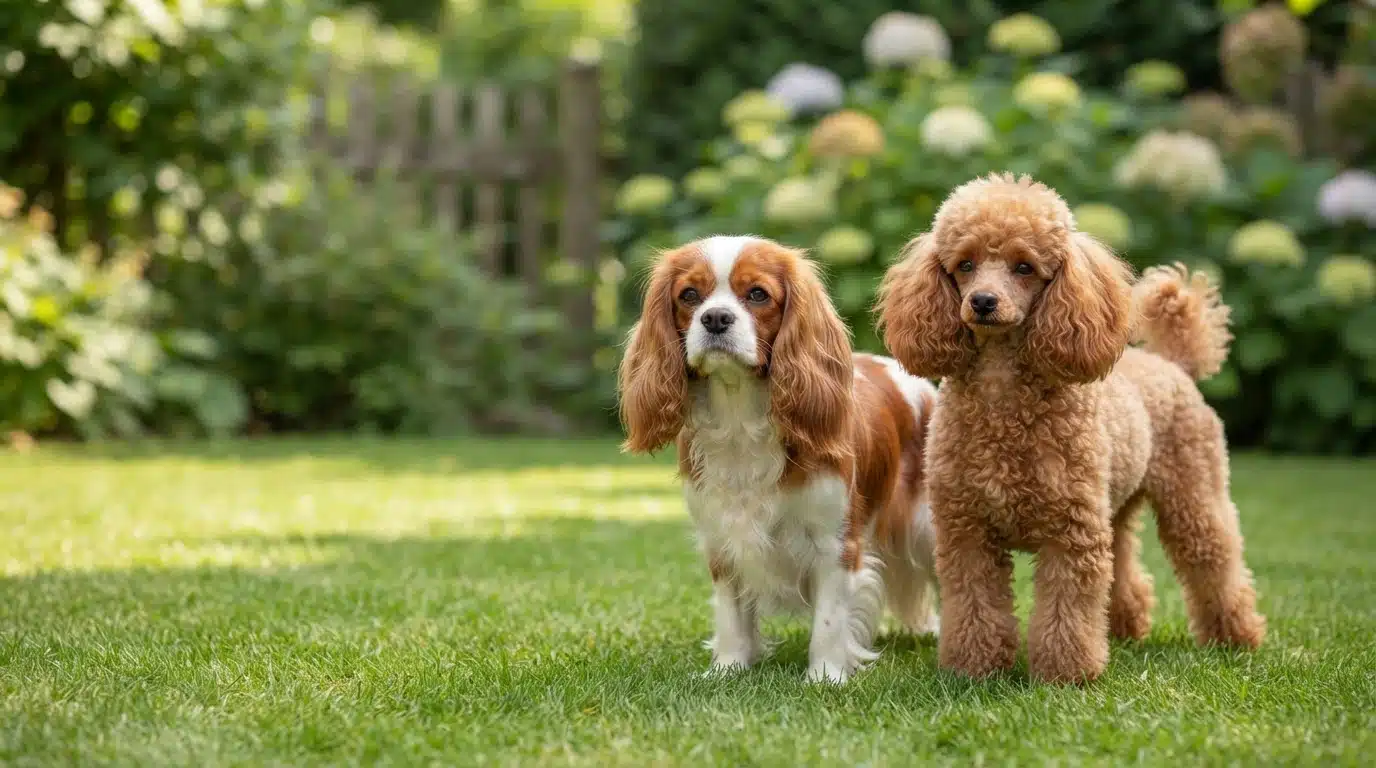
The Cavalier King Charles Spaniel Side
Cavaliers carry the heaviest known genetic load for heart disease in dogs. Research into myxomatous mitral valve disease shows it starts early in this breed and gets worse over time, and a heart murmur heard in an eight-week-old puppy is a red flag, not a cute quirk. Cavaliers also carry risk for syringomyelia, a painful condition where fluid-filled cavities form near the spinal cord, often showing up as sensitivity around the head and neck. Eye problems such as progressive retinal atrophy and dry eye sit on this side too, so ask for eye exam records on the parent dogs.
The Poodle Side
Poodles bring a different list to the mix. Patellar luxation, where the kneecap slips out of place, shows up in toy and miniature lines, so watch how a puppy runs and stands. Hip dysplasia, cataracts, and progressive retinal atrophy also appear in Poodles, and some lines carry genes for sebaceous adenitis, a skin condition. Most of these are screenable, which is why breeder health testing documentation matters as much on the Poodle parent as the Cavalier one.
What Crossbreeding Does and Does Not Guarantee
Mixing breeds lowers the odds of some inherited conditions, but it does not remove them. A puppy can still receive problem genes from either parent. That is why our Cavapoo temperament and behavior guide pairs personality notes with the same health screening logic. Parent testing plus puppy exams beats hope every time.
Which Signs Are Emergencies and Which Can Wait
Some cavapoo puppy health signs need a clinic tonight, others can wait until morning, and many just need a note in your log. Sort every symptom into one of three tiers so you act fast on the dangerous ones without panicking over normal puppy quirks.
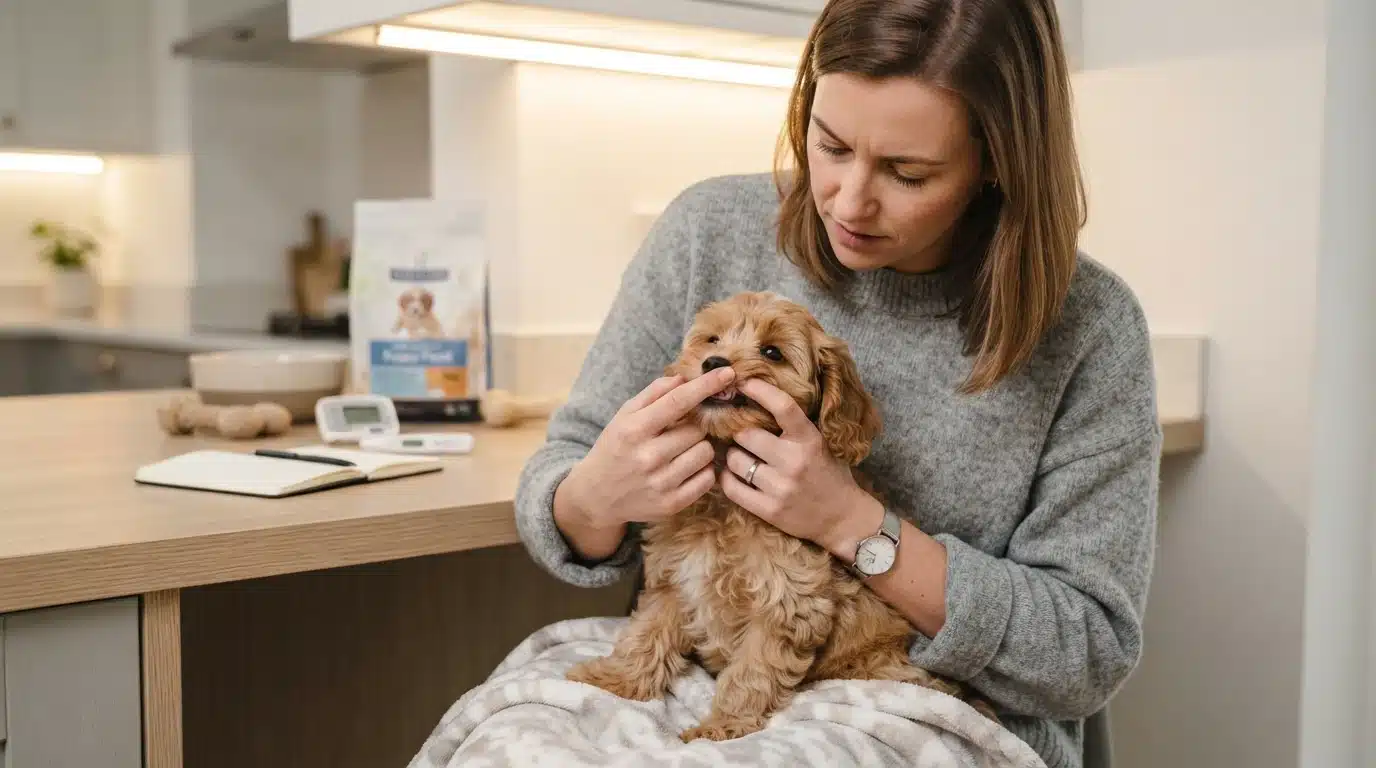
Go to an Emergency Clinic Now
Go straight to an emergency clinic for labored breathing, blue or pale gums, collapse, seizures, a bloated or painful belly, or repeated vomiting that includes blood. A puppy that cannot keep water down or refuses food while acting weak also needs immediate care, since young puppies dehydrate quickly. The AAHA’s emergency guide lists ongoing vomiting and diarrhea among signs that cannot wait. Trouble urinating is another red flag, especially in a male pup.
Call Your Veterinarian the Same Day
Some cavapoo health issues fall in between. Call your vet the same day for a single vomit with normal energy, mild diarrhea that lasts past two meals, squinting or watery eyes, a limp that improves within minutes, or a cough that interrupts play. A soft clicking from a hind leg can point to a cavapoo patella problem, and a faint murmur heard at a routine exam may relate to mitral valve disease in small breeds. Neither is a 911 event, but both deserve a documented check soon.
Watch and Bring Up at the Next Visit
Many signs are routine. A slightly lazy afternoon after vaccines, one soft stool from a new treat, mild tear staining, or scratchy ears likely belong on your monitoring log instead. Record what you saw, when it started, and how long it lasted. Bring that list to each visit so your vet can track cavapoo eye problems or hear patterns over time, and fold these notes into your first-week routine.
Verifying the Paperwork That Backs Up What You See
A bright-eyed puppy can still carry inherited risk, so documents matter as much as the exam you watched. Good paperwork answers three separate questions: who the parents are, what they were tested for, and how the puppy has been cared for so far.
| Document | Question It Answers | What to Look For |
|---|---|---|
| Pedigree or parent records | Who are the parents? | Named sire and dam, matching the puppy’s paperwork |
| Parent health clearances | What were they tested for? | Cardiac, eye, and patella results with dates and examiners |
| Puppy vet record | How has this puppy been cared for? | Vaccination and deworming dates signed by a licensed vet |
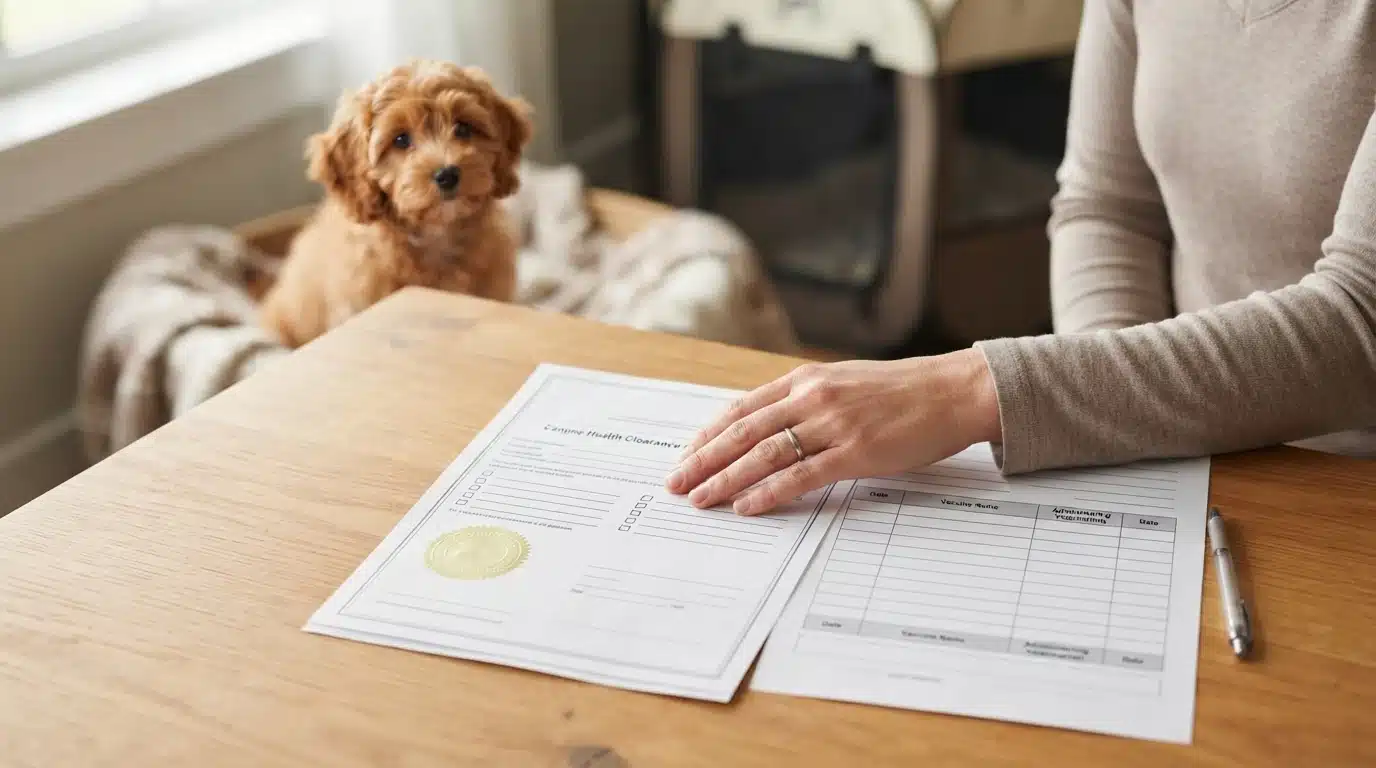
Three Documents That Answer Three Different Questions
Start with the parent records, which confirm the litter really belongs to the dam and sire listed. Then ask for health clearances on those parents, not a promise that testing “was done.” Finally, review the puppy’s own vet record for vaccine and deworming dates. A breeder who hands all three over without prompting has usually kept up with the rest of their program too.
Reading the Test Names: What Each Screening Covers
The names tell you what each result actually rules out. A cardiac exam, done by a veterinarian, screens for the heart murmurs linked to mitral valve disease in small breeds. A CAER eye exam screens for inherited eye problems, and patella evaluation checks for loose kneecaps. The Cavalier King Charles Spaniel Club recommends screening hearts, eyes, patellas, and hips before breeding, with periodic rechecks.
Getting an Independent Exam Before the Deposit Is Final
A pre-purchase veterinary exam is your own check, not the breeder’s. Pick your own clinic, ask for a written report, and listen for a murmur over the heart and check both kneecaps. Ask whether the clinic offers telemedicine reviews, because some families arrange an exam within days of a puppy’s arrival instead. Many breeders, including those who sell nationally with delivery, welcome this step, and it fits naturally alongside the program’s own health guarantee terms. If a seller resists an outside look at a documented puppy, treat that as a finding in itself.
A Monitoring Schedule for the First 30 Days at Home
Check your Cavapoo puppy daily in the first week, then focus on weight, teeth, and gait through week four. The early days are about baseline: what normal eating, sleeping, and stool look like for your puppy, so changes stand out fast.
Days One to Seven: Settling, Eating, and the First Vet Visit
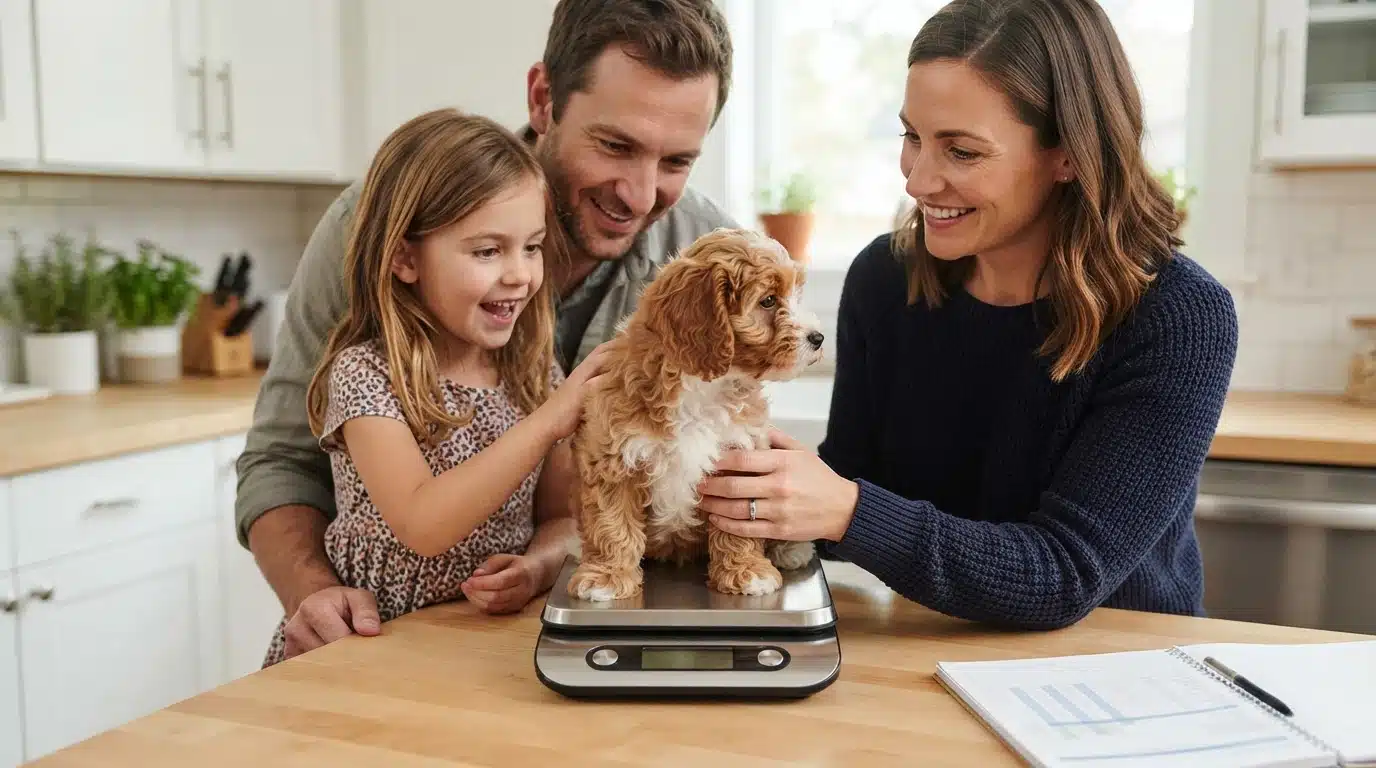
Keep a simple daily log for the first seven days. Note appetite, water intake, stool quality, energy, and any coughing or scratching. Weigh your puppy every two or three days on a kitchen scale. Book a vet visit within the first few days so your vet can confirm the vaccine and deworming schedule and check the heart, knees, and eyes. Ask your vet to record a baseline weight and heart grade. Bring any health paperwork from the breeder, since your vet will want the full history. If eating, play, and stools stay steady, keep the routine and watch.
Weeks Two to Four: Teething, Coat Changes, and Weight Checks
From week two onward, weigh weekly and log the number. A healthy puppy gains steadily, so two flat readings in a row deserve a call to your vet. Check the mouth for loose baby teeth and sore gums, and note any chewing habits. Watch the coat for bald spots, dandruff, or constant scratching. Once a day, watch your puppy trot toward you and check for a skip, hop, or limp in the back legs. Record anything odd, even small things, and bring the log to follow-up visits.
Common Mistakes to Avoid When Evaluating Health Signs
Trusting Photos, Vibes, and Verbal Reassurance
A cute photo proves nothing. Neither does a breeder’s “he’s totally healthy” over the phone. Ask for dated videos of the puppy moving, eating, and playing, plus vet records with the clinic’s name on them. A pre-purchase veterinary exam catches what a camera can’t. If a breeder resists documentation, that hesitation is the red flag, not the puppy.
Over-Reacting to Normal Puppy Traits
Wobbly steps at six weeks, a firm belly, and one sneeze are usually just puppy stuff. Soft fur thinning during a coat change is normal too. Panicking over every quirk leads to weak decisions, while shrugging off real signs, like a persistent cough or a skipping gait, leads to missed ones. Learn what a healthy young Cavapoo typically looks like, then compare calmly before you worry.
For a fuller walkthrough, this guide on how to choose a healthy puppy covers both sides: signs and red flags.

Ready to meet a healthy, well-bred Cavapoo? Browse available puppies at Sage Puppies, then start the application. Cassie’s owner-managed matching means every puppy arrives with documented health checks, so your first thirty days of monitoring begin with confidence, not guesswork. Wisely Bred. Beautifully Loved.
Frequently Asked Questions
Q1: What health signs should I check in a Cavapoo puppy?
Check eyes, ears, coat, movement, breathing, digestion, and energy. Look for clear eyes, pink skin, an even gait, quiet breathing, firm stool, and playful energy with real naps.
Q2: Is a heart murmur in a Cavapoo puppy always serious?
No. Some murmurs are innocent and fade, but Cavalier lines carry mitral valve disease risk, so get any murmur graded and confirmed in writing by a vet.
Q3: What does patellar luxation look like in a puppy?
Watch for a skipped step, a hind leg held up briefly, or a soft click. A vet should check both kneecaps before you pay a deposit.
Q4: Which puppy symptoms need an emergency vet today?
Labored breathing, blue or pale gums, collapse, seizures, a bloated belly, or repeated vomiting with blood. Puppies dehydrate fast, so refuse food plus weakness also can’t wait.
Q5: What health documents should a breeder provide?
Parent records, dated cardiac, eye, and patella clearances on both parents, and the puppy’s vet record with vaccine and deworming dates signed by a licensed clinic.
Q6: Can I get a vet exam if my puppy is delivered?
Yes. Many breeders allow a pre-purchase exam or telemedicine review within days of arrival. If a seller resists an outside look, treat that as a red flag.
Conclusion
Cavapoo puppy health signs come down to eyes, ears, coat, movement, heart, digestion, and energy. Each maps to a risk from the Cavalier or Poodle side, so an even gait matters as much as clear eyes. Sort anything you spot into three tiers: emergency clinic, same-day vet call, or a note in your monitoring log. Then back what you see with parent health clearances, the puppy’s vet record, and an independent exam before the deposit is final. Keep the log running through the first thirty days, since a baseline of normal eating, stool, and weight makes changes obvious early. Documentation plus your own hands-on check beats reassurance every time.