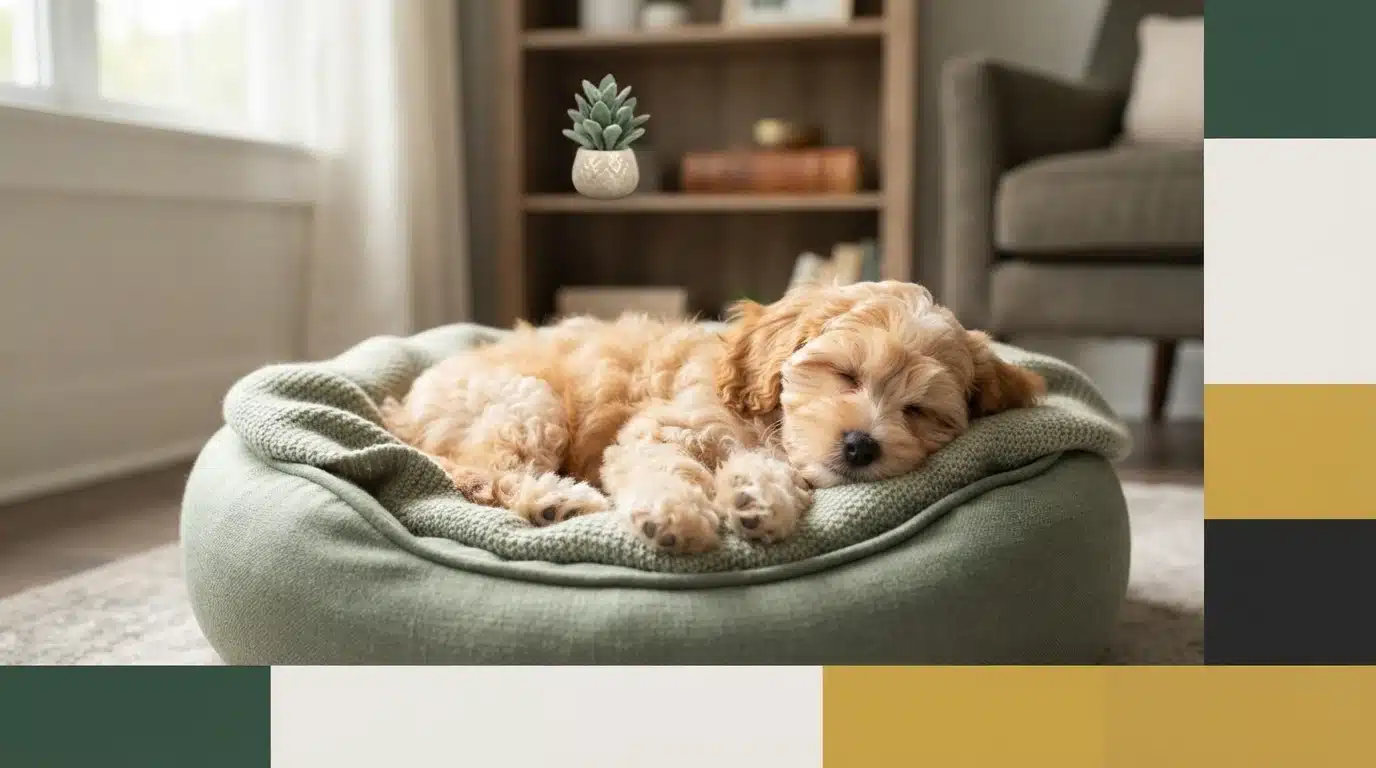
Quick Summary: The first 90 days with a Cavapoo or Havanese puppy depend on predictable feeding, sleep, potty breaks, gentle training, and safe socialization between 3 and 14 weeks. Cavapoos learn quickly but need more activity and consistent attention, while Havanese are calmer, more sensitive, and better suited to quieter homes. Both need frequent brushing, professional grooming every 6 to 8 weeks, gradual alone-time practice, and the full first-year budget. Sage Puppies provides written health records, including vaccination and deworming histories, a vet exam, and verifiable parent testing, before pickup.
Your first week with a small-breed puppy runs on two clocks: a feeding clock and a bathroom clock. A Cavapoo usually takes to food and games fast, which makes training feel easier. A Havanese tends to be the calmer, quieter houseguest.
Many first-time owners pick a puppy from price and photos. They learn about meal timing, brushing and alone time later, sometimes too late for the dog they chose.
This guide follows your first 90 days with a Cavapoo or Havanese. You will see how each breed handles training, feeding, grooming, exercise, barking and time alone. Then you get one simple rule for choosing, plus how to review Sage Puppies’ litters, pricing and application with confidence. If you are a cavapoo first-time owner, the daily time you can give in those first three months matters more than any coat chart.
Cavapoo vs Havanese Puppies for First-Time Owners: At a Glance
| Cavapoo puppy | Havanese puppy | |
|---|---|---|
| Training ease for a beginner | High; responds well to food rewards and short games, although poodle energy requires consistency. | Good but sensitive; shuts down with tense tone and needs gentle consistency. |
| Feeding schedule | Four meals a day to 4 months, three from 4 to 6 months and two after 6 months. | Four meals a day to 4 months, three from 4 to 6 months and two after 6 months. |
| Grooming time per week | Brush several times a week from the puppy-coat change; professional grooming every 6 to 8 weeks. | Several brushings a week, more during coat change; the long coat mats quickly. |
| Energy and exercise needs | Moderate to high play drive; typically two walks plus indoor play. | Lower; settles more easily and typically needs about 30 minutes of daily activity. |
| Best household fit | Active beginners who want a trainable dog and can accommodate a higher play drive. | Calm households wanting a quiet, attached companion. |
How the Cavapoo and the Havanese Compare for a New Owner
Cavapoo puppy
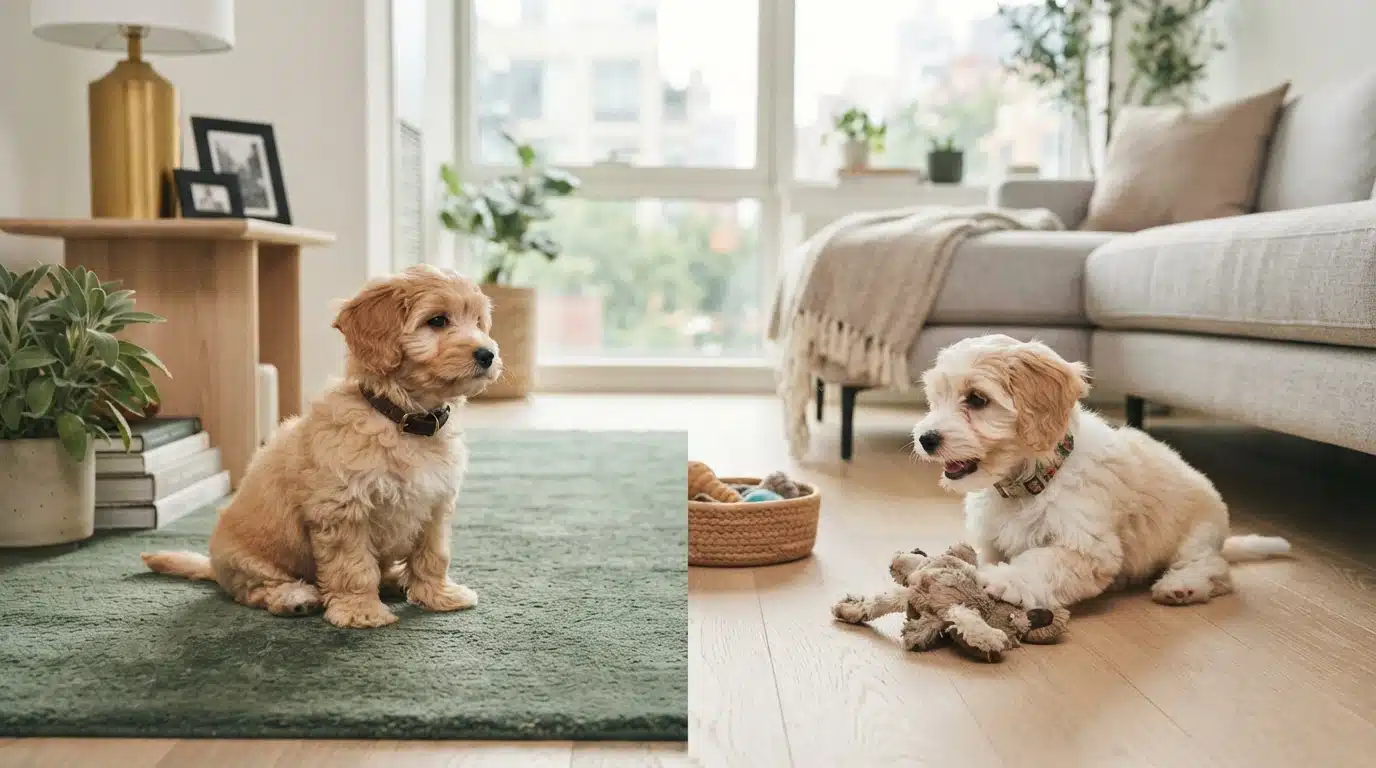
A Cavapoo mixes the Cavalier King Charles Spaniel with the Poodle, giving the cavapoo first-time owner a bright, food-motivated puppy that trains quickly with rewards and short games. It fits active beginners who can keep up with a moderate to high play drive. The soft wavy or curly coat needs steady brushing and professional grooming every 6 to 8 weeks.
Havanese puppy
The Havanese is Cuba’s only native breed, a small companion with a silky single-layered coat and a people-first temperament. It suits calm households wanting a quiet, attached dog that follows its family room to room. Training goes well with gentle consistency, since a tense tone can shut a Havanese down.
What Care Do Cavapoo Puppies Need in the First 90 Days?
Your first three months set the pattern for the next twelve. Two things matter most early: a steady sleep and potty routine, and safe social contact before the socialization window closes. Everything else follows from those.
Week One: Two Clocks, Not Two Problems
Most cavapoo first-time owner stress comes from mixing up two schedules. One clock is your puppy’s body: potty breaks after every nap, meal and play session, plus a short crate time to build bladder control. The other clock is yours, and it exists to keep the first one predictable. Feed, walk and settle at the same times daily, and house training clicks faster. Expect tired, overwhelmed behavior the first few days. Keep the world small: one room, one crate, one yard.
Weeks Two Through Eight: The Socialization Window
Dogs are most open to new experiences between about 3 and 14 weeks of age, according to UC Davis veterinary guidance. So carry your puppy to new surfaces, sounds and friendly people while vaccines finish. Pair each new thing with treats and stay calm yourself. Short puppy classes can start once your vet agrees. Once your puppy settles in, monthly progress checks help you track what comes next on a cavapoo puppy milestones timeline, from teething to adult coat change.
Months Three Through Twelve: The Coat and the Calendar
The soft puppy coat starts giving way to the adult wave or curl, often around 6 to 9 months. Brush several times a week now so mats never start, and book professional grooming every 6 to 8 weeks before coats tangle. Keep training sessions short and daily. adolescence is real in small breeds. For the bigger picture of each stage, see Cavapoo puppy growth by month.
Which Puppy Is Easier to Teach, and Why It Is Not the Same Answer
Fast Progress, Steady Demand
Cavapoos pick up new skills quickly. They come from two biddable parent breeds, so they read your cues fast and repeat what earns a reward. House training often moves along well when you keep a set schedule and take them out after every nap and meal. The trade-off is that a Cavapoo also learns bad habits just as fast, so sloppy timing now means more fixing later. They need your attention daily, not just at training time.
Sensitive, People-Focused, Easy Once Trust Is Built
Havanese and Havapoos learn best through people. They want to work with you, but they take a moment to feel safe first. Harsh corrections slow them down, while gentle praise speeds everything up. Once trust is built, these dogs are steady, willing and quick to settle. Crate training and calm alone-time practice pay off early because this group bonds so tightly that they can struggle if left alone without preparation.
The Beginner Method That Works for Both
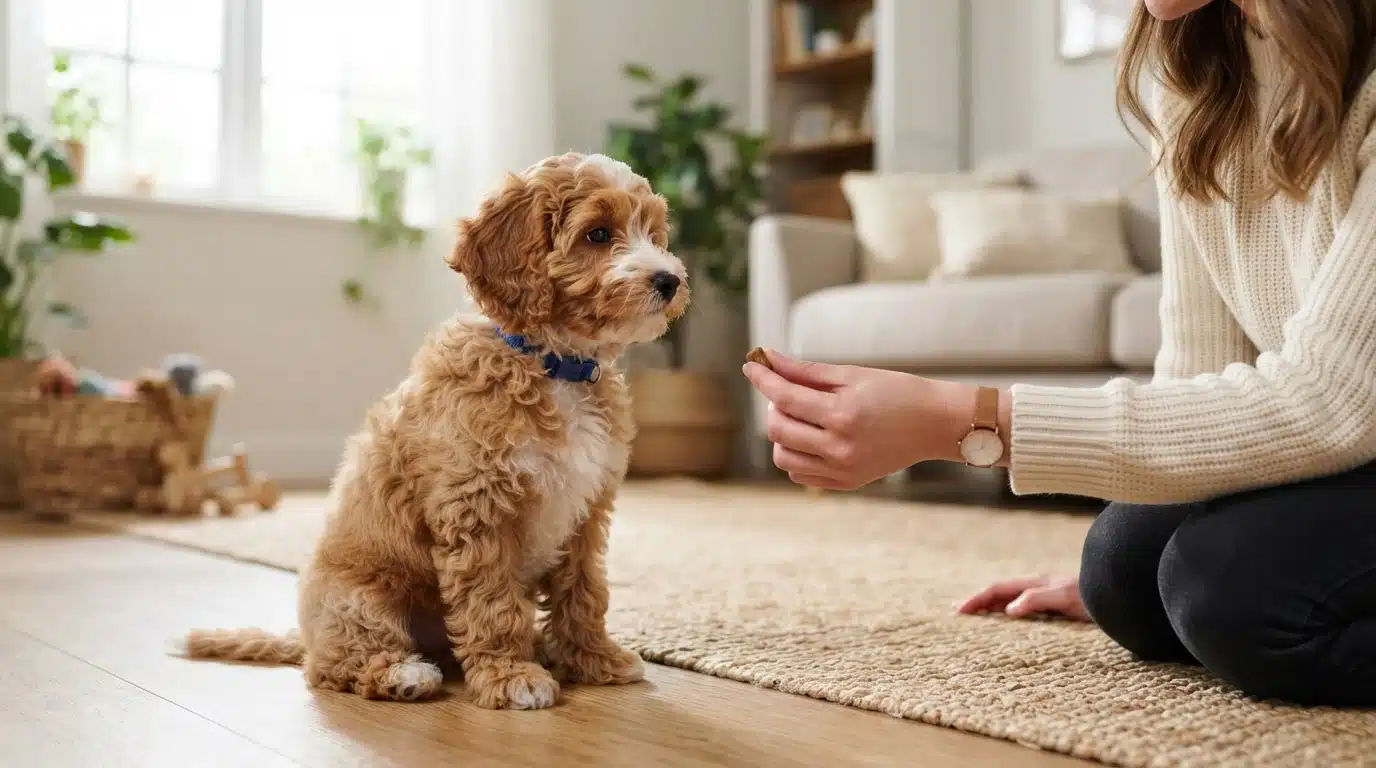
Both breeds respond to the same short, kind routine. Train in two-minute sessions, reward the exact behavior you want, and end each session on a win. Keep the social window open between 3 and 14 weeks with safe new sights and sounds. For a fuller walkthrough, this Cavapoo training guide covers the basics step by step.
Same Schedule, Different Watch Items
Building the Meal Schedule for a Toy-Sized Puppy
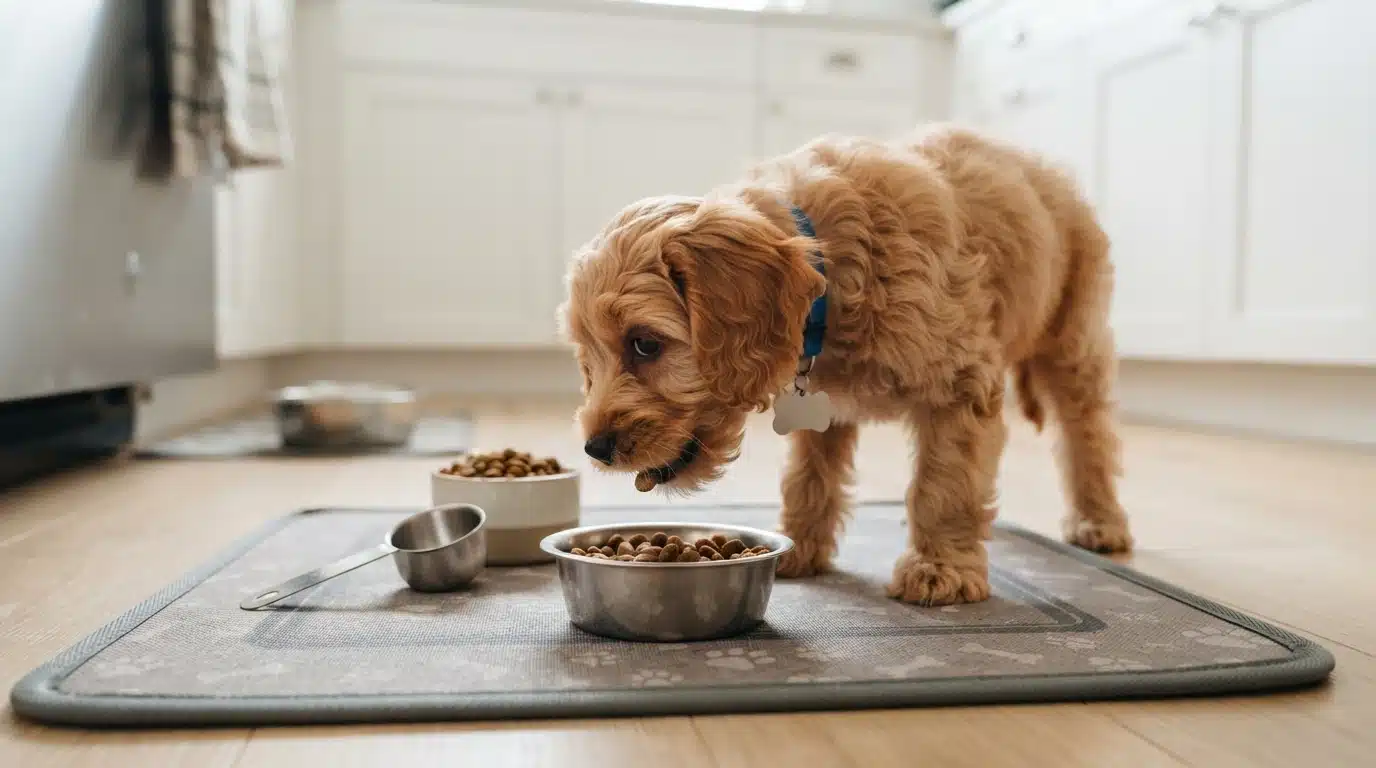
Toy breeds burn through calories fast, so feeding rhythm matters more here than with larger dogs. Most toy puppies start on four small meals a day until about 4 months, drop to three meals from 4 to 6 months, then settle into two meals after 6 months. Small stomachs can’t hold a full day’s food at once, and going too long between meals can trigger low blood sugar, especially in tiny puppies. Measure each portion so growth stays steady instead of choppy.
Cavapoo Watch Items at the Bowl
Cavapoos often act hungry even after a full meal, so portion discipline matters. Watch for quick weight gain, since extra pounds stress small joints. Some Cavapoos have the Cavalier’s sensitivity to rich food, and loose stools can show up after table scraps or fatty treats. Feed measured meals, keep treats under about 10% of daily calories, and let your vet check growth during each puppy visit.
Havanese Watch Items at the Bowl
Havanese puppies usually eat with more focus and less begging, but they can be picky early on. If a puppy sniffs and walks away, try the same food at the next meal instead of swapping brands right away, which trains fussiness. Havanese also eat slowly, so protect the meal from interruptions. Watch for small stools that signal overfeeding, and keep water fresh because long silky coats get messy bowls fast.
Where the Weekly Time Actually Goes
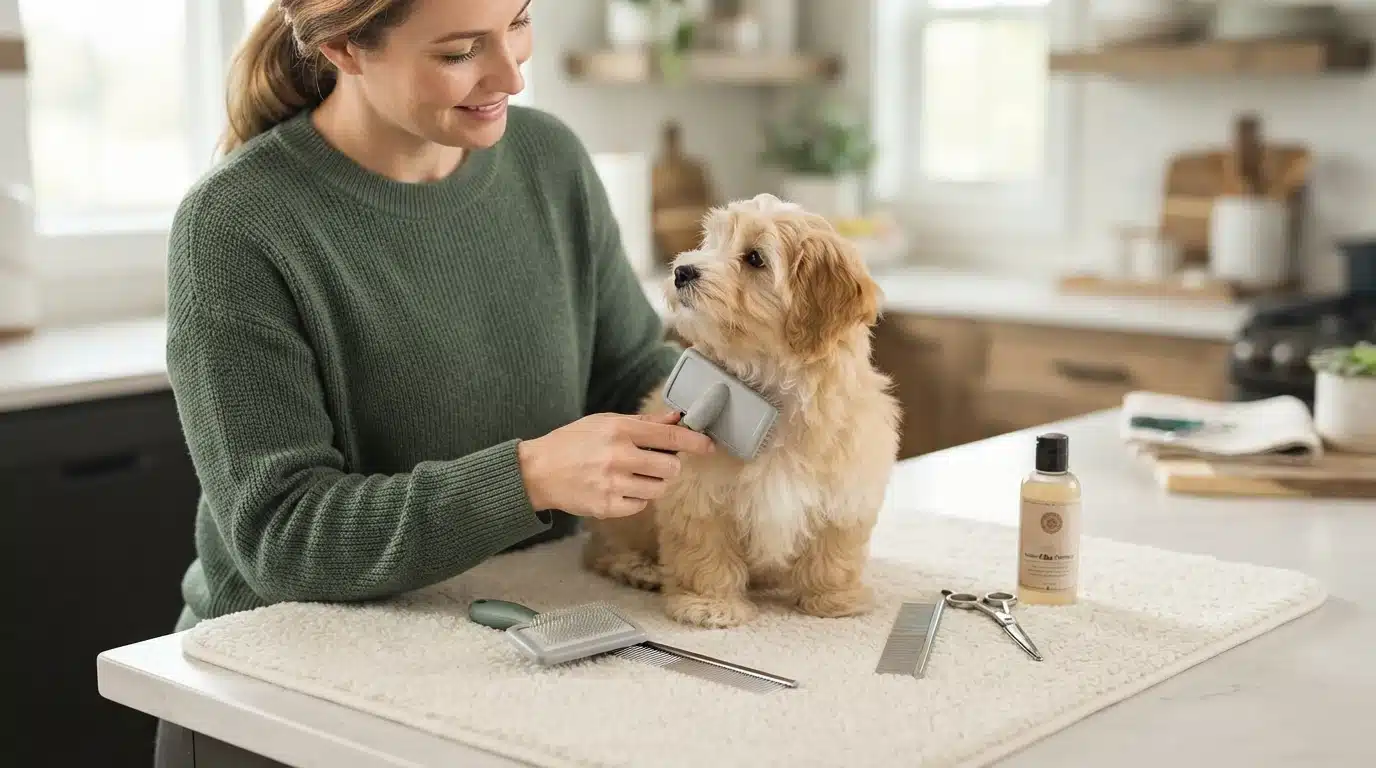
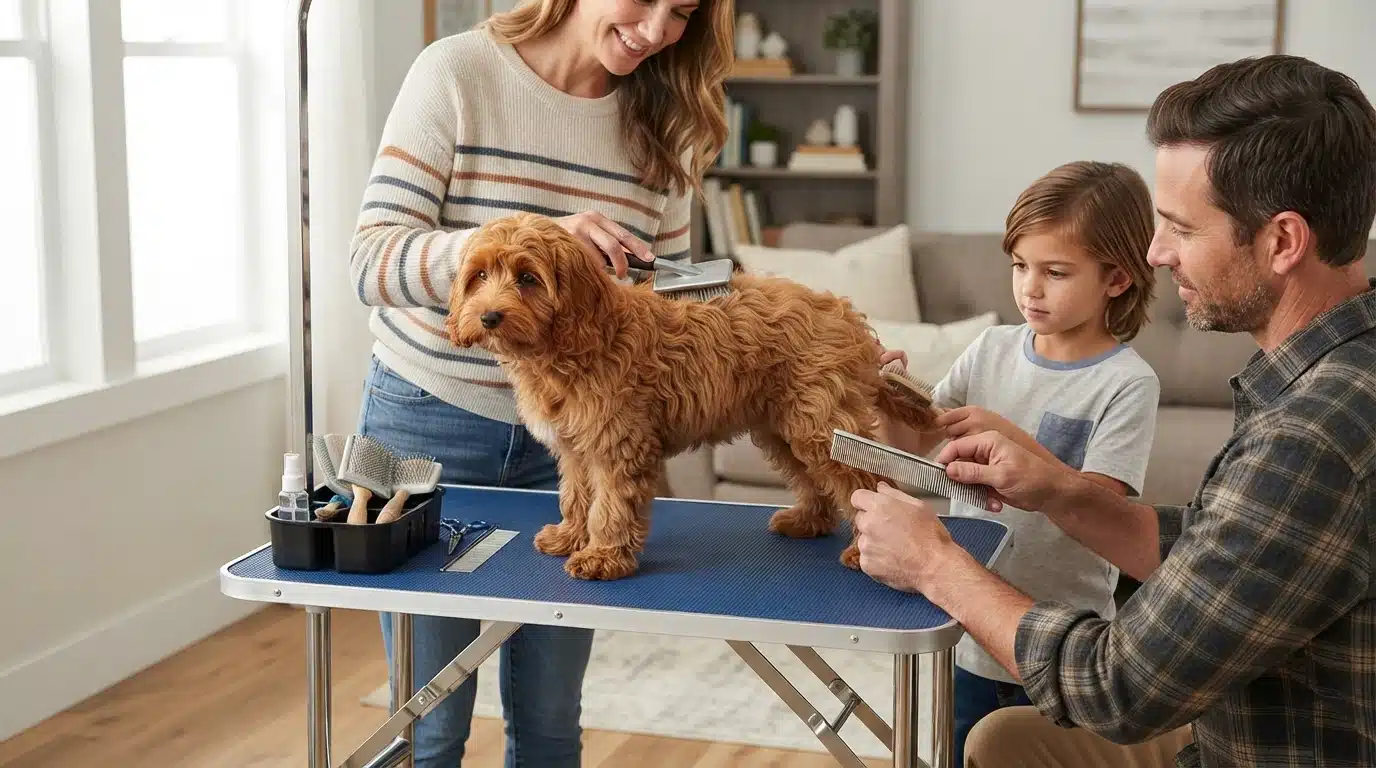
Grooming is where the two breeds diverge most, so it sets the pace of your week. Both coats need brushing several times a week and professional trims every 6 to 8 weeks, but the coat types differ. Here is what that looks like in practice.
Cavapoo Coats: From Puppy Fluff to Wavy Adult Hair
A Cavapoo puppy starts with soft fluff that is easy to handle. Then the adult coat grows in, usually between 6 and 9 months, and the texture shifts to a denser wave or curl. This change is when mats form fastest, because loose puppy hair tangles into the new growth. Brush down to the skin, not just the top layer, and check behind the ears and under the legs. If you keep the schedule steady through those months, the adult coat becomes simple to maintain.
Havanese Coats: Silky, Single-Layered, and Quick to Mat
Havanese coats are silky and single-layered, so they shed very little but knot quickly. The fine hair catches debris and splits at the ends when brushed dry, so many owners mist the coat with water first. A metal comb finds knots a brush slides over. Both breeds respond to the same core habit: short, calm sessions several times a week instead of one long battle.
The Cost Side of Coats, Checked Against a Real Total
Professional grooms typically run $50 to $90 per visit for a small breed, so budget roughly $400 to $700 in the first year. Add a slicker brush, comb, detangler spray and nail clippers, about $40 to $80 up front. When you compare puppy prices, weigh these grooming costs alongside the purchase price, which at Sage Puppies runs $3,500 to $4,500.
Exercise, Barking and the Hours You Are Alone
How Much Exercise Each Puppy Wants
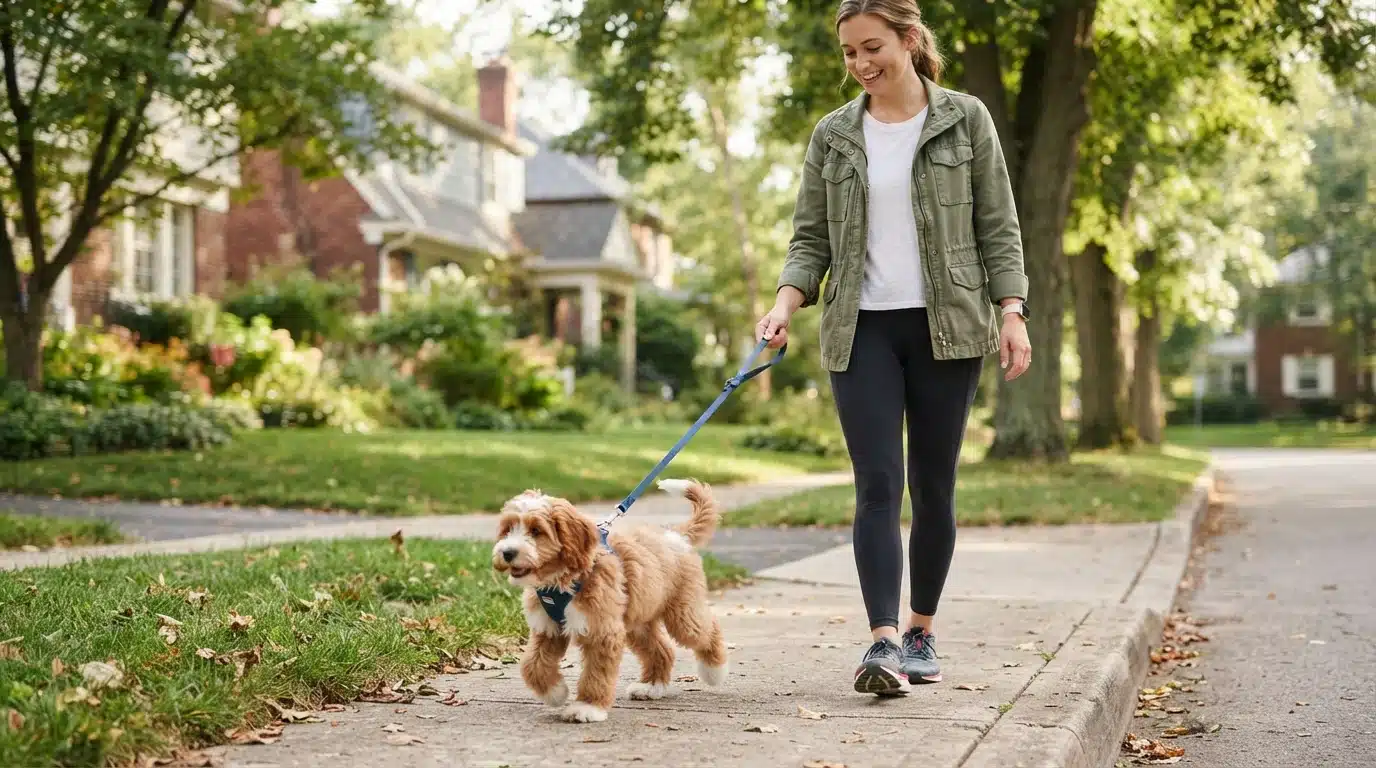
A Cavapoo usually wants two short walks a day plus a round of indoor play, so plan roughly 30 to 45 minutes of activity. A Havanese is happy with less: two gentle walks and a game of fetch often cover it. A Havapoo sits between the two. Tired puppies settle faster, chew less and sleep through the night, so a midday play session often solves more problems than any training trick.
Barking, Distress and Alone Time
Both breeds are companion dogs, so both can struggle when left alone. The fix is practice, not power. Start with one or two minutes in the crate, then stretch the time over a week, which matches advice from the AKC on teaching puppies to be alone. Keep daytime crate stays under three or four hours for puppies under six months, a limit groups like the Humane World crate guide also stress. If you want a step-by-step crate plan, our guide to crate training a Havanese puppy walks through it. Whining that fades is normal; nonstop barking with pacing means the time went up too fast.
Noise, Children and Visitors
Neither breed is a guard dog, so barking usually means excitement or a want, not danger. Teach a “quiet” cue, greet visitors calmly, and give your puppy a mat or toy when kids play loudly. Calm modeling from adults does most of the work.
Health Records to Ask For, and the Part Beginners Skip
What to Ask, Line by Line
Before you hand over any money, ask for paperwork in writing. You want vaccination dates and the vaccine maker, deworming dates and the product used, a vet exam dated within a few days of pickup, and the parents’ health test results. For Cavapoos, that usually means heart and eye checks on the Cavalier side and patella and eye checks on the Poodle side. Get microchip numbers too.
Verifying What You Are Told
Here is the part most first-time buyers skip: check the records yourself. Look up the sire and dam in the OFA database to confirm the test results actually exist. Call the listed vet clinic to confirm the exam. A breeder who resists either step is telling you something.
What Sage Puppies Shows You
Every Sage puppy leaves with a written health record, vaccination and deworming history, a vet exam, and parent testing you can verify. The records arrive before pickup, so you can read them while your questions are still fresh.
Never accept photos of records as a substitute for names and dates you can confirm yourself.
Which Should You Choose: Cavapoo or Havanese for a First-Time Owner?
Both breeds are small, friendly and eager to please. The real difference is daily energy. Match the dog to your schedule and the first year gets much easier.
Choose a Cavapoo If…
Pick a Cavapoo if your household is active and you enjoy time outside. Expect two short walks a day plus a round of indoor play, around 30 to 45 minutes of activity. This mix thrives with kids, games and training sessions, so it suits families who want a playful buddy involved in most of the day.
Choose a Havanese If…
Pick a Havanese if you want a calmer companion that settles more easily. It still needs about 30 minutes of daily activity, but it is content with shorter outings and more lap time. Apartment living, retirees and work-from-home owners often fit this breed well because it bonds closely and adapts to a relaxed pace.
And the Honest Middle Path
Can’t decide? Spend an hour with each breed before you commit, or ask your breeder which puppy’s temperament matches your routine. A good match on energy matters more than coat color or cuteness, and it prevents the most common reason first-time owners struggle.

Ready for a Cavapoo of your own? Sage Puppies matches first-time families with well-bred Cavapoo, Havapoo and Havanese puppies. Browse available puppies, check current pricing, and start the application today.
Frequently Asked Questions
Q1: What care do Cavapoo puppies need for first-time owners?
Feed four small meals daily until 4 months, keep potty breaks after every nap and meal, brush several times a week, and give 30 to 45 minutes of activity each day.
Q2: How much does a Cavapoo puppy cost in the first year?
At Sage Puppies, purchase price runs $3,500 to $4,500. Add roughly $400 to $700 for grooming plus $40 to $80 in basic coat tools, food, and vet visits.
Q3: How long can a Cavapoo puppy be left alone?
Keep daytime crate stays under three or four hours for puppies under six months. Build up from one or two minutes, stretching the time over a week.
Q4: How often should a Cavapoo be groomed?
Brush several times a week, especially during the 6 to 9 month coat change, and book professional grooming every 6 to 8 weeks.
Q5: When should a Cavapoo puppy switch from four meals to two?
Four meals a day until about 4 months, three meals from 4 to 6 months, then two meals after 6 months.
Q6: Are Cavapoos easy to potty train?
Yes. They learn quickly from routine and rewards, but bad habits also stick fast, so keep timing consistent from day one.
Conclusion
A Cavapoo and a Havanese ask for the same core care: steady meal times, short kind training, brushing several times a week, and alone-time practice built slowly. The difference is energy. An active household fits a Cavapoo, while a quieter home fits a Havanese. Your first 90 days set the pattern, so keep potty and sleep routines predictable and use the 3 to 14 week social window well. Ask for written health records, then verify them in the OFA database yourself. Match the puppy to your daily schedule, and budget the full first-year cost, not just the purchase price. Do that, and the most common first-year struggles never start.