Quick Summary: Havapoo puppies do best with short, varied play sessions that combine movement and mental work, including low obstacle courses, gentle tug, sniff walks, carpet fetch, and puzzle feeders. Start shallow water play at 12 to 16 weeks with constant supervision, and use safe surfaces, clean outdoor spaces, and age-appropriate activities to protect growing joints. A predictable routine of play followed by calm time helps puppies tire out and settle, with Sage Puppies recommending that owners follow each puppy’s recovery rather than rely on fixed exercise formulas.
A Havapoo puppy can play hard for ten minutes, flop down mid-tug, and bounce back twenty minutes later ready for more. That zoom-then-crash rhythm surprises new owners, and it often leaves you holding one chew toy while your puppy naps on a half-finished project of his own. Havapoo puppy playtime is less about long exercise sessions and more about short, varied bursts.
This guide gives you simple play ideas that fit a small, people-oriented companion breed. You’ll find indoor games, outdoor fun, water play, and brain games, all arranged into a daily routine you can repeat. We also note how to adjust activities as your puppy grows from eight weeks to six months.
The advice here comes from Sage Puppies in South Jordan, Utah, where founder Cassie Milar raises Havapoo puppies and walks new families through life with them. Use these ideas to match your puppy’s energy instead of fighting it.
What Play Activities Are Good for Havapoo Puppies?
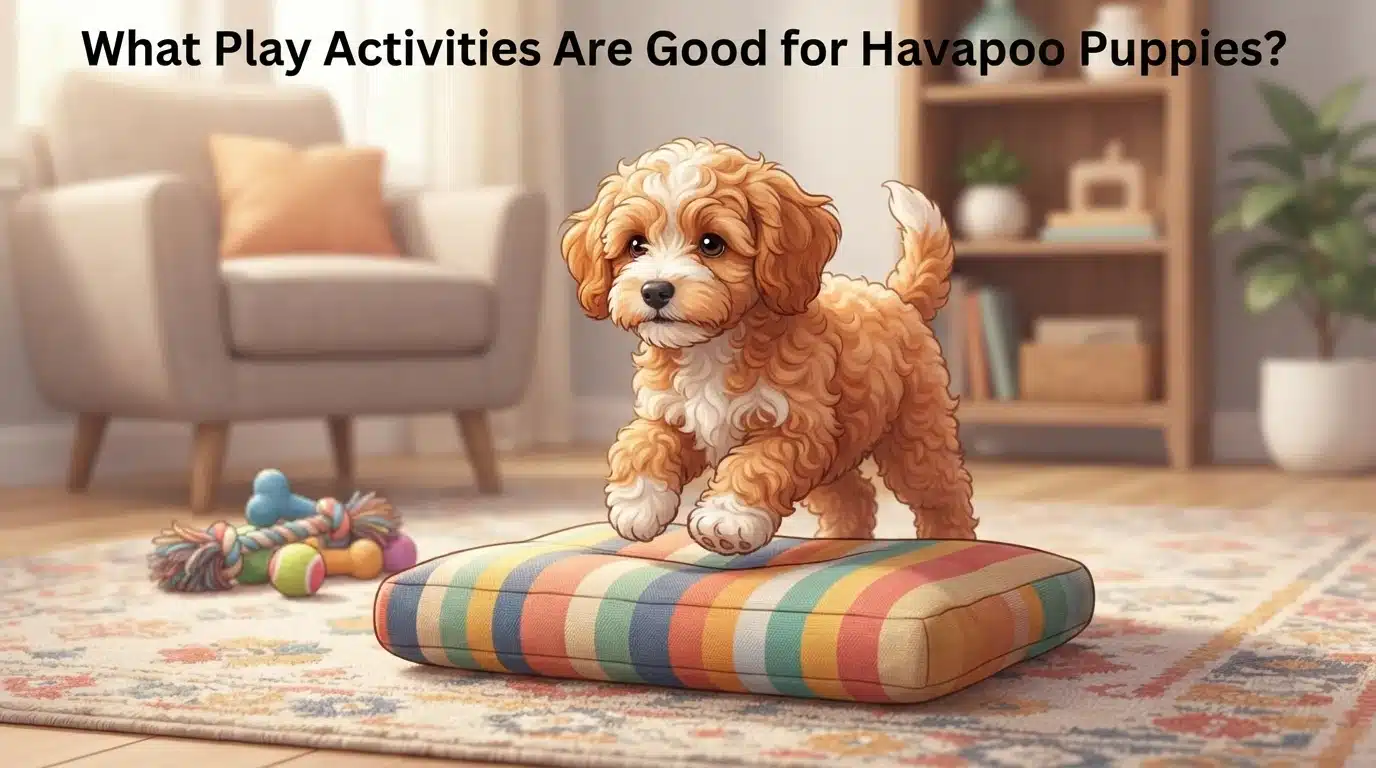
Good havapoo puppy playtime falls into six categories, each with its own best age window:
- Low obstacle play – cushions and low boxes to step over; best from 8 weeks
- Gentle tug – soft, grip-friendly toys; best from 10 weeks
- Sniff walks – slow, sniff-heavy outings; best from 8 to 10 weeks, after early shots
- Fetch on carpet – short indoor rolls; best from 12 weeks
- Brain games – snuffle mats and puzzle feeders; best from 8 weeks
- Shallow water play – a few inches of water; best from 12 to 16 weeks, always supervised
The Six Play Categories That Work Best for a Havapoo
Each category suits a small, people-oriented breed. Low obstacle play builds balance without jumps. Tug toys sized for little mouths protect their grip and teeth. Sniff walks let the nose work, which tires a puppy faster than running. Short fetch games work indoors on rugs. Brain games turn meals into puzzles. Water play comes last and stays shallow.
Why Havapoo Puppies Need a Mix of Physical and Mental Play
A tired mind matters as much as tired legs. Havapoos bond hard with their people, so games you play together settle them best. Mixing categories prevents boredom and keeps energy steady. For more on matching games to temperament, see our guide to Havapoo energy and play needs.
How to Adjust Play as Your Havapoo Grows
Puppies’ bones still grow, and their growth plates are easy to injure. Skip stairs, jumping and long runs until your vet clears them. Favor flat play early, then add height and distance gradually as VCA Hospitals explains.
Indoor Play Ideas for Small Spaces and Apartment Homes
A Havapoo puppy does not need a yard to burn off energy. Five indoor games work well in an apartment: a low obstacle course built from cushions, short rounds of tug, hide and seek with treats, a rolled-ball fetch on carpet, and sniffing games on a snuffle mat. Each takes minutes to set up and fits in a small living room.
Build a Low Indoor Obstacle Course From Household Items
Line up cushions, a low box, and a rolled blanket so your puppy steps over each one. Keep everything low enough that your puppy never has to jump. Lead him through with a treat the first few times, then let him find his own path. Two or three laps is plenty for a young puppy, and you can rebuild the course in a different order next time.
Tug Games With Rules That Keep It Fun
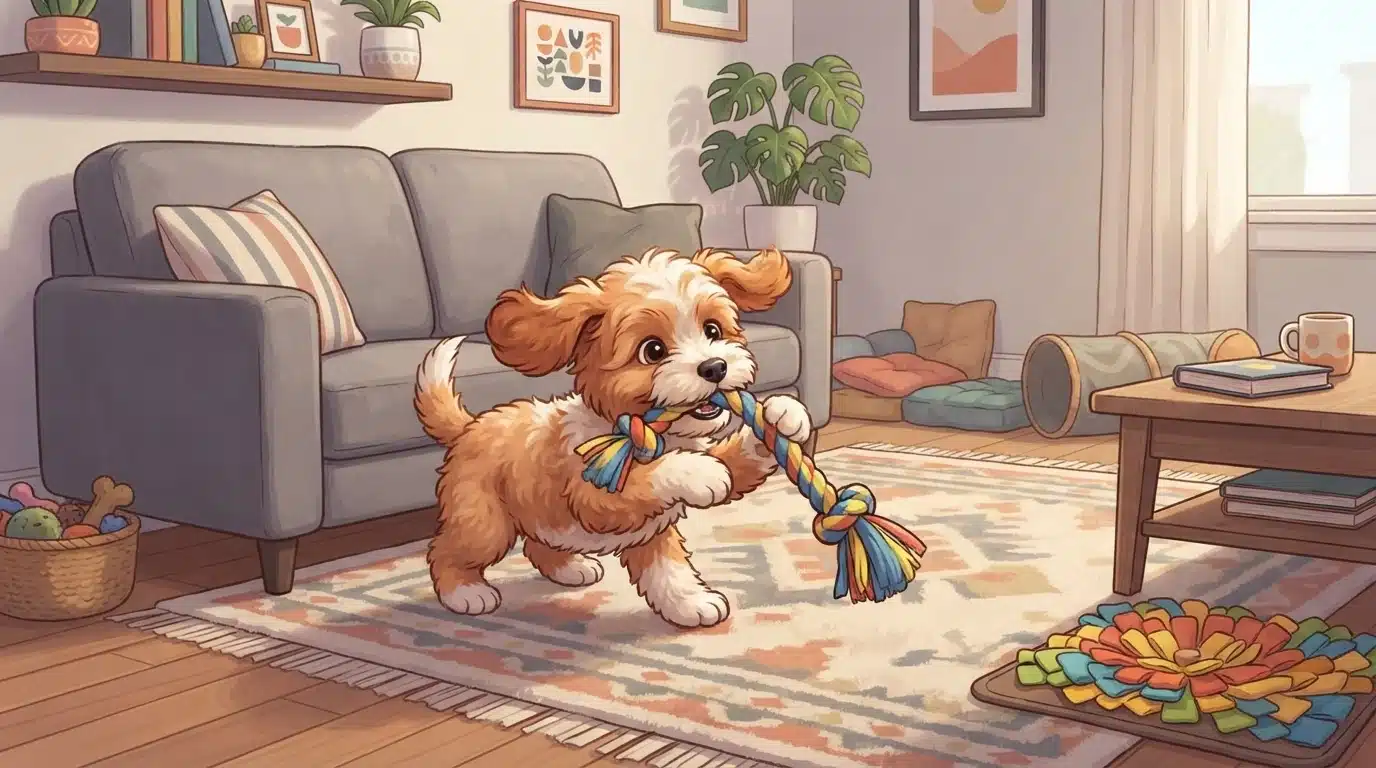
Tug is a great fit for small apartments because it uses little floor space. Start around 10 weeks with a soft toy that is easy to grip. Teach drop it early: if your puppy lets go, the game restarts, so letting go becomes the best move. Keep pulls gentle and low to the ground, and stop the game if play turns growly or grabby.
Hide and Seek for Puppies With Noses
Havapoos are people-focused, so hiding yourself works even better than hiding treats. Ask your puppy to stay, step behind a door, and call him once. Let him use his nose to find you. Trade a treat for hide and seek with small pieces of kibble tucked under a towel or cup.
Fillers, Snuffle Mats and Calm Time
Snuffle mats and puzzle feeders turn dinner into a game, and they are safe from 8 weeks. Scatter a few kibble pieces in the mat, let your puppy sniff them out, then follow with a quiet rest in his bed. This Havapoo puppy playtime mix of sniffing and settling suits small homes well.
Outdoor Play That Is Safe for a Havapoo Puppy
Havapoos were built for laps, not long runs. Outdoor play still matters, but it should be short, sniffy and close to the ground. These three formats cover most days.
Sniff Walks on a Harness and Loose Leash
A sniff walk is a slow stroll where your puppy sets the pace. Sniffing is real work, and it tires a small dog faster than distance does. Use a flat harness, not a collar, so nothing presses on the throat. Keep the leash loose and let your puppy stop and read every fire hydrant. Fifteen minutes of this beats a forced march.
Yard Treasure Hunts and Grass Games
Your own grass is the safest outdoor gym. Scatter a few kibble pieces in the lawn and let your puppy hunt them down by scent. Roll a soft ball a short distance through low grass, or drag a toy along the ground so she can pounce. Keep sessions to a few minutes, then rest. Puppies crash quickly and often don’t notice they’re tired.
Ground Rules for Puppies Before Full Vaccination
Until your puppy finishes the puppy shot series, ground shared by unknown dogs carries some risk. The good news: you don’t need to stay indoors. Veterinarians generally advise avoiding areas with heavy dog traffic, like dog parks, while allowing safe socialization on clean surfaces such as your own yard, patios and quiet pavement.
Practical rules:
- Carry your puppy across parking lots and busy sidewalks.
- Skip dog parks, trailheads and grass at pet stores until your vet clears her.
- Let friends’ vaccinated dogs visit your yard instead of meeting strangers’ dogs.
- Rinse muddy paws, and skip ground where wildlife or stray dogs pass through.
The window for social skills is short, so keep experiences rich while staying on clean ground. When you’re weighing pick-up dates against shot schedules, planning around the full Havapoo puppy cost and timeline helps you set realistic expectations.
Water Play and Cool-Weather Ideas
Shallow Splash Play With Constant Supervision
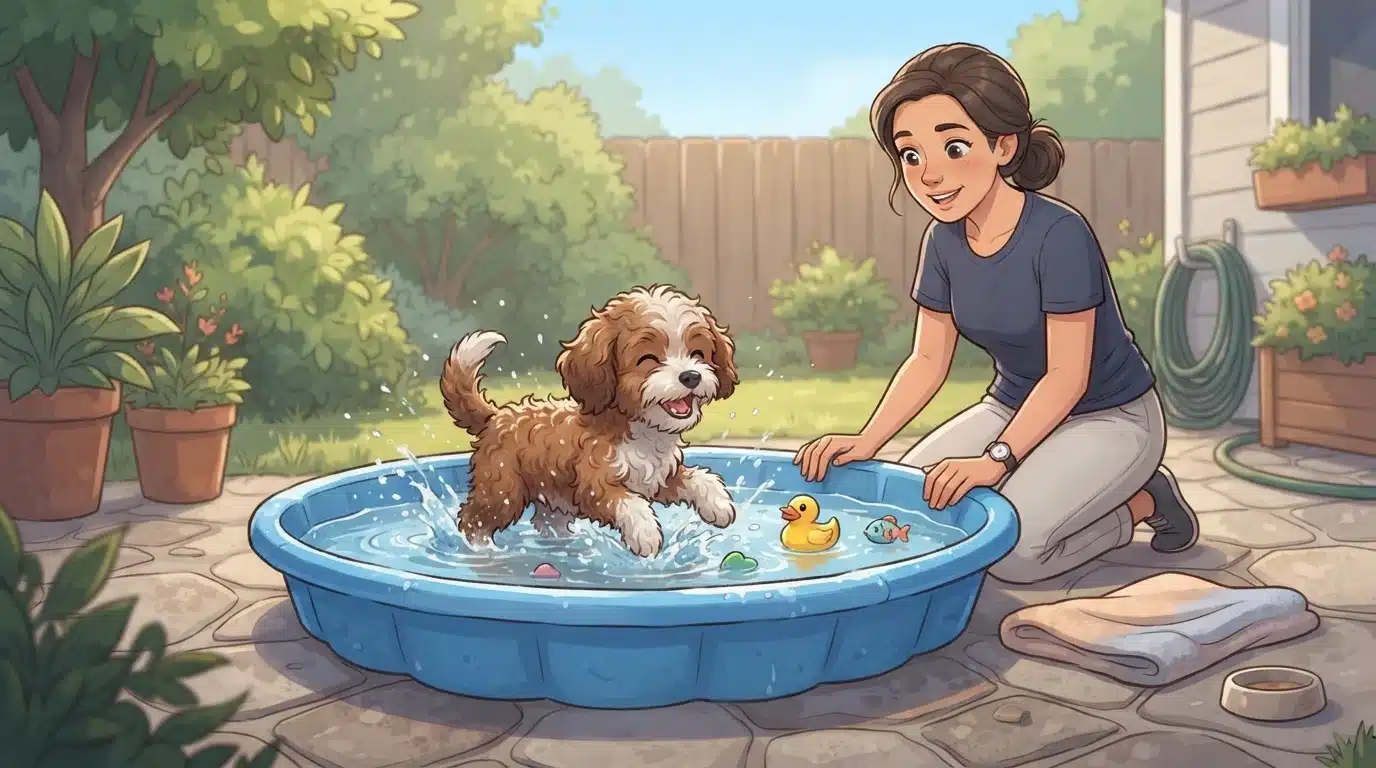
Once your Havapoo is 12 to 16 weeks old, a few inches of water can become a favorite game. Fill a kiddie pool or a shallow tub, drop in a floating toy, and let your puppy wade in at her own pace. Never force the first entry. Sit close and keep eyes on her the whole time, even in ankle-deep water, because puppies can tire or slip fast. Rince and dry her ears afterward to prevent irritation. Breeders like Sage Puppies start introducing calm water sounds early, which makes this stage easier, but supervision is still the whole job.
Hot-Weather Alternatives When Outdoor Play Is Limited
Pavement burns little paws, so plan water and exercise around the coolest hours. Walk early or after sunset, and test the ground with your hand first. Keep sessions short, offer fresh water often, and never leave your puppy in a parked car, even for a minute. If midday heat cancels outdoor play, move the fun inside: a sniff walk down a hallway, short fetch on carpet, or a frozen treat to lick. Watch for heavy panting and slowed steps, and stop before she looks worn out.
Heat safety comes first: dogs cool off by panting, not sweating, so a hot day limits them far more than it limits you.
Rain, Snow and Cold-Weather Play
Small breeds chill quickly, so cold days call for short bursts indoors and quick trips outside. Layer a well-fitted coat below freezing, wipe paws after snow, and skip icy sidewalks. Rainy days work well for indoor sniffing games, tug on a mat, and a slow search through a snuffle mat. Rotating two or three quiet games keeps a bored puppy busy without wearing out young joints. End each day with a calm chew or a gentle massage, and your Havapoo will settle happily no matter the weather outside.
Brain Games and Training-Based Play
A Havapoo’s brain needs work just like its legs. Mental games tire a puppy out faster than a long walk, and they fit easily into a small apartment day.
Treat Hunts and Food-Finding Games
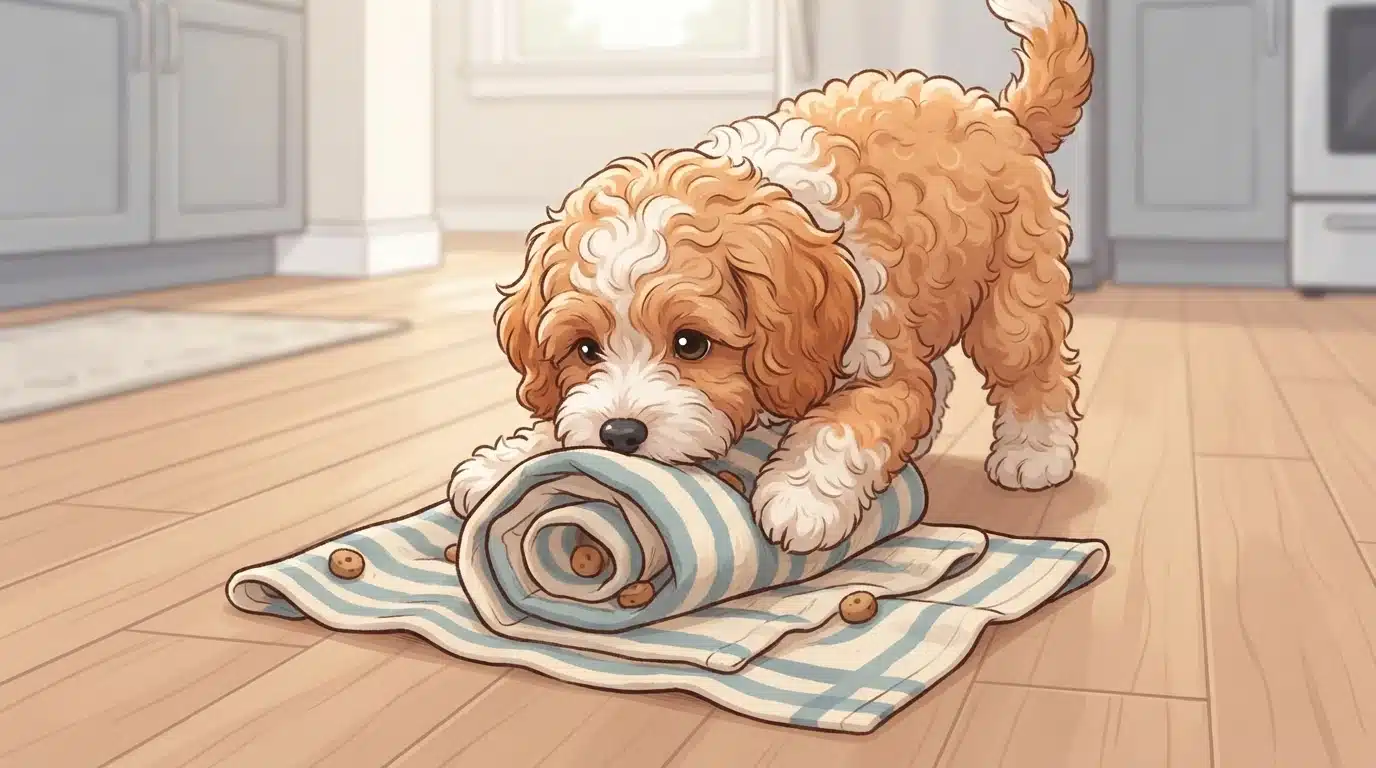
Hide a few kibble pieces around a room and let your puppy search. Sniffing is naturally calming, so a five-minute hunt can settle an evening zoomies fit. Start easy, with treats in plain sight, then tuck them under a towel corner or behind a chair leg.
Trick Practice That Counts as Play
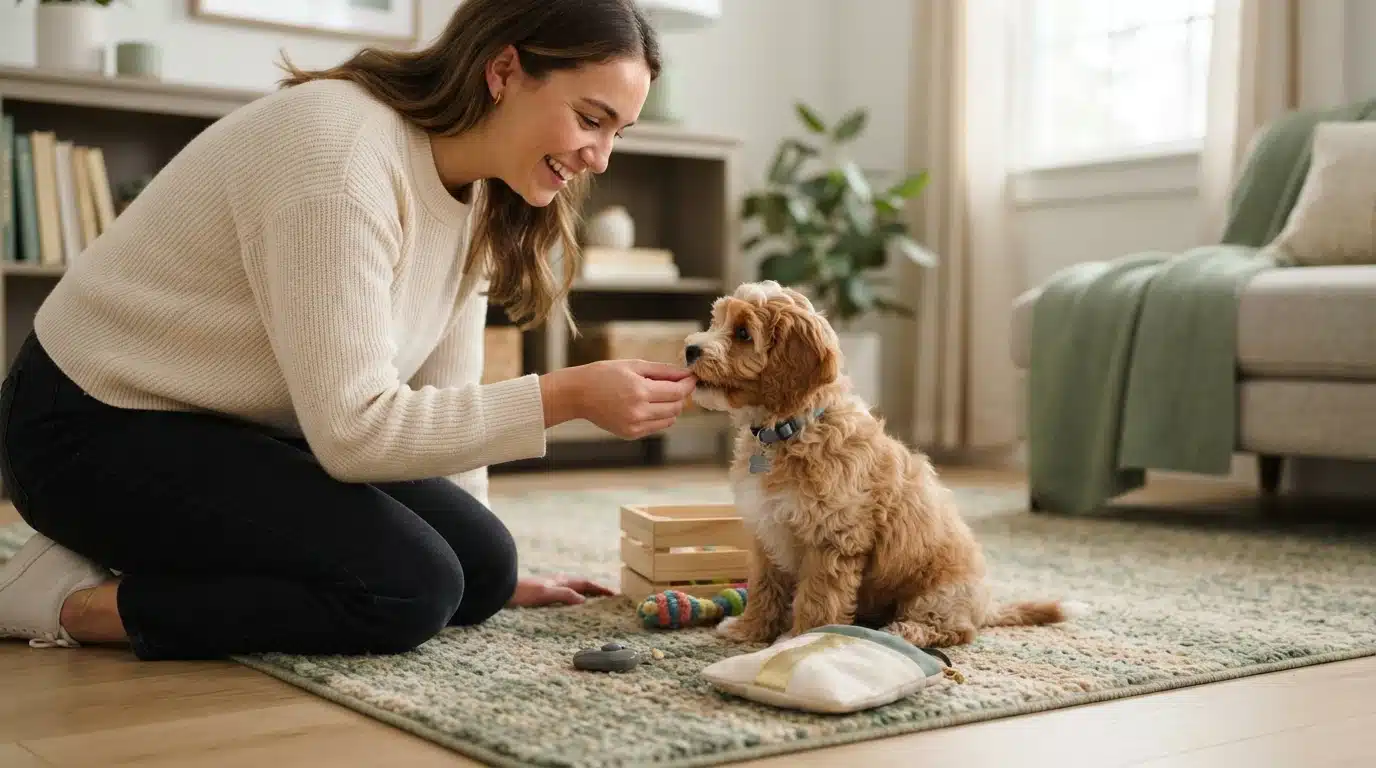
Short training bursts feel like games to a people-oriented breed. Rotate three or four cues in two-minute sessions: sit, spin, touch a target with a nose, or hop onto a low stool. “Drop it” doubles as a tug rule, so practice it mid-game with a soft toy. Keep the tone light, end on a win, and reward with play instead of always using food.
Puzzle Toys and Chewing Enrichment
Snuffle mats and puzzle feeders are safe from 8 weeks, and they turn dinner into a game instead of a thirty-second gulp. Rotating two or three toys keeps them interesting. Teething Havapoos also chew hard between 3 and 6 months, so pair puzzles with safe chew options; our puppy teething toys guide covers small-breed fits. Freeze a stuffed food toy for longer sessions on days you are busy.
Building a Daily Playtime Routine That Fits Your Day
A Havapoo puppy play routine works best when it matches your own schedule, not someone else’s. Here is a day that fits most families, plus how to judge the right amount of play and help your puppy wind down afterward.
A Sample Day: Morning, Midday, Evening
What does a typical Havapoo puppy play day look like?
- Morning: A short sniff walk before breakfast, then a snuffle mat or puzzle feeder with the first meal.
- Midday: Ten to fifteen minutes of low obstacle play or gentle tug inside.
- Evening: A slow sniff walk, a brain game with dinner, then calm time before bed.
Repeat that rhythm daily. Puppies settle faster when the day has a predictable shape.
How Much Play Does Your Havapoo Actually Need?
How much exercise does a Havapoo puppy need? Aim for a few short play blocks spread through the day, and let your puppy’s recovery guide you. If she flops down, pants hard, or loses interest mid-game, stop and let her rest. If she settles calmly afterward, the amount was right. The old “five-minute rule” (five minutes per month of age) gets repeated everywhere, but it has no scientific backing. Watch your puppy instead of the formula, since a small breed tires differently from a large one.
Ending Play So Your Puppy Can Settle
Puppies rarely stop on their own, so you close each session. Drop the energy first: slower voice, softer movements. Then swap the toy for a chew or give a short sniff in a quiet corner. Practice drop it training during tug rules so games end on your cue, not hers. Finish with water, a potty break, and a calm spot in her crate or pen. That last quiet stretch teaches her that play has an off switch, which makes evenings and bedtime far easier for everyone.
Safety Rules and Play Mistakes to Avoid
What are the safety rules for Havapoo puppy play? Keep every session short and watched. Pick soft floors, skip high jumps, check the surface first, and swap hard tugs for gentle games. Match the activity to your puppy’s age and stay close. The hazards below are common, and each one has a simple fix.
Floors, Teeth and Jumping: the Everyday Hazards
Slippery floors cause most play injuries in small puppies. Put a rug or yoga mat down before fetch or tug so little paws can grip. Growth plates stay open until about a year, so repeated jumping off couches or stairs puts real strain on young joints. Keep obstacles low and let your puppy step, not leap. Between 3 and 6 months, teething gets intense, so stick to soft, grip-friendly toys and save tug rules for gentle sessions.
Heat, Water and Supervision
Flat-faced and fluffy breeds overheat fast, so play outdoors in early morning or evening when it’s warm. Watch for heavy panting, and bring water on every summer outing. Never leave a puppy in a hot car, even for a minute. Water play stays supervised shallow water play: a few inches deep, always with you nearby, until your puppy swims with confidence on a leash and harness.
Kids, Guests and Playdates
Children mean well, but grabby hands and running games overwhelm a small puppy. One adult should watch every dog-and-child session and call breaks when play gets loud. Keep guests seated while your puppy approaches them. For playdates, match your Havapoo with calm, vaccinated dogs on safe ground, keep sessions to 15 or 20 minutes, and end on a calm note. Watch puppy body language the whole time: a tucked tail or stiff posture means rest now.

A bored Havapoo puppy finds her own games, and they are rarely the ones you want. The daily rhythm above keeps her tired, happy and easy to live with. Want a pup who fits right into your family’s routine? Explore Sage Puppies, where we match each Havapoo with the home that suits her best.
Frequently Asked Questions
Q1: What play activities are good for Havapoo puppies?
Six kinds work best: low obstacle courses, gentle tug with a soft toy, sniff walks, short fetch on carpet, brain games like snuffle mats, and supervised shallow water play from 12 to 16 weeks. Rotate them so both body and mind get tired.
Q2: How long should each play session be?
Keep sessions to 5 or 15 minutes, then rest. If your puppy flops down or loses interest, stop. Recovery matters more than a clock.
Q3: Can my puppy play outside before vaccinations are done?
Yes, on clean ground. Use your own yard, quiet pavement, or a patio, and skip dog parks and grass where unknown dogs walk.
Q4: When can Havapoo puppies start water play?
Between 12 and 16 weeks, in just a few inches of water, with you watching the whole time.
Q5: How do I get my puppy to calm down after play?
Lower your own energy, swap the toy for a chew, then finish with water, a potty break, and a quiet spot in the crate or pen.
Q6: What toys should I avoid during teething?
Skip hard tug toys and anything small enough to swallow. Between 3 and 6 months, stick to soft, grip-friendly options that protect baby teeth.
Conclusion
Havapoo puppy playtime works best in short, varied bursts rather than one long workout. Rotate the six core games: low obstacle courses, gentle tug with soft toys, sniff walks, indoor fetch on carpet, snuffle mat brain games, and supervised shallow water play once your puppy reaches 12 to 16 weeks. Keep sessions brief, stay on clean ground before shots are finished, and skip jumps and stairs while growth plates are open. A steady daily rhythm, with a calm wind-down after each session, tires both body and mind and prevents boredom mischief. Watch your puppy’s recovery instead of counting minutes, and adjust the mix as she grows from eight weeks to six months.