
Quick Summary: Before visiting a California puppy seller, ask for parent health test results you can verify yourself on the OFA database, plus the puppy’s dated vaccine and deworming records. Watch for red flags like parking-lot handoffs, no mother on site, or pressure for a same-day deposit. California law requires a written disclosure at sale, and starting January 1, 2026, nonrefundable deposits are banned and disclosure duties extend to all breeders selling into the state. Sage Puppies, a home-raised Havanese, Havapoo, and Cavapoo program in South Jordan, built the checklist from its own standards and offers nationwide delivery.
A puppy visit can feel warm and reassuring right up until a seller cannot show who bred the litter, what vet care each pup received, or health testing on the parents. That gap is the whole problem. Most California buyers want to do the right thing, but nobody hands them a clear puppy seller checklist before they walk in.
This guide fixes that. It gives you a California puppy checklist built around records to inspect, behaviors to watch, and answers that should make you pause. You will find the key questions ask breeder lists skip: proof of parent health testing, vaccination and deworming dates, and how the puppies were raised.
As a boutique, home-raised program behind Havanese, Havapoo, and Cavapoo puppies, we built this from the same standards we hold ourselves to. Use it, and you will know within one visit whether a seller is honest.
Ask These Questions Before You Schedule the Visit
A good phone call saves a wasted drive. Before you book a visit to any California seller, work through this part of your puppy seller checklist. The answers should be specific, calm, and easy to verify. Vague or defensive replies are your first real data point.
Confirm Who Bred and Raised the Puppy
Start with the basics. Ask exactly where the puppies were born and who cares for them each day. A responsible breeder raises the litter in their home, so the answer is a place and a routine, not “at a facility.”
Then ask to speak with whoever did the breeding. If you reach a broker or a third party who cannot put you on the phone with the breeder, that is a warning sign. Some sellers list puppies they never handled.
Here are three questions that cut through quickly:
- Who is the mother, and where does she live? You should be able to see the mom during your visit, or at least meet her on video.
- How many litters do you raise per year? One to a few suggests real hands-on care. Constant litters suggest volume breeding.
- Can you describe the puppy’s daily routine? Feeding times, play with children, exposure to household sounds. Home-raised puppies have answers.
Sellers with nothing to hide invite these questions. It is the standard we hold ourselves to at Sage Puppies, where every litter is raised inside our South Jordan home, and it should be the standard anywhere you shop.
Request Health and Visit Details in Advance
Next, ask for records before you drive. A trustworthy seller will email or text them without hesitation.
Request three things: the puppy’s vaccination and deworming dates, the parents’ health test results, and the name of the veterinarian who examined the litter. Then confirm the visit itself. Ask how long you can stay, whether you can meet the mother, and if other litters will be present.
Pause if: the seller resists sharing records “until you commit,” pressures a same-day deposit, or will only meet in a parking lot. Good breeders welcome meetings at their home.
For more on screening sellers in this state, our puppy buyer’s guide for California walks through the full process.

Use the Visit to Check the Puppy and Its Environment
Paperwork tells you what a seller claims. The visit shows you what is true. Walk in with your eyes open and your phone ready to take notes, and treat the whole stop as one long observation rather than a series of questions.
Observe the Puppy Without Trying to Diagnose
You are not a vet, so do not play one. Instead, look for the everyday signs of a healthy, well-started puppy and write down what you see.
- Eyes and nose: clear and bright, with no thick discharge or crusting.
- Coat and skin: soft, clean fur with no bald patches, scabs, or constant scratching.
- Energy: playful and curious, then happy to rest. A puppy that only sleeps or only paces deserves a question.
- Movement: a steady, bouncy gait with no limping or head tilting.
- Body condition: you should feel ribs under a light layer, but not see them sharply.
Then watch temperament. A confident puppy approaches you, investigates new objects, and recovers fast after a startle. Shyness at eight weeks can be normal, but freezing, hiding, or growling at every new thing is worth a gentle follow-up question about socialization.
Ask to handle the puppy. It should feel comfortable being held, touched on the paws and ears, and set back down. Puppies raised in a home, like those in our own step-by-step process, usually meet this test easily because people have been part of their daily routine from day one.
Look at the Mother, Litter, and Living Area
Ask to see where the puppies live and where the mother stays. A seller with nothing to hide will walk you straight there.
- The mother: she should be friendly, clean, and interested in you. Ask to meet her in person and confirm her health testing records match the paperwork.
- The litter: puppies should be similar in size, alert, and free of fleas or waste on their coats.
- The space: clean bedding, fresh water, room to play, and safe toys. Strong ammonia smells or crowded cages are a clear signal to pause.
- The surroundings: puppies raised inside a busy family home tend to handle household sounds, children, and handling better than kennel-raised littermates.
If a seller offers only a parking lot handoff or a separate building you cannot enter, treat that as a serious red flag. A good breeder is proud of the environment and expects you to look closely.
Verify Parent Testing and the Puppy’s Veterinary Records
Paperwork tells you more than a charming puppy photo ever will. Before you visit a California seller, ask for two separate stacks of records: the parents’ health test results and the puppy’s own vet care history. Good breeders produce both without hesitation. Sellers who dodge the request are giving you an answer, just not the one you want.
Ask for Identifiable Parent-Test Results
“Our dogs are health tested” means nothing without the dog’s name attached to each result. Ask for the registered name of both the sire and the dam, then look them up yourself on the OFA database. This takes ten minutes and can’t be faked with a screenshot.
For Havanese parents, the Havanese Club of America lists three core screens: an annual eye exam by a board-certified ophthalmologist, patella evaluation, and hip evaluation. Those are the tests that earn a CHIC number. Many breeders add hearing and cardiac checks on top. The AKC publishes similar club-recommended tests for the Toy Group, which covers Poodles, Cavalier King Charles Spaniels, and the other parents behind Havapoo and Cavapoo litters.
Match the names carefully. The testing certificate should match the registered name, the age at testing, and the result. Eye exams expire after one year, so check the date. If a seller sends a collage of certificates with no legible names, ask again, in writing.

Pause if: both parents are named but only one has test results. Both sides of the pairing matter equally.
Separate Parent Screening from Puppy Care Records
These two record types answer different questions, and mixing them up is a common buyer mistake. Parent testing predicts inherited risk. Puppy records show the care this specific puppy received so far.
The puppy’s stack should include a vet exam record with the clinic’s name and date, vaccine dates and lot numbers, and the deworming schedule with products used. Ask which vaccine series the puppy has started and what remains, because your own vet will want to plan boosters. A breeder education guide for Havanese buyers recommends expecting documentation in hand before money changes hands, and the same logic applies to any mix.
At the visit, compare the vaccine dates against the puppy’s stated age. A ten-week-old puppy should show real exams and at least one round of vaccines, not a blank page. Reputable programs, including ours at Sage Puppies, hand over a dated health record with each puppy and walk you through it. If a seller promises records “after you pay,” treat that as a reason to keep looking. You can see what complete documentation looks like on our health testing page.
Review the California Disclosure Packet and Sale Terms
California has some of the strongest puppy buyer protections in the country, so use them. Under the Polanco-Lockyer Pet Breeder Warranty Act, every breeder must hand you a written disclosure at the time of sale, and starting January 1, 2026, new rules extend disclosure duties to all breeders selling into California and ban nonrefundable deposits. If a seller resists showing you these papers, that tells you something before you hand over a dollar.

Match the Written Disclosure to the Puppy
The written disclosure is not a formality. It must list the breeder’s name and address, the puppy’s date of birth, breed, sex, color, and identifying marks, plus the sire and dam’s registration details if the puppy is sold as registerable. You should also see a full record of shots and worming with dates, and any vet treatment the puppy received.
Then check the signed health statement. The breeder certifies either that the puppy has no known disease, illness, or inherited condition, or that a licensed California vet has documented and cleared a known condition for sale. Both parties sign the disclosure, and the breeder must also repeat the medical information out loud.
Compare each line against what you observed during your visit. Does the birth date match the age of the puppy in front of you? Do the vaccine dates line up with the shot record? A mismatch is a reason to slow down and ask questions.
Read the Contract Before You Pay
The contract sets the terms that matter most if something goes wrong. California’s pet lemon law gives you real remedies: return the puppy for a refund, exchange it, or keep it with vet fee reimbursement, if a vet certifies illness within 15 days or a genetic condition within one year. To use those rights, you must notify the breeder within five days of a diagnosis.
So read for clauses that undercut you. Walk away from any contract that waives your statutory rights, demands a nonrefundable deposit, or pushes you to a specific vet. Ethical programs, including how we structure things at Sage Puppies, put terms in plain language because confident families ask questions first.
Check Communication, Matching, and Ongoing Support
A good breeder asks about you as much as you ask about them. How a seller talks before the visit tells you a lot about how the next 15 years will go.
Ask About Temperament and Family Fit
Before you book a visit, describe your household honestly. Mention kids, other pets, work schedules, and activity level. Then listen to the response. A careful breeder narrows the match instead of just selling the next available puppy. Expect questions like: Who is home during the day? Any allergies? Have you owned a small breed before?
Pay attention to how they describe each puppy. Ethical sellers talk about individual temperament, not just the litter. They should explain which puppies are bold, which are softer, and why a certain pup suits a quieter home. At Sage Puppies, for example, the puppy matching process starts with your lifestyle, then pairs you with a Havanese, Havapoo, or Cavapoo that fits it.
Clarify Support After the Puppy Comes Home
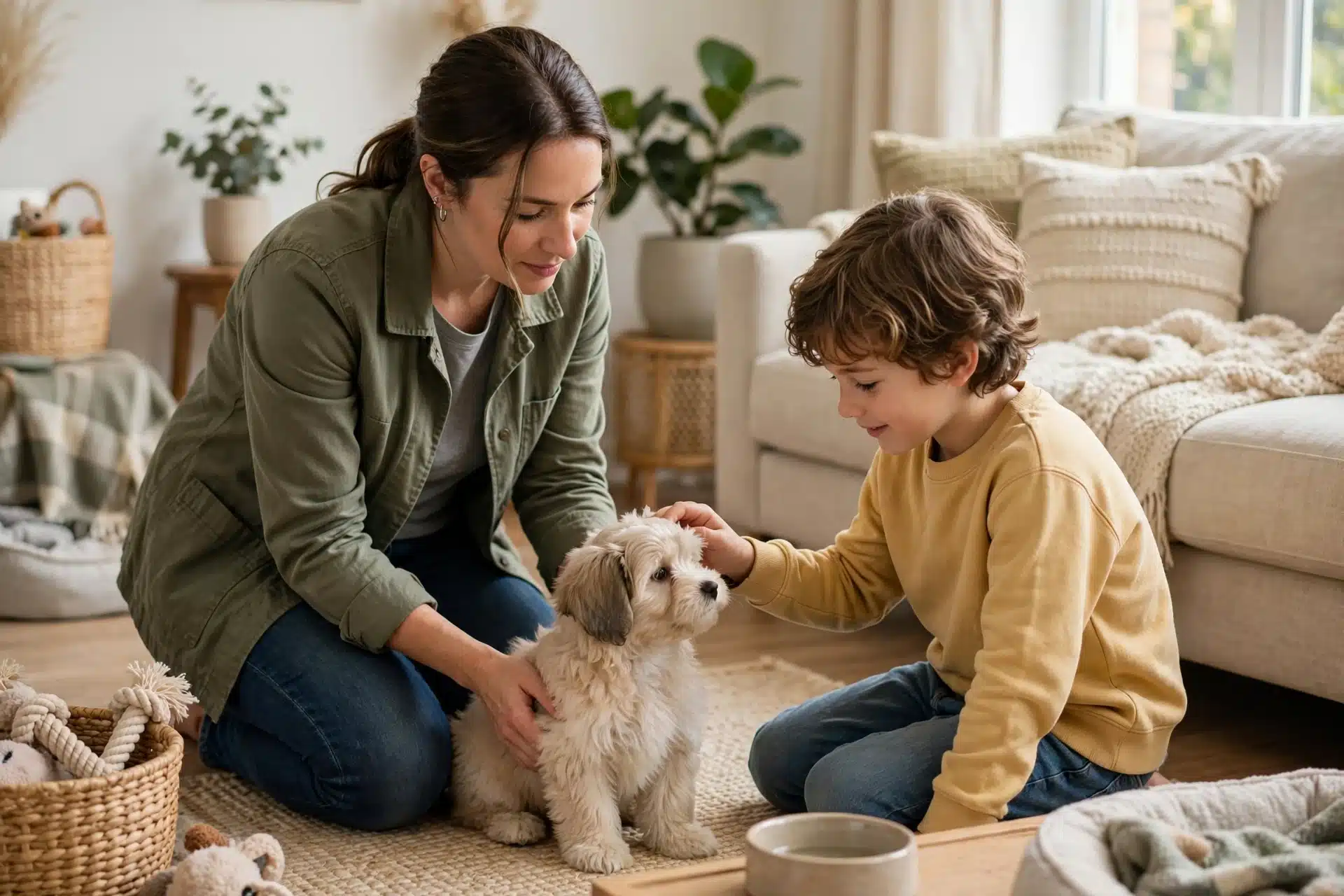
Ask one direct question: “What happens after pickup day?” A strong breeder has a clear answer. Look for a written plan that covers feeding schedules, the first vet visit, grooming for a Havanese coat, and how to handle the first nights. Also ask how long they will answer your questions. Many good breeders stay available for the dog’s whole life.
Vague answers here are a reason to pause. Confident, specific ones are a green flag.
Know When to Pause or Walk Away
Most California puppy visits go well. But some sellers show you, clearly and early, that something is off. Your job is not to be polite. It is to protect your family and your money. Here are the patterns that should stop you mid-conversation, and a simple way to decide what to do next.
Treat These Patterns as Reasons to Stop and Reassess
A seller who will not let you see where puppies live is the biggest red flag. If every meeting happens in a parking lot, a lobby, or a rest stop, pause. Healthy litters come from homes the breeder is proud to show.
Watch for these too:
- No health records. You should see vaccination dates, deworming, and vet exam notes in writing, not “the vet said she’s fine.”
- No proof of parent health testing. Ethical Havanese, Havapoo, and Cavapoo breeders share eye, heart, and patella results for the parents. “Both parents are healthy” is not documentation.
- Puppies always available. Three litters of the same mix, ready right now, in every color? Ask why.
- Pressure tactics. “Someone else is coming at five” is a sales line, not an urgency you owe a response to.
- Puppies under eight weeks. Sending a puppy home early is against California law for most sales, and it shortchanges the pup’s development.
- Vague answers, repeated. One dodge might be nerves. A pattern of them is a decision.
Use a Pause, Verify, or Leave Decision
When something feels off, slow down instead of arguing. Use this quick filter:
- Pause when a record is missing but the seller seems willing. Say you will continue once you see it.
- Verify when the answer surprises you. Call the listed vet, or check the paperwork yourself before you pay anything.
- Leave when the seller refuses records, dodges the home visit, or pushes you to decide today.
You can always come back. A reputable program, including ours here in South Jordan, will welcome a second visit or a video call, and a waitlist beat a regret. Compare any seller against our questions for a California puppy seller before you commit.

Use this checklist anywhere you shop, including with us. At Sage Puppies, our Havanese, Havapoo, and Cavapoo puppies are home-raised in South Jordan from health-tested parents, with pickup or nationwide delivery. See our available puppies and take the next step with confidence.
Frequently Asked Questions
Q1: What should a California puppy seller be able to show during a home visit?
A: Ask to see where puppies live, the mother, health records, vaccination dates, and vet contact details. A confident seller welcomes all of it without hesitation.
Q2: Which health tests should Havanese and Cavapoo parents have in California?
A: Look for documented cardiac, eye (ophthalmologist), and patella exams, plus DNA panels for breed-relevant conditions. Ask for certificates, not verbal reassurances.
Q3: What red flags mean I should walk away from a California puppy sale?
A: No mother on site, multiple breeds always available, no vet records, refusal to visit, or pressure to pay a deposit fast. Each one alone is reason enough.
Q4: Can I get a puppy delivered to California instead of visiting?
A: Yes. Some programs, including Sage Puppies, offer nationwide delivery so you can verify health records and temperament remotely.
Q5: How old should a puppy be before coming home?
A: At least eight weeks. Ethical sellers keep puppies longer for socialization, often ten to twelve weeks for small breeds.
Make Your Decision With Clear Evidence
A good puppy visit comes down to paperwork and your own eyes. Ask for health testing records, see where the puppy lives, and watch how it responds to people. A trustworthy California seller welcomes every question and hands over documentation without hesitation.
Hesitation, excuses, or pressure to pay quickly are reasons to pause. You can also compare what you learn against our California buyer’s guide as you weigh your options.
Take your time. Families who verify each detail on this checklist tend to bring home a healthier, better-adjusted Havanese, Havapoo, or Cavapoo, and that effort pays off for years.



