Quick Summary: Family-raised puppies are often a better fit for homes with children when they truly experience household noise, gentle handling, and supervised contact with kids during the 3-to-14-week socialization window. A well-run kennel can work just as well, so buyers should verify the rearing setup, parent health testing, and daily handling rather than trust the label. Sage Puppies offers home-raised Havanese, Havapoo, and Cavapoo puppies, but every puppy still needs calm, supervised interactions and household rules from day one.
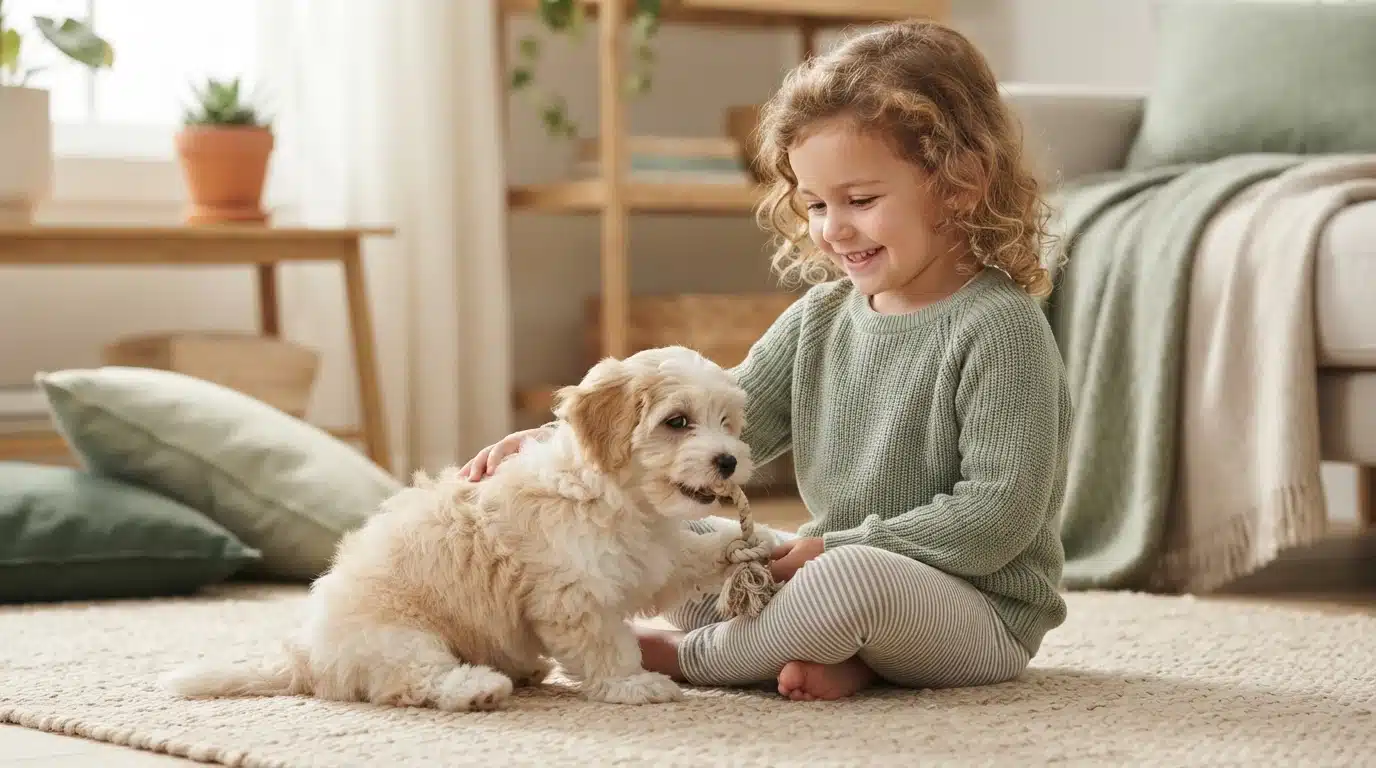
It is 6:40 on a Saturday morning. The coffee is not made, a Havapoo puppy is climbing the toddler, and a third grader reads the newspaper aloud on the couch. A family-raised puppy has seen this exact scene before. A kennel-raised puppy likely has not. That difference is the strongest argument for family raised puppies for kids, and honestly, it is the only part research clearly supports.
Most families searching for family raised puppies for sale near me hit marketing claims instead of evidence, usually right as their youngest starts walking. So this piece separates fact from sales pitch: what the rearing environment actually predicts about a puppy around children, the safety rules that apply either way, a verification checklist, and where a home-raised program like Sage Puppies fits.
Family-Raised vs Kennel-Raised Puppies for Homes With Kids: At a Glance
| Family-raised puppies | Kennel-raised puppies | |
|---|---|---|
| Daily environment | Indoors in a family home, amid household noise, floors, appliances, and visitors | Whelping room, indoor run, or outdoor kennel on a breeder’s property |
| Exposure to children | Often incidental and daily, though some family programs have no young children present | Planned or limited, depending on whether visitors or family are allowed in |
| Handling and habituation | Daily hands-on handling by several household members, including children | Routine handling by staff or volunteers, often several times a day |
| Health and veterinary oversight | Records vary; typically breeder-scheduled exams plus parent health testing | Often centralized, so records may be easier to obtain in one place |
| Cost and contract terms | Often mid-range pricing plus deposit, pickup or travel, and delivery costs | Sometimes priced below home-raised programs; deposit and contract terms vary |
| Best fit for a home with kids | Families who want a puppy already habituated to household noise and everyday movement | Families comfortable with an intensive socialization plan at home before the puppy meets the kids |
How Family-Raised and Kennel-Raised Puppies Compare
Family-raised puppies
Family-raised puppies are whelped and reared inside a breeder’s home, so household noise, appliances, and everyday movement are part of daily life from day one. This route suits families looking for family raised puppies for kids, especially ones already used to children and busy rooms. Some family programs have no young kids present, so ask.
Kennel-raised puppies
Kennel-raised puppies grow up in a whelping room, indoor run, or kennel with structured handling routines rather than incidental family contact. Records are often centralized in one place, and pricing sometimes runs below home programs. This route fits families ready to run an intensive socialization plan at home before kids meet the puppy.
Are Family-Raised Puppies Better for Homes With Kids?
Yes, family-raised puppies are often better for homes with kids, but only when the “family-raised” claim is real. A puppy who grows up around everyday household life tends to handle noise, handling, and chaos more calmly. The benefit comes from genuine exposure during the socialization window, not from a phrase on a breeder’s website.
What ‘family-raised’ means in practice, not on a website
A truly family-raised puppy is whelped and reared in a living space, not a separate kennel building. That means vacuum noise, doorbells, school-morning rush, and daily handling by adults and children under supervision. Ask the breeder where puppies sleep, who holds them, and how often. If the answer is vague, the label probably is too.
What the research actually supports
Studies on puppy development point to a sensitive period, roughly 3 to 14 weeks, when puppies learn what counts as normal. Positive exposure to people, sounds, and gentle handling during that window predicts calmer adult behavior. Research also stresses supervised interaction with children, since breeders and families both shape biting inhibition. No study shows a bloodline difference between kennel-raised and family-raised dogs; the environment does the work.
When family-raised is not the better choice
Family-raised does not automatically mean kid-ready. A busy household with no routine, no health testing on parents, and no temperament matching can produce a more anxious puppy than a clean, structured kennel with a real socialization plan. If a program uses “family-raised” as its only selling point, treat that as a claim to verify, not a guarantee. Ask about parent health testing and how each puppy is matched to a home with children.
How Early Exposure to Children Shapes a Puppy’s Temperament
Puppies raised around children learn early that small hands, high voices, and sudden movement are normal. That lesson shapes a dog for life. Family raised puppies for kids tend to start life with fewer surprises, but only when the exposure is done well.
The socialization window is short and it does not wait
A puppy’s sensitive period runs roughly 3 to 14 weeks, and it overlaps the time most puppies leave their breeder. What a puppy experiences before eight weeks matters just as much as what you do after. If the whelping room sits apart from daily family noise, that stretch of learning happens in a quiet kennel instead of a kitchen. You can still catch up, but you are working against the clock.
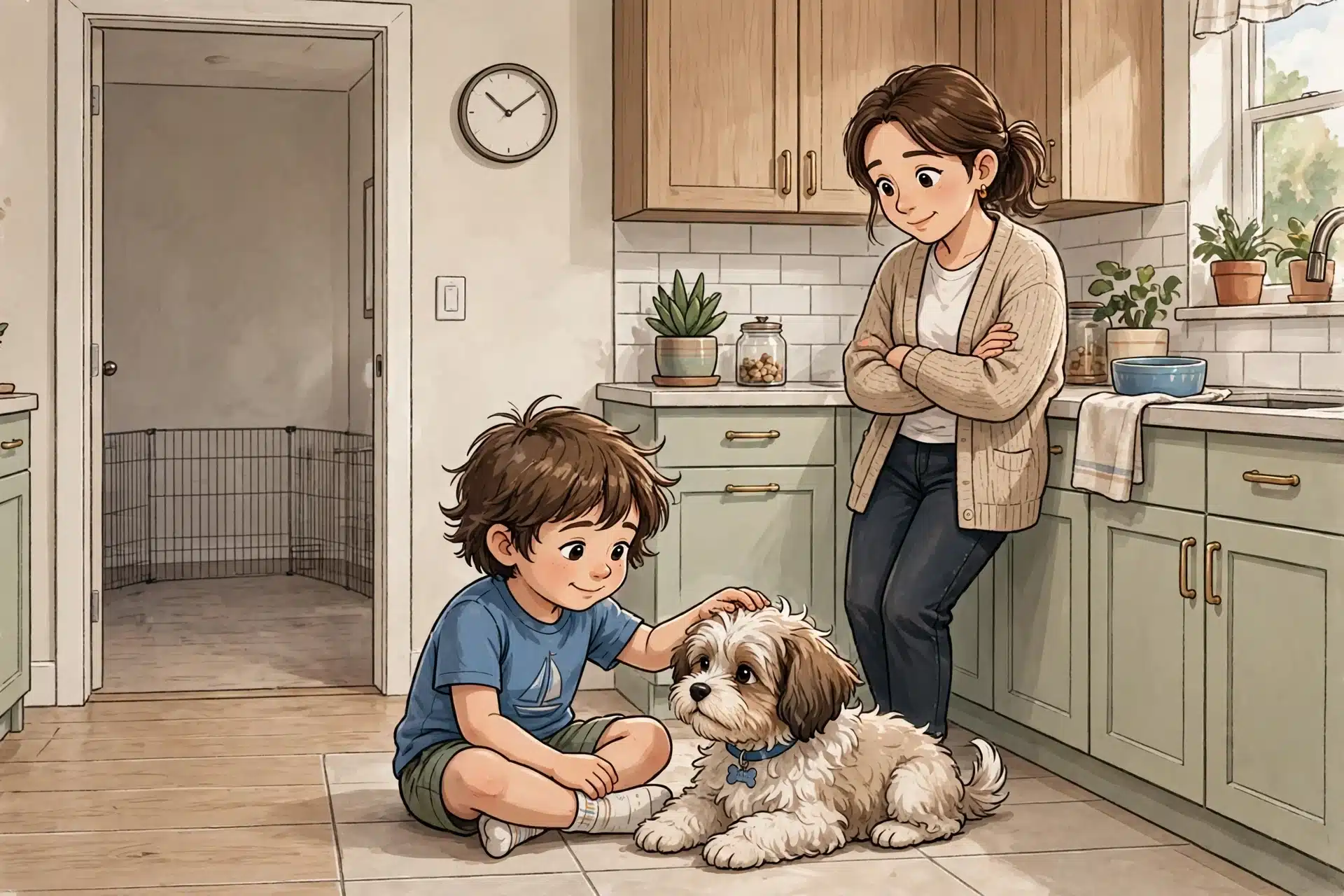
Habituation is not the same as flooding
Good exposure means calm, repeated contact. Bad exposure means overwhelming the puppy. Flooding, which is forcing a scared puppy to endure kids chasing or grabbing, teaches fear, not tolerance. Watch for these signs of healthy habituation:
- The puppy approaches children on its own and settles nearby
- It recovers fast after a loud squeal or dropped toy
- Tail and body stay loose during supervised interaction with children
A puppy that freezes, hides, or snaps needs quieter exposure, not more of it.
Structured kennel routines can still close the gap
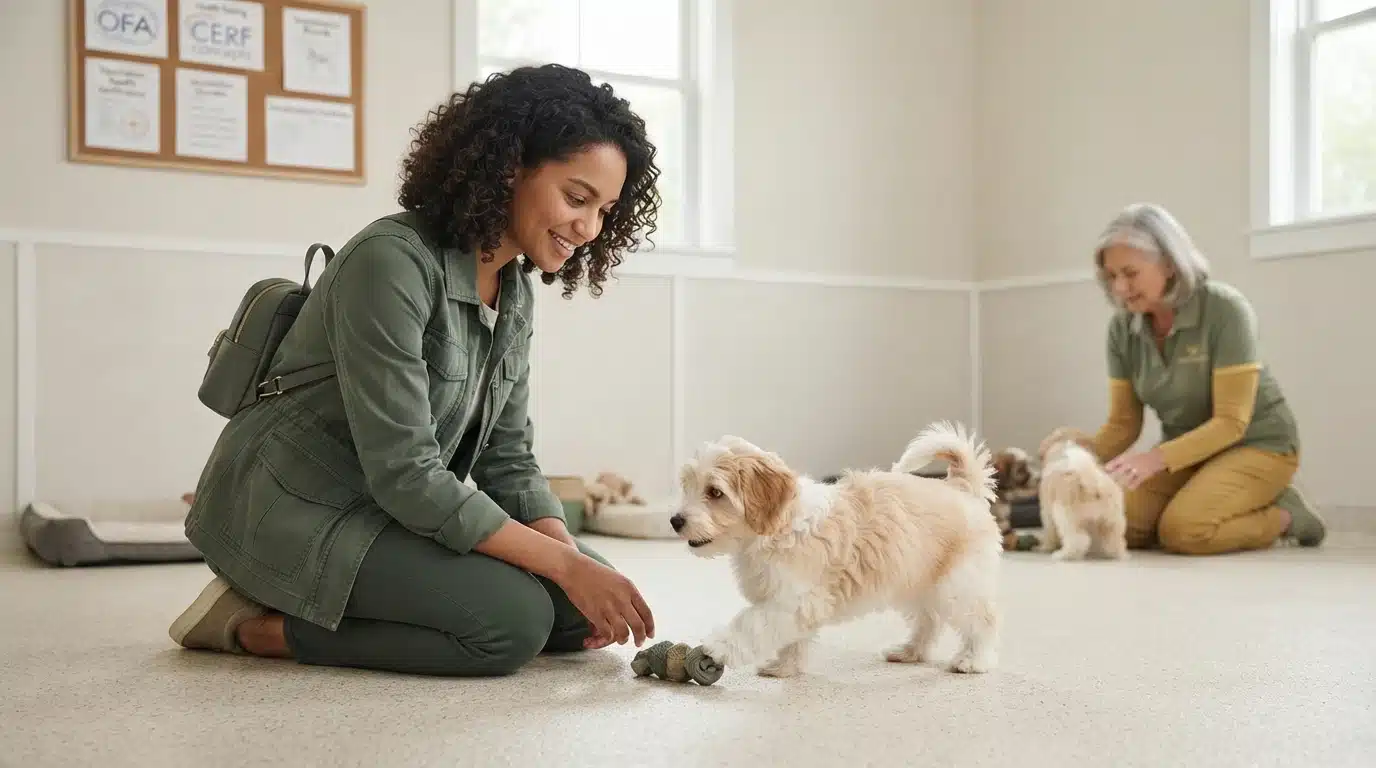
A well-run program can bridge the distance. Breeders can invite calm children to visit, play recordings of crying babies, and handle puppies daily in different rooms. Ask how each puppy spends its days before you commit a deposit. Programs that document daily handling, like the one behind Sage’s family-raised puppy approach, give you something to verify rather than a slogan.
Safety Rules That Apply No Matter Where a Puppy Was Raised
A family-raised puppy is still a puppy
A friendly start does not cancel puppy behavior. Every puppy nips, jumps, and guards food or toys sometimes, and those teeth are sharp even at eight pounds. The AVMA notes that children account for about half of the dog bites reported each year, so the first weeks home matter more than the first weeks at the breeder. Treat your puppy like a puppy, not a plush toy, from day one.
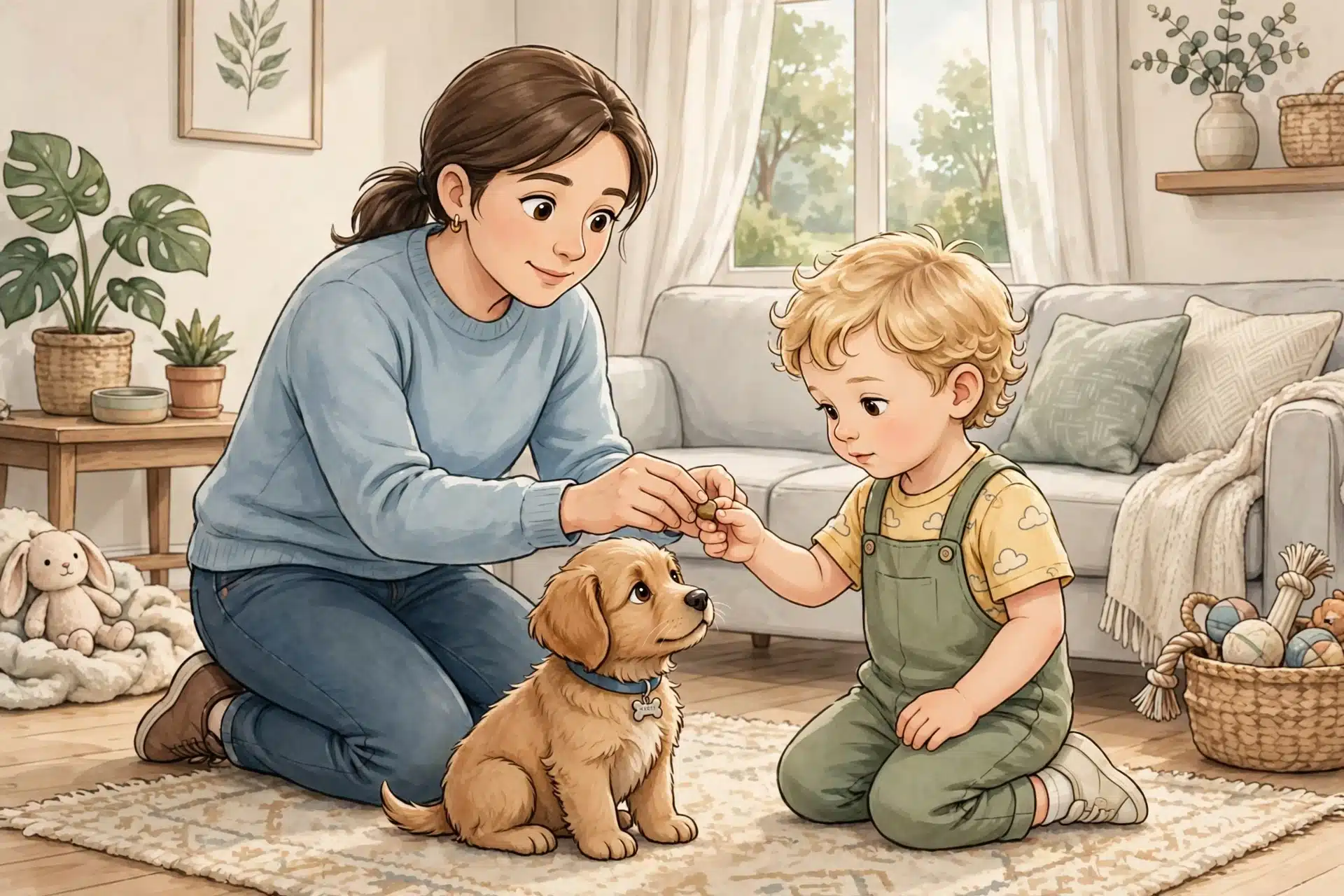
Supervised, structured interaction beats constant contact
Bite inhibition, the gentle mouth a dog learns as a puppy, develops through short, calm lessons, not hours of rough play. Set rules your child can follow: no grabbing, no sitting on the dog, no disturbing meals or sleep. Keep every early interaction supervised, because a well-meaning toddler and a tired puppy is a predictable pairing. Many bites happen with a familiar dog at home, so structure protects both of them.
Breed temperament still matters
Temperament shapes how much correction a puppy absorbs. Breeds like the Havanese, Havapoo, and Cavapoo tend toward people-focused, biddable temperaments, which helps when a child is learning dog manners. That is a tendency, not a guarantee, and matching a puppy’s energy to your household matters as much as the breed name. A calmer puppy often suits a home with a busy toddler better than the boldest one in the litter.
Evaluating a Breeder’s Home Environment
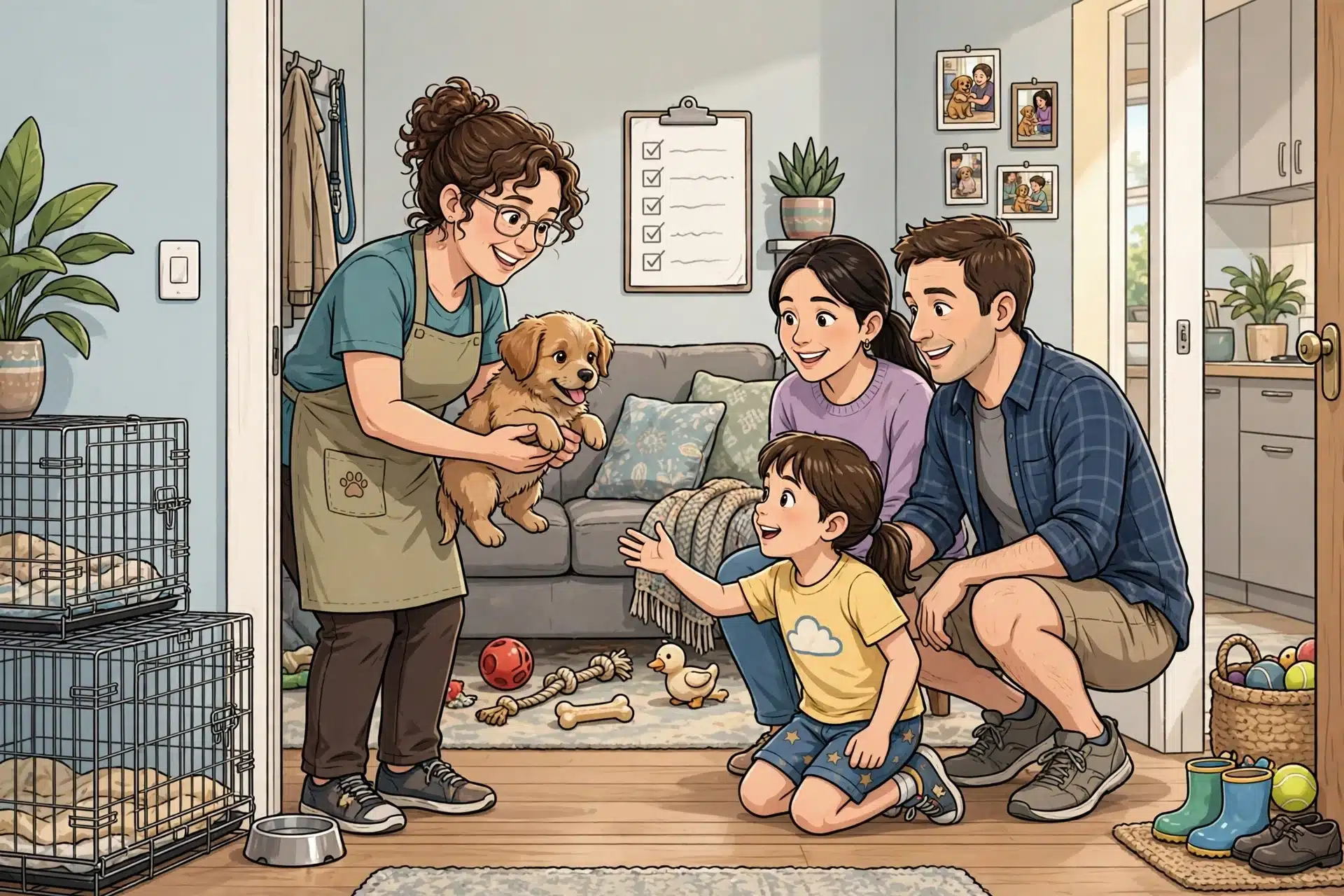
What a genuine home environment looks like
A puppy was really raised with children when the kids appear in video calls, photos, and visits, not just in the ad. Look for a living space, not a garage or barn: crates near family activity, toys under the couch, and a [puppy socialization checklist](
) the breeder follows daily.
Questions to ask before you pay a deposit
Ask these five questions in one call:
- Which rooms do the puppies live in during the day?
- How often do your children handle the puppies, and under what rules?
- Can I see a video of today’s playtime, not a highlight reel?
- Which parent dogs can I meet, and what health testing do they have?
- What happens if this puppy is not a fit for my family?
A confident breeder answers quickly and offers proof.
Documents and red flags
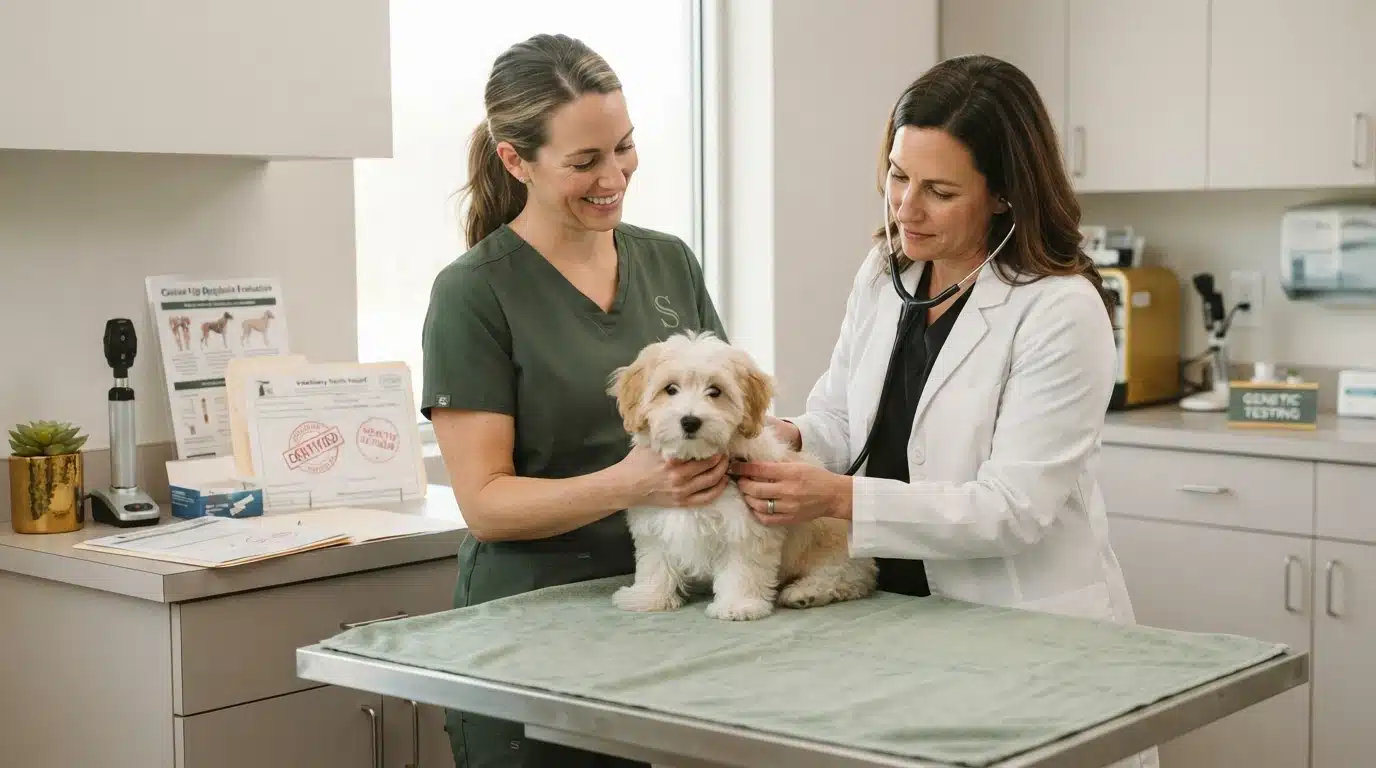
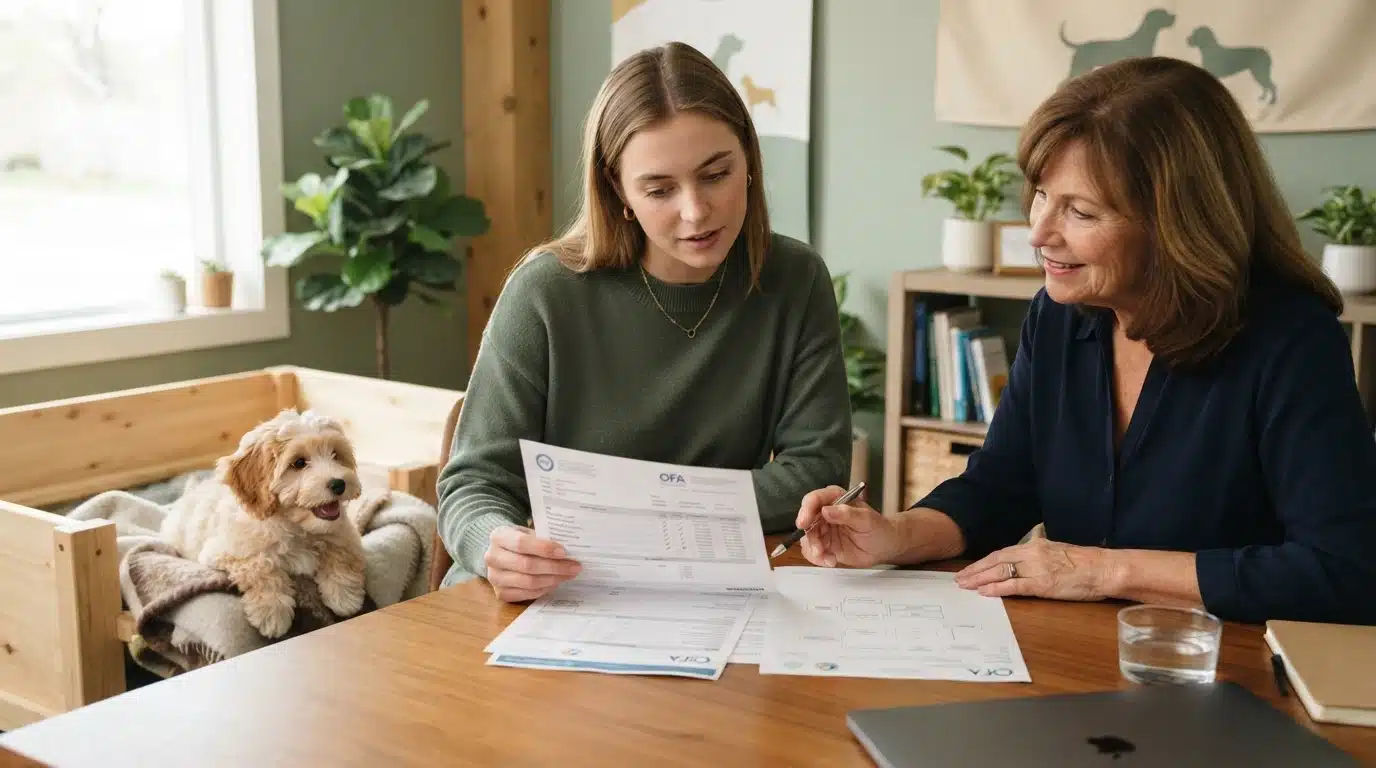
Ask for veterinary records, parent health testing results, and a written contract covering deposits and returns. Red flags include multiple litters always available, refusal to visit or video call, no questions about your home, and puppies ready “immediately” with no waiting list. Trust what you can verify, not what the listing promises.
Cost, Time, and Logistics for Families Buying a Puppy
A well-bred small-breed puppy usually costs more than the adoption fee people expect. Most boutique programs charge $3,000 to $4,500, and the final number depends on more than the breed name.

Price ranges and what changes the total
Coat color, litter size, and demand all move the price. Rare coloring or a smaller litter can add several hundred dollars. Budget for the first-year basics too: vet visits, vaccines, food, a crate, and gear often add $1,000 or more before training.
Local pickup versus delivery for families
Picking up your puppy locally lets you meet the breeder, see where the litter lives, and ask questions face to face. Ground transport or flight-nanny delivery works for distant families, but it adds cost and a longer day for the puppy, so ask exactly how the trip is handled.
Contract terms that matter to families
Read the contract before you pay a deposit. Look for a health guarantee window, return terms if the match fails, spay or neuter expectations, and any delivery promises in writing. A breeder who answers these plainly is easier to trust than one who promises more than a contract can back.
Small-Breed Options: Havanese, Havapoo, and Cavapoo From a Home Program
For families with young children, the strongest small-breed candidates are typically:
- Havanese: sturdy, people-focused, and famously tolerant of busy households
- Havapoo: Havanese crossed with Poodle, often playful and quick to learn
- Cavapoo: Cavalier King Charles Spaniel crossed with Poodle, usually gentle and eager to please
A caution line: breed traits describe tendencies, not promises. A littermate can vary widely, so temperament observation matters more than the label.
A home-raised program in South Jordan, Utah
Sage Puppies breeds only these three types, raised inside a home rather than a kennel building. Puppies for families near South Jordan, Utah can be met in person, and nationwide families can arrange delivery. Because Cassie runs the program herself, you can ask exactly who handled each puppy and when. Current Havanese, Havapoo, and Cavapoo availability is listed on her available-puppies page.
How the guardian program works
Some breeding dogs live with approved local guardian households instead of at Cassie’s home. Placements involve a $200 fee, a smoke-free home requirement, and a limit of four litters, with breeding no earlier than about 1½ to 2 years of age. Guardians bring the dog to Cassie for health testing, vet visits, and the weeks around whelping and puppy care. It is not a free puppy or a rescue placement; the terms are specific.
How the program fits a family with children
Small size helps around kids, but supervision still decides safety. Ask which puppies have already met gentle, calm children, and match energy level to your household. When researching family raised puppies for sale near you, compare how each program socializes litters during the 3-to-14-week window, then observe the puppies yourself before deciding.
Which Should You Choose: Family-Raised or Kennel-Raised?
Neither setting is automatically better. What matters is how the puppies are raised during the sensitive 3-to-14-week window, and whether the breeder can prove it. Match the setting to your family, your questions, and your patience for vetting.
Choose family-raised when
You want a puppy that has already lived around noise, kids, and daily household chaos. Puppies raised in a living space, not a separate whelping room, meet more ordinary experiences early: vacuum cleaners, doorbells, toddlers on the move. That head start often means less startle and faster settling in your home. Ask for photos and video of the puppies in the actual living area, and ask which household members handle the litter daily.
Choose kennel-raised when
A clean, structured kennel can work well if the breeder runs a deliberate socialization plan anyway. Some programs rotate puppies through new surfaces, sounds, and handling even though the litter lives apart from the family. Kennels also make parent health testing and veterinary records easy to inspect in person. The risk is not the building. It is a breeder who calls the setup a bonus and skips the enrichment work.
The four questions that settle it
Ask these of any breeder, home or kennel:
- Where do the puppies sleep and play? Living space or separate building?
- Who handles them, and how often, before 8 weeks?
- What did you expose them to, and when?
- Can I see the parents’ health testing?
Honest answers beat a pretty setting. When you are ready, a thoughtful puppy application can help you sort these questions with a breeder before you commit.

A family-raised puppy can be a great fit for kids, but only if the claim checks out. If you want a small companion raised with care, see Sage Puppies’ available litters at Sage Puppies, or start the application to ask questions first.
Frequently Asked Questions
Q1: Are family-raised puppies better suited to homes with children?
Often, yes, but only when the claim is real. A puppy genuinely raised in a living space has already met noise, handling, and daily chaos, so it tends to settle faster around kids. Verify the setup before trusting the label.
Q2: What should families ask a puppy breeder before paying a deposit?
Ask five things:
- Which rooms do the puppies live in?
- How often do children handle them, and under what rules?
- Can I see today’s playtime video?
- What parent health testing exists?
- What happens if the puppy is not a fit?
Q3: At what age can my child safely interact with a new puppy?
From day one, but always supervised and in short, calm sessions. Set rules: no grabbing, no sitting on the dog, no disturbing meals or sleep. A toddler and a tired puppy need an adult within reach.
Q4: Can a kennel-raised puppy still do well with kids?
Yes. A clean, structured kennel with a deliberate socialization plan, new sounds, surfaces, and daily handling, can match a home setting. You will just need to run that plan consistently during your puppy’s first weeks.
Q5: What signs show a puppy was genuinely raised around children?
Look for children appearing in live video calls and photos, not just ads. The puppy should approach kids on its own, recover quickly from loud noises, and stay loose-bodied during interaction.
Q6: How much should I budget for a family-raised small-breed puppy?
Most boutique programs charge $3,000 to $4,500. Add $1,000 or more for first-year basics like vet visits, vaccines, food, a crate, and gear, plus delivery or pickup costs if you live out of state.
Conclusion
Family-raised puppies are often better for homes with kids, but only when the claim is real. What matters is genuine exposure during the 3-to-14-week socialization window, daily handling by adults and supervised children, parent health testing, and a breeder who answers questions with proof instead of slogans. A structured kennel with a real socialization plan can match a home setting, so judge the rearing, not the label. Watch temperament, set interaction rules from day one, and budget for the full first-year cost before you pay a puppy deposit. Verify every “family-raised” claim, then choose the puppy that truly fits your household.