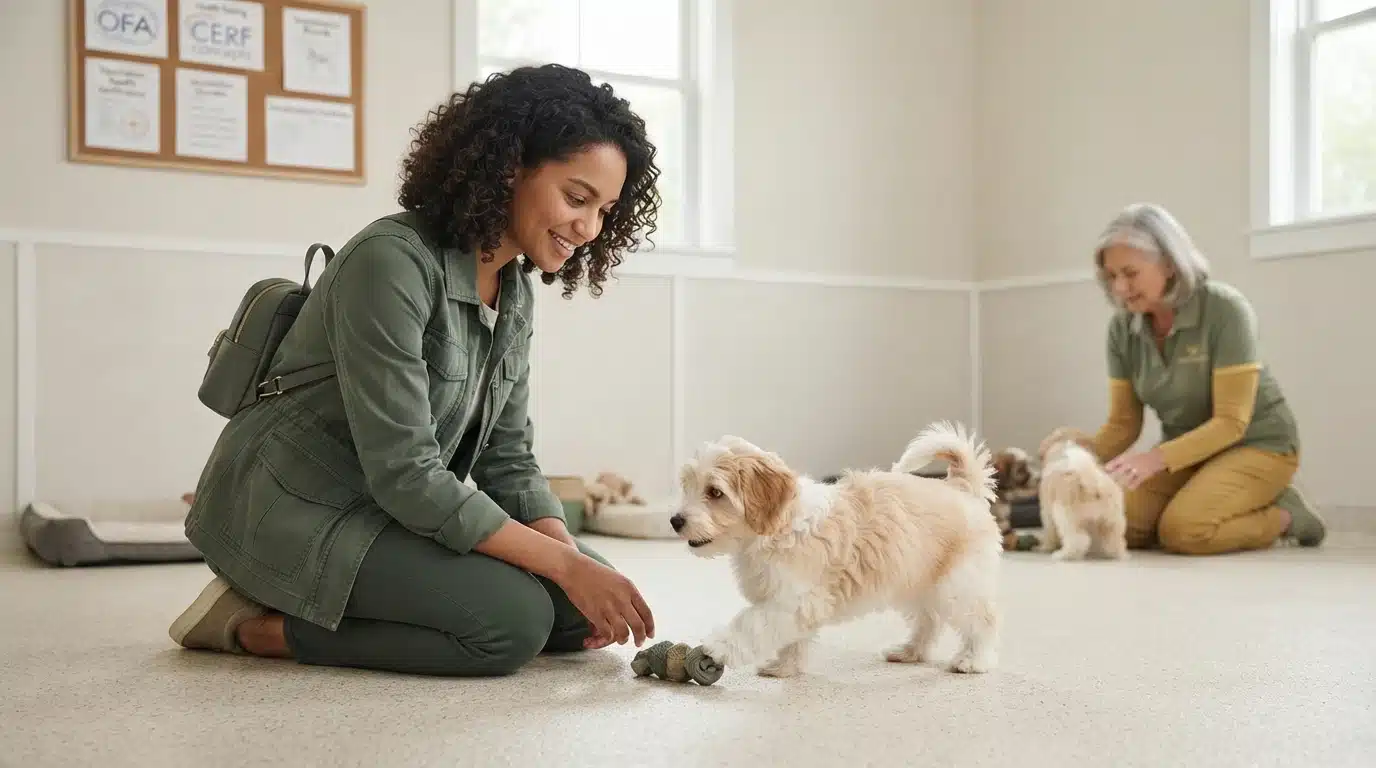
Quick Summary: To spot a Utah puppy reseller, verify that the puppy, mother, and litter location are real through an address check, local licensing, and a live video tour. Watch for warning signs such as constant availability, vague health records, neutral-location pickups, urgent deposit requests, and refusal to answer questions about the puppy’s first eight weeks. A written contract with the seller’s identity, health records, refund terms, and take-back policy is essential because Utah has no puppy lemon law, and programs such as Sage Puppies emphasize transparency before payment.
The listing says the Havapoo litter is in South Jordan, Utah. The photos look right, and the price sits a full thousand dollars below what you expected to pay. That mix is one of the clearest Utah puppy reseller warning signs: the puppy is real somewhere, but the person selling it is a middleman, not the breeder who raised the litter. Resellers, sometimes called puppy brokers, buy litters or collect deposits and pass the puppy along, so you never meet the person who knows the parents, the health history, or the first eight weeks. This guide shows how to spot that setup before money changes hands. You will learn the puppy reseller vs breeder difference, how to confirm a puppy is physically in Utah, which questions and paperwork separate a real Havanese, Havapoo, or Cavapoo breeder from a forwarder, and a step-by-step way to verify every claim. Sage Puppies raises these breeds in South Jordan, and we built this checklist from what buyers actually run into.
Step 1: Know the Difference Between a Breeder, a Backyard Seller, and a Reseller
Most Utah puppy listings fall into one of three buckets, and mixing them up is how buyers overpay. A breeder raises puppies from dogs they own and care for. A backyard seller breeds casually, often with little health testing. A reseller does something different again: they buy puppies from someone else and sell them to you.
What a Utah puppy reseller actually does
A reseller, sometimes called a puppy broker, does not breed anything. They source puppies, often from out-of-state kennels or classified ads, then advertise them as “available in Utah.” The puppy may arrive on a transport van days after you pay. The reseller never saw the parents, cannot describe the first eight weeks of the puppy’s life, and has no vet history beyond what the shipper handed over. That gap matters. If a puppy gets sick two days later, the person you paid may point at paperwork from a kennel you cannot contact.
Ask one simple question early: “Who owns the mother, and can I meet her?” A real breeder answers easily. A reseller stalls, redirects you to a website, or says the mother is “back east.” Some listings hide this on purpose, so verify a puppy is physically in Utah before any money changes hands. You can walk through the full vetting process in our guide to choosing a puppy in Utah.
Why small-breed puppies pull resellers into Utah
Havanese, Havapoos, and Cavapoos sell fast in Utah because demand outpaces local litters. Small breeds produce only two to five puppies per litter, so a single responsible program cannot stock every search result. Resellers fill that gap with imported stock and premium pricing. The buyer pays broker markup for a puppy whose early care nobody can vouch for.
Step 2: Verify the Puppy Is Physically in Utah
A listing that says “Utah” tells you nothing. Puppies shipped in from out-of-state mills get relabeled as local every day. Before you send a deposit, confirm the puppy you are buying was actually born and raised here. What proof shows a puppy is really located in Utah?
- A street address for the breeder’s home or facility, not a P.O. box
- A city or county breeder or kennel license matching that address
- A USDA license listing, when the seller qualifies for one
- A live video tour of the puppy where it lives, with the same dog on camera
Ask for the physical address and then hold them to it
Start simple. Ask the seller for the exact address where the puppy lives. A real breeder answers in one sentence, because they are proud of their setup. A reseller stalls, offers a general city, or suggests a meeting spot instead. Then check the address on a map and use it in every later step. If the paperwork, license, or vet records list a different address, ask why. One mismatch can be a typo. Two or more are a pattern, and you should walk away. Our guide to choosing a puppy in Utah covers how this fits into the full buying process.
Run the license and registration lookups yourself
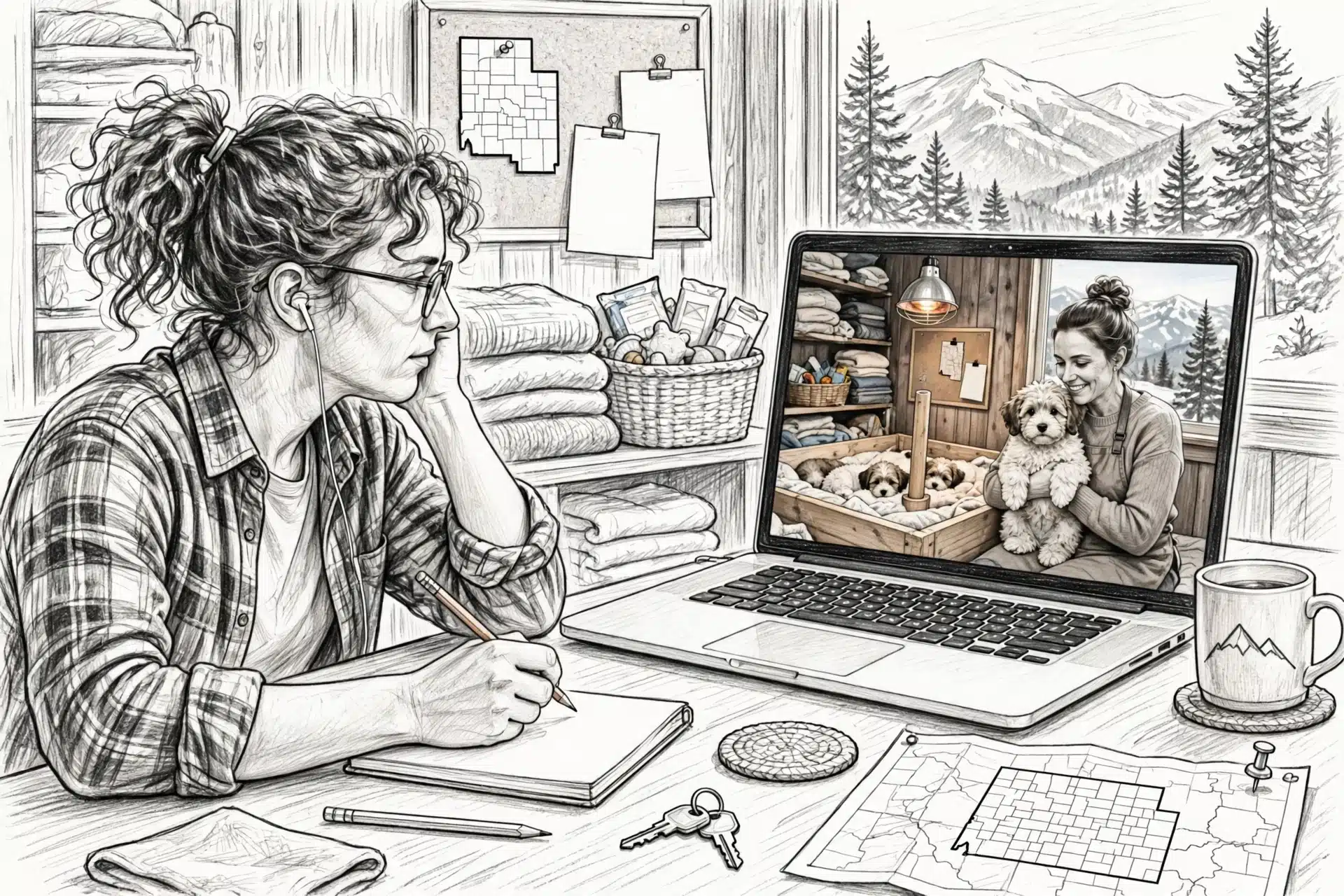
Do not take a screenshot as proof. Open the USDA Animal Care Public Search Tool and search the seller’s name and Utah. Breeders with more than four breeding females who sell sight unseen need a federal license, so many small Utah programs will not appear there, and that alone is not a red flag. Also contact the city or county animal services office for the seller’s area. For example, Salt Lake County Animal Services handles licensing locally and can tell you whether a kennel permit exists at that address.
Why pickup at a neutral location signals a broker
Real breeders want you to visit where the puppies were raised, meet the mother, and see the litter. A broker cannot offer that, so they propose a parking lot, a rest stop, or a third-party “delivery partner.” That arrangement means the puppy traveled to them, sometimes from another state entirely. Insist on a visit to the address from Step 1 or a live video call at that same address. Anyone raising puppies honestly will agree without hesitation.
Step 3: Run the Utah Puppy Reseller Warning Signs Screen
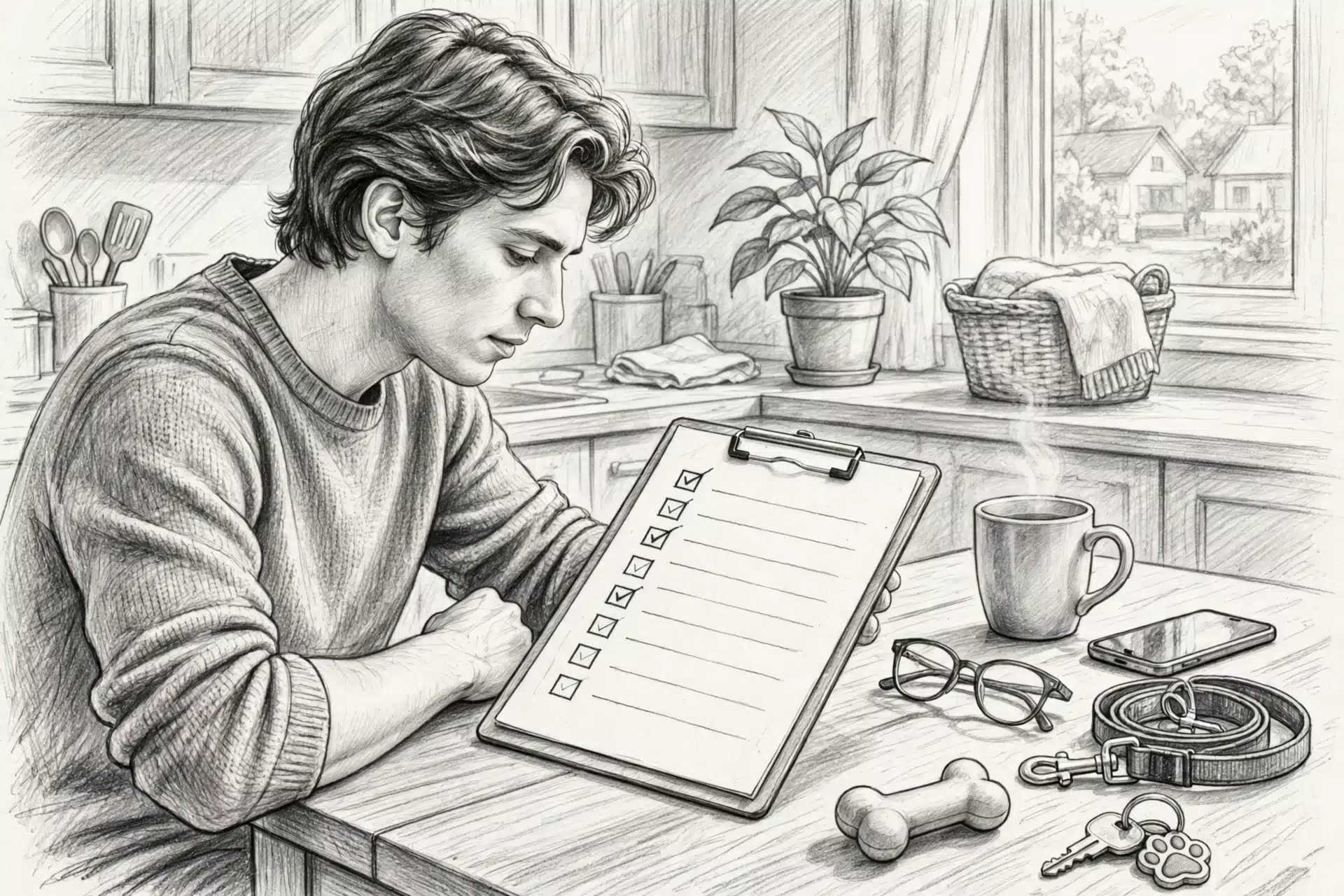
You can spot puppy resellers in Utah by watching for a pattern, not a single slip. Resellers buy litters from out-of-state kennels, then resell the pups locally as if they raised them. Run each seller against these eight signs:
- No mother dog on site, or a “mom lives elsewhere” excuse
- Multiple unrelated breeds always “available now”
- Puppies held in a kennel, garage, or storage unit rather than a home
- No vet records, or records with a different kennel’s name
- Will not let you visit or join a live video call on request
- Selling many litters at once, every week
- No written contract or health record you can keep
- Fresh listings across several sites with rotating phone numbers
Why price pressure and payment pressure travel together
Resellers make money on turnover, so their tactics push you to decide fast. Watch for deposits demanded through apps like Zelle or gift cards, “someone else is coming at 5” scripts, and fees that appear only after you commit. A real breeder answers price questions in writing and explains what the fee covers. If a seller quotes a low price, then adds delivery, paperwork, and “vet prep” charges, you are looking at a reseller markup, not a family program. Slow down whenever someone ties your answer to a clock. Some legitimate programs charge more up front; Sage Puppies, for example, prices openly instead of layering surprise fees. The point is not the number but the honesty around it.
Questions a real breeder will welcome
Ask four things and judge the response, not just the words. Who is the mother, and can I meet her? Which vet has seen these puppies, and when? Where was each puppy born and raised? What happens if I cannot keep the dog later? Breeders who raise the litter love these questions. Resellers stall, deflect to photos, or get defensive. For more on sorting sellers before you ever reach this stage, see this guide to choosing a puppy in Utah.
Step 4: Verify the People and the Home on a Live Call
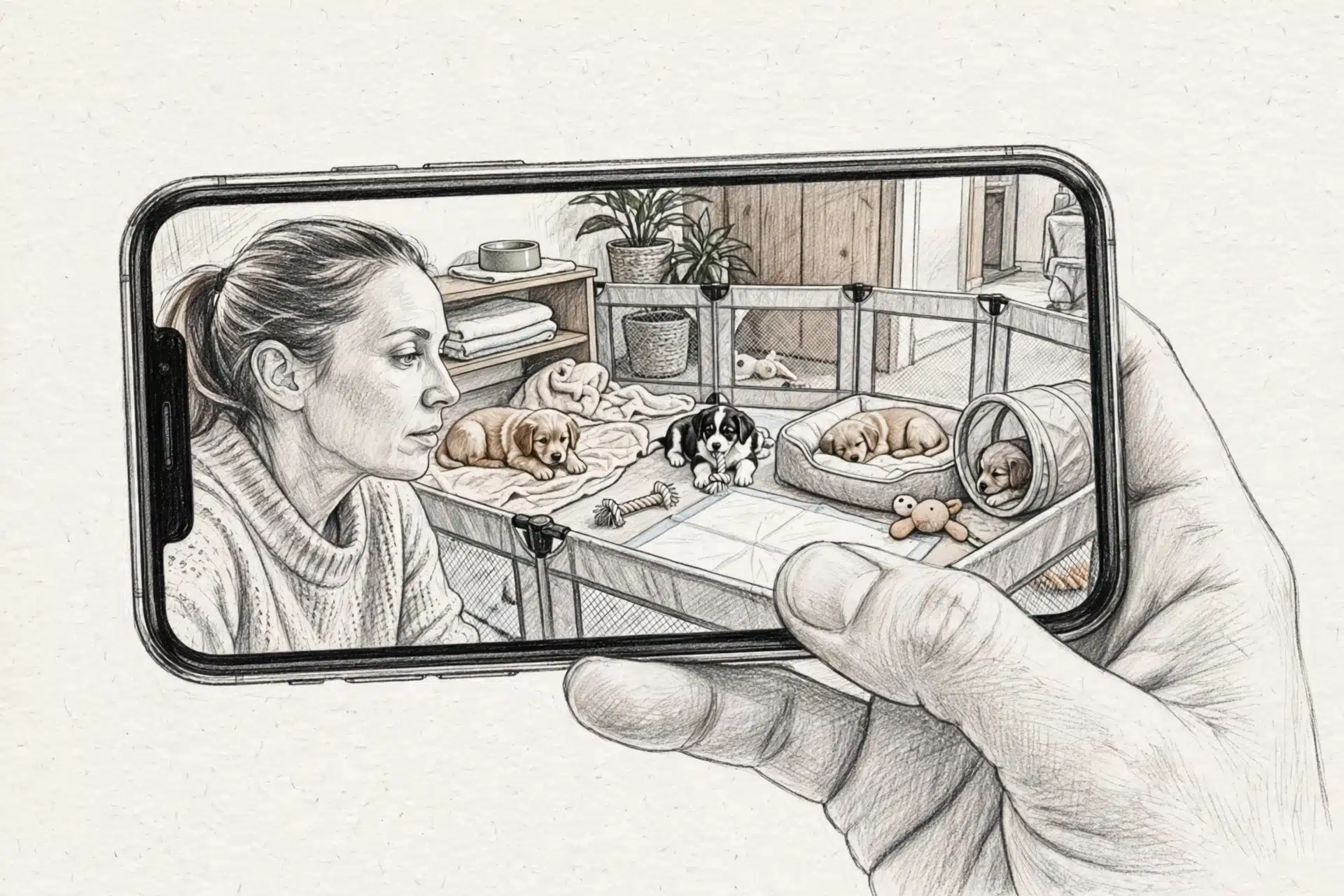
A seller who refuses a live video call is telling you something. Photos and short clips are easy to steal, so insist on a real-time call where you control the camera requests. Ask the seller to walk through the space where the puppies actually live and to hold the puppy you would receive. This is the fastest way to confirm the puppy is really where they say it is.
What to ask for on camera
Treat the call like an inspection. A legitimate seller expects it and walks you through willingly.
- The puppy itself, held up close, so you can check eyes, coat, breathing and movement
- The mother, or an honest reason she is not there (some programs use a stud dog elsewhere)
- The living space: whelping area, play area, and where puppies sleep
- Proof of location, like the puppy near a window with a Utah address visible
- Spontaneous angles: ask them to pan the room on your request, not just show a prepared spot
If the video keeps dropping, the lighting is always bad, or they push you to a “quick deposit” instead, treat that as a red flag. Serious programs, including small Utah operations like Sage Puppies, build a call into the matching process anyway, so a refusal has no good excuse.
Telling a home program apart from a facility
Most small companion breeds in Utah are raised in homes, and that is fine. A good home program still shows a clean, safe, puppy-proofed space with real enrichment: toys, play surfaces, and puppies handled daily by family members.
A reseller on a call looks different. The puppies are often in a crate, a garage, or a nondescript room with no mother present and no story about the litter. Ask where the puppy was born and who cared for it during the first eight weeks. Vague answers, or a puppy “just arrived” from somewhere else, point to a broker moving inventory.
One clean sign of a true home program: the person on camera can describe each puppy’s personality without reading from notes, because they have actually lived with the litter. Ask which puppy is boldest and which one shadows the mom. Real answers come from daily contact, not a sales script.
Step 5: Read the Paperwork Without Being Fooled by It
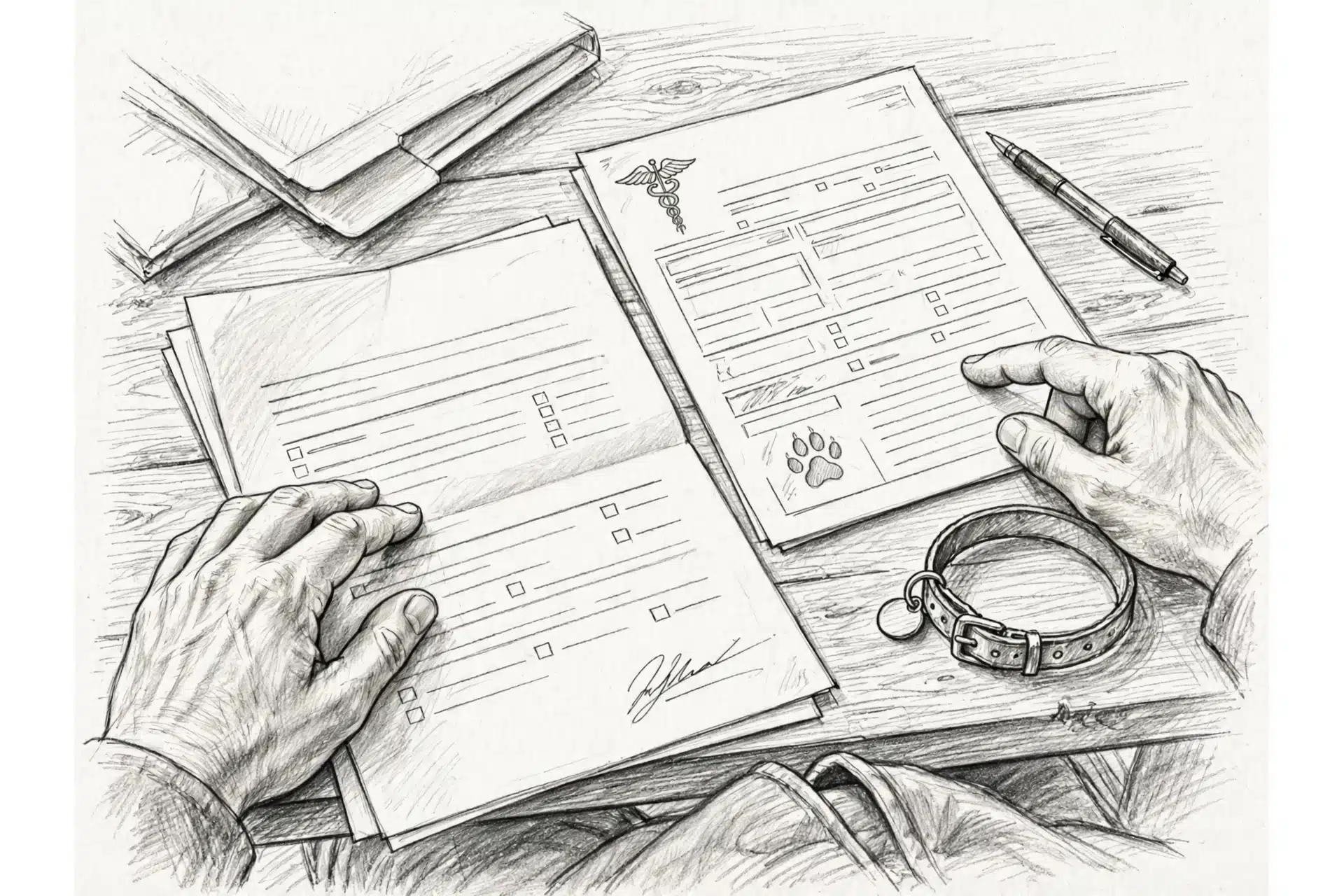
Paperwork proves nothing by itself. Resellers print health records, registration papers, and “guarantees” that look official but describe a puppy they never examined. The trick is knowing which documents carry real information and which ones exist only to fill a folder.
The documents worth demanding and the ones that are decoration
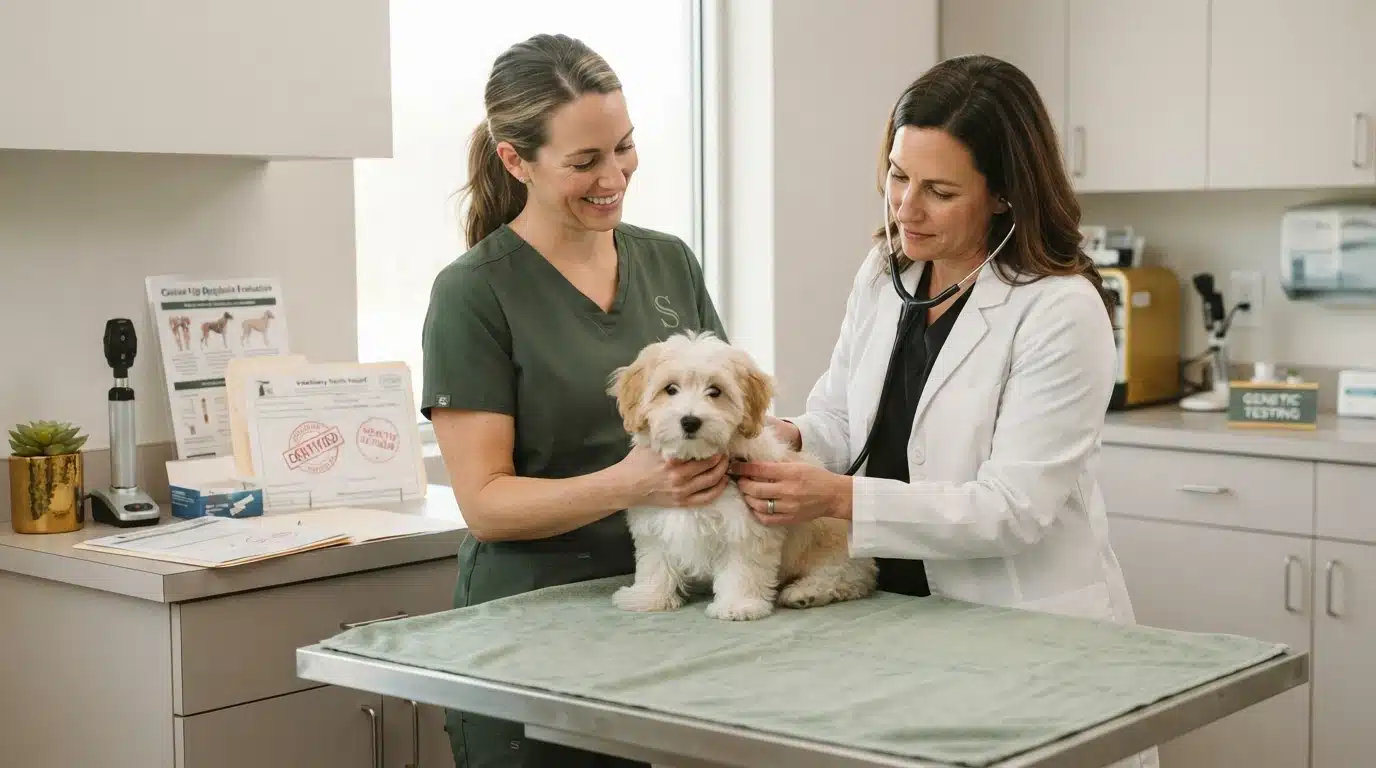
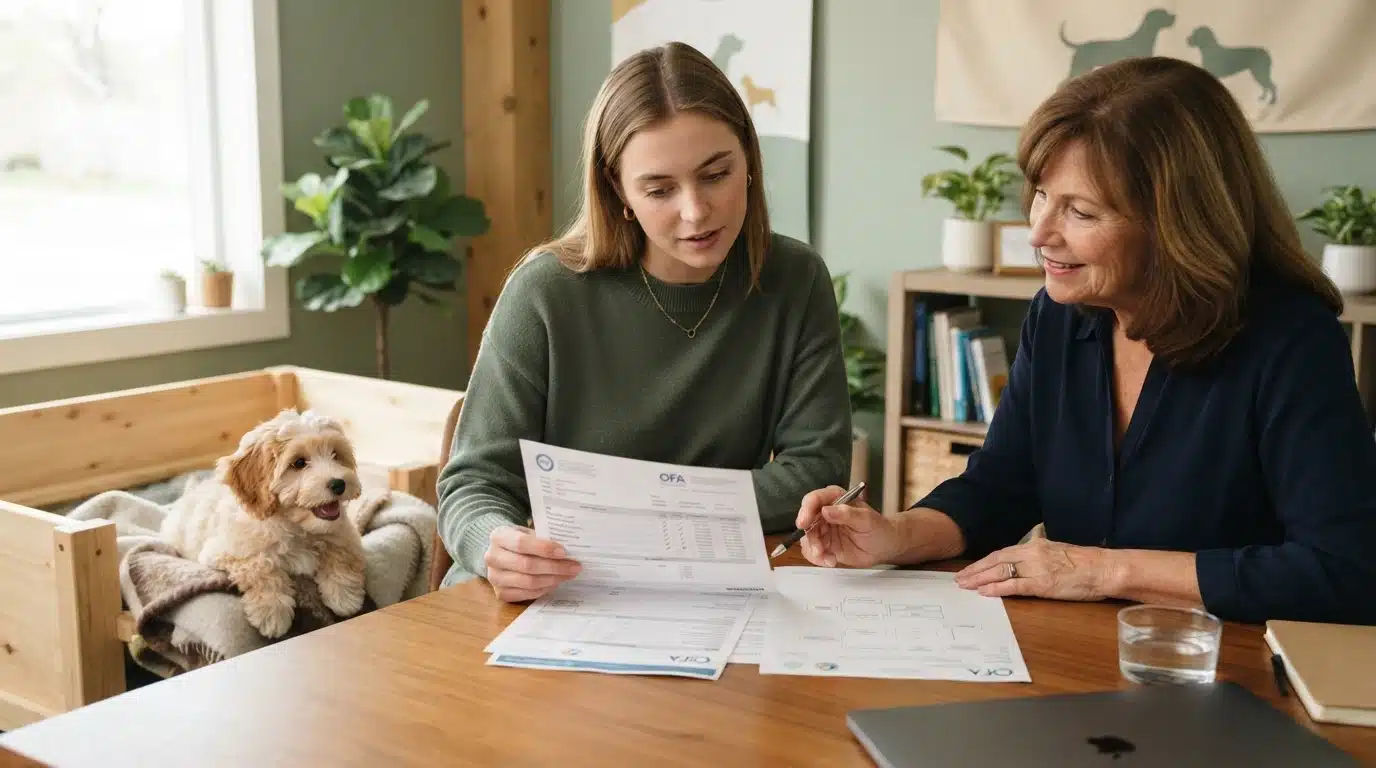
Ask for documents tied to this specific puppy: a vet exam record dated within the last few weeks, vaccination and deworming dates with product names, the dam and sire listed by name, and parent health test results you can match to the registry. A real breeder hands these over without hesitation and lets you call their vet.
Decorations are easy to spot. Generic certificates with no puppy name, laminated “champion bloodline” cards, a health record copied from a sibling, or registration papers mailed after pickup all point to a reseller working from a stack of forms. If every litter from the seller has the same vet clinic name but the clinic cannot confirm the visit, walk away.
Our guide to breeder contracts and records shows which lines matter most when you compare litters.
Contract terms that protect you in Utah
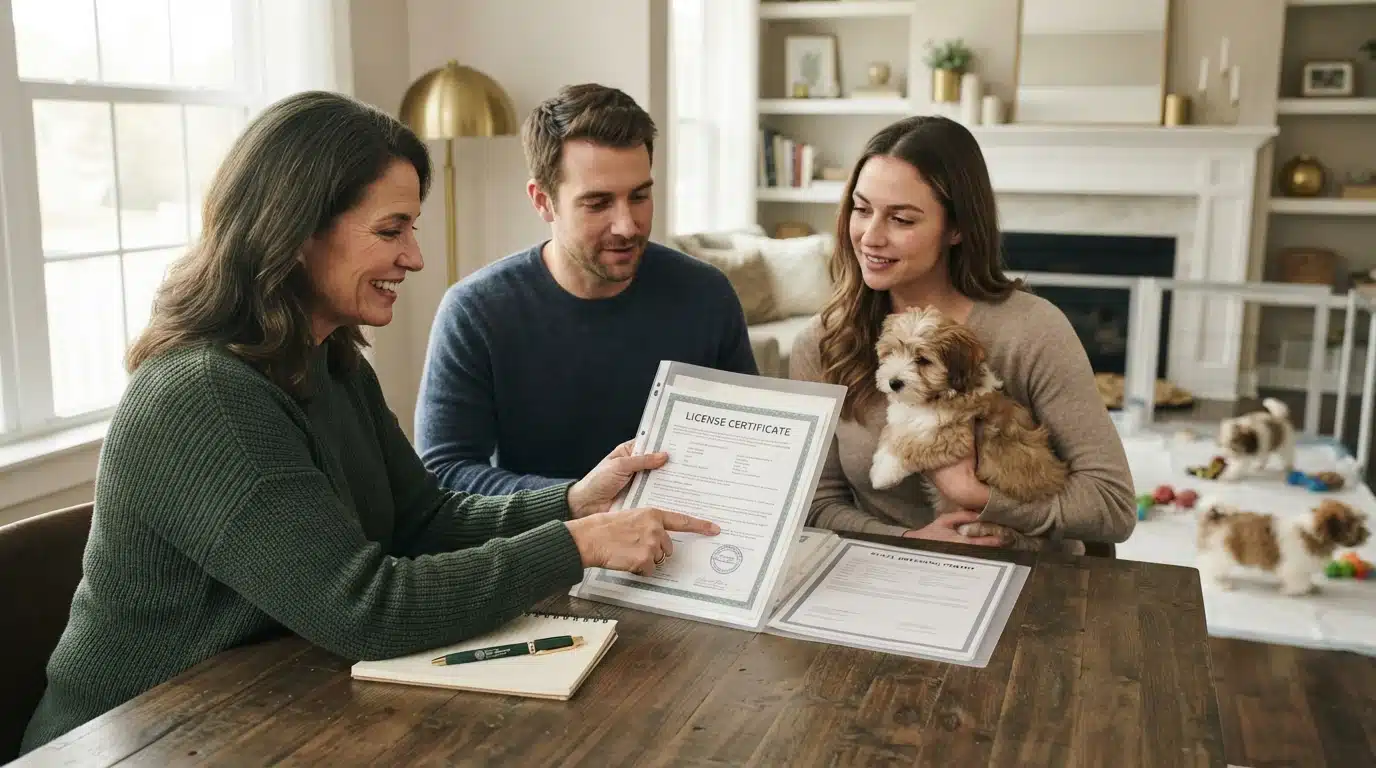
So what should a Utah puppy contract include? Look for these clauses before you pay:
- Full names, address, and signature of the actual seller, not a P.O. box or an app handle
- Return and refund terms if a vet finds a serious illness or congenital defect within a set window
- A written health record attached and signed at pickup
- Take-back language, meaning the seller takes the dog back at any age instead of letting it land in a shelter
- The exact price and what it covers, so no fees appear after you commit
One more thing. Utah has no puppy lemon law of its own, and only about 22 states have any pet purchaser protection act, so your contract is the main safety net. Write remedies in, get signatures, and keep a copy.
Step 6: Compare the Working Relationship Before You Pay
A breeder’s paperwork tells you who they are. A reseller’s paperwork tells you who they pretend to be. Compare how each one works with you, not just what they charge.
Application, waitlist, and reference signals
A real breeder asks about you first. Expect an application covering your home, schedule, and experience with dogs, plus questions about kids or other pets. Resellers skip this because their goal is a fast sale, not the right home.
Ask how the waitlist works. A breeder can tell you which litter your puppy would come from, when the dam was bred, and roughly when pups go home. Vague answers like “we always have puppies available” point to a broker pulling stock from multiple sources.
Then ask for references from families who bought in the last year or two. A confident breeder connects you. If someone stalls, offers only recent five-star texts, or says privacy rules forbid it, treat that as a flag and look elsewhere.
Trustworthy programs of any size, including ours, put the application and matching steps in writing before any money moves.
Build a total cost sheet before you compare offers
Price tags mislead unless you list everything. Before you compare two breeders, build a simple sheet with the same columns for each one:
| Cost item | Breeder A | Breeder B |
|---|---|---|
| Puppy price | ||
| Deposit and refund terms | ||
| Delivery or pickup travel | ||
| Spay or neuter requirements | ||
| Included vet checks and vaccines | ||
| Health guarantee length and limits | ||
| Starter supplies included |
Watch for fees that appear only after you commit, a pattern the earlier scam warnings flagged. A small breed puppy total cost also includes food, grooming, and vet care for years, so a slightly higher price with stronger records and support often wins. Some programs, such as the reservation process page, spell out each step and payment upfront, which makes this comparison easy.

If the red flags in this guide made you want a breeder who does it right from the start, meet Sage Puppies. Cassie Milar raises Havanese, Havapoo, and Cavapoo puppies in South Jordan, Utah, and walks every family through a clear application and matching process. Visit the site, review the application, and see exactly how a transparent program works.
Frequently Asked Questions
Q1: How can you spot puppy resellers in Utah?
Run the eight-warning-sign screen: no mother on site, many unrelated breeds, no vet records, refusal of visits or video calls, constant fresh litters, app-based deposits, and rotating listings. One slip may be noise, but a pattern points to a broker.
Q2: Do I need a USDA license to prove a breeder is legitimate?
No. Small home programs with few breeding females often fall under the threshold. Ask for a city or county kennel permit instead, and treat a missing federal listing as neutral.
Q3: What questions should I ask before paying a deposit?
Ask who owns the mother, which vet has seen the litter, where the puppy was born, and what the return terms are. Breeders answer directly; resellers stall or redirect you to photos.
Q4: Is buying sight unseen ever safe?
Only with a live video call where you control the camera requests, see the living space, and match paperwork to that puppy. Skip any seller who pushes a quick deposit instead.
Q5: What protections do I have if Utah has no puppy lemon law?
Your contract is the safety net. Get seller identity, refund terms, take-back language, and the itemized price in writing, then keep signed copies.
Q6: How do deposits with puppy resellers turn into scams?
Pressure plus payment apps. Zelle requests, gift cards, and “someone else is coming” scripts are classic puppy deposit scam moves, since these payments are hard to reverse.
Conclusion
Telling a real breeder from a reseller comes down to one pattern: can the seller show you the puppy, the mother, and the address where the litter lives? Run the eight warning signs, ask who owns the dam, verify the puppy is physically in Utah through licenses and a live video call, then match every paper to that specific puppy. Since Utah has no puppy lemon law, your written contract is the main protection. Slow down whenever price or payment pressure pushes you to decide fast. Havanese, Havapoo, and Cavapoo buyers who follow this order in Utah will almost always end up with the breeder who actually raised the litter, not a middleman moving inventory.