Quick Summary: Choose a Montana ranch dog by its job first, not by acreage alone, since herding, guarding, and companion roles demand very different care. The guide ranks herding breeds like Australian Shepherds, Cattle Dogs, and Border Collies for stock work, guardian breeds like Great Pyrenees, Anatolian Shepherds, and Akbash for livestock protection, and small companions like Havanese, Havapoo, and Cavapoo for family life. Open space never replaces training, boundaries, or supervision, and breed tendencies are just starting points. For families wanting a house dog rather than a ranch hand, Sage Puppies raises those small companion breeds with health-tested parents and nationwide delivery.
A dog on a Montana ranch might be a devoted family companion, a trained stock dog, or a livestock guardian. Those are very different jobs, and they call for different breeds, training, and daily routines. Many lists of Montana puppies treat open land as a fit for every dog, but a high-drive herder and a small companion puppy need different care, boundaries, and space to thrive. This guide compares seven Montana dog breeds by their likely ranch role, family fit, and practical demands, and it keeps a clear line between moving livestock and simply living well on a rural property. We ranked the ranch dogs breeds by working purpose and usefulness to families choosing between roles. Keep in mind that breed tendencies are starting points, not promises: the right match also depends on each dog, its lineage, your training, fencing, and experience. Choose the job first, then the puppy.
Montana Ranch Dog Breeds at a Glance
| Breed | Best for | Typical role | Activity needs | Family companion fit |
|---|---|---|---|---|
| Havanese, Havapoo, or Cavapoo | Families wanting a small, people-focused companion | Family companion, not a working ranch dog | Regular age-appropriate walks, play, training, and supervised outdoor time | Strong fit for families prepared for small-dog care and grooming |
| Australian Shepherd | Active, experienced homes seeking a herding partner | Herding and stock work | High; daily training and meaningful work | Can be a companion with sufficient activity, guidance, and training |
| Australian Cattle Dog | Experienced handlers working around cattle | Cattle herding | High; purposeful exercise, training, and mental engagement | Best for active, prepared homes familiar with herding instincts |
| Border Collie | Experienced handlers able to provide structured herding work | Herding and stock movement | Very high; ongoing mental work and physical activity | Possible with an active, training-oriented home and suitable outlets |
| Great Pyrenees | Ranchers prepared to raise and manage a livestock guardian | Livestock guarding and predator deterrence | Role-specific patrol and livestock companionship, with proper care and management | Depends on purpose, upbringing, socialization, and household management |
| Anatolian Shepherd | Experienced livestock operators seeking a guardian | Livestock guarding | Guardian work, secure boundaries, socialization, and daily care | Requires experienced ownership and careful placement |
| Akbash | Livestock operations seeking a purpose-matched guardian | Livestock guarding | Guardian role, livestock bonding, supervision, and consistent care | Best considered by experienced owners with breeder support |
What to know about ranch dogs in Montana
Montana ranches run on two very different kinds of dogs. Herding breeds move and manage stock. Livestock guardian breeds live with the sheep or cattle and protect them around the clock. Neither job is interchangeable, and neither one makes a dog automatically easy to live with.
That matters if you’re shopping for Montana puppies for a rural property. Acreage alone doesn’t turn a companion breed into a working dog. Every puppy still needs training, daily supervision, proper shelter, and safe boundaries, no matter how much open space you have.
The list below sorts it out: true working breeds first, then small companions that fit rural family life well – like the home-raised Havanese, Havapoo, and Cavapoo puppies from Sage Puppies.
1. Havanese, Havapoo, or Cavapoo
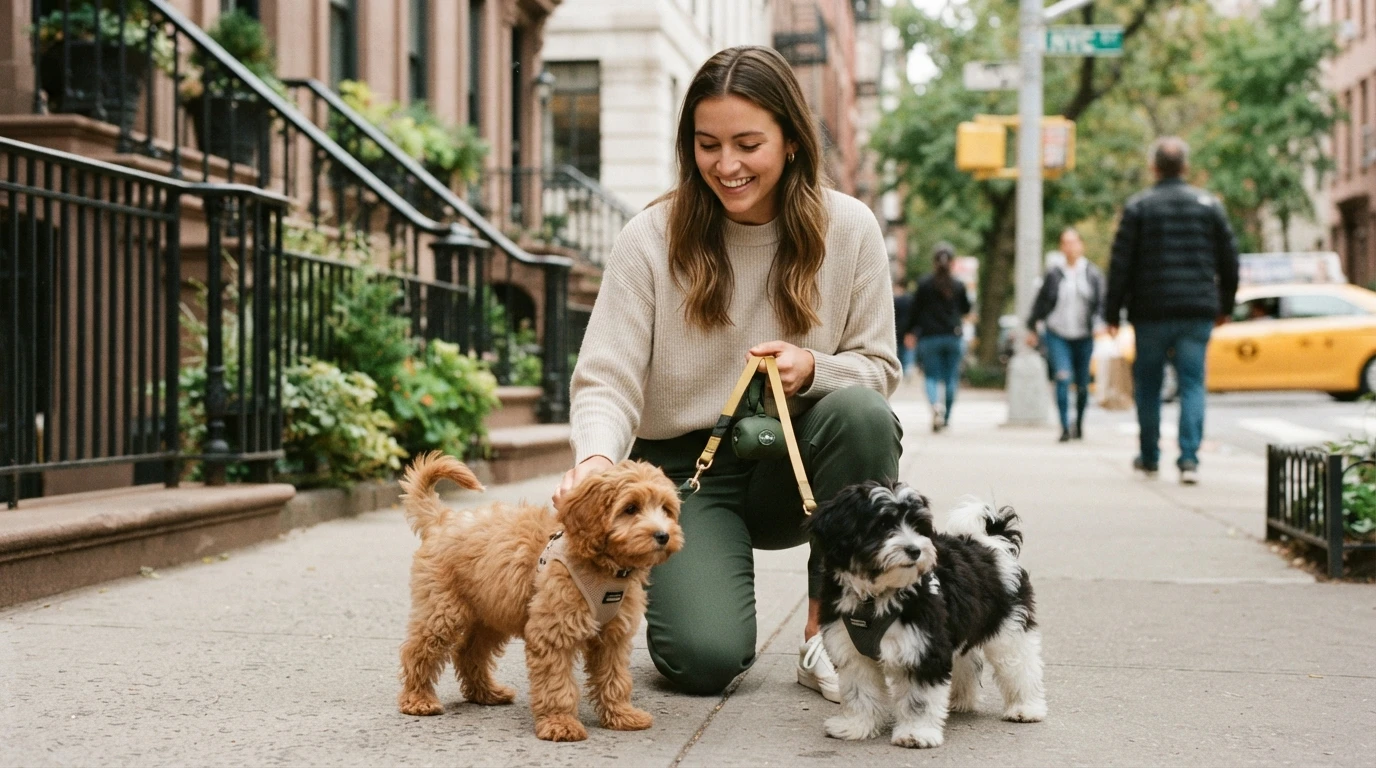
Not every family searching Montana puppies needs a dog that can move cattle. Some want a small companion who rides along, greets guests, and settles in the house after a day outside. That is the role for a Havanese, Havapoo, or Cavapoo – and it is a role worth being honest about. These are people dogs, not herders or livestock guardians, and the AKC describes the Havanese as a cheerful, adaptable companion that thrives on family attention rather than demanding a job on the range.

Highlights
- Havanese, Havapoo, and Cavapoo are Sage Puppies’ focus breeds, home-raised in South Jordan, Utah
- Parent health screening, veterinary wellness care, early handling, and family-focused matching
- Local pickup in South Jordan, with delivery coordinated for families nationwide
Pros
- These puppies join family routines without anyone pretending they work livestock
- Sage Puppies walks you through breed guidance, health information, and go-home planning
- Pickup and delivery options are flexible and easy to discuss
Cons
- They are not bred to herd or guard, so a working dog is still a separate need
- Small size means careful supervision around livestock, larger working dogs, vehicles, and equipment
- Coat care and adult size vary by breed and individual puppy, so ask before you commit
Their outdoor time should be planned around size, age, weather, and safe boundaries. This entry ranks first because many readers want a loving house companion for rural life, not a second ranch hand.
Last updated: September 27, 2026
Also Read: Havanese, Havapoo & Cavapoo Puppy Care Blog
2. Australian Shepherd
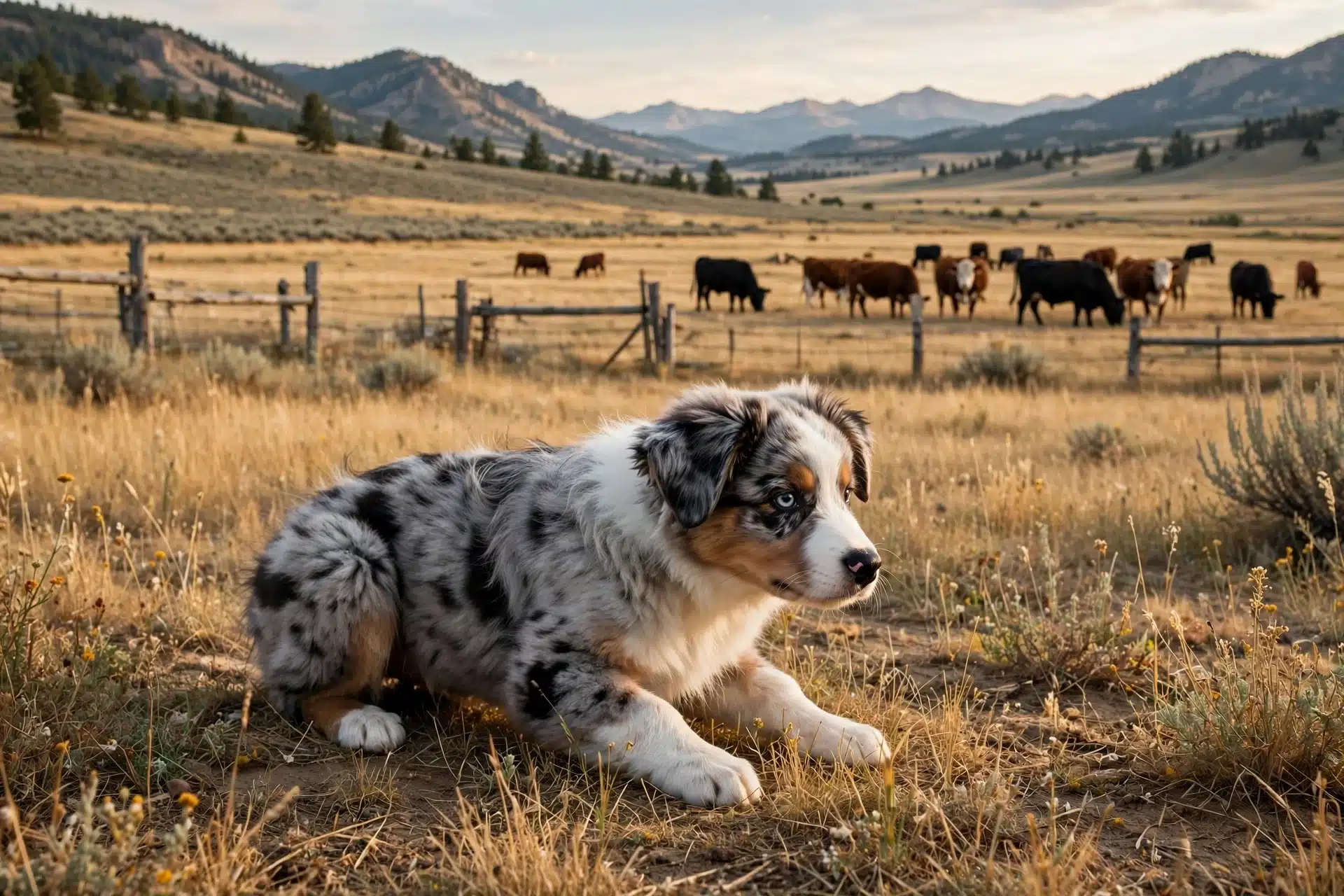
Few breeds carry a stronger link to ranch and cowboy life than the Australian Shepherd. This is a tough, capable herding dog, and on a Montana property the appeal is its working background, not just your acreage. What the breed really needs is training, purposeful activity, and a clear job.
Highlights
- A recognized herding breed with deep ranch-dog roots, often seen working alongside cowboys at rodeos and on stock farms.
- Herding instincts show up fast and can affect behavior around livestock, children, bikes, and other moving animals.
- Needs an owner ready to provide structured work, training, and daily engagement.
- If stock work is the goal, ask breeders about the parents’ working-line background and demonstrated abilities.
Specs
- Best for: Active, experienced homes seeking a herding partner
- Typical role: Herding and stock work
- Activity needs: High; daily training and meaningful work
- Family companion fit: Can be a steady companion with enough activity, guidance, and training
Pros
- Strong association with ranch life and herding
- Suits owners who want an engaged working partner
- Versatile breed background
Cons
- Acreage alone does not supply the training or purposeful work this breed needs
- Herding behavior requires thoughtful management around kids and livestock
- Not a livestock guardian by default
It ranks here because it is a recognizable, genuinely ranch-associated breed with a strong fit for real stock work, though it is not an automatic match for every family.
Last updated: September 27, 2026
Also Read: 7 Montana Puppy Breeds Best Suited for Cold Weather Homes
3. Australian Cattle Dog
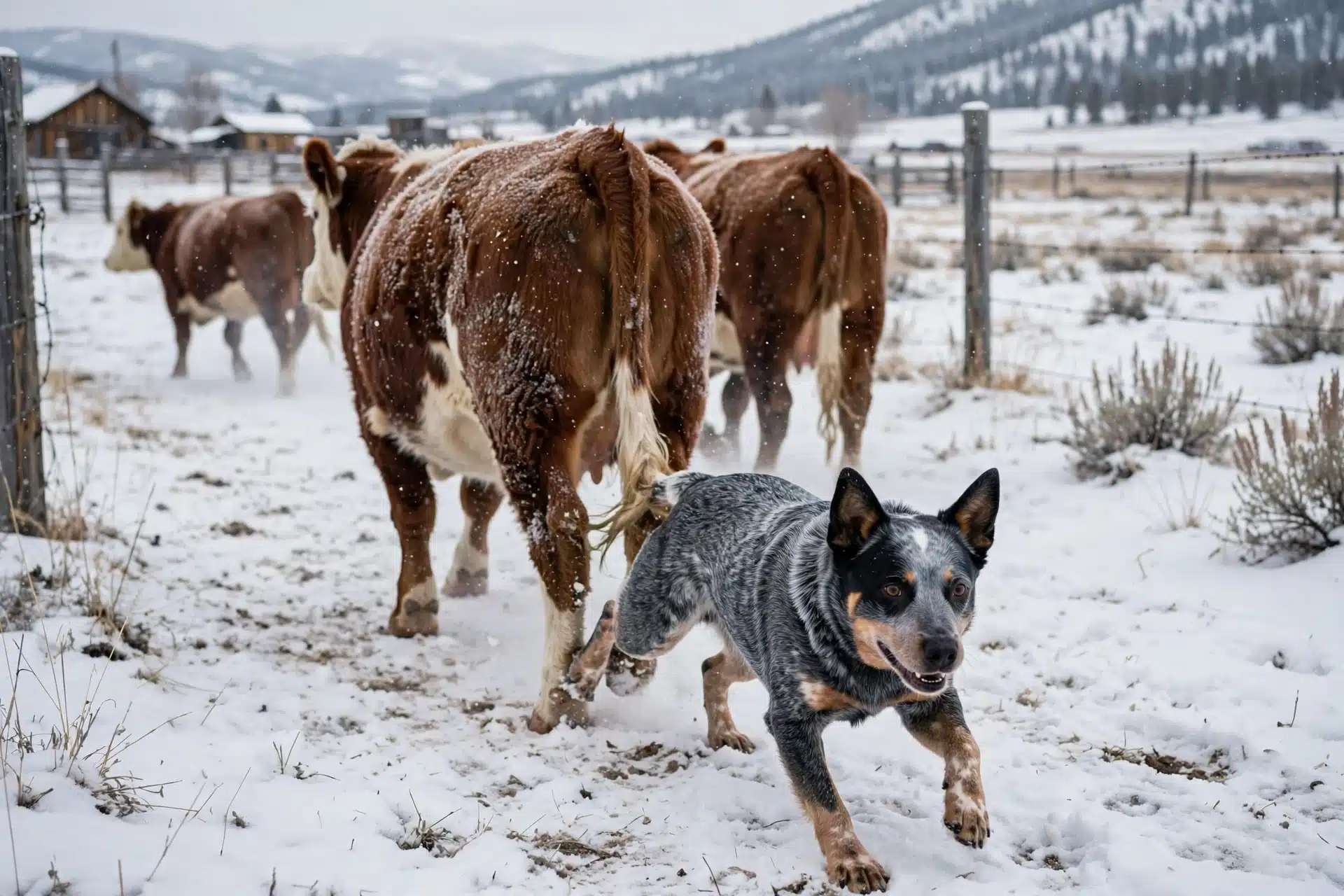
A compact, sturdy stock dog with a tenacious working nature. Known as a heeler, the Australian Cattle Dog was built to move cattle over rough ground, which makes it a natural match for Montana ranch life. Its small size hides a big work ethic, so it suits experienced hands more than first-time owners.
Highlights
- The AKC describes the breed as loyal, intelligent, and tenacious.
- Its cattle-herding heritage makes it relevant to ranch work.
- Early training and clear boundaries matter in a home with livestock, since heelers can nip heels when excited.
- Consider individual temperament and your own experience before expecting real stock work.
Specs
- Best for: Experienced handlers working around cattle
- Typical role: Cattle herding
- Activity needs: High; purposeful exercise, training, and mental engagement
- Family companion fit: Best for active, prepared homes familiar with herding instincts
Pros
- Purpose-bred for herding cattle.
- Intelligent and capable of focused work.
- Compact compared with many large ranch breeds.
Cons
- Strong work instincts are hard to manage without structured outlets.
- Not a substitute for livestock guarding.
- A busy ranch still requires supervision and training.
Its cattle-working specialization makes it a direct fit for one central Montana ranch role, though its intensity is not right for every companion-seeking household.
Last updated: September 27, 2026
Also Read: Puppy Care Blog & Resources | Sage Puppies
4. Border Collie
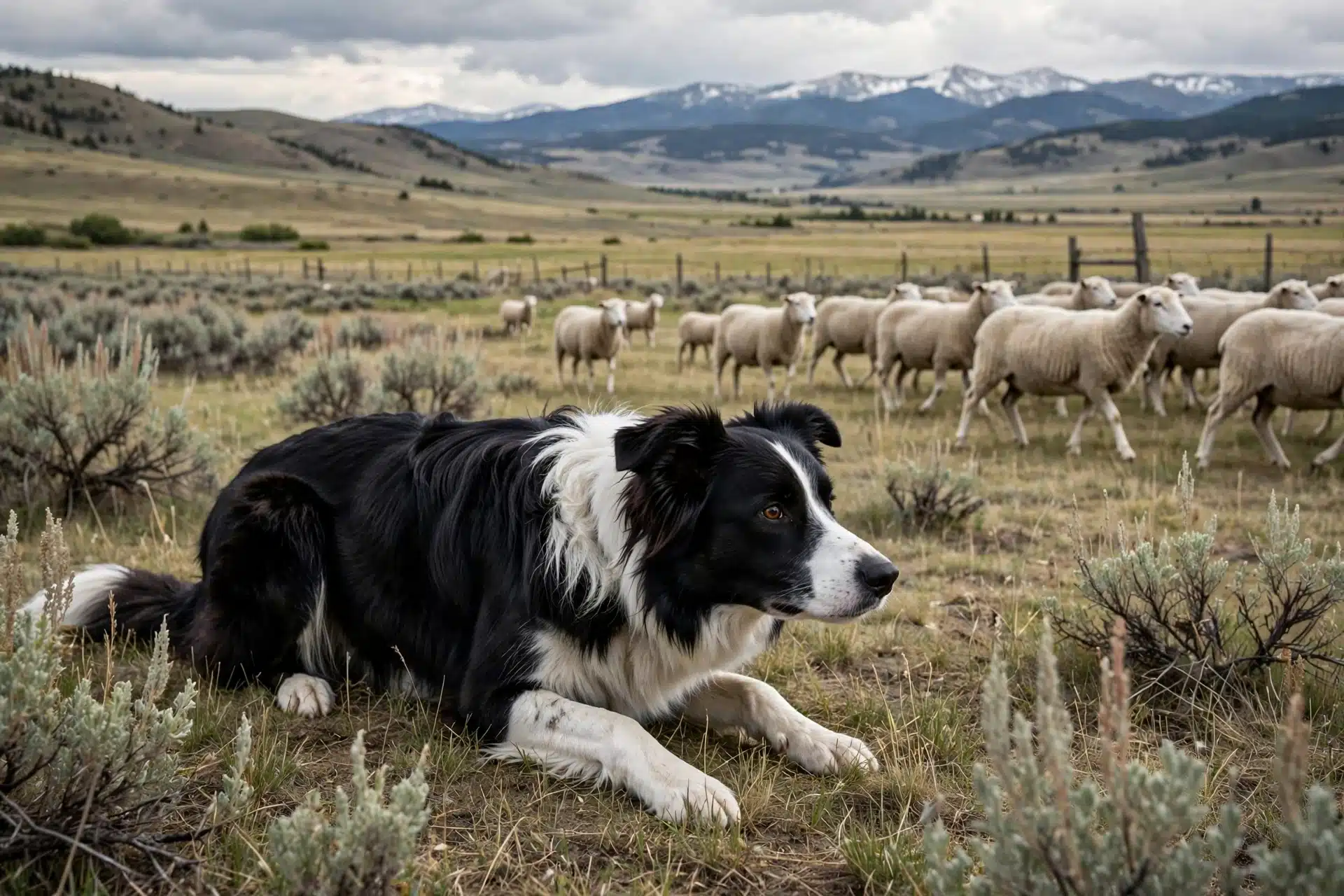
Border Collies are widely regarded as the smartest herding dog in the world, with a work drive to match. For Montana ranchers who need a dog to move livestock all day, few breeds come close – but only with a handler who knows what they’re doing.
Highlights
- A herding breed recognized for intelligence and intense work drive
- Can suit structured stock work with knowledgeable handling
- Needs mental engagement as much as physical activity
- Requires thoughtful management in a home without herding work
Specs
- Typical role: Herding and stock movement
- Activity needs: Very high; ongoing mental work and physical exercise
- Best for: Experienced handlers providing structured herding work
- Family companion fit: Possible with an active, training-focused home and real outlets
Pros
- Highly regarded for herding ability and intelligence
- A capable partner for handlers with stock-work experience
- Responds well to structured tasks and consistent training
Cons
- Challenging for first-time owners without a plan for the work drive
- Open space alone does not meet its mental or training needs
- Herding behavior needs managing around children and other animals
Don’t choose one just because your ranch has room to run. Ask breeders about the dog’s working line, temperament, and early stock exposure rather than trusting the breed name alone. It ranks fourth because its intensive needs can overwhelm casual acreage owners, even though it excels at stock work.
Last updated: September 27, 2026
Also Read: Guides – Sage Puppies
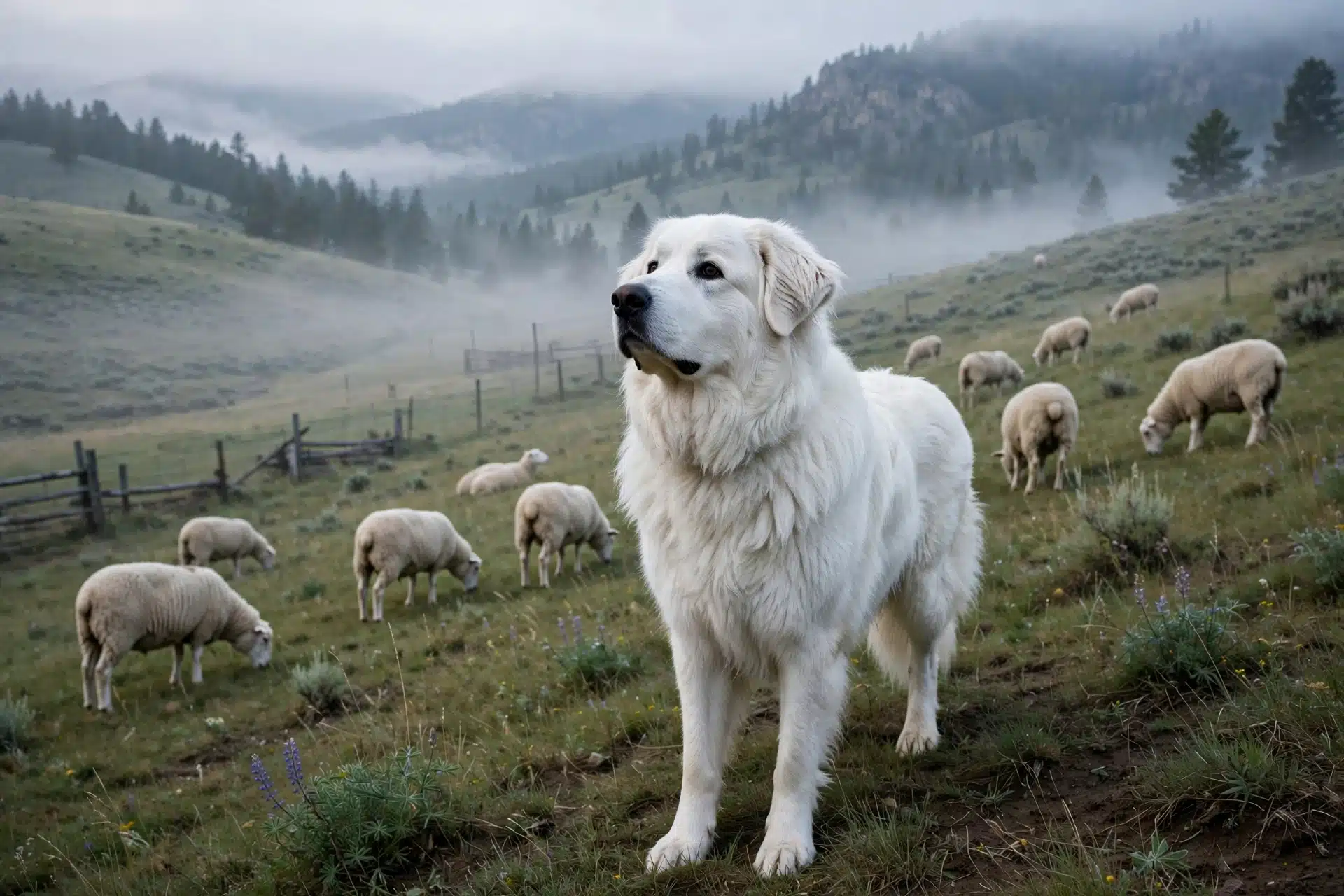
5. Great Pyrenees
Great Pyrenees dogs have guarded sheep and cattle for centuries, and Montana ranches still use them today. Their job is different from a herder’s: a guardian bonds with the livestock and deters predators instead of moving animals on command. That makes this breed a serious working commitment, not a quick fix.
Highlights
- A recognized livestock guardian breed with strong regional relevance in Montana.
- Guardian work depends on livestock bonding, the right upbringing, and ongoing management.
- Young dogs should not be assumed to provide protection right away. A puppy needs months, often years, to mature into dependable work.
- Think through how a guardian handles visitors, neighboring properties, and recreation areas near your land. Montana State Extension discusses the breed among the guardians commonly used in the state.
Specs
- Best for: Ranchers prepared to raise and manage a livestock guardian
- Typical role: Livestock guarding and predator deterrence
- Activity needs: Role-specific patrol and livestock companionship, with proper care and management
- Family companion fit: Depends on purpose, upbringing, socialization, and household management
Pros
- Established guardian background with real history behind the instincts.
- Fits operations where a guardian role is genuinely appropriate.
Cons
- Not a herding dog, and not an instant solution when brought home as a puppy.
- Needs careful livestock bonding, socialization, and boundary work.
- Size and guardian instincts demand an experienced, prepared household.
It ranks here because guardian work matters in Montana, but its distinct responsibilities place it below the herding breeds.
Last updated: September 27, 2026
Also Read: 10 Red Flags to Avoid When Visiting a Local Puppy Breeder
6. Anatolian Shepherd
Anatolian Shepherds show up on Montana sheep operations as livestock guardian dogs. Their job is protection, not herding, and they work with an independence that surprises first-time owners. This is a breed for experienced ranch homes with clear boundaries.
Highlights
- A recognized guardian breed with real relevance to Western ranch settings
- Working potential depends on breeding, early exposure to livestock, and steady management
- Fills a distinct role when a ranch needs protection rather than herding
Specs
- Best for: Experienced livestock operators seeking a guardian
- Typical role: Livestock guarding
- Activity needs: Guardian work, secure boundaries, socialization, and daily care
- Family companion fit: Requires experienced ownership and careful placement
Pros
- Working breeders can assess a puppy’s fit for your specific operation
- A serious option where predators are the concern, not stray cattle
Cons
- Not a beginner’s interchangeable family dog
- Large size and independent behavior demand preparation before the puppy ever sees a pasture
- Any working expectation waits until the dog matures
Ask a prospective breeder about the parent dogs and how they raise puppies. Preparation matters more than pedigree.
It ranks below the Great Pyrenees because that breed is more familiar to readers and appears more often in Montana ranch guidance.
Last updated: September 27, 2026
Also Read: How to Prepare Your Montana Puppy for a Safe First Night
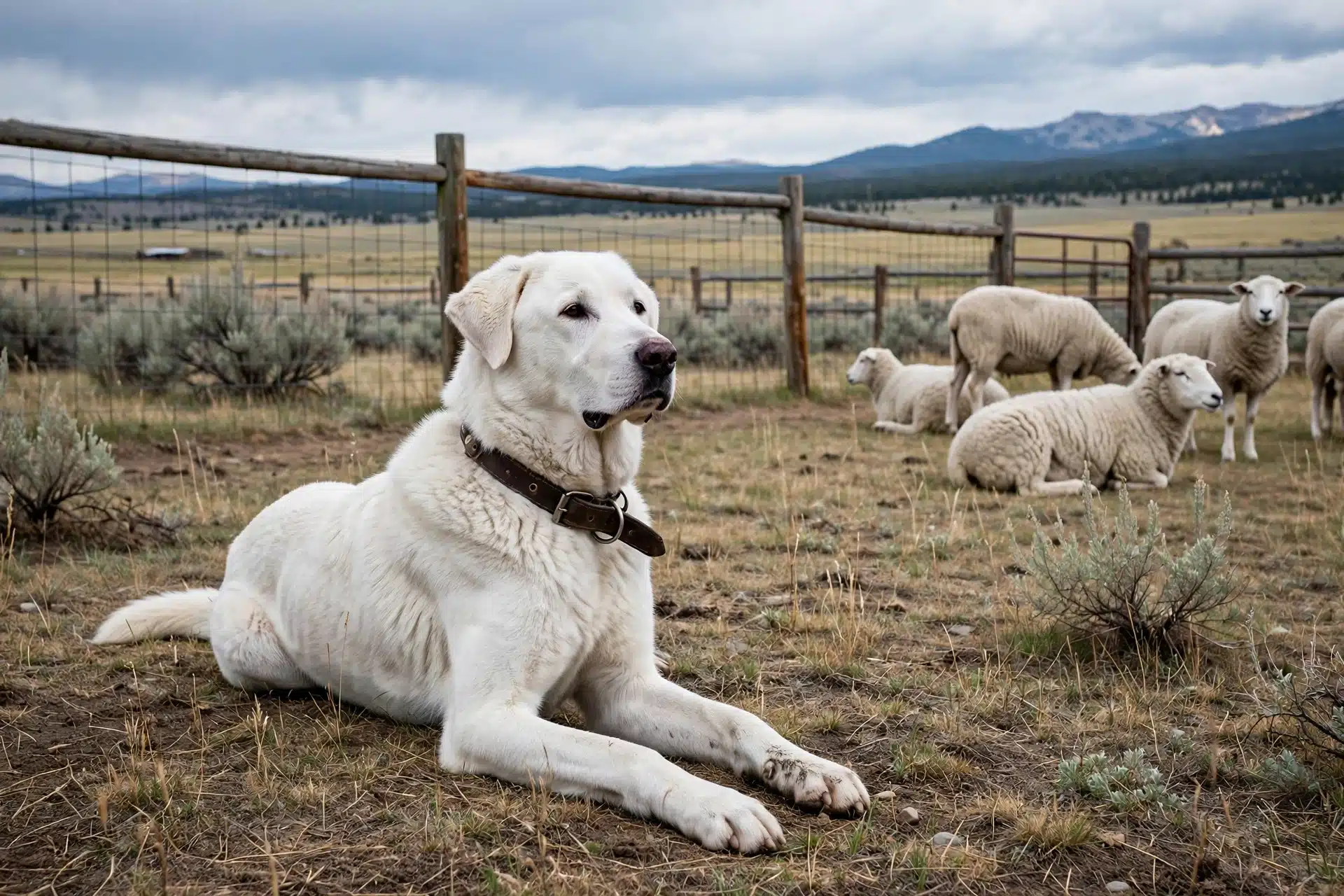
7. Akbash
The Akbash is a livestock guardian breed, and it belongs on this list for one reason only: protecting livestock. Montana sheep producers and Extension discussions include it among the guardian breeds used across the state’s open rangeland. It is not a herding dog, and it is not a small family companion like a Havanese or Cavapoo.
Highlights
- Listed among guardian breeds used by Montana sheep producers
- Should be selected for the actual operation and livestock, not for looks
- Ask about working lineage, early livestock exposure, and management guidance
- Differs from herding breeds and small companion breeds in purpose and daily needs
Pros
- A guardian breed with established use in Montana sheep operations
- Makes sense where livestock protection is the specific need
- Encourages an honest conversation about purpose and breeder expertise
Cons
- Not a general recommendation for any family with acreage
- Breed name alone cannot guarantee guardian suitability
- Demands livestock-specific socialization and steady, hands-on management
Specs
- Best for: Livestock operations seeking a purpose-matched guardian
- Typical role: Livestock guarding
- Activity needs: Guardian role, livestock bonding, supervision, and consistent care
- Family companion fit: Best considered by experienced owners with breeder support
It rounds out the regional guardian options while proving a point: individual fit and breeder knowledge matter far more than a breed label. If you want a small companion instead, a home-raised Cavapoo or Havapoo puppy from Sage Puppies fits ranch family life without livestock-guardian expectations.
Last updated: September 27, 2026
How to choose the right dog for Montana ranch life
Start with the job. A herder moves livestock all day. A guardian lives with the flock and deters predators. A companion shares family life and needs no job at all. Pick which one you actually need before you pick a breed.
Then match the dog to your setup. Use these checks:
- Your experience level. A first-time owner will struggle with a strong-willed working line. An honest breeder will say so.
- Your livestock. Cattle, sheep, and poultry need very different dogs. Ask what the parents actually work.
- Your boundaries. Small properties and heavy visitor traffic suit calmer, more people-focused dogs.
- Breeder transparency. Ask for parent health testing, early socialization records, and what support they offer after you take the puppy home.
- Your daily commitment. Open space is not a substitute for training, mental engagement, shelter, and veterinary care.
If you want a small family companion instead of a stock dog, compare Havanese, Havapoo, and Cavapoo puppies and plan safe outdoor time around your puppy’s size and age. Sage Puppies, a home-based program in South Jordan, Utah, fits this role well – health-tested parents, early socialization, and nationwide delivery. Review their available puppies, application, and pricing before deciding if the match fits your family.

Not every Montana homestead needs a herding dog. If your land is more backdrop than workplace, a well-bred companion fits ranch life beautifully. Sage Puppies raises Havanese, Havapoo, and Cavapoo puppies with health-tested parents and gentle early socialization, delivered nationwide or picked up near South Jordan, Utah. Browse our available puppies and submit an application today.
Frequently Asked Questions
Q1: What are the best dog breeds for ranch life in Montana?
Australian Shepherds, Border Collies, Great Pyrenees, Anatolian Shepherds, and Queensland Heelers top the list. They handle cold, cover ground well, and many have instincts for herding or guarding livestock on working ranches.
Q2: Which puppy breeds thrive in open spaces?
Breeds with strong stamina and weather resistance do best: Aussies, Collies, livestock guardians, and sturdy terriers. Small companions like Havanese can also thrive when they live primarily indoors with the family.
Q3: Are there puppies for sale in Montana suited for ranches?
Yes. Montana breeders offer herding and guardian breeds, and programs like Sage Puppies deliver small companion breeds nationwide, including Montana, for families who want a house dog alongside their working dogs.
Q4: Can small companion breeds handle Montana winters?
Havanese and Cavapoos manage cold on short outdoor trips but should live indoors. They’re built for companionship, not outdoor living.
Q5: Should my ranch dog and companion puppy be raised separately?
Supervise early introductions. Working dogs often bond well with small companions once boundaries are clear.
Q6: How do I pick between a working breed and a companion breed?
Match the dog’s job to your daily life. If you need livestock help, choose a herding or guardian breed. If you want a family house dog, a companion breed fits better.