Quick Summary: Before choosing a puppy, count your real door-to-door work hours, since a puppy can only hold its bladder about one hour per month of age, so a full shift needs a midday break plan. Breed alone doesn’t predict alone-time readiness, so pick a breeder who matches individual temperament to your schedule, like Sage Puppies does with its Havanese, Havapoo, and Cavapoo puppies. Build a routine with gradual alone-time practice, a backup walker, and a quiet crate or pen, then use a six-question readiness checklist before committing.
A Michigan commute can turn an eight-hour shift into a ten- or eleven-hour stretch away from home, and a young puppy cannot plan its day around your shift. This is the real challenge of puppy work schedule planning: not whether you love dogs enough, but whether the hours you’re actually gone line up with what a small puppy needs. The gap between those two things is where most new owners get overwhelmed.
The good news is that the answer is rarely “wait forever.” It’s building a puppy work schedule that fits your real week – realistic alone-time windows, potty breaks that match your route, and a breed whose temperament suits shorter bursts of company. In this guide, you’ll get a schedule-first framework for Michigan puppy adoption, covering shift work, commutes, crate time, and dog walkers. We focus on small companion breeds like the Havanese, so we’ll also show what a Havanese puppy schedule looks like in practice. No hype, no breed myths – just a plan that works for your actual day.
Start With the Hours Your Puppy Would Actually Be Alone
Before you compare breeds or browse litters, map out the real number: how many hours a day your puppy would be home without you. That single number shapes everything else, from which breed fits to whether you need a midday helper. A realistic puppy work schedule starts here, not with a wishlist.
Count the Door-to-Door Absence
Most people guess their workday at eight hours. Then they add the commute, the gym stop, the grocery run, and dinner out. Suddenly a “workday” is ten or eleven hours away from home.
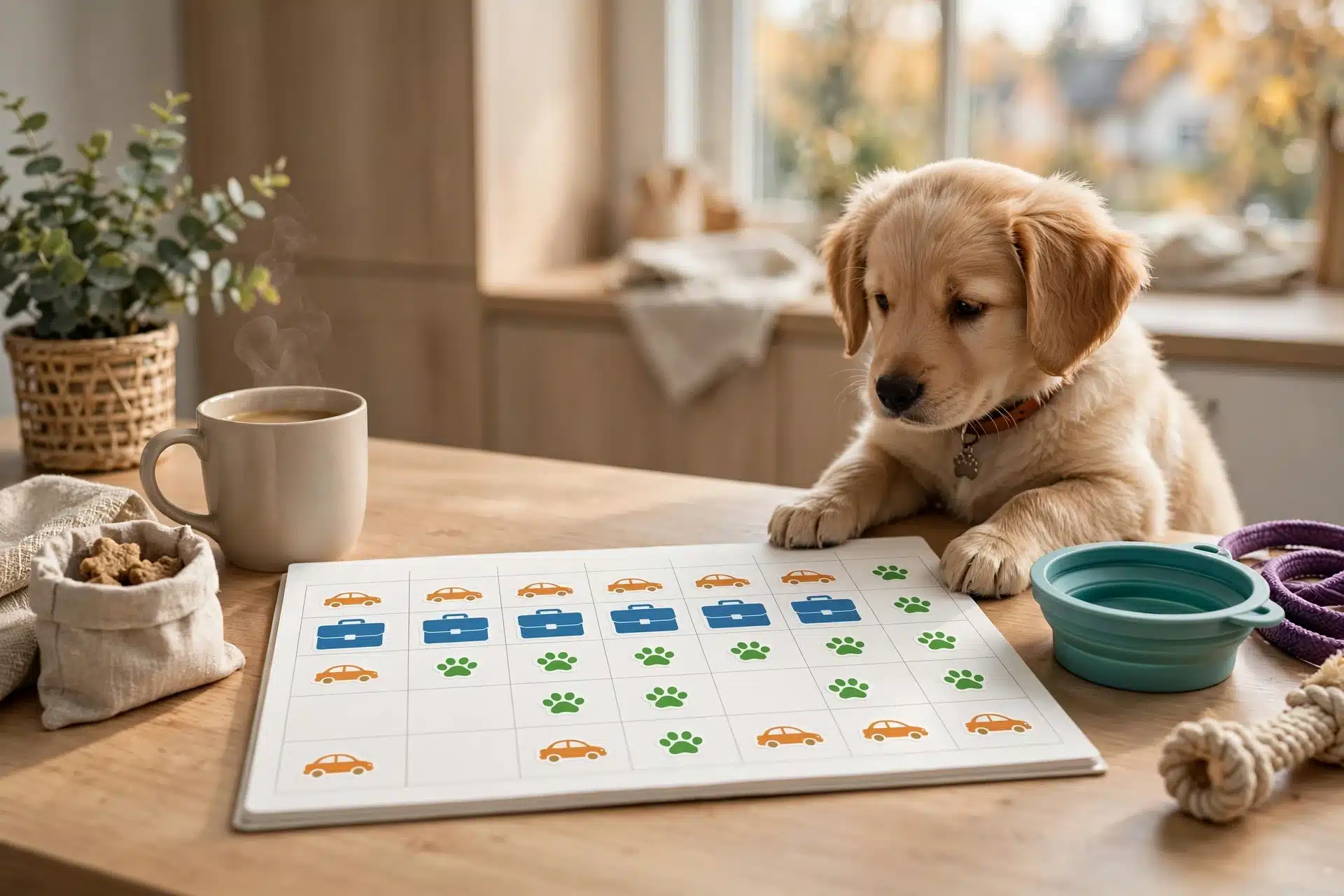
Count it honestly. Track one normal week from door to door, including weekends. Write down every stretch away from the house, even short ones. You want your true longest daily absence, not your best-case day.
Treat Age Guidelines as a Starting Point, Not a Guarantee
Puppies have real physical limits. The AKC’s guidance follows a simple rule: a puppy can hold its bladder roughly one hour per month of age, so a three-month-old handles about three hours and a six-month-old about six according to the AKC. Even adult dogs should not go much past six to eight hours without a break.
| Puppy Age | Rough Alone-Time Limit |
|---|---|
| Under 10 weeks | About 1 hour |
| 10-12 weeks | About 2 hours |
| 3-6 months | One hour per month of age |
| 6 months and up | 6-8 hours with a midday break |
These are starting points. Some puppies need less time; a few handle more. Temperament, training, and preparation all matter, so watch your own puppy instead of trusting the chart blindly.
Look at the Whole Week, Not Only the Ideal Day
Your best weekday is not the test. Check the longest days: overtime shifts, Michigan winters that slow the drive, evenings with plans. If most days need a dog walker, neighbor, or family member to stop by, plan that before you reserve a puppy. At Sage Puppies, we ask families about their routine early, because a well-matched puppy starts with an honest look at your week.
Also Read: Guides – Sage Puppies
Match the Puppy’s Needs to a Care Plan You Can Rely On
A puppy’s day has to be built around two numbers: how long it can hold its bladder and how long it can rest calmly without you. Most sources agree a puppy can wait roughly its age in months plus one hour, so an 8-week-old tops out near two to three hours between potty breaks, according to Wisconsin Humane Society. Build your plan around that, not around hope.
Choose a Midday Plan That Fits the Puppy’s Stage
A young puppy cannot last a full workday alone, no matter how well behaved it is. Pick one midday option and stick with it:
| Puppy age | Max daytime stretch | Midday plan that fits |
|---|---|---|
| 8-12 weeks | 1-2 hours | Neighbor, family member, or sitter every 2-3 hours |
| 3-4 months | 3-4 hours | One dog-walker visit plus a potty break before and after work |
| 5-6 months | 4-5 hours | One reliable midday break, longer evening sessions |
| 6+ months | 5-6 hours | Breaks can taper once house training is solid |
Trainers also recommend the 2:1 rule: for every two hours in the crate, plan one hour out for play, food, and potty, as Rover’s crate training guide explains. Small breeds like Havanese and Cavapoos often need the shorter end of every range.
Build a Backup Before You Need One
Write down two backups now, not during a snowstorm in January. Line up a second dog walker, a nearby friend, and one puppy daycare that takes young puppies. Save their numbers in your phone. Michigan winters and lake-effect weather will cancel your commute plans at least once, and your puppy still needs its 12:30 potty break.
Use a Safe Rest Area, Not an All-Day Crate Assumption
Plan the day as a cycle: potty, play or meal, potty, rest. Rotate between a properly sized crate for naps and a gated playpen with water and a chew for longer stretches. Puppies need 16 to 20 hours of sleep a day, so rest matters, but no puppy should sit in a crate for eight straight hours. If you’re choosing a well-started puppy from a program like Sage Puppies, ask how the litter was raised at home so the first weeks of your plan match what the puppy already knows.
Also Read: Puppy Care Blog & Resources | Sage Puppies
Choose for Individual Temperament, Not a Breed Shortcut
You might assume a “lap dog breed” guarantees a puppy who naps through your workday. It doesn’t. Breed gives you a starting point, but it can’t predict how any one puppy will handle being alone.
Why Breed Alone Cannot Predict Alone-Time Readiness
Breed tendencies are real, but they’re averages, not promises. Swedish researchers who tracked decades of temperament data found roughly a 50/50 chance that an individual dog matches its breed’s typical mentality, since differences within a breed can be as big as differences between breeds. Separation behavior follows the same pattern. A longitudinal study of six-month-old puppies found no significant link between breed and separation problems. What mattered instead were early routines: enough sleep, a quiet overnight space, and calm departures.
Ask About the Individual Puppy and Their Routine
Because individual temperament and early experience matter more than the breed label, interview the breeder the way you’d screen a daycare.
- Ask how each puppy in the litter differs. Some are bold and busy; some settle faster. Which puppy recovers quickly after a startle?
- Ask about early habits. Has the puppy practiced short, calm alone stretches? Do they sleep overnight in a pen or crate?
- Ask how the breeder matches puppies to homes. At Sage Puppies, matching considers your schedule, not just your color preference.
- Share your honest routine. A 9-to-5 with a lunch visit is workable. Guessing isn’t.
Consider the Havanese Puppy Schedule in Your Home
A Havanese puppy fits many work schedules well, but success comes from the routine you build, not the breed alone. Plan morning potty and play, a fed-and-tired midday stretch in a safe space, and a predictable evening wind-down. Puppies who get enough daytime sleep and a consistent, enclosed overnight spot adapt more easily to your hours. Build the schedule before pickup day, then pick the puppy whose temperament fits it.
Also Read: Buy Puppies in Michigan: Questions About Delivery and Pickup
Plan the First Weeks and the Routine After You Return to Work
The first few weeks set the pattern for everything that follows. Plan your calendar around the puppy, not the other way around.
Arrange a Gentle Transition Home
Take time off when your puppy arrives. Trainers recommend planning vacation days so your puppy can settle into the new environment before facing a full workweek, as the AKC notes. Use those days to establish potty routines, teach the crate, and build trust.
At Sage Puppies, our home-raised Havanese, Havapoo, and Cavapoo puppies arrive with early socialization already started, which softens the first days. Aim for a long weekend to two weeks if you can. Line up a midday helper now – a neighbor, dog walker, or puppy sitter – so the plan exists before day one.
Build Alone-Time Practice Gradually
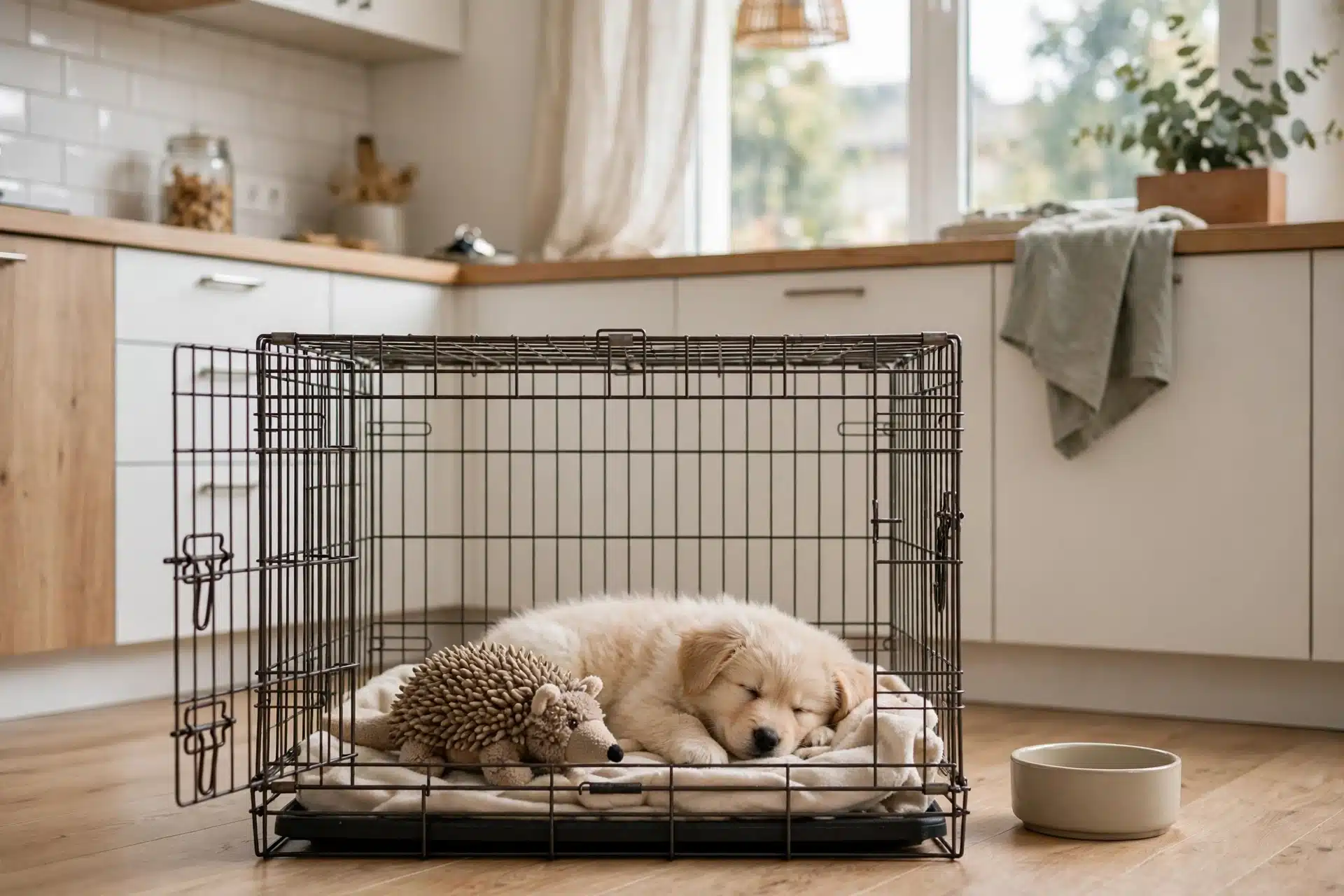
Puppies are not born knowing how to be alone. Start while you are still home: settle your puppy in a crate or pen, step out of the room for a minute or two, then return calmly. Add time slowly across several days, as AKC’s alone-time guide explains.
A simple progression:
- Leave the room for 1-2 minutes; return before fussing starts.
- Work up to 30 minutes with you out of sight.
- Step outside for short errands, then longer ones.
- Match full workdays to your puppy’s age – a common rule is one hour per month of age, plus one.
Feed meals in the crate and use a stuffed chew toy so time alone feels good, not scary.
Make Mornings and Evenings Sustainable
The daily rhythm matters more than any single day. Keep mornings predictable: potty break first, breakfast, short play, then a calm settle before you leave. Keep goodbyes quiet and boring.
Evenings carry the real weight. Plan a potty break the moment you walk in, then exercise, training, and calm cuddle time. Ten focused minutes of play beats an hour of distracted fussing. A tired, connected puppy handles the next workday well.
Also Read: Sage Puppies vs My Doodle Puppy: Which Offers Better Family Support?
Use This Work-Schedule Fit Check Before You Choose
Before you fall in love with a specific puppy, run your plan through a simple fit check. Puppies under 12 weeks cannot hold their bladder for a full workday, so your plan matters more than the breed on the page. The ASPCA’s puppy care guide stresses that early weeks set the pattern for house training and confidence, and that pattern depends on who shows up.
A Realistic Readiness Checklist
Answer each question with a yes, a no, or a name:
- Midday break: Can someone visit the puppy between 10 a.m. and 2 p.m. every weekday for the first month?
- Backup person: Do you have a neighbor, family member, or paid sitter ready if work runs late?
- Flexible window: Can you shift your start or end time by an hour during weeks one and two?
- Remote option: Do you have even one or two work-from-home days you can use in the adjustment period?
- Evening energy: Can you give 20 to 30 minutes of play and training every evening, even on hard days?
- Budget backup: Is there money set aside for a dog walker at $15 to $30 per visit if your schedule changes?
If you can answer yes to at least four of six, you are ready to move forward. If not, keep reading.
When to Adjust the Plan or Wait
A no answer is not a failure. It is just a signal. Maybe a relative can handle midday visits, or your employer allows a longer lunch break. Adjust the plan first.
Wait if you cannot name any backup person, or if overtime is unpredictable and frequent. A puppy can wait a few months. A bond built on missed potty breaks is harder to fix later.
Tip: Ask your breeder about the puppy’s current routine before pickup day. Matching it for the first two weeks lowers stress for both of you.
Take the Next Step When Your Care Plan Is Ready
Once your checklist is solid, choose a breeder who will be honest about alone-time limits. At Sage Puppies, we help families in Michigan and across the country match a Havanese, Havapoo, or Cavapoo puppy to their real schedule, not their ideal one. Browse our available puppies or start an application when your plan feels ready.

A busy schedule doesn’t have to mean waiting years for the right puppy. At Sage Puppies, our home-raised Havanese, Havapoo, and Cavapoo puppies start with health-tested parents and early socialization, so they adapt well to real family routines. Browse our available puppies, submit an application, and choose local pickup in South Jordan, Utah or nationwide delivery to Michigan. Your well-started companion is closer than you think.
Frequently Asked Questions
Q1: What are the best puppy breeds for people with full-time jobs?
There is no magic breed. Focus on temperament, age, and your support plan. Small companion breeds like Havanese, Havapoos, and Cavapoos adapt well when owners plan midday care.
Q2: How do I choose a puppy that fits my work schedule?
Map your week first. Count real alone hours, arrange a midday break, and pick a confident, well-socialized puppy from a breeder who starts early training.
Q3: Can I leave a puppy home alone while I work?
Not for a full shift at first. Puppies under four months need breaks every few hours. Build up gradually with crate training, potty coverage, and enrichment.
Q4: Should I get an adult dog instead?
Possibly. An older dog with proven house training tolerates longer days better than a young puppy.
Q5: Can a puppy be delivered to Michigan?
Yes. Sage Puppies offers nationwide delivery, so Michigan families can bring home a health-tested, home-raised puppy without long travel.
Choose a Puppy With a Plan That Works
A puppy and a job can coexist, but only when the plan comes first. Start with the age-based alone-time limits, like the AKC guideline of one hour per month of age, then build your schedule around them. Map your Michigan work hours, line up a midday break, and match the breed to the plan.
Small companion breeds like a Havanese, Havapoo, or Cavapoo fit well into a structured day, especially when they come from a breeder who starts socialization early. The difference between a puppy that settles calmly and one that struggles is rarely luck. It’s preparation, a consistent routine, and a family that agrees on who handles feeding, potty breaks, and training before the puppy walks through the door.