Quick Summary: A vet health certificate confirms a puppy appeared healthy on exam day, while a DNA test identifies specific inherited variants, so neither guarantees lifelong health. Buyers should request the puppy’s exam record, the parents’ DNA and specialist screening results, and a written health guarantee before paying a deposit. Sage Puppies says its Havanese, Havapoo, and Cavapoo families provide documented parent testing, but the same records and questions should be requested from any breeder.
Two papers, one puppy, two very different promises. A vet health certificate says your puppy was examined today and looked well. A DNA panel says what her genes might mean for the next fifteen years. If you are searching for health-tested puppies for sale near me and a breeder hands you one but not the other, the honest answer is that neither document alone is the proof that matters most. The proof is knowing which questions each one answers.
Buyers hear that DNA health screening rules out disease and that a clean vet certificate means a healthy puppy. Each claim covers a different set of conditions, and asking for both records is reasonable, not rude. This guide lines the two up side by side, shows where each falls short, and ends with a simple checklist for what to request before you reserve. At Sage Puppies, we raise Havanese, Havapoo and Cavapoo puppies in South Jordan, Utah, so these are the exact records we hand our own puppy families.
Vet Health Certificate vs DNA Test: At a Glance
| Veterinary health certificate | DNA health screening test | |
|---|---|---|
| What it measures | Physical exam findings, growth, visible illness, vaccination and parasite status | Inherited variants for a defined list of genes, plus carrier and clear status |
| When it happens | Usually shortly before pickup or transport, around 8 to 12 weeks | Any time a usable sample is available, commonly from a cheek swab after 8 weeks |
| What it cannot show | Inherited conditions, disease that has not surfaced yet, or future joint, eye and heart risk | Most polygenic conditions, current illness, or whether a dog will actually show disease |
| Best for | Confirming the individual puppy is fit to travel, eat and go home right now | Lifelong risk planning and breeding decisions, especially for Poodle and Cavalier lines |
| How long it stays useful | A moment-in-time snapshot; some versions are short-dated for transport | Lasts the dog’s whole life because the DNA does not change |
How Vet Health Certificates and DNA Tests Compare
Veterinary health certificate
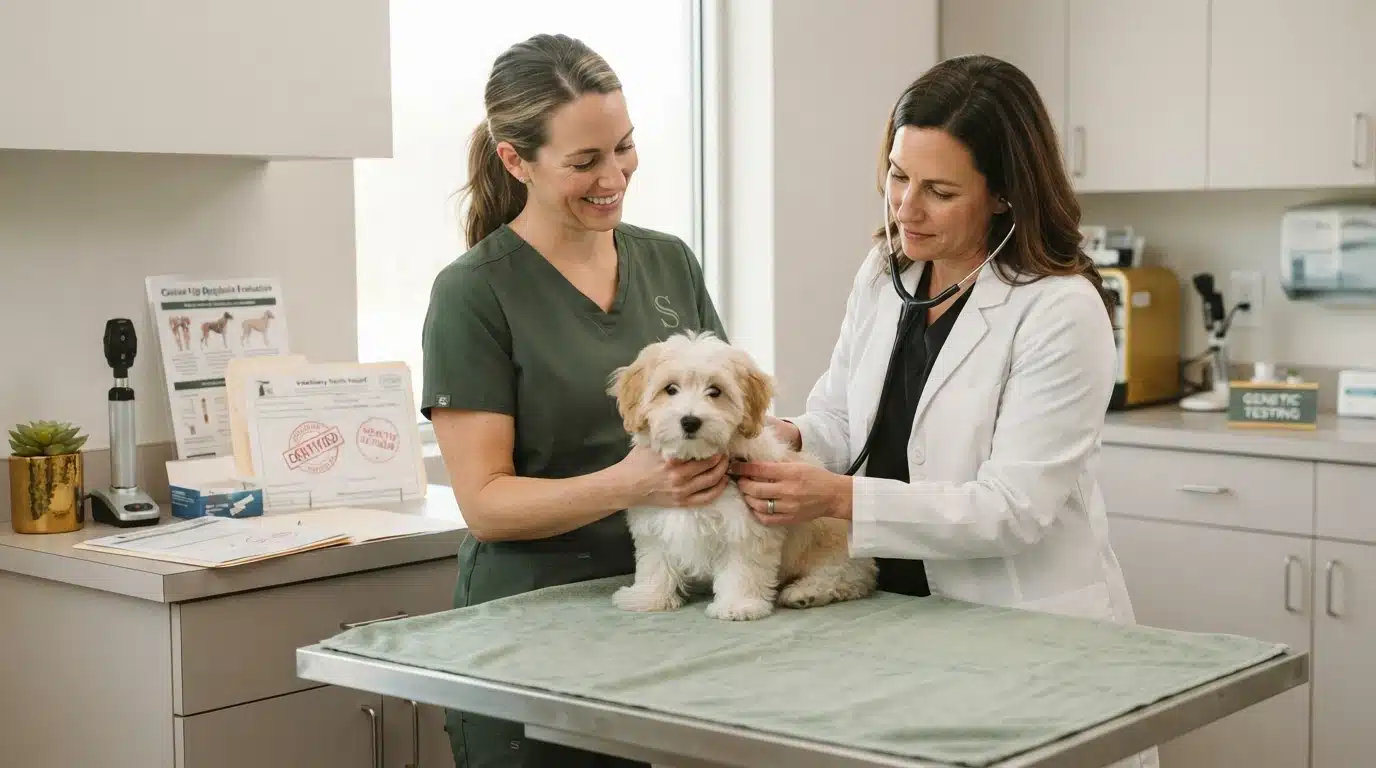
A vet health certificate is a written record of a hands-on exam of one puppy at one moment. It covers physical condition, visible illness, and often vaccine and deworming status, so it tells you the puppy is fit to travel and go home now. It cannot show inherited risk or disease that has not surfaced yet.
Key strengths
- Confirms current health and growth
- Documents vaccines and parasite control
- Supports state-to-state travel paperwork
DNA health screening test
A DNA health screening test reads lab markers to show whether a dog is clear, a carrier, or at risk for specific inherited variants. It guides lifelong planning and breeding choices, especially for Poodle and Cavalier lines behind Havapoos and Cavapoos. It cannot detect current illness or most polygenic conditions.
Key strengths
- Results last the dog’s whole life
- Identifies carrier and clear status
- Supports parental health testing and lineage checks
What a Vet Health Certificate Actually Proves
A vet health certificate is a snapshot, not a promise. Officially called a certificate of veterinary inspection, it records that a licensed veterinarian looked at your puppy on a specific date and found no signs of illness at that moment. That is a real and useful piece of evidence. But it says nothing about what your puppy inherited from its parents, so it cannot predict disease that shows up years later.
What happens during the exam itself
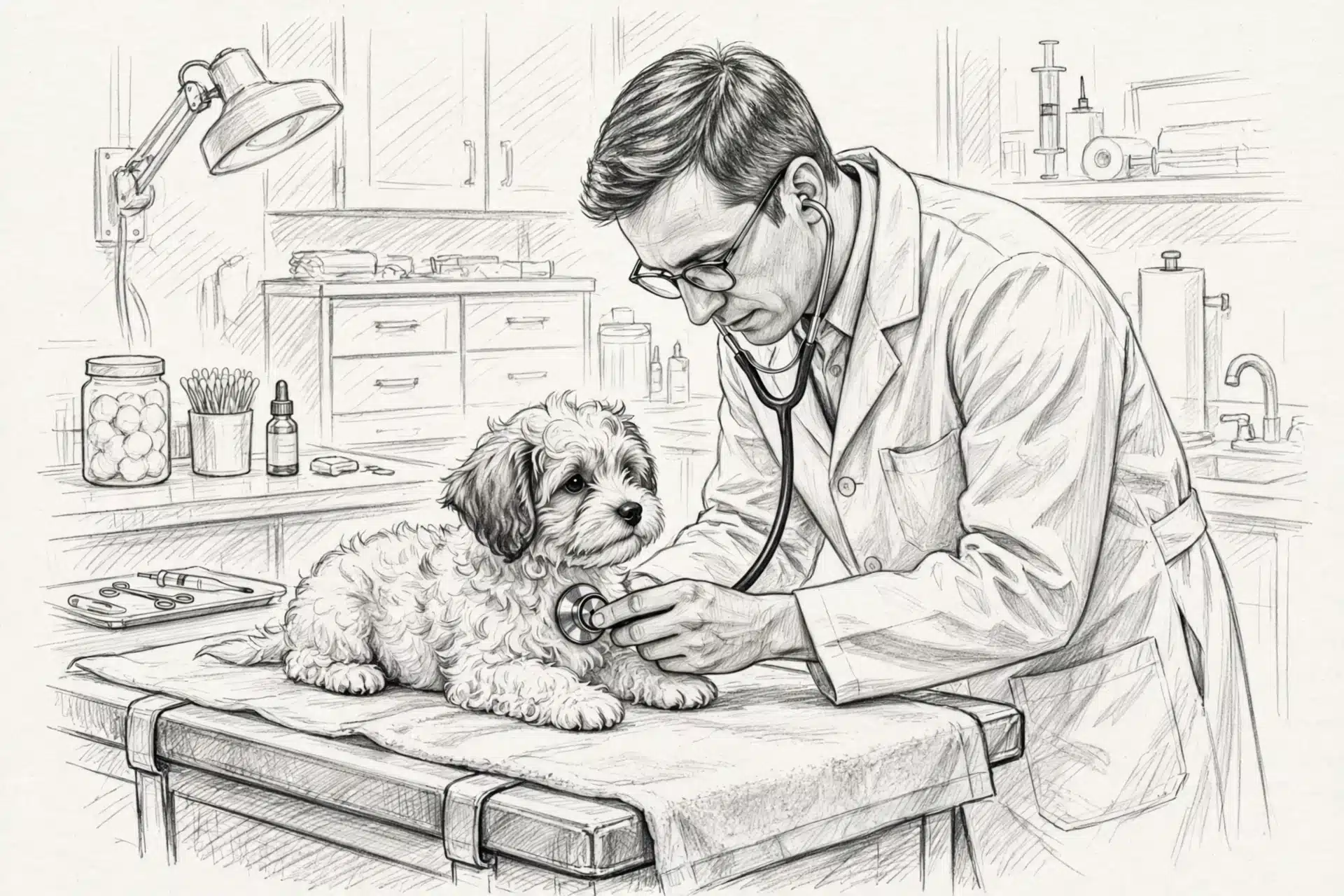
The vet checks the puppy from nose to tail. Expect a look at the eyes, ears, mouth, heart and lungs, plus a feel of the abdomen, skin and joints. The vet notes the puppy’s temperature, weight, and any parasites found on a fecal test. Vaccines given so far go on the record too.
What you get is a signed page saying this puppy appeared healthy on this day. It does not include X-rays, eye certifications by a specialist, or DNA results. Heart conditions such as a murmur may be noted if the vet hears one, but many inherited problems are silent at eight to twelve weeks. A clean exam means “no visible trouble today,” which is why serious breeders pair the certificate with parent health testing.
Why a certificate is a travel document as much as a sale document
The certificate’s oldest job is legal, not medical. Most states require a certificate of veterinary inspection, issued by an accredited vet within a set window, when a dog crosses state lines. The USDA notes that each receiving state sets its own entry rules, so requirements vary. Airlines and ground transport services often ask for the same paper before they will move a puppy.
So when a breeder hands you a certificate, part of what you are holding is paperwork that lets your puppy legally travel home. Ask when it was issued, because the clock on it starts running right away.
What a DNA Health Test Actually Proves
A DNA health test does not guarantee a puppy is healthy. It checks a specific list of inherited gene variants and reports what it finds for each one. That is a narrow but useful slice of information, and it answers a different question than a vet exam does. The report tells you about genes your puppy was born with, not about the heart murmur or knee problem a vet can hear and feel today.
Reading a DNA report: clear, carrier, at risk
Most puppy DNA panels use three labels, and each one means something different:
| Result | What it means | What it means for your puppy |
|---|---|---|
| Clear | No copies of the variant found | The puppy should not develop that specific condition |
| Carrier | One copy, no symptoms expected | Breeding pairs must be matched carefully to avoid affected puppies |
| At risk | Two copies of the variant | The puppy may develop the condition the test covers |
A clear result only clears the conditions on that panel. It says nothing about hip dysplasia, heart disease or eye problems the panel does not screen for. For Havanese, Havapoo and Cavapoo families, the diseases worth asking about include cardiac issues, patellar luxation and progressive retinal atrophy, plus breed-specific variants a good breeder already knows to test for.
Why parent results usually matter more than the puppy’s own panel
Here is the part most buyers miss. If both parents are clear for every variant on the panel, the puppy is clear too, by simple genetics. A puppy with two copies of a gene gets one from each parent. So a breeder who screens the parents before breeding gives you the same answer with more reliability, because the parents were tested by an adult lab result rather than a swab taken at eight weeks. When a breeder documents parent health testing and lineage on every pairing, you inherit that assurance without needing to retest a wiggly puppy. Ask for the parents’ reports and match them to the puppy’s family tree.
Where Both Fall Short: Joints, Eyes, Heart and Environment
Clinical screening the parents cover that a puppy exam cannot
A puppy’s visit checks what is visible that day. It cannot tell you how the dog’s knees, eyes or heart will hold up at age five. That is what parental screening exists for. Conditions like patellar luxation, a kneecap that slips out of place, are common in small breeds, and the OFA screens breeding dogs for them with a hands-on joint exam.
Eye and heart checks work the same way. A veterinary ophthalmologist examines the parents’ eyes each year, and a cardiologist or vet listens for structural heart problems. The Havanese Club of America lists patellas, eyes and hearing among the core tests behind a CHIC number. DNA results cannot duplicate any of this, because most joint, eye and heart disease has no single gene behind it. Ask to see the parents’ certificates, not just the puppy’s.
For Havanese families, the breed-specific checklist on the Havanese page covers exactly which parental results to ask for.
The categories no single document will ever cover
Some risks sit outside both documents. Environment, nutrition, exercise on hard floors, and dental care shape a small dog’s health for life. A clean certificate and clear DNA results say nothing about how a puppy is raised in its first eight weeks, or how you care for it afterward.
No paperwork predicts injury, parasites picked up later, or problems that appear in middle age. That is why the final checklist separates what each document proves from what only time and good husbandry reveal.
Is a Vet Health Certificate Better Than a DNA Test?
The short answer
Neither one is better. They answer different questions, so you want both. A vet health certificate says this puppy looked healthy on exam day. A DNA test says which inherited variants this puppy did or did not inherit from its parents.
- The certificate checks today’s health: heart, lungs, eyes, weight, temperature, and vaccines.
- The DNA test checks risk for life, covering inherited diseases the exam cannot see.
Skip the certificate and you may lack the paperwork many states require for a puppy crossing state lines. Skip the DNA test and you know nothing about conditions like the heart or eye problems that can run in Havanese, Cavapoo, and Havapoo lines. A breeder who offers both, with health tests worth requesting before you buy, is easier to judge than one offering either alone.
What a missing document actually signals
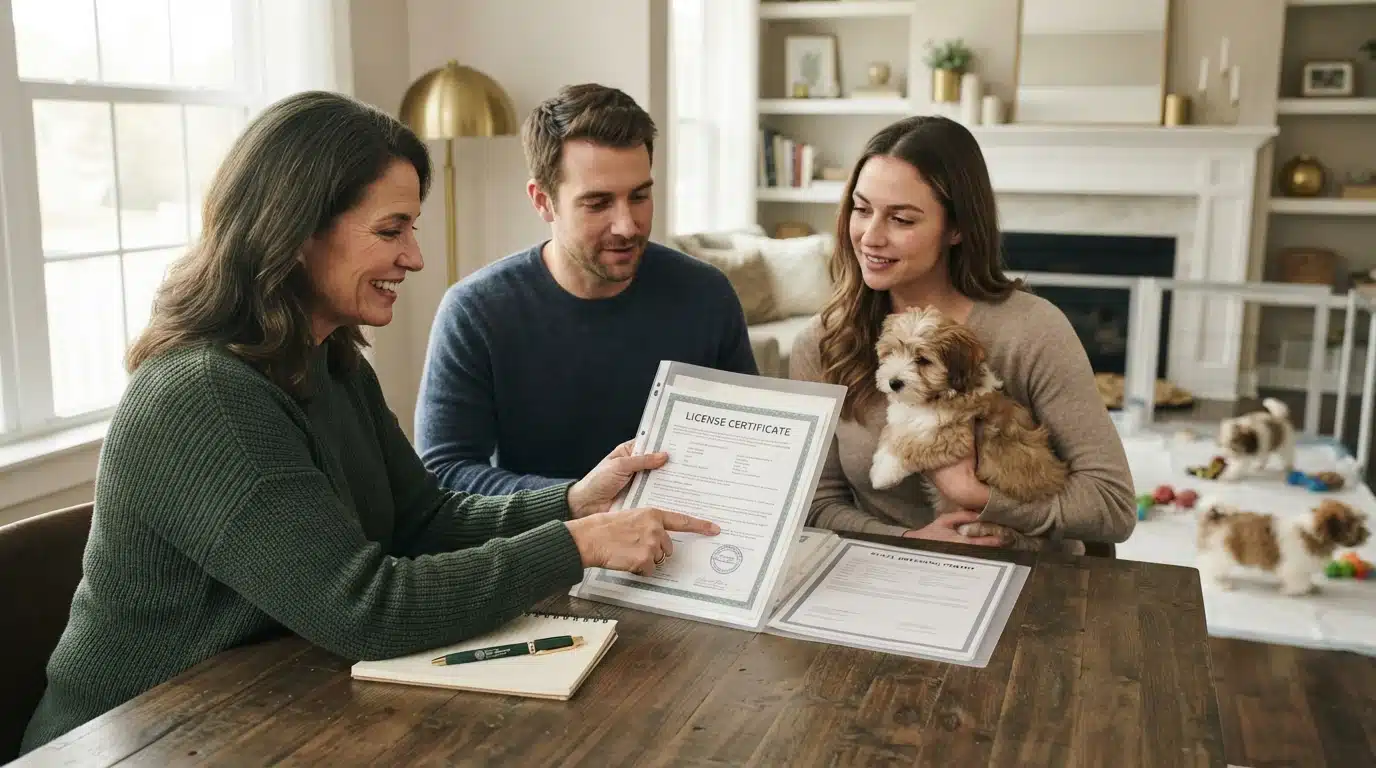
A missing document does not prove a sick puppy. But it tells you how a program handles proof. If a breeder cannot produce a certificate of veterinary inspection for interstate delivery, you cannot verify the exam ever happened. If there is no DNA report, ask whether the parents were screened at all. Vague answers, “the vet checked them,” or promises of paperwork after payment are the real warnings. A confident breeder hands you dated, named records without being asked twice.
What Health Proof to Ask a Breeder For
Ask a breeder for three things: the puppy’s own vet exam record, the parents’ clinical screening results, and DNA variant results for the breed. A single certificate of veterinary inspection alone proves very little, so request each document before you pay a deposit.
The documents worth requesting before you pay a deposit
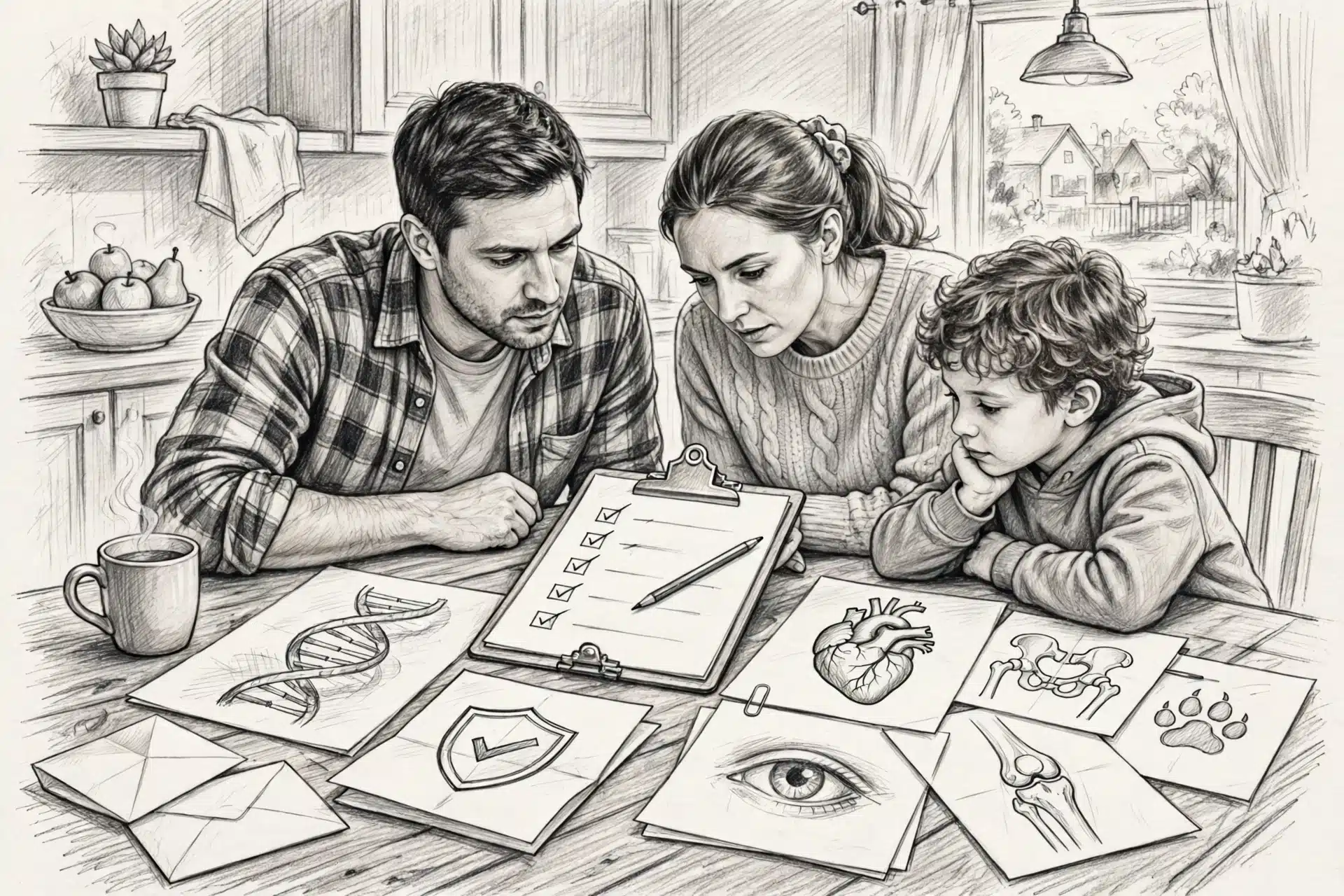
Work through this checklist in order:
- A recent vet exam record for the puppy, with date, weight, heart and eye findings.
- The certificate of veterinary inspection if your puppy travels state to state.
- Parent health testing results, such as OFA CHIC numbers or breed club records, showing hearts, eyes, hips and patellas were screened.
- DNA test reports for both parents, listing the exact variants tested for Havanese, Havapoo or Cavapoo.
- A written health guarantee and contract that spells out what is covered and for how long.
If a breeder hesitates on any item, ask why. Good programs keep these records on hand because they rely on them for every pairing.
Questions that reveal real testing
Your questions matter as much as the paperwork. Try these:
- Which specific DNA variants did you test the parents for, and can I see the reports?
- Were the eye and heart exams done by specialists, or by a general vet?
- How do the parents’ results shape which dogs you breed together?
A breeder who tests well can answer all three without reaching for a brochure. Vague replies like “the parents are healthy” or “they’ve been checked” usually mean no documentation exists. At Sage Puppies, every pairing is planned around documented parent testing, so those reports are part of the application conversation from the start. Ask the same questions anywhere you shop, and compare what actually arrives in writing.
Which Should You Choose: Vet Certificate or DNA Test?
Here is the short answer: you do not choose one. You ask for both, because each document answers a different question about a different dog.
Choose the vet certificate when
Ask for a certificate of veterinary inspection when you need proof the puppy itself is healthy right now. This matters most at the handoff point. If your puppy flies or travels across state lines, many states require a current health certificate, so check the rules for your destination before pickup day. The same document works as your baseline record: weight, temperature, heart and lung sounds, and the vaccines and deworming given so far. It confirms what you can see today. It says nothing about what the puppy may inherit.
Choose the DNA panel when
Ask for the parents’ DNA results when you want to know what the puppy could carry. A variant panel screens for inherited conditions such as progressive retinal atrophy and cardiac myopathy in Havanese lines, and it flags carrier status before two dogs are ever bred together. For Havanese, Havapoo and Cavapoo puppies, the panel tells you whether a puppy is clear, a carrier, or affected for each tested variant. That is prediction, not a promise. A clear puppy can still get sick from causes no test covers, and a carrier puppy can live a full healthy life.
The third layer most buyers forget
Between those two documents sits the one buyers overlook: the parents’ clinical screening. Eye exams, cardiac clearances, patella ratings, and OFA CHIC and breed club health requirements document the adults as living, examined dogs, not just genetic codes. DNA can only find known variants. A specialist exam can catch cataracts, heart murmurs, or loose kneecaps that no current panel detects. Responsible programs test the parents on both fronts, and any program that shows only one layer is showing you half the picture. Ask for all three records together, and read each one for what it actually proves.

Still sorting which proof to ask for? Take the checklist above to any breeder and watch how they respond. If you want a Havanese, Havapoo or Cavapoo raised under that same standard, start with Sage Puppies. Ask questions early, compare answers calmly, and choose the litter you can actually verify.
Frequently Asked Questions
Q1: Is a vet health certificate better than a DNA test for a new puppy?
No. The certificate confirms today’s health; the DNA test shows lifelong inherited risk. You want both, plus the parents’ clinical screening.
Q2: What health proof should I ask a puppy breeder for?
Request the puppy’s vet exam record, the parents’ OFA and specialist results, DNA reports, and a written puppy health guarantee and contract before you pay.
Q3: Does a DNA test guarantee a puppy is healthy?
No. It screens a specific variant list only. A clear puppy can still develop joint, heart or eye problems no panel covers.
Q4: Can I use a DNA kit instead of parent health testing?
No. Parent results reflect adult exams and cover more variants, so they answer more questions than one puppy swab.
Q5: How fresh does a health certificate need to be for travel?
Each state sets its own entry window, so ask your vet or transport service the required date range before pickup.
Conclusion
A vet health certificate and a DNA test are not rivals. One confirms a puppy is healthy today; the other maps inherited risk for life. The layer between them, the parents’ clinical screening through OFA CHIC and breed club health requirements, catches what neither document can. For Havanese, Havapoo and Cavapoo families, the strongest position is asking for all three records: the puppy’s exam, the parents’ specialist results, and DNA variant reports. Read each for what it actually proves, not what it promises. Programs that hand over dated, named documents without hesitation are showing you how they operate, and that transparency tells you more than any single paper ever will.