Quick Summary: Before buying a Havanese, Havapoo, or Cavapoo, request three record sets: the puppy’s veterinary records, both parents’ clinical screening results, and full DNA panel reports showing carrier status. For Havanese parents, verify OFA hips, patellas, and current eye exams, while Havapoo and Cavapoo parents also need screening for each side of their crosses, including cardiac testing for Cavalier lines. DNA tests and a pre-purchase vet exam do not guarantee lifelong health, so confirm results directly in the OFA database, check that records predate breeding, and put health promises in writing. Sage Puppies supports this same documented process and shares each parent’s screening results before buyers reserve a puppy.
Two litters can look identical on a breeder’s website and carry very different paperwork. One seller produces an OFA number, an eye exam date, and a completed pre-purchase vet exam on request. The other answers every question with “our puppies are health tested,” which tells you which health tests were done exactly nothing. That gap is the real risk when shopping for health tested puppies for sale near me, because the phrase covers everything from a single vet visit to full genetic health tests on both parents. This guide sorts the paperwork into three piles: puppy records, parent screening, and DNA results. It then maps each test to what breed clubs currently require for the Havanese and the parent breeds behind the Havapoo and Cavapoo, and closes with a verification workflow. Sage Puppies breeds only these three, so the framework reflects the breeds we place with families.
Which Health Tests Do Havanese, Havapoo, and Cavapoo Puppies Need?
Havanese, Havapoo, and Cavapoo puppies need three record sets: the puppy’s own vet exam and records, clinical screening results on both parents, and DNA panel results showing carrier status. Breed matters too, so know what each parent club expects before you pay a deposit.
The three record sets every buyer should request
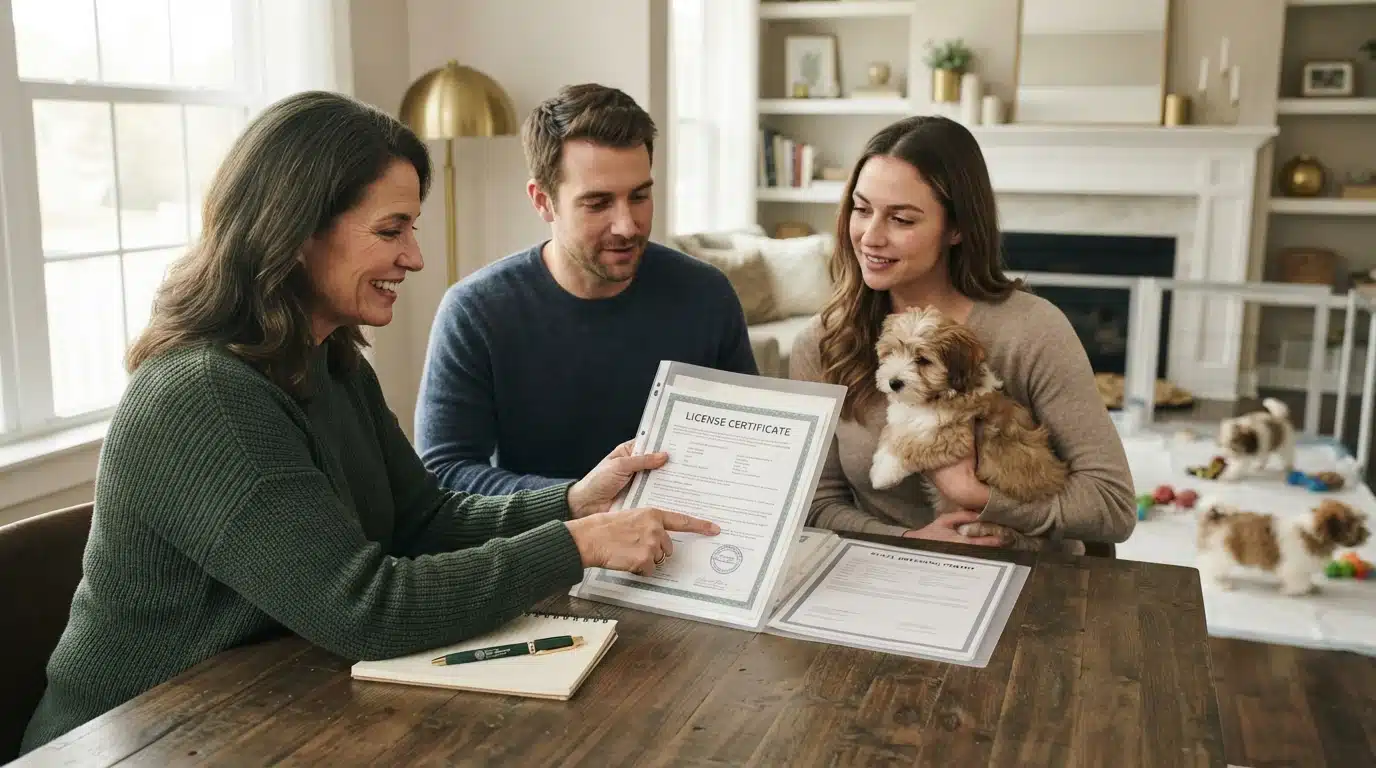
Ask for each set in writing, not as a verbal yes.
- Puppy health records. A vet exam date, vaccinations given, deworming history, and a microchip number.
- Parent clinical screening. Certificates from the Orthopedic Foundation for Animals (OFA) for hips, patellas, and eyes, ideally with a CHIC number confirming all required tests were done.
- DNA results. A breed-appropriate genetic panel listing each marker and whether each parent is clear, a carrier, or affected.
Keep copies. Reputable breeders send them without hesitation.
Screening to request for Havanese parents
Havanese parents should hold current OFA evaluations for hips, patellas, and eyes, which is what the breed’s CHIC number covers. The Havanese Club of America spells this out in its 2025 health statement, so ask breeders to match it. Also request patellar luxation certification and an annual eye examination certificate dated within the past year. For a deeper list of questions, our guide to health-tested puppy parents walks through what to ask and why.
Screening to request for Havapoo and Cavapoo parents
Mixed breeds have no single parent club list, so screen for both sides of the cross. Havapoos need Havanese tests plus Poodle screening; Cavapoos need Cavalier King Charles Spaniel testing, including mitral valve disease screening, plus Poodle tests. Cardiac screening matters most here because Cavaliers carry a high risk of heart disease. Verify each certificate in the OFA database yourself.
What a full test list looks like in practice
A complete file fits on a few pages: both parents’ OFA numbers, eye exam dates, cardiac results, and a DNA panel. If a breeder can produce all of it quickly, you have found someone worth trusting.
Genetic Health Tests: What DNA Panels Can and Cannot Tell You
A DNA panel can tell you which gene variants a puppy inherited, but it cannot promise a healthy adult dog. It covers only the conditions tied to known genes, not heart, knee, or eye problems that develop later. Here is the honest split.
| A DNA panel covers | A DNA panel cannot tell you |
|---|---|
| Carrier status for known gene variants | Whether the puppy stays free of heart disease |
| Risk for specific inherited disorders | Current heart, knee, or eye condition |
| How two parents’ results combine | Overall health on the day you bring the puppy home |
How inherited conditions work in small companion breeds
Many small-breed disorders are recessive. A puppy gets sick only when it inherits one copy of the variant from each parent. A carrier parent looks completely healthy, so carriers pass the gene along silently for generations. That is why testing both parents matters more than testing one. When both parents are clear, the puppies cannot inherit the condition, even if a panel never ran on the pups themselves.
What to ask for when a breeder offers DNA testing
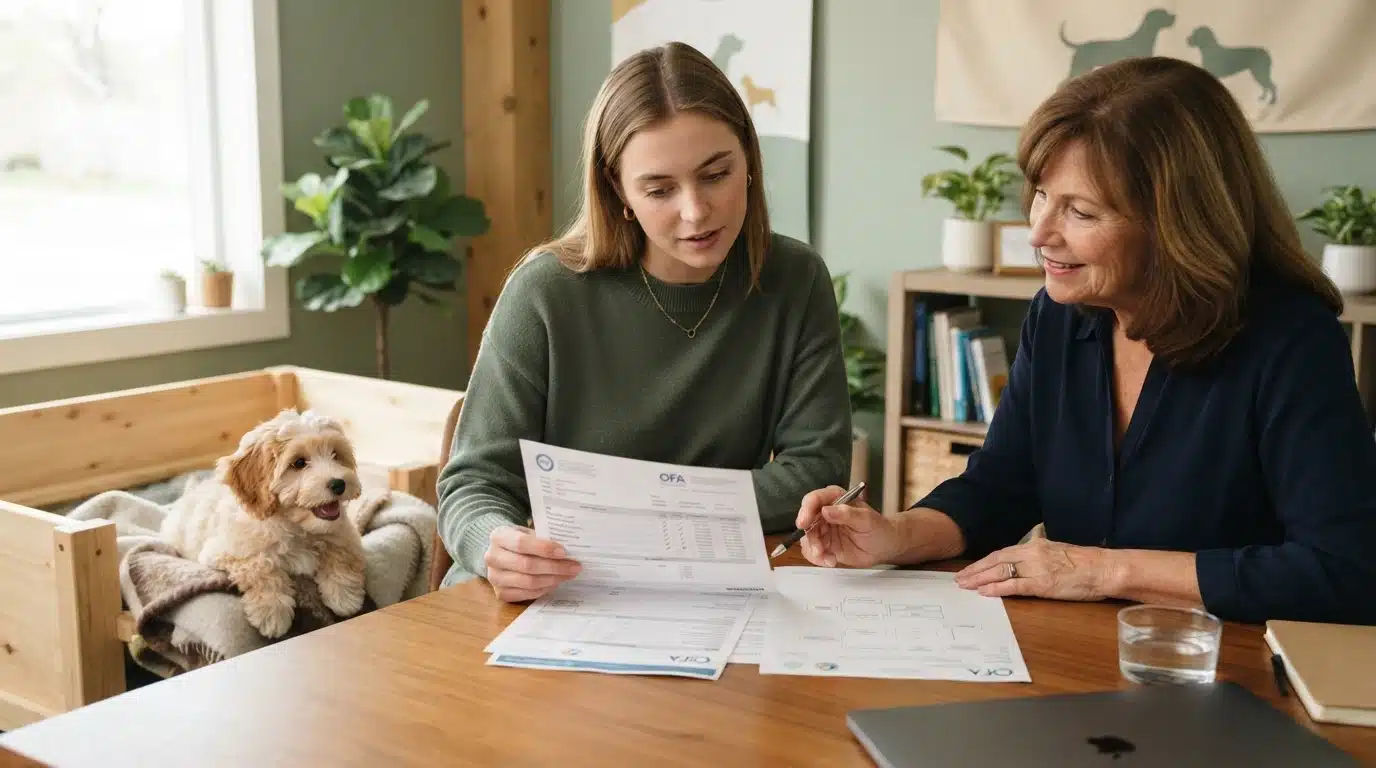
Ask for two things: the actual lab report and the parent names as registered. A screenshot is not enough. The report should list each condition tested and the result for each dog. Then match the parents on the report to the parents of your litter. If a breeder tested only one parent, ask what condition the other side could carry. A clear answer shows the pairing was planned, not hoped for.
How to talk to your veterinarian about DNA results
Bring the reports to your puppy’s first vet visit. Ask which results change your puppy’s watch list and which ones do not matter for a pet. A carrier result, for example, usually affects breeding decisions, not daily care. Your vet can also explain what the panel missed, so you know which exams still matter each year. Shared results make checkups sharper and save you worry later.
Understanding CHIC, OFA Numbers, and What Health Tested Actually Means
A CHIC number and a health certificate are not the same thing. A CHIC number shows a dog finished its breed’s screening list and the owner made the results public. A health certificate is a short vet exam, usually for travel, and tells you almost nothing about inherited disease risk. That difference shapes how you should read every “health tested” claim.
What OFA records and how to look up a parent’s record
The OFA database stores test results for hips, elbows, patellas, eyes, cardiac, thyroid, and DNA panels. Ask the breeder for each parent’s registered name, then search it on the OFA site yourself. Match the dog’s microchip or birth date so you know you found the right animal.
What a CHIC number does and does not mean
Per OFA’s CHIC program, a number is issued when a dog completes every breed-specific test and the owner opts into public results. It is a completion badge, not a passing grade. Abnormal results still earn a CHIC number, so always read the actual scores.
Marketing phrases to translate before you buy
| Phrase | What it may actually mean |
|---|---|
| “Health tested parents” | One test done, possibly a failed result |
| “Vet checked” | A wellness exam, not genetic screening |
| “CHIC eligible” | Tests planned, no results posted yet |
| “Health guaranteed” | A contract promise, not screening proof |
Ask for the specific test, the result, and the registry number. Serious breeders, including us, expect these questions and answer them with paperwork.
Tip: request links to each parent’s OFA page before you place a deposit, and see which genetic health tests every puppy should have for the full checklist.
Breed-Specific Screening: What Each Parent Breed Requires
Havanese screening, per the parent club
Ask for three items on every Havanese parent. The club’s own guidance, updated in its 2025 health statement, lists an annual eye exam, a hip x-ray, and patella (knee) certification. BAER hearing testing was dropped from CHIC requirements in 2022. A breeder who can show all three reports is keeping pace with the breed’s current standard.
Cavalier King Charles Spaniel screening for Cavapoo parents
Cavaliers carry known heart risk, so mitral valve disease screening is the non-negotiable request here. Ask for a cardiology exam by a board-certified cardiologist, an annual eye examination certification, and patellar luxation certification on both Cavapoo parents. Hip evaluation is worth requesting too. Because crosses are not covered by a single parent club, compare each parent against its own breed’s requirements.
Poodle parent records and the Havapoo cross
The Poodle side needs its own paperwork. Request OFA hip results, an eye exam within the past year, and patella certification. For toy and miniature Poodles, patellas matter most, since loose kneecaps appear in small lines. Ask whether the breeder ran a DNA panel for progressive retinal atrophy, an inherited eye disease in Poodles. A “vet checked” comment is not a substitute for any of these records.
Where records are published and how to check them
Legitimate results live in public registries, not in a text message. Search the OFA database by the parent’s registered name and confirm results, dates, and the CHIC number. If a breeder only offers paper copies, ask why the results are not posted. For background on how patellar luxation affects small crosses, see Sage Puppies’ comparison of Cavapoo and Havapoo joint health.
The Pre-Purchase Vet Exam: What to Request and What to Ask
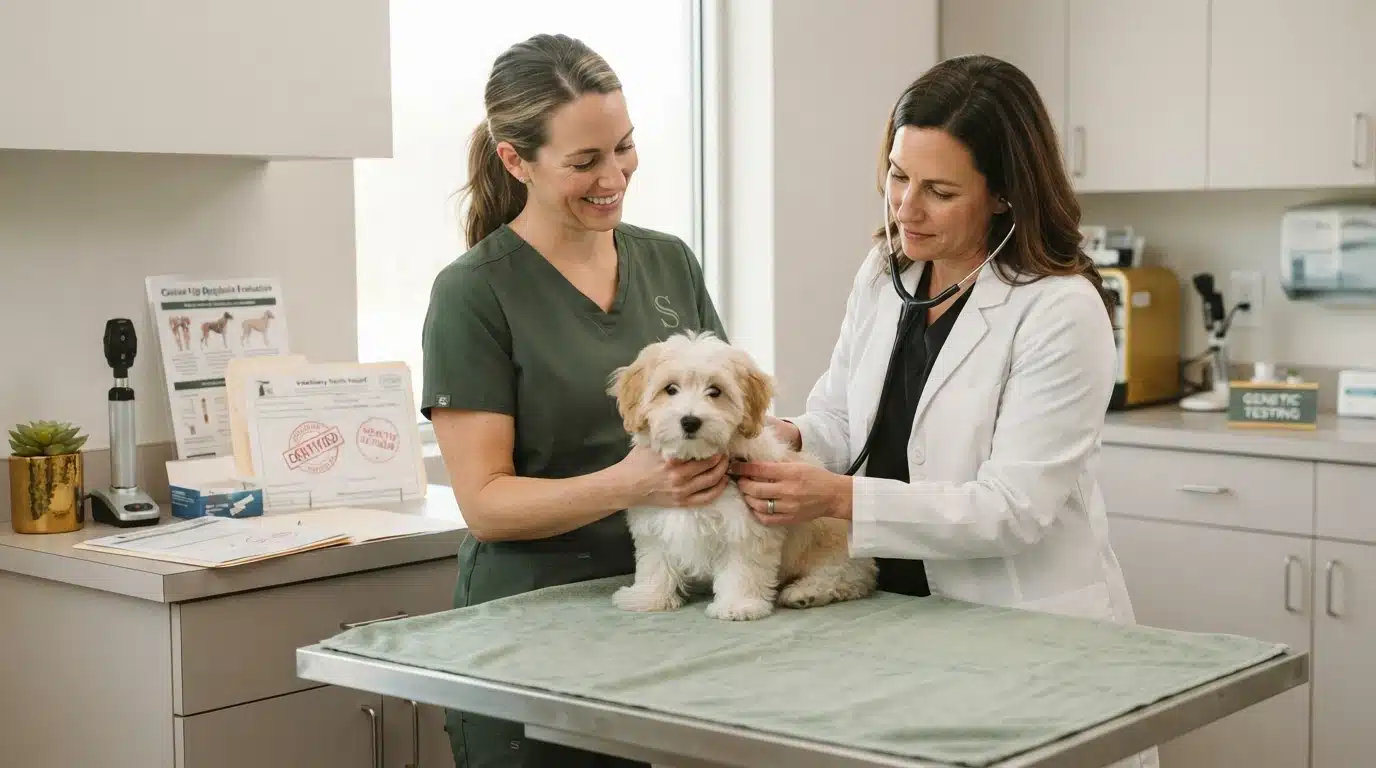
A pre-purchase vet exam is a full physical check of the puppy you plan to buy, done before money changes hands. What does it actually check? Usually this:
- Heart and lung sounds
- Eyes, ears, nose, and mouth
- Teeth alignment and bite
- Skin, coat, and any signs of parasites
- Knees and hips for looseness
- Weight, temperature, and body condition
- Vaccination and deworming records
Scheduling the exam, and who should attend
Book the exam within 24 to 48 hours of bringing your puppy home, or before pickup if the seller allows it. Use your own vet, not one the seller recommends. Plan for one adult plus whoever will handle daily care. Ask the clinic to send records ahead so your vet can review them first.
What the veterinarian actually examines
The vet works head to tail. They listen to the heart for murmurs, check the eyes for cloudiness or discharge, and look at the bite. They flex the knees, since small breeds like Havanese and Cavapoos can show early signs of loose kneecaps. They also check for hernias, ear infections, and parasites, then compare findings against the seller’s puppy health records, as outlined in guides to a puppy’s first vet visit.
Questions to ask at the exam
- Is the heart and lung sound normal for this age?
- Does the bite line up correctly?
- Do the knees feel stable on both legs?
- Are these records complete and consistent?
- What should we watch for in the next two weeks?
Limits of a single exam
One exam captures one day. It cannot predict adult heart disease, inherited eye problems, or genetic conditions that appear later. That is why parent screening and DNA results, covered earlier, matter more for long-term risk. Use the exam to confirm the puppy is healthy today, not disease-free for life.
Red Flags and Verification: Confirming Records Before You Pay
A five-step verification sequence before you pay
Verify a breeder’s records in this order:
- Ask for the parents’ registered names and the puppy’s microchip number.
- Look up each parent in the OFA database yourself rather than trusting screenshots.
- Check the DNA panel report for carrier status on breed-relevant conditions.
- Match dates: results must predate the breeding, not follow the litter.
- Get every promise written into the contract.
A reputable program such as Sage Puppies expects these questions and answers them without hesitation.
Warning signs in how records are presented
Watch for vague answers, cropped screenshots, and results attributed to “the parents” without registered names. A registry lookup that returns nothing is a bigger problem than an honest gap. Be wary if the seller says results are “pending” for a parent already bred twice, or if DNA claims cover only one breed in a mixed litter. Pressure to pay before records arrive is the clearest signal to walk away.
When a record is genuinely missing
Not every missing item means a bad breeder, so ask why. Eye exams renew annually, and some screenings wait until a dog reaches full maturity, so a young parent may legitimately lack one result. What matters is whether the breeder explains the gap, shows the appointment plan, and puts written health terms in the contract. Silence or deflection is the actual red flag.
How Health Testing Fits into a Small-Breed Puppy Purchase
Health testing is what separates a careful breeder from a lucky one. Before you reserve a puppy, ask what was checked on the parents, not just how cute the litter is.
What a buyer can request before a reservation
Ask for three things in writing: the puppy’s own health records, the parents’ clinical screening results, and their DNA panel carrier status. Parents should have patellar luxation certification and a current eye exam on file. For purebred Havanese, the Havanese Club of America health statement expects breeders to test sires and dams annually. Any breeder can claim healthy lines. A serious one sends results before you pay a deposit, without prompting.
Why breed focus and written health terms matter
Each breed carries its own risks, so testing lists differ. A Havanese parent club requires OFA Hips, OFA Patellas, and annual CERF eye exams for a CHIC certificate, while doodle crosses need both parent breeds covered. Written contract terms protect you, too. Ask what the breeder covers, for how long, and what proof the guarantee needs. At Sage Puppies, every litter follows the same documented process, so families know what was tested and why. Get the answers in writing, then compare them to the breed standard.

You now know which health tests to ask for and how to read the answers. Bring that list with you when you talk to any breeder, including us. At Sage Puppies, every parent’s screening results are shared up front, so you can compare and apply with confidence.
Frequently Asked Questions
Q1: What health tests do Havanese, Havapoo, and Cavapoo puppies need?
Ask for three record sets: the puppy’s own vet exam and records, clinical screening on both parents (hips, patellas, eyes, plus cardiac for Cavalier lines), and DNA panel results showing each parent’s carrier status.
Q2: Which genetic and orthopedic tests should the parents of a small breed puppy have?
Request OFA hip and patellar certifications, an annual eye examination certification, and cardiac screening. Add a DNA panel covering breed-relevant conditions, such as progressive retinal atrophy in Poodle lines.
Q3: Which OFA and DNA test numbers should a breeder show me for the puppy’s parents?
Ask for each parent’s registered name, OFA numbers for hips, patellas, eyes, and cardiac, a CHIC number, and the full DNA lab report. Verify every result yourself in the OFA database.
Q4: Do the puppies themselves need DNA testing?
Usually not. When both parents are clear of a recessive condition, puppies cannot inherit it, so parent results often cover the litter.
Q5: Is a pre-purchase vet exam enough on its own?
No. It confirms the puppy is healthy that day. Long-term risk comes from parent screening and DNA results, so request all three record sets.
Q6: What if a parent is missing one screening result?
Some tests wait for maturity, and eye exams renew yearly. A good breeder explains the gap and documents a plan. Vague answers are the real warning sign.
Conclusion
Good breeders hand over paperwork before you ask for it. That single habit tells you more than any website photo.
This guide comes down to three requests: the puppy’s own health records, clinical screening on both parents, and DNA panel carrier status. Verify everything yourself in the OFA database, match dates to the breeding, and get written health terms in the contract. A pre-purchase vet exam confirms the puppy is healthy that day, but parent screening protects the years after. Breeders who hesitate, crop screenshots, or pressure you to pay first are showing you exactly who they are.