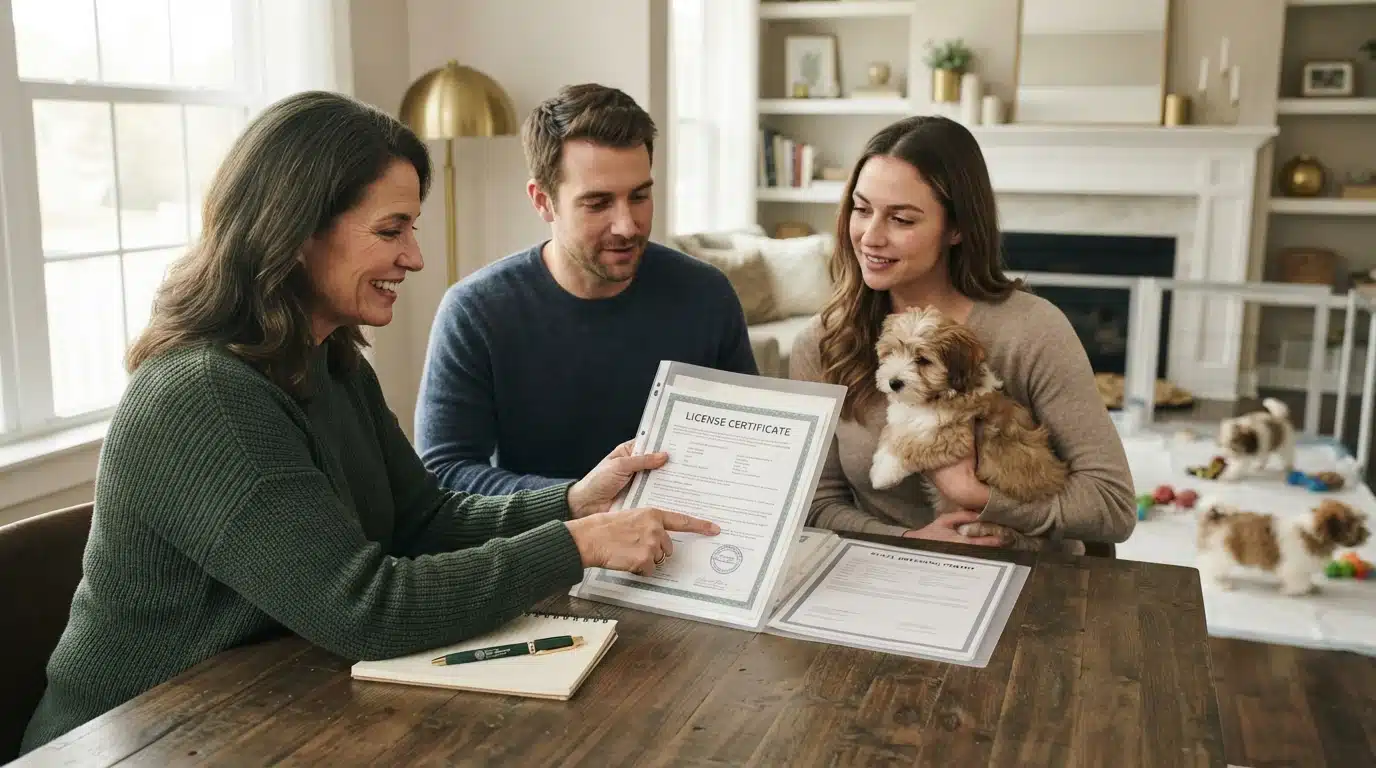
Quick Summary: Finding a trustworthy puppy breeder requires patience, independent verification, and refusing pressure to pay before checking the seller, puppy photos, parent health tests, and business details. Look for OFA and CHIC records, a live visit or video tour, puppies at least eight weeks old, written contracts with a return clause, and safe payment methods. Walk away from wire transfers, gift cards, urgent deposit demands, stolen photos, vague health claims, and breeders who refuse questions or meetings. Sage Puppies emphasizes these same verification steps and lifelong support for Havanese, Havapoo, and Cavapoo families in Utah.
You type “puppy breeder near me” into your phone at 9 p.m., and within a minute you have six options, four of them ads with the same puppy photo and a price that feels almost too good. Figuring out how to find a good puppy breeder is the hardest part of bringing home a dog, because the listings all look alike and the scams are good at looking real.
This guide walks you through where to find a puppy breeder, how to research a puppy breeder, and how to check records like OFA and CHIC health testing before you send a deposit. Every step uses current primary sources, so you can verify rather than trust a sales page.
We run a small Havanese, Havapoo, and Cavapoo program in South Jordan, Utah, and we built this playbook from the same checks we ask our own families to run.
Step 1: Start Your Search in the Right Places
A trustworthy puppy breeder rarely shows up first in a late-night search. You find one through channels with built-in accountability:
- Breed-specific clubs, which hold members to a written code of ethics
- Breeder directories that verify litters and registrations
- Word of mouth from vets, groomers, and local trainers
- Local shelter and rescue referrals, even for purebred puppies
Each channel gives you a starting name, not a finished decision. Verification comes in Step 2.
Breeder directories and breed-specific clubs
Breed clubs are the strongest starting point for purebreds. The American Kennel Club’s AKC Marketplace connects buyers with breeders who register their litters, and parent clubs such as the Havanese club list members who commit to health testing their breeding dogs. Directories help, but treat them as leads. A listing proves someone paid a fee, not that they raise healthy puppies.
Ask your vet, groomer, and local shelter
Your vet sees breeder-raised puppies every week and knows which local programs produce well-socialized dogs. Groomers and trainers hear the same rumors you do, only sooner. Shelters and breed-specific rescues often know responsible breeders in the area, because ethical programs stay in contact with them. Ask one direct question: “Where would you send a friend looking for a Havanese puppy?” People answer honestly when they are not selling to you.
Local search filters that narrow the noise
Search “reputable puppy breeder near me” plus your city, then filter by proximity rather than ad spend. Ignore the listings with stock puppy photos and prices that shift weekly. Map results within an hour’s drive so you can visit in person, which matters more than any website. For small breeds like Havanese, Havapoo, or Cavapoo, add the breed name to your search to cut through generic puppy listings. Some families planning puppy delivery versus local pickup widen the radius to two or three hours. If breeder cost is shaping your radius, it helps to know what reputable breeders typically charge before you compare listings.
Step 2: Research the Breeder Before You Send Money
Learning how to find a good puppy breeder comes down to this step: verify everything before a deposit leaves your account. A trustworthy breeder’s online footprint holds up under checking. A scammer’s does not.
What a breeder’s website should and should not show
A real breeder’s site names the people behind the puppies, lists the breeds they actually raise, and shows photos of adult dogs, not just litters. Look for health testing talk, a clear process, and honest limits, like waitlists. Be wary of sites that stock “every breed,” push countdown timers on prices, or hide a phone number. Small programs, including boutique Havanese and Cavapoo breeders in Utah, usually show fewer dogs and more detail.
Verify the business and the photos
Run a reverse image search on two or three puppy photos. Stolen pictures are the most common scam signal. Then confirm the business itself: search the state’s business registry for a registered entity, and check the address is real. Ask for a live video call so you can see the puppy, the mother, and the home in one shot. A breeder who refuses video and insists on only delivery is a hard pass.
Read the reviews for patterns, not adjectives
Ignore five-star one-liners and angry rants. Read for patterns instead. Do past buyers mention health records arriving on time, honest answers about temperament, and support after pickup? Repeated complaints about sick puppies or vanished sellers matter more than any single glowing review. Check reviews off the platform too, since scammers often farm praise on their own pages.
Warning: Never pay with gift cards, wire transfers, or payment apps with no buyer protection. A credit card leaves a paper trail; those methods leave nothing.
Step 3: Ask These Questions and Check the Records
Anyone learning how to find a good puppy breeder eventually reaches the same moment: the phone call. A legitimate breeder will answer your questions freely and ask plenty of their own. Watch for these trust signals in order:
- Can I visit or video call and see the puppy with its mother?
- What health testing have the parents had?
- What does your health record for this puppy include?
- How do you socialize the litter?
- What are your deposit and return terms?
- Will you take the dog back at any age?
Three layers of health information, explained
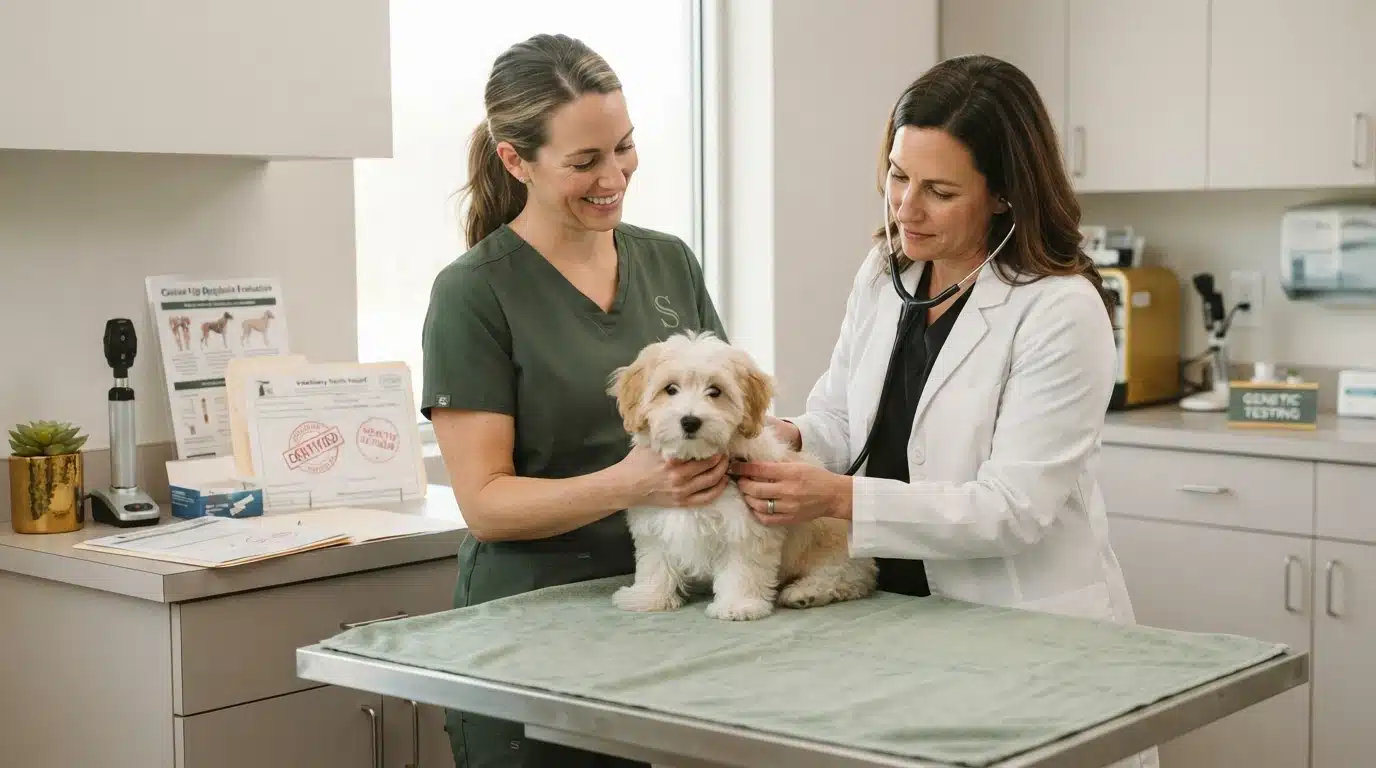
Verifying health testing means checking three separate layers. Puppy records are the documents for the dog you take home: vaccination dates, deworming, and a vet exam. Parent screening covers the mother and father, such as OFA hip, eye, and heart evaluations, plus CHIC numbers you can look up yourself. DNA results show whether either parent carries genes for breed-specific conditions.
Each layer matters. A stack of puppy shots tells you nothing about inherited disease, so ask to see the parents’ test results, not just a verbal “vet checked” answer.
Checking public records yourself
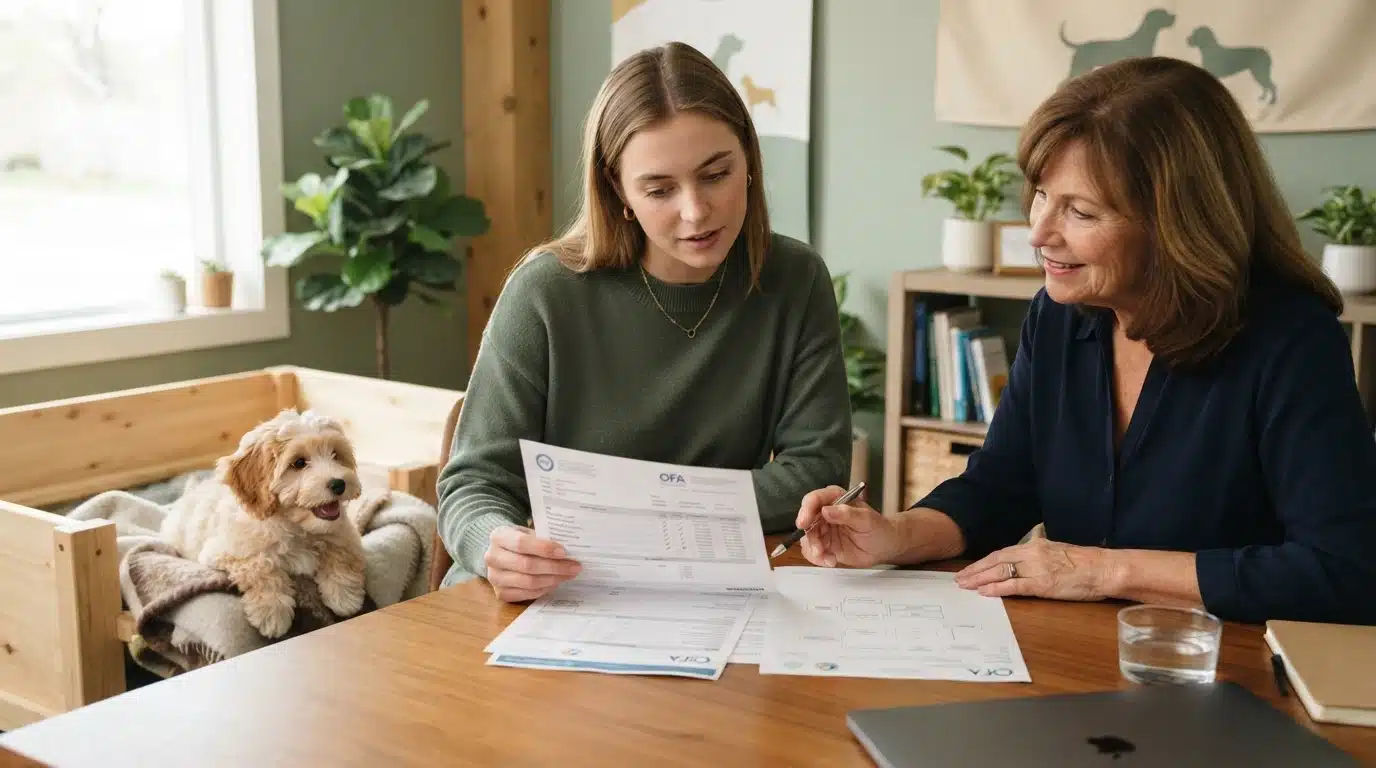
Good breeders expect verification. Search the OFA website for the parents’ registered names to confirm hip, eye, and cardiac results. A CHIC number means the breeder completed a breed-specific set of health checks. If anything cannot be found or the breeder refuses to share names, treat that as a clear red flag.
Step 4: Meet the Puppies and Watch How the Breeder Handles You
Photos and paperwork only tell you so much. The visit, in person or on video, shows you how the puppies live and how the breeder treats people. The AKC lists openness and a clean, enriching home environment among the signs of a responsible breeder, and you can only confirm both by watching closely.
What to look for during a visit or video walkthrough
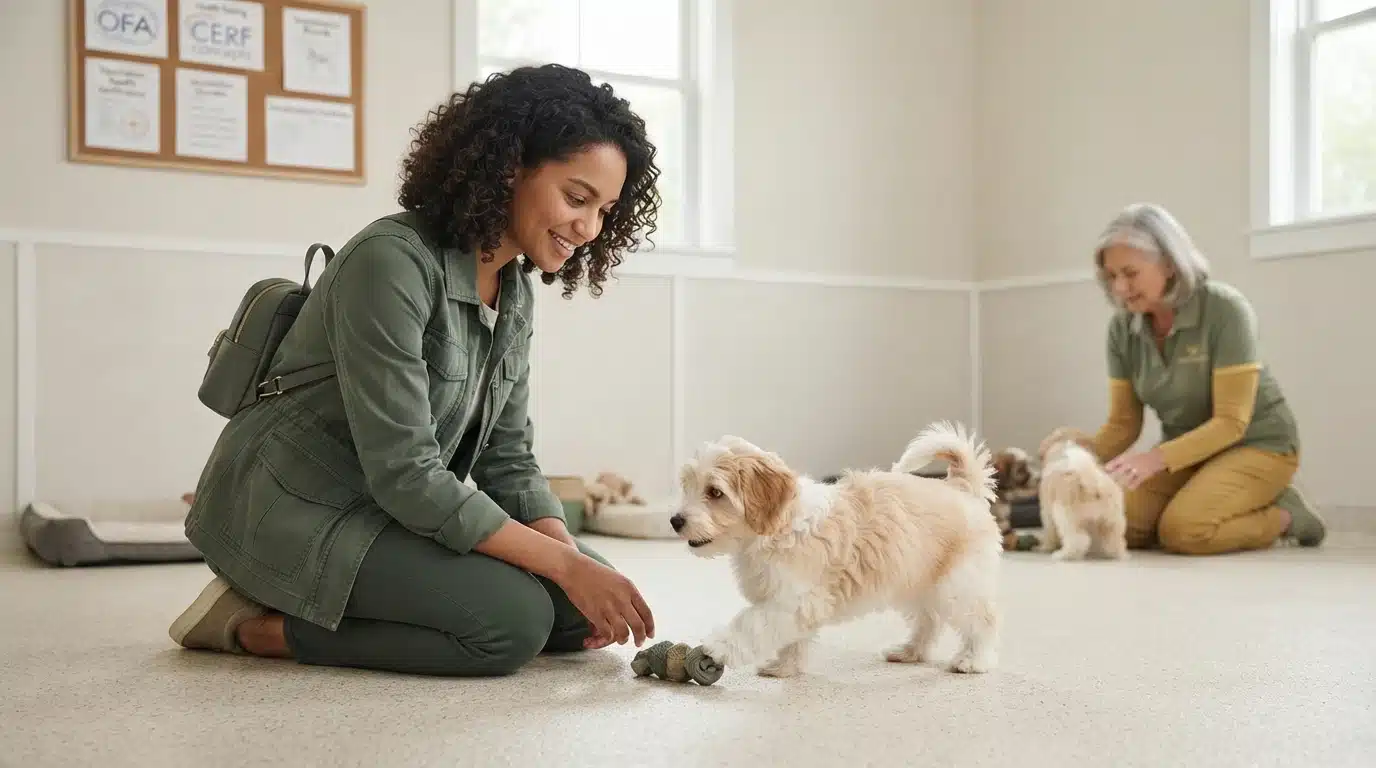
Ask for a live video tour if you cannot come, and ask to see where puppies sleep, play, and eat. Clean flooring, fresh water, toys, and room to move matter more than decor. Request to meet the mother dog and see the litter together. Puppies raised in a home setting, around normal noise and handling, usually adjust faster once they leave. A serious program will narrate daily routines without prompting.
Watching behavior without running a test
You are not grading the litter. You are watching how they respond to everyday moments. Curious puppies wander toward you. Shy ones may hang back, then warm up within minutes. Both can turn into great companions. What you want is a breeder who describes each puppy honestly instead of steering you toward the fastest sale. Good socialization practices, as one breeding group explains, show up in how calmly puppies handle new people and sounds, not in a staged performance for visitors.
A breeder who asks you hard questions is a good sign
Expect the interview to run both ways. A careful breeder will ask about your home, your schedule, kids, other pets, and your experience with dogs. Some will turn down a buyer who is a poor fit, and that is exactly what you want to see. When Cassie Milar matches families with her Havanese, Havapoo, and Cavapoo litters, the questions come before any deposit is discussed. If you can visit locally, this guide to visiting a Utah breeder safely walks through what to check on site.
Red Flags That Should End the Search
Most puppy scams and bad breeders show their hand early. The most common puppy breeder red flags are: payment by wire transfer, gift card, or app like Zelle; pressure to pay a deposit today; “hypoallergenic” or health-guarantee claims with no test records; refusing video calls or visits; and selling puppies under eight weeks old. Any one of these should end the conversation.
Payment and pressure red flags
Never send money by wire transfer, gift card, crypto, or payment apps with no buyer protection. Scammers ask for these because the money cannot be traced or reversed. Reputable breeders accept checks, cards, or documented deposit processes and put terms in writing.
Pressure is the second signal. A breeder who says a deposit must be paid within the hour, or that three other families are “sending money right now,” is rushing you past verification. Walk away.
Claims that no responsible breeder makes
Be skeptical of “hypoallergenic, guaranteed,” “vaccinated and trained,” or health promises with no paperwork behind them. No breeder can promise a puppy will never trigger allergies or never get sick. Ask for proof instead: OFA or CHIC records, parent health tests, and vet exam dates. If answers stay vague, the claim is marketing. A good breeder also never breeds females on every heat or offers “teacup” sizes as a selling point.
If a photo looks familiar, run a reverse image search. Scammers reuse stolen puppy pictures across ads and websites.
Refusing to meet, and puppies placed too young
You should be able to visit, or at least join a live video call where you see the puppy moving around its mother. Excuses like “we only ship” or “the location is private for safety” usually hide a puppy mill or no real litter at all.
Age matters just as much. Puppies should stay with their mother until at least eight weeks. Breeders sending puppies home at five or six weeks cut off critical socialization. Keep checking, because the details in how to visit a breeder and inspect puppies safely will catch what ads hide.
Contracts, Deposits, and the Rules in Your State
A good breeder hands you a written contract before money changes hands. Read it slowly, because the details decide what happens if something goes wrong.
What the contract should actually say
A solid puppy purchase contract should include:
- Full identification of both buyer and seller, with contact details
- The puppy’s date of birth, breed, sex, and microchip or registration numbers
- A health record showing vaccinations and deworming dates
- Payment terms, including what the deposit covers and when the balance is due
- A return-to-breeder clause, which requires you to give the dog back to the breeder if you can’t keep it at any point in its life
- Any health guarantee, spelled out in plain language with deadlines and required vet exams
State rules you should read before you pay
Twenty-two states have pet purchase protection laws, sometimes called puppy lemon laws. Depending on the state, you may return the dog for a refund, keep it and get partial reimbursement, or have vet bills covered for a covered condition. Most laws require prompt written notice and a vet’s certification, so timing matters. Utah has no lemon law, so your contract carries more weight there. Michigan State University’s Animal Legal Center keeps a state-by-state table, and it’s worth a read before you send a deposit anywhere. A breeder who puts refund terms in writing, the way our deposit and reservation terms spell out, is easier to hold accountable than one who promises verbally.
Delivery or Pickup: Deciding How Your Puppy Travels
What pickup actually involves
Pickup means you meet the breeder at their home, see the puppy’s living space, and watch how the dam interacts with your family. You handle paperwork in person, ask last-minute questions, and drive home with your puppy in a secured crate on the passenger side floor or back seat. For families in Utah, this is the simplest path: bring a blanket that smells like home, plan a bathroom stop on longer drives, and keep the first ride calm and short.
When delivery is the right option
Delivery makes sense when the breeder you trust sits far away and no local program matches your standards. Ground transport, a flight nanny, or in-cabin airline travel can all work safely for a young Havanese, Havapoo, or Cavapoo, but costs and logistics vary. Ask who holds the puppy, how long the trip runs, and what happens on a delay. Some breeders, including small Utah programs like Sage Puppies, arrange both options, so confirm the details before you pay a deposit.
After You Choose: What Lifelong Support Should Look Like
The relationship you want for the next decade
A good breeder stays in your life long after pickup day. The clearest sign is a return clause: your contract should state the breeder takes the dog back if you ever cannot keep it, at any age. Many breeders also keep first right of refusal, so the dog comes back to them rather than ending up in a shelter or a resale ad. Groups like the ASPCA treat this policy as a hallmark of a responsible breeder, and it should be spelled out in plain language before you sign.
Ask what support looks like week one, year one, and year ten. Expect answers to feeding and grooming questions, updates on the parents’ health, and honesty when something goes wrong. The breeder you pick becomes your dog’s first advocate. Choose one who plans to be there.

Ready to skip the late-night ad scrolling and meet a breeder who answers every question openly? Sage Puppies raises Havanese, Havapoo, and Cavapoo puppies in South Jordan, Utah, with owner-managed matching and clear records. Browse available puppies, review the application, and take your next step today.
Frequently Asked Questions
Q1: Where can I find a trustworthy puppy breeder in my area?
Start with breed clubs, the AKC Marketplace, and referrals from vets, groomers, or trainers. Then verify everything: health records, business registration, and a live video call.
Q2: What makes a puppy breeder trustworthy and legit?
Look for these signals: they welcome visits or video calls, share OFA and CHIC test results, answer questions openly, ask about your home, and offer a written return clause.
Q3: How do I vet a puppy breeder before visiting their home?
Run a reverse image search on photos, confirm the business in your state registry, read reviews for patterns, and request a video tour showing the puppy with its mother.
Q4: Should I pick up my puppy or use delivery?
Pickup lets you inspect the home and meet the dam. Delivery works when no local breeder meets your standards, but confirm who handles the puppy and trip details first.
Q5: What payment methods are safe for a puppy deposit?
Use checks, cards, or documented processes with buyer protection and written terms. Never pay by wire transfer, gift card, crypto, or apps that cannot reverse a payment.
Q6: How old should a puppy be before coming home?
At least eight weeks. Puppies separated earlier miss critical socialization with their mother and littermates.
Conclusion
Learning how to find a good puppy breeder comes down to patience and verification. Start with breed clubs, directories, and referrals, then research the breeder before money moves. Ask direct questions, check OFA and CHIC records yourself, and watch how the breeder handles you during a visit or video call.
Three signals matter most: open records, a written contract with a return clause, and a breeder who interviews you as hard as you interview them. Wire transfers, pressure tactics, and puppies under eight weeks should end the conversation.
Verification takes a few evenings. The dog you choose will be with your family for a decade or more, so it pays to slow down, check every claim, and pick a breeder who welcomes the scrutiny.