Quick Summary: Meet family-raised puppies in a planned one to two hour home visit, observe the dam and litter environment, test each puppy’s recovery and comfort, and verify dated health records and parent testing. Do not pay a deposit until you have met the puppies, reviewed the contract, and confirmed guarantees, vaccination details, and return terms in writing. Sage Puppies supports this process by requiring an application before the visit and encouraging families to meet the litter before discussing payment.
Most buyers meet family-raised puppies in a living room, on the breeder’s terms, with about forty minutes and no plan. That unstructured visit is where the worst buying decisions happen. You fall for a face, miss the warning signs, and sign paperwork you have not really read.
This guide fixes that. It walks you through a breeder home visit in order, from the first phone call to the second puppy visit. You get request scripts, a puppy breeder home visit checklist, record checks, and clear go-or-walk-away criteria. Every step draws on published veterinary and welfare guidance, not breeder marketing, and it applies whether you are visiting homes with Havanese, Havapoo, or Cavapoo puppies for sale near you in Utah or across the country.
Step 1: Request the Visit and Confirm What You Will See
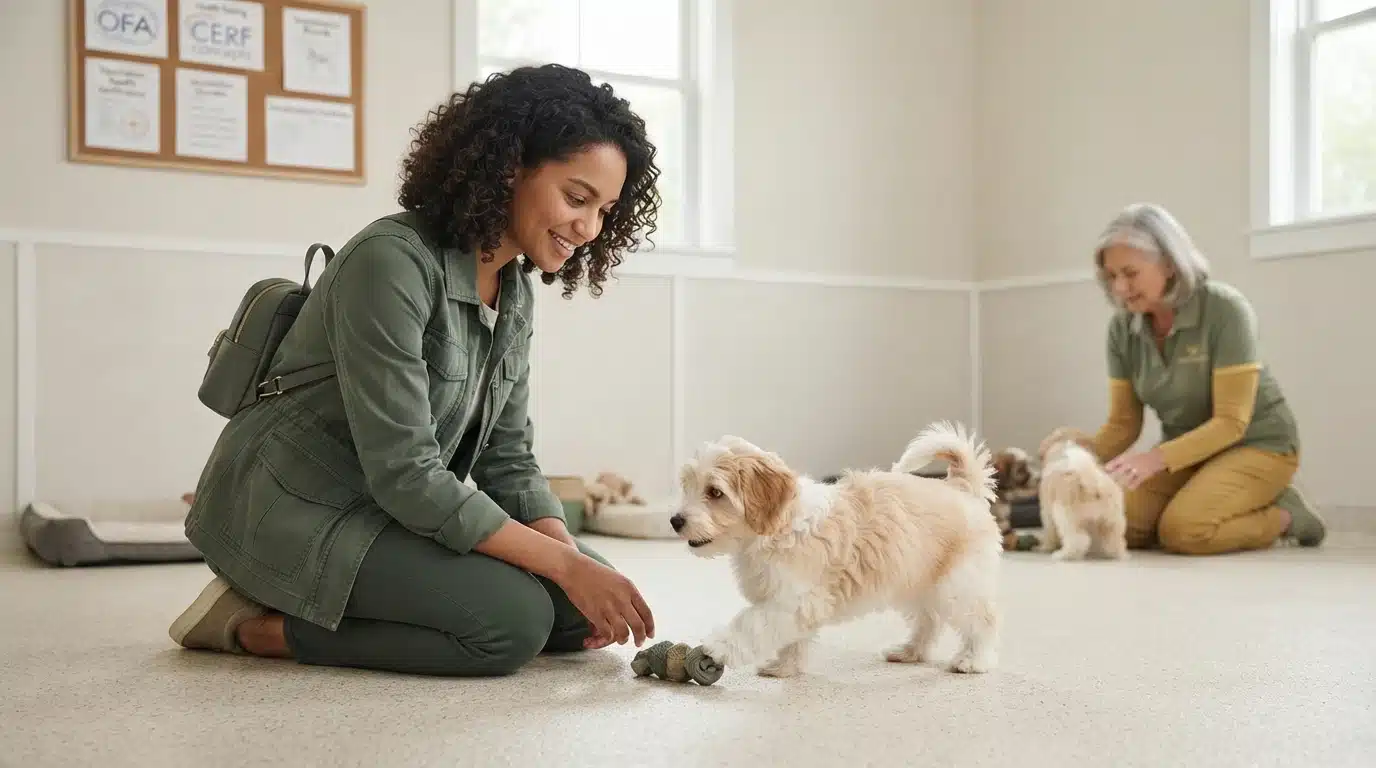
Meeting family raised puppies in person should start before you drive anywhere. Email or call the breeder, say you are interested in a puppy, and ask to visit the home where the litter lives. A confident breeder will suggest a time, usually after the puppies are four to five weeks old, and tell you exactly what the visit covers. Ask whether you will meet the mother and see where the puppies sleep and play. Some programs also offer delivery or a video call when travel is hard, and our buyer’s checklist walks through what to confirm either way.
What You Should Be Able to See on a Visit
A legitimate breeder has nothing to hide, so expect access. You should be able to see:
- The mother (dam) and the whole litter together
- The actual space where puppies eat, sleep, and play
- The puppies moving, eating, and reacting to people
- Feeding setup and general cleanliness
Note the puppies’ body condition, clear eyes and noses, and how they respond to you. Use your own puppy breeder home visit checklist on your phone so nothing gets skipped.
Questions About Visits That Should Concern You
Hesitation is not always a problem, but some answers are. Watch for:
- “Visits are after the deposit only”
- “You can meet at a parking lot instead”
- No mother on site, with no clear reason
- Vague excuses about the puppies’ location
More than one of these is a real red flag.
Step 2: Prepare Your Household and Your Questions
Plan on a puppy visit that lasts one to two hours. That window gives you time to watch the litter wake up, play, and settle again, plus a calm conversation with the breeder. Shorter than an hour and you mostly see a snapshot; a rushed visit is where buyers miss the clearest signs.
Build a Short Question Set Before You Leave
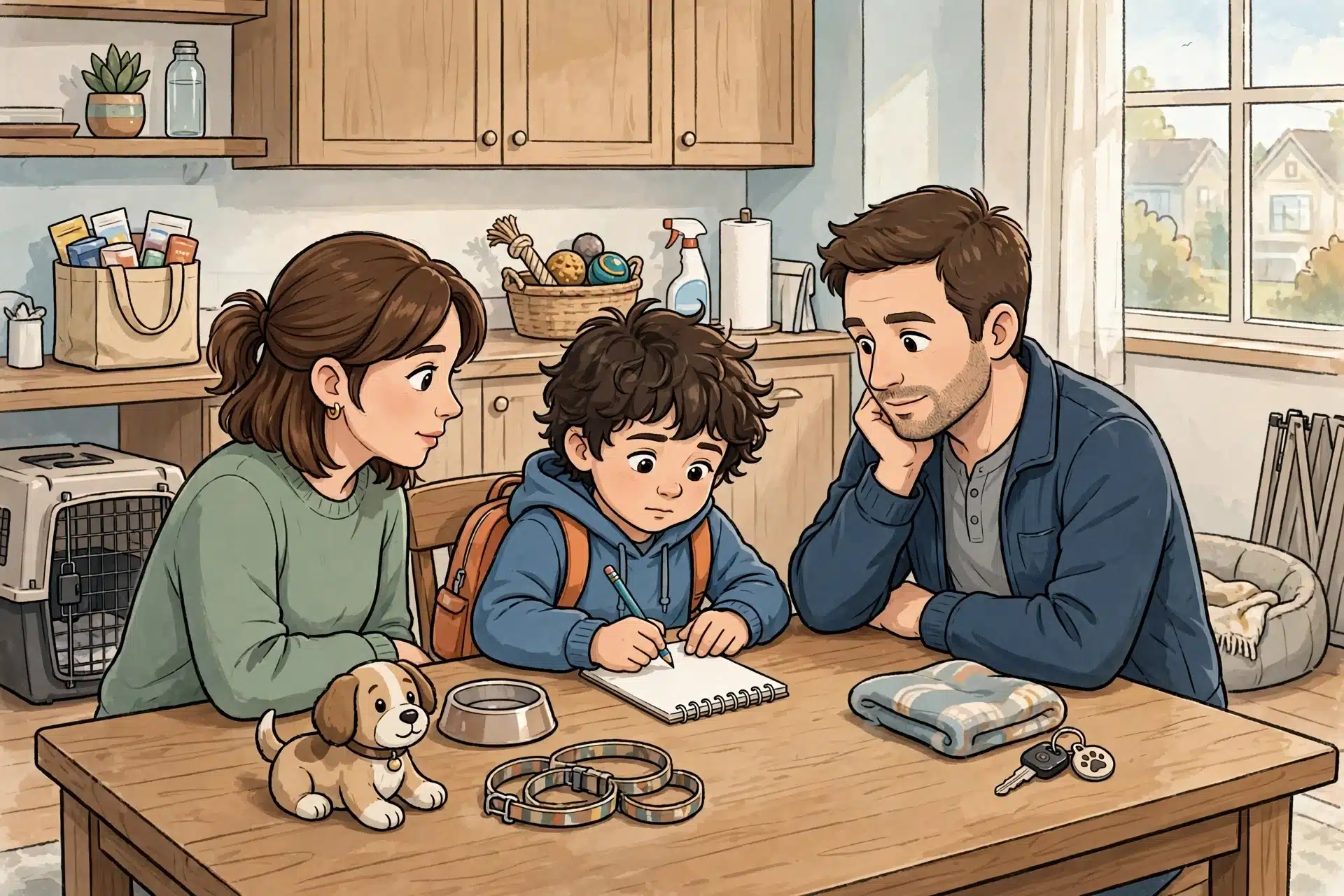
Write your questions down the night before. Twelve or so is plenty, and each one should have a follow-up ready. Useful starters include:
- Where were the puppies born, and where do they sleep?
- May I see the dam, and can she be handled?
- How do you handle early socialization and household habituation?
- What vetting, deworming, and microchip paperwork will I receive?
- What happens if a health issue appears in the first year?
If a program asks you to apply before a visit, that is normal for small breeders. Sage Puppies, for example, starts with an application, so finishing yours early means the visit is about meeting the puppies, not starting paperwork.
What to Bring and What to Leave Behind
Bring your written questions, a phone for photos, and clean clothes. Leave the kids’ snacks, other dogs, and new shoes at home. Some homes ask visitors to remove shoes or use hand sanitizer before handling puppies, so wear easy slip-offs.
Recording What You See
Take notes within ten minutes of leaving. Note the dam’s behavior, litter energy, and anything the breeder said that surprised you. Photos help, but written impressions fade slower than you think, and side-by-side notes make comparing breeders simple.
Step 3: Observe the Home Environment and the Dam
You learn more from ten quiet minutes of watching than from any brochure. This part of the puppy breeder home visit checklist covers two things: where the litter lives and how the mother behaves around you. Watch first, ask later. The answers your eyes give you are the honest ones.
What the Puppy Area Should Look and Feel Like
Start with the basics. The space should be clean, dry, warm, and free of strong ammonia smell. Puppies need room to stand, turn, and play, with bedding that stays dry and surfaces they can grip. Look for toys, a whelping box or penned area, and fresh water. according to the AVMA, early experiences during the weeks you are visiting shape behavior for life, so a lively but tidy space matters more than a fancy one.

What the Dam Tells You About the Litter
The mother is your best preview of adult temperament. She should look healthy: bright eyes, clean coat, comfortable weight, and no signs of pain when she moves. Notice how she greets you. A well-bred dam may be curious or watchful, but not cowering or lunging. The AVMA notes that a dam’s condition and behavior reflect her care, so ask how many litters she has had and how she is housed between them. Breeders who breed their dams responsibly will answer easily.
Signs the Puppies See Ordinary Human Life
Puppies raised in a home act like they live in one. They should startle briefly at a dropped pan, then recover and investigate. Watch for calm reactions to vacuum noise, kids, and doorbells, and loose, playful bodies when people handle them. Most breeders who raise family-raised puppies welcome this handling, because it builds the confidence you will rely on later. If the puppies bolt and stay frozen, ask what daily life looks like for the litter.
Ask to see the puppies where they sleep and eat, not on a table picked for the visit.
Step 4: Meet the Puppy and Assess Development and Temperament
Photos and videos are useful, but meeting family raised puppies in person tells you what a listing never can: how each pup recovers, explores, and settles. This is where you watch temperament with your own eyes.
A Simple Handling Sequence to Run for Each Puppy
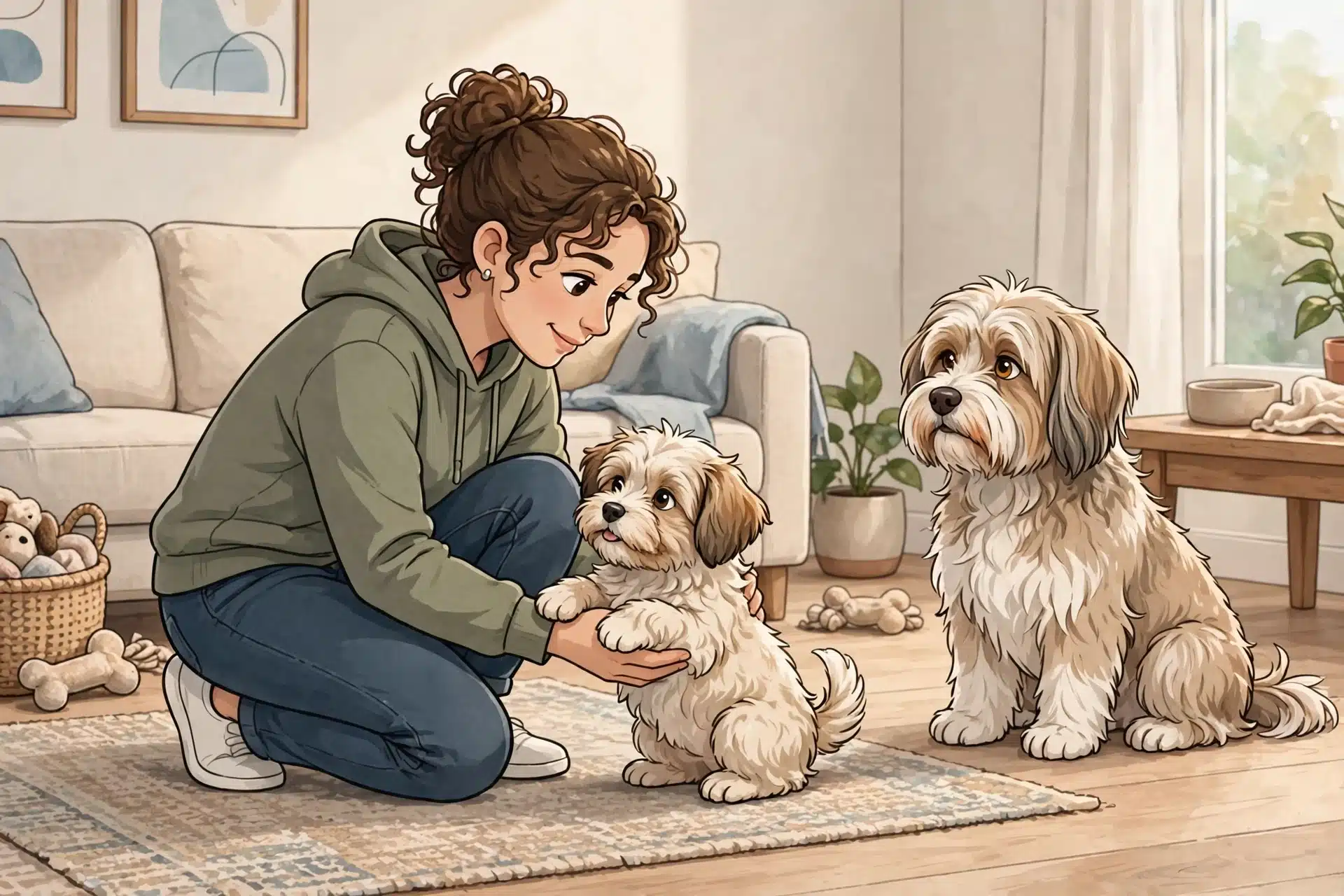
Use the same short sequence on every pup so you compare fairly. Start by sitting on the floor and letting the puppy approach you. Pick it up, hold it for thirty seconds, and set it down. Cradle it belly-up briefly, touch its ears and paws, and walk a few steps with it. Then drop a soft key ring a few feet away and note what happens. Write down how each puppy handled each step, because memory fades fast when you visit more than one litter in a day.
Reading Recovery, Comfort, and Interest
What matters most is not a bold first reaction but how quickly the puppy recovers. A pup that startles, shakes it off, and returns to play is a good sign. Snuggling into your arms, chewing calmly on your shoelace, or following you around all show comfort and interest. Breeders and trainers who study puppy selection agree that single snapshots mislead, so watch for patterns across the whole visit, and note that pups go through passing fear stages as they grow, as Assistance Dogs International explains.
What One Visit Cannot Tell You
A puppy that hides once may simply be tired or hungry, so resist judging on a single moment. Temperament also shifts during fear periods, and VCA Animal Hospitals notes that ongoing socialization shapes more of an adult dog’s behavior than any test does. Ask the breeder which pups have been boldest over weeks, not just today. When possible, schedule a second visit closer to pickup. Many breeders, including boutique programs like Sage Puppies, can tell you how each puppy has differed day to day, which is context no visitor can gather in an hour.
Step 5: Audit Health Records, Testing, and Ancestry
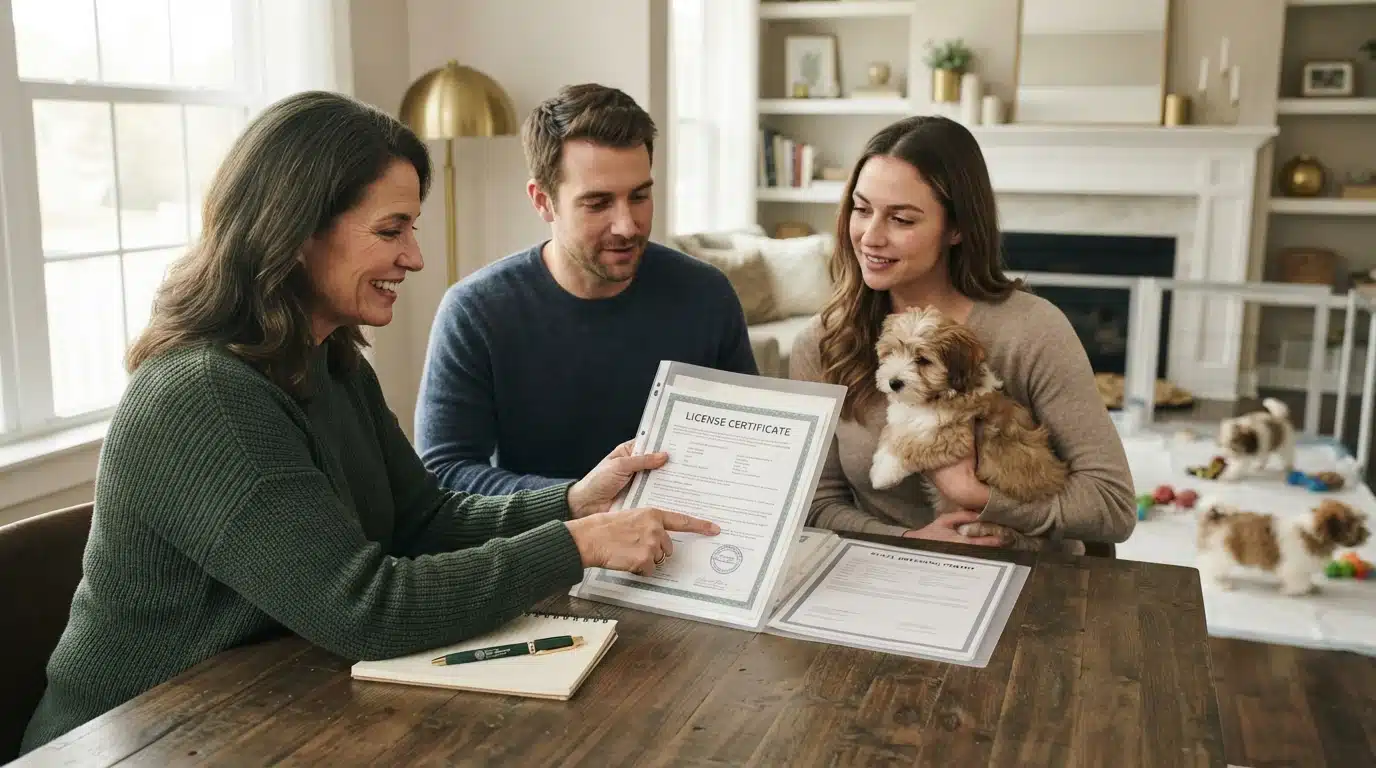
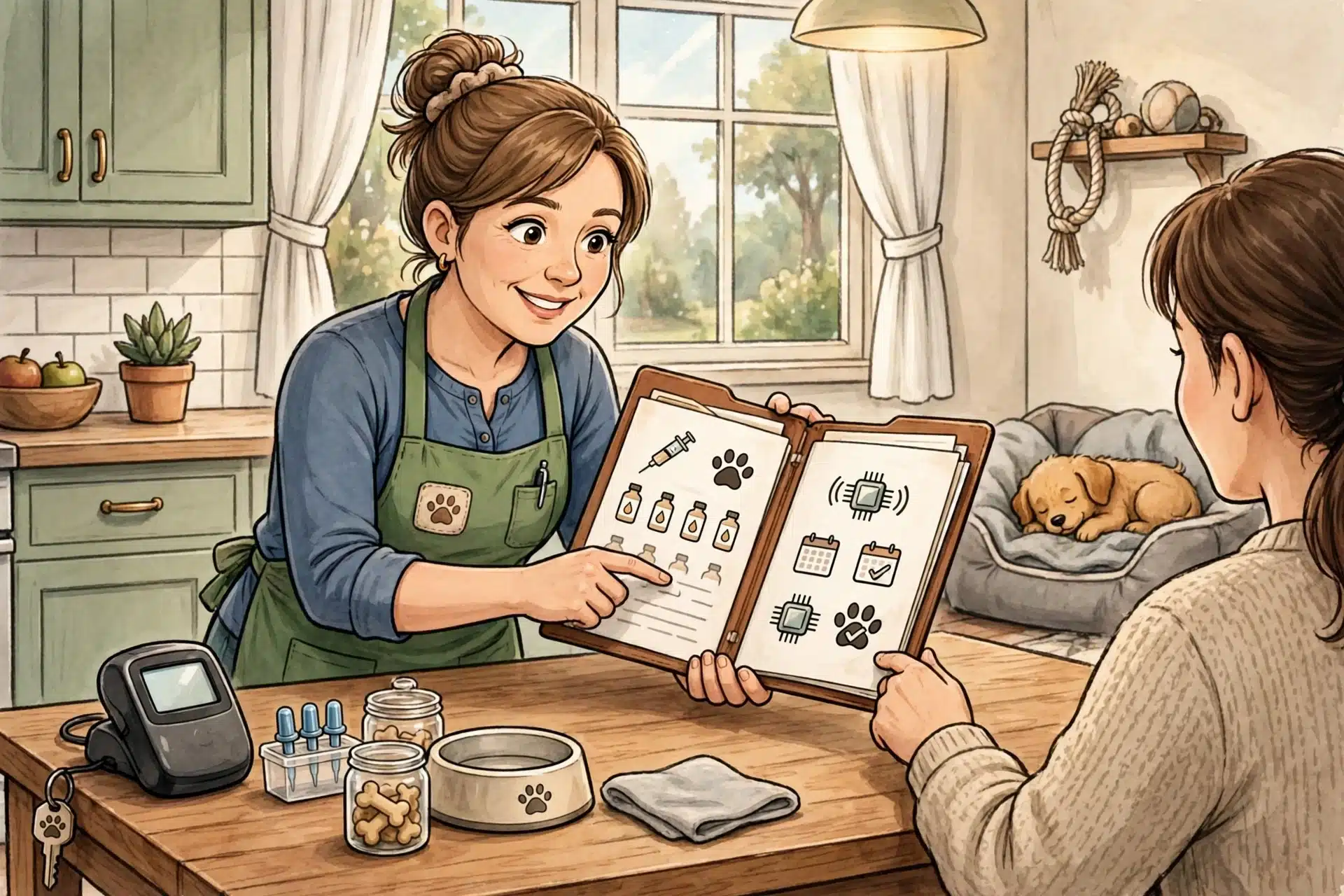
Paper claims are easy to make. Records are not. Before you hand over a deposit, verify puppy health records yourself, in person, and match every claim the breeder has made to a document with a date on it.
The Documents to Ask to See
Ask for four things and read them while you sit there:
- Vaccination records showing dates, products used, and the veterinarian’s name
- A wellness exam note dated after birth, not a photocopied template
- Deworming dates and the medication given
- Microchip paperwork, once a puppy is chipped, matching the number you can scan
A breeder who keeps good records usually produces these in minutes. Fumbling, excuses, or “we’ll email it later” deserves a follow-up before any money changes hands.
Health Testing Relevant to Havanese, Havapoo, and Cavapoo
Parent testing matters more than puppy paperwork here. The Havanese Club of America expects breeders to screen sires and dams for eyes, hearing, hips, knees, and heart, with results filed through OFA. You can read the breed-specific screenings in OFA’s browse-by-breed listing and the breed club’s own health and testing guide. For the mixed litters, ask which parent carries the tests and see the certificates, since no single standard covers Havapoos or Cavapoos.
Verifying Ancestry Rather Than Assuming It
A pedigree is a claim until you check it. Ask for registration papers or a DNA parentage report for the dam and sire, then look both dogs up by name in the OFA public results database. Their eye, patella, and cardiac entries should match what the breeder told you on the phone. If a parent’s name returns nothing, ask why. Unregistered sires happen, but you deserve a straight answer before you commit. This step protects you if the puppy’s health guarantee later references tested parents, because you will already know exactly which dogs those are. When a program like ours publishes its screening approach openly, it saves you this entire verification trip, but you should still run the same check on any breeder you visit.
Ask for these documents before your visit ends. Strong breeders expect it; weak ones stall.
Step 6: Put Terms in Writing Before You Commit
A good visit ends with paper, not promises. Ask the breeder to send the contract before you leave, so you can read the puppy deposit and contract terms at home without pressure.
The Terms to Confirm on Paper
Look for these items in writing before you sign anything:
- Total price, deposit amount, and refund or transfer rules
- The puppy health guarantee and return policy, including time limits
- Which vaccines and dewormings are included, with dates
- Spay or neuter expectations
- Delivery or pickup details and who pays travel costs
If any of these live only in a text message, ask for a signed contract that covers them.
Do Not Pay a Deposit Before the Meeting
Is it okay to pay a deposit before meeting the puppy? In most cases, no. A deposit reserves a specific puppy, and you cannot commit to one you have never seen in person. Reputable family breeders expect this. They hold your place through a video call or a visit first, then take payment once you have met the litter. If a breeder pushes for full payment before you meet family raised puppies, treat it as a red flag and walk away.
Questions for the Breeder’s Reference List
Ask for two or three families who bought puppies in the last year, then call them. Useful questions:
- Did the puppy match the temperament the breeder described?
- Were health records handed over as promised?
- How did the breeder handle any problem after pickup?
Honest answers confirm what you saw during your visit. A program like Sage Puppies shares its process up front, so you know the terms before a deposit is ever discussed.
Step 7: Decide, Follow Up, and Document
A Simple Decision Rule You Can Apply
Score the visit the same day, while details are fresh. Give one point each for: you saw the dam interact with the litter, records matched what the breeder claimed, the space smelled clean, and the puppies handled handling without panic. If the breeder pushed for a same-day deposit before you saw everything, treat that as a minus. Meeting family raised puppies in person should leave you calm, not rushed. Four points or more means you can move forward; anything less deserves a second visit before any deposit and reservation terms get signed.
The Two Weeks After the Visit
Send a short thank-you email with two or three follow-up questions, such as how the puppies do at bath time. Honest breeders answer promptly and in detail. Ask for updated photos or a video, and request a copy of the vaccination and microchip paperwork ahead of go-home day. Save every reply. If answers slow down or change once your interest is known, that shift is data too.
When Walking Away Is the Evidence-Based Choice
Walking away is not failure; it is the checklist working. Leave if records are missing, the dam is absent with no real reason, or the breeder resists a vet reference. A lost deposit matters far less than a decade of vet bills and heartache. Trust what you saw over what you were told.

Ready to meet puppies raised in a real home, with health records and honest answers at every step? Start your application with Sage Puppies, and Cassie will walk you through matching, visiting, and bringing your Havanese, Havapoo, or Cavapoo home.
Frequently Asked Questions
Q1: How should you meet family-raised puppies before buying one?
Request a home visit, meet the dam and litter where they sleep and eat, run the same handling sequence on each puppy, and verify records before any deposit.
Q2: How long should a puppy visit take?
Plan on one to two hours. That gives you time to watch the litter wake up, play, and settle, plus an unhurried talk with the breeder.
Q3: Should you pay a deposit before meeting the puppy?
Usually no. A deposit reserves one specific puppy, so wait until you have visited or at least had a video call.
Q4: What health records should a breeder show you?
Vaccination records, a dated wellness exam, deworming dates, microchip paperwork, and health testing certificates for both parents.
Q5: What are the biggest puppy visit red flags?
Deposit before visits, parking-lot meetups, no dam on site, missing records, or pressure to decide the same day.
Q6: Is a second visit worth it?
Yes. A second puppy visit near pickup confirms temperament and lets you collect final paperwork before go-home day.
Conclusion
Meeting family-raised puppies before you buy comes down to a clear order of steps. Request the visit and confirm what you will see, then observe the home and the dam before you touch a puppy. Run the same handling sequence on every pup, verify puppy health records and parent testing in person, and get deposit and contract terms in writing before any money moves.
Trust what you see over what you hear. A breeder who welcomes questions, produces records, and never pushes a same-day deposit is showing you how they will treat you for the puppy’s whole life. When anything feels rushed or hidden, walking away is the checklist doing its job.