Quick Summary: Choose a reputable breeder when breed, adult size, parent health testing, and ongoing support matter most, while a rescue offers a lower fee, faster match, and vaccines, microchipping, and spay or neuter care already covered. Sage Puppies, for example, offers Havanese, Havapoo, and Cavapoo puppies for $3,500 to $4,500 with parent testing, written records, and breeder support, while rescue adoption fees generally run $50 to $500. Either route can provide a wonderful companion, so verify the paperwork, meet the dog or mother, and arrange an early vet visit before committing.
If you are searching for a reputable puppy breeder near me with a rescue tab still open, you are not indecisive. You are weighing the breeder vs rescue puppy question, and the two routes promise different things. A breeder can partly document a puppy’s health history and temperament. A rescue cannot fully explain a dog’s past. Both can end with a wonderful companion.
Many families in Utah and across the country make this call with incomplete information, pressure, and folklore about which path is more responsible. This comparison puts cost, health records, timing, and aftercare side by side, shows what to verify before you pay any fee or deposit, and ends with a simple rule for your household.
Breeder vs Rescue Puppy: At a Glance
| Reputable breeder | Rescue or shelter adoption | |
|---|---|---|
| Upfront cost | example: Sage Puppies Havanese, Havapoo and Cavapoo puppies are priced at $3,500 to $4,500, plus travel or transport | Often a lower adoption fee than a breeder price; commonly includes spay or neuter, vaccines and microchip |
| Health documentation | Parental health testing plus a vet exam and vaccination records for the puppy | Vaccination and deworming records are typical; lifetime history and parental testing are usually unavailable |
| Breed and size predictability | You know the breed, and adult size range, before you commit | Mixed or uncertain breed, and adult size is often unknown in young puppies |
| How long you wait | Weeks to months, depending on litters and selections; wait list terms vary by breeder | Often days to a few weeks, though a specific puppy may be adopted quickly |
| Support after the puppy comes home | Written contract terms, health guarantee and return policy if offered, and ongoing breeder contact | Varies widely: shelter counseling, foster support, or trial periods depending on the organization |
How a Reputable Breeder and a Rescue Each Work
The breeder vs rescue puppy choice comes down to two different ways of bringing a dog home. Here is what each path actually involves before we compare them side by side.
Reputable breeder
A reputable breeder tests the parent dogs, raises litters in a home setting, and stays in contact with your family for the puppy’s life. This route fits people who want to know the breed and adult size before they commit, which matters for small companion breeds. For example, a Sage Puppies Havanese, Havapoo or Cavapoo puppy costs $3,500 to $4,500, plus travel if needed.
Key strengths
- Predictable breed and adult size range
- Parent health testing plus puppy vet exam and vaccination records
- Written contract and ongoing breeder support
Rescue or shelter adoption
A rescue re-homes a dog it already has, usually for a lower fee that often covers spay or neuter, vaccines and a microchip. It suits families open to a mixed breed and flexible about age and history. You can often meet the actual dog before deciding, and adoption can happen in days to a few weeks.
Key strengths
- Lower upfront fee with vet care already done
- Faster timeline than most breeder wait lists
- Shelter or foster support during the transition
What a Reputable Breeder Is Actually Selling You
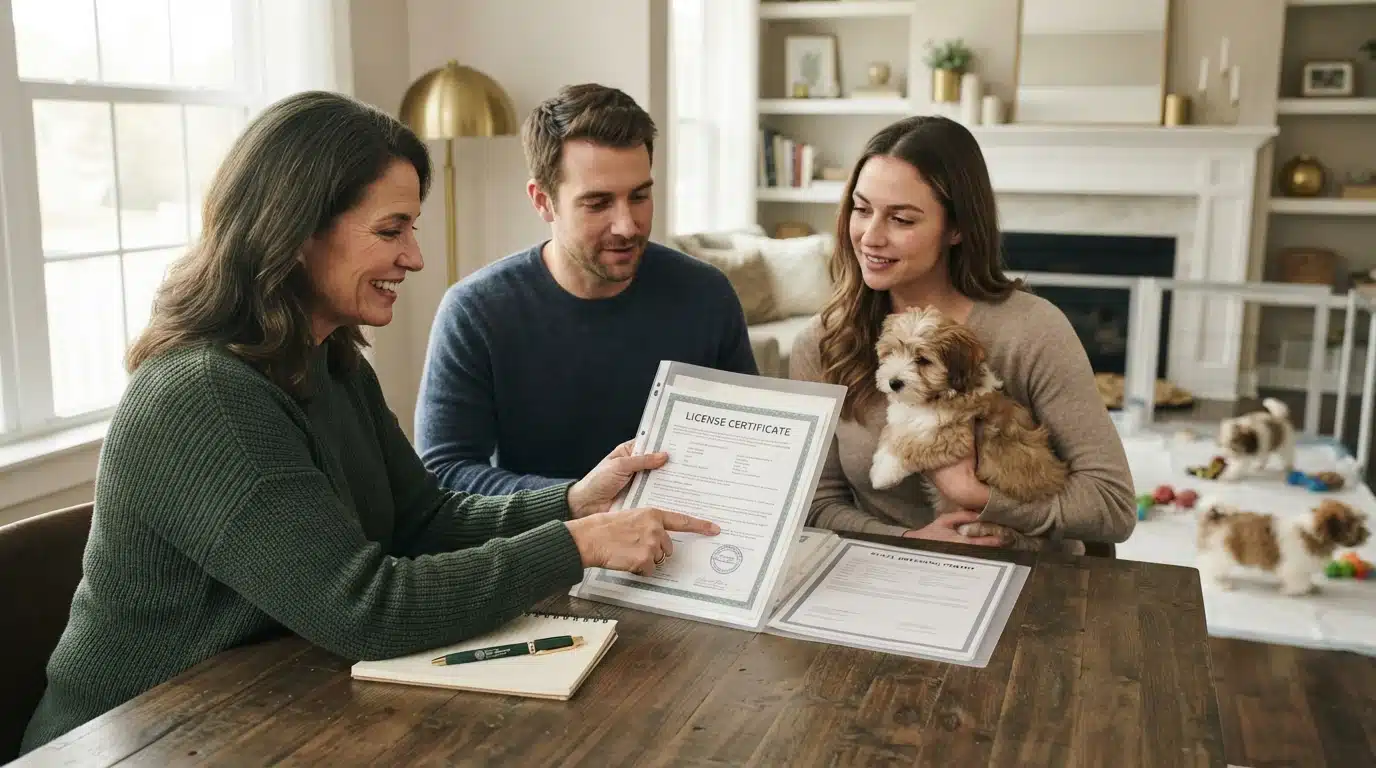
When you pay a breeder’s price, part of what you buy is paperwork. Good breeders can prove their puppies’ history, and they hand those records over without hesitation. If someone dodges these requests, treat it as a red flag.
The records a breeder should show you without being asked
A reputable breeder should show you these records:
- Vet exam records, proving the puppy had a health check.
- Vaccination dates, usually the first set of puppy shots.
- Deworming history, with dates and the product used.
- Parent health clearances, like OFA certifications for hips, eyes, or heart.
- A written contract, covering the sale and return terms.
- Microchip or registration papers, where they apply.
The parent clearances matter most, because they show the breeder screened for inherited problems before breeding, not after. Programs that publish health testing, such as through the Orthopedic Foundation for Animals, let you look up results yourself. This documentation is a big part of what breeder prices actually cover.
Home visits, video calls, and questions a breeder should welcome
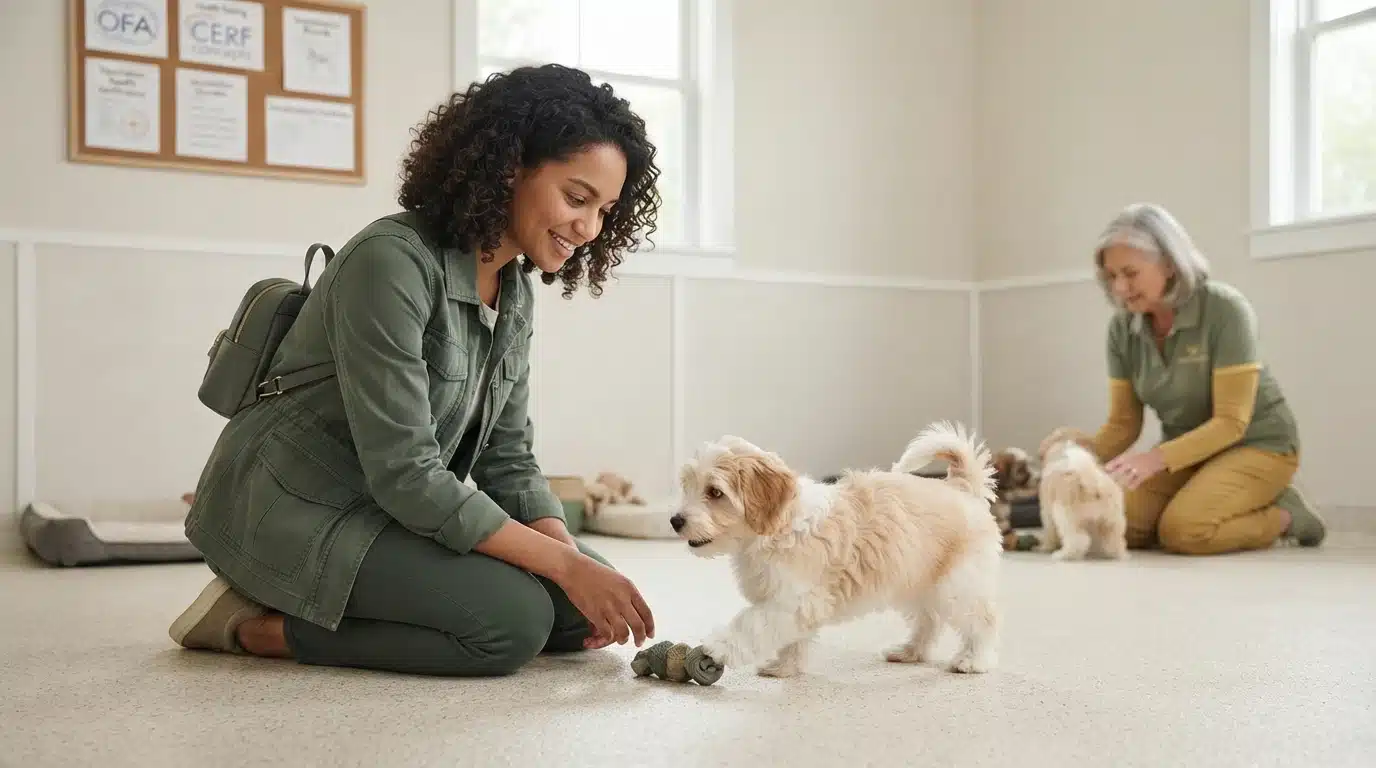
A trustworthy breeder has nothing to hide, so they welcome your checks. For a local purchase, ask to visit and meet the mother dog where the puppies were raised. If you are buying from out of state, expect a video call showing the puppies, the mother, and the living space in real time.
They should also interview you. Good breeders ask about your home, your schedule, and your experience with dogs, because they are placing a puppy they care about. A breeder who says yes to every buyer without questions is usually selling, not matching.
Expect this two-way conversation at any serious program, including small Utah operations that match families nationwide.
What Rescue Adoption Does Better Than Most People Expect
Rescue adoption has a reputation problem. People picture mystery mixes and endless vet bills, but a good rescue often hands you more finished work for your money than any breeder can. The puppy usually arrives vaccinated, microchipped, and sometimes already spayed or neutered.
What the adoption fee usually covers
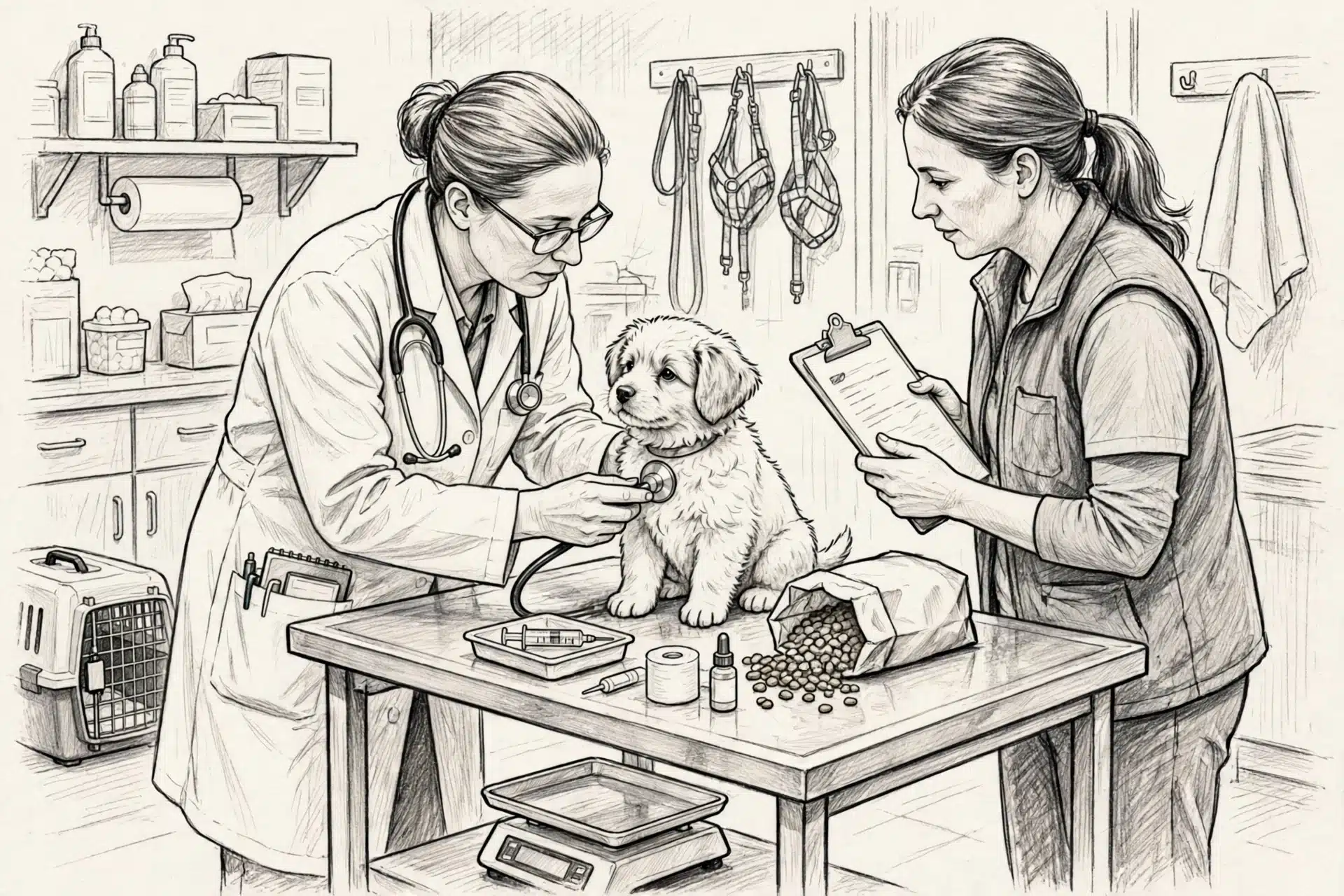
Most shelters and rescues charge somewhere between about $50 and $500, and that fee does real work. A typical adoption includes core puppy vaccinations, a health check by a veterinarian, deworming, and a registered microchip. Many rescues also cover the spay or neuter surgery before you ever take the puppy home, or hand you a voucher for it.
That matters more than people expect. Spay and neuter cost for a small dog often runs several hundred dollars on its own, so an adoption fee can quietly include care you would otherwise pay for separately. Some rescues throw in a starter bag of the food the puppy has been eating, which saves your stomach and the puppy’s at the same time.
The unknowns you accept, and the support you gain
Adoption trades certainty for value. You rarely meet the puppy’s parents, and history about temperament or health may be thin, especially for surrendered dogs. A rescue puppy’s adult size is a guess if the mix is unclear.
What you gain is a team. Reputable rescues screen adopters, talk you through house training questions, and take the dog back if the match fails, so a puppy never lands in a shelter again. Many foster-based rescues can even tell you how a puppy behaves in a real home, not a kennel run.
Budget example, labeled as such: an adoption fee around $300, plus a spay voucher you may still use, can total less than a single visit to a private vet clinic. No invented market average here, just the math most adopters actually face.
The Real Cost of Each Route Once You Count Everything
Is a rescue puppy cheaper than buying from a breeder? Usually yes at first, and the numbers are easy to compare. Rescue adoption fees mostly run about $50 to $500, with a labeled budget example landing near $300 plus a possible spay voucher. A breeder puppy such as a Havanese or Cavapoo runs $3,500 to $4,500 up front. But the sticker price is only the opening figure. Both routes carry first-year costs that start to close the gap.
What the breeder price actually covers
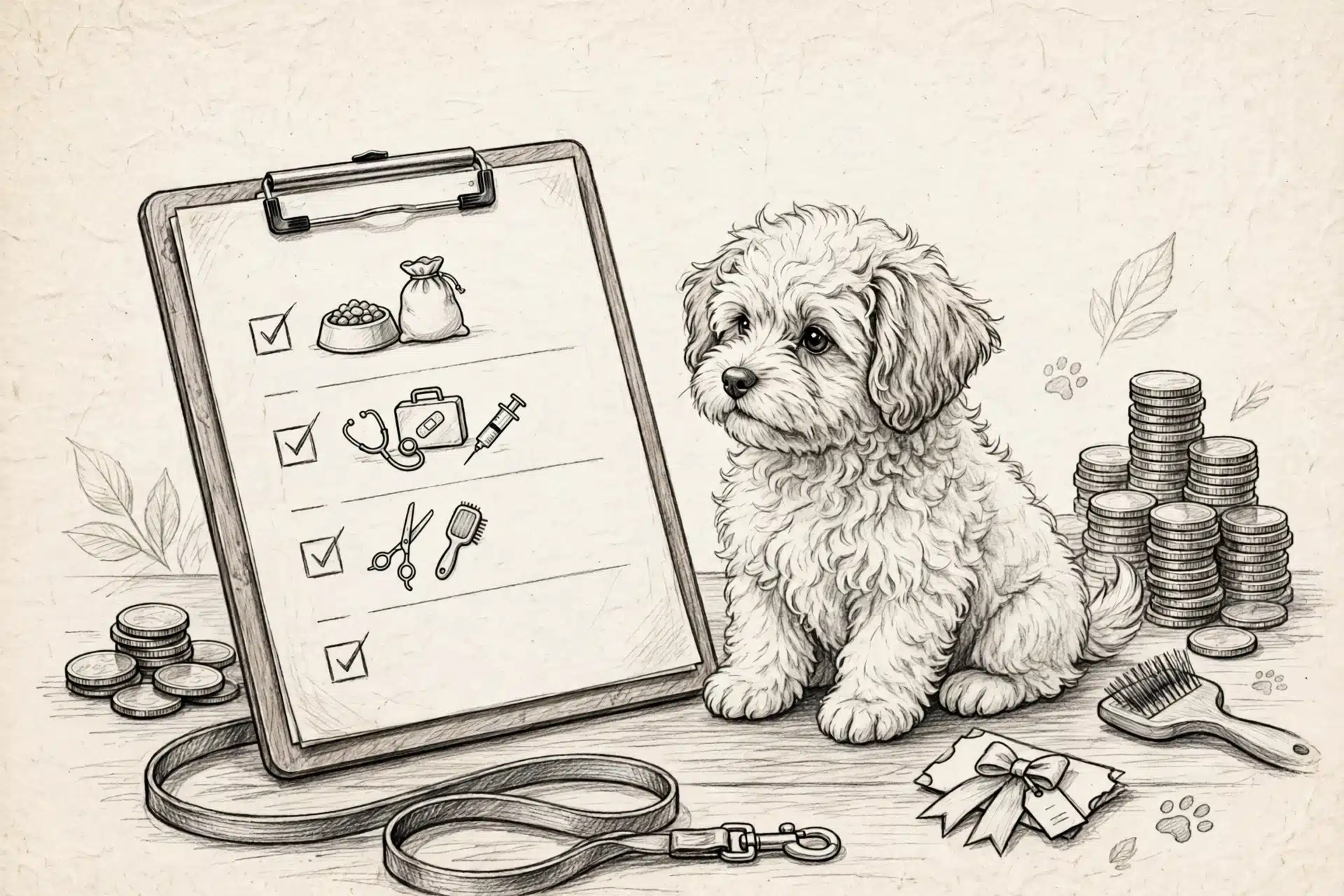
The adoption fee vs breeder price question gets clearer when you list what each figure includes. A breeder’s price typically bundles early vet checks, first vaccinations, deworming, microchipping, and the paperwork a new owner needs. Good programs also include health testing of the parents, early socialization, and ongoing breeder support. Some breeders may include starter food or a scent cloth from the litter. Adoption fees usually cover spay or neuter, current vaccines, and a microchip already placed. Comparing the full list, rather than the top-line number, keeps the comparison honest.
The first-year costs both routes share
Whichever route you pick, plan for the same first-year basics. Vaccines and boosters, parasite prevention, food, bedding, a crate, toys, and grooming tools for a small breed all come due quickly. Spay or neuter surgery can run several hundred dollars if it is not already covered, and puppy classes add more. Training treats, a carrier, and licensing round out the year. Costs vary by clinic, region, and dog, so treat these as planning ranges rather than quotes. A Havanese or Cavapoo also needs regular grooming, which many owners handle at home. Budget the same starter list either way, then compare only what genuinely differs.
Health, Records, and the Question of Genetic Soundness
Why breed-specific health testing matters most for small companion breeds
A puppy can look healthy and still carry inherited problems that show up later. That is why the OFA’s breed-specific CHIC screenings exist: each breed gets its own required tests. For Havanese, the Havanese Club of America’s health guide lists patellar luxation, hips, and eye exams as the core CHIC requirements, because loose kneecaps and inherited eye disease are the conditions this breed actually faces.
Small companion breeds also share some traits that make screening worth the effort. Tight knee joints, clear heart sounds, and sound eyes matter more in a dog that will be picked up, carried, and living with your family for 12 to 15 years. A breeder who screens both parents and shares the results is reducing risk you cannot see on visit day.
Rescues work differently. Most cannot produce OFA certificates for a mixed-breed or surrendered dog, so their health picture leans on vet exams, vaccinations, and whatever history the intake paperwork provides. That is not a flaw so much as a different kind of answer, and it should shape what you ask each source.

What to do with the records in either case
Ask for paperwork, then read it. A breeder should hand over the parents’ OFA or CHIC numbers, which you can look up yourself, plus the puppy’s vet exam and vaccination record. If a seller talks about health testing but will not show results, treat that as a red flag. For rescue dogs, get the intake exam, vaccine dates, and any known medical history in writing.
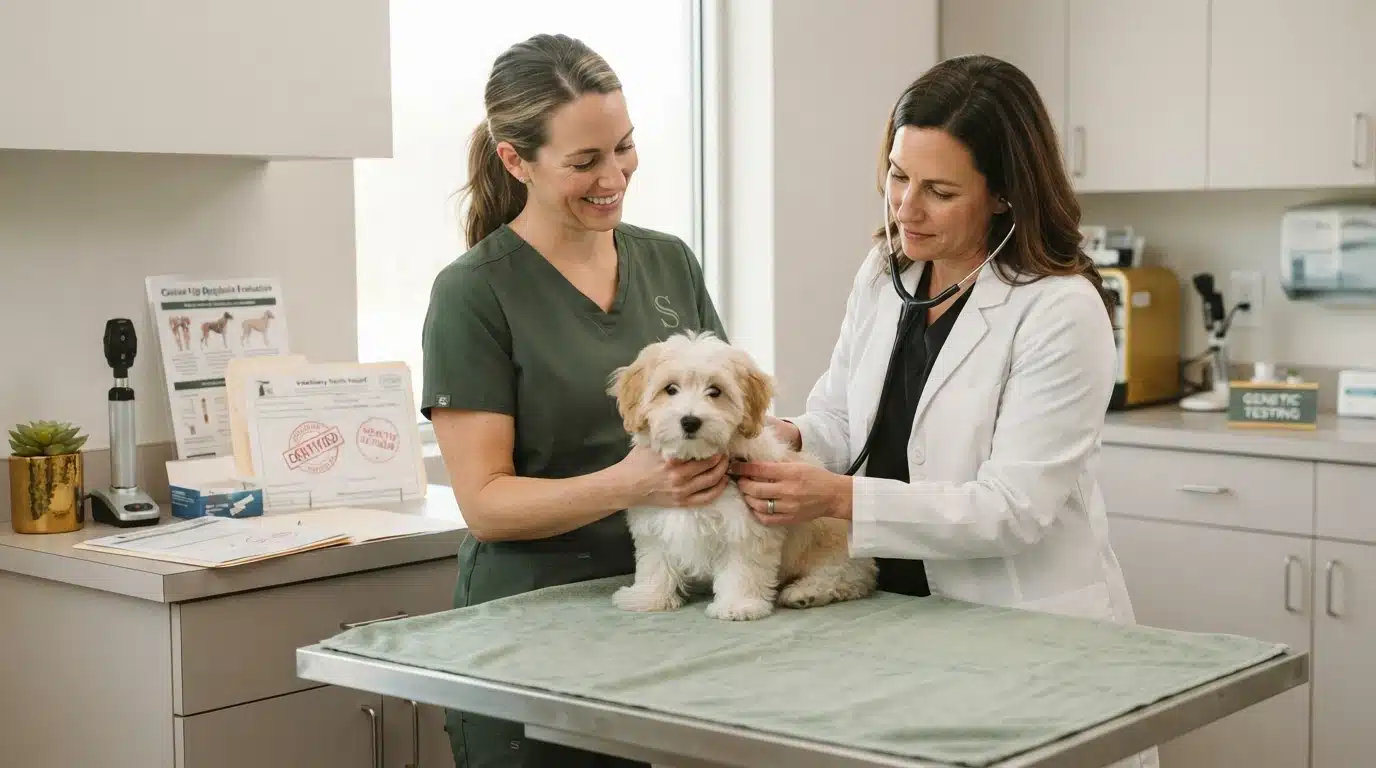
Either way, book your own vet visit within the first few days. Bring every document you received so your vet can confirm dates and flag gaps. This is also when you register the microchip if one was placed, since that step only protects your dog once your contact details are attached. Puppy health records only work if someone actually follows up on them, and that someone is you.
Availability, Wait Times, and Fitting Your Household
Planning around a real timeline
How long it takes depends on the path you choose. From a reputable breeder, expect a few weeks to several months: good programs plan litters ahead, and a specific breed or sex may mean waiting for the next litter to arrive and go home at eight weeks or later. From a rescue, timing is less predictable. Some adopters find a match within weeks, while popular breeds and small dogs can carry waitlists of their own.
So decide what your household can actually absorb. A family with a set move date or school schedule may prefer a breeder’s planned litter, since go-home dates are known early. An adopter with flexibility can wait for the right rescue to surface. If you go the breeder route, most programs, including the puppy application Sage Puppies uses, place approved families in line before a litter is even born.
Matching the dog to your home and routine
Timeline is only half the equation. The dog’s temperament, energy level, and grooming needs have to fit your actual week. A Cavapoo or Havanese thrives on company, so a household gone ten hours a day should plan for midday help. Rescue dogs often come with a known history, which helps, but some need a quieter adult home rather than a busy one with young kids.

Breeders can tell you what a litter’s parents are like, which predicts a lot. Honest rescues tell you what a dog has already shown. Either way, match the dog to the home you have, not the one you hope for.
Which Should You Choose: Reputable Breeder or Rescue?
Neither route is automatically better. The right choice depends on what you know about the puppy you want, your timeline, and how much uncertainty your family can handle. Most families land on one of two answers.
Choose a breeder when
Pick a reputable breeder if you want predictability and documented history:
- You have your heart set on a specific breed or mix, such as a Havanese, Havapoo, or Cavapoo, and you want known traits for size, coat, and temperament
- You want to see puppy health records, parent health testing, and the puppy’s first weeks documented before you commit
- Your family includes young kids or a first-time owner, and a known start in a home setting lowers the risk
- You can wait for a litter, since good breeders often have a waitlist rather than puppies on demand
- You want breeder support after pickup, from feeding questions to early training
If you live outside Utah, ask how a breeder handles transport and whether you can meet the puppy by video before the flight.
Choose a rescue when
Pick rescue adoption when flexibility fits your situation better:
- You are open to a range of ages, mixes, and coat types instead of one specific breed
- A lower upfront cost matters, since adoption fees mostly run about $50 to $500
- You would rather give a home to an adult dog whose size and personality are already known
- You have time to work through unknown history, possible fearfulness, or missing early records
- Your local shelter or breed-specific rescue has dogs that match small-companion homes
Both routes can produce a wonderful family dog. The honest question is not which is better in general, but which trade-offs your household accepts. If a known, small companion breed is the priority, a breeder route such as current available puppies starts with a clear application. If giving a second chance matters more, rescue will reward you.

Still weighing both paths? Sage Puppies keeps the choice honest: an owner-run matching process, clear pricing, and Havanese, Havapoo or Cavapoo puppies raised in Utah with care. Browse the available puppies, or start the application and see if the fit is right for your family.
Frequently Asked Questions
Q1: Should you get your puppy from a breeder or a rescue?
Pick a breeder for a known breed, size, and documented health history; pick rescue for lower cost and a faster, flexible match. Choose based on which uncertainty you can accept.
Q2: How do I spot breeder red flags before paying a deposit?
Refused parent health testing, no contract, and no video call or visit. Any seller asking payment before you see records is a scam risk.
Q3: Why is a rescue puppy cheaper than a breeder puppy?
Adoption fees run about $50 to $500 and usually include vaccines, microchip, and spay or neuter.
Q4: Can I verify a breeder’s health testing myself?
Yes. Ask for OFA or CHIC numbers and look up the parents’ results on the OFA site.
Q5: Do rescue puppies have health records?
Typically vaccines, deworming, and an intake exam, but rarely parent history or genetic testing.
Q6: Is a breeder puppy worth the cost for a first-time owner?
Often yes, because documented records, predictable temperament, and breeder support reduce surprises for inexperienced families.
Conclusion
The breeder vs rescue puppy decision comes down to trade-offs, not a single right answer. A reputable breeder gives you a known breed, parent health testing, and support; rescue adoption offers a lower fee, finished vet care, and a faster match. Both cost more after the first year than the sticker price suggests.
Verify whichever route you take. Ask for records, meet the dog or the mother, and book your own vet visit within days. Match the puppy to your actual household, then commit with confidence either way.