Quick Summary: Before paying for a puppy in Utah, verify the seller’s state and city permits, inspect dated vet records and parent health tests, review written deposit and health terms, and meet the puppy in person or by live video. Utah’s breeder permit sets care standards but does not guarantee health or refunds, so unclear records, pressure to pay quickly, or refusal to answer questions are major red flags. Sage Puppies in South Jordan says it provides these records, contracts, licensing details, and documented pickup or delivery options for Havanese, Havapoo, and Cavapoo puppies.
Drive twenty minutes from South Jordan and you can find a dozen Havapoo or Cavapoo litters. Most breeders will happily show you a folder of vet records, too. The difference between a good decision and an expensive one usually comes down to a short list of Utah puppy adoption questions you asked before any money changed hands.
This Utah puppy adoption checklist gives you that list. You’ll see which questions to ask a breeder up front, which ones matter during a visit, and which Utah checks, like the state’s dog breeder permit, you can handle yourself in minutes.
It comes from Sage Puppies, a small program in South Jordan that raises Havanese, Havapoo, and Cavapoo puppies and walks buyers through health records and deposits every week. Use it as your adopting a puppy checklist, whether you pick up locally or have your puppy delivered.
The Core Questions to Ask Before Buying a Puppy in Utah
What questions should you ask before buying a puppy in Utah? Start with these four: Who is the seller, and can you verify them? Who are the parents, and what health testing backs them up? What happens after you take the puppy home? And what do the license and paperwork show? Any trustworthy Utah puppy adoption checklist covers all four before money changes hands.
Questions About the Seller and the Puppies
Ask who you are actually dealing with. Is this a licensed breeder, a rescue, or someone reselling puppies they did not raise? Request the seller’s full name, physical address, and Utah license number. Ask how many litters the home produces each year, and whether you can visit in person before committing. If you are out of state, ask for a live video call so you can see the puppy and the setting. A program like Sage Puppies in South Jordan keeps this simple with an application and owner-managed matching. Vague answers here are a red flag, not a detail to sort out later.
Questions About the Parents and Breeding History
Ask to meet the mother, or at least see recent photos and video of her. The dam’s temperament and condition tell you more than any website copy. Then ask for puppy health records and genetic testing results for both parents, especially for Havanese, Havapoo, and Cavapoo lines where hip, eye, and heart screens matter. Ask how many litters the mother has had, how far apart they are, and what socialization the puppies get in their first eight weeks.
Questions About Aftercare and Long-Term Support
Ask what happens the day you take the puppy home and in the months after. Which vaccinations and dewormings are done, and will you get dated records? Does the contract spell out a health exam window, return terms, and who pays for what? Ask whether the breeder answers questions at six months the same as at week one. A good breeder screens you too, and expects updates as the puppy grows.
Health Testing and Veterinary Records to Ask For
A responsible Utah seller should hand you a full health folder, not a one-line summary. Before you pay anything, ask what’s actually in it.
Which Health Records to Request and Why
Ask for these documents by name, because vague answers hide real gaps:
- Parent health test results for hips, knees (patellas), eyes, and heart
- Genetic testing results for breed-specific conditions
- A written puppy health check from a licensed veterinarian
- Vaccination and deworming records with dates and product names
- Microchip registration papers
For Havanese, Havapoo, and Cavapoo puppies, genetic panels matter most because several eye and heart conditions pass quietly through healthy-looking parents. Ask which diseases each parent was actually tested for, not just whether they were “tested.”
How to Verify a Report Instead of Trusting a Summary
Anyone can type “parents are health tested” into a message. Proof looks different. Ask for the certificate number or registration ID, then look it up yourself on the Orthopedic Foundation for Animals database, where you can confirm the test, the result, and the dog’s age. A report dated after the breeding started tells you the tests came late. If a seller hesitates to share verifiable results, treat that as a red flag when buying a puppy, and keep looking.
canine patella and eye health testing explained
Questions to Ask Your Veterinarian Before Pickup
Book a puppy exam within the first few days home, and bring the paperwork with you. Ask your vet three things. Does this record set look complete and genuine? Are the vaccine dates appropriate for this puppy’s age? Is anything in the exam – heart murmur, loose kneecaps, eye cloudiness – worth follow-up? These visits also give your vet a baseline, which makes any later claim under a health agreement much easier to sort out.
Visiting the Breeder and Meeting the Puppy in Person
A real visit tells you more in one hour than a week of phone calls. Ask to see where puppies are born, sleep, and play.
What a Legitimate In-Person Visit Looks Like
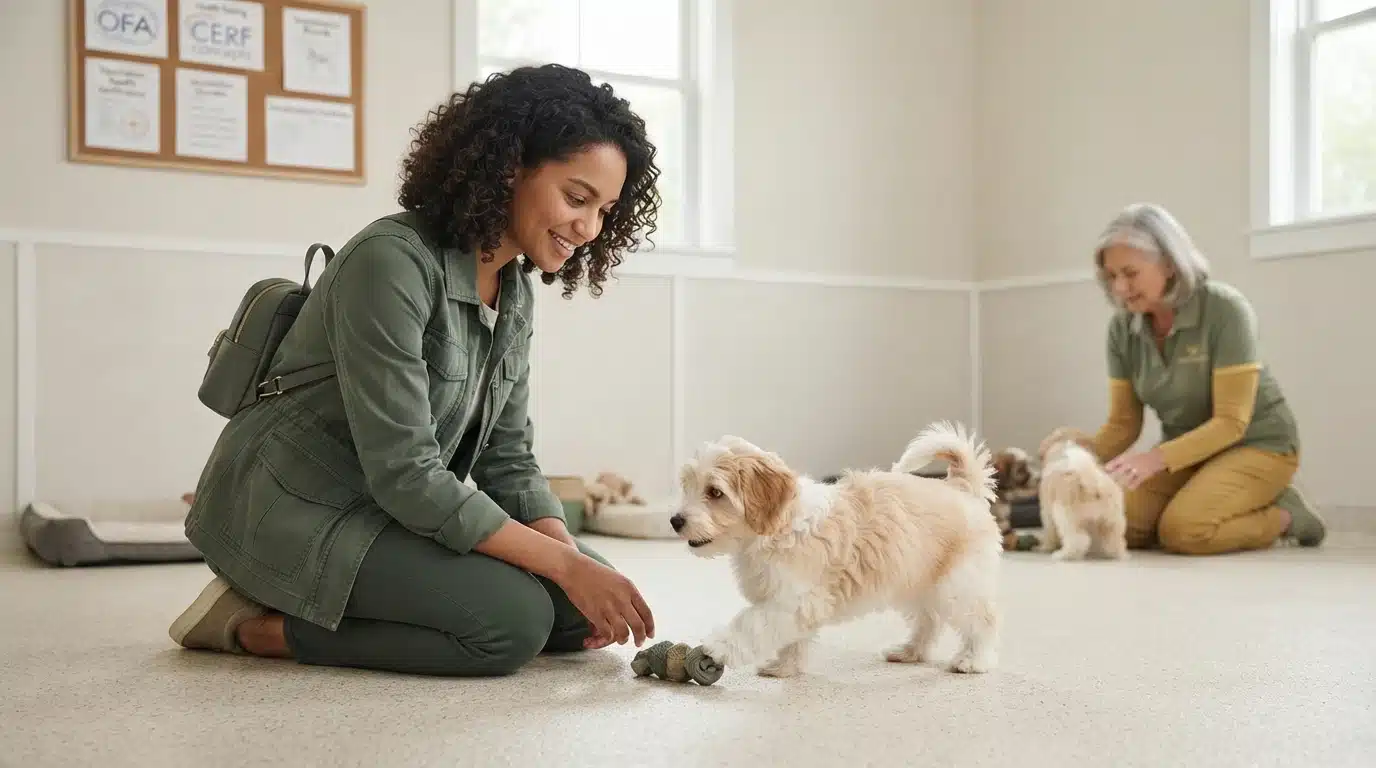
A trustworthy breeder invites you into the home or kennel and lets you meet the mother. You should see clean bedding, fresh water, and puppies that act curious rather than fearful. The breeder answers questions without rushing you and hands you the puppy so you can check eyes, ears, coat, and body condition. Watch how the dam behaves around people. If the breeder refuses to let you past the front door, pushes a different puppy than the one you asked about, or wants payment before you meet the litter, walk away. Bring your checklist and keep notes.
When You Cannot Visit: Video Calls and Delivery Buyers
Plenty of Utah families buy from a distance or pick up out of state, so a live video call replaces the visit. Ask for an unedited walkthrough of the whelping area, then request a close-up of the exact puppy, not a litter photo. A breeder who only sends pre-recorded clips is a red flag. If delivery is part of your plan, confirm who transports the puppy and how health papers travel with it. Sage Puppies handles this through a documented pickup or delivery process, and you can review how out-of-state delivery works before you commit to any deposit.
Contracts, Deposits, and Guarantees to Review
A good contract tells you what happens when things go wrong. Before you put money down, ask to see the full document, not a summary.
Deposit and Refund Questions
Deposits vary, so ask what yours actually buys. Is it refundable if you change your mind, or only if no puppy matches your preferences? Does it roll over to a future litter, and does it expire? Get the answers in writing, including the deposit amount, the balance due, and the payment methods accepted. A breeder who hesitates to put refund terms on paper is a red flag. Also ask when the deposit counts: at matching, at birth, or at pickup. If you want a sense of fair terms, see what a clear puppy pricing and reservation page spells out.
Health Guarantee Scope and Limits
Most breeders offer a health guarantee, but the details decide how much it protects you. Ask how long it lasts, what conditions it covers, and whether genetic testing of the parents backs it up. Check who pays if a covered problem appears: a refund, a replacement puppy, or vet bill reimbursement. Read any requirements you must meet to keep the guarantee valid, such as a vet exam within a set window. Learn what to expect from solid puppy health records and genetic testing before you sign anything.
Pickup, Delivery, and Paperwork Terms
Ask exactly what you receive at handoff: vaccination records, deworming dates, microchip registration, and registration papers if the breed carries them. Confirm the pickup date, location, and whether out-of-state delivery is offered, what it costs, and who handles travel. If you live outside Utah, ask who signs the contract and when payment is final. Clear terms here prevent last-minute surprises on pickup day.
Before signing, compare the whole package, including pricing, to what each Utah program actually puts in writing.
Utah Rules and Local Checks Before You Pay
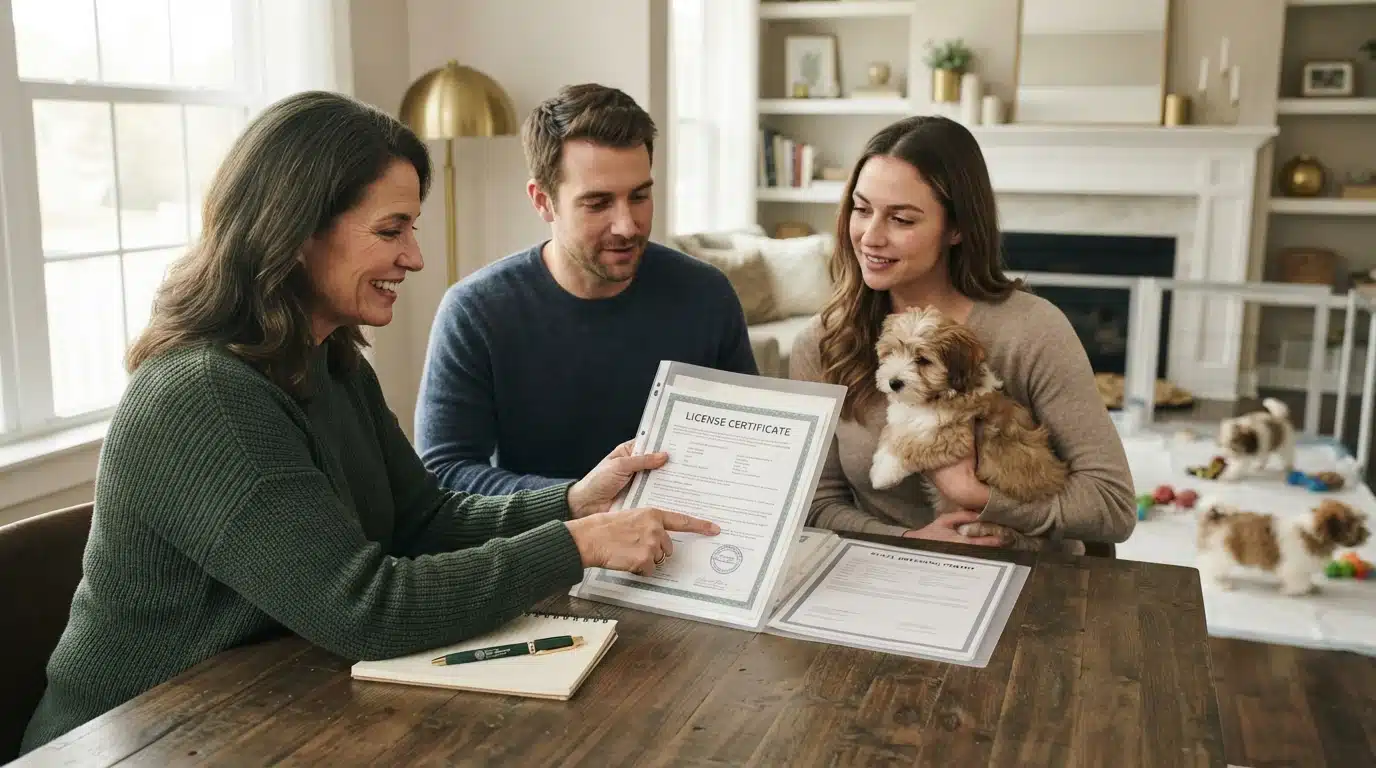
Utah does require a state permit for many breeders. Under a 2023 law, anyone who breeds dogs for profit must hold a valid dog breeder permit from the Utah Department of Agriculture and Food. The rule took effect July 1, 2024, and permits expire after one year. Verify this before you hand over money:
- Ask for the permit number and check the issue and expiration dates.
- Confirm the name on the permit matches the person you’re dealing with.
- Ask whether the facility has been inspected, since the state can inspect permitted breeders.
State and City Licensing in Utah
State rules cover the whole picture, but cities add their own layer. Salt Lake City goes further than the state: its code requires dog breeders to obtain a separate license through animal services, on top of any kennel or fancier’s permit. If you’re buying in Salt Lake County, ask which city the breeder operates in, then check that city’s animal control office. Smaller towns often rely on general kennel permits only, so what applies in South Jordan may differ from Salt Lake City. A quick call to the local office settles it.
Questions to Ask a Seller About Their Licenses
Put these questions in writing so you have the answers on record:
- Do you hold a current Utah dog breeder permit, and what is the number?
- Does your city require a breeder or kennel license, and is yours current?
- When was your facility last inspected, and by whom?
A legitimate breeder answers without hesitation and offers to share documents. Hesitation, vague numbers, or “we don’t need one” are red flags when buying a puppy, because the rules have applied statewide since mid-2024.
What Utah Law Does Not Do for Buyers
Here’s the part many families miss. The permit system sets care and facility standards for breeders, but it does not act as a warranty for you. It won’t guarantee a puppy’s health, force a refund if something goes wrong, or cover genetic conditions that appear later. Those protections live in your contract, not in state code. That’s why the paperwork questions elsewhere in this checklist matter as much as the license checks. Sage Puppies handles the permit and local licensing on its end, so buyers can focus on the puppy itself rather than chasing compliance records.
Red Flags When a Utah Puppy Seller Cannot Answer
Most red flags show up in what a seller will not answer. Watch for these:
- No Utah breeder permit or license. Every legitimate Utah seller can show a current permit.
- No vet records or dates of shots. Records should name the clinic and match the puppy’s age.
- No parent health testing. A breeder who cannot discuss genetic tests skipped them.
- Refuses in-person or video meeting. You should always see the puppy before paying.
- Pressure to pay fast. Deposits demanded the same hour are a classic scam move.
- No written contract. Walk away from any deal that stays verbal.
Warning Signs in Sales Conversations
A seller’s words often tell you more than their paperwork. Be cautious if they dodge questions about where the puppies live, cannot name the parents, or claim the litter is “ready today” for anyone who pays first. Another sign: they will only text and refuse a phone or video call. Scam listings in Utah often reuse the same puppy photos across several classifieds, so a reverse image search is worth two minutes. Ask how they socialize the litter. An honest breeder describes daily handling; a vague “they’re with mom” answer usually means the puppies are raised in a kennel or shed, not a home.
Warning Signs in Records and Facilities
Paper records separate careful breeders from careless ones. A seller should show vaccination and deworming dates, a vet exam note, and results for parent genetic tests. If the dates look typed in one sitting or the vet’s name is missing, ask for the original documents. For a facility visit, check that puppies live in a clean, warm space with room to play, and that the mother is present and healthy. A seller who will not let you see where litters are raised is hiding something. This is where good puppy health records matter most, because weak paperwork is the fastest way to spot a puppy mill origin.
The Final Checklist Before You Sign and Pay
A Ten-Point Sign-Off Before Payment
Answer these ten questions with yes before you pay a puppy deposit. If any answer is no, stop and ask more.
- Did the breeder show a current Utah dog breeder permit?
- Do the puppy health records include genetic testing results?
- Have you seen the puppy’s parents or a recent video?
- Did you meet the puppy in person or through a live video call?
- Does the puppy deposit contract state the total price and refund terms?
- Did the breeder answer your vet-prep and feeding questions plainly?
- Does the contract include a written health warranty you understand?
- Have you verified the breeder’s references or reviews?
- Is the pickup or delivery plan clear and safe for a small puppy?
- Do you feel free to walk away without pressure?
A full walkthrough lives in our small breed puppy adoption checklist, including what records to keep.
Next Steps for Utah Families
Once every box is checked, confirm the final details in writing. Set the pickup time at the breeder’s home in South Jordan or schedule delivery, and agree on the exact date. Ask for your copy of the contract and all records before money changes hands. Then plan the first week: a vet visit within a few days, a quiet setup, and time off work if you can. Careful questions now are what make Havanese, Havapoo, and Cavapoo puppies such an easy fit for Utah families later.

Ready to put these questions to work? Sage Puppies answers every one up front, from health records to Utah licensing, for our Havanese, Havapoo and Cavapoo families. Browse available puppies, review our application, and start a match built on trust, not pressure. Wisely Bred. Beautifully Loved.
Frequently Asked Questions
Q1: What questions should I ask before buying a puppy in Utah?
Ask four things before money changes hands:
- Who is the seller? Get their name, address, and Utah dog breeder permit number.
- Who are the parents? Request health testing and genetic testing results.
- What happens after pickup? Get vaccinations, contract terms, and aftercare in writing.
- What do licenses show? Verify state and city permits yourself.
Q2: What health guarantees and vet records should a Utah puppy seller provide?
Expect a written health guarantee with clear length, covered conditions, and refund terms. Records should include a licensed vet exam, dated vaccination and deworming logs, microchip papers, and parent genetic test results you can verify in the OFA database.
Q3: Can I visit the breeder and meet the puppy in person before buying in Utah?
Yes, and a legitimate breeder welcomes it. You should see where puppies live, meet the mother, and handle the puppy. Out-of-state buyers should ask for a live, unedited video call showing the whelping area and the exact puppy.
Q4: How much do Havanese, Havapoo, and Cavapoo puppies cost in Utah?
Prices vary by breeder, lineage, and what’s included, such as health testing and delivery. Utah boutique programs often range from $3,500 to $4,500. Always compare the full package: records, contract terms, and aftercare, not just the sticker price.
Q5: How can I tell if a Utah puppy listing is a scam?
Watch for pressure to pay fast, refusal of phone or video calls, reused photos, and no permit number. Run a reverse image search on the listing photos, and walk away if the seller resists a written puppy deposit contract.
Q6: Does a Utah dog breeder permit protect me as a buyer?
Not directly. The permit sets care and facility standards for breeders, but it doesn’t guarantee health or refunds. Your contract carries those protections, so review it closely before paying a deposit.
Conclusion
This Utah puppy adoption checklist comes down to four buckets: verify the seller’s state and city permits, confirm parent health testing you can look up yourself, get contract and deposit terms in writing, and meet the puppy in person or on a live video call. Any no or hesitation is a red flag worth heeding, because Utah’s dog breeder permit sets care standards but does not protect your wallet. Ask these questions to a dog breeder before money changes hands, and the right match for your family follows naturally. Havanese, Havapoo, and Cavapoo puppies raised in a careful home reward that effort for years.