Quick Summary: Havanese puppies shed very little, but their silky hair tangles quickly, so owners should brush at least three times a week with a slicker brush and metal comb, and daily during the 8-to-18-month coat change. Bathe every two to three weeks only after removing tangles, then dry the coat fully to prevent mats. A puppy cut needs 10 to 15 minutes of brushing three or four days a week, while a full coat requires daily care, and Sage Puppies emphasizes starting this routine early with puppies raised through their first coat change.
That first tuft of silky hair on your couch cushion teaches a quick lesson: low-shedding does not mean no grooming. Many new owners figure this out on day three, holding a puppy in one hand and a wire brush bought in a hurry in the other. Havanese puppies shed very little, but their fine, human-like hair tangles fast, especially behind the ears and along the collar line. This guide gives you a realistic plan for Havanese coat care: a weekly brushing routine, the tools that actually matter, a bath-and-dry method, and what to expect when the soft puppy coat changes around six to nine months. The advice comes from Cassie Milar’s Sage Puppies program in South Jordan, Utah, where Havanese, Havapoo, and Cavapoo litters have been raised and coached through their first coat change since 2025. Read it before your puppy comes home, and grooming stays a ten-minute habit instead of a weekend rescue job.
Do Havanese Puppies Shed? What Low-Shedding Really Means
Yes, Havanese puppies shed, but very little. The breed is considered low-shedding rather than non-shedding, and the ASPCA notes that loose hair usually gets trapped in the outer coat instead of falling to the floor. That is good news for your vacuum, though not a pass on brushing.
Why You Will Still Find Hair Around the House
Trapped hair has to go somewhere, and brushing is what releases it. Skip a few sessions and you will notice fuzz on the sofa, your black pants, and behind the ears where mats form first. Some Havanese also have a lighter single coat, so shedding varies between dogs. Think of low-shedding as “less cleanup,” never “none.”
How the Double Coat Works
Most Havanese carry a soft undercoat under a longer, silky top layer. The undercoat sheds lightly, while the outer coat catches the loose strands until you comb them out. Because the hair keeps growing rather than cycling out, it tangles fast. That is why Havanese coat care leans on a regular routine with a metal comb and slicker brush instead of waiting for shedding season.
What Low-Shedding Means for Families With Allergies
Less shedding means less hair carrying dander through your home, which helps some allergy sufferers. But no dog is truly hypoallergenic, and reactions depend on the person, not the breed label. Spend time with a Havanese before you commit if allergies run in your family. If you want the full routine behind all this, our guide to Havanese puppy grooming covers schedules, tools, and bathing in detail.
Choosing the Right Brush, Comb, and Detangling Spray
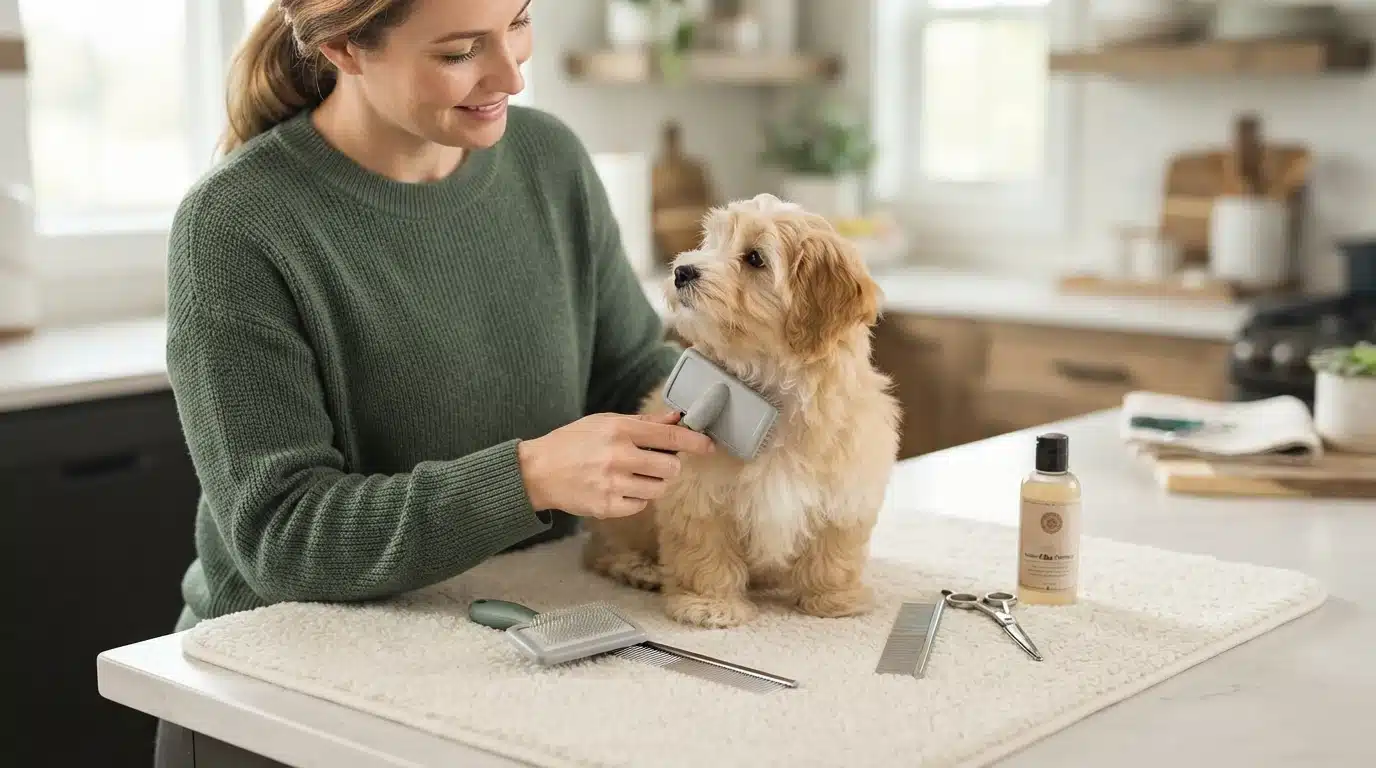
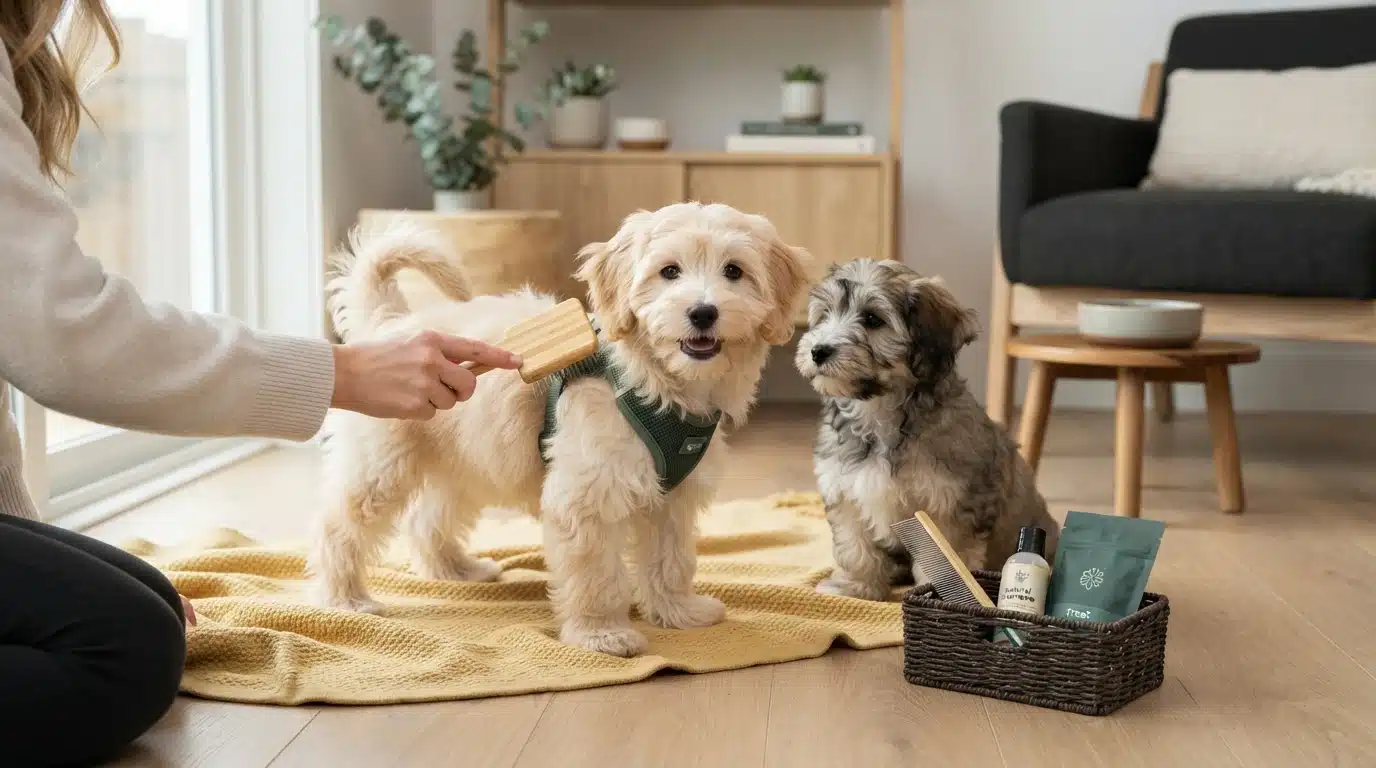
Havanese coat care comes down to three tools: a slicker brush to lift loose hair and work through tangles, a pin brush for fluffing and finishing, and a metal comb to check that you truly reached the skin. A light detangling spray makes the whole routine faster. You do not need a drawer full of gadgets.
Slicker Versus Pin Brush: What Each One Is For
A slicker brush has fine, bent wire bristles. It grabs dead undercoat and small tangles, so use it on trouble spots like behind the ears, the armpits, and the belly. Light pressure works better than scrubbing. A pin brush has smooth, rounded pins and glides through the topcoat without scratching. Use it for everyday brushing and for fluffing the coat after a bath. Most Havanese owners need both.
Why a Metal Comb Is Non-Negotiable
A slicker brush can hide mats. It smooths the outer layer while a tangle sits tight against the skin underneath. After brushing, run a metal comb from skin to tip. If it glides through clean, the section is done. If it catches, you have found a mat the brush missed. This two-step check, brush then comb, is the habit that keeps a Havanese mat-free, and it matters most behind the ears and under the collar.
Never pull a mat out with the comb. Hold the coat at the base, work spray into the tangle, and ease it apart with your fingers first.
Detangling Spray and Conditioner
Dry hair snaps when you brush it, so mist the coat with a detangling spray before every session. Lightly coat the section, not the dog, and comb through while it is still damp. Look for a spray made for dogs with aloe or a light conditioner, and skip anything with heavy silicone, which builds up between baths. If you want a second opinion on any of these, Sage Puppies’ guide to a Havanese grooming schedule and tools walks through the full kit Cassie actually uses.
A Week-One Brushing Routine You Can Actually Keep Up
Brush a Havanese puppy at least three times a week, and daily during a coat change. A short, steady routine beats an occasional long one, because this silky, low-shedding coat mats when it sits untouched. Here is a week-one schedule that fits real life:
- Monday, Wednesday, Friday: six-minute brush-outs with a slicker brush and metal comb
- Saturday: comb check, plus a spritz of detangling spray on any tangles
- Every day: a 10-second feel behind the ears, armpits and belly
The Havanese Club of America puts full-coat brushing at two to three times a week, so three sessions gives you a safe margin.
Why Three Times a Week Is the Starting Point
Puppy coats are softer and more forgiving than the adult coat, so week one is about building the habit, not fighting knots. Somewhere between 8 and 18 months, the puppy coat gives way to the adult one, and that change can last several months, with tangles forming fast. If you train your hands now, the coat change later is a schedule tweak instead of a crisis.
A Six-Minute Session, Step by Step
- Sit low. Put the puppy on your lap or a non-slip surface, not a high table.
- Spray first. Lightly mist with detangling spray so dry hair does not break.
- Brush the body. Use short slicker-brush strokes in the direction the hair grows.
- Line-comb. Part a small section and comb from the skin outward, one strip at a time.
- Reward and stop. Two minutes per side is plenty for a young puppy.
Short sessions end on a good note, and that keeps the puppy willing next time.
The Four Spots That Mat First
| Spot | Why It Mats | Fix |
|---|---|---|
| Behind the ears | Friction from sleeping and shaking | Comb gently every session |
| Armpits | Leg movement rubs hair together | Hold the leg up, brush flat |
| Belly | Contact with bedding and grass | Check daily, comb weekly |
| Base of the tail | Dense, often-forgotten hair | Part and comb to the skin |
Mats start at the skin, not the surface, so the comb check matters more than the brush.
Baths, Drying, and Keeping Tangles From Forming
Short answer: Most Havanese do well with a bath every two to three weeks, and a puppy coat often stretches closer to every four weeks. Dirty outdoor dogs can be washed sooner. Do not bathe a matted coat; brushing before water turns small knots into solid mats.
How Often to Bathe and Why Wet Coat Matters Most
Plan on a bath every two to three weeks for a puppy cut, and every week or two for a full coat that picks up more grime. The Havanese Club of America notes that full-coated adults need frequent, thorough grooming, and washing is part of that rhythm.
Water is the real hazard. A wet coat tightens loose tangles into mats within minutes, especially behind the ears. So brush completely before the bath, not just after.
A Gentle Bath Routine
Keep it simple and calm, since early baths set your puppy’s attitude for life.
- Brush and comb out fully, then place a cotton ball lightly in each ear.
- Use lukewarm water and a dog shampoo made for silky coats. Skip human shampoo, which strips natural oils.
- Lather in the direction the hair grows, working from neck to tail.
- Rinse twice as long as you think you need. Leftover shampoo causes itchiness and flakes.
- Squeeze, don’t rub, excess water out with a towel.
Drying Without Creating Tangles
Never let a Havanese air-dry. Damp hair curls, frizzes, and locks in knots you just brushed away.
Use a dryer on low heat and low speed, or a pet grooming dryer with a nozzle. Aim down the coat while brushing through each section with a pin brush. Work ear feathers and leg furnishings last, combing them flat as they dry. Ten careful minutes here saves an hour of detangling later, and a light mist of detangling spray keeps the coat sliding smoothly between baths.
Puppy Cuts Versus Long Silky Coats: Choosing Your Path
A Havanese puppy haircut is not just about looks. It decides how much time you spend brushing every week. Both choices keep the low-shedding coat you fell for, but the upkeep is very different. Here is how they compare.
What a Puppy Cut Changes About Your Week
| Puppy cut | Full coat | |
|---|---|---|
| Brushing time | About 10 to 15 minutes, 3 to 4 days a week | 20 to 30 minutes, every day |
| Bath and dry routine | Every 3 to 4 weeks | Every 2 to 3 weeks |
| Risk of matting | Low | Higher behind ears and armpits |
| Grooming cost | Lower | Higher, more frequent trims |
The short trim keeps tangles rare. You still brush, but sessions stay short and calm. Miss a day or two and the coat forgives you.
Growing a Long Silky Coat
The full coat is the breed’s show look, and it can be stunning. It also demands daily brushing with a slicker brush and metal comb, plus detangling spray on trouble spots. During the coat change between 8 and 18 months, mats form fast, so long coats need extra patience in that stretch. Skip a few sessions and you may face a shave-down instead of a trim.
Making the Decision With Your Time and Budget
Pick the puppy cut if your weeks are busy or this is your first dog. Pick the full coat if you enjoy grooming as part of your day. Many families start short, learn the routine, then grow it out. Professional grooming for either style typically runs a recurring appointment every few weeks, so price that into your budget before you decide.
Coat Care in Utah Homes and in Delivery Homes Across the Country
Dry Air, Hard Water, and Static
Utah’s dry air pulls moisture out of a Havanese coat fast. Dry hair snaps and tangles more easily, so a light leave-in conditioner or detangling spray helps more here than it might in a humid state. Hard water adds another problem: mineral buildup leaves the coat dull and slightly rough, which makes mats grip harder. A monthly clarifying shampoo or a filtered rinse attachment keeps the coat softer. Static is the small daily annoyance. Run a humidifier in the room where you brush, and mist the coat lightly before you start so the comb glides instead of sparking.
Winter Coats, Snow, and Salt
Snow itself is easy. Shake it out, towel the paws and belly, and brush the damp spots before they tangle. Road salt and ice-melt are the real trouble, because they dry the pads and can irritate skin between the toes. Rinse paws with lukewarm water after every walk, then dry them well. In deep snow, check for snowballs packed between the toe pads and behind the ears, two spots where mats start quietly.
What Changes When a Puppy Travels to a New Climate
A puppy moving from Utah to a humid state, like Florida or Georgia, gets a softer, slightly puffier coat and may need more frequent brushing after baths. Most families arrange pickup or delivery through Sage’s Utah pickup and puppy delivery process. Give the coat two to three weeks to adjust before changing your routine.

A Havanese coat rewards a steady routine, not perfection. If you want a puppy raised with that grooming habit already started, Sage Puppies can help. Cassie Milar matches Havanese puppies with Utah and nationwide families, and the application walks you through every step. Start yours today and bring home a silky-coated companion with confidence.
Frequently Asked Questions
Q1: Do Havanese puppies shed, and how much coat care do they need?
They shed very little, but the loose hair gets trapped in the coat until you brush it out. Plan on brushing at least three times a week with a slicker brush and metal comb, plus a light detangling spray, to keep the silky coat mat-free.
Q2: When does the Havanese puppy coat change to the adult coat?
Most puppies change coats between 8 and 18 months. Mats form quickly during this stretch, so brush daily and work through trouble spots like behind the ears and the armpits.
Q3: Should I choose a puppy cut or a full silky coat?
Pick a puppy cut for shorter sessions, about 10 to 15 minutes three or four days a week. A full coat looks striking but needs daily brushing.
Q4: How often should I bathe a Havanese puppy?
Every two to three weeks works for most puppies. Always brush completely before the bath, since water tightens loose tangles into mats fast.
Q5: Does a Havanese coat change in a different climate?
Yes. A puppy moving from dry Utah to a humid state often develops a softer, puffier coat and may need extra brushing after baths. Give the coat two to three weeks to adjust.
Conclusion
Havanese puppies shed very little, but that silky hair asks for steady care. Brush at least three times a week with a slicker brush and metal comb, mist with detangling spray first, and comb to the skin so hidden mats never get a start. Bathe every two to three weeks, dry completely, and brush daily through the coat change between 8 and 18 months. The puppy cut keeps sessions short, while a full coat needs daily work, so match the haircut to your week. Utah’s dry air and hard water call for extra conditioner, and a puppy moving to a humid state needs a short adjustment period. Havanese coat care rewards ten steady minutes over one long rescue session. Families ready to meet their match can browse Sage’s available Havanese puppies and start the routine from day one.