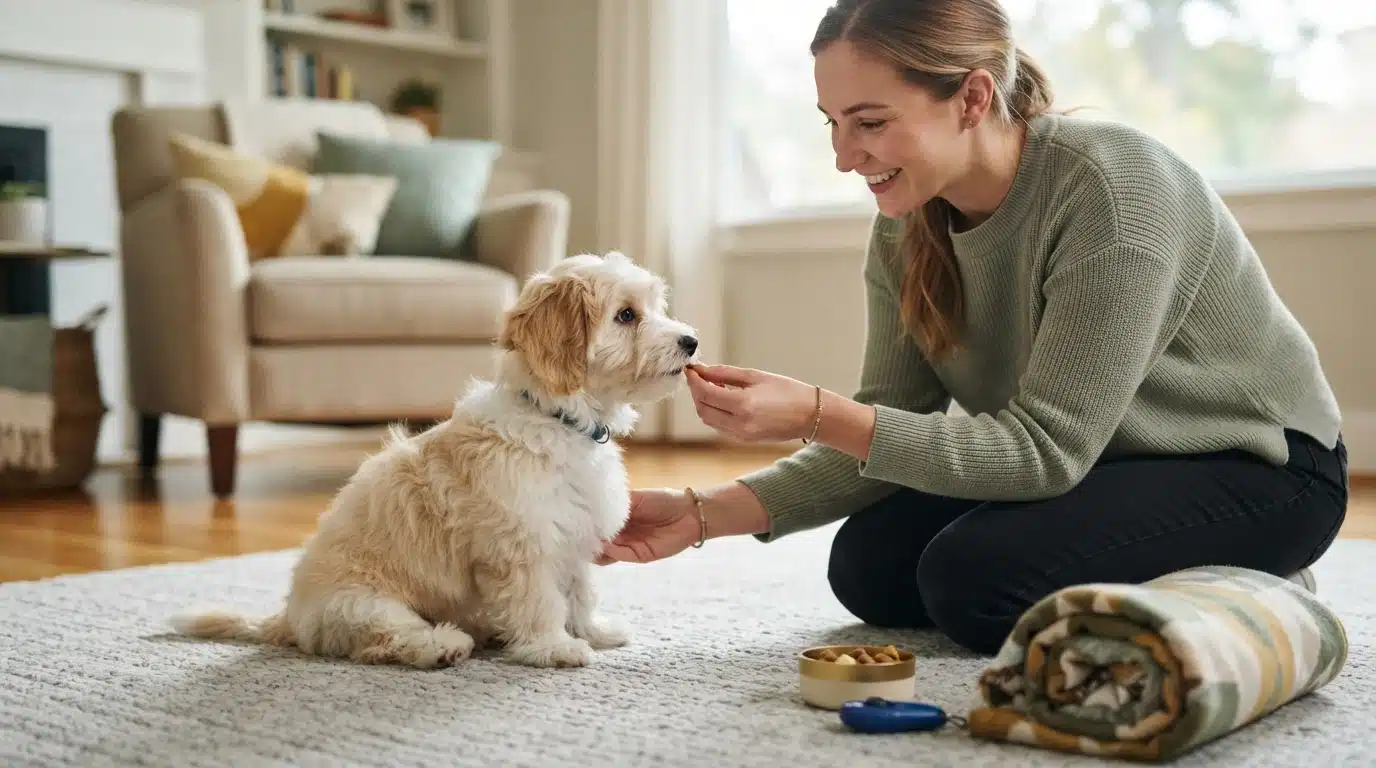
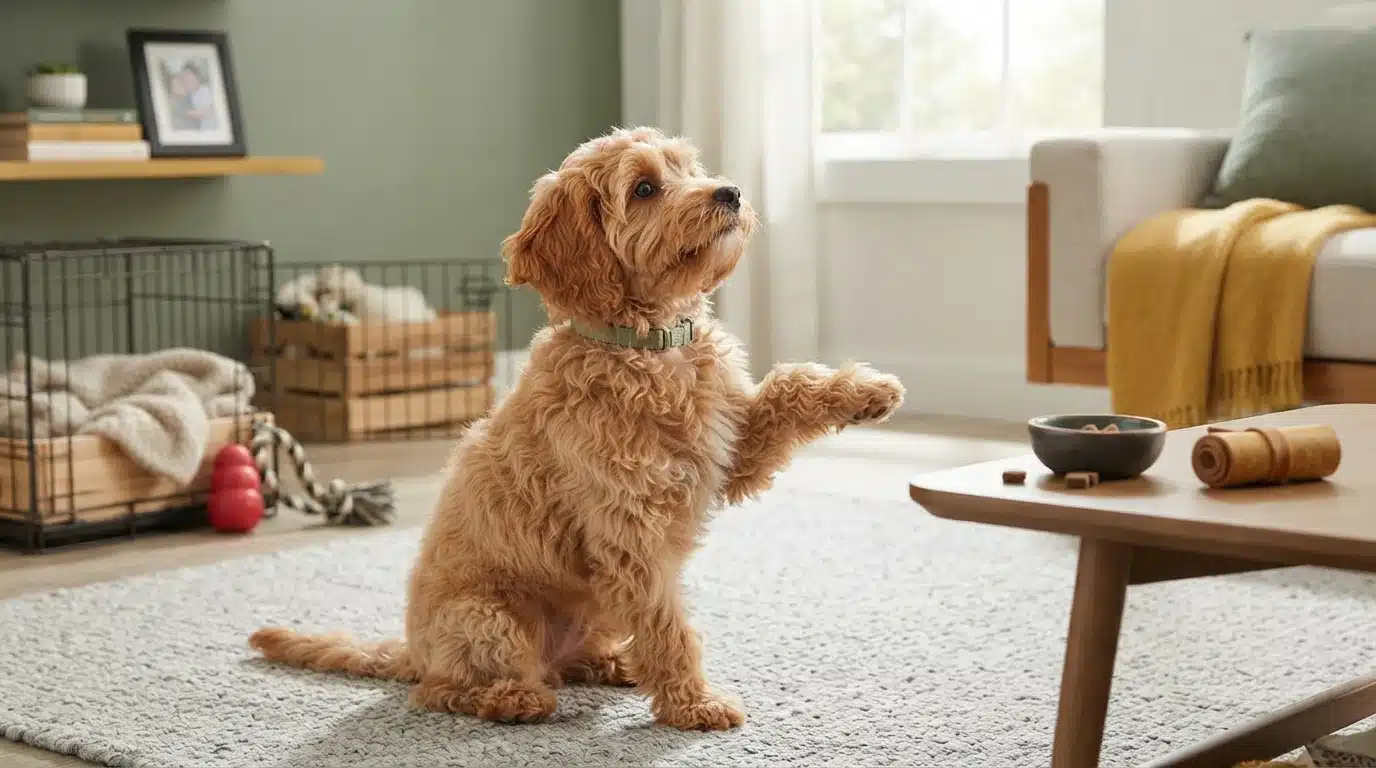
Quick Summary: Socialize a Havanese puppy gradually during its first month: begin with three quiet days, then introduce people, everyday sounds, surfaces, controlled outdoor experiences, and calm vaccinated dogs in small, positive sessions. Let the puppy choose when to approach, watch for stress signals, and avoid forced contact, dog parks, and public ground until the veterinarian confirms the vaccine series is on schedule. A predictable routine with regular meals, potty breaks, naps, and brief training sessions will help build a calm, confident companion.
Most Havanese puppies come home around eight weeks old, right at the start of the window when socialization matters most. That means the havanese puppy first month is both your busiest stretch and your best chance to shape a confident, easygoing companion, all while you are still figuring out where the water bowl goes.
The challenge is real. You want to expose your puppy to new people, sounds, and surfaces before twelve weeks, but her vaccines are not finished. This guide gives you a puppy week by week plan for those first four weeks, plus a simple new puppy daily routine and clear guidance on when a puppy class is safe.
It draws on AVSAB guidance and the experience of a Utah breeder who has placed Havanese puppies with first-time families across the country.
Week 1: Settle In and Build a Safe Base
Week one opens the Havanese puppy first month, and its job is simple: help your puppy decompress. Many trainers follow the 3-3-3 idea, where a new dog needs about three days to settle before the bigger adjustment begins. Havanese puppies are social, but even a Velcro breed needs quiet first.
Keep the World Small for Three Days
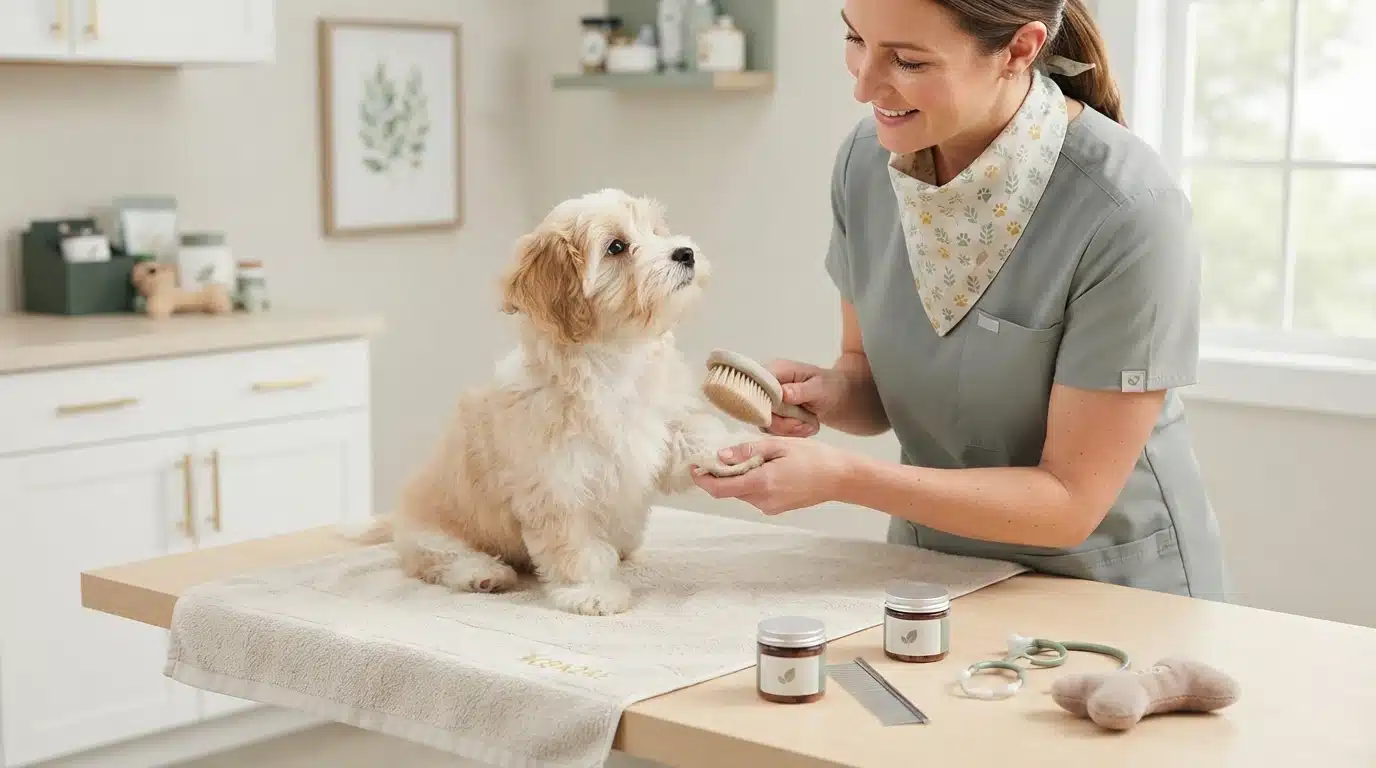
Limit your puppy to one room and a small yard spot for the first three days. Skip visitors, car trips, and errands. Let her eat, sleep, potty, and learn your voice without overload. Short handling sessions count as socialization too, so touch her paws, ears, and muzzle gently each day. That groundwork pays off later in Havanese puppy grooming, when brushing becomes routine instead of a battle.
Name the Sounds and Surfaces Already in Your House
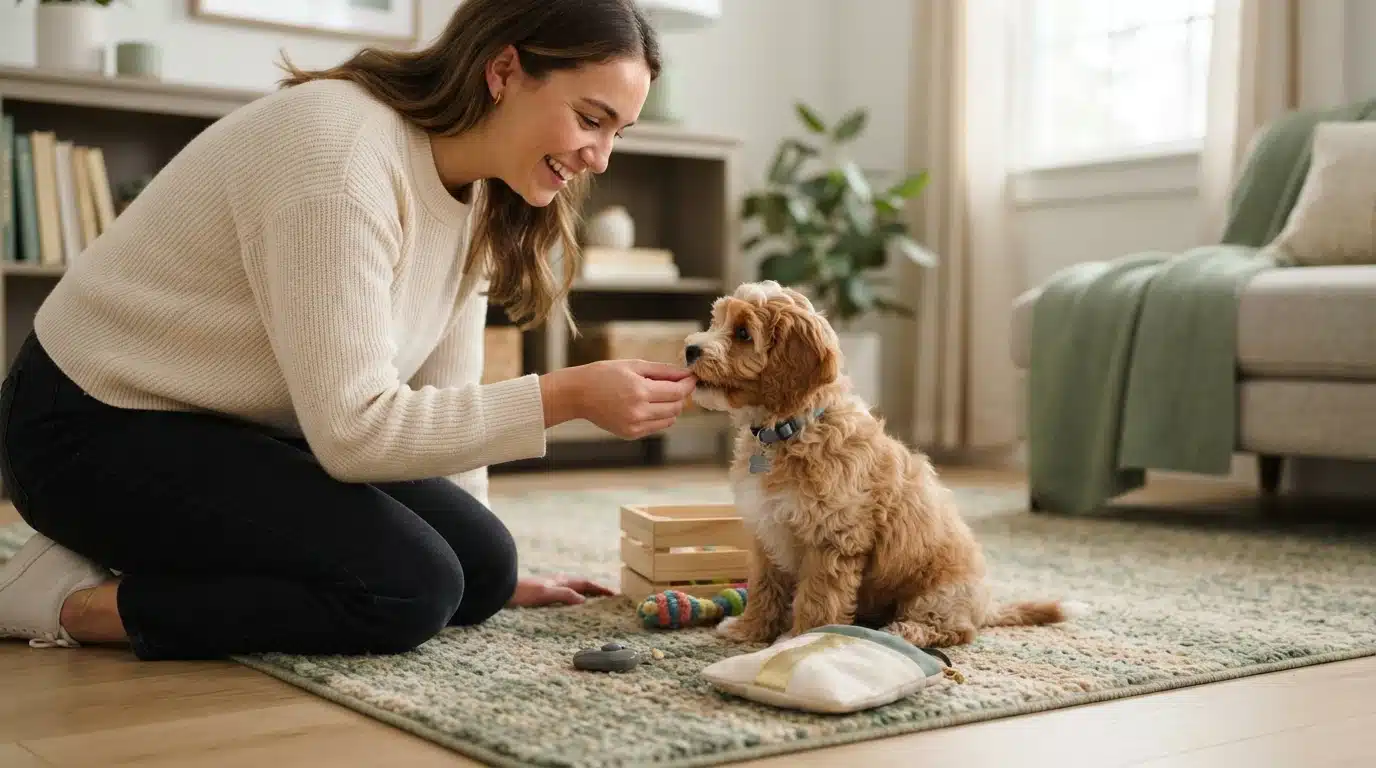
Introduce everyday sounds at low volume: the dishwasher, doorbell, vacuum, and TV. Pair each one with a treat so noise predicts something good. Then add surfaces. Let her walk on tile, rugs, grass, and a single low step. Keep sessions under two minutes and end while she still looks confident. Havanese read your mood closely, so stay cheerful and matter-of-fact.
What Counts as Done in Week One
By day seven, your puppy should sleep through most nights with only one or two potty breaks, eat her meals willingly, and approach you rather than hide. She should tolerate handling without squirming free, and startle noises should recover fast, within a few seconds of a treat. She does not need tricks, leash skills, or new places yet. A calm, curious puppy who trusts her people is the real finish line, because that trust carries every later lesson.
Week 2: Introduce People on Purpose
Build a List Instead of Waiting for Visitors
Week 2 of the Havanese puppy first month is when guests should become routine, not random. Havanese love people, but love grows from calm repetition. Write down ten different people your puppy could meet this week: men with beards, a teen, a grandparent, someone in a hat. Aim for one or two new people a day, each staying a few minutes, and keep every meeting low-key. If you’re picking up locally in South Jordan, short visits are easy to arrange.
The Three-Step Greeting
Teach every guest the same routine so your puppy learns what to expect.
- Pause at the door. The guest ignores the puppy for one minute, no eye contact or reaching.
- Let the puppy choose. Your puppy approaches on their own, ideally after sniffing shoes or the floor.
- Calm reward. When the puppy gets close, the guest scratches the chest gently or drops a treat.
Repeat that pattern with each visitor and your Havanese stops guessing. Predictable greetings teach puppies that strangers are safe and boring.
Reading an Unsure Puppy
Watch your puppy’s body, not the wagging tail alone. A comfortable puppy has loose ears, soft eyes, and moves in and out freely.
| Comfortable | Unsure |
|---|---|
| Loose body, soft wiggly tail | Stiff or frozen posture |
| Approaches on their own | Backs away, hides behind you |
| Plays or explores after | Licks lips, yawns, shakes off |
| Eats treats easily | Refuses food or turns away |
Any unsure signal means slow down. Move the guest farther back, or end the visit and let your puppy settle. This is how you read puppy stress signals before fear takes root. The stubborn moments now are small; ignored, they can harden into shyness later in the Havanese puppy first month.
Week 3: Add Outdoors, Surfaces, and Everyday Noise
By week 3 of your Havanese puppy’s first month, the world should get a little bigger. The American Veterinary Society of Animal Behavior says the first three months are the prime socialization window, so this week you add ground under the paws, sound in the ears, and weather on the face. Go slow, watch for stress, and end each outing on a good note.
Carried and Controlled Outdoor Exposure
Your puppy is not fully vaccinated yet, so keep paws off unknown ground. Carry him to a quiet sidewalk, a pet-friendly storefront, or a friend’s fenced yard and let him watch the world from your arms. People pass, bikes roll by, a dog barks two blocks away, and nothing bad happens. That is the lesson. Short trips work best: five minutes out, then home for a nap. For a full list of places and experiences to cover, our puppy socialization checklist breaks it down by age.
Surfaces, Sounds, and Weather on Purpose
In the first 8 to 12 weeks, expose your puppy to a grouped set of everyday things: surfaces like grass, gravel, tile, a doormat, and a slightly wobbly cushion; sounds like the vacuum, dishwasher, doorbell, and traffic; weather like light rain, wind, and sun; and handling of paws, ears, and mouth. Introduce one item at a time with treats nearby. If he backs away or freezes, lower the intensity. Havanese dogs read your mood, so act bored and cheerful.
Callout: Keep a simple log. Note what he met each day and how he reacted. Patterns show up fast.
When a First Puppy Class Makes Sense
A group class is ideal once your puppy meets AVSAB’s conditions: at least one set of vaccines given seven or more days before class, plus a first deworming, and he is healthy. At 10 to 11 weeks, many Havanese puppies fit that window. Look for small classes with positive-reinforcement trainers who keep play sessions short and matched by size. A shy puppy may need a quieter class or one more week at home first.
Week 4: Dog Introductions and Public Skills
Your Havanese is now ready for calm dog-to-dog contact and short public outings. Keep both low-key. The goal this week is exposure, not playdates that turn into chaos.
Parallel Play Over Face-to-Face Meets
Skip the nose-to-nose hello at first. Start with parallel walking at a distance, which lets two dogs learn each other’s scent and movement without pressure. Walk side by side about ten feet apart, then close the gap slowly if both stay loose and curious. Let them sniff a tree the other dog just visited. Watch for stiff tails, hard stares, or a frozen body. If you see those, widen the gap again. A Havanese usually wants friends, but a pushy greeting from a big dog can teach fear in one bad moment.
Leash Skills That Make Outings Easier
A 15-minute outing goes badly if the leash turns into a tug of war. Practice loose-leash walking in your hallway or yard before you try a store. Use a flat harness, not a collar, since small necks are fragile. Reward with a tiny treat whenever the leash stays slack. If your puppy pulls toward something interesting, stop and wait. Moving forward becomes the reward, so pulling stops paying.
Practicing Being Handled and Settled
Outings mean strangers will want to pet your puppy, so make handling boring-good now. Touch ears, paws, and the tail for two seconds, then treat. Repeat daily. Also teach a settle: place a mat down, feed calm behavior on it, and build to a few quiet minutes at a coffee shop. This one skill keeps every future outing manageable.
Your New Puppy Daily Routine: A First Month Template
A predictable day does more for a Havanese puppy than any single training session. Potty breaks, meals, play, and naps happen at the same times every day, so your puppy learns what comes next and settles faster. Here is a new puppy daily routine you can adapt to your own hours.
A Sample Day, Hour by Hour
No two families run the same schedule, and that is fine. What matters is the order of events, not the exact clock times.
| Time | What Happens |
|---|---|
| 7:00 am | Wake up, straight outside to potty |
| 7:15 am | Breakfast, then another potty break |
| 7:45 am | Short play or training session |
| 8:00 am | Nap in the crate or pen |
| 10:00 am | Potty break, gentle handling, nap |
| 12:00 pm | Lunch, potty, play, nap |
| 3:00 pm | Potty, leash practice in the yard |
| 5:30 pm | Dinner, then potty |
| 7:00 pm | Calm play, name game, settle on a mat |
| 10:30 pm | Last potty break, then bedtime |
Potty Breaks and Meals That Anchor the Day
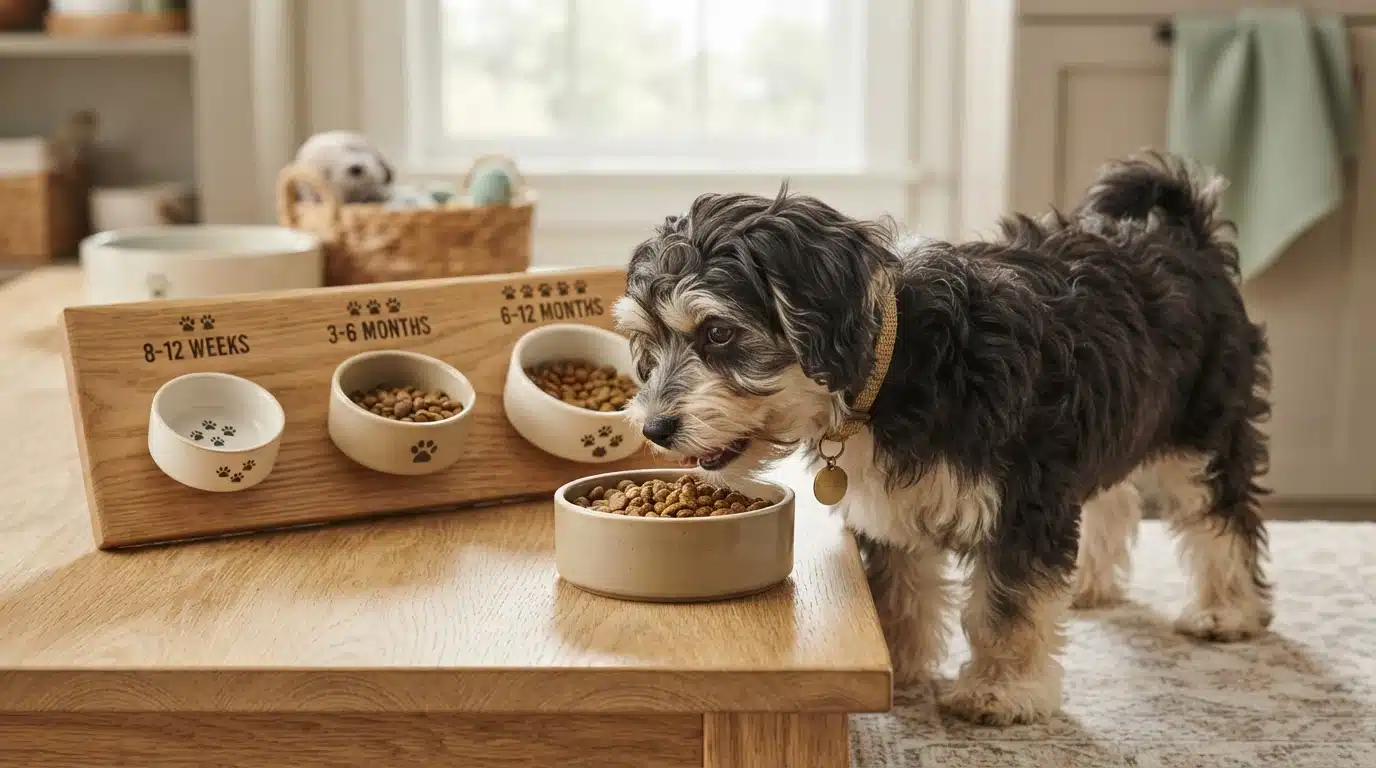
Young puppies need a trip outside roughly every two to four hours, plus after every meal, nap, and play session, a pattern the AKC potty training timeline recommends keeping consistent. Feed three meals at set times. Take your puppy out through the same door to the same spot, and reward quietly the moment she finishes. Predictable meals make predictable potty habits.
Expect one or two overnight breaks at eight weeks. Set an alarm rather than waiting for crying.
Folding Training Into the Routine
Training rides on moments the routine already creates. Before meals, ask for a sit. During potty trips, say your cue word. After naps, practice two minutes of name games or a mat settle. Keep each session under five minutes, and end while your puppy still wants more. Small breed puppies learn best in short, calm repetitions, so the daily rhythm itself becomes the lesson.
Can Havanese Puppies Meet Other Dogs Before They Are Fully Vaccinated?
The Short Answer
Yes, in most cases. The risk of behavior problems from under-socializing a puppy is a real and serious risk. The American Veterinary Society of Animal Behavior recommends starting puppy classes as early as 7 to 8 weeks, as long as certain conditions are met. Their position is that behavioral issues, not infectious disease, kill far more dogs under three years old. Still, you control exposure. Stick to known, vaccinated dogs and clean, controlled settings until your veterinarian confirms the vaccine series is moving along on schedule.
Per AVSAB guidance, safe early contact usually looks like this:
- Known dogs: Only healthy, fully vaccinated dogs you or a friend own
- Structured classes: Puppy classes that require a first round of vaccines at least seven days before class, plus a clean, disinfected facility
- Carried exposure: Your Havanese rides in a carrier or your arms near dog-friendly places, without paws on shared ground
- No shared water or waste: Skip communal bowls and spots where unknown dogs relieve themselves
Controlled Contact Versus Communal Dog Areas
A friend’s backyard with one gentle adult dog teaches your puppy how other dogs speak. A dog park does the opposite. Parks mix unknown vaccination histories, high arousal, and rough play, and a bad first meeting can shape a small breed puppy for months. At 8 to 12 weeks, when Havanese puppy socialization matters most, choose settings you can leave in ten seconds. If your pup got a strong start before pickup, keep the same standard at home, and our Havanese program notes describe what we pair with each litter.
The Risk Tradeoff, Honestly Framed
Both risks are real, so weigh them openly rather than pick a side. Parvovirus spreads through soil and feces and can survive outdoors for a year or longer, which is why vets warn against public ground before the vaccine series finishes. The counterweight: dogs missing their social window often develop fear and reactivity that is much harder to fix. The practical answer is a middle path. Use clean, private spaces and vaccinated dogs now, save public pavement and parks for after your vet clears the series, and call your vet if your puppy seems unwell.
Common Mistakes to Avoid in Month One
Fixed Daily Exposure Quotas and Over-Scheduling
There is no number of new things your puppy must meet each day. The AVSAB position statement asks for exposure “without causing over-…”; the point is quality, not a quota. Stuffing three errands, a visitor, and a car ride into one morning usually backfires. A tired, over-stimulated Havanese stops learning and starts rehearsing fear. Watch how your puppy recovers after each new thing, then decide whether the day needs more. If more structure helps, lean on naps, not new places.
Forced Contact and Misreading the Moment
Never hold your puppy so a stranger can pet her, and never push her toward a dog, a vacuum, or a stair. Forced contact teaches her that you will not protect her, which is the opposite of what socialization should build. Instead, let her choose to approach, and reward any step toward the new thing, even one glance. Learn her stress signals: lip licking, yawning, a tucked tail, turning away, or sudden sniffing that looks like an escape plan. If you see two or more, add distance right away. Reading those moments correctly matters more than any checklist, because a calm puppy who chooses to explore is the goal every single time.

A calm, confident Havanese starts with those first four weeks, and you don’t have to figure them out alone. Sage Puppies pairs every family with honest guidance before and after pickup. Have questions about your puppy’s first month? Reach out to Cassie and the team today.
Frequently Asked Questions
Q1: How do I socialize a Havanese puppy in its first month at home?
Work through the week by week plan above: three quiet days first, then new people, surfaces, and sounds paired with treats. Keep each session under five minutes and end while your puppy still looks confident.
Q2: What should I expose my Havanese puppy to in the first 8 to 12 weeks?
Cover surfaces like grass, gravel, and tile; sounds like the vacuum and doorbell; light weather; and gentle handling of paws and ears. Add ten or more different people and calm, vaccinated dogs.
Q3: Can Havanese puppies meet other dogs before they are fully vaccinated?
Yes, with limits. Stick to healthy, vaccinated dogs you know, clean settings you can leave quickly, and carried exposure near busy places. Skip dog parks until your vet clears the vaccine series.
Q4: What if my puppy seems scared of something new?
Add distance right away, lower the intensity, and let her approach on her own. Reward any glance or small step forward. Never force contact, because it teaches her you will not protect her.
Q5: How many new things does my puppy need each day?
There is no quota. Watch how quickly she recovers after each new experience, then decide. Quality beats numbers, and an over-stimulated puppy stops learning.
Q6: When can my puppy join a group class?
Most puppies fit the window around 10 to 11 weeks, once they have had one vaccine set at least seven days before class, a first deworming, and a clean bill of health.
Wrapping Up Your First Month
The Havanese puppy first month comes down to a simple pattern: quiet days first, then people, sounds, surfaces, and calm dogs, all paced to your puppy’s signals. Follow the puppy week by week plan, keep the new puppy daily routine steady, and let her choose when to approach. Watch her stress signals, skip dog parks, and enroll in class once she meets the vaccine rule. Small, calm steps now build a confident companion for life.