Teaching a Puppy to Settle: Calm Skills for Family Life
A puppy who can relax near the family is easier to include in meals, homework, conversations, travel, and quiet evenings. Whether your puppy joins you through pickup in South Jordan, Utah, or delivery to another state, calm behavior begins with simple routines and thoughtful practice.
Puppies are naturally curious, social, and active. They do not arrive knowing how to lie quietly while dinner is prepared, children finish homework, or visitors sit in the living room. Settling is a skill that develops through repetition, appropriate rest, and reinforcement of calm choices.
Teaching a puppy to settle does not mean expecting a young dog to be quiet all day. It means helping the puppy move between activity and rest without needing constant entertainment or becoming increasingly overstimulated.
What Does “Settle” Actually Mean?
Settle, stay, and place can work together, but they are not exactly the same behavior.
A relaxed state
The puppy softens physically and mentally. The exact position is less important than calm breathing, a loose body, and reduced attention to every movement in the room.
A defined location
The puppy goes to a bed, mat, cot, or other designated area. Place gives the puppy a clear physical boundary and can become a useful starting point for settling.
A maintained position
The puppy remains in a requested position until released. A dog can technically stay while remaining alert and tense, which is different from true relaxation.
Meet the Need Before Training the Calm
A puppy may struggle to settle because something important still needs attention. Before beginning, consider the puppy’s physical comfort, activity level, and environment.
Potty and comfort
Give the puppy an appropriate potty opportunity. Check that the room is comfortable and that the resting surface is not too warm, slippery, noisy, or isolated.
Age-appropriate activity
Calm is easier after the puppy has had an appropriate combination of movement, sniffing, play, social interaction, and simple training.
Enough rest
Many young puppies need more sleep than families expect. A puppy who appears wild, mouthy, or unable to focus may actually be overtired rather than under-exercised.
How to Teach a Puppy to Settle
Begin in a quiet room and keep the first sessions simple. The cue should eventually predict relaxation, not a long struggle between the puppy and the handler.
Choose a comfortable settling area
Use a small bed, folded blanket, bath mat, or portable puppy mat. Select something comfortable enough for rest but practical enough to move between rooms or bring on family outings.
Begin near the puppy
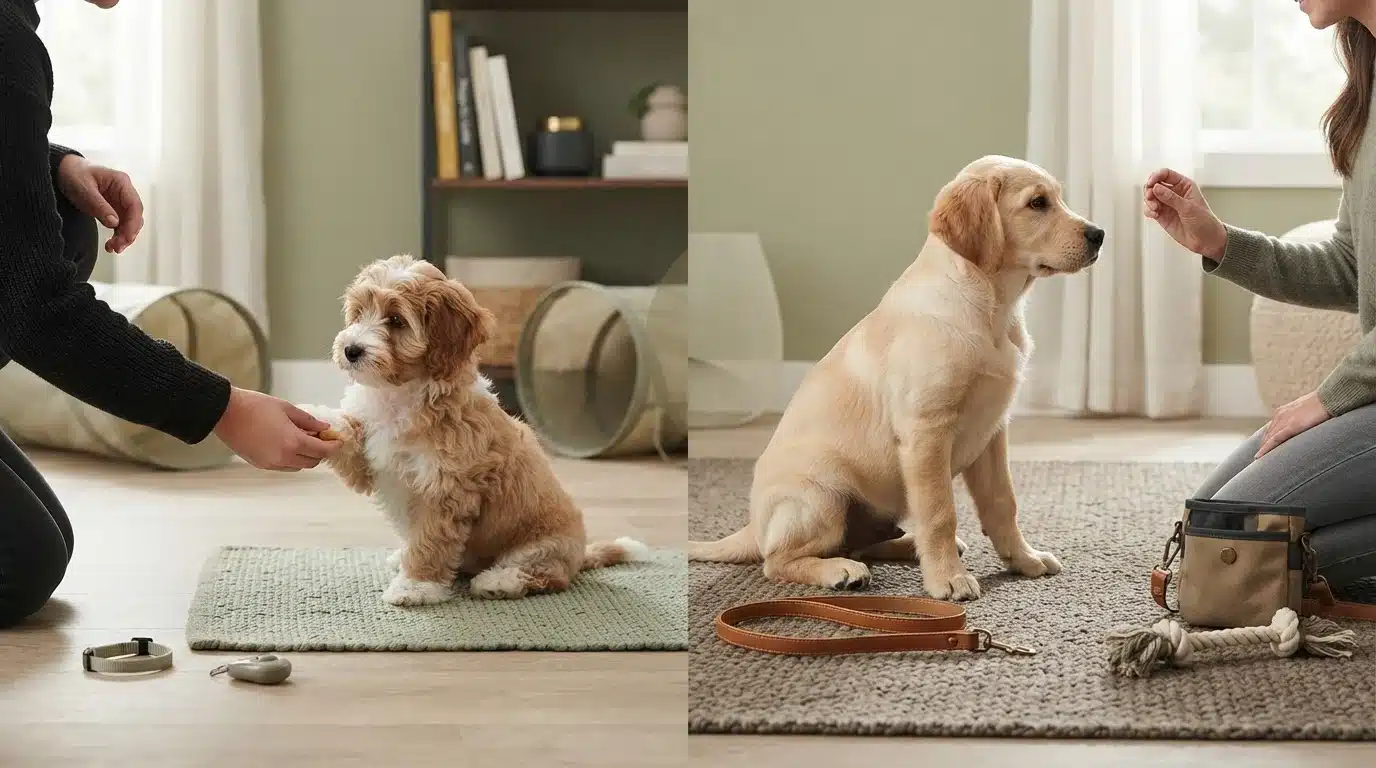
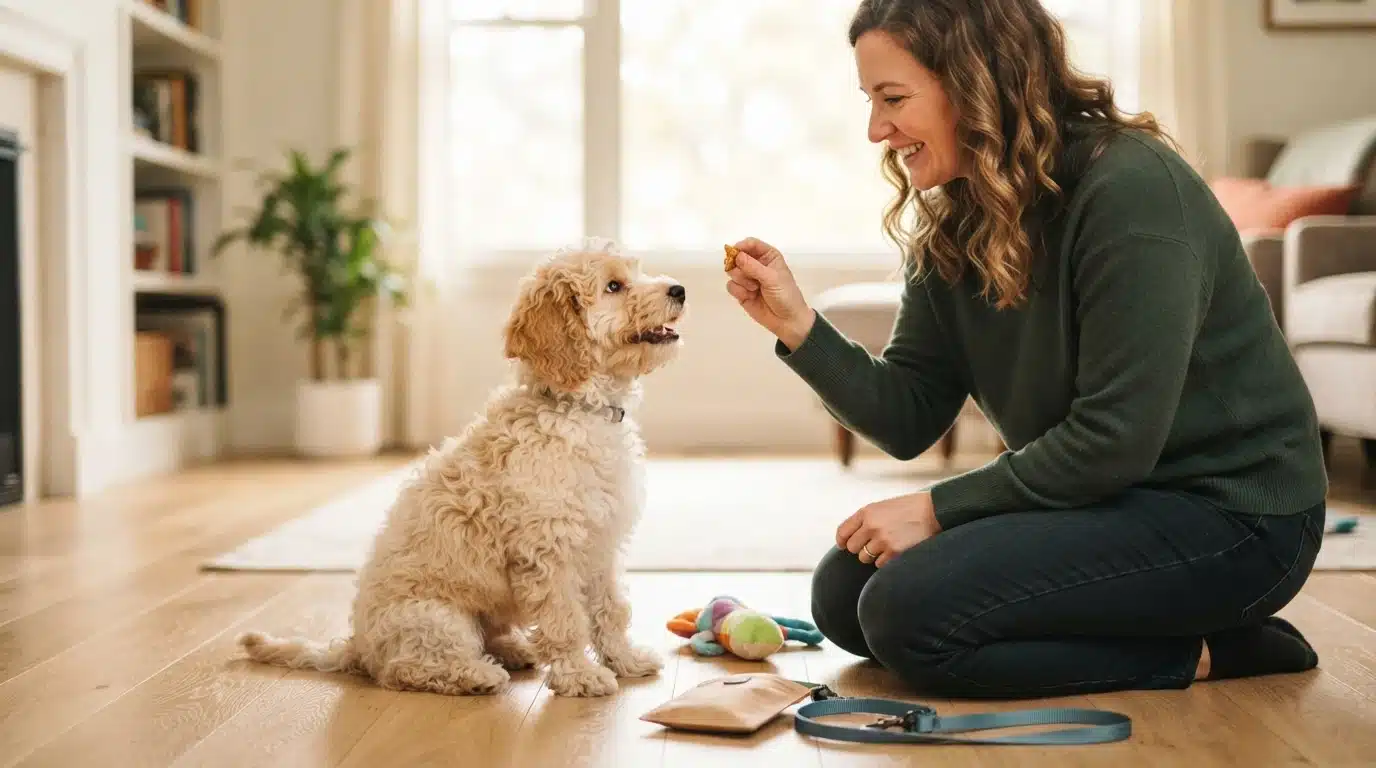
Sit beside the mat with the puppy on leash or within a puppy-safe area. Avoid immediately asking for a formal down. Give the puppy a moment to observe the environment and make a calm choice.
Mark small moments of relaxation
Quietly say “yes” or use another consistent marker when the puppy lies down, shifts onto one hip, lowers the head, disengages from a distraction, or softens the body.
Place the reward between the paws
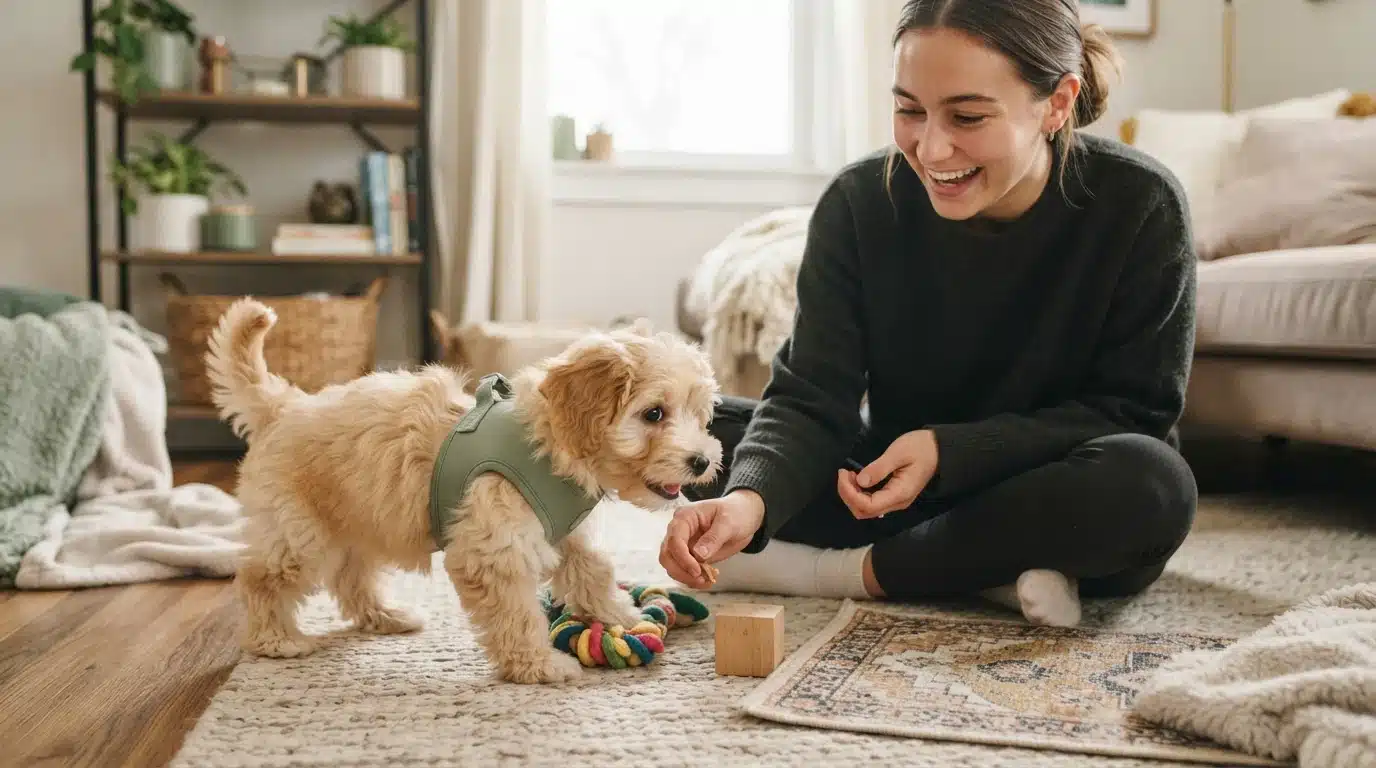
Deliver a small treat low and slowly rather than holding it above the puppy’s face. Feeding between the paws helps keep the puppy’s head and body close to the resting surface.
Pause before offering another reward
Allow a few quiet seconds to pass. If the puppy remains relaxed, place another treat between the paws. At first, reward often enough that the puppy does not need to get up and seek activity.
Add the word after the behavior is predictable
Once the puppy regularly relaxes on the mat, softly say “settle” as the puppy begins to lie down or soften. Avoid repeating the word when the puppy is too distracted to respond.
Introduce a clear release word
Use a word such as “free,” “all done,” or “okay” to end the exercise. The release helps the puppy understand that calm behavior has a beginning and an end.
Build one difficulty at a time
Gradually increase duration, your distance from the puppy, or the level of distraction. Do not increase all three at once. Return to an easier version whenever the puppy becomes restless.
Try this during a quiet part of the day
- Place the mat beside your chair and sit down.
- Give the puppy a moment to investigate without repeating commands.
- Mark and reward the first calm behavior you see.
- Place two or three additional rewards between the puppy’s paws at relaxed intervals.
- Release the puppy while the exercise is still successful.
- Repeat later in a different but still manageable situation.
When a Puppy Is Too Tired to Settle
Overstimulation can look like excess energy. When a puppy has moved beyond a productive learning state, reduce activity and help the puppy transition to a quieter environment.
Common signs
- Sudden zooming that becomes difficult to interrupt
- Harder or more frequent mouthing
- Barking at people, toys, or treats
- Grabbing clothing, the leash, or the settle mat
- Rapidly switching between activities
- Difficulty responding to familiar cues
What to do instead of adding more excitement
Lower the lights, reduce conversation, put stimulating toys away, and provide a calm potty opportunity. Then guide the puppy to an appropriate resting space with a familiar chew or another veterinarian-approved enrichment option.
Avoid turning every restless moment into another round of chasing, wrestling, or high-energy play. Sometimes the puppy needs help transitioning into rest.
Build Settle Training Into Family Life
Calm behavior becomes reliable when it is practiced in ordinary situations, not only during formal training sessions.
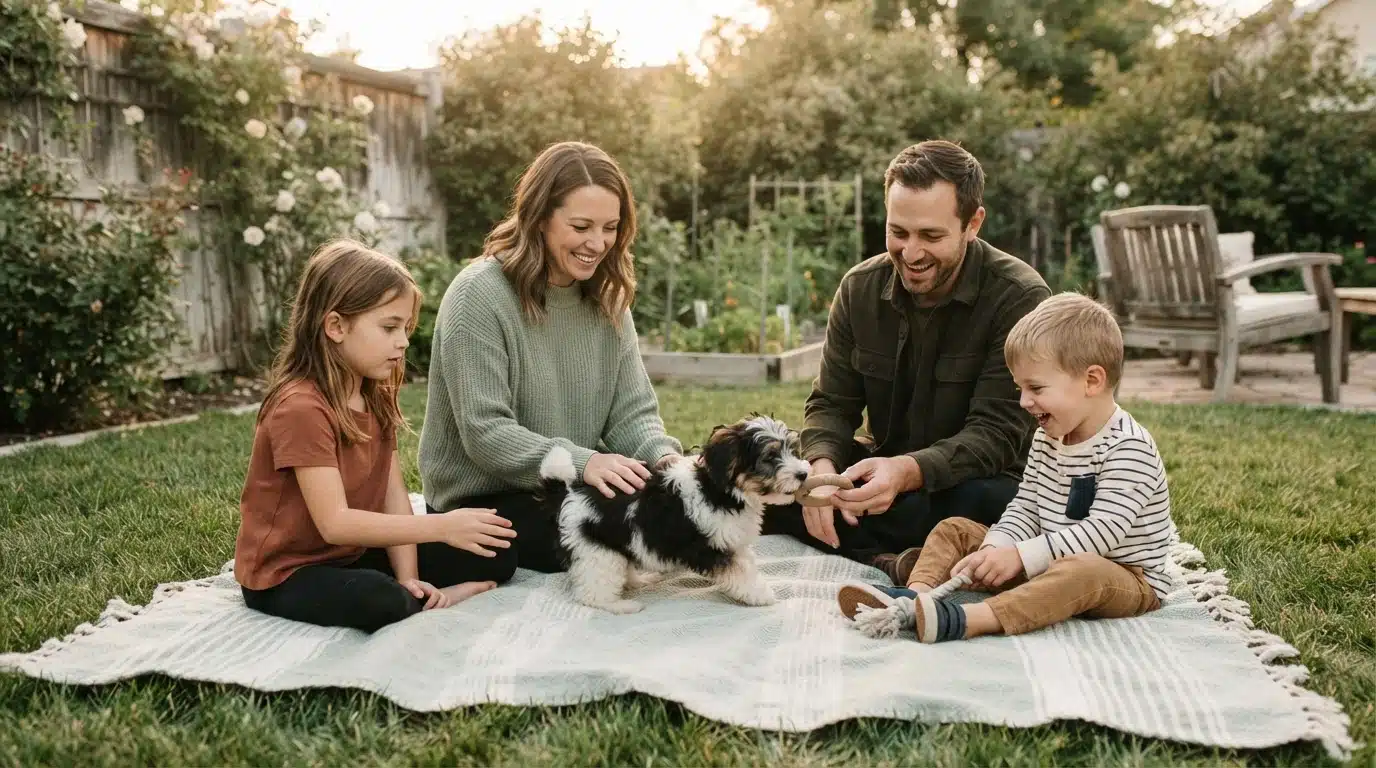
Make Calm Behavior a Family Project
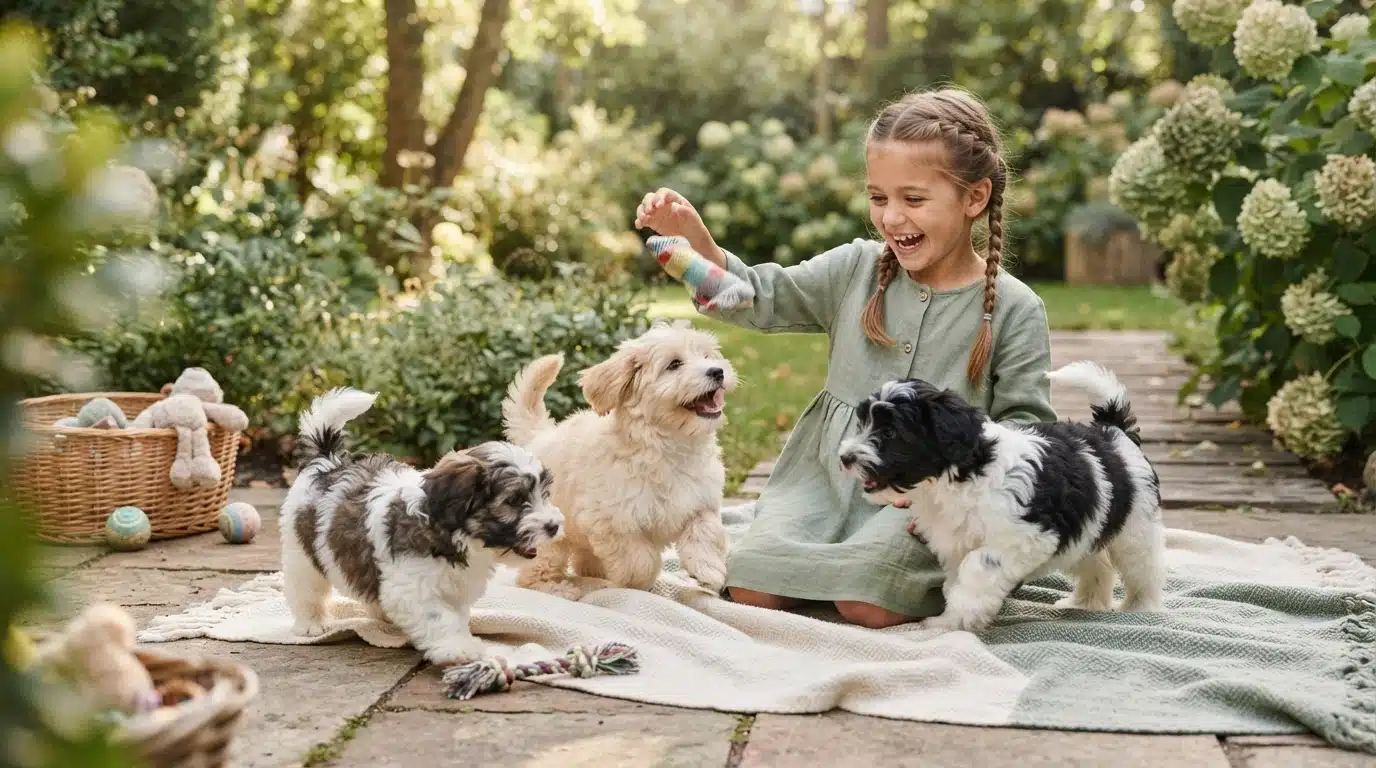
Children can participate, but adults should manage the training environment and make sure the puppy is not overwhelmed. Consistent family rules make settling easier to understand.
Let resting puppies rest
Do not climb on, hug, move, tease, or repeatedly touch a puppy who has settled or fallen asleep.
Use quiet voices near the mat
The settling area should not become the center of loud games, running, or repeated attempts to excite the puppy.
Have an adult deliver most rewards
This prevents children from crowding the puppy or turning treat delivery into a fast, stimulating game.
Use management when needed
Gates, pens, crates, and leashes can create safe separation when the puppy or children are not ready for direct interaction.
Common Settle-Training Mistakes
- Waiting until the puppy is already out of control Practice during manageable moments so the puppy can learn the behavior before it is needed in a difficult situation.
- Expecting a formal down-stay A puppy may be technically lying down while remaining tense and intensely focused. Reward softer body language, not only position.
- Repeating “settle” continuously A cue loses clarity when it is repeated while the puppy is unable to respond. Make the exercise easier instead.
- Holding or forcing the puppy down Physical restraint can create frustration or discomfort. Arrange the environment and reward voluntary calm behavior.
- Increasing difficulty too quickly A puppy who settles in a silent room may not be ready to settle beside running children, a doorbell, or visiting dogs.
- Removing all normal puppy activity Settling should balance healthy play, training, exploration, social interaction, and rest. It should not replace them.
How to Know the Training Is Working
Progress is usually gradual. Look for small improvements in how quickly the puppy relaxes and how much support is needed.
Faster recovery
The puppy returns to a calmer state more easily after play, visitors, a walk, or another exciting experience.
Longer quiet periods
The puppy remains relaxed for increasing periods without needing food delivered every few seconds.
More locations
The puppy can settle in different rooms, on a portable mat, or during manageable family activities.
Softer body language
You see a loose body, resting head, slower breathing, relaxed ears, or less visual tracking of every movement.
Less demand behavior
The puppy becomes less likely to bark, paw, mouth, or repeatedly seek entertainment during quiet family time.
Independent choices
The puppy begins choosing a bed, mat, or nearby floor space without being directed every time.
Talk With a Professional When Calm Seems Impossible
Some difficulty settling is normal during puppyhood. However, contact your veterinarian if a sudden behavior change, pain, digestive discomfort, persistent itching, unusual restlessness, or another physical concern could be involved.
A qualified, reward-based trainer or behavior professional can also help when settling attempts consistently produce intense distress, panic, persistent aggression, or behavior that feels unsafe for the puppy or family.
Teaching a Puppy to Settle FAQ
At what age can I begin teaching a puppy to settle?
What word should I use for the settle cue?
Why does my puppy keep getting up from the mat?
Is crate training the same as settle training?
Should I give my puppy a chew while practicing?
How do I teach a puppy to settle around children?
Preparing for a puppy who fits family life?
Explore Sage Puppies’ Havanese, Havapoo, and Cavapoo puppies, learn about our process, and complete an application when you are ready to begin.
You may also explore Havanese puppies, Havapoo puppies, and Cavapoo puppies.