Quick Summary: Socialize a Havanese puppy with short daily sessions that introduce one new sound, surface, object, or person at a safe distance, reward calm behavior, and end before the puppy tires. Build on attention, mat settling, and calm handling skills while progressing from sounds to people and movement, and let visitors and children approach the puppy on its own terms. Treat-taking alone does not prove comfort, so watch body language, log each exposure, and seek a trainer or veterinary behaviorist if fear persists past 16 weeks or worsens.
A Havanese puppy can meet a dozen unfamiliar people in a single afternoon without leaving your living room. Whether that afternoon builds confidence or fear depends almost entirely on what you planned the night before. Most first-time owners know puppy socialization home routine work matters, but they wing it, and the puppy learns the wrong lessons. This guide gives you a week by week plan built for the home you already have: an exposure log, simple indoor activities, visitor steps that keep things safe before vaccinations are finished, and Havanese-specific adjustments for a vocal, people-focused small breed. You will also learn to read your puppy’s comfort signals instead of assuming a taken treat means all is well. The approach follows advice from veterinary behaviorists and Cassie Milar’s documented experience raising Havanese, Havapoo, and Cavapoo puppies at Sage Puppies in South Jordan, Utah.
How Do I Socialize a Havanese Puppy at Home?
A Havanese puppy socialization home routine works in short daily sessions with four steps: pick one new experience, let your puppy watch it from a safe distance, reward calm behavior with treats and praise, then end before your puppy gets tired. Repeat with different sounds, surfaces, people, and handling each day. At home you cover most of it, so the plan matters more than fancy equipment.
What Home Socialization Actually Covers
Socialization means positive exposure, not crowds. At home it includes sounds such as the vacuum and doorbell, surfaces such as tile, grass, and stairs, gentle handling of paws and ears, meeting new people of different ages, and short alone-time practice. A Havanese thrives on people, so add being alone calmly as its own skill. Aim for a few new items per day, always paired with treats.
Why the First Three Months Matter
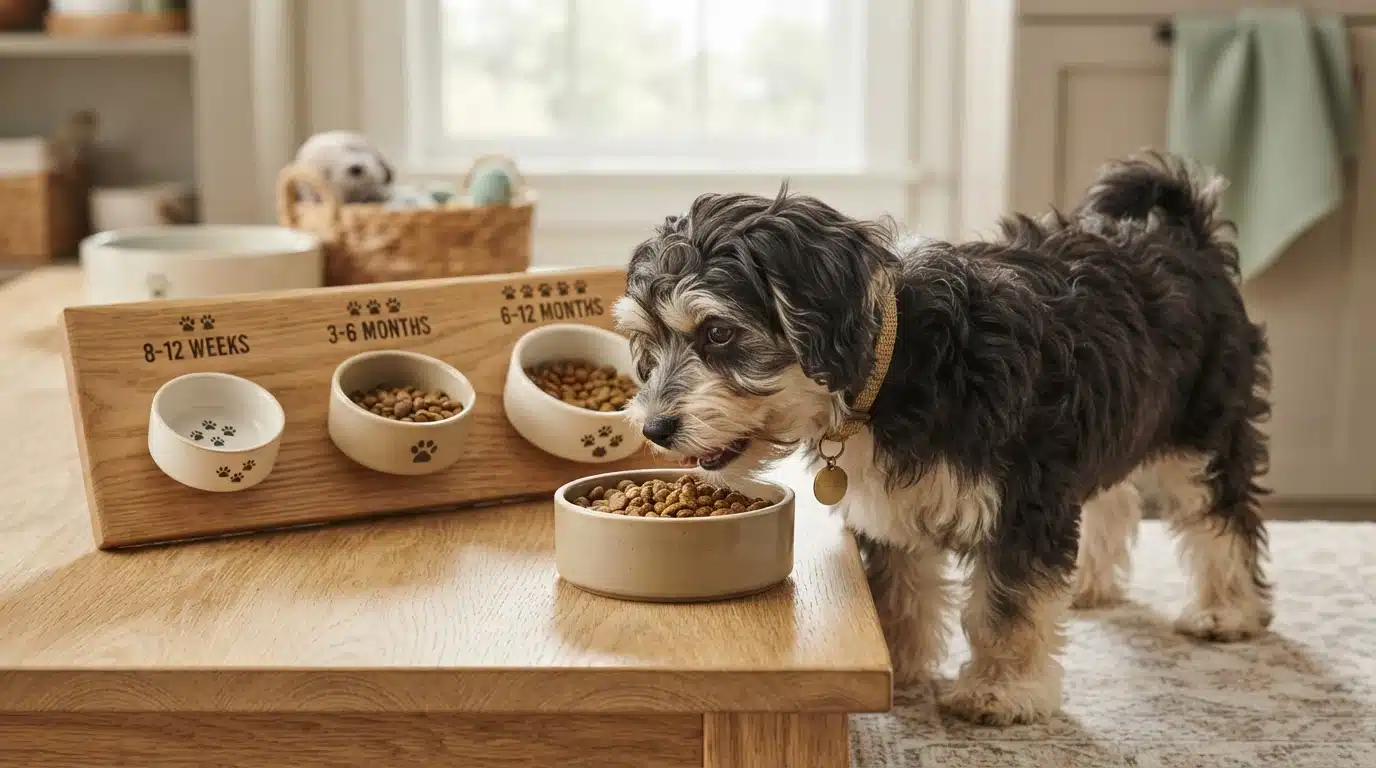
According to the AVSAB position statement, the first three months are the most important time for puppy socialization, and it supports starting before a puppy is fully vaccinated. During this window, sociability outweighs fear, so new things feel interesting instead of scary. The AVMA reports puppies can begin socialization classes at 7 to 8 weeks with at least one set of vaccines. Keep your puppy’s shots on schedule with the first-year Havanese puppy health checklist.
The Four-Part Session Structure
Run each session the same way, about five minutes long:
- Choose one new sound, surface, object, or person.
- Observe from a distance your puppy handles calmly.
- Reward calm looking, sniffing, or stepping closer with treats.
- Stop while your puppy still wants more, and log it.
Foundation Skills That Make Every Exposure Easier
Three skills carry almost every socialization session: attention, calm on a mat, and calm body handling. Teach them first, and each new sound, surface, or visitor becomes easier because your puppy already knows what to do.
Look at Me and Marker Training
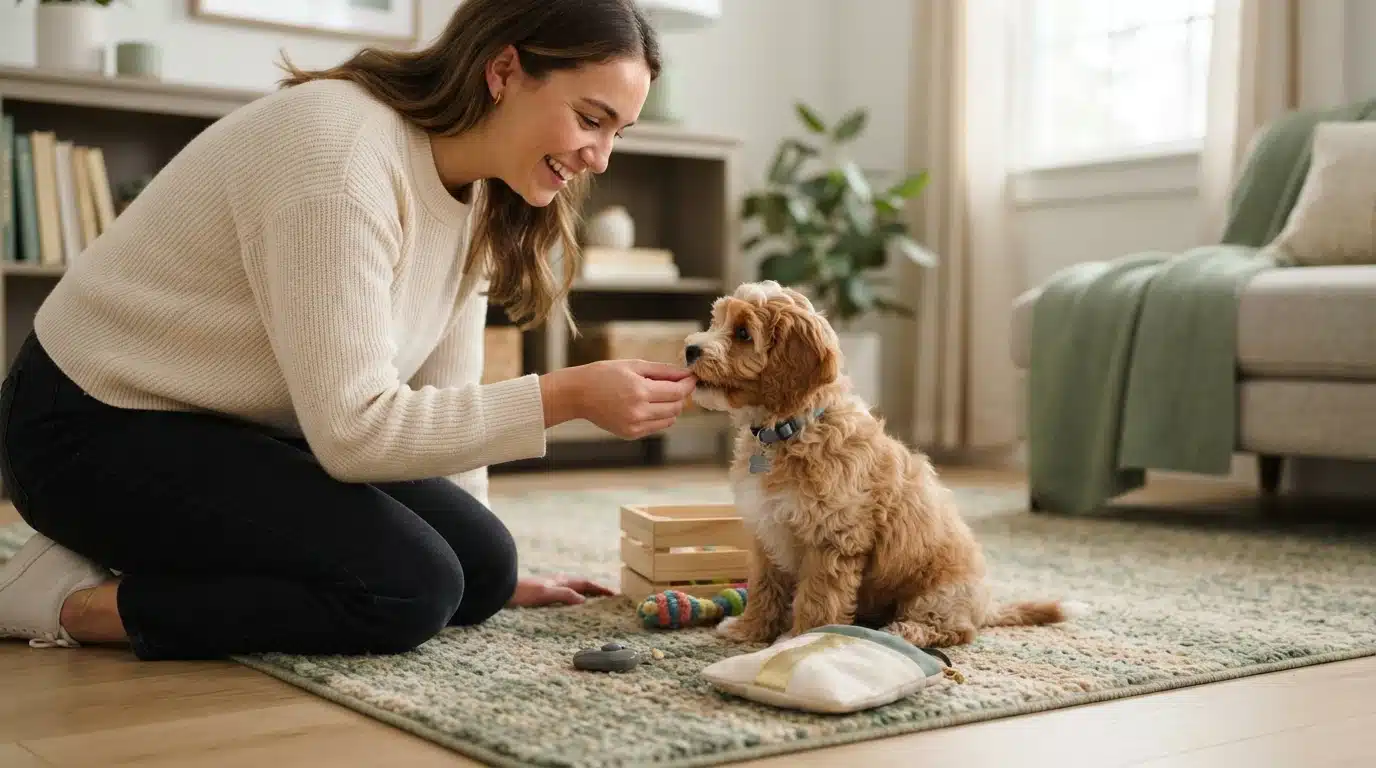
Start with reward-based puppy training using a marker word like “yes” or a clicker. Say the marker the instant your puppy looks at you, then treat. Practice in the kitchen, then on walks. A puppy who checks in with you during a new experience is easier to guide than one who bolts.
Settle on a Mat
Grab a towel or mat and reward your puppy for stepping on it, then for lying down. Build to a full minute of calm before you add distractions. This settle becomes your portable off switch: bring the mat to the vet lobby, a friend’s porch, or a busy room, and your Havanese has a familiar job.
Body Handling and Cooperation
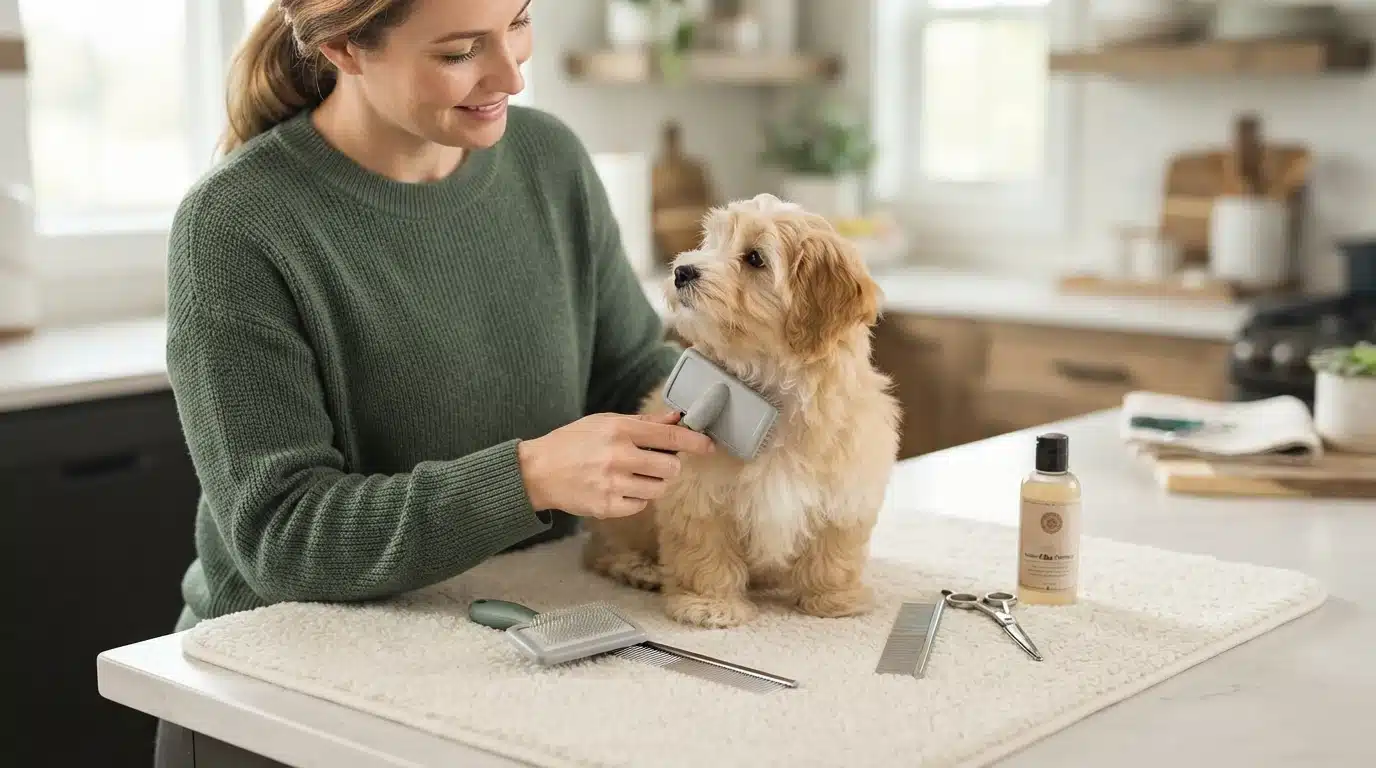
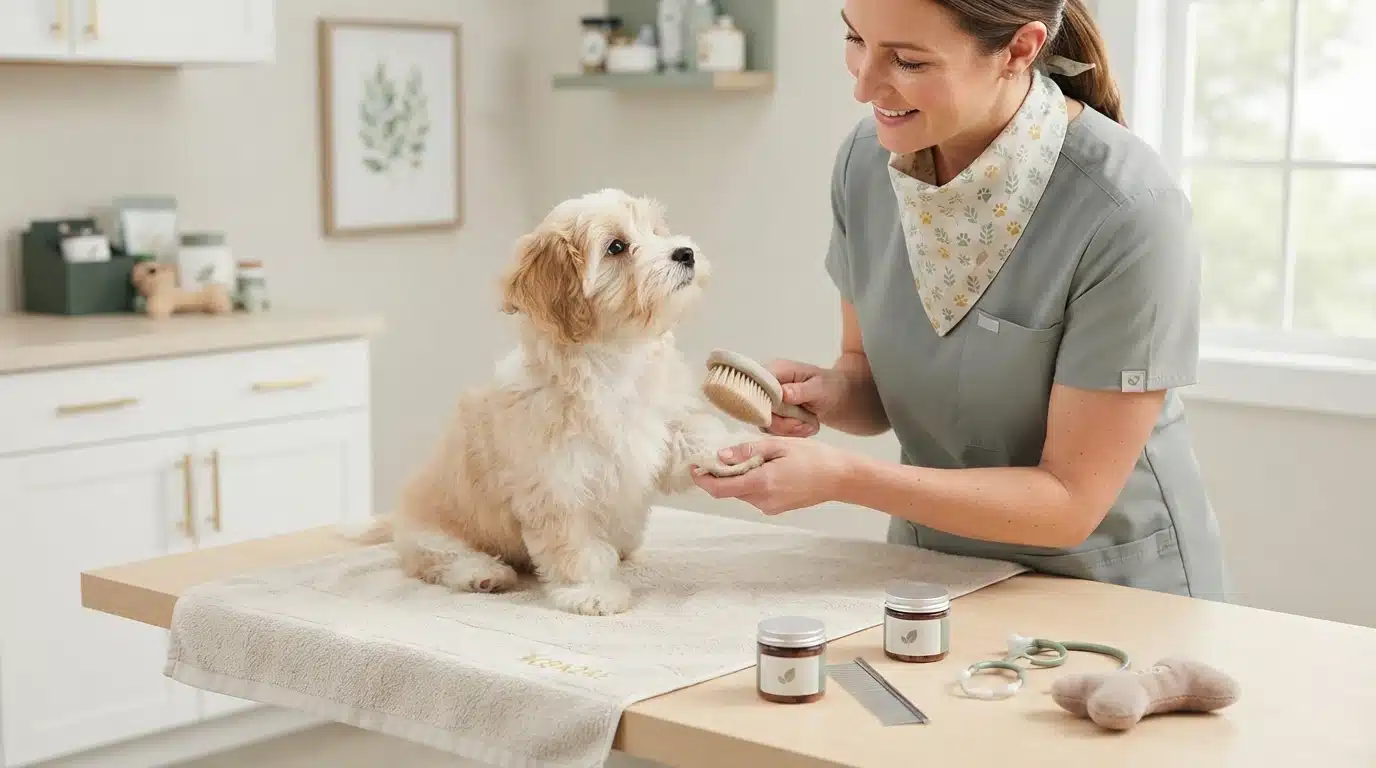
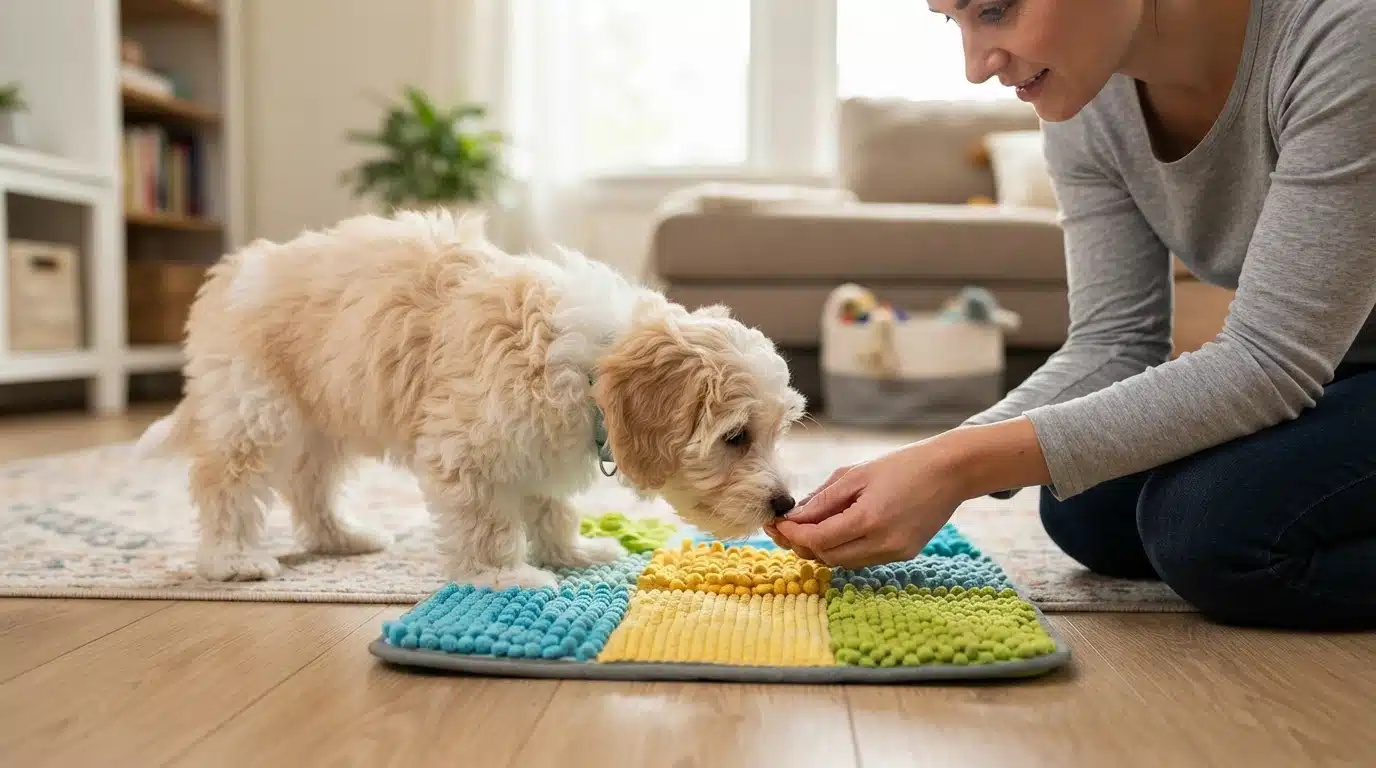
Handle ears, paws, tail, and muzzle for a few seconds, mark, and treat. Pair handling with a lick mat or frozen Kong so the puppy associates touch with good things. Havanese need regular grooming, so this skill pays off for life. It also makes vet exams and nail trims calmer. If your puppy stiffens, pulls away, or stops eating, end the session and go back to an easier touch. Comfort matters more than tolerance.
Vocal by nature, Havanese often bark when unsure. Before new exposures, run a quick attention round: the look, the settle, the touch. That warm-up keeps the puppy socialization home routine smooth and steady.
A Week-by-Week At Home Puppy Socialization Routine
Puppies move through their most open learning window between three and fourteen weeks, so a simple weekly plan beats a scattered one. This week by week puppy socialization plan keeps everything indoors until your vet clears outside time, and it builds on itself: sounds first, then people, then movement.
Weeks One and Two: One New Thing at a Time
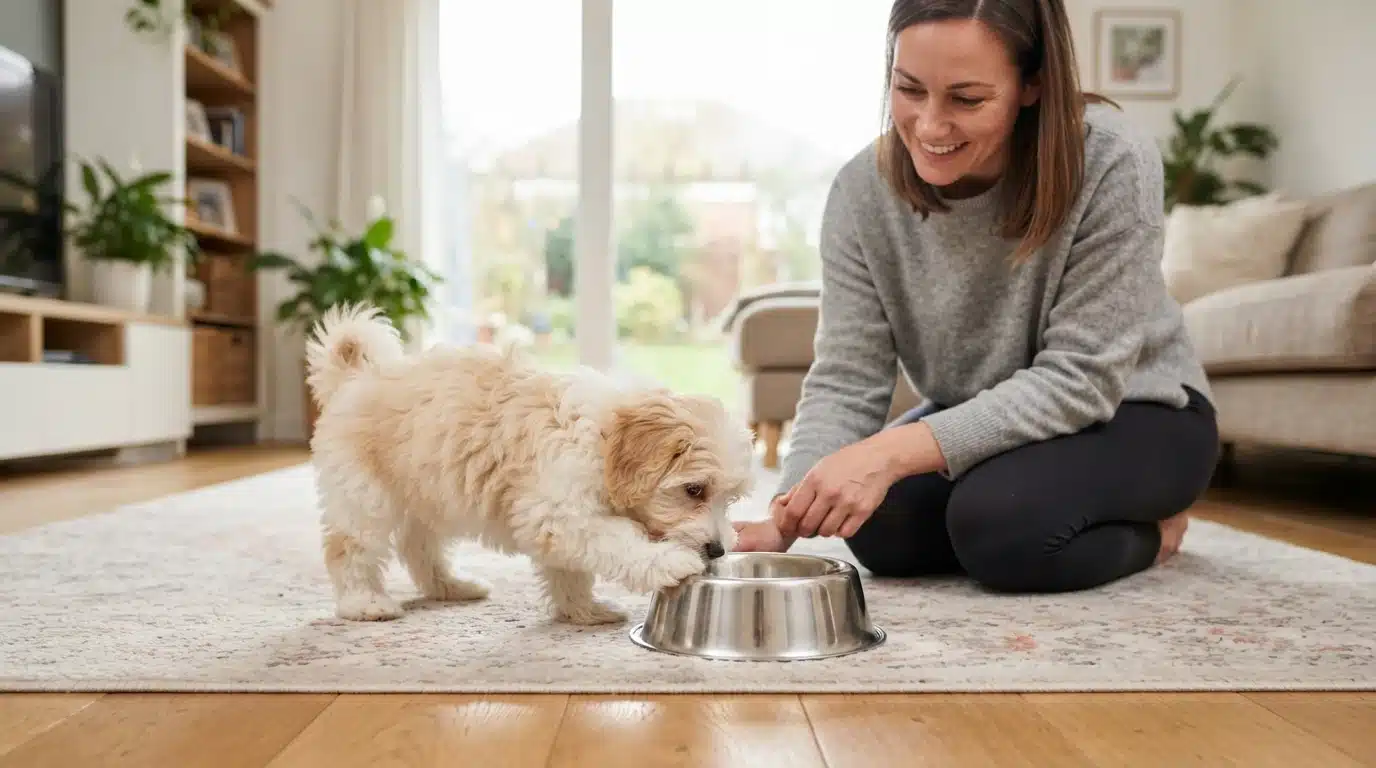
Start small. Introduce one new sound, surface, or object per day, such as a blender whirring in another room, a bath mat underfoot, or an umbrella opening across the room. Keep each session under five minutes. Pair every new thing with a treat so your puppy learns that novelty predicts good food. If your puppy startles, stop, increase the distance, and try again tomorrow.
Weeks Three and Four: People, Voices, and Routine Objects
Add variety to the people your puppy meets: men, children, someone in a hood, someone in a hat. One or two calm visitors per day is plenty for a small breed. Let your puppy approach rather than being passed around. Add everyday objects to the routine, like a carrier, a leash, and a nail file touched lightly to each paw.
Weeks Five and Six: Movement, Handling, and Busy Spaces
Now layer in motion and mild busyness. Try a box with one low side, a plank on the floor, gentle ear and paw handling, and recordings of traffic or crowds. Rotate which family member feeds meals so your puppy accepts care from everyone.
How to Move Up a Level
Raise the challenge only when your puppy stays loose-bodied, sniffing, and willing to eat. Treat-taking alone is not comfort; a stiff puppy who snatches food is worried. If you see freezing or backing away, drop back one level for two days. Log each exposure, date, and reaction, and a family-raised routine like the ones behind Sage Puppies’ own family-raised puppy socialization schedule guide can show how breeders run the same steps.
Introducing Strangers, Visitors, and Children Safely
How to Introduce Your Havanese Puppy to Strangers Safely
Use the same calm script every time, because predictability builds trust. When a guest arrives, follow this five-step visitor protocol:
- Let your puppy observe from a safe spot first.
- Ask the visitor to ignore the puppy for a minute.
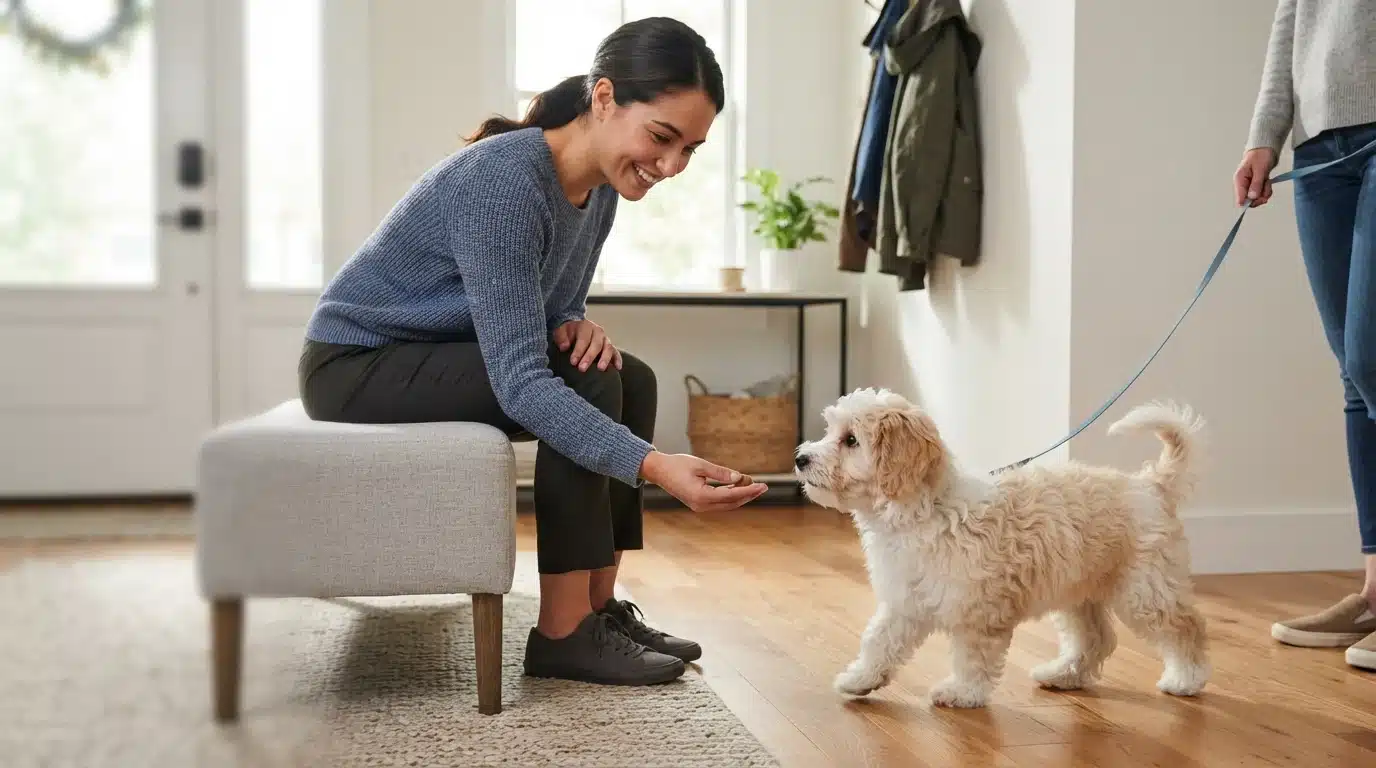
- Have them sit or crouch sideways, avoiding eye contact.
- Let your puppy approach on her own terms.
- Reward quiet, relaxed contact with a treat.
Hand the visitor treats so new people become good news. If your puppy hides or freezes, end the greeting and try later. Taking a treat is not the same as being comfortable, so watch her body: loose wagging means yes, tucked tail and lip licking mean no.
Rules for Children Around a Small Breed
A Havanese weighs under 15 pounds, so rough handling can injure him even when he stays quiet. Teach kids three simple rules before any greeting. First, let the puppy come to them; never grab or chase. Second, pet the side or chest with slow strokes, not hugs or pats on the head. Third, if the puppy walks away, the game is over.
Sit children on the floor so the puppy can climb into laps by choice, and keep an adult in the room during every greeting. These guardrails matter for Havanese, Havapoo, and Cavapoo puppies alike, since all three are people-loving small breeds that will tolerate more than they should.
Door, Mailbox, and Delivery Moments
Doors are the hardest test, because bells, knocks, and strangers arrive together. Ring the doorbell yourself at low volume, then feed a treat before your puppy can bark. Gradually raise the volume over a week. This pattern teaches him that the sound predicts food, not chaos, and it curbs the watchdog barking this breed loves to practice.
For deliveries, practice at the mailbox instead. Walk your puppy out during quiet pickup times, let him watch a package come and go, then head back inside. Rehearsing these small moments keeps real ones boring, which is exactly what you want from a vocal, people-oriented breed.
Indoor Puppy Socialization Activities That Build Confidence
You can socialize a Havanese puppy well before he finishes his vaccines, and most of it happens indoors. Three activity categories cover the essentials:
- Scent and search games build problem-solving and calm focus.
- Sound and object novelty teach him that odd things are safe.
- Movement and body awareness grow physical confidence on wobbly, slick, or raised surfaces.
Here is how each one works, with a Havanese-sized twist.
Scent and Search Games
Nose work tires a small puppy faster than a walk does. Hide a few pieces of kibble under one towel, then under two, and let him sniff them out. A simple muffin-tin game works too: drop treats into the cups and cover some with tennis balls. Keep sessions to five minutes. If he gets frustrated or starts mouthing the towel, make the next hide easier.
Sound and Object Novelty
Introduce one new thing per day: a crinkly bottle, an umbrella opening, a laundry basket he can climb into. Play household sounds at low volume first, then raise it as he stays relaxed. The rule is simple: if he notices, recovers, and goes back to exploring, the exposure worked. Treat-taking alone does not count as comfort. Watch his body instead, and let him approach on his own.
Movement and Body Awareness
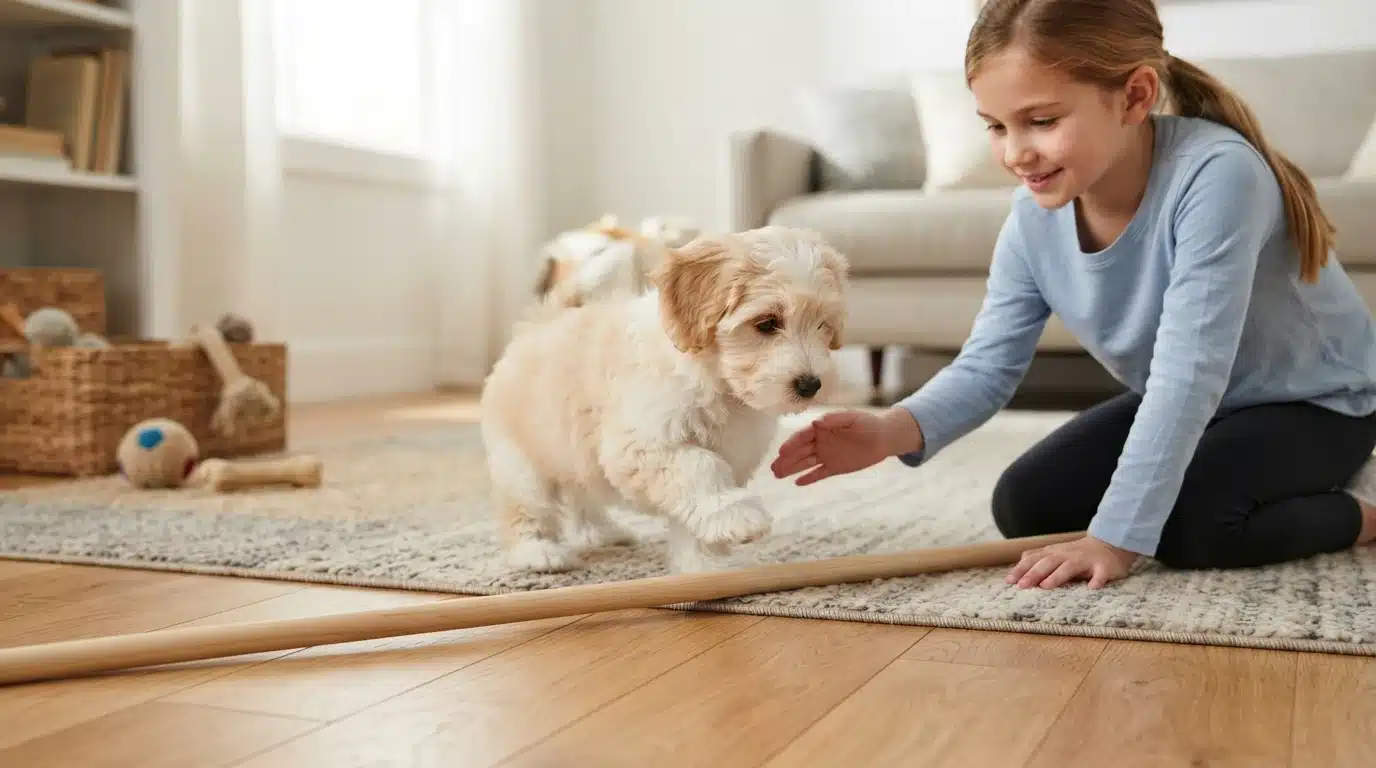
Set up a mini obstacle course in a hallway. Lay a broom handle flat so he steps over it, place a folded towel for a bump, and add a yoga mat for a slick patch. Lure him through slowly with treats, never push. Small breeds like the Havanese are quick, but their short legs need low, stable props. Two or three passes, then stop while he still wants more. Reward-based puppy training like this builds confidence he will carry into every new place you visit later.
Reading Comfort, Stress, and When to Ask for Help
Puppies tell you how they feel before they melt down. Your job is to notice the small signals early and end each session while it’s still fun.
How do you know if your puppy is stressed during socialization? Check body language in three groups:
- Comfort: loose body, soft eyes, wagging or relaxed tail, willing to eat, explores or approaches on his own
- Early stress: lip licking, yawning, shaking off, turning his head away, scratching suddenly, moving slowly or hanging back
- Overload: crouching or freezing, tucked tail, pinned ears, hard staring, trying to hide, or growing instead of settling
If you see early stress, pause. Give him space and let him watch. Overload means the session ends now, and next time you start with an easier version.
Adjusting the Plan
Treat-taking is not the same as comfort. A worried puppy will still eat a treat, so use food as one signal, not the whole picture. If he backs up, look away, or refuses food twice, lower the intensity. Stay farther away, shorten the session, or skip that trigger for a week. Progress counts even when it looks slow.
When to Call in a Professional
Ask for help if fear signs last past 16 weeks, grow worse instead of better, or include growling and snapping at everyday things. A reward-based trainer or veterinary behaviorist can build a plan before habits harden. Your vet can also rule out pain, which often looks like grumpiness in small breeds.
From Home Routine to Safe Public Experiences
When a Class Is an Option
A puppy class adds noise, strange dogs, and new people all at once, which home practice cannot copy. Since a Havanese puppy can start classes at 7 to 8 weeks with at least one vaccine set, ask your vet about timing. Look for small class sizes, reward-based trainers, and clean floors. A good trainer welcomes questions about cleaning products and vaccine rules. Sit outside the first session if needed, then join the next one. If your puppy takes treats and relaxes after a few minutes, he is ready to participate. If he hides the whole hour, carry him through the next session instead.
Carried and Controlled Outings
Your puppy does not need paws on the ground to gain experience. Carry him on walks, and let him watch traffic, kids, and other dogs from the safety of your arms. Short drives, quiet patios, and a friend’s house all count. Keep each outing under twenty minutes at first, and pair every new sight with a treat. Watch his body: loose muscles and sniffing mean comfort, while tucked tails and panting mean stress. If he seems worried, give him space or end the outing early. End on a win, not a scare, and log what worked in your puppy socialization log.

A steady plan is what turns those first nervous weeks into confidence. If you are still choosing your puppy, Sage Puppies raises Havanese, Havapoo and Cavapoo puppies in South Jordan, Utah, and helps families nationwide start well. Visit the site, see available puppies, and ask your questions early.
Frequently Asked Questions
Q1: How do I socialize a Havanese puppy at home?
Run short daily sessions: pick one new sound, surface, object, or person, let your puppy observe from a safe distance, reward calm behavior with treats, and stop before she tires. Log each exposure and repeat daily with something new.
Q2: What is the socialization window for Havanese puppies?
The most important window is the first three months, with peak openness between three and fourteen weeks. AVSAB advises starting before vaccinations finish, and puppies can begin classes at 7 to 8 weeks with one vaccine set.
Q3: How do I introduce my Havanese puppy to strangers safely?
Have guests ignore her at first, sit sideways, and avoid eye contact. Let her approach on her own terms, hand visitors treats, and end the greeting if she hides or freezes.
Q4: What indoor socialization games work for small breed puppies?
Try scent hides under towels, muffin-tin treat games, low-volume household sounds, crinkly bottles, and a hallway obstacle course with a broom handle, towel bump, and yoga mat. Keep sessions near five minutes.
Q5: Does taking a treat mean my puppy is comfortable?
No. A worried puppy will still eat. Watch her body instead: loose muscles, soft eyes, and exploring mean comfort, while freezing, lip licking, or a tucked tail mean stress.
Q6: When should I get professional help with socialization?
Ask a reward-based trainer or veterinary behaviorist if fear signs last past 16 weeks, worsen, or include growling at everyday objects. Your vet can rule out pain first.
Conclusion
Socializing your Havanese puppy at home comes down to a repeatable pattern: one new experience per session, observed from a safe distance, paired with treats, and ended while your puppy still wants more. Keep sessions under five minutes, work inside the three-to-fourteen-week window, and lean on foundation skills like the attention look, a settled mat, and calm body handling. Read her body, not just her appetite, because a taken treat does not guarantee comfort. Keep a simple puppy socialization log so you can spot stalled progress early. Done steadily, these small daily wins build the confident, easygoing companion this breed is known for.