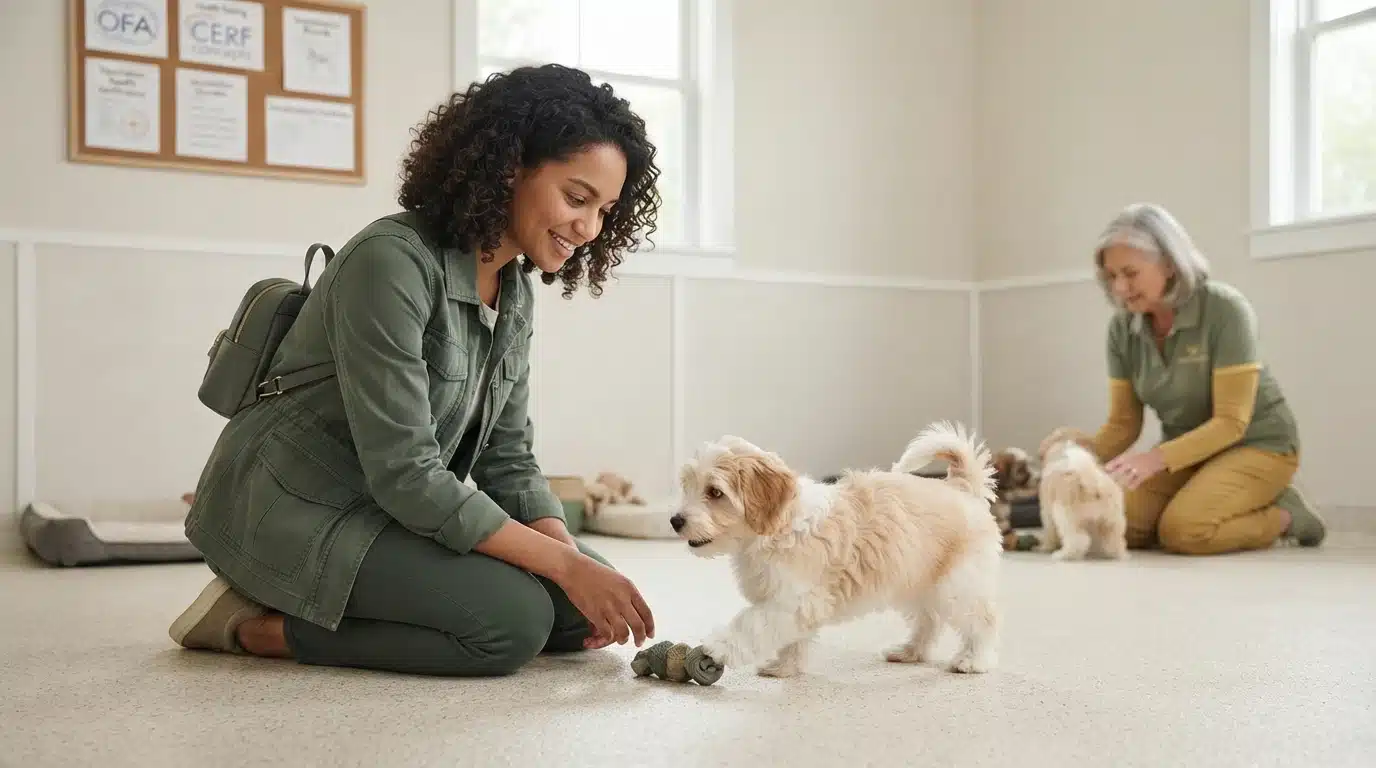
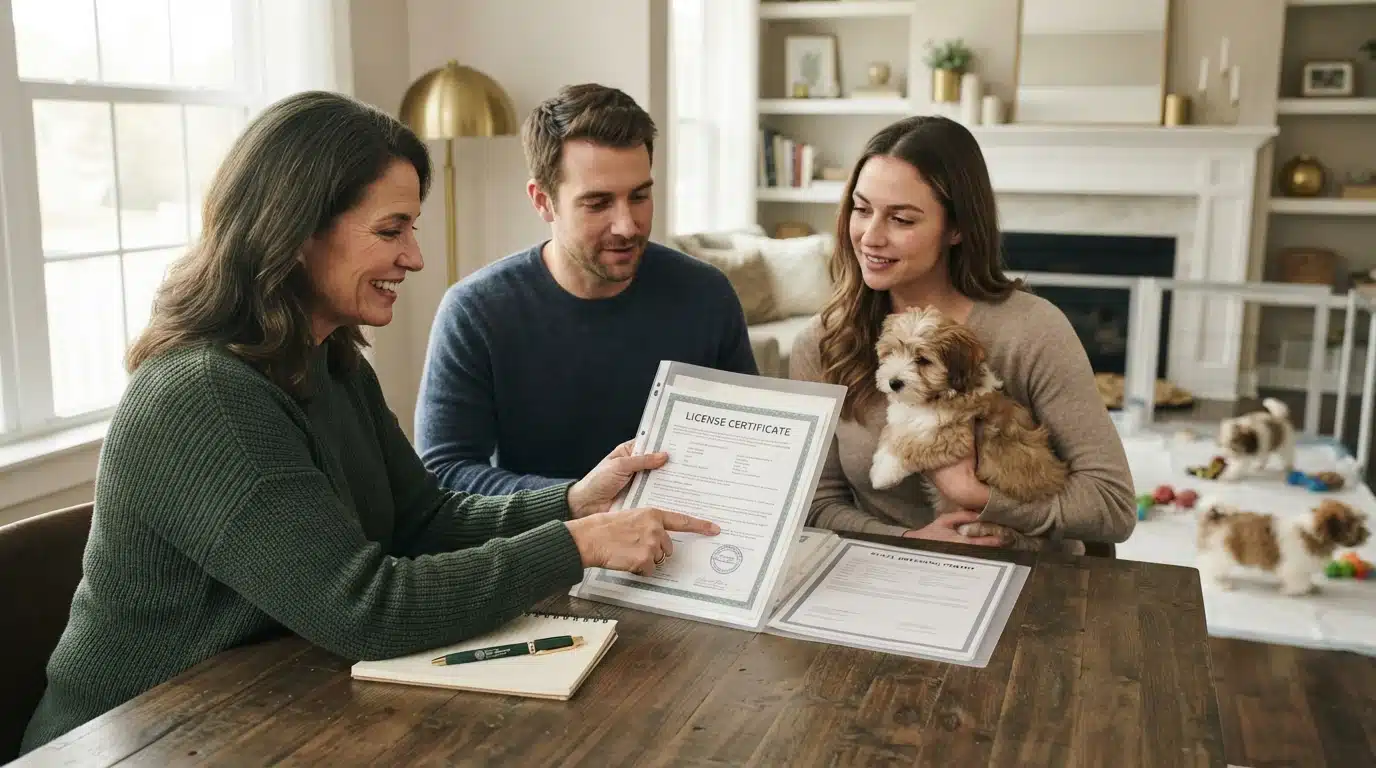
Quick Summary: Choose a family-raised puppy based on proof, not promises: visit the home, meet the mother, and ask specific questions about daily care, handling, and early socialization. Before paying, request veterinary exam records, dated vaccination and deworming logs, parent health tests, and a written contract covering deposits, health guarantees, and returns. Sage Puppies follows this approach by raising Havanese, Havapoo, and Cavapoo puppies in a South Jordan home and encouraging visits before commitment.
You have the family, the home is ready, and you have narrowed the search to family-raised puppies for sale near you. That is exactly when a great breeder and a careless one both sound warm on the phone. The difference shows up in the family breeder questions you ask and how freely the answers come. Ask well, and a home breeder hands over records, invites you into the room where the puppies live, and lets you meet the mother. Ask poorly, and you get a deposit request instead of information. Most listings use the same cozy language and similar prices, so it is hard to tell which puppies truly live in a home. This guide covers what to ask, what good answers sound like, what to check on a visit, and which records to request before you pay. Sage Puppies raises Havanese, Havapoo and Cavapoo puppies in a South Jordan, Utah home, and the standards below are the ones we hold ourselves to.
Family-Raised Puppies vs Store and Broker Puppies: At a Glance
| Sage Puppies | Store and broker puppy sellers | |
|---|---|---|
| Daily living environment | Puppies raised in a family home in South Jordan, Utah, with whelping and early care handled by the breeder | Litters typically raised in kennels or brokered facilities, with limited exposure to ordinary household routines |
| Health records and testing | Puppy exam and vaccination records, parent clinical screening and DNA variant results, with Havanese testing aligned to Havanese Club of America CHIC guidance | Records vary widely, and parent testing is often unavailable or supplied without veterinary context |
| Parent access and visits | Home visits and parent meetings expected before commitment, with whelping and eight weeks of care kept with the breeder | Visits typically happen at the store or a neutral location, and seeing the mother and littermates is uncommon |
| Buyer screening and support | Puppy application with questions about your household, plus post-purchase guidance from the breeder | Little or no application, so little screening of fit, home readiness or long-term support after sale |
| Price and contract terms | Puppies priced $3,500 to $4,500 with written contract terms and a reservation and deposit process | Price set by the store or broker, with contract terms that often rely on store policies rather than breeder guarantees |
| Best for | Families who want small-breed puppies raised in a home, with local pickup in Utah or arranged delivery | Buyers who want immediate availability and a fixed retail price, and who are ready to ask harder questions |
How Family-Raised Puppies and Store Puppies Compare
Sage Puppies
Sage Puppies is a boutique home-based program in South Jordan, Utah, founded in 2025 by Cassie Milar. It raises Havanese, Havapoo and Cavapoo puppies in a family home and places them through an application, contract and reservation process, so family breeder questions get answered before you commit. It suits families who want local pickup in Utah or arranged delivery.

Key strengths
- Puppies raised in a family home with breeder-handled whelping and early care
- Home visits and parent meetings expected before commitment
- Puppy exams, vaccination records, parent screening and DNA results
Store and broker puppy sellers
This side covers pet store windows, brokered online listings and large-scale operations where litters grow up away from a family home. It appeals to buyers who want immediate availability and a fixed retail price. Many buyers later realize they should have asked harder questions first, since parent dogs often stay out of view. It works best for people ready to screen a seller themselves.
Key strengths
- Immediate availability and set retail pricing
- Predictable store-based purchase process
What Family-Raised Actually Means (and What It Does Not)
“Family-raised” should describe a puppy that grows up inside a real home, not a kennel run or a store cage. That early life shapes how a dog handles the world for years. You can verify it by looking for these signs:
- The puppies live indoors, in a space you can visit
- They hear daily household noise: TVs, doorbells, kids, dishes
- The mother is on site and friendly with people
- They are handled by different family members, not one worker
- Potty and crate habits started at home, on a routine
A puppy raised this way has already met vacuum cleaners, slick floors, car rides and other dogs’ comings and goings.
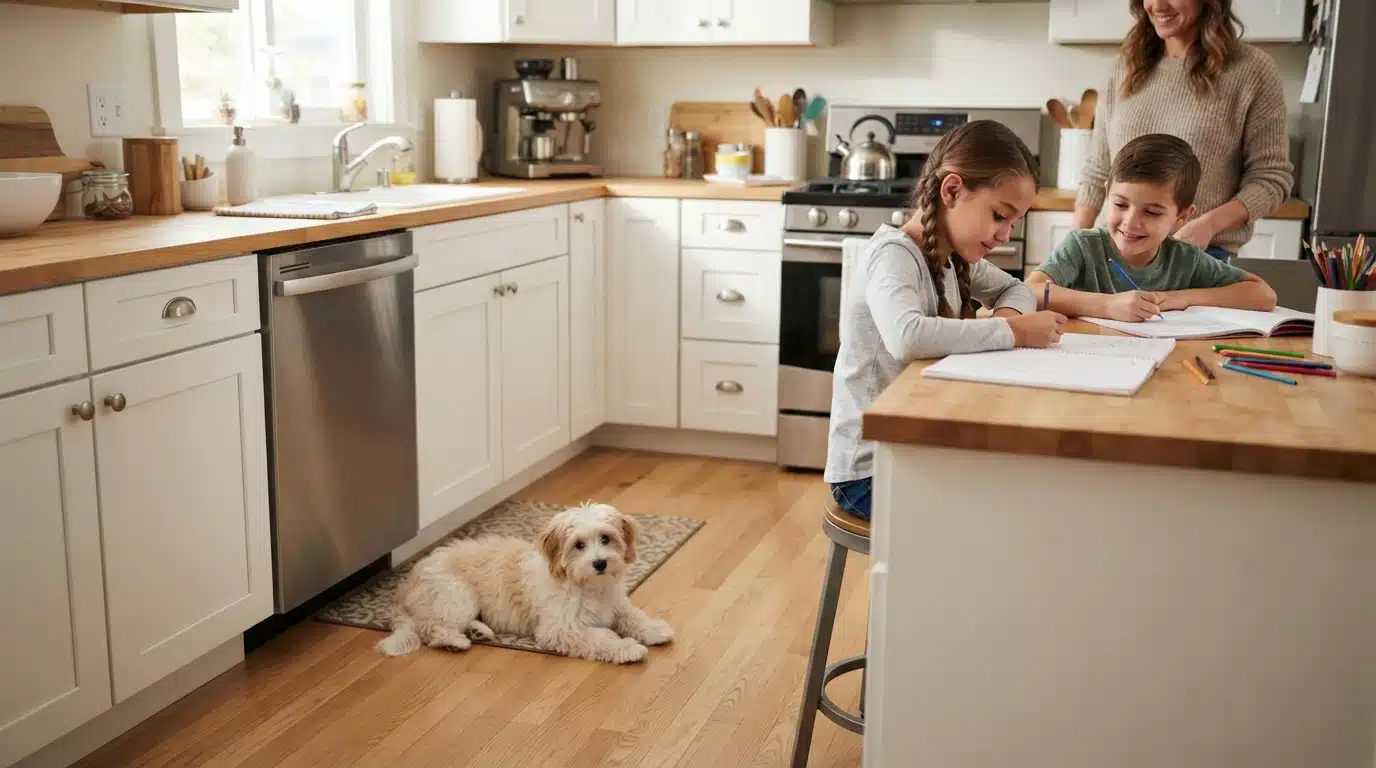
Household sounds, smells and routines a store puppy misses
A puppy store keeps litters in glass enclosures with fluorescent light and disinfectant. The puppies smell chemicals, not cooking. They learn that strangers tap glass and that sleep happens on wire. Home-raised puppies learn the opposite. They nap through a washing machine, learn food comes after sitting calmly, and start house training on the same schedule a family uses. Those first eight weeks build the habits you will either keep or fix later. If you want the full picture of what a family-raised puppy’s daily schedule looks like, that page walks through a typical day from morning potty to bedtime.
Why the label alone proves nothing
Anyone can write “home raised” on a website, including brokers who never touch the litter. Some puppy stores buy from out-of-state breeders and present the puppies as family-raised anyway. So treat the words as a claim, not a fact. The proof is in answers and records, which is why good family breeder questions come before any payment. Ask where the puppies sleep, who handles them and whether you can meet the mother. Then watch whether the answers stay specific. Vague replies are a reason to walk away.
The Questions to Ask a Family Breeder Before You Pay Anything
A good breeder answers every one of these without hesitating. Ask the four groups below in order, and write down the answers. If a seller gets vague about where the puppies sleep, who the parents are, or what paperwork you’ll receive, that’s your cue to keep looking.

Questions about life inside the home
- Where do the puppies live during the day and at night?
- Who is around them, and how often?
- What have they already heard and handled, like vacuum noise, kids, or car rides?
- How many litters do you raise each year?
A true home answer sounds specific. “They sleep in the kitchen crate and follow my kids to the bus stop” beats “they’re well socialized” every time.
Questions about the parents and the litter
- Can I meet the mother? Where is she right now?
- How old is she, and how many litters has she had?
- Where is the father, and can I see his health testing?
- How many puppies are in the litter, and have any had health issues?
If the mother isn’t on site, ask why. Some programs use stud dogs elsewhere, which is fine, but you deserve a straight answer and photos.
Questions about records and health commitments
- What vaccinations and deworming has each puppy had, and at what ages?
- Will I get the vet record in writing before pickup?
- Does your contract include a health guarantee, and what exactly does it cover?
- What happens if a genetic issue appears in the first year?
Request copies, not summaries. A health commitment you can’t read isn’t a commitment.
Questions about the day you bring your puppy home
- When can my puppy come home, and why that age?
- Do you offer local pickup, and how does delivery work out of state?
- What food is the puppy eating, and how do I transition?
- Who do I call with questions after pickup?
Keep this list saved on your phone. Asking it in the same order each time makes it easy to compare breeders side by side.
Health Records: What to Request and What Each Document Proves
A breeder should provide four things: a vet exam record for your puppy, a vaccination and deworming log, parent health test results, and a written health and return policy. Each one proves something different, and each one can be faked or skipped, so learn what to look for.
| Document | What it proves |
|---|---|
| Puppy vet exam record | A licensed vet saw this puppy, not just the breeder |
| Vaccine and deworming log | Dates, products and doses given, on paper |
| Parent test results | The parents were screened before breeding |
| Written health policy | What the breeder covers, and for how long |

Puppy exam records versus parent screening
These are not the same document. A puppy exam record covers one visit: weight, heart, eyes, teeth. Parent screening looks years ahead, checking hips, patellas, eyes and DNA before a litter exists. Ask for both. A vet exam with no parent testing means the puppy looks healthy today, but says nothing about inherited conditions.
Reading a breed club health program
For a Havanese, the breed club lists the tests a dog needs for a CHIC number, including OFA hips, patellas and eye exams, and results must be publicly released. Look parents up by their registered names. Ask what a Cavapoo or Havapoo program screens for on each parent’s genetic tests.
Red flags in the paperwork
Watch for missing dates, “vaccines up to date” with no log, results shared only as screenshots, or a parent who was never tested at all. Vague paperwork usually means vague breeding.
Visiting the Home: What You Should See, Ask and Be Allowed to Do
What a well-run home visit looks like
A good breeder invites you in without hesitation. You should see the mother with her litter, clean flooring, fresh water, and puppies that approach you curiously rather than cowering. Ask to hold each puppy and watch how they respond to handling. Note whether the space smells clean and whether the puppies look well fed and groomed.
Ask where the puppies sleep, how often they are handled, and what a normal day sounds like. If a breeder steers you to “meet in a parking lot” or only offers video calls without a reason, treat that as a caution flag.
Tip: A breeder who asks you plenty of questions is usually the one doing it right.
Whelping, guardians and where the litter lives
Ask where the puppies were born and raised. Puppies whelped in a home environment, rather than a separate kennel building, adapt faster to household noise and handling. Some small programs use guardian homes, where a breeding dog lives with a family and returns for litters, so ask whether your puppy’s mother lives in a home full time.
It’s fair to ask about early socialization routines and whether the litter meets children, other dogs, or household sounds before going home. Breeders who raise litters in their own living space, as some South Jordan programs do, can usually walk you through every detail on the spot.
Price, Deposits and Contract Terms You Should See in Writing
How to read a published price range
A good breeder lists a price range, not a vague “call for pricing.” Range pricing makes sense because coat, size and litter timing affect the cost. For example, Havapoo and Cavapoo litters often sit at different points of the same range. Ask what moves a puppy to the top or bottom of it. A transparent program, like Sage Puppies’ pricing and reservation page, shows the range and what it covers before you apply.

Deposit and contract questions
Ask these before any money moves:
- Is the deposit refundable, and under what conditions? Get the answer in writing, not verbally.
- Does the deposit apply to a specific puppy or the next available litter? Those are different promises.
- What does the contract cover? Look for health terms, return policy and spay or neuter expectations.
- When is the balance due, and how?
Why breeders who avoid pet stores are worth a closer look
Home breeders set their own prices and terms, so they can explain every line on the contract. Pet stores and brokers buy from third parties, which makes pricing less visible and accountability harder to trace. Ask any breeder where their puppies are born and raised. A clear, direct answer tells you who is responsible if a question comes up later.
Red Flags and Puppy Scams to Watch For
Warning signs in listings and conversations
Most puppy scams follow a pattern. Watch for photos that appear on many sites (run a reverse image search), prices far below the usual range, and sellers who push a wire transfer, gift card, or payment app. Other warning signs: no video calls, vague answers about the mother, excuses for why you cannot visit, and pressure to pay a deposit the same day. A real family breeder welcomes questions and never rushes you.
A verification routine before money moves
Slow down and confirm a few things first. Ask for a live video tour of the home where the puppy lives. Request the mother’s photos, health records, and vet contact information, then call the clinic to confirm. Check the breeder’s address, reviews, and how long the website has existed. Sign a written contract that spells out the deposit, health terms, and pickup or delivery details before any payment. Legitimate programs such as Sage Puppies use a clear application and contract process, so treat anything less as a reason to walk away.
Which Should You Choose: a Family Breeder or a Store-Bought Puppy?
For most families, a family-raised puppy is the better pick. You see where the puppy came from, meet the mother, and get health records straight from the person who raised the litter. Store and broker sources hide that history, so you rely on paperwork instead of your own eyes. Here is when each option makes sense.
Choose a family breeder when
Pick a family breeder when you want to meet the mother dog and see the home where your puppy spent its first weeks. A good breeder answers questions about temperament, health testing and daily handling, and lets you visit or arrange video calls. You also get a written contract, early health records and someone who will take your calls after pickup. If you want a Havanese, Havapoo or Cavapoo raised around kids and household noise, this is the path that gives you proof instead of promises.
Consider a store or broker source when
A store or broker can make sense when no nearby home-raised litters fit your timeline and you cannot wait for a planned breeding. Some families like browsing in person and taking a puppy home the same day. If you go this route, ask which breeder produced the litter, request that breeder’s contact information and read the health terms closely. You give up meeting the mother, so insist on full puppy breeder health records and a clear return policy before you pay. Quiet, reserved families who prefer a planned wait will usually be happier with a breeder.

Use the questions above when you visit any breeder, including us. At Sage Puppies, every Havanese, Havapoo and Cavapoo puppy is raised in our South Jordan home, and you can see it yourself. Start the application, plan a visit, and meet the litter before you decide.
Frequently Asked Questions
Q1: What questions should I ask a family breeder before buying?
Ask where the puppies sleep, who handles them daily, whether you can meet the mother, what vaccinations and deworming each puppy has had, and what the written contract covers. Good answers are specific and come with records in writing.
Q2: How do I tell if a puppy is really home raised?
Ask for a live video tour or visit the home. Look for indoor living space, the mother on site, everyday household noise and confident puppies that approach people willingly.
Q3: Can I visit the puppies before paying a deposit?
Yes, and a good breeder expects it. Declining visits without a reason or offering only parking-lot meetings is a caution flag worth acting on.
Q4: What health records should a breeder give me?
Request a puppy vet exam record, a dated vaccine and deworming log, parent health test results, and a written health and return policy before money changes hands.
Q5: Are deposits refundable with family breeders?
It depends on the program. Ask whether the deposit is refundable, what conditions apply, and whether it holds a specific puppy or your place in a future litter. Get all of it in writing.
Q6: How much should a family-raised Havanese, Havapoo or Cavapoo cost?
Published ranges vary by breeder. Quality home programs usually charge several thousand dollars and explain what moves a puppy up or down the range, so ask what factors affect the price.
Conclusion
Finding family-raised puppies for sale near me comes down to one thing: proof over promises. Ask specific family breeder questions about where the puppies sleep, who handles them and whether you can meet the mother. Request written records, including puppy exams, vaccine logs and parent health testing. Visit the home or demand a live video tour, and read the contract before any deposit moves. A real breeder welcomes all of it, calmly and without pressure. Store and broker sellers usually cannot offer that transparency. Take the question list on your phone, compare answers side by side, and choose the breeder whose home, records and terms you have actually seen.