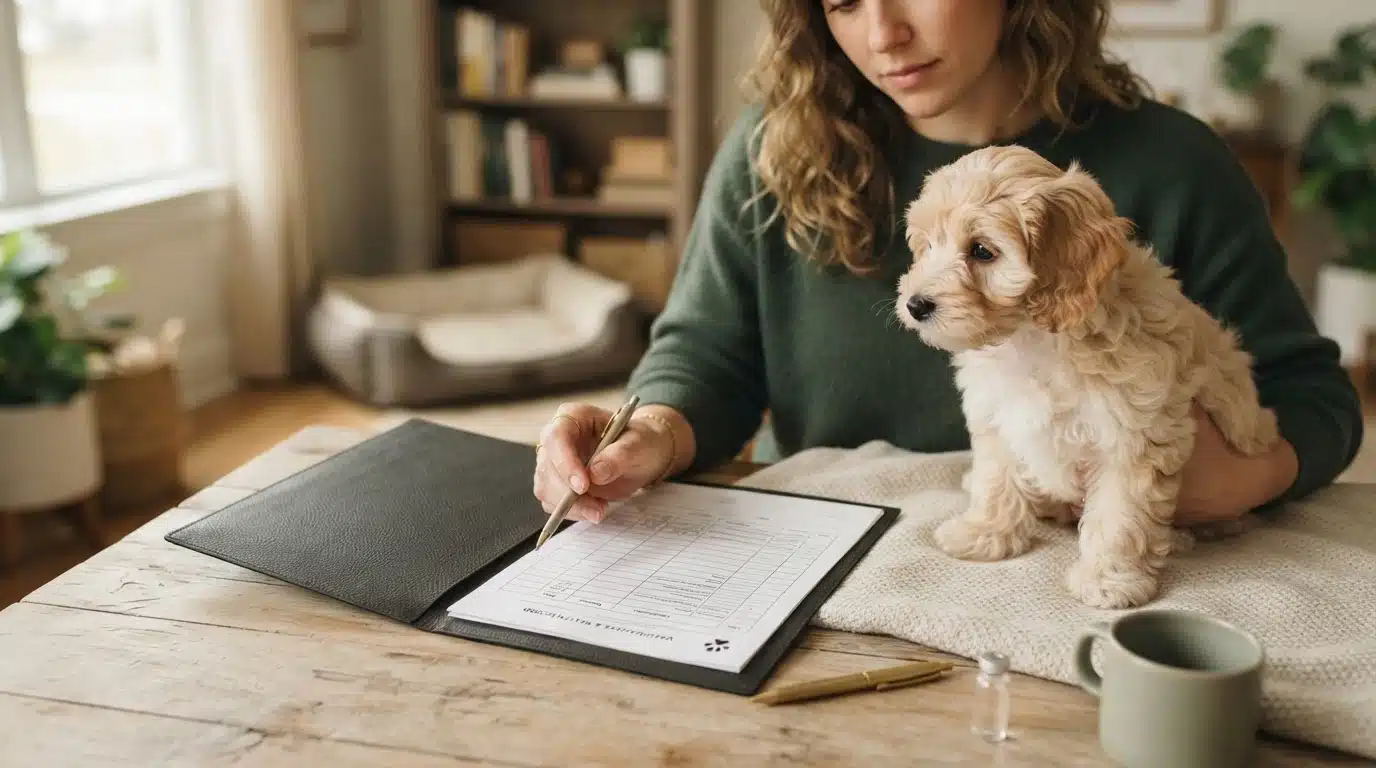
Quick Summary: A polished breeder website tells you almost nothing, so the article walks buyers through a five-phase screening process built around the parent’s actual OFA and DNA records, a seven-question phone interview, a written contract with a take-back clause, and a red-flag tier list sorted by severity. Severe signs like skipped health testing or same-day shipping should end the conversation, while mild issues like slow emails rarely disqualify a program. Throughout, the piece holds up Sage Puppies, a small Utah program raising Havanese, Havapoos, and Cavapoos, as a working example of what transparent answers, open health records, and a contract that requires returning the dog look like in practice.
You found two Havapoo breeders with polished websites, warm puppy photos, and deposit lists that opened this morning. Both look great online. But one of them will be on the phone with you for the next fifteen years, and a pretty homepage tells you nothing about how that person raises dogs or answers a 2 a.m. question.
That’s the real challenge: good websites hide bad practices. Most first-time buyers don’t know which questions separate a careful breeder from a good marketer.
This guide gives you a five-phase screening pass you can actually use. You’ll learn what to ask about health testing, how to read red flags by severity, and which answers should end the conversation. By the end, you’ll have a decision, not another vague checklist.
We’ve walked families through this at Sage Puppies, our small Havanese, Havapoo, and Cavapoo program in South Jordan, Utah, since 2025. We built this puppy breeder screening playbook because we’d rather you choose the right breeder than the fastest deposit button.
Step 1: Run a First Pass on the Breeder’s Public Trail
Good puppy breeder screening starts before you pick up the phone. Most breeders leave a public trail: a website, reviews, and social posts. Fifteen minutes of reading tells you whether this person is worth a call at all.
What the Website Should Show Before You Ever Call
A trustworthy breeder’s site answers basic questions without making you ask. Look for:
- Which breeds they raise, and how many. A program focused on one or three breeds usually knows those dogs well. A site listing eight breeds is a warning sign.
- Health testing proof. You want to see named tests, like OFA or CERF results, on the parents, not just the phrase “health tested.”
- Real photos of the dam and sire, with names and ages, plus past litters as adults.
- Clear pricing and process. Applications, waitlists, and what the price includes should be written down. Vague pricing invites surprises later.
- A real location and person. A city, a first name, and a way to visit or video chat matter more than polished design.
Compare a few sites side by side. For example, a small program like Sage Puppies lists its three breeds, its Utah location, and its application steps openly, so you can screen most of it from your couch. If a site hides all of that, keep a note of it, because our guide to red flags in unethical puppy breeders explains why.

Reading Reviews and Social Without Being Fooled
Reviews and social pages help, but read them with a skeptical eye. On Google and Facebook, look for patterns instead of single stars. Several reviews mentioning sick puppies or ignored messages weigh more than one angry rant. Beware pages with only five-star reviews posted in the same week, which often means they were solicited or faked.
Social accounts tell a different story. A breeder posting puppy updates over months shows real litters and real care. An account created last month with professional photos only is thin evidence. Check tagged posts from past buyers too. Happy families usually tag their breeder when the puppy comes home, and their comments are harder to fake than testimonials on the breeder’s own site.
Step 2: Verify Health Testing on Both Parents
Words like “health-tested” get thrown around a lot in puppy ads. Some breeders mean full orthopedic and eye screening through verified registries. Others mean “the vet saw the dog once.” Here is how to tell the difference before you hand over a deposit.
What ‘Health-Tested’ Should Actually Mean for Small Breeds
For Havanese, Havapoos and Cavapoos, real health testing covers two sides of each pairing.
The sire and dam each need their own results. A cleared father does nothing for a mother who was never screened. Ask for both dogs’ names and registration numbers so you can look them up yourself.
What should be on that list:
- Patellar luxation evaluation. Loose kneecaps are the most common orthopedic problem in small breeds.
- Hip evaluation. Even small breeds can carry hip dysplasia, so many responsible programs submit hips anyway.
- Annual eye exams by a board-certified veterinary ophthalmologist, because cataracts and other inherited eye disease show up in all three breeds.
- Cardiac exam to rule out heart murmurs.
- DNA panels for breed-specific conditions, such as the genes behind Havanese chondrodysplasia and progressive retinal atrophy in poodle crosses.
A good puppy breeder screening step here is simple: ask “what testing have both parents had, and can I see the records?” If the answer is “the vet checked them,” keep asking. An ethical program expects the question and answers it gladly. Vague answers deserve the same suspicion as no answers at all.
How to Read OFA and Genetic Results Yourself
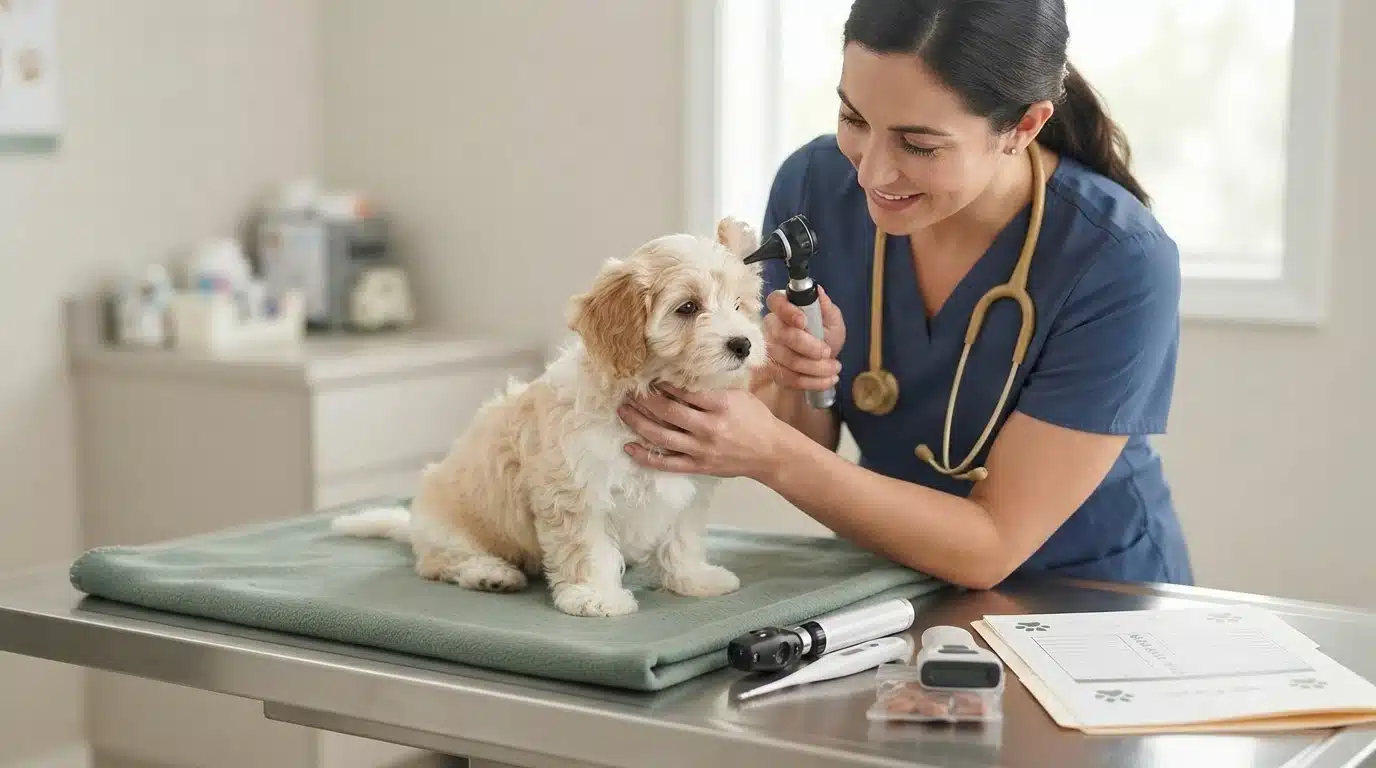
The Orthopedic Foundation for Animals (OFA) runs a public database. Search a dog’s registered name or number and you can see each test, the result, and the date.
What to look for:
| Result | What it tells you |
|---|---|
| OFA number with a rating | Test was reviewed by specialists and passed |
| CHIC number | Dog met a breed’s full testing requirement |
| “Preliminary” | Juvenile hip reading, less reliable than a final |
| Normal/Clear eye cert | Current exam within the last 12 months |
For DNA results, ask for the actual lab report, not a screenshot of a sentence. Legitimate panels name the lab and list each condition tested with a result of clear, carrier or affected.
One honest note: a carrier result is not automatically a dealbreaker. What matters is the pairing. Two carriers of the same gene should never be bred together, so ask how the breeder matched them.
When records check out, you will often find them right on the breeder’s site. Our parents’ health testing is listed openly on each litter’s page, and any program you screen should offer the same.
Step 3: Run the Breeder Interview Both Ways
A good breeder interview is not a quiz you pass. It goes both ways. You ask about their program, and they ask about your home, your schedule, and your plans for the puppy. If a breeder never interviews you back, that tells you something too.
Before the call, write your questions down. Seven is enough to learn most of what matters without turning the first conversation into an interrogation.
Seven Questions to Ask on the First Call
- “How long have you been breeding, and which breeds do you raise?” Longevity matters, but so does focus. A program built around one or two breeds usually knows those dogs deeply.
- “What health testing do the parents have, and can I see the results?” Look for OFA or CERF records, not just “they’re healthy.” Reputable breeders share paperwork gladly.
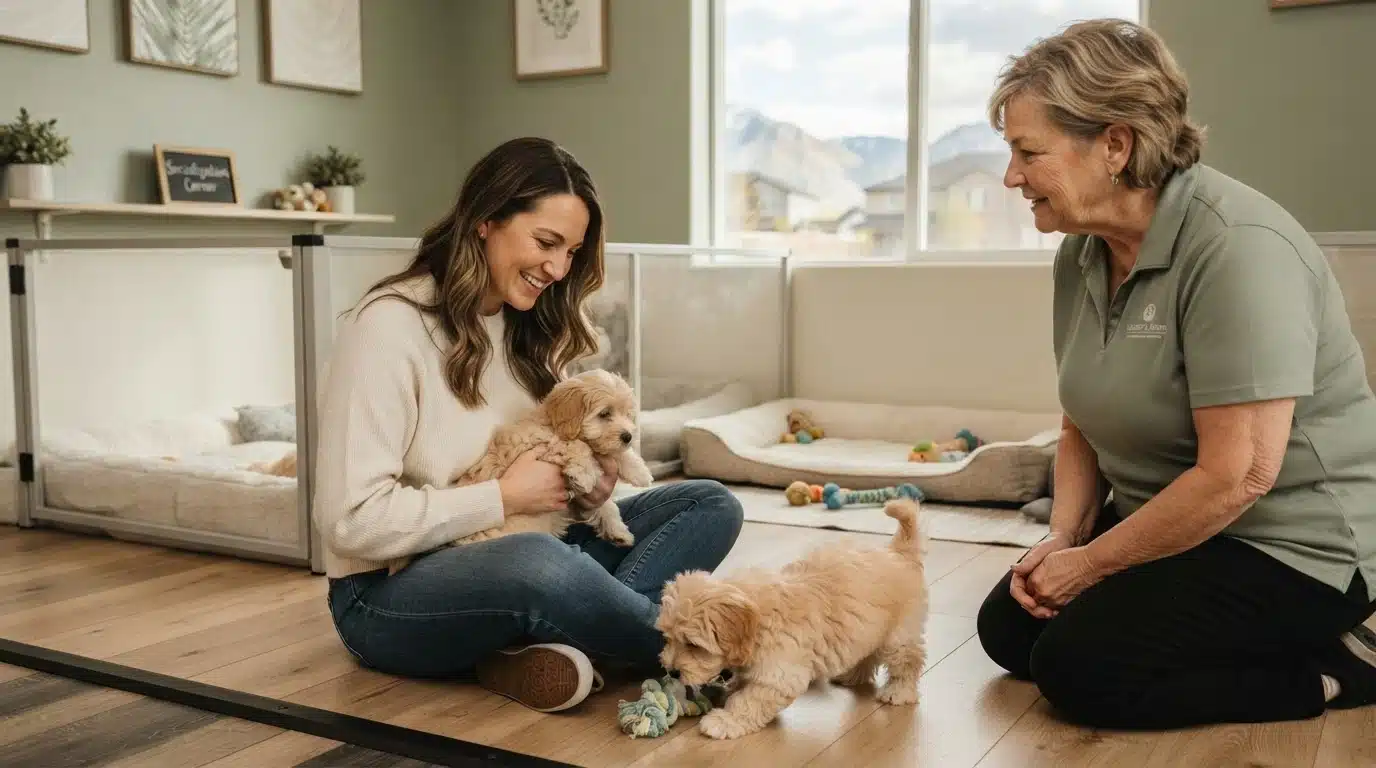
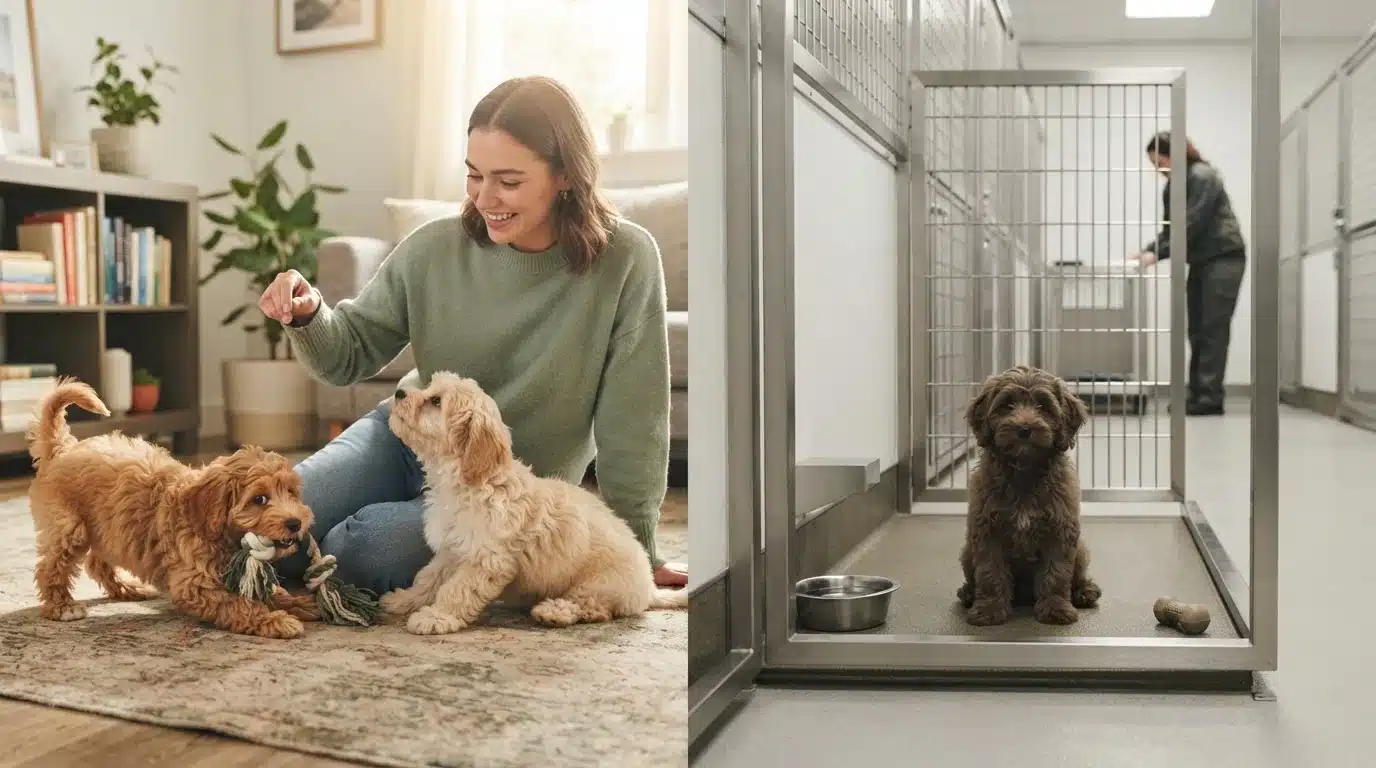
- “Where do the puppies live during their first eight weeks?” You want to hear about the home, not a kennel building. Puppies raised inside a house meet everyday sounds early.
- “How do you socialize the litter?” Good answers mention handling by different people, household noises, and early exposure to car rides or grooming.
- “Can I visit, or meet the mother dog?” In-person visits build trust. If distance rules that out, ask about a video call and live photos of mom with the litter.
- “What happens if my situation changes and I can’t keep the puppy?” Ethical breeders require the puppy come back to them, at any age. No questions, no judgment.
- “What does my puppy go home with, and what support do you offer after?” Expect vaccination records, a health exam summary, food history, and a breeder who answers calls months later.
Notice the pattern in that list. Every question gives the breeder room to show their standards instead of just saying yes or no. Write down not only the answers but how the breeder reacts. Comfortable, open breeders welcome these questions. Defensive ones dodge.

What a Good Answer Actually Sounds Like
Strong answers are specific, calm, and easy to check. “Both parents have OFA cardiac and patella clearances dated last spring, and I’ll email copies” beats “our dogs are all healthy.”
Watch for honesty about hard topics too. A breeder who says “one puppy in that litter has a mild hernia, here’s how we’ve handled it” is showing integrity, not weakness. Vague, salesy replies, or annoyance at basic questions, are signals worth weighing. If answers stay thin, compare them against common warning signs of an unethical breeder before you commit. At Sage Puppies, Cassie welcomes every one of these questions and expects your follow-ups.
The breeder’s questions matter just as much. Expect inquiries about your work schedule, children, other pets, yard, and experience with small breeds. That back-and-forth protects the puppy, and it protects you from a mismatch that hurts later.
Step 4: Read the Contract Before You Sign
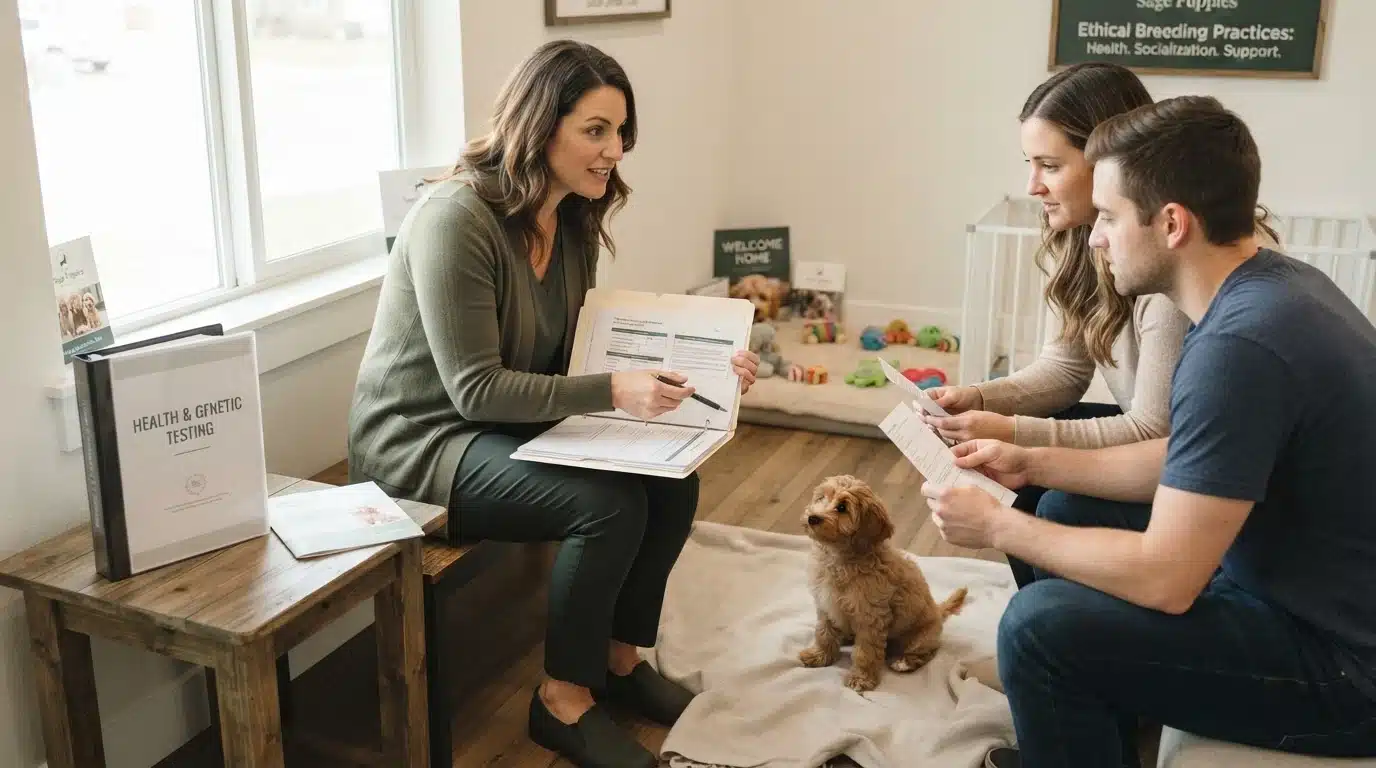
A good breeder hands you a written contract before any money changes hands. If someone hesitates to put terms on paper, walk away. The contract protects both of you, and it tells you a lot about how the breeder operates. Read the whole document, not just the price line. Here are the clauses that deserve a second look.
Five Clauses Worth Reading Twice
| Clause | What to Look For | Why It Matters |
|---|---|---|
| Health guarantee | Coverage window, often 12 months, for genetic conditions | Shows the breeder stands behind their health testing |
| Return clause | Breeder takes the dog back at any age, no questions | Responsible breeders never want their dogs in shelters |
| Spay or neuter terms | Requirement and timing for pet puppies | Standard for companion dogs, not show or breeding rights |
| Breeding rights | Clear limits or fees if you ever want to breed | Prevents surprise costs and disputes later |
| Delivery and pickup terms | Who transports the puppy, when, and who pays | Avoids confusion if you live outside Utah |
The health guarantee is the big one. Ask what it actually covers and what proof you need, such as a vet exam within a set number of days. Get vague answers in writing before you sign.
Warning: A contract that demands you return the dog to the breeder, not rehome it, is a good sign. A contract with no health terms at all is not.
How Deposits, Waitlists, and Refunds Should Work
Most reputable breeders use a deposit to hold a spot, then apply it to your total. At Sage Puppies, the deposit is spelled out in writing before you pay, along with how puppy picks happen and when. Ask three questions of any breeder: Is the deposit refundable, and under what conditions? How are picks ordered, by deposit date or by breeder match? What happens if the litter is smaller than expected or no puppy fits your home?
A fair answer puts your deposit toward a future litter or refunds it. A breeder who keeps money with no puppy and no explanation is telling you something. Get the refund terms in the contract, not in a text message.

Still weighing a breeder’s answers against your gut? Our guide to unethical puppy breeder red flags pairs well with this step.
Step 5: Decide, Walk Away, or Buy With Eyes Open
You have done the work: the health testing, the references, the contract, the video call. Now comes the part no checklist can do for you. Look at your notes and make a call. Most breeders will land somewhere between flawless and faintly odd, and that is normal. The skill is knowing which quirks are harmless and which ones should stop you cold.
Red Flags Ranked: Severe, Moderate, and Mild
Not every warning sign deserves the same weight. Sort what you saw into three tiers before you decide.
| Tier | What It Looks Like | Your Move |
|---|---|---|
| Severe | No health testing on the parents, no vet records, puppies always available, will ship a puppy same-day to anyone with a card | Walk away, no matter how cute the photos are |
| Moderate | Vague contract terms, refuses a video call, pressures you to pay a deposit today, will not let you meet the mother | Ask direct questions and require answers in writing |
| Mild | Slow email replies, a messy website, prefers texts to calls | Annoying, but rarely a sign of a bad program |
Severe flags end the conversation. A breeder who skips testing on a breed prone to heart or eye problems is gambling with your dog’s life, and no discount makes that math work. Pressure tactics matter too. A litter that is genuinely well-bred will find homes, so a seller who pushes urgency is telling you something.
Moderate flags are recoverable if the breeder explains. Someone who hesitates on a video call may just be private about their home. Ask why. A clear, calm answer moves them back to safe ground.

Mild flags deserve a shrug. Some excellent breeders are terrible at websites. Judge the puppies and the parents, not the fonts.
After the Screening Passes: Planning Pickup or Delivery
Once you say yes, lock down logistics early. If you are local, schedule a pickup day and ask what to bring. If you are flying in or arranging delivery, confirm who handles travel, what it costs, and how the puppy rides. At Sage Puppies, families in Utah pick up in South Jordan while nationwide families use owner-managed delivery, so the same litter can go either way. Confirm your pricing and reservation details before go-home day, then send in your application so the match is official.

You’ve screened five breeders and still feel unsure. That’s normal. The next step is simple: see what a well-run program looks like up close. Review the health testing, availability and matching process at Sage Puppies, then start the application and ask us anything a good breeder should answer gladly.
Frequently Asked Questions
Q1: how to screen breeders for puppy health
Ask for proof of parent health testing, not just “vet checked” puppies. Reputable breeders share OFA or CERF results, vaccination records and a written health guarantee before you pay anything.
Q2: How much should a puppy from a screened breeder cost?
Small-breed puppies from health-tested parents typically run $3,500-$4,500. Prices far below that range often mean skipped testing or poor care, so treat a bargain as a warning sign.
Q3: What questions should I ask a breeder on a phone call?
Ask who raises the puppies, how they’re socialized, what health tests both parents passed and whether you can visit. Then listen: a good breeder will ask you plenty of questions back.
Q4: Is it a red flag if a breeder has puppies available right now?
Sometimes. Ethical breeders usually have waitlists, so instant availability of multiple litters deserves scrutiny. Ask why puppies are on hand and how long they’ve waited.
Q5: How many litters a year is too many for one breeder?
One or two litters per mother per year is the guideline. A breeder producing many litters across several dams may be running a volume operation rather than a careful program.
Q6: When should I submit my application?
Apply early. Boutique programs like Sage Puppies match families through an application process, so getting approved before a litter arrives means more choice, not a guarantee.
Conclusion
Screening a breeder comes down to five phases: research, first contact, the health-testing review, the visit, and the final decision. Score each one instead of trusting a warm phone voice. Health testing paperwork, clean living conditions, and honest answers about flaws matter more than a polished website. Walk away from anyone who pressures you, dodges questions about the parents, or won’t let you visit.
A good breeder screens you right back, and that’s a healthy sign. Expect questions about your home, schedule, and experience. Breeders like Sage Puppies in South Jordan, Utah, keep their programs small on purpose, which means clearer answers and better-supported puppies.
Take your time, keep your scorecard handy, and trust what you see over what you’re told. The right puppy is worth the extra week of checking.