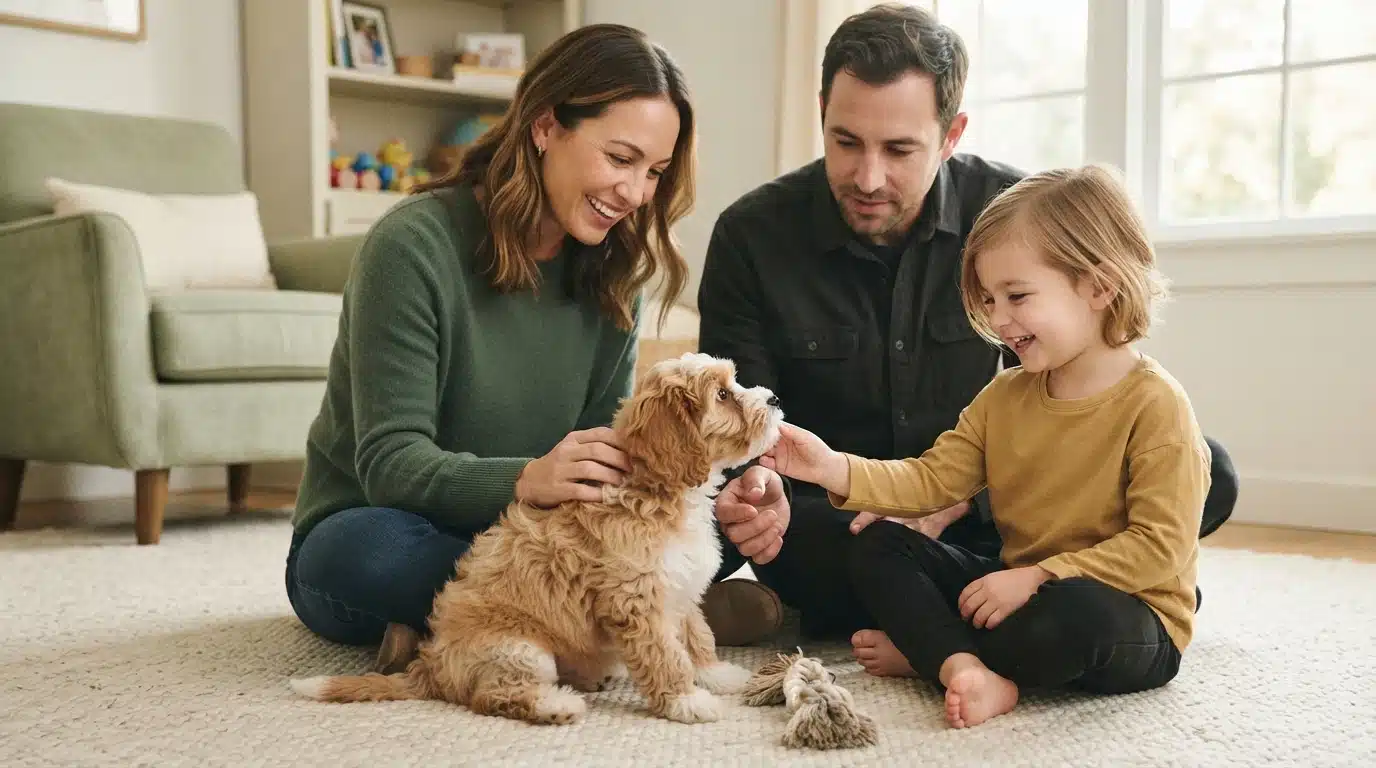
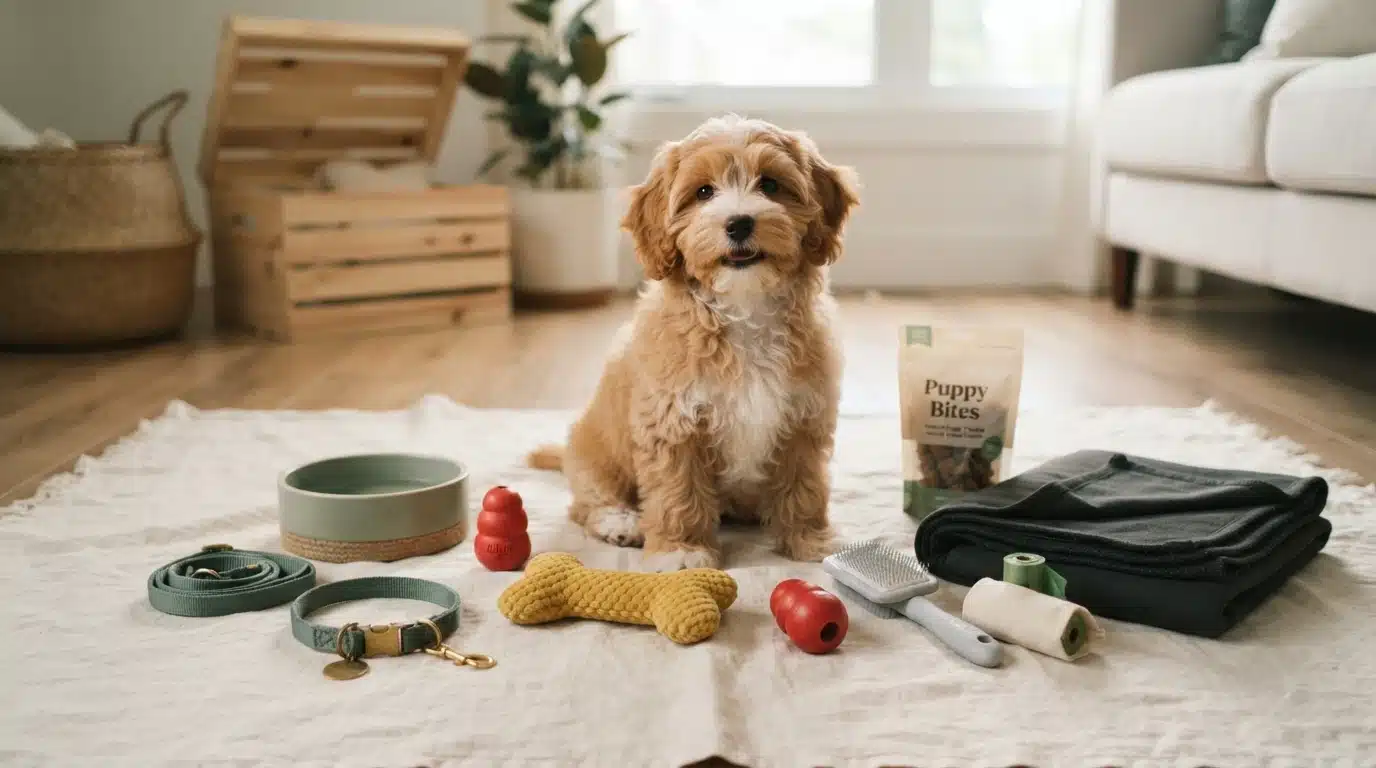
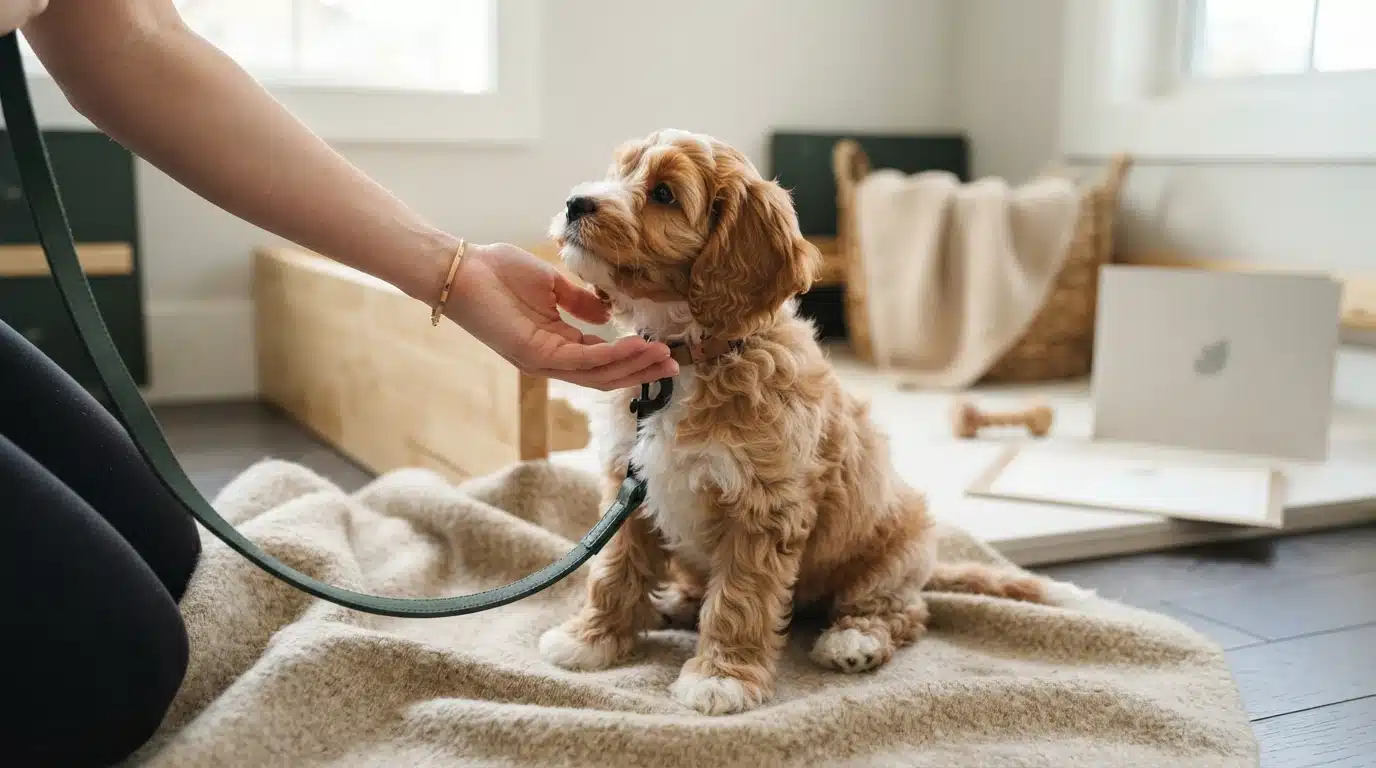
Quick answer: A useful breeder visit helps you understand the puppy’s daily care, review records and ask about the match for your household. Confirm access and hygiene arrangements before traveling. A room restriction, a quiet puppy or a protective mother does not establish the quality of a program by itself; look for clear explanations and evidence you can check.
Before you visit a puppy breeder, prepare three things: questions about the individual puppy, a list of records to review and your family’s daily routine. Cute photos can start the conversation. A visit should help you decide whether the care, information and proposed match make sense.
This guide is a buyer’s checklist, not a description of guaranteed access at Sage Puppies. Visit arrangements vary with the program, litter age, household and health precautions. Sage Puppies is based in South Jordan, Utah; review the application and matching process and confirm any meeting or travel arrangements directly before booking.
Before traveling: confirm what the visit will include
Ask whether a visit is available at this stage, who may attend, which dogs you can meet and how long to allow. A newborn litter may need different arrangements from an older puppy. If access is limited, ask the reason and what alternative information the breeder can provide, such as a scheduled video conversation, current photographs or records.
- What is the purpose of this appointment: learning about the program, discussing a match or meeting a particular puppy?
- Can children attend, and how will their interaction with the dogs be supervised?
- What hygiene steps should visitors follow? Should you reschedule after illness or contact with other dogs?
- Which parent dogs are on site? If a parent is elsewhere, how can you verify their identity and information?
- What records can you review beforehand, and which will be supplied closer to go-home?
For an out-of-state trip, confirm the appointment before buying travel. Obtain arrival instructions privately and ask how delays or a change in the puppy’s readiness would be handled. A flexible appointment policy does not prove poor disease control; the useful question is how the breeder manages visitor risk.
On arrival: follow the agreed rules and observe calmly
Let the breeder explain where to go and whether handling is appropriate. Ask before picking up a puppy, taking photographs or entering another area. Leave your own pets at home unless the breeder has specifically arranged otherwise. Respecting a boundary lets you evaluate the program without adding pressure to the dogs.
Look at the accessible living space and ask about areas you cannot see. Is there suitable bedding, water, space to rest and a routine for cleaning? Ask how those arrangements change as puppies grow. A photograph or short visit gives a snapshot; it does not replace veterinary records or a conversation about daily care.
A restriction on entering a whelping room or meeting a mother immediately can have a reasonable explanation. Ask for that explanation and a way to verify the information you need. Repeatedly evasive answers, inconsistent identities or pressure to pay before reviewing terms deserve further investigation. Our breeder warning-sign guide offers additional questions.
Meet the dogs without treating one encounter as a test
Ask to learn about both parents and, where appropriate, meet the parent who is present. A nursing mother may want space, and an unfamiliar visitor can change a dog’s behavior. Shyness, barking or a growl during that encounter does not diagnose illness or establish how a puppy will behave as an adult. Give the dog room and ask about their ordinary temperament and care.
For the puppy, watch voluntary approach, play, rest and recovery rather than insisting on a greeting. Do not select only the boldest puppy or reject a quieter one from a single moment. Ask what the breeder observes across the day and over time.
- How does this puppy settle after play?
- What happens when they meet something unfamiliar?
- What handling, household sounds, surfaces and age-appropriate routines have they experienced?
- What parts of our home routine might need adjustment for this puppy?
- What is known, what is an estimate and what remains uncertain?
Those questions are more useful than asking whether the puppy is already “fully socialized.” Families continue confidence-building and training after go-home.
Review parent screening and puppy care separately
A puppy’s veterinary examination and the parents’ breeding-related screening answer different questions. Ask for both, with the dog’s identity, test or examination name, date and result. A general “health-tested” claim is a starting point for questions, not a substitute for documents.
- Which breed-relevant screenings were completed for each parent, and how can you review the results?
- What relevant health history is known in the family line?
- What veterinary care has the puppy received so far?
- Which vaccination and parasite-care records will accompany the puppy, and what care remains due?
- What do the written health terms cover, exclude or require from the buyer?
The OFA’s CHIC program explains breed-specific screening and public results. A CHIC number means the required screening results are available; it does not mean every result is normal or guarantee future health. Ask your veterinarian to help interpret relevant records.
Use a two-column note before deciding
Keep “what I saw” separate from “what I still need to confirm.” For example, observing a puppy resting quietly is an observation. Concluding that the puppy will tolerate a full workday alone is an assumption that needs a different conversation. This simple distinction keeps a pleasant visit from turning into an unsupported promise.
- Observed or documented: Record the specific behavior, care information or document you reviewed.
- Still to confirm: List missing records, size estimates, written terms, timing and household-fit questions.
- Next step: Agree who will answer each question and when, before any commitment that depends on it.
Read the terms before paying
You do not need to complete a reservation during the visit. Ask for the written purchase or reservation terms and time to read them. Some puppy records will develop as care is completed, so confirm what is available now and when the remaining documents will be provided.
- The particular puppy or proposed match and total purchase price
- Any reservation payment, whether it is credited toward the price and the cancellation terms
- Projected go-home timing and what could change it
- Pickup or delivery arrangements and any separate transportation quote
- Buyer responsibilities, health terms, return provisions and the actual support offered
For Sage’s current details, start with pricing and reservation. Ask Cassie about the individual puppy and arrangements rather than assuming this general checklist defines a Sage visit policy.
Frequently asked questions
Can I visit before a puppy is born?
Ask the breeder. Availability and access vary. A general program conversation, current parent information or a video meeting may be more appropriate than entering a nursery.
Should I bring children?
Confirm permission and supervision arrangements first. Let puppies approach voluntarily and ask an adult to manage handling.
How long should the visit last?
Confirm the allotted time. There is no universal 45- or 90-minute requirement; the appointment should allow useful questions while respecting the dogs’ needs and household routine.
Is a room restriction a warning sign?
Not on its own. Ask why access is limited and how you can verify living conditions and parent information. Assess the explanation alongside records, consistency and written terms.
What should I leave with?
A clear understanding of what you reviewed, what remains outstanding and the agreed next step. Obtain written terms before paying and confirm when the puppy’s final care records will be supplied.
Make the next step an informed one
A good visit leaves you with better questions and checkable information. Compare the individual puppy, daily care, parent records and written terms with what your family can provide. Explore current Sage puppies and the application process when you are ready to discuss fit and timing.