Quick Summary: When buying a puppy in Utah, verify the breeder, review a written contract, and confirm what the deposit reserves before paying. Prefer credit cards, cashier’s checks, or documented bank transfers, and avoid wire transfers, gift cards, cryptocurrency, and pressure to pay quickly. Make sure refund rules, health guarantees, veterinary exam deadlines, delivery terms, and late-pickup fees are spelled out in writing, as Sage Puppies recommends for its Havanese, Havapoo, and Cavapoo placements.
The email arrives at 9:14 on a Tuesday. It holds a photo of a small cream Havapoo, a price, and one urgent line: send the deposit today, because two other families are already paying. Most Utah buyers freeze right there. The hesitation is not about the puppy. It is about the money, and what happens to it if something goes wrong.
This guide walks through utah puppy payment basics in plain language: how a deposit works, what it should reserve, and which payment methods protect you. It also breaks down a typical puppy purchase agreement, clause by clause, so you know what to ask for in writing.
At Sage Puppies in South Jordan, we place Havanese, Havapoo, and Cavapoo puppies with families across Utah and the country, so we see both sides of these contracts every week. Here is what to check before you pay.
How Puppy Payment Actually Works in Utah, Step by Step
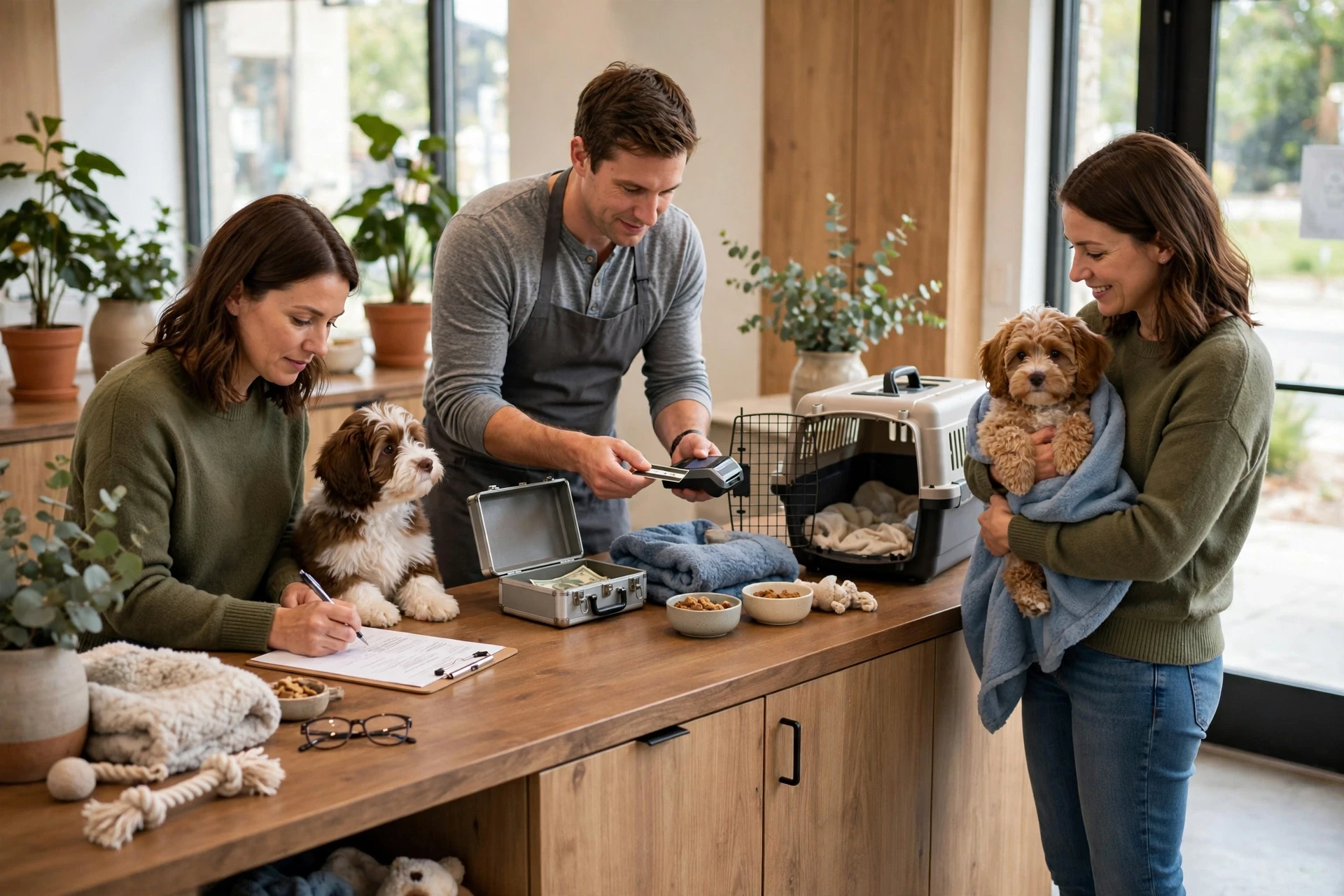
Payment for a puppy in Utah moves in two steps: a deposit to hold your puppy, then the balance at pickup. At Sage Puppies, Havanese, Havapoo, and Cavapoo puppies are priced from $3,500 to $4,500, so confirm the exact puppy’s price before you send anything. Here is how each stage works.
The Application Stage, Where No Money Moves
Start with the application, not a payment. A good breeder asks about your home, schedule, and experience before any money changes hands. You describe the breed and litter you want, and the breeder confirms a puppy is actually available. No deposit yet, because nothing is reserved. If someone demands payment before a real conversation, treat that as a warning.
What a Deposit Actually Reserves
A deposit reserves one specific puppy, not a vague spot in line. Get the puppy’s description, price, and pickup window in writing. Most breeders credit the puppy deposit toward the purchase price, so the balance drops by that amount. Many deposits are non-refundable, though some allow transfers to a future litter. Ask which applies before you pay, and watch for puppy scam red flags like wire transfers or gift cards.
The Balance and the Go-Home Handoff
You pay the remaining balance at or just before pickup. Utah buyers picking up locally can often use a card or cashier’s check, while many out-of-state families send the balance by Zelle or bank transfer. Confirm which methods the breeder accepts in advance. If you delay pickup past the agreed date, ask whether a boarding fee applies. Keep your receipt with the contract.
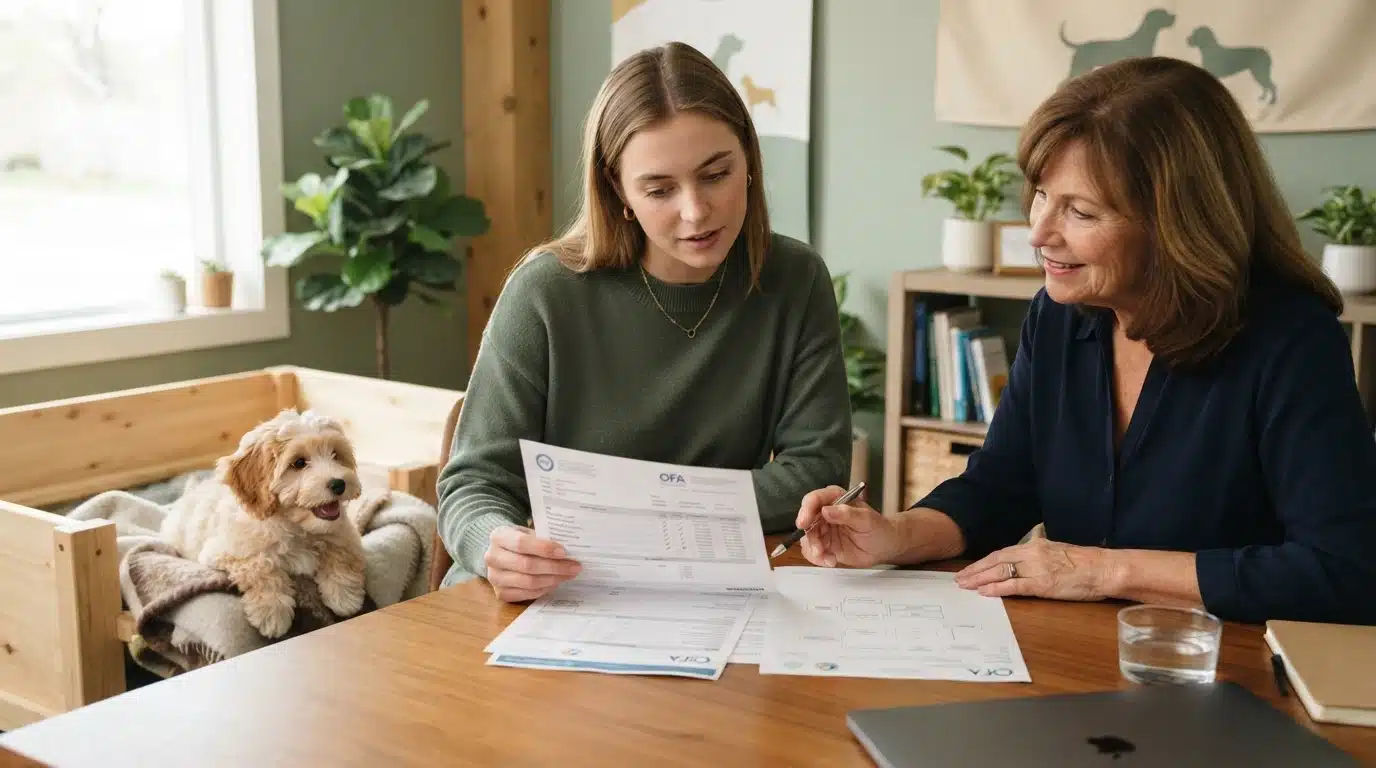
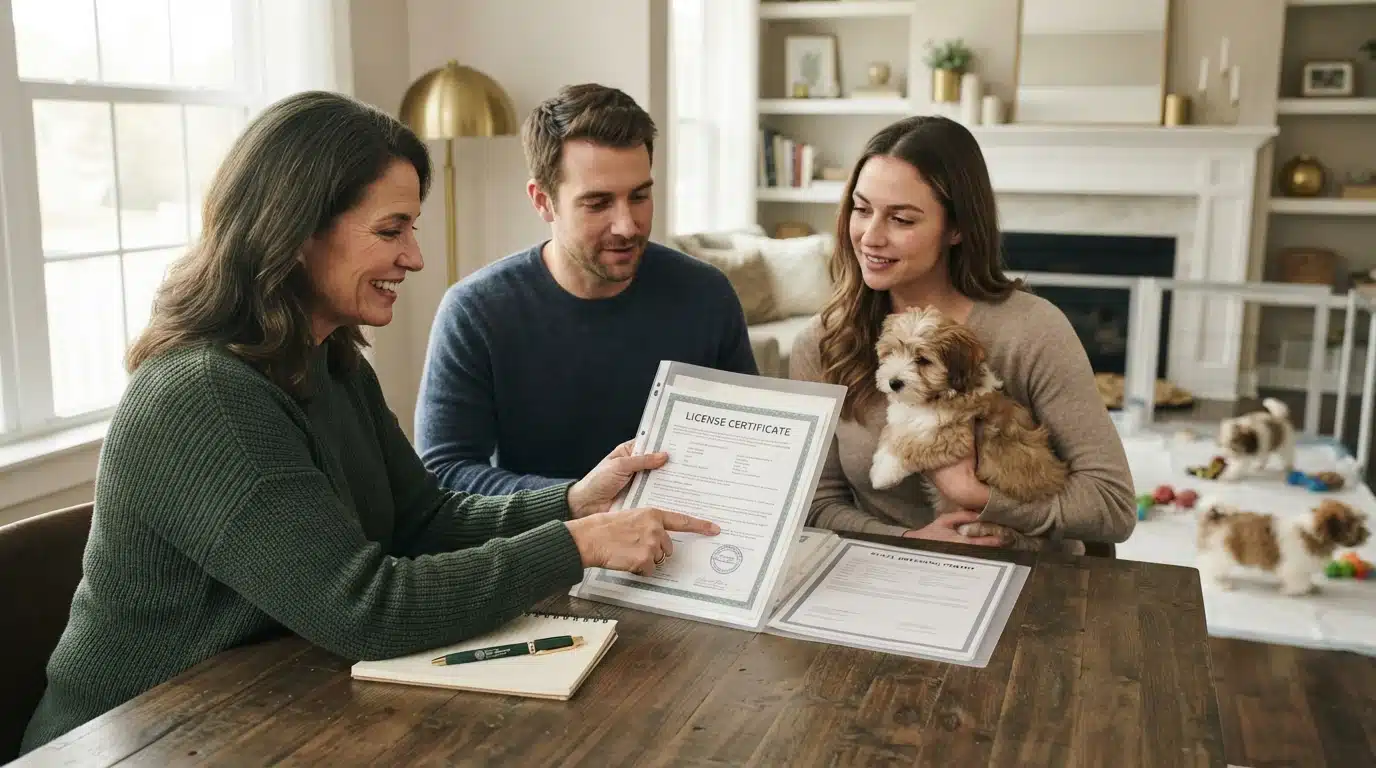
Reading a Utah Puppy Purchase Contract Line by Line
Most Utah puppy contracts cover five things: the parties and the puppy, money terms, ownership transfer, health clauses, and legal boilerplate. Here is what each line means and what to fix before you sign.

Buyer Information, Puppy Details, and Price
The opening block names you, the breeder, and the exact puppy. Check that the breed, sex, birth date, color, and microchip number match what you were told. If the litter was Havanese, Havapoo, or Cavapoo, the written breed should say so. Confirm the price line matches the quote you received, and that any puppy deposit credited toward the purchase price appears as a subtracted amount.
Payment Methods, Fees, and Deadlines
This section states how you pay and when. Look for accepted methods, deposit size, final payment date, and any fee if pickup slips, such as a boarding fee if you delay pickup. Watch for vague wording like “payment due at discretion of seller.” Ask for numbers in writing. Weigh cashier’s check versus Zelle for a puppy: a check leaves a paper trail, an app transfer usually cannot be reversed.
Transfer of Ownership, Records, and Registration
These lines say when the puppy becomes legally yours. Look for the pickup or delivery date, what documents you receive, and who holds registration papers. You should get vet records, vaccination dates, and microchip details at handoff. If registration is promised, the contract should name the registry and a deadline, not just “papers included.”
Limitation of Action, Entire Agreement, and Signature
The legal close limits lawsuits and voids anything said outside the contract. A limitation of action clause often sets a short window, sometimes days, to raise a claim. The entire agreement clause means verbal promises count for nothing. So get every promise written in, then sign. Some breeder red flags hide in exactly these last clauses, so read them twice.
Payment Safety When Buying Puppies in Utah
Payment safety when buying puppies in Utah starts with the method you choose. The question is simple: what payment methods are safest when you send a deposit for a puppy? Here is the short answer, in order:
- Credit card. Disputes are possible, and card companies can reverse fraudulent charges.
- Cashier’s check or bank check. Traceable paper with a bank trail behind it.
- Documented bank transfer. You keep records, so a pattern of fraud is provable.
- Zelle or Venmo, with caution. Fine with a verified, known breeder, but these apps are built for people who trust each other.
What to avoid: wire transfers, gift cards, prepaid cards, and cryptocurrency. Only scammers insist you must pay with gift cards, payment apps, crypto, or a wire service like Western Union, according to the FTC.
How to Pay: The Safer End of the Methods List
For a Utah puppy payment, match the method to the amount. A deposit of a few hundred dollars may be fine through Zelle once you have verified the seller. The full balance, often several thousand dollars, deserves a cashier’s check or credit card. Keep every receipt and screenshot.
The Three Questions That Prove You Are Talking to a Real Breeder
Ask these before money moves. First, can we video call and see the puppy live? Second, can you show the litter with the mother in the same frame? Third, what vet has examined the puppies, and may I call the clinic? A real breeder answers fast. A scammer stalls.
Red Flags That Should Stop a Payment
- Only payment by wire, gift card, or crypto.
- A price that looks too good for the breed.
- Stock photos, or “shipping only, no visits.”
- Pressure to send a non-refundable deposit within hours.
- No written contract offered at all.
What to Do If a Payment Feels Wrong
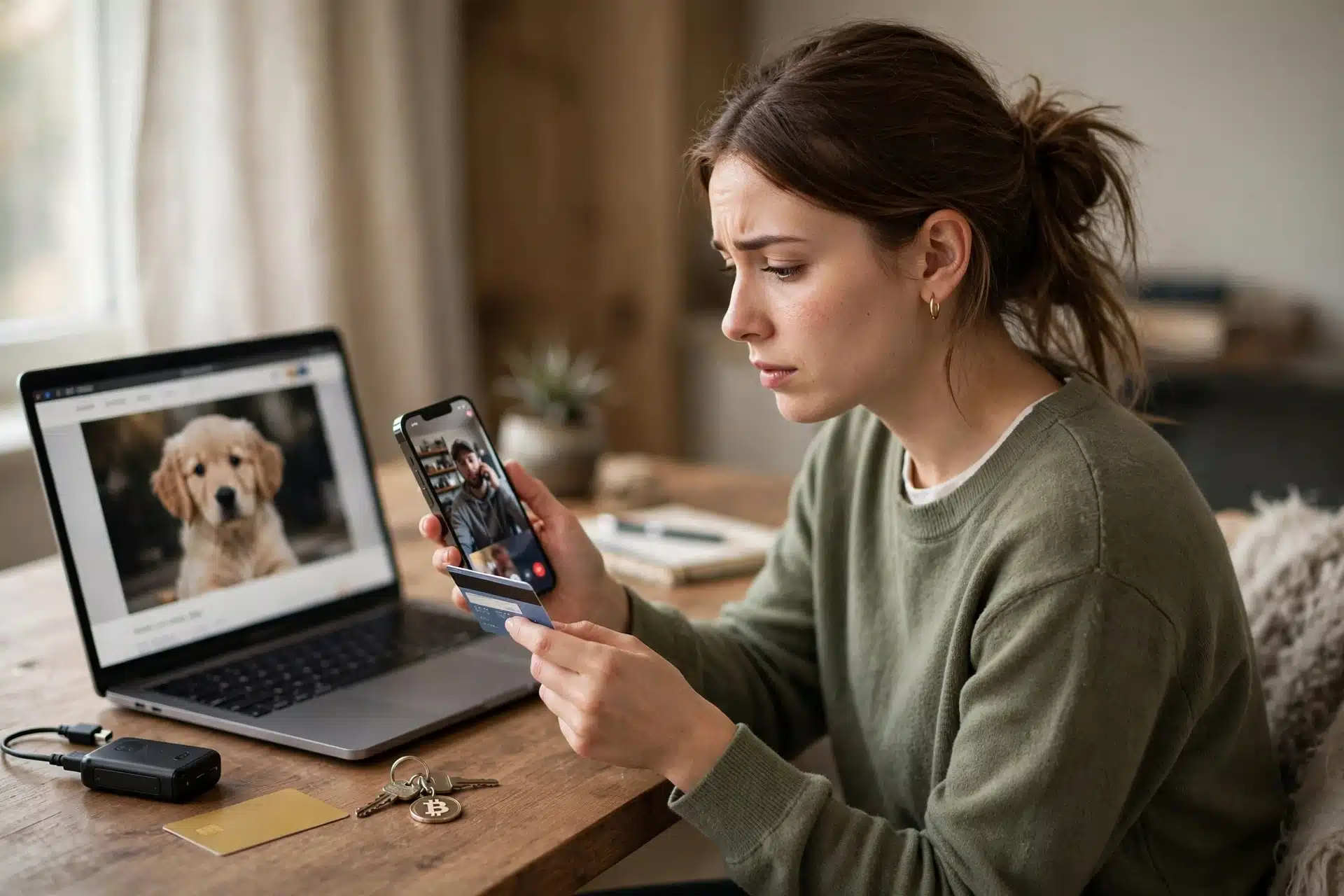
Stop. Do not send more money to “release” or “insure” a puppy, a classic follow-up scam. Call your bank the same day and report the charge. Then file a report with the FTC, which tracks pet scams across the country. If you paid by credit card, ask about a chargeback in writing. A cautious program such as Sage Puppies will never rush your deposit; its refund policy is spelled out on the puppy deposit refund terms page, and any breeder you trust should match that clarity.
Slow down, verify, and pay only through methods with a paper trail.
Refund, Cancellation, and Transfer Rules to Ask For in Writing
Refunds When the Puppy Cannot Be Delivered
What happens to your deposit if the puppy is not available? If the breeder cancels or the puppy dies or becomes unfit before pickup, a fair contract returns the deposit or applies it to another litter. Get the scenario mapping in writing before any Utah puppy payment leaves your account:
| Scenario | Fair contract term |
|---|---|
| Breeder cancels | Full deposit refund, no fees deducted |
| Puppy dies or is unfit | Full refund or transfer to a later litter |
| You back out | Deposit forfeited, per the non-refundable clause |
Non-Refundable Deposits and Why Rules Are Shifting
Most breeders label deposits non-refundable to hold a spot, and courts usually enforce a clear label as Good Dog explains. But states are starting to push back. California’s new AB 506 law makes a puppy contract void if it carries a non-refundable deposit for a California buyer, according to Midwoofery’s summary. Ask where the rule applies to you.
Transfers, Guardians, and Co-Ownership Arrangements
If you cannot take this litter, can the deposit move to a future Havanese, Havapoo, or Cavapoo litter? Ask how long the credit stays valid. Also request any guardian home agreement or co-ownership terms in full. These documents can obligate you to breed the dog, share litters, or accept training conditions, so never rely on a verbal promise.
Fees You Could Owe If You Take Longer Than Planned
Ask what happens if pickup slips past eight weeks. Some contracts add a boarding fee if you delay pickup, often a daily rate. Confirm the amount, the grace period, and whether flight delays count as your delay.
Health Guarantees, Vet Exams, and the Clauses That Look Protective but Aren’t
A health guarantee sounds like safety in writing. Often it is. But some warranties are drafted so the breeder almost never has to pay out, and you only learn that after a problem shows up. Read the guarantee the way you read the price: word by word.
What the Health Warranty Should Cover
A fair warranty names what it protects against: congenital defects (problems present at birth) and serious hereditary conditions, usually for one to two years. It should state the remedy plainly, whether that’s a replacement puppy, a refund, or help with treatment costs. Vague wording like “healthy at time of sale” with nothing after it covers very little.
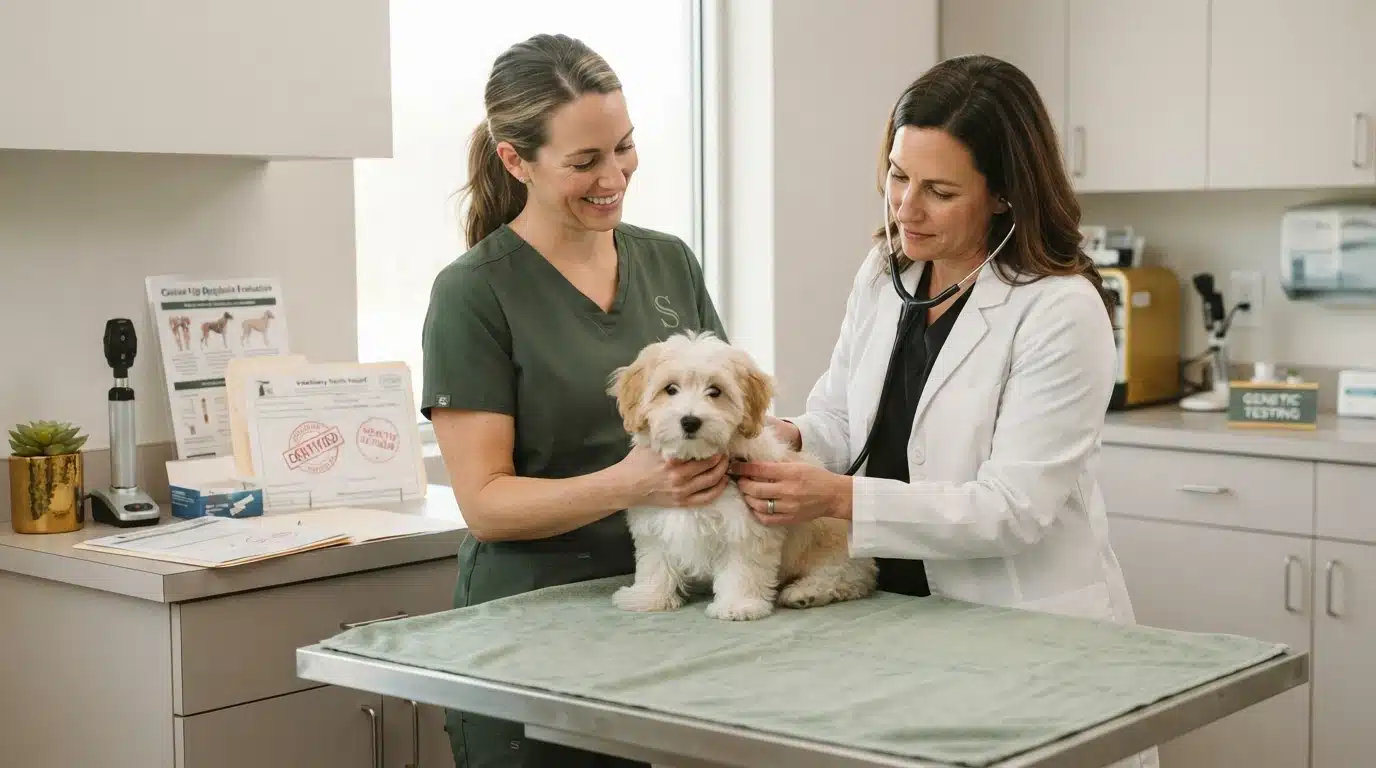
The Veterinary Exam Window
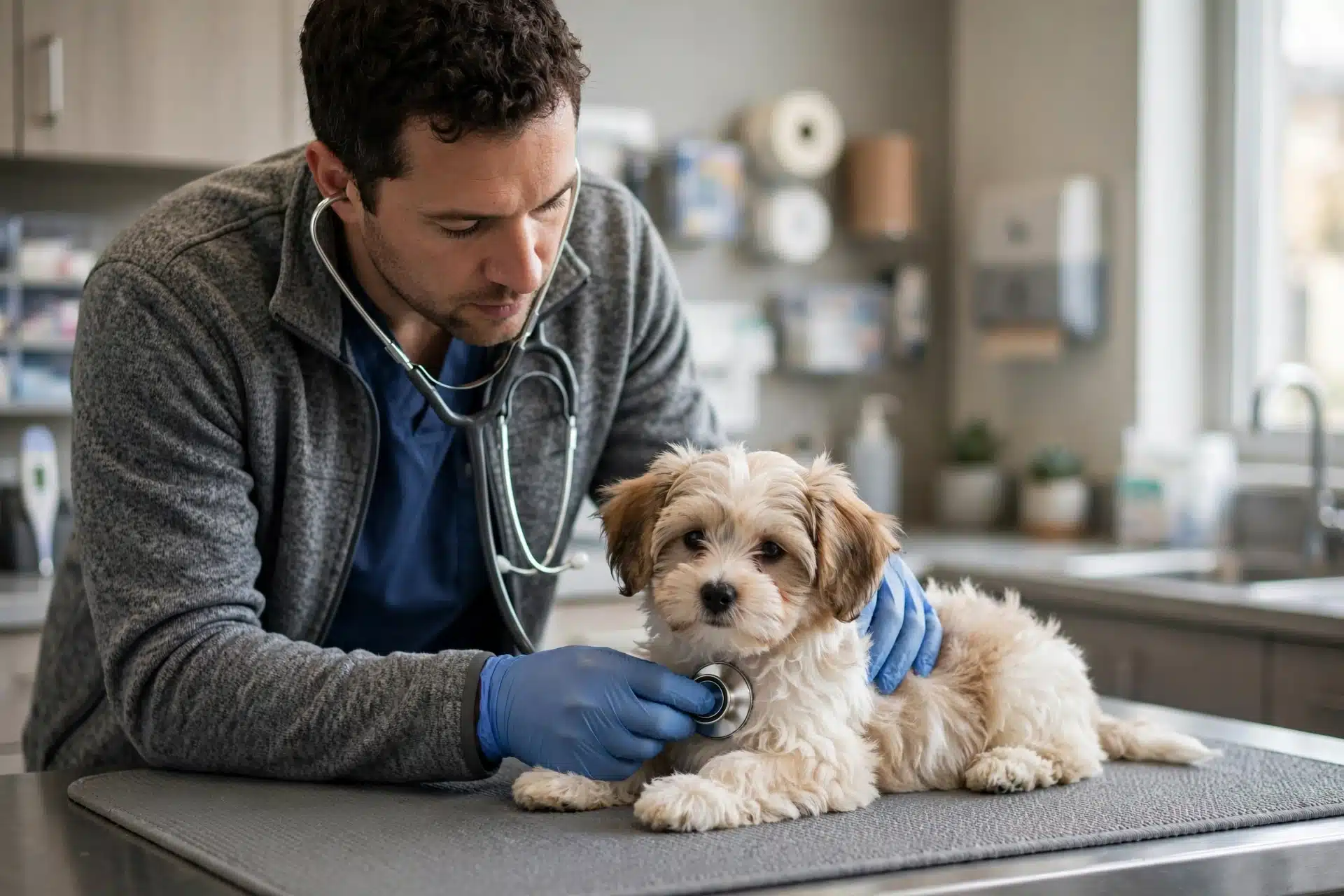
Most contracts require a vet exam within 48 to 72 hours of pickup, which is a reasonable ask; it confirms both of you saw a healthy puppy. The trap is in the fine print. Some contracts void the entire warranty if you miss the window, exclude weekends and holidays from the count, or refuse exams done at an emergency clinic when your regular vet is booked.
Guarantees That Quietly Depend on Your Choices
Watch for clauses that shift the risk onto you. Common versions: coverage voided if you feed a specific brand, skip a listed vaccine schedule, or delay a follow-up shot. Others exclude anything “stress related,” which can swallow kennel cough or diarrhea. Ask what happens if the condition is diagnosed late, after the exam window but within the guarantee period.
Questions That Reveal the Real Warranty
Ask these before you sign: What conditions are covered, and for how long? What remedy do I get, and who chooses? Can I use any licensed vet, including an emergency clinic? What exactly voids coverage? Get each answer in writing.
According to sample breeder contracts, the 72-hour requirement exists so buyer and breeder both confirm health at handoff, which is fair. A warranty that dies the moment the window closes is not.
Local Pickup in South Jordan or Nationwide Delivery: What Payment Looks Like
Local Pickup and What to Confirm Before You Drive
Meeting in person is the safest way to pay. For South Jordan pickups, confirm the exact balance due, the accepted payment method, and the pickup date before you drive. Many programs charge a boarding fee if you delay pickup, so ask what happens if your date slips. Bring a printed copy of the signed contract. The handoff is where you pay the balance and walk away with both the puppy and the paperwork, so treat it as the final payment checkpoint, not a formality.
Delivery, Travel Costs, and Who Pays
Nationwide delivery changes the math. You typically pay the puppy’s balance before travel is booked, then cover the flight or ground transport fee separately. Ask three questions in writing: who books the transport, who pays the airline or courier directly, and what happens if a flight is canceled. Never wire travel money to a third party the breeder named at the last minute. That is one of the classic puppy scam red flags. A Utah program such as Sage Puppies keeps these terms in the written agreement, so compare your contract, not a text message.
The First Week After the Handoff
Your contract’s clock starts at handoff. Most agreements require a veterinary exam within 48 to 72 hours, so book that visit before pickup day. Keep every receipt, save the health record, and email your vet’s findings to the breeder. If the exam turns up a problem, your contract’s notice deadline decides whether the health guarantee still applies. Missing that window can void it, even when the concern is real. One quiet week of photos and updates also protects you later.
Common Mistakes to Avoid
Paying Before the Terms Exist
The most expensive mistake is sending a deposit before the written terms do. Pressure to “pay now to hold your puppy” is a classic puppy scam red flag; the FTC warns buyers about sellers who push fast payment and dodge questions. Until you have a signed agreement that states the price, what the deposit reserves, and how refunds work, your money has no protection. Wait for the contract, read it, then pay.

Before you send a deposit, make sure every payment and contract term is in writing. The team at Sage Puppies walks you through the application, pricing, and matching step by step, so you know exactly what you are agreeing to. Visit today and ask your first question with confidence.
Frequently Asked Questions
Q1: What should I know about payment safety when buying puppies in Utah?
Pay by credit card or cashier’s check whenever possible, avoid wire transfers, gift cards, and crypto, and never send money before a written contract and a live video call with the puppy and mother.
Q2: Are puppy deposits refundable in Utah?
Often no. Most breeders label deposits non-refundable, but many credit them toward the purchase price or allow a transfer to a future litter. Get the rule in writing first.
Q3: Should I pay a puppy deposit with Zelle or a cashier’s check?
Zelle works for small deposits to a verified breeder. For the full balance, prefer a check or card because both leave a traceable record.
Q4: What veterinary exam deadline should my puppy contract include?
Look for a 48 to 72 hour exam window after pickup, and confirm which clinics count, including emergency vets.
Q5: What fees might I owe if pickup is delayed?
Ask about a boarding fee if you delay pickup, including the daily rate, grace period, and whether flight delays count.
Conclusion
Payment for a puppy in Utah comes down to three habits: verify before you pay, read the contract before you sign, and keep every term in writing. Confirm what a deposit actually reserves, choose traceable methods like a card or cashier’s check over wire transfers, and ask clause by clause what the health guarantee covers, how long it lasts, and what voids it. Get refund, cancellation, and transfer rules spelled out, including any boarding fee if you delay pickup. None of this is distrust; it is how careful buyers and careful breeders protect each other. A breeder who welcomes these questions is usually the one worth paying.