Quick Summary: To find a trusted puppy breeder in Utah, focus on verifying their location, health testing, and socialization practices rather than just cute photos. Ask detailed questions about their process, breeder transparency, and puppy care before reserving. A reputable breeder provides clear communication, consistent reviews, and a well-organized handoff, ensuring a healthy, well-matched puppy for your family.
You may be trying to buy puppies in Utah and seeing three very different signals. One breeder says “available now.” Another has a sleek website but gives few real details. A third quietly offers health-tested Havanese, Havapoo, or Cavapoo puppies from South Jordan, with a clear process and delivery options for families outside Utah.
That gap is the real problem. It is hard to tell who is truly careful, honest, and consistent. A cute puppy photo does not prove strong breeding practices. Fast replies do not prove health testing. If you want to buy puppies in Utah, you need a better way to compare breeders than looks, price, or who has puppies first.
This guide shows you how to do that. You will learn what to ask, what to verify, and how to spot signs of a breeder who puts puppy health, temperament, and family fit first. You will also see how to compare process quality, pickup or delivery options, and breeder transparency before you commit.
We know Utah buyers often want more than a basic checklist. They want confidence. If you plan to buy puppies in Utah, this guide will help you choose with clear next steps, not guesswork.
1. Start With the Breeder, Not the Puppy Photo
A cute puppy photo can pull you in fast. That is normal. Still, the safer move is to judge the breeder first and the puppy second. A polished website cannot prove good care, but a clear process often can. If you want the full vetting framework, start with the parent guide on how to find a trusted breeder in Utah and use this section as your first filter.
Check for a real Utah presence
Ask one simple question early: Does this breeder clearly exist in a real place? You should be able to find a Utah city, service area, pickup details, and a consistent business identity across their site and messages.
Utah also has breeder-related rules worth knowing. In 2024, the state passed breeder care standards that include limits on selling puppies under eight weeks and rules tied to breeding females, as shown in Utah HB0478. That does not replace your homework, but it gives you a baseline.
Use this quick check:
- Look for a real Utah location, not just “we ship nationwide.”
- Confirm whether pickup is local, by appointment, or through delivery.
- Ask what city the puppies are raised in.
- Check whether the breeder explains local compliance if needed.
- Watch for copied text, vague contact pages, or no family/process photos.
A breeder can protect home privacy and still be transparent about city, process, and pickup steps.
| Good sign | Red flag |
|---|---|
| Clear Utah base like South Jordan or another real city | No location beyond “USA” |
| Pickup and delivery explained | “Message for details” on everything |
| Consistent name, phone, and email | Different names across platforms |

Look for a focused breed program
Trusted breeders usually stay narrow and intentional. That matters because breed knowledge shapes health choices, early care, and family matching.
A focused program often means:
- They raise only a few breeds.
- They can explain each breed’s size, coat, and energy.
- They match puppies by temperament, not color alone.
- They share why those breeds fit family life.
If a breeder offers many unrelated breeds at once, slow down. Breadth can mean sales-first thinking. A boutique program like Sage Puppies, for example, staying centered on Havanese, Havapoo, and Cavapoo is easier to trust than a site selling every trending puppy type at once.
Fewer breeds often means better attention, cleaner communication, and stronger family guidance.
Pay attention to communication style
How a breeder talks to you tells you a lot. Good breeders ask questions back. They want to know about your home, kids, schedule, and dog experience. That is a good sign, not a hurdle.
The USDA also lets the public search certain licensed facilities and inspection records through its Animal Care Search Tool. If a breeder says federal licensing applies to them, you can verify that.
Watch for this pattern:
-
Good communication
- Answers clearly
- Explains next steps
- Sets realistic timing
- Welcomes questions
-
Poor communication
- Pushes for a deposit fast
- Avoids direct answers
- Sends only photos, no process
- Gets defensive when asked about care
Also Read: 10 Must-Ask Questions Before Buying a Puppy Locally
2. Verify Health Testing and Early Care Before You Reserve
Before you place a deposit, ask for proof of parent health testing and a clear picture of how the litter is raised. This step tells you more than cute photos ever will. For a full breeder screening process, go back to the main guide on finding a trusted Utah breeder.
Ask what was tested on the parents
Start with a simple question: What exactly was tested on the sire and dam? Do not settle for “they’re healthy” or “our vet checked them.” Real breeder screening should name the tests, the dates, and the results.
According to AKC guidance on health testing, breed-specific screenings often include both genetic tests and exams tied to known inherited risks. That matters because testing is not one-size-fits-all.
Ask for:
- The names of the tests
- Copies or links to results
- Which parent had which result
- Whether results are public through OFA or another registry
- What issues the breeder is trying to avoid in that breed line
Use this quick check:
| What to ask | Good answer | Red flag |
|---|---|---|
| Were the parents tested? | Specific tests named with proof | “Yes, all clear” with no records |
| Are results public? | OFA or documented lab results | “We keep that private” |
| Is testing breed-specific? | Tests match breed risks | Same script for every breed |
A good breeder explains testing in plain English and does not act bothered when you ask.
Separate health testing from routine vet care
A puppy can have a vet exam and still come from untested parents. Those are not the same thing. Health testing looks at inherited risk in the breeding dogs. Routine care covers the puppy’s day-to-day start.
Ask the breeder to break early care into two buckets:
- Parent screening before breeding
- Puppy care after birth
Routine puppy care may include:
- Wellness exams
- Age-appropriate vaccines
- Deworming
- Weight checks
- Clean housing
- A take-home record
That care matters. So does hygiene. The CDC notes that animals can carry germs even when they look clean, and it advises handwashing after handling pets. A careful breeder should have basic cleanliness rules for visitors, kids, and shared spaces.
Warning: “Vet checked” is not proof of strong breeding decisions. It only shows the puppy was seen.
Ask how puppies are handled and socialized
Early handling shapes confidence. Ask what the breeder does from week to week, not just “Are they socialized?”
Look for answers like:
- Daily gentle handling
- Exposure to normal home sounds
- Time with adults and supervised children
- Safe surface changes like rugs, tile, or grass
- Crate or potty area intro
- A plan to prevent overstimulation
Ohio State veterinary guidance says the first 12 weeks are a prime time for puppy socialization, while disease prevention still needs care and balance. That is why smart breeders do both.
Use this checklist before you reserve:
| Early care question | What you want to hear |
|---|---|
| How often are puppies handled? | Daily, calm, structured contact |
| What do they hear and see? | Household sounds and new surfaces |
| How do you keep them safe? | Clean setup, visitor rules, age-based exposure |
If you are comparing Utah breeders, this is where boutique programs like Sage Puppies stand out when they can clearly show both health-tested parents and family-raised early care.
Also Read: 10 Adorable Havapoo Colors You Need to See (2026)
3. Read the Process Like a Buyer, Not a Browser
A polished website can look great and still tell you very little. Read the breeder’s process like you are already halfway to bringing a puppy home. That mindset helps you spot what is real, what is vague, and what needs a follow-up question.
A serious breeder starts with an application
Good breeders do not treat puppy buying like online checkout. They ask about your home, schedule, past dog experience, kids, and what kind of temperament you want. That is a good sign, not a hurdle.
A basic contact form is not enough on its own. Look for a process that includes:
- An application before approval
- A real review step
- Questions about lifestyle fit
- A note that the breeder may say no if the match is wrong
If a breeder will sell to anyone with a card and a shipping address, slow down.
This matters even more if puppies are sold sight-unseen. The USDA’s breeder licensing guidance makes clear that application, records, and buyer process are part of a real business operation, not a casual side sale USDA license application packet.
Sage Puppies, for example, should feel more like a guided placement process than a product page. That is what careful families want.
Reservation details should be clear before money changes hands
Deposits are normal. Confusion is not.
Before you place money down, you should know exactly:
- How much the reservation fee is
- Whether it is refundable or transferable
- When the balance is due
- How puppy selection works
- What happens if the breeder does not have the right match
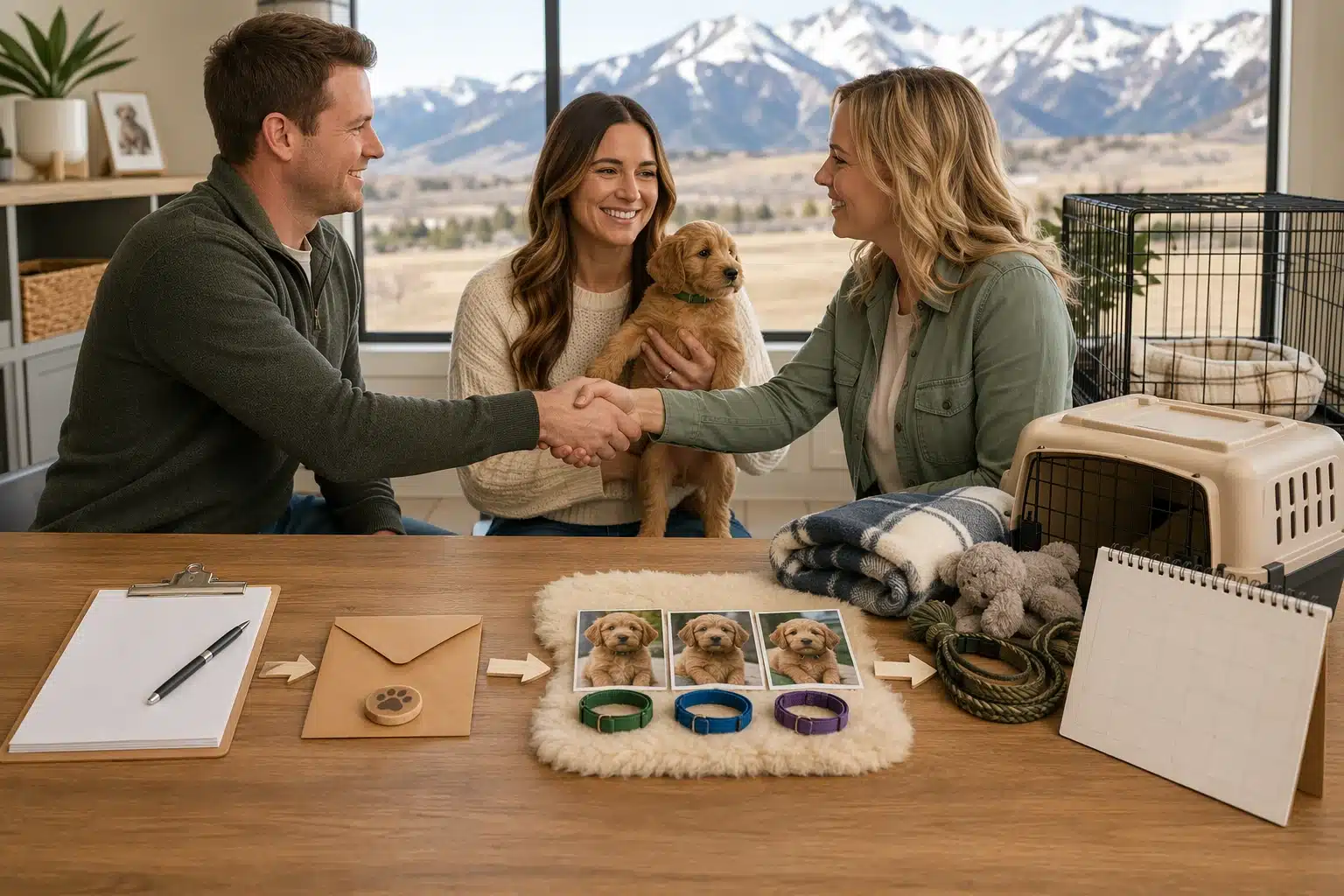
A clear process often looks like this:
| Process point | What you should see | Red flag |
|---|---|---|
| Application | Reviewed before approval | Instant checkout |
| Deposit | Terms written plainly | Vague “DM for details” |
| Matching | Temperament and family fit explained | First pay, first pick only |
| Final payment | Due date listed | Surprise fees late in process |
Ask for the written reservation terms before you send anything.
If delivery is involved, those terms matter even more. For commercial dog imports, APHIS requires specific health and rabies paperwork in English for covered transactions, which shows how important clear pre-travel documents are in any puppy handoff process APHIS commercial dog import guidance.
Go-home planning should feel calm and organized
The last step should not feel rushed. A thoughtful breeder gives you a clear pickup or delivery timeline, explains what records you will receive, and sets expectations for the first few days at home.
Look for go-home planning that includes:
- Pickup or delivery options
- Health record timing
- Food and routine notes
- What to bring on pickup day
- Who to contact with questions
That calm, organized handoff usually reflects better care from the start.
4. Compare Reviews, Fit, and Next Steps With Confidence
Read reviews for patterns, not perfection
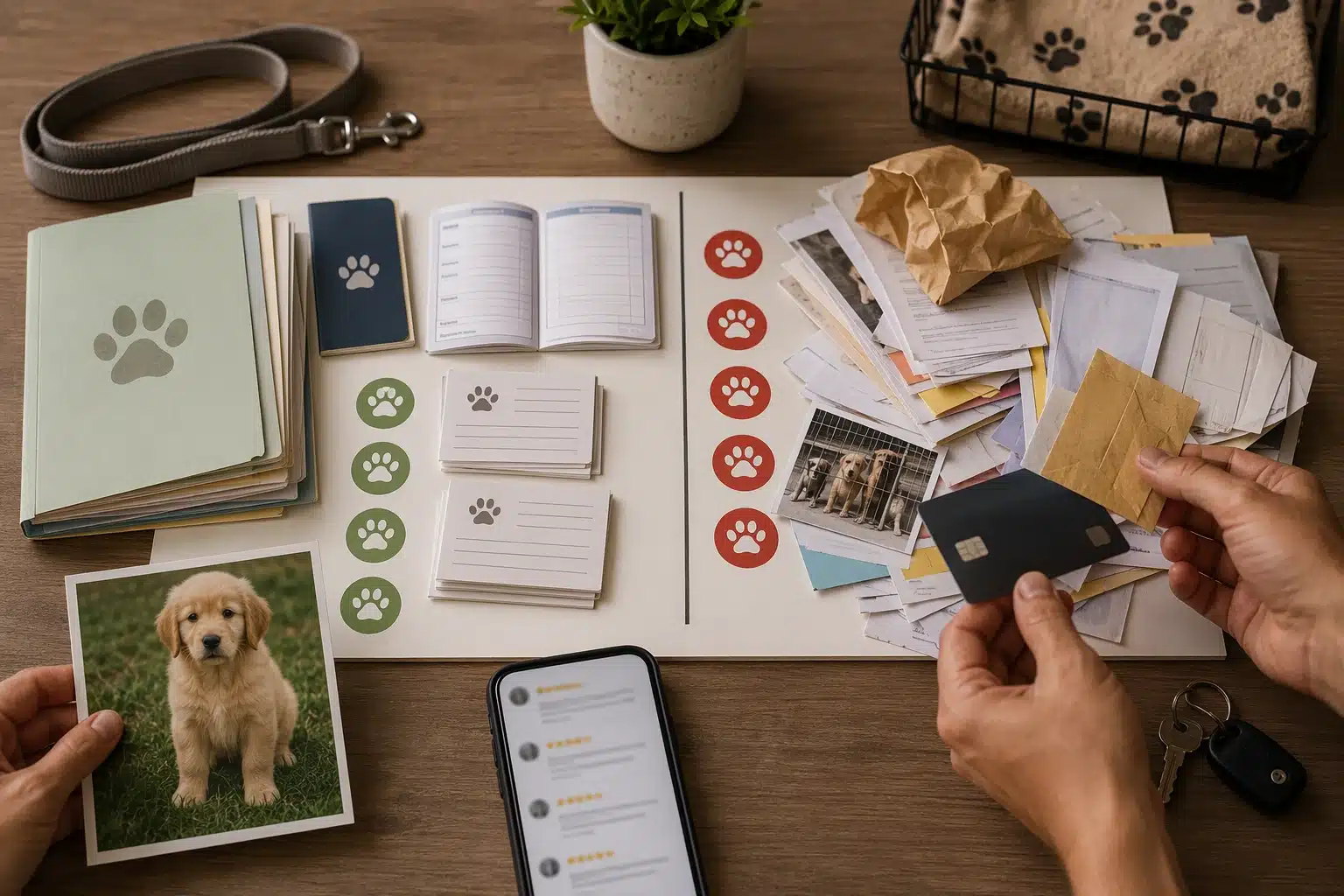
A good breeder should have consistent signals of trust, not a flawless wall of praise. The FTC advises buyers to check multiple review sources, watch for review bursts, and stay alert to fake or manipulated feedback in its review guidance. That matters when you are comparing puppy sellers.
Look for patterns like these:
- Families mention clear communication
- Reviews describe a clean, calm process
- Buyers say the puppy matched the breeder’s description
- People mention support before pickup or delivery
- Small complaints feel normal, not hidden
Watch for red flags too:
- Dozens of reviews posted in a short time
- Vague praise with no real details
- Pressure to send money fast
- Complaints about health records, pickup confusion, or silence after payment
A trusted breeder does not need perfection. They need a believable history of doing the right things well, over and over.
| What to look for | Good sign | Caution sign |
|---|---|---|
| Review detail | Specific puppy, timing, process notes | Generic praise only |
| Review timing | Spread out over time | Sudden burst |
| Complaint style | Minor, reasonable issues | Repeated trust problems |
| Breeder response | Calm, helpful, professional | Defensive or absent |
Make sure the breed fits your household
Even a great breeder is the wrong choice if the breed does not fit your home. The AKC describes the Havanese as cheerful, social, and small, which helps explain why many families like them for close companion life in its breed overview.
Use a simple fit check:
- Pick Havanese if you want a more predictable small companion.
- Pick Havapoo if you like a friendly, bright mix with coat care in mind.
- Pick Cavapoo if you want a cuddly, people-focused family dog.
Ask yourself:
- Do we want a quieter lap companion or a more playful sidekick?
- Can we handle regular grooming?
- Are our kids gentle with small dogs?
- Will someone be home enough for a social puppy?
Cute is not enough. Daily fit matters more than puppy photos.
If you are still deciding, the parent guide should help narrow your breeder list before you reserve.
Know the best next step when trust is established
Once a breeder checks out, take the next right step, not the fastest one. Usually that means:
- Review the Available Puppies page
- Read Pricing/Reservation
- Submit the Application
- Confirm pickup or delivery details
- Ask your last practical questions
This is where process quality stands out. A strong breeder explains what happens after approval, how matching works, what records you receive, and what go-home timing looks like. That calm, clear process matters as much as the puppy itself.
For families comparing Utah options, Sage Puppies should feel easy to verify. You want a breeder whose steps are clear, whose communication stays steady, and whose puppies are raised for real family life, not rushed sales.
If trust is established, move forward with the application. If you still feel unsure, pause and keep comparing.
Also Read: 10 Small Breed Puppies That Stay Friendly & Easygoing

If you want a breeder that makes trust easier to verify, start with Sage Puppies. Their South Jordan, Utah program focuses on Havanese, Havapoo, and Cavapoo puppies, with health-tested parents, early socialization, and clear pickup or delivery steps. Review available puppies, pricing, and the application process, then ask the questions from this guide before you reserve.
Frequently Asked Questions
Q1: where to buy puppies in Utah
Start with breeders who show their process clearly, not just cute photos. Ask about parent health testing, home raising, socialization, pickup or delivery, and how they match puppies to families. In Utah, boutique programs like Sage Puppies can be a better fit than high-volume listings.
Q2: How can I tell if a Utah breeder is trustworthy?
Look for clear answers, not vague promises. A trusted breeder explains health testing, puppy care, timelines, pricing, and next steps. They welcome questions and do not rush payment. If details feel hidden or pressure feels high, walk away.
Q3: Should I choose local pickup or delivery?
Both can work well if the breeder handles the handoff carefully. Local pickup gives you face time and an easy trip home. Delivery helps out-of-state families. Ask who transports the puppy, what the timeline is, and how updates are shared.
Q4: What should I ask before placing a deposit?
Ask what the deposit holds, when puppies are matched, what is included, and what happens if timing changes. You should also ask about temperament goals, size range, and support after pickup. Clear answers now prevent stress later.
Q5: Are small breeds good for first-time dog owners?
Often, yes. Havanese, Havapoo, and Cavapoo puppies can suit first-time families because they are companion-focused and easy to bond with. Still, every puppy needs training, grooming, and routine. Pick the right temperament, not just the cutest face.
Conclusion
Finding puppies for sale in Utah gets much easier when you stop looking at cute photos first and start checking breeder habits. A trusted breeder should answer questions clearly, share health details, explain pickup or delivery, and show how puppies are raised.
Utah families should also know the legal basics. In 2024, Utah passed Animal Care Amendments, including rules tied to breeding female care and a ban on selling puppies under eight weeks old. At the federal level, dog welfare standards are still under review, with USDA looking at better rules for exercise, socialization, and breeding female care, according to the AVMA summary of the 2026 review.
The main takeaway is simple:
- Verify the breeder
- Review the process
- Ask hard questions
- Choose care quality over speed
That approach helps you bring home a healthy, well-started puppy with more peace of mind.