Quick Summary: To find healthy puppies in Michigan, verify seller transparency by asking for health records, visiting the environment, and ensuring clear pickup and payment plans. Beware of high-pressure tactics and fake listings; reputable breeders welcome questions and show proof of health testing. Matching the puppy’s personality to your lifestyle is crucial, and taking time to verify details greatly reduces risks of scams or unhealthy dogs.
If you are looking at Michigan puppies for sale and a seller will not show the puppy’s mother, share vet record dates, or explain pickup clearly, slow down. That is a warning sign, not a reason to reserve fast. Many Michigan puppies for sale listings look good online but hide weak health screening, poor breeding, or sloppy handoff plans.
This guide solves that problem. It shows you how to sort safe, well-raised puppies from risky ads, what to ask before you put down money, and which trust signals matter in Michigan.
We built this for families who want a healthy companion, not a gamble. You will learn how to review records, spot red flags, and compare Michigan puppies for sale with more confidence. If you are also weighing breeder options, start with our parent guide and use this article to make smarter calls before you bring a puppy home.
1. Start with the seller, not the puppy photo
A cute photo proves almost nothing. The seller tells you far more. Before you ask about eye color or size, check whether this is a real breeding program with clear standards, records, and a process that slows buyers down instead of rushing them.
Look for a real breeding program, not a high-pressure ad
A solid seller should show you how they raise puppies, not just what one puppy looks like today. In Michigan, large-scale dog breeding kennels must register with MDARD if they house more than 15 intact females that have whelped before, and those kennels must meet inspection steps and care rules under MDARD’s program.
Use this quick screen first:
| What to check | Good sign | Red flag |
|---|---|---|
| Seller identity | Full name, location, phone, website | No last name, vague location |
| Puppy care | Explains routine, socialization, records | Only talks about deposit |
| Parent dogs | Shares details on dam and sire | Avoids all questions |
| Visit or video | Offers live video or in-person visit | Refuses both |
| Paperwork | Mentions health records clearly | Says “papers later” |
Ask:
- Can I see where the puppy is raised?
- Can I meet the mother or see a live video with her?
- What vet records come home with the puppy?
- How do you match puppies to families?
Good breeders welcome careful questions. Risky sellers act annoyed by them.
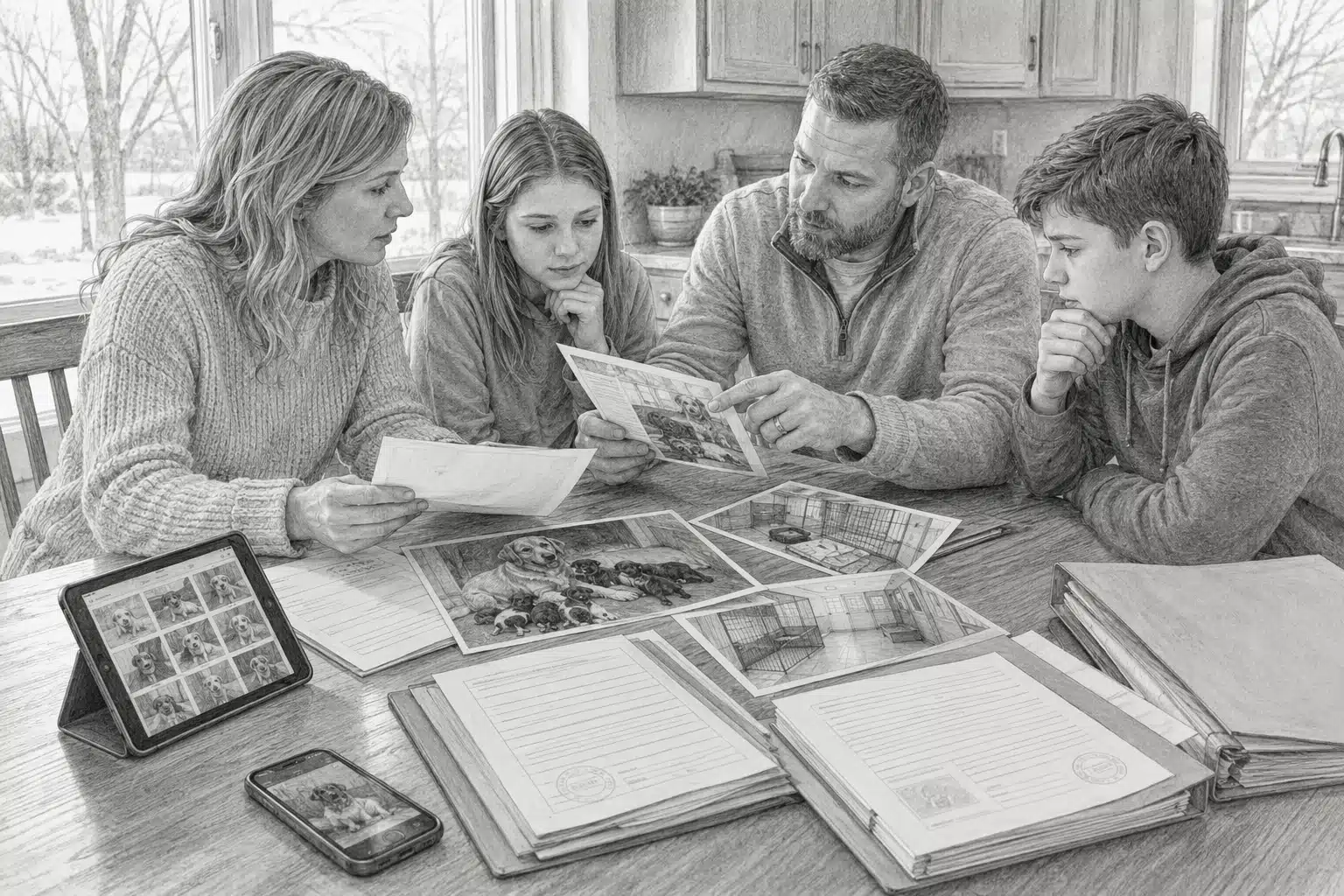
If you want a better model, look at breeders with a clear application, reservation, pickup, and support process. That kind of structure matters more than a polished ad.
Check for signs the listing is built to create urgency
Scammy listings try to speed you up. Michigan’s consumer protection office warns buyers to watch for puppies sold sight unseen, fake shipping fees, copied testimonials, reused photos, and sellers who push payment apps or gift cards in its puppy scam alert.
Common urgency tricks include:
- “Last one left” with no proof
- “Send deposit in 10 minutes”
- Deep discounts far below normal
- Extra charges for crates, insurance, or sudden transport changes
- Meeting only in a parking lot
Use this rule: if the seller creates panic, pause the deal.
A healthy puppy listing should make room for verification, not pressure.
Also Read: Health-Tested Puppies for Sale Near Me: Buyer Checklist
2. Verify health records before you reserve anything
Ask for the records before you send a deposit. A good seller should share them fast, not after you commit. Start with the puppy’s vet exam date, vaccine dates, and deworming dates. You want the actual timeline, not a vague line like “up to date.”
Use this quick checklist:
- Date of the last veterinary exam
- Each vaccine given and the date
- Each deworming treatment and the date
- Any notes about illness, treatment, or follow-up care
- The name of the vet clinic that saw the puppy
If the seller only sends a handwritten note with no dates, slow down. If they avoid your questions, walk away.
A clean puppy photo is not proof of health. Paperwork should match the puppy’s age and care history.
A routine check is helpful, but it is not the same as real health testing. A basic exam tells you how the puppy looked that day. It does not prove the parents were screened for inherited issues.
Ask two separate questions:
- What care has this puppy already received?
- What health testing was done on the parents?
That difference matters. For example, a seller may say “vet checked” and hope you stop there. Keep going. Ask for parent testing results when the breed has known concerns, and ask what conditions they screen for. Responsible programs, including boutique breeders like Sage Puppies, are usually clear about parent health work because they expect careful buyers.
| Record type | What it tells you | What it does not prove |
|---|---|---|
| Vet exam | Puppy looked healthy at that visit | Long-term genetic health |
| Vaccine record | Shots given on specific dates | Full disease protection yet |
| Deworming record | Parasite treatment dates | That the puppy is parasite-free forever |
| Parent health testing | Screening for inherited risks | That no issue can ever happen |
Michigan rules matter here too. Under Michigan law, pet shops and large-scale dog breeding kennels cannot sell a dog under 8 weeks old and must provide a valid pet health certificate. MDARD also says that certificate must be issued by a veterinarian and is valid for 30 days from the exam date according to MDARD’s pet shop guidance.
If the puppy is coming from out of state into Michigan, ask whether interstate paperwork was required too. Paperwork gaps are a real red flag.
Also Read: 10 Small Breed Puppies That Stay Friendly & Easygoing
3. Confirm the puppy was raised in a healthy environment
Look for a home-raised setting with normal family life
Ask to see where the puppies actually live, not just a clean corner for photos. A healthy setup should feel like real daily life. Puppies do best when they hear normal sounds, meet people often, and stay in a space that is cleaned well.
The early socialization window starts around 3 weeks and runs to about 12 to 14 weeks, according to Penn State Extension. That means the breeder’s home setup matters a lot before you ever pick up your puppy.
Look for signs like:
- Clean bedding with no strong odor
- Fresh water and age-appropriate food
- Safe indoor space plus supervised play areas
- Calm contact with adults and, if present, respectful children
- Regular cleaning of floors, crates, bowls, and potty areas
A spotless room is not enough. You want a puppy raised with both cleanliness and normal family contact.
Red flags include:
- Puppies kept only in outdoor runs or sheds
- Strong ammonia smell
- Dirty coats or stool stuck on fur
- Little interest in people
- Sellers who refuse live video or in-person viewing

Ask what the puppies experience before go-home day
Good breeders do more than feed puppies and wait. They give safe, age-right exposure to the world. The AKC notes that during the first three months, gentle exposure to people, sounds, surfaces, crates, and car rides can shape a puppy’s future temperament in a lasting way through early puppy socialization.
Ask this short checklist:
- What sounds do they hear daily?
- Do they walk on different surfaces?
- Are they handled gently every day?
- Have they started crate or car ride practice?
- How do you keep socialization safe before full vaccines?
A strong answer should include controlled exposure, not chaos. Think vacuum noise, doorbells, grooming touch, short crate time, and calm visitors.
| Good sign | Why it matters |
|---|---|
| Planned daily handling | Builds trust with people |
| New sights and sounds | Lowers fear later |
| Clean, low-risk socialization | Supports health and confidence |
Also Read: Reputable Puppy Breeder Near Me: 9 Signs to Trust
4. Use the breeder interview to test trust, not just friendliness
Ask the questions that protect your future puppy
A warm call is nice. Clear answers matter more. Use the breeder interview to confirm health, daily care, and how the puppy was raised.
Ask direct questions like:
- What health testing was done on both parents, and can I verify it?
- What issues have shown up in this line before?
- How are puppies socialized before they go home?
- What does your contract say if the puppy gets sick or I cannot keep it?
- At what age do puppies go home?
In Michigan, large-scale dog breeding kennels have rules for housing, animal care, and recordkeeping under MDARD kennel requirements. Michigan law also says certain sellers and large-scale breeding kennels cannot sell a dog under 8 weeks old, per state law section 287.335a.
If a breeder avoids records, changes the subject, or rushes you to reserve, treat that as useful information.

Listen for calm, specific answers instead of sales talk
Good breeders do not need perfect scripts. They do need real details.
Look for answers that include:
- Names of tests
- Ages and routines
- Why this pairing was chosen
- What they are still watching in the litter
- What support happens after pickup
Watch for the opposite:
- Vague lines like “our dogs are very healthy”
- Big promises with no paperwork
- Pressure to send a deposit before you finish questions
- Defensiveness when you ask about past problems
A trustworthy breeder can say, “Here is what we tested, here is what we saw, and here is what we do next.” That steady tone matters. At Sage Puppies, for example, families should expect transparency, not charm alone.
Check whether the breeder screens you too
A responsible breeder should interview you. That is a good sign, not a hassle.
They may ask about:
- Your work schedule
- Children and other pets
- Training plans
- Travel, fencing, and who will handle daily care
The American Kennel Club notes that strong breeders question buyers carefully to match puppies to the right homes. If a seller will hand any puppy to anyone with fast payment, that is a red flag.
The best interview feels mutual. You are not just buying a puppy. Both sides are protecting that puppy’s next 10 to 15 years.
Also Read: 10 Things to Check Before Buying a Small Puppy – Sage Puppies
5. Make sure pickup, delivery, and payment terms are clear
A good puppy sale should feel boring on paper. That is a good sign. Before you send a deposit, ask for the full handoff plan in writing.
Use a simple checklist:
- Pickup date or delivery window
- Exact location and who handles the handoff
- What records you receive that day
- Final payment amount
- Refund terms if the puppy is not as promised
- Who pays transport costs and what happens if plans change
If the puppy is crossing state lines, ask whether a certificate of veterinary inspection is needed. Michigan says an interstate health certificate, also called a CVI, may be required for out of state movement, and a CVI is valid for 30 days from the exam date according to MDARD health certificate guidance.
| Item to confirm | Why it matters | What to ask |
|---|---|---|
| Handoff method | Prevents confusion | Pickup, flight nanny, or ground delivery? |
| Paperwork | Protects you | Will I get vaccine records and signed contract at handoff? |
| Timing | Reduces stress | What is the earliest safe release date? |
| Payment schedule | Stops surprise fees | Deposit now, balance when? |
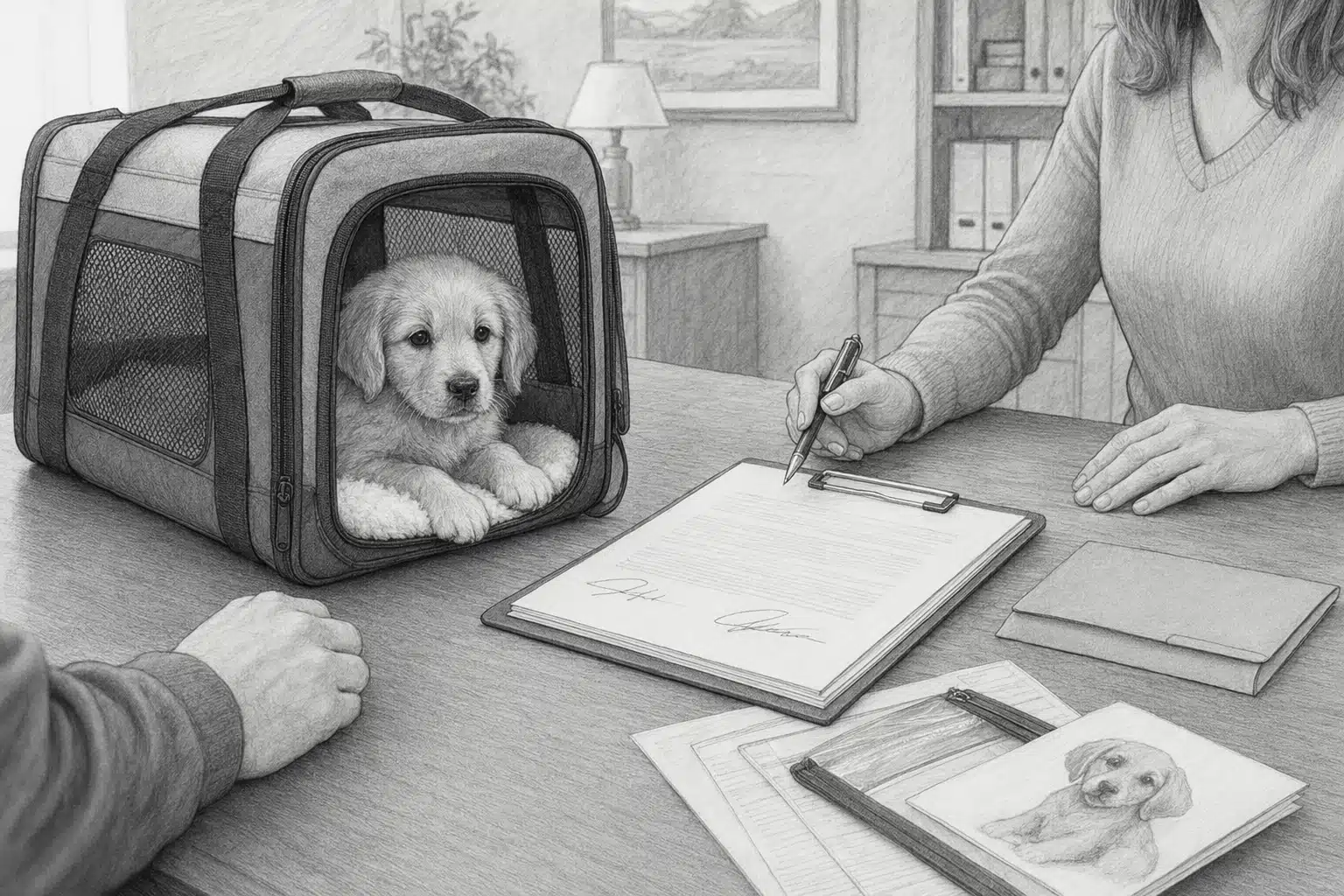
Scams often show up right before transport. Michigan warns buyers about fake extra fees for crates, insurance, weather delays, and last minute medical costs in its puppy scam alert.
Watch for these red flags:
- Pressure to pay only by wire, gift card, crypto, Zelle, Venmo, or Cash App
- New delivery fees after you already paid
- A seller who will not name the transporter
- No clear refund policy if the puppy becomes unavailable
Safer sellers explain pickup, delivery, and payment in one place before they ask for money.
Sage Puppies and other careful breeders should be able to walk you through each step without rushing you.
Also Read: 10 Signs a California Puppy Listing Is a Scam – Sage Puppies
6. Choose the puppy that fits your home, not the one that feels fastest to reserve
The best puppy is not always the first one that catches your eye. It is the one whose energy, confidence, and handling style fit your daily life.
Michigan State University notes that dogs’ personalities can change over time, but fear and anxiety may stay more stable, and owner behavior helps shape outcomes according to MSUToday. That is why a good match matters from day one.
Use this quick filter before you commit:
- Young kids at home – Look for a puppy that recovers well, enjoys touch, and is not the busiest in the litter.
- Quiet household – A softer, lower-key puppy may settle in faster.
- Active family – Choose a puppy with moderate to higher play drive, not just random excitement.
- First-time owners – Ask the breeder which puppy is easiest to guide and least intense.
- Other pets – Ask how the puppy responds to littermates, sharing space, and mild frustration.
Purdue Extension says one of the biggest reasons dogs are surrendered is a poor fit with the family’s lifestyle in its dog selection guide.
Do not choose by color, size, or sympathy alone. Choose by fit.
Ask the breeder:
- Which puppy settles fastest after play?
- Which one startles, then recovers well?
- Which one seeks people without demanding constant attention?
- Which one fits a home like ours?
A careful breeder will guide the match, not push the fastest deposit.
Also Read: 10 Questions to Ask Before Buying a Puppy Locally – Sage Puppies

If you want a healthier, lower-risk way to bring home a puppy, start with Sage Puppies. Their home-raised Havanese, Havapoo, and Cavapoo puppies come from health-tested parents, with clear next steps, pickup or delivery, and a family-first process that helps Michigan buyers choose with confidence.
Frequently Asked Questions
Q1: where to buy puppies in Michigan
Buy from a breeder or family-raised program that shares health testing, parent details, vet records, and clear pickup terms. Skip vague listings. If you want an out-of-state option, Sage Puppies offers transparent matching and delivery.
Q2: How do I spot a risky puppy listing?
Watch for stock photos, pressure to send a deposit fast, no parent info, no video call, and no real address. A good seller answers hard questions and shows how puppies are raised.
Q3: What records should I ask for before reserving?
Ask for vaccine and deworming records, a recent health check, birth date, parent breed details, and any health testing done on the parents. Get everything in writing before you commit.
Q4: Is meeting the puppy in person required?
Not always. A live video visit can work if the breeder is out of state. You should still see the puppy moving, the space, and how the breeder handles questions.
Q5: When should I walk away?
Walk away if the seller avoids calls, changes the story, refuses records, or offers to meet in a parking lot. A healthy puppy search should feel clear, calm, and verifiable.
Conclusion
A healthy puppy in Michigan starts with one simple rule: verify everything. The safest sellers welcome questions, show where puppies are raised, share clear health records, and never rush your deposit. Michigan also gives buyers useful guardrails. Large-scale breeding kennels must register with MDARD, and those sellers must provide a valid pet health certificate and cannot sell a dog under 8 weeks old. Just as important, the state warns buyers not to purchase sight unseen and to stay alert for fake shipping fees, copied photos, and pressure tactics in online puppy scams. If you slow down and check the details, you greatly improve your odds of bringing home a healthy, well-raised companion.