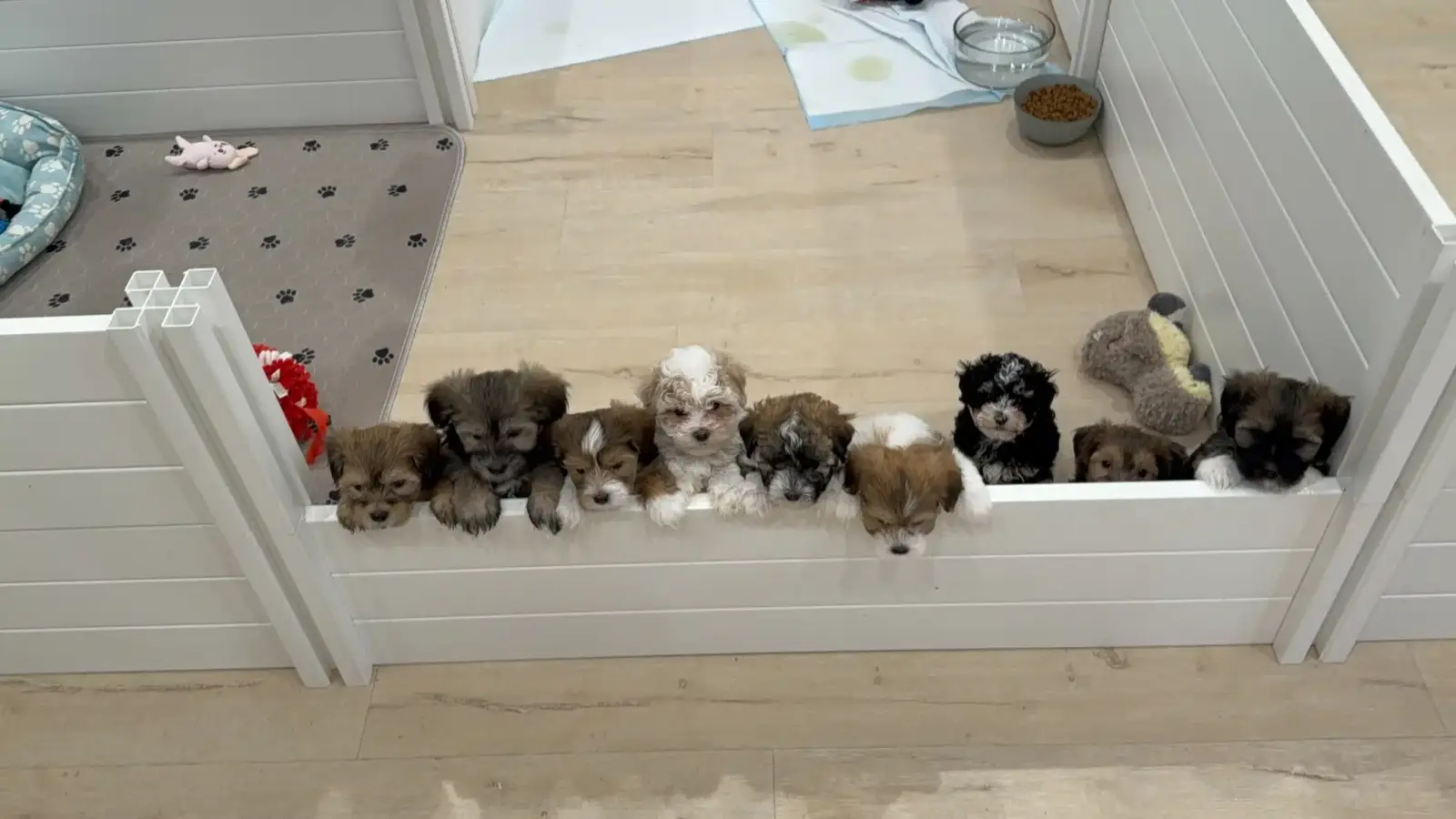
Quick Summary: Set up one small, puppy-proofed room before your new puppy arrives, then run the same potty sequence every time: same door, same yard spot, one short cue, and a treat within two seconds of finishing. Michigan winters demand extra prep, so shovel a 3-by-3-foot potty patch, wipe paws after every trip to remove road salt, and keep trips short in freezing weather. Sage Puppies, which raises Havanese, Havapoo, and Cavapoo puppies in a home setting, says its puppies arrive already used to household routines, which makes that first week easier.
Your puppy’s first trip outside can happen during a Michigan snow flurry. If the door, the path, the towels, and the safe bathroom spot are not ready, a simple potty break turns into a scramble for both of you. That is the real challenge of puppy week one: your home and routine need to work before your puppy arrives, not after.
This guide walks you through a first-week setup plan built for Michigan weather. You will get a room-by-room safety walkthrough, a potty schedule that survives cold snaps, and simple cold-weather routines that keep puppy potty training on track even when the yard is snowy. We also flag the moments when a quick call to your veterinarian beats guessing.
At Sage Puppies, we raise Havanese, Havapoo, and Cavapoo puppies in a home setting, and we send every puppy to a family prepared for those first days. These Michigan puppy tips come straight from that experience. Set things up now, and week one feels calm instead of chaotic.
Step 1: Create One Safe, Easy-to-Supervise Puppy Zone
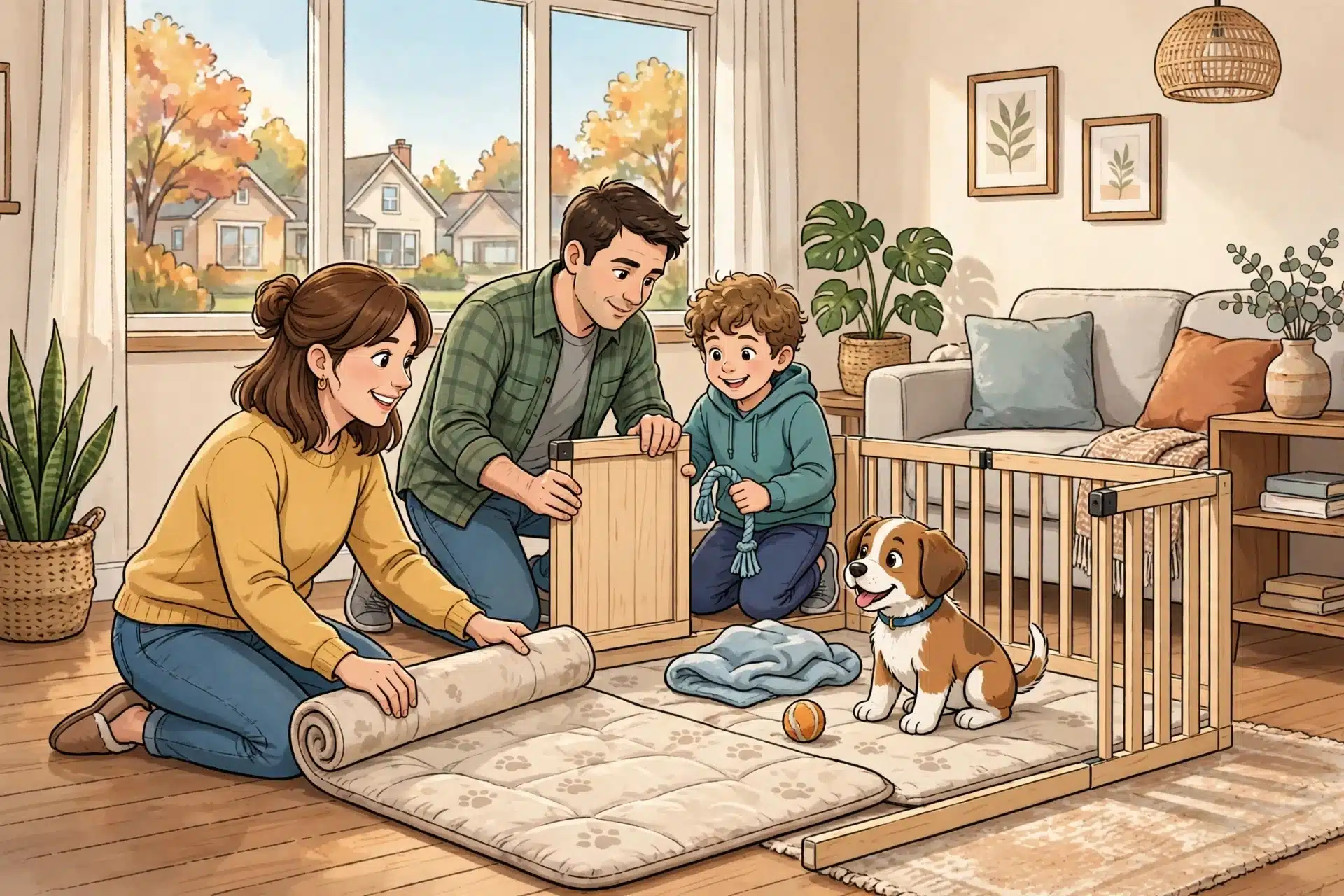
The best puppy week one starts in one room, not the whole house. Pick a small space where your puppy will spend most of the first week, usually a kitchen, family room, or corner of your living room. One room keeps potty trips quick and supervision simple.
Walk the Room at Puppy Height
Get on your hands and knees. It sounds silly, but it works. You will spot hazards you never noticed standing up. Here is your checklist:
- Cords and chargers. Puppies chew. Tuck every cord behind furniture or slide on cord covers.
- Small objects. Coins, kids’ toys, hair ties, and sock lint can block a puppy’s intestines.
- Houseplants. Many common plants, like pothos and philodendron, are toxic. Move them up high or out of the room. Check the ASPCA’s toxic plant list before your puppy arrives.
- Trash cans and outlets. Use a can with a locking lid and push outlet caps into open sockets.
- Rugs and runners. Loose edges trip tiny legs. Roll them up for now, or tape the corners down.
Pull low furniture away from the wall a few inches, too. Puppies squeeze into gaps. If you can slide a hand behind the couch, a curious nose will find it.
Tip: Sit in the room for five quiet minutes. Anything that dangles, sways, or slides is chew bait. Remove it now, not after an accident.
Set Boundaries Before the Puppy Arrives
Decide the rules before the big day, and hold every family member to them. Mixed rules confuse puppies fast.
- Gate it in. Use baby gates or a puppy playpen to define the zone. A crate or pen inside the zone gives your puppy a nap spot that feels safe.
- Set the floor rules. Will the puppy be allowed on furniture? On the stairs? In bedrooms? Agree now, and stay consistent.
- Stock the zone. Food and water bowls, a chew toy or two, and a blanket that smells like home. Keep it simple. Too many toys overwhelm a young puppy.
Puppies from home-raised programs like ours already know a calm family setting, so a single predictable room feels familiar instead of scary. If you want more prep help, our first night and puppy prep guide walks through what to have ready.
One room, clear rules, safe floors. That is your entire setup goal for the first week.
Step 2: Prepare Supplies and a Calm Arrival
Have the First-Week Essentials Within Reach
Buy the basics before pickup day, not after. A puppy who arrives to a ready home settles in twice as fast. Here is the short list:
- Crate sized for an adult Havanese or Cavapoo, with a divider panel
- Soft bedding that washes easily
- Food and water bowls, preferably stainless steel or ceramic
- The same food the puppy already eats so you avoid stomach upset during the switch
- A flat collar, ID tag, and a 4 to 6 foot leash
- Puppy-safe chews and a few toys, including one plush comfort toy
- Enzyme cleaner for potty accidents, so no scent lingers
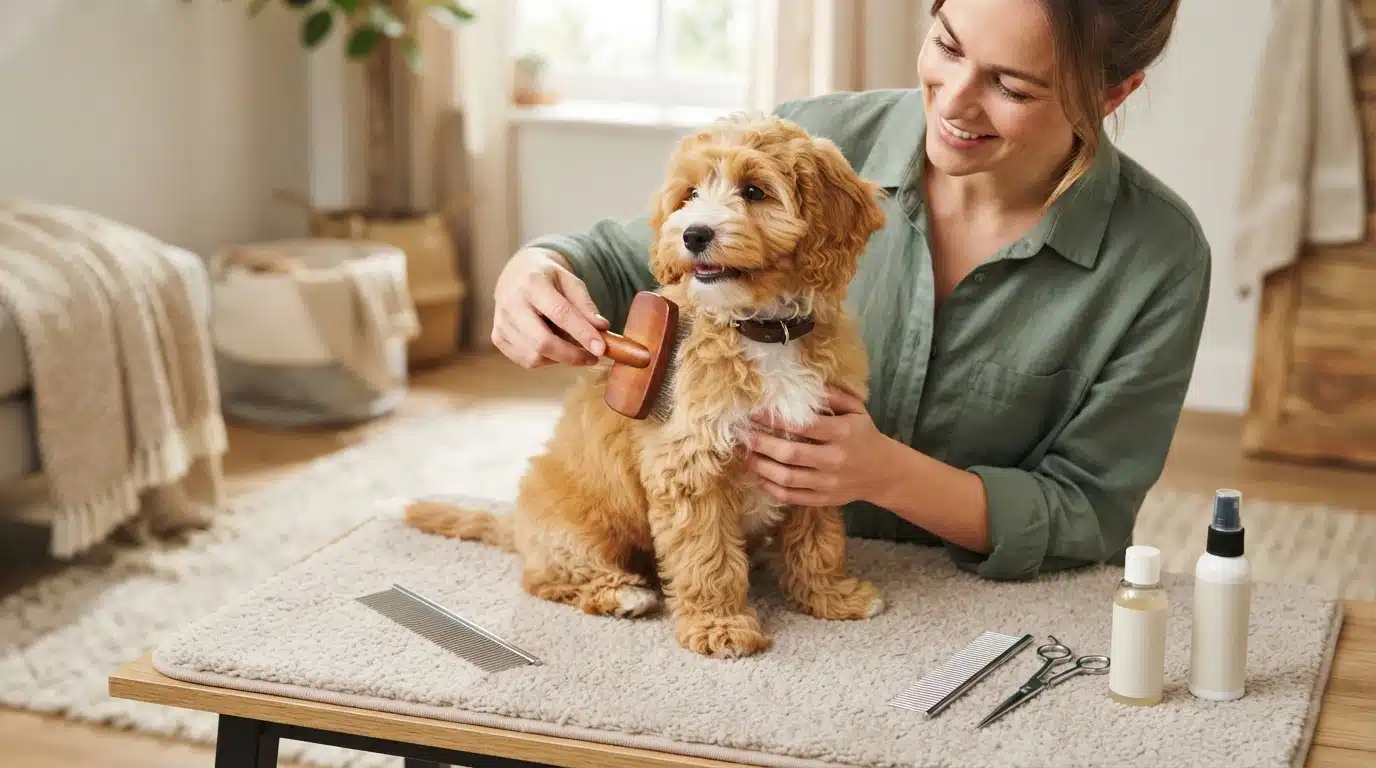
- Grooming basics: a slicker brush, puppy shampoo, and nail clippers
- Baby gates to block stairs or off-limit rooms
Set up one small “puppy station” near the door: leash, waste bags, and treats for potty breaks. In a Michigan January, add a towel by the door to dry wet paws fast and melt snow off little feet.
If you are still choosing your companion, our available puppies page shows who is ready to join a family now.
Keep the First Welcome Quiet
The drive home and the first hour shape how your puppy reads your house. Loud greetings feel exciting to us, but they overwhelm a puppy who just left her mother and littermates.
Plan the arrival like this:
- Keep the car ride calm with soft voices and no loose food.
- Carry the puppy straight outside to the potty spot before anything else.
- Let her explore one room on leash, at her own pace.
- Introduce family members one at a time, sitting low and letting her come to them.
Ask friends and neighbors to wait a few days. Young children should sit on the floor and keep hands gentle. Skip the visits until the puppy naps well and eats on schedule.
Quiet does not mean boring. Short, gentle play sessions build trust faster than a busy house ever will.
Tip: Puppies sleep 18 to 20 hours a day. A calm first week is not missing out. It is exactly what your puppy needs.
Step 3: Make Michigan Potty Trips Predictable and Weather-Aware
Puppies learn bathroom habits from repetition. In Michigan, that repetition has to survive snow, lake-effect rain, and days when nobody wants to step outside. A predictable routine solves both problems at once.
Use the Same Potty Sequence
Run the exact same steps every single time. Puppies fasten onto patterns, and a fixed sequence tells them what comes next before they even understand the words.
Follow this order on every trip:
- Clip on the leash and walk out the same door.
- Head to the same patch of yard.
- Say one short cue, like “go potty.”
- Wait quietly. No play, no chatter.
- Praise and treat the moment they finish.
- Walk straight back inside.
The same door matters more than you might think. Your puppy links that door to the job, so within a week or two they may sit by it as their signal. A small breed like a Havanese or Cavapoo picks this up quickly with steady practice.
Also control the timing. Most puppies need to go:
- Right after waking up
- Within 10 to 15 minutes after eating or drinking
- After play sessions
- Just before bedtime
Between those moments, a young puppy can usually hold it about one hour per month of age. Set a timer if it helps. If you want a deeper schedule template, our first-week puppy tips include a day-by-day rhythm you can copy.
Key tip: Keep treats by the door, not in the kitchen. A reward delivered within two seconds of finishing is the only one your puppy connects to the act.
Plan for Snow, Rain, and Slush
Michigan weather will test your routine, so build for it before puppy arrives.
Snow: Clear a small path and stomp down a 3-by-3-foot potty spot. Deep snow frightens small puppies and hides the scent they need. Re-tamp the patch after every storm.
Rain and wind: Most puppies hesitate in rain. Go out with them, stand under an awning or umbrella, and stay patient. A quick trip in a downpour still beats an accident on the rug.
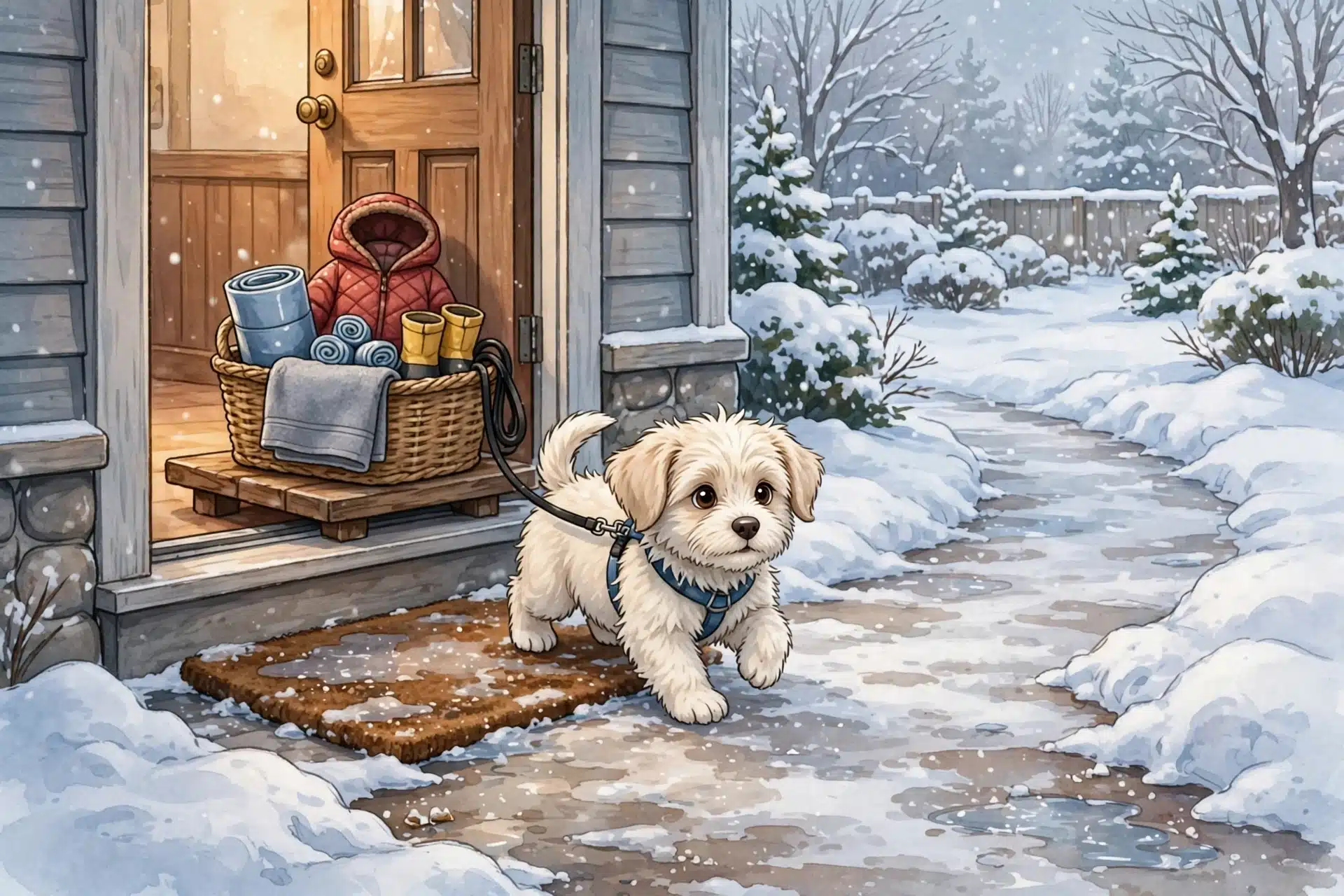
Slush and road salt: Wipe paws with a damp towel at the door, every time. Salt can irritate pads, and licking it off upsets small stomachs.
Keep a puppy weather kit by the exit: a towel, a short leash, poop bags, and boots or a coat for bitter cold snaps.
When a storm makes trips impossible, a patch of puppy pads just inside the garage door covers the gap. Use it as backup, not the main plan, so outdoor training stays on track. Small companions from our program arrive well started on routines, which makes this week far easier for families in any climate.
Puppies settle fastest when the day looks the same from morning to night. Your goal this week is not a strict schedule. It is a rhythm your puppy can predict, built on cues that repeat: a potty break, a meal, a short play session, then a nap in the crate.
A young puppy needs far more sleep than an adult dog. Most eight- to ten-week-old puppies sleep 18 to 20 hours a day, so plan naps after every meal and play burst. Expect a potty trip within 15 to 20 minutes after eating, and again after waking. Feed three to four small meals a day at the same times your breeder fed, then keep that going.
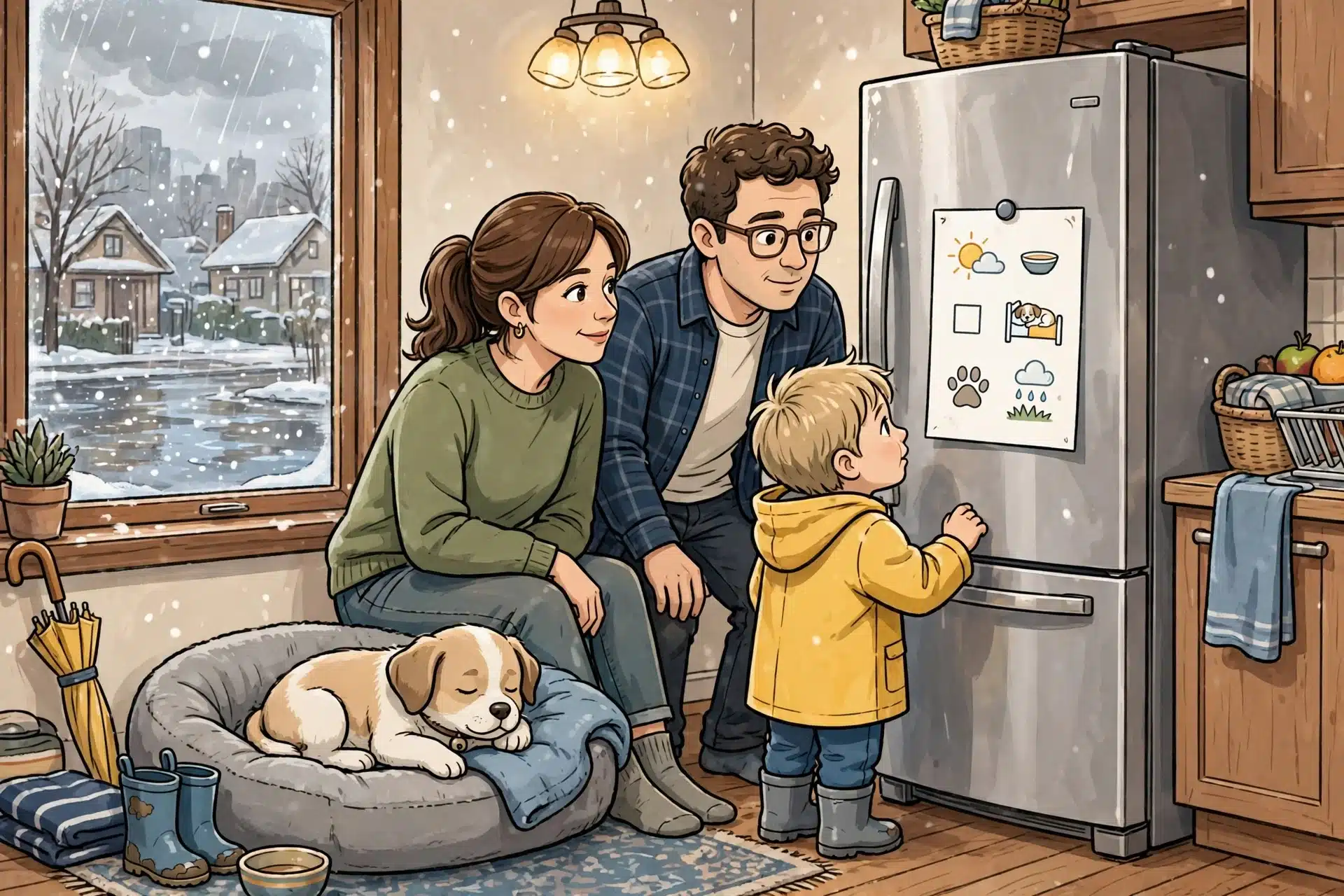
Try a simple loop and repeat it all week:
- Wake up, go straight outside to the potty spot.
- Breakfast, then a calm few minutes indoors.
- Short play or training, five minutes at most.
- Back outside, then crate or pen for a nap.
Write the times on the fridge so everyone follows the same loop. Consistency matters more than perfection.
Keep Introductions Small and Positive
The first week is not the week for visitors, dog park trips, or long outings. Your puppy is learning that your home is safe. Too many new people and places in seven days can overwhelm a young pup and set back potty training.
Invite one or two calm guests at a time. Ask them to sit on the floor, let the puppy approach first, and hand out a treat. Keep each visit short. Skip meetings with unknown dogs until your veterinarian clears vaccines, usually after the puppy series finishes around 16 weeks.
Our Havanese, Havapoo, and Cavapoo puppies leave Sage Puppies already used to household sounds, gentle handling, and family life, so most settle in quickly. Your job this week is simply to keep that confidence growing. Calm, short, positive experiences beat big outings every time.
If your puppy seems stressed, hides, or refuses food for more than a day, call your vet. Trust your gut. You know your puppy better each day.
Step 5: Review the Setup Each Evening and Adjust
Your puppy changes fast. The gate that held on Monday may not hold by Friday, and the potty spot that worked in sun won’t work under two inches of fresh snow. A short evening review keeps your setup one step ahead instead of one accident behind.
Use a Five-Minute Evening Check
After your puppy settles for the night, walk the space with fresh eyes. Look for what the day revealed.
- Scan for chew damage. Check baseboards, rug corners, and cord covers. Anything gnawed gets removed or blocked tomorrow.
- Test the gate latches. Small puppies grow quick, and a determined push can pop a loose panel.
- Count the potty wins. Note where accidents happened. A repeat spot near the door often means you missed the signals.
- Refresh the water and bedding. Wash anything soiled so morning starts clean.
- Reset the potty path. In Michigan winters, shovel and salt the route again so the 2 a.m. trip stays safe.
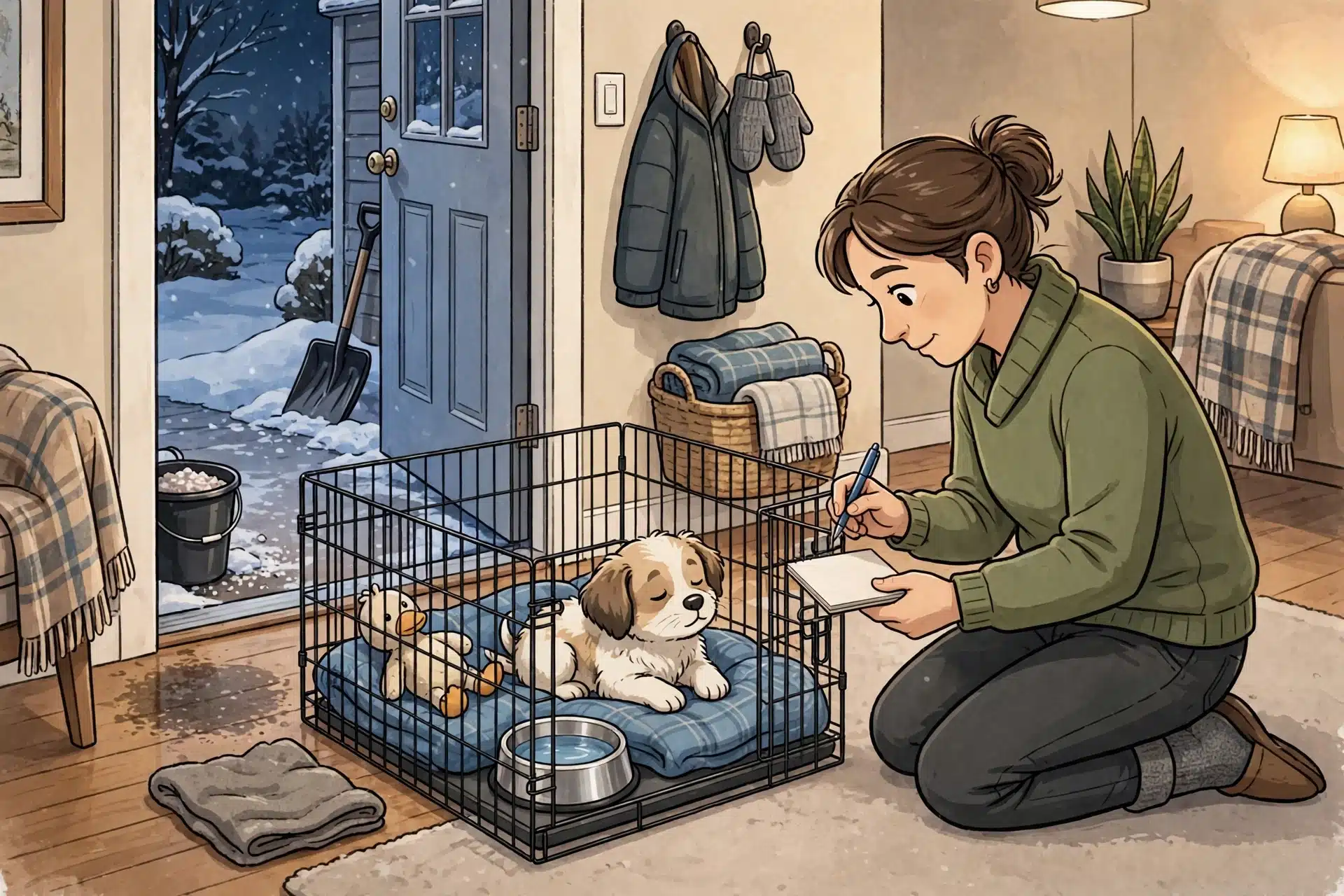
Put Michigan Follow-Up on the Calendar
Weekly reviews matter as much as nightly ones. Michigan weather shifts fast, so plan for it.
- Set a Sunday evening check-in. Walk the whole setup, inside and out, before the new week starts.
- Watch the forecast. If a storm or deep freeze is coming, move potty breaks earlier and clear the path ahead of time.
- Track progress on paper. Fewer accidents and longer calm stretches mean the setup is working.
If something keeps failing, simplify rather than add more gear. And when a behavior worry sticks around, ask your veterinarian.
Puppies from a thoughtful, home-raised program like our puppy process arrive with early routines already started, so your first week often builds on real foundations rather than guesswork.

Your puppy’s first week starts before it arrives. At Sage Puppies, every Havanese, Havapoo, and Cavapoo goes home well-socialized, health-checked, and ready for a calm start. Browse our available puppies, fill out an application, and we’ll walk you through pickup in South Jordan or nationwide delivery. Visit https://sagepuppies.com today.
Frequently Asked Questions
Q1: How do I puppy-proof my Michigan home before bringing a new puppy home?
Get down to puppy level and remove cords, small objects, and houseplants puppies can chew. Block stairs with gates, secure trash cans, and set up one quiet room with a crate, bed, and water before your puppy arrives.
Q2: What supplies do I need for a puppy’s first week at home?
Stock a correctly sized crate, food and water bowls, puppy food, a collar and ID tag, a leash, pee pads, enzyme cleaner, chew toys, and grooming basics. Keep everything in one spot so routines start on day one.
Q3: How do I keep a new puppy warm and safe during a Michigan winter?
Keep potty trips short, dry your puppy’s paws and belly after snow, and use a coat for quick breaks. Watch for shivering, and give your puppy a warm crate away from drafty doors and cold floors.
Q4: How often should a puppy go outside in freezing weather?
Follow the same potty schedule as always: after waking, eating, and playing. Just keep each trip to a few minutes so cold paws don’t discourage house training.
Q5: When can a puppy go outside in a Michigan yard?
Wait until your veterinarian clears it, usually after the full puppy vaccine series. Until then, carry or supervise your puppy in areas other dogs don’t use.
Q6: Should I pick up or have my puppy delivered?
Both work well. Sage Puppies offers local pickup in South Jordan, Utah, plus nationwide delivery, so Michigan families can bring home a well-started Havanese, Havapoo, or Cavapoo with confidence.
A Calm Start to Puppy Week One
Your puppy’s first week comes down to three things: a safe room, a steady potty routine, and patience with Michigan weather. Puppy-proof one small space, take potty breaks after every nap and meal, and keep cold-weather trips short and warm.
Expect a few accidents and a night or two of whining. That is normal, not a setback. Stick to the same schedule, praise quietly, and your puppy will settle faster than you think.
When something feels off, like refusing food, low energy, or nonstop diarrhea, call your veterinarian instead of waiting it out. Small breeds lose body heat and fluids quickly.
If you want more prep guidance, our bringing puppy home guides cover the first night, crate setup, and week-one routines in detail. A calm, prepared home is the best welcome you can give.