
Quick Summary: Treat every Maryland puppy listing as a set of claims you can verify, not facts you accept. Ask what ‘health tested’ actually means, get the parent’s registered name and check it yourself in the OFA database, and confirm the puppy’s own vet records, vaccines, and deworming dates. Walk away if a seller pressures you for a deposit, refuses video of where the puppies live, or offers to meet in a parking lot. Sage Puppies, which raises Havanese, Havapoo, and Cavapoo litters in its South Jordan, Utah home, is held up as an example of the transparency this guide asks buyers to demand.
Scroll through puppies for sale in Maryland and every listing looks great. Bright photos, sweet faces, and the phrase “health tested” in the caption. But those words only mean something if the seller can tell you what was tested, when, and how the puppy is being raised. Many buyers can’t tell the difference between a real answer and a polished dodge.
This guide fixes that. You’ll learn how to read a listing closely, which questions reveal a responsible breeder, and which red flags should stop you before you send a deposit. It comes from breeders who raise Havanese, Havapoo, and Cavapoo puppies at home, with health-tested parents and open answers for every family who asks. Wise buyers ask better questions. Here’s how to do exactly that.
Every puppy listing is really a bundle of claims. Some you can check. Some you cannot. Learning the difference is the fastest way to sort serious sellers from noise when you browse puppies for sale in Maryland.
Read the Listing as a Set of Verifiable Claims
Start by treating each line as a question: “Can I confirm this?” A claim like “Mom is on site, here are her OFA results” can be verified. “Champion bloodlines, health guaranteed!” is a vibe, not a fact. That does not make the seller dishonest, but it tells you where to dig.
Separate Specific Details from Marketing Language
Strong listings are full of specifics: birth dates, weights, the parents’ names and ages, vaccination schedules, and clear photos of where the puppies sleep. Weak listings lean on adjectives: “adorable,” “perfect family pet,” “rare coloring.”
A quick way to judge a listing:
- Count the facts. Names, dates, vet details, and prices are facts. Superlatives are not.
- Check dates against reality. A puppy listed as “8 weeks old” in photos that look newborn is a red flag.
- Compare photos. Are all puppies pictured in the same home, or do images look scraped from other sites? Reverse image search helps.
- Look for what’s missing. No price, no location, no parent photos? Ask why.
Tip: The more a listing tells you before you ask, the more confident the seller usually is. Vague listings invite vague answers later.
Specifics also signal care. A breeder who tracks weights weekly and posts them is watching litter health closely. At Sage Puppies, for example, listings and updates center on each puppy’s real progress, not stock-photo polish.
Check Whether the Seller Is the Breeder
Many “puppies for sale in Maryland” listings are posted by brokers or resellers, not the person who raised the litter. That matters because the person who raised the puppy knows its temperament, health history, and early days.
Ask one direct question: “Did your family raise this litter in your home?” Then watch the answer. A breeder says yes and offers detail. A broker stalls, reads from a script, or redirects to a third-party shipper.
Other checks:
- Does the same name appear across the site, social media, and litters over time?
- Can they show you the mother? Even by video?
- Do they ask you questions back? Good breeders screen buyers too.
Serious, home-raised programs, including ours in South Jordan, Utah, welcome these questions. Transparency is not a burden; it is the baseline.
Want to see what a transparent listing looks like? Browse our available puppies.
Verify the Breeder, Puppy Origins, and Maryland Context
A listing can sound perfect and still hide the one detail that matters most: where the puppy actually came from. Before you fall for a photo, confirm who bred the puppy, where it was born, and what the seller can honestly show you.
Ask Where the Puppy Was Born and Raised
Start with one direct question: “Was this puppy born in your home?” A responsible breeder answers easily and offers detail without being asked twice. You want to hear about the mother, the whelping setup, and how the litter was raised.
Ask follow-ups that are hard to fake:
- How old is the mother, and how many litters has she had?
- Can you visit, or see a video of the puppies in their living space?
- Where do the puppies sleep, play, and meet new people?
Vague answers are a signal. “We work with a partner” or “the puppies come from our facility” deserves more questions, not fewer. Puppies raised in a busy home meet everyday sounds, handling, and children early. That early start shapes temperament for life. At Sage Puppies, every litter is born and raised in our home in South Jordan, Utah, and we share photos and video of the puppies’ environment so families know exactly what they are getting.

Understand What Maryland Licensing Can and Cannot Show
Maryland requires some commercial breeders and shelters to hold a license, and you can check a seller’s status through state records. That is worth doing. A license confirms someone registered with the state and, in limited cases, passed an inspection.
What it does not confirm is how the puppies live day to day. A license is not a quality rating, a health promise, or proof of socialization. Small home-based breeders may fall under thresholds that do not require licensing at all, so a missing license is not automatically a red flag either.
Treat licensing as one data point. Pair it with the things that actually predict a healthy puppy: health testing on both parents, transparent answers, references from past families, and a breeder who asks you questions right back.
Learn how our adoption process works to see what full transparency looks like from a breeder’s side.
Examine Health Testing and Veterinary Records
A listing that says “health tested” tells you almost nothing on its own. The details behind that phrase are what separate a responsible breeder from one using a popular keyword.
Ask What ‘Health Tested’ Means
When a listing claims the parents are health tested, ask three questions. Tested for what? By whom? Can I see the results?
Good answers sound specific. For Havanese, that means eye exams, hearing tests, and knee (patella) checks. For Cavapoo and Havapoo litters, ask about both parent breeds, since each side can pass on different problems. The Orthopedic Foundation for Animals keeps a public database where you can look up a dog’s results yourself by registered name. If a breeder gives you a name and the results check out, that is a strong sign.
Vague answers sound different. “The vet checked them” or “they come from healthy lines” is not testing. A quick vet visit is not the same as screening for inherited conditions.
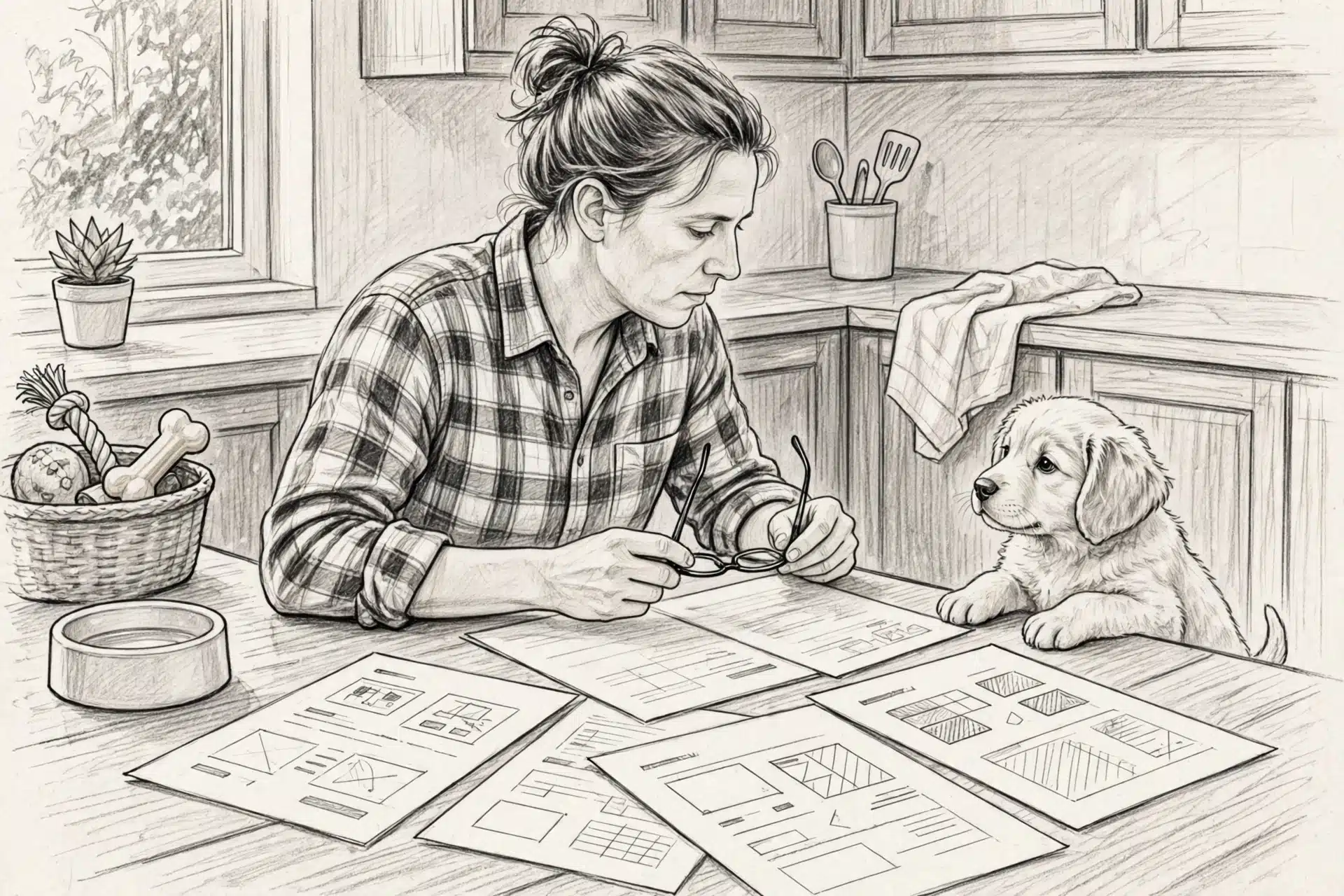
You can also ask for proof directly. At Sage Puppies, health testing on every parent dog is part of the program, and families can review the details before they commit. A confident breeder welcomes these questions. A defensive one is telling you something.
Tip: Ask for the parent’s registered name and look it up in the OFA database yourself. takes two minutes and confirms the listing instead of trusting it.
Review the Individual Puppy’s Veterinary Information
The puppy’s own records matter just as much as the parents’ results. Every puppy should have seen a licensed veterinarian before going home. Ask for:
- The date and location of the vet visit
- Which vaccines were given, and when the next one is due
- Deworming history
- Any concerns the vet noted
Ask to see the actual records, not just hear that they exist. Dates should match the puppy’s age. A vaccine given too early, or a gap with no visit at all, deserves a question.
If the breeder uses a delivery service to your area, ask how the records travel with the puppy. Paperwork should arrive with the dog, not later by email, if at all.
Assess Early Care, Temperament, and Family Fit
A listing can only tell you so much. The best listings show you how the puppy actually lives, not just how it looks. This part of your review is where vague answers start to matter more than cute photos.
Look for Concrete Descriptions of Daily Life
A responsible breeder describes the puppy’s days in specific terms. Look for details like where the puppies sleep, who handles them, and what sounds they hear growing up. A kitchen with family traffic builds different confidence than a quiet kennel run.
Phrases worth trusting include “raised in our home,” “handled by our kids,” and “started on crate training.” Ask what socialization actually looks like: car rides, different floor surfaces, visitors, or other pets. At our program in South Jordan, Utah, early socialization is part of daily life, not a checklist item.

Vague answers are a signal too. “They’re loved very much” sounds nice but tells you nothing. Ask for a video of the puppy at play. Thirty seconds of footage shows more than any paragraph of text.
Match the Individual Puppy to Your Household
Each puppy in a litter is different. A bold puppy may thrive in a busy house with young kids. A gentler pup may fit a quieter home or a first-time owner better. Ask the breeder which puppy they would place with your family, and why.
Temperament questions to ask:
- Is this puppy the first to greet people or the last?
- How does it respond to loud sounds or new objects?
- Has it been alone for short stretches yet?
Also think honestly about your own routine. A Cavapoo or Havanese wants company; long empty days are hard on them. A breeder who asks about your schedule is a good sign, because it means they care where the puppy ends up. Browse available Havanese puppies to see how individual personalities are described.
Review Communication, Contract Terms, and Handoff Plans
Read the Agreement Before Paying
A good listing tells you the price and deposit. A good breeder backs both with a written contract. Before you send any money, ask for the full agreement and read every line.
Look for these items:
- The exact price, deposit amount, and refund rules
- A health guarantee with a time window, such as a vet check within 72 hours
- What happens if the puppy gets sick soon after pickup
- Spay or neuter expectations, if any
- A clause about returning the dog if your family cannot keep it
Serious breeders welcome questions. If a seller pressures you to “pay today or lose the puppy,” walk away. If they cannot put basic terms in writing, that says plenty too.
Compare terms across sellers the same way you compare prices. A slightly higher cost with clear, fair contract terms usually beats a bargain with no protection.
Tip: Ask for the contract as a document you can keep, not just a screenshot. A breeder who shares paperwork openly has usually done this many times before.
Confirm Pickup or Delivery Details Directly
Once the agreement looks fair, nail down the handoff. Talk to the breeder by phone or video, not only text. Ask who will be there, where the puppy has lived, and what comes home with them, like food samples and vet records.
If you live in Maryland and a Utah breeder like Sage Puppies works for you, ask exactly how the puppy arrives: which day, which method, and who handles travel stress. Good programs explain pickup versus delivery clearly before you commit.
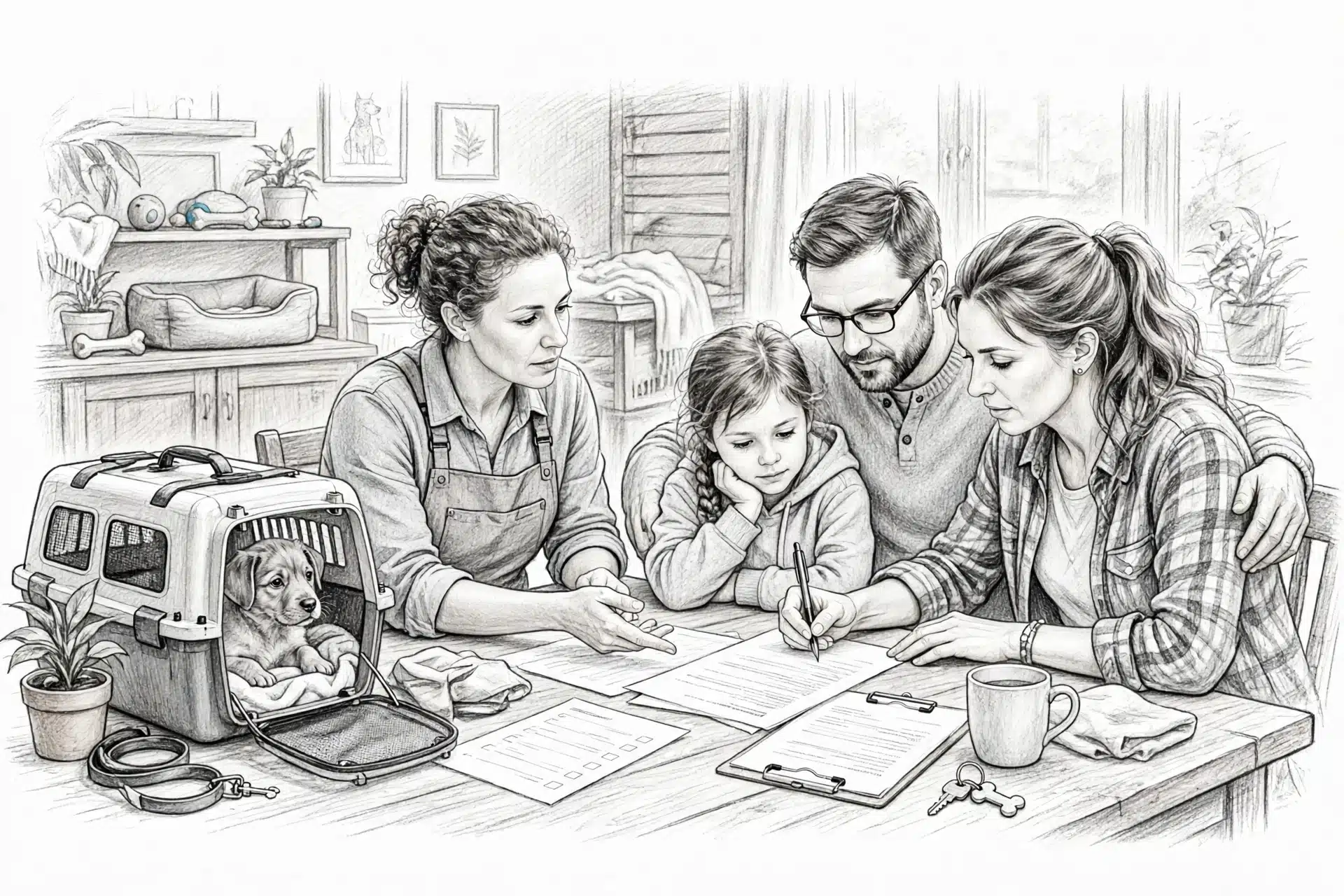
Ask about the first 48 hours too. You should know when to feed, when to visit your vet, and who to call if something seems off. A breeder who plans the handoff this carefully will also support you after.
A face-to-face pickup scheduling call reveals a lot about how a breeder communicates.
Use a Consistent Review Framework Before You Decide
A good listing review works best when you apply the same steps every time. Random browsing leads to gut-feel decisions. A short checklist keeps you fair to honest sellers and quick to spot the ones who hide things.
Compare Answers, Documents, and the Listing
Responsible breeders stay consistent across every channel. Check that the details match in three places:
- The listing itself: age, breed, price, and vaccination status.
- Direct answers: what the seller tells you on the phone or in messages.
- Paperwork: vet records, health clearances, and registration forms.
If the listing says a pup is eight weeks old but the vet record shows six weeks, ask why. Small mismatches can be typos. Repeated ones are a pattern.
Keep notes in a simple sheet. One row per listing, one column per question. After five or six inquiries, clear differences appear. Transparent sellers answer fast and welcome follow-ups. Vague ones stall or change their story.
This is the standard we hold ourselves to at Sage Puppies. Our program walks families through every step openly, and you can see exactly how it works on our step-by-step adoption process page.
Tip: Ask the same three questions twice, a few days apart. Honest breeders give the same answers. Confused or shifting answers deserve a closer look.
Know When to Pause or Decline
Walk away from a listing when you see red flags. Common ones include:
- Multiple litters and breeds always available, year-round.
- Pressure to pay a deposit before you ask questions.
- No vet records, or records with the puppy’s name missing.
- Refusal to let you see where puppies live, in person or by video.
- Meeting offers in parking lots instead of the home.
One missed detail is a question. Several together are a warning. A pause costs you nothing. An unhealthy puppy from a careless source costs years of worry and vet bills.
Trust the process, not the pressure.

Ready to skip the guesswork? Sage Puppies pairs health-tested parents with a transparent, family-raised process, plus pickup in South Jordan or nationwide delivery to Maryland. Browse our available Havanese, Havapoo, and Cavapoo puppies today and start your application with confidence.
Frequently Asked Questions
Q1: How do I evaluate Maryland puppy listings?
Look for health testing records, parent photos, live video of the puppy, and a breeder who asks you questions back. Vague answers, instant delivery offers, and no vet history are red flags.
Q2: What questions should I ask a breeder?
Ask about parent health testing, socialization, vaccination schedule, and how puppies spend their first weeks. Responsible breeders, like Sage Puppies, welcome detailed questions and share photos freely.
Q3: Are online puppy listings trustworthy?
Some are. Trustworthy listings show consistent details, real breeder contact information, and let you meet the puppy by video before any payment.
Q4: Should I see the puppy in person?
Yes, if possible. Otherwise, request a live video call showing the puppy moving, eating, and interacting with people.
Q5: What paperwork should a puppy come with?
Expect vaccination records, deworming dates, a vet exam summary, and health details about both parents.
Make an Informed Next Move
A good listing rewards your patience. Check the seller’s transparency, ask for health testing on both parents, and weigh how the puppies are raised, not just the photos. Red flags like vague answers or rushed payment deserve a walk away.
No single paper or badge proves a breeder is responsible. Patterns do. Consistent details, honest limits, and a breeder who asks about your home are the signs worth trusting.
If you want to see what that looks like in practice, browse our available puppies and compare any listing you find against it.



