
Quick Summary: Idaho has no statewide puppy breeder license, so a clean or empty search result proves nothing either way. Buyers should instead check local city or county kennel permits and, for breeders who ship puppies sight unseen with more than four breeding females, a USDA APHIS license. The real test is direct evidence: parent health testing, vaccination records, a look at where puppies are raised, and how willingly the breeder answers questions. Sage Puppies, which uses in-person pickup and hand-delivery, notes that this face-to-face model keeps it on the transparent side of the USDA retail pet store rule.
Search for an Idaho breeder license lookup and you may land on state pages for contractors, nurses, or real estate agents. Puppy breeding is not on those lists, which leaves many buyers wondering whether their breeder even needs a license. The honest answer is often no, because Idaho breeder laws are thinner than most people expect, and most oversight happens at the city, county, and federal levels.
That gap matters. It means a clean search result proves little, and a missing record proves even less. This guide walks you through what an Idaho dog breeder is actually required to have, where to check each credential, and how to read the warning signs when no lookup exists. We have spent years matching families with home-raised Havanese, Havapoo, and Cavapoo puppies, so we will also share what transparent breeders offer before you ever ask.
What Idaho’s Breeder-Licensing Rules Do and Do Not Establish
Idaho takes a lighter touch with breeders than many states. There is no statewide puppy breeder license to look up, so verifying a breeder means checking the layers that do exist: federal rules, local ordinances, and the breeder’s own records. Here is what each layer actually tells you.
The State Statute Buyers May Encounter
Idaho’s animal welfare laws set baseline care standards for dogs, but they do not create a public breeder licensing registry. Under Idaho breeder laws, commercial breeding operations fall under the state’s animal cruelty and care statutes rather than a dedicated kennel-licensing program. That means the state can act when animals are neglected, yet a buyer cannot pull up a state license number the way you might check a contractor’s certification. The statute protects dogs; it does not credential breeders in a way you can verify online. For a fuller walkthrough of the buyer’s checklist, see our Idaho puppy buying guide.
Statewide Rules Are Not the Whole Picture
Two other layers may still apply. First, if a breeder sells dogs with three or more litters per year or has a certain number of adult dogs, federal USDA rules under the Animal Welfare Act can come into play, and licensed operations appear in the USDA’s public inspection records. Second, cities and counties in Idaho can require a kennel permit or business license through local zoning or animal control offices. So a breeder operating legally may hold a city permit, a federal certificate, both, or neither, depending on their scale and location.
Why “No State License Found” Is Not a Verdict
Because Idaho offers no state registry, an empty search proves nothing either way. A clean result does not flag a bad breeder, and finding paperwork does not confirm good care. What matters is direct evidence: health testing records for the parents, an invitation to see where puppies live, veterinary references, and how the breeder answers your questions. Ask for proof, not permits. Responsible programs, including small home-raised ones, expect those questions and answer them willingly.
Check Whether Federal USDA Licensing May Apply
Federal Licensing Is a Separate Question
Beyond idaho breeder laws, there is one federal layer worth checking: the Animal Welfare Act. Breeders who count as “dealers” under this law need a license from the USDA’s Animal and Plant Health Inspection Service (APHIS). That license is separate from anything the state or your city requires, so a breeder with no USDA number is not automatically breaking the rules. Many small, honest programs are exempt under federal law, and knowing why matters more than scanning for a license number. The exemptions hinge on two things: how many breeding females the breeder keeps and how puppies are sold.
Sales Model and Physical Observation Can Matter
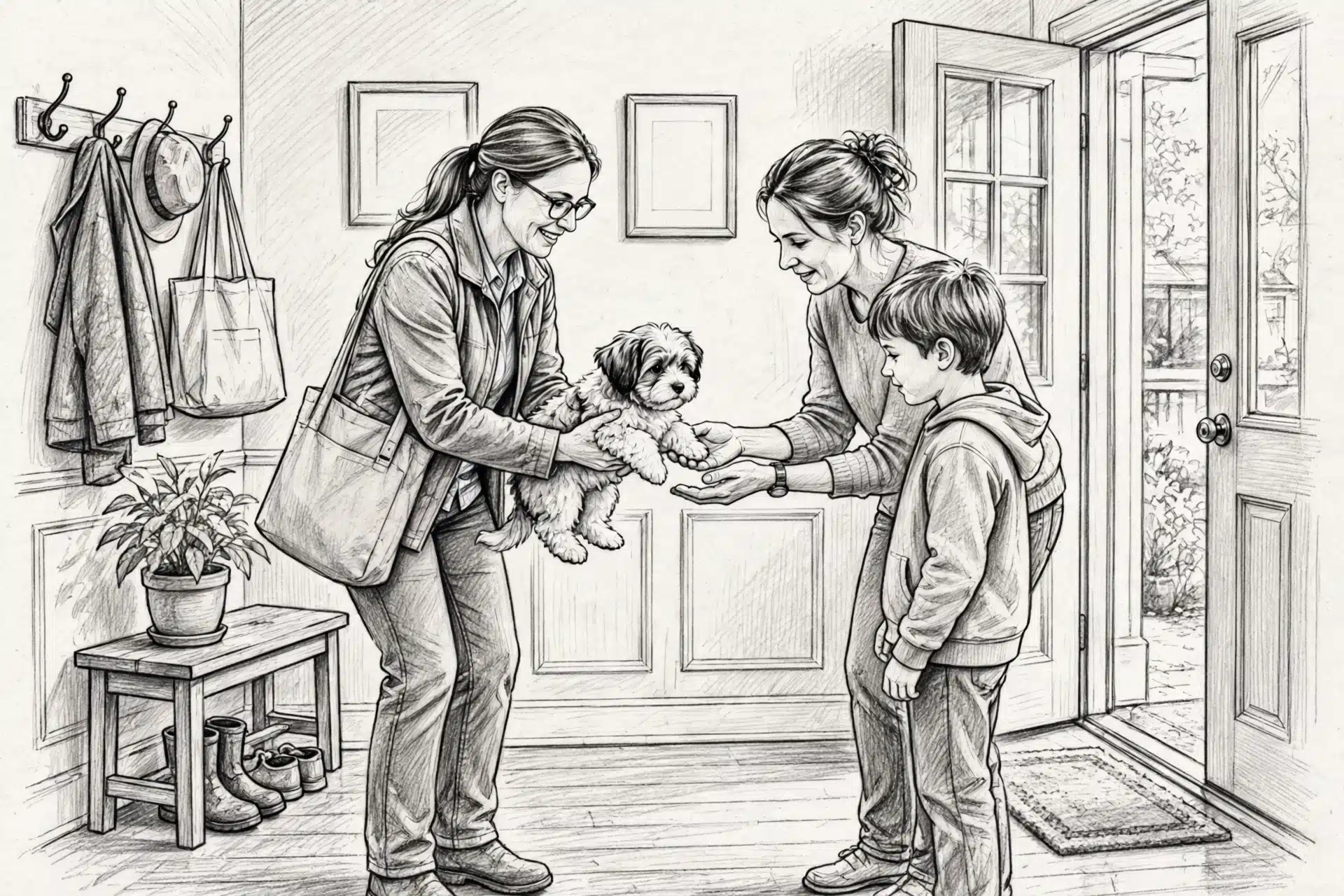
The USDA’s retail pet store rule draws a clear line between two kinds of sellers. A breeder who sells in face-to-face sales, where you can physically see the puppy before you take it home, is exempt, no matter how many breeding females they keep. Photos, videos, and video calls do not count. Breeders who sell sight unseen, shipping puppies to buyers they never meet, need a USDA license once they keep more than four breeding females. Anyone with four or fewer breeding females is exempt regardless of sales method, as 9 CFR § 2.1 spells out.
This matters when you buy from out of state. If a breeder plans to fly or drive your puppy to you without a face-to-face meeting, ask whether they hold a USDA license and where you can verify it. A reputable seller will answer directly. Programs like Sage Puppies lean on in-person pickup and hand-delivery, which keeps both the breeder and the family on the transparent side of this rule.
Use APHIS for a Case-Specific Answer
Edge cases exist, and APHIS decides them case by case. If a breeder’s setup confuses you, contact APHIS directly for a ruling before you buy.
A claim is only as good as the office behind it. A breeder who says they are “licensed” may mean a city kennel permit, a state registration, or a USDA license. Each one lives in a different office, so your first task is to figure out which paper you are actually checking.
Collect the Details Before Searching
Start with a short list you gather from the breeder directly. Ask for the exact name on the license, the license or permit number, and the city and county where the dogs live. If they mention a USDA license, ask for the certificate number, which usually looks like two digits, a letter, a hyphen, and four digits (for example, 43-A-1234).
Keep copies of what they send you, including screenshots. Honest breeders answer these questions easily. Vague answers or a number they cannot produce are a signal to slow down. You can pair this check with other steps to vet a puppy breeder so credentials and care standards get reviewed together.
Contact Local Officials for Local Requirements
Idaho does not run a single statewide breeder licensing program, so city and county offices matter most. Call or email the clerk’s office in the city where the kennel sits, or the county planning and zoning office if the address is rural. Ask one clear question: does this person or address hold the kennel or animal permit your area requires?
Bring the address with you. Officials cannot discuss much without it. Many offices will confirm whether a permit exists and whether it is current, even if they cannot share complaint history. A written confirmation, even a short email, is worth keeping.
Call during weekday business hours and ask for the department that handles animal control or business licensing. Staff will point you to the right desk if you guess wrong.
Confirm Federal Claims with APHIS
Federal oversight only applies in specific cases. Under the federal Animal Welfare Act, breeders who sell dogs sight unseen, such as shipped puppies, generally need a license from USDA APHIS, while small hobby sellers who meet buyers face to face often fall under an exemption, as this overview of USDA licensing rules explains.
If a breeder claims a USDA license, verify it yourself. Search the number in the APHIS Animal Care public search tool and check that the status is active and the name matches. You can also request inspection reports. Keep in mind that a clean federal license confirms legal status, not how a puppy was raised in a family home.

Assess the Evidence Beyond a License
A license tells you a breeder is allowed to operate. It does not tell you how the puppies are raised, whether the parents were health tested, or how your puppy will be socialized before it comes home. That is why serious buyers look for proof of care, not just paperwork. The three checks below take less than an hour and reveal far more than any registration number.
Ask for Verifiable Health and Puppy Records
Responsible breeders share records before you ask, and they expect questions. Request three things: vaccination and deworming dates, a recent veterinary exam note, and health test results for both parents. For breeds like Havanese, Havapoos, and Cavapoos, that usually means eye, heart, and patella clearances.
Then verify. A vaccination card is easy to check because it lists the clinic, and a quick call confirms the visit happened. Vague answers are a signal. “The vet handled all of that” is not the same as naming the clinic and the date.
| Record | What to Expect | Red Flag |
|---|---|---|
| Vaccinations | Dated card with clinic name | No dates, no clinic |
| Parent testing | OFA or CERF results by name | “Tests were done” with no proof |
| Vet exam | Recent written summary | Refuses to share |
At Sage Puppies, health-tested parents and full records come standard with every litter, which is the level of openness to expect from anyone you consider.
Look for Transparency About Raising and Placement
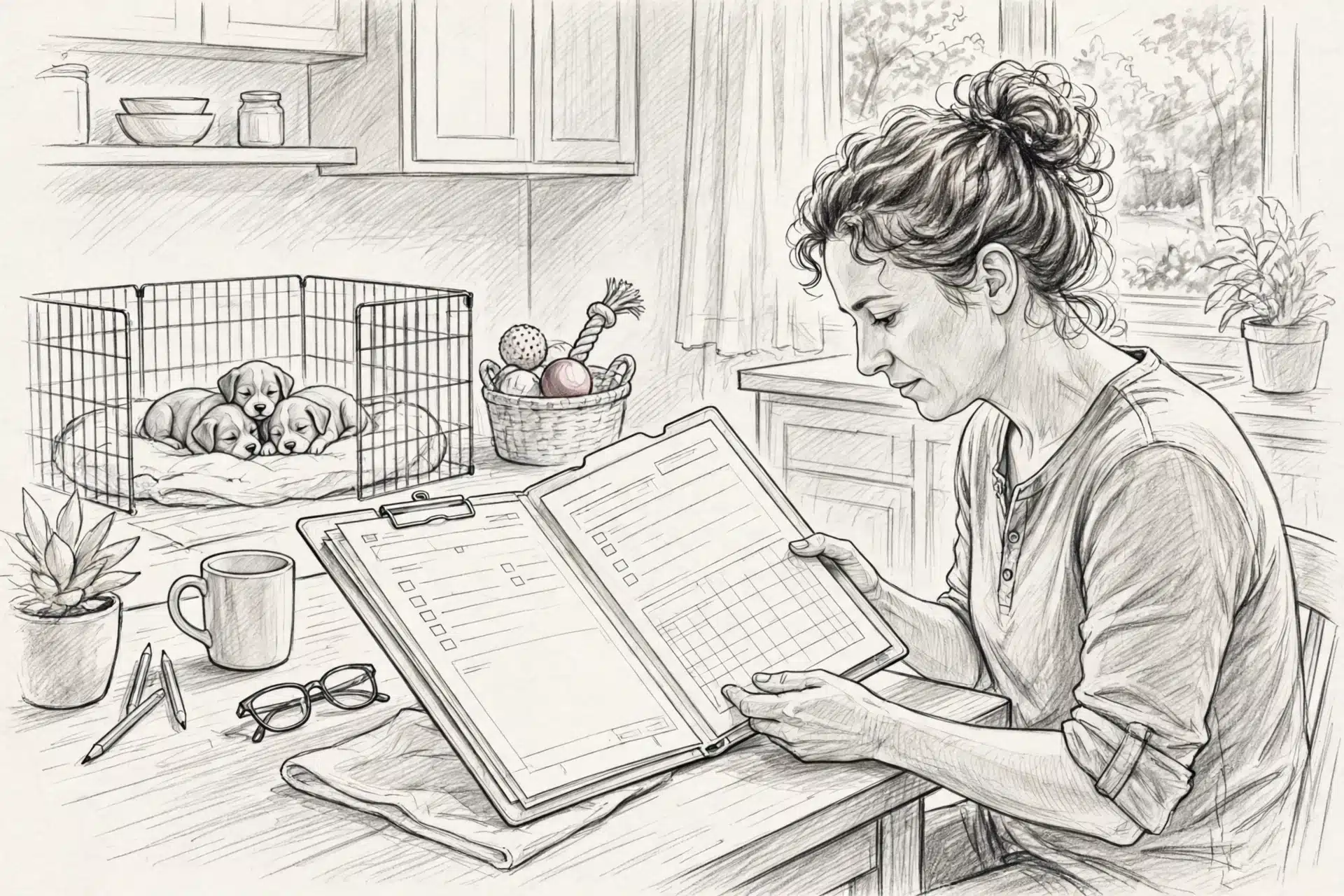
How a puppy spends its first eight weeks shapes its temperament for life. Ask where the puppies sleep, who handles them daily, and what sounds, surfaces, and people they meet. Puppies raised inside a busy family home usually adapt faster than puppies kept in outdoor runs.
Placement matters just as much. Good breeders ask you questions too, about your schedule, children, and experience. They explain their pickup or delivery process clearly, and they stay reachable after you take the puppy home. A breeder who never asks anything may be more interested in the sale than the match.
Tip: Ask for a video call to see where the puppies live. Ethical breeders welcome it.
Interpret Credentials in Context
Put everything together before you decide. A licensed breeder with evasive answers deserves a pass. An unlicensed hobby breeder in a no-license city can still be excellent if the records, health testing, and communication check out. Credentials open the door, but evidence of daily care earns your trust.
Know When to Pause and What to Do Next
Most Idaho breeders are honest, and a missing public database just means you check paperwork directly. But some answers should slow you down. Knowing the difference keeps you from talking yourself into a puppy you will worry about later.
Signals That Deserve Follow-Up
Pause and ask more questions when a breeder:
- Refuses to name the county or city where the puppies are raised
- Will not share a license number, or changes the subject when you ask
- Claims licensing “isn’t required” for any situation, even large-scale operations
- Pushes same-week delivery before you have seen health records or the dam
- Cannot explain how puppies are socialized in the first eight weeks
- Avoids vet questions or will not name their clinic
- Pressures you with “two other families are waiting” style urgency
One vague answer may be shyness. A pattern of them is a pattern, full stop.
Use a Simple Decision Checklist
Work through these in order and let the answers guide you:
| Question | Green Flag | Red Flag |
|---|---|---|
| Can they describe the home where puppies live? | Clear, specific details | Dodges or sends only staged photos |
| Do they share health testing on the parents? | Records on request, no hesitation | “Vet checked” with no proof |
| Will they let you call their vet? | Names the clinic willingly | Declines or stalls |
| Is the pace set by you or them? | Patient, answers repeat questions | Urgency and pressure tactics |
| Do you feel calm after each conversation? | Yes, mostly | Anxious or rushed |
Four or five green flags? Move forward. Two or more red flags? Step back and keep looking.

Choose a Next Step That Fits Your Family
If a breeder clears your checklist, keep the momentum: confirm paperwork in writing, then plan pickup or delivery. If credentials stay murky, walk away without guilt. Responsible programs, including family-raised ones like Sage Puppies, welcome every question, because a well-matched puppy starts with a confident buyer. Trust that instinct. It rarely steers you wrong.

Now that you know what to check on paper, see what transparent breeding looks like in practice. At Sage Puppies, health-tested parents, home-raised Havanese, Havapoo, and Cavapoo puppies, and an open adoption process are the standard. Visit our Available Puppies page and ask us anything. Honest answers come first.
Frequently Asked Questions
Q1: Does Idaho require puppy breeders to be licensed?
Idaho has no statewide breeder licensing program. Some cities and counties set their own kennel or animal-related permit rules, so local requirements vary. Larger operations that sell wholesale may need federal oversight instead.
Q2: How do I verify an Idaho puppy breeder’s license?
Ask the breeder directly which licenses or permits they hold, then confirm local permits with their city or county clerk. For federal status, request their USDA license number and check it on USDA records.
Q3: Are USDA licensed puppy breeders listed in a public database?
Yes. The USDA maintains a searchable list of licensed breeders and dealers. Keep in mind that small, home-based breeders selling puppies directly to families are usually exempt from USDA requirements.
Q4: What documents should a responsible breeder provide?
Expect health testing records for both parents, vaccination and deworming dates, a written health history, and a clear contract. At Sage Puppies, families also get guidance on early socialization and ongoing care.
Q5: Does a license guarantee a healthy puppy?
No. Licensing confirms legal status, not puppy quality. Judge breeders on health testing, transparency, clean living conditions, and how they raise and socialize their puppies.
Q6: Can an out-of-state breeder ship a puppy to Idaho?
Yes. Many families in Idaho welcome puppies from trusted programs elsewhere. Confirm travel plans, health paperwork, and pickup or delivery details before you reserve.
Conclusion
Verifying an Idaho puppy breeder comes down to three layers: state registration, local kennel permits, and federal USDA status when the breeder ships or sells wholesale. Idaho publishes no single breeder lookup, so ask for paperwork directly and confirm what you can.
Credentials matter, but so does everything around them. Health-tested parents, clean living spaces, and a breeder who answers questions freely tell you more than a certificate alone.
When a breeder welcomes your checks and shares records without hesitation, that openness is the credential you are really looking for. Families who want a home-raised option with health testing and clear pickup or delivery plans can see how our Havanese and Havapoo program works in practice.




