Quick Summary: Safe puppy transport to rural Idaho hinges on a short checklist: confirm the exact delivery point, get an Idaho-compliant health certificate (CVI) with your full address, and vet the transporter’s credentials and emergency plan. Compare quotes by service level, not just price, and prepare the puppy with a familiar crate and written feeding instructions. At the handoff, inspect the puppy, collect all paperwork, and settle it into a calm home. Sage Puppies, a Utah breeder, walks families through each step, emphasizing that ethical breeders handle most of this planning for you.
A puppy headed to a ranch outside Salmon or a cabin near McCall may spend hours past the nearest major airport or vet clinic. That last stretch matters as much as the interstate. Good puppy transport Idaho planning means covering the final miles, not just the highway.
Most transport problems happen close to home: long gaps between potty stops, no health paperwork for the handoff, or a rural pet courier who seems fine on paper but can’t show you proof. This guide fixes that. You’ll get a step-by-step checklist covering entry documents, transporter vetting, route planning for country roads, realistic costs, and a calm breeder-to-family handoff.
We raise Havanese, Havapoo, and Cavapoo puppies at Sage Puppies in South Jordan, Utah, and we coordinate safe puppy travel to families across the region. Here’s exactly how to plan it.
Step 1: Confirm the Idaho Route and Delivery Point
Every smooth puppy transport Idaho run starts with one thing: a confirmed route. Before your puppy leaves Utah, nail down exactly where the driver will stop and how they will reach you. Rural roads, long driveways, and spotty cell service can turn a simple handoff into a frustrating afternoon if nobody planned ahead.
Give the Transporter a Physical Address and Access Notes
A mailbox number or “the house past the grain silo” will not cut it. Give the transporter:
- A full street address with ZIP code
- GPS coordinates if your home sits off an unnamed county road
- Road notes: gravel stretches, seasonal closures, gates, or low-clearance bridges
- A working phone number and one backup contact
Drivers on long hauls plan fuel and puppy care stops around your location, so accurate details keep the trip on schedule. Ask how the driver will confirm arrival, since many rural Idaho properties have weak cell coverage. A text one hour out gives you time to meet them at the road. This is standard practice for nationwide delivery programs like ours, and good transporters expect it.
Choose Door-to-Door Delivery or a Planned Meeting Point
With door-to-door, your puppy comes straight to your home. It costs more but removes travel risk on your end. A meeting point, such as a town exit or public lot near the highway, saves money and works well when your driveway is rough. Choose somewhere easy to find, safe to park, and close enough that a tired puppy is not riding another hour. Match the choice to your setup, and your puppy transport Idaho experience stays calm from start to finish.
Also Read: 10 Red Flags to Avoid When Visiting a Local Puppy Breeder
Step 2: Assemble the Puppy’s Idaho Travel Documents
Idaho keeps its paperwork simple, but it does not waive it. Every dog entering the state needs a Certificate of Veterinary Inspection, and the certificate must be in the hands of whoever is driving. Get these documents right before travel day and the handoff goes smoothly.
Request an Idaho-Compliant Certificate of Veterinary Inspection
Ask the breeder’s veterinarian to issue a Certificate of Veterinary Inspection (CVI), sometimes called a health certificate. Idaho requires one for all dogs coming into the state, and it must list the full physical address of the destination, so have your rural address, including any route or box details, ready before the vet visit.
Two Idaho quirks matter. First, the state does not accept the older APHIS 7001 form as a valid CVI, so confirm the vet uses an approved electronic system. Second, animals entering from states where New World Screwworm has been found need a CVI issued within 5 days of movement. You can review the full rules on the Idaho State Department of Agriculture pet import page. Timing matters too: most certificates are valid for 30 days, so schedule the exam close to your pickup date. A breeder who ships puppies regularly, like Sage Puppies, will already have this routine down.
Callout: Keep a copy of the CVI with the driver. Idaho rules state the certificate must be in the possession of the person transporting the animal at the time of entry.
Check Rabies Timing, Vaccination Records, and Puppy Age
Rabies vaccination is required for dogs 12 weeks and older entering Idaho. That gives you a planning window: a Havanese or Cavapoo puppy younger than 12 weeks can travel without the shot, while an older puppy must have a current one-year or three-year vaccine listed on the CVI.
Match the records to the puppy’s birth date. Ask for the vaccine date, manufacturer, and expiration in writing.
| Puppy Age | Rabies Requirement |
|---|---|
| Under 12 weeks | Not required for entry |
| 12 weeks and older | Current vaccination, listed on the CVI |
If your puppy travels by air, the CDC’s dog importation FAQs cover airline-related rules, though interstate puppies usually fly under state rules only.
Create a Printed and Digital Document Packet

Make one folder, keep it simple:
- Printed CVI with your full destination address
- Vaccination record with dates and expiration
- Microchip number, if the puppy has one
- Breeder contact and sales receipt
- Scanned copies saved offline on your phone
Hand the packet to the transporter before departure and keep a duplicate for your files. Cell service fails on rural roads, so paper wins.
Also Read: Havanese, Havapoo & Cavapoo Puppy Care Blog
Step 3: Screen the Transporter Before You Book
A good transporter matters as much as a good breeder. Your puppy’s safety during the drive depends on who holds the leash, so screen them before you pay anything.
Ask Who Holds Custody of the Puppy
Start with one simple question: does one person stay with your puppy the whole trip? Ground transport comes in two styles. A dedicated courier drives only your puppy, door to door. A route-based driver collects several puppies and drops them along the way.
Both can work, but custody transfers are risk points. Each handoff is a chance for confusion, missed feedings, or a puppy left too long in a crate. Ask for the full chain of custody in writing, from breeder to your driveway.
Ask the breeder who they trust. Ethical programs like ours only use transporters we would hand our own puppies to.
Verify Vehicle, Crate, Temperature, and Break Practices
Next, get specific about how the puppy rides. The Animal Welfare Act transportation standards set clear rules for dogs shipped by hired carriers, and you can borrow them as your checklist.
Ask these questions:
- Is the crate large enough for the puppy to stand, turn, and lie down?
- Is the vehicle climate controlled, and what temperature range do they maintain?
- How often does the puppy get out for water, food, and potty breaks?
- How many puppies ride at once, and are they ever crated together?
- Can the driver send photo or video updates during the trip?
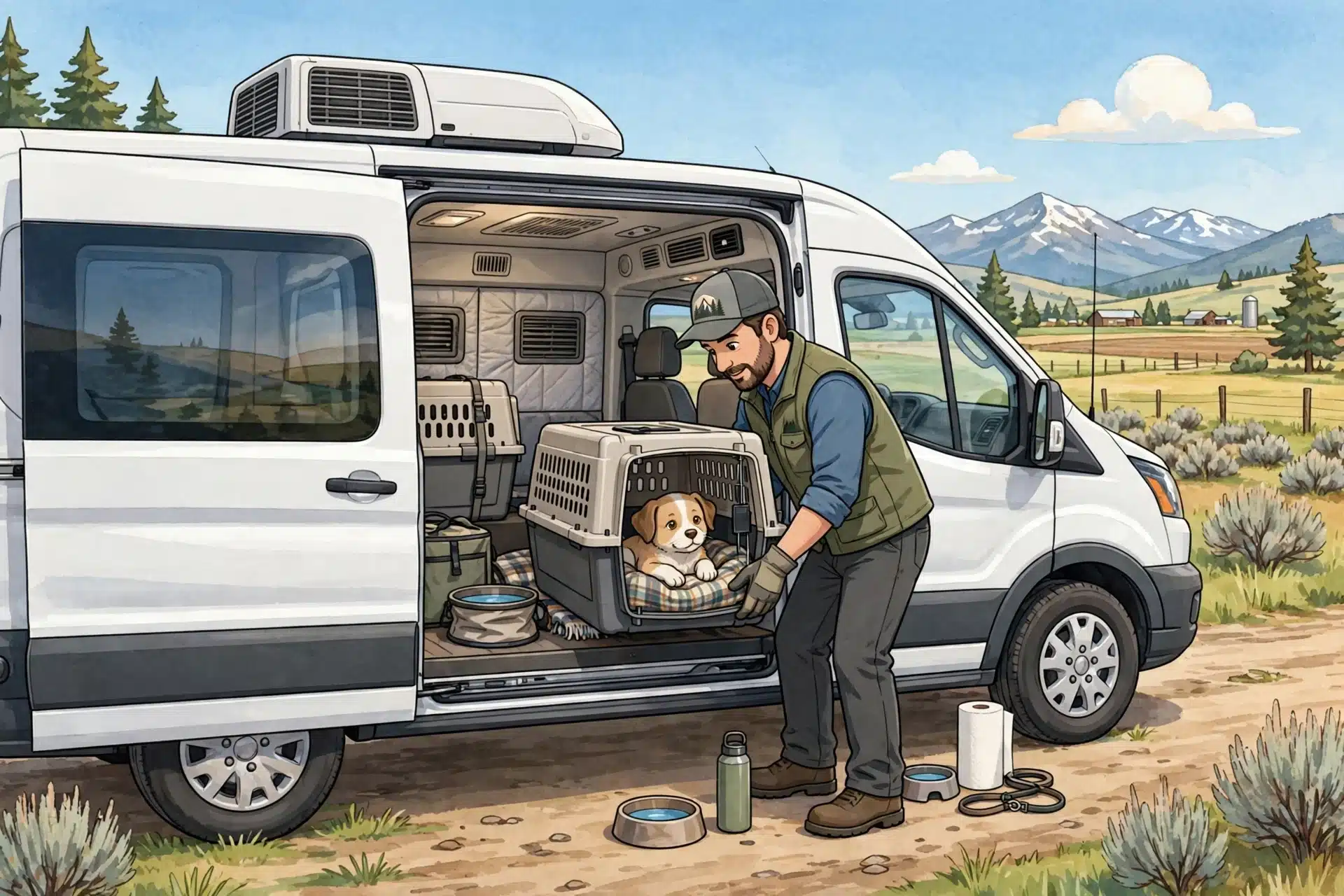
A driver who answers easily and offers references is a good sign. Vague answers are not.
Request Credentials, Insurance, and an Emergency Plan
Finally, confirm the paperwork. Businesses that ship animals for hire must be registered with USDA under the Animal Welfare Act, so ask for their registration details and check them against the APHIS registration records. Also ask for proof of insurance and a written emergency plan.
Their plan should name a backup route, a vet contact along the way, and who you call if the trip is delayed. A prepared driver will send these without pushback. If someone goes quiet when you ask, book someone else.
Also Read: How to Choose a Puppy Veterinarian in Idaho
Step 4: Compare Rural Idaho Transport Quotes by Service, Not Just Price
The cheapest quote rarely wins. Two transporters can charge similar amounts and deliver very different experiences. Read each quote line by line before you choose.
Separate Included Services from Add-On Charges
Ask every transporter what the base price covers. Some quotes include door-to-door delivery, rest stops, food, and photo updates. Others add fees for rural addresses, overnight care, or extra stops on long gravel roads. A 2025 cost guide puts domestic pet transport between $200 and $1,500, but service level explains most of that spread.
Compare quotes with this quick checklist:
- Door-to-door delivery to your exact address
- Potty and water break schedule
- Photo or text updates during travel
- Insurance and licensing
- Crate use included or rented
| Quote Item | Usually Included | Common Add-On |
|---|---|---|
| Rural drop-off | No | $50-$150 |
| Overnight care | No | $75-$150 per night |
| Photo updates | Often | Usually free |
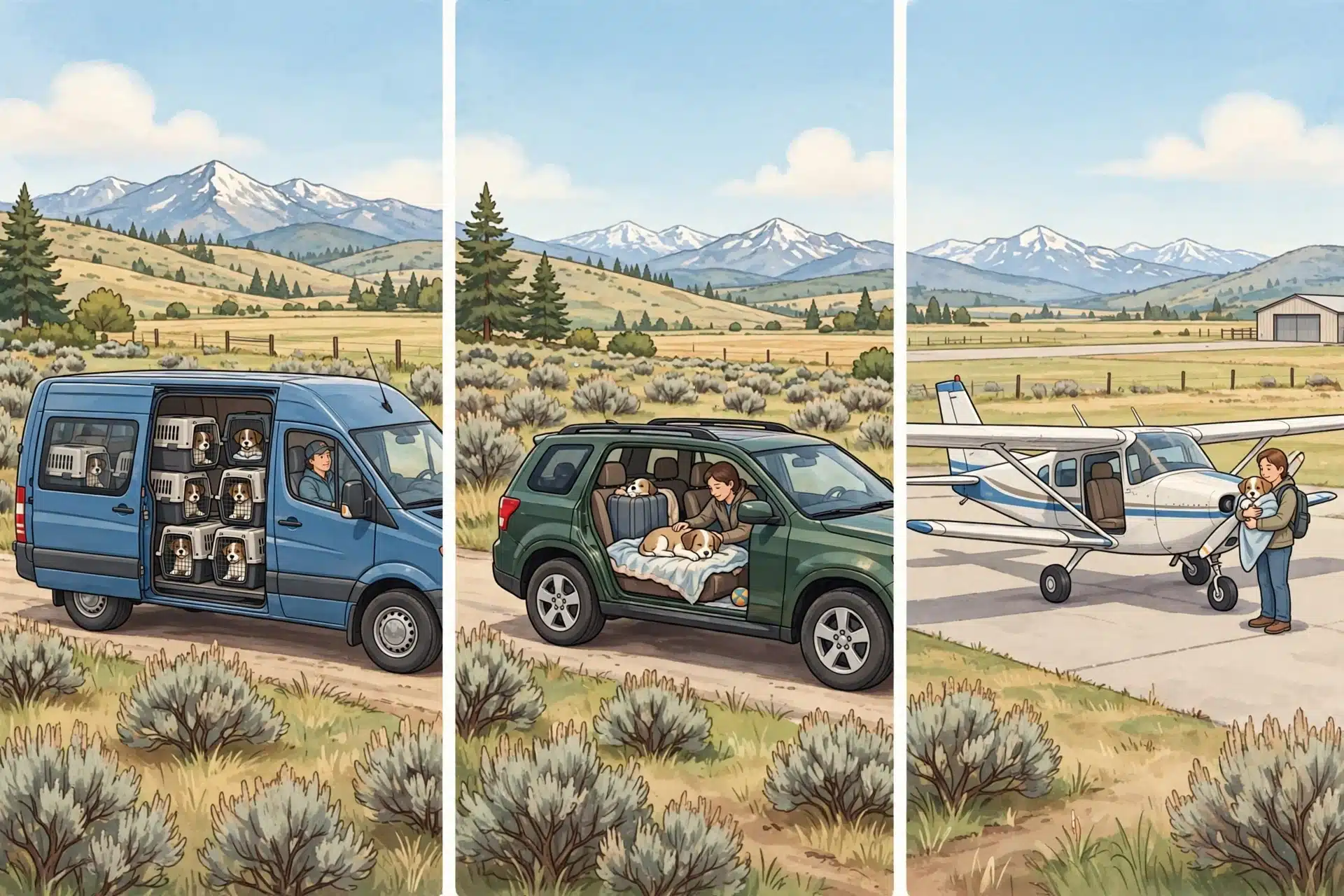
Compare Private, Shared, Ground, and Air Options
Each method suits a different situation. Shared ground rides cost less per pet but add stops. Private ground runs direct with one handler. Flight nannies carry small breeds, like Havanese and Cavapoos, in the cabin for $500 to $1,500 on domestic routes, per Petworks pricing data. Air cargo moves faster but brings weather limits. For a small puppy heading down a rural Idaho road, private ground transport usually offers the best mix of price, calm, and control.
Step 5: Prepare the Puppy for a Long, Low-Stress Journey
A calm trip starts days before the transporter arrives. Puppies handle travel far better when the crate, the routine, and the food all feel familiar. The ASPCA’s travel safety tips recommend keeping pets secure in a well-ventilated crate lined with bedding, and sending them off with food, water, and comfort items.
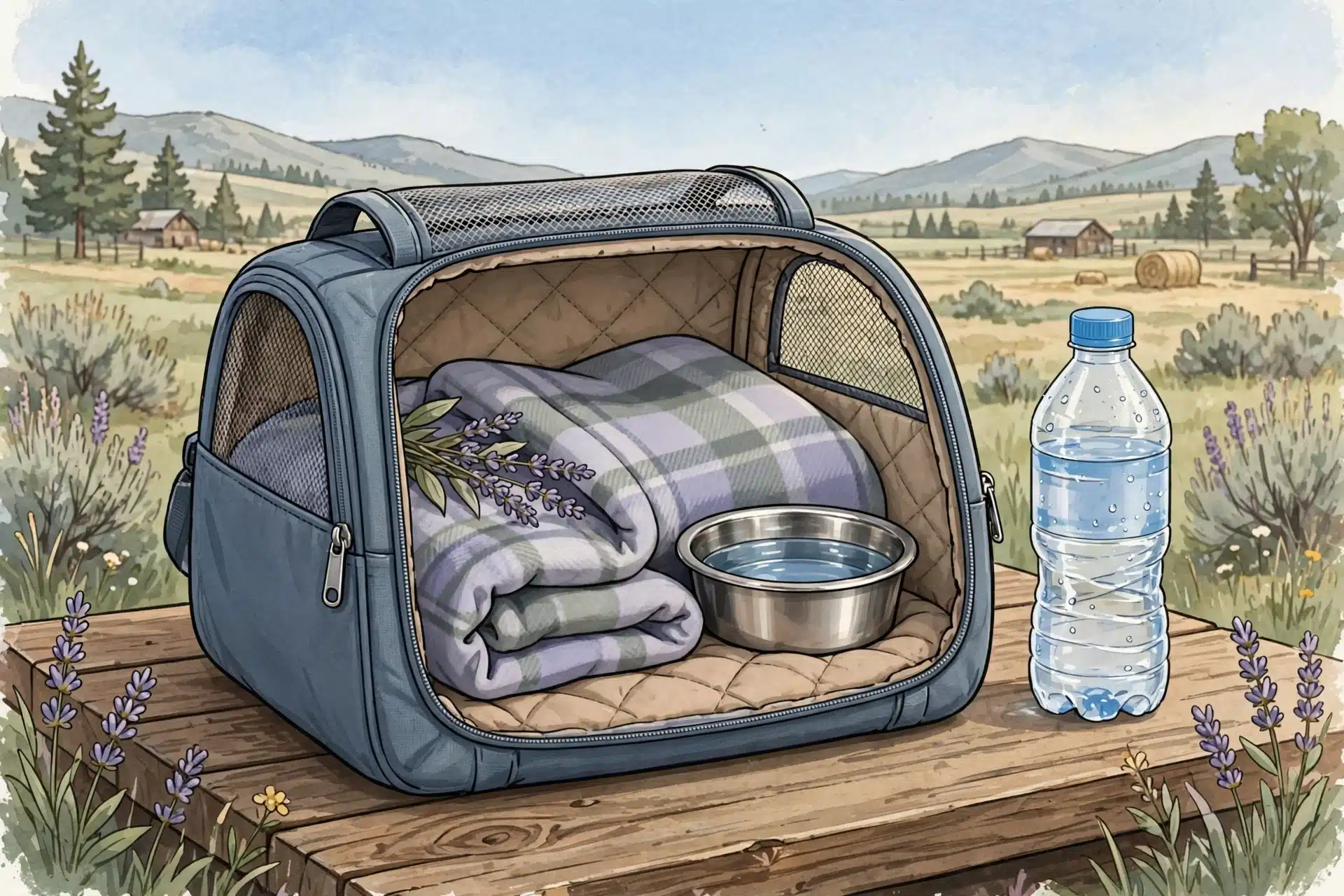
Make the Carrier Familiar Before Departure
Ask your breeder to start crate work early. At Sage Puppies, puppies spend time in crates during their socialization weeks, so the carrier already feels like a den, not a trap.
- Request the breeder place a scented blanket from the litter inside the crate.
- Ask that meals or treats be given inside the carrier during the final week.
- Confirm the crate is sized so the puppy can stand, turn, and lie down.
Set Feeding, Water, and Break Instructions
Put the feeding plan in writing and hand it to your transporter. The ASPCA advises a light meal three to four hours before departure and no food in a moving vehicle. Plan breaks too.
- Feed a light meal three to four hours before pickup.
- Offer bottled water only, since unfamiliar water can upset young stomachs.
- Schedule potty and stretch breaks every two to three hours.
Plan for Weather, Delays, and Medical Concerns
Rural routes bring real risks: long gaps between services, sudden storms, and cell dead zones. The Animal Humane Society suggests limiting travel to about seven hours per day and mapping emergency vet clinics along the route. Confirm the van has climate control, ask for weather-based delay rules in your transport contract, and pack the puppy’s vaccination records where the driver can reach them fast.
Also Read: Puppy Care Blog & Resources | Sage Puppies
Step 6: Complete a Safe Idaho Handoff
Meeting your puppy for the first time should feel calm and unhurried. Do it in daylight, at a spot you picked ahead of time, with the transporter staying long enough to answer questions.
Inspect the Puppy and Confirm the Records
Before you accept the puppy, slow down and check things in order:
- Look the puppy over: clear eyes, clean ears, no limping, steady breathing.
- Watch how it moves. A confident Havanese or Cavapoo should be curious, not limp or shaking.
- Compare the puppy to the photos and video the breeder sent you.
- Collect the health certificate, vaccination record, and deworming dates.
- Sign the transfer or sale paperwork on the spot and take photos of every page.
Ask the transporter when the puppy last ate and went potty. That helps you plan the first hours at home. If anything looks wrong, note it in writing before you sign.
Settle the Puppy Into a Prepared Home
The first day sets the tone. The AKC’s first-day guidance suggests showing your puppy its potty spot right away and keeping the home calm. Feed the food the breeder already used, adjusting slowly if you switch later. Plan a vet visit within a couple of days, then let your puppy rest.
Also Read: 7 Idaho Puppy Search Filters for First-Time Dog Owners
Common Mistakes to Avoid When Arranging Idaho Puppy Transport
Small mistakes cause most transport problems. Here are the ones we see most often, and how to skip them.
- Skipping the health certificate. Most states, including Idaho, expect a certificate of veterinary inspection for puppies crossing state lines. The USDA’s pet travel guidance explains that destination states set their own entry rules, so confirm before the trip, not the morning of.
- Transporting a puppy too young. Federal rules require dogs to be at least 8 weeks old and weaned before commercial transport, per USDA’s age requirements. Never accept a puppy shipped earlier.
- Hiring an unvetted transporter. Ask for USDA registration, insurance, and recent references before you pay a deposit.
- Ignoring winter weather. Rural mountain routes close fast. Build a backup date into your plan.
- Vague handoff plans. Agree on the exact meeting spot, time, and contact number in writing.
- No paper trail. Keep vaccination records, the purchase agreement, and receipt together in one folder.
Quick tip: Ethical breeders handle most of this for you. At Sage Puppies, transport details are confirmed in writing before your puppy ever leaves our care, so nothing rests on your shoulders alone.

Planning to bring a Havanese, Havapoo, or Cavapoo home to rural Idaho? Sage Puppies offers health-tested, home-raised puppies with safe, well-planned nationwide delivery. Browse our available puppies, submit an application, and we’ll walk you through every transport step.
Frequently Asked Questions
Q1: What documents are required to transport a puppy to Idaho?
Most transporters need a health certificate from a licensed vet, issued within 10 days of travel, plus vaccine records. Ask your breeder for both before pickup day so nothing delays the handoff.
Q2: How much does puppy transport to rural Idaho cost?
Ground transport typically runs $250 to $600 depending on distance, while flight nanny services often cost $500 to $1,000. Rural drop-off points can add fees, so confirm the final address in writing first.
Q3: How do I find a safe puppy transporter for Idaho?
Look for USDA-registered transporters with current insurance, recent reviews, and clear communication. Ask how often they stop, how they handle potty breaks, and whether you get photo updates during the trip.
Q4: Can I meet my puppy at a rest stop instead of my home?
Yes. Many families in rural Idaho prefer meeting at a well-known rest stop or town center. Just agree on an exact spot and time, and share your cell number with the driver.
Q5: What should I bring to the handoff?
Bring water, a leash, a towel, and a crate-safe blanket that smells like home. Confirm your puppy’s vaccine records, then let it stretch and potty before the drive back.
Conclusion
Safe puppy transport to rural Idaho comes down to a short checklist done early. Confirm your puppy has a certificate of veterinary inspection issued within Idaho’s required window. Vet the transporter, plan a route with real rest stops, and set a calm handoff with paperwork, food, and quiet time at home. Small breeds like a Havanese, Havapoo, or Cavapoo travel well when the schedule puts their comfort first. At Sage Puppies, we walk every family through transport and pickup in plain terms, so the trip feels as considered as the breeding behind your puppy. USDA APHIS guidance is worth a final check before travel day.