Quick Summary: Havapoos usually pick up cues a little faster and stay glued to you during recall work, while Havanese bring eager, people-focused attention that holds up well in short, lively sessions, and neither breed wins training outright. Both house-train on the same four-to-six-month clock, so your own routine of three-to-five-minute reward-based sessions, a consistent potty loop, daily brushing and handling, and patience with barking and time alone decides the pace more than the breed label. Havapoos suit owners who like training games and curlier, lower-shedding coats; Havanese suit owners who value documented breed predictability and enjoy a long silky coat. Sage Puppies, the kennel behind this guide, offers owner-managed matching and puppies available for local pickup in South Jordan, Utah or nationwide delivery.
Put two puppies from the same household through the same sessions, and they can learn a name and a sit in equal time yet grow into very different training partners. The Havapoo often works out puzzles faster but tires of repetition. The Havanese usually wants to please and holds focus longer. That is the honest answer on havapoo vs havanese training speed, and it beats a speed chart nobody has ever measured.
First-time owners rightly want a simple answer before bringing a puppy home, plus a realistic picture of week-by-week work, especially house-training. This comparison breaks trainability into motivation, problem-solving, focus, sensitivity, and handling tolerance, then turns those differences into a routine for the first ten weeks. You will finish knowing which individual puppy fits your household, not which breed wins.
Havapoo vs Havanese Training Snapshot
| Havapoo | Havanese | |
|---|---|---|
| Learning approach | Pattern-based problem solving, often faster at picking up cues and shaping behavior | Attentive, people-focused, responds readily to handler cues |
| Motivation style | Rewards, novelty and mental challenge | Eagerness to please and close handler attention |
| Focus and repetition | Can lose interest in repetitive drills; may test boundaries | Sustained attention on a familiar handler when engaged |
| Noise sensitivity | Varies; some are alert to household noise | Often more vocal and reactive to household noise |
| Coat handling in training | Curlier coats need frequent handling practice for brushing and trims | Silky double coat needs daily brushing; matting must be handled early |
| Best fit for | Owners who enjoy training games and want a curlier coat | Owners who value predictability and a documented breed standard |
Havapoo and Havanese at a Glance
Havapoo
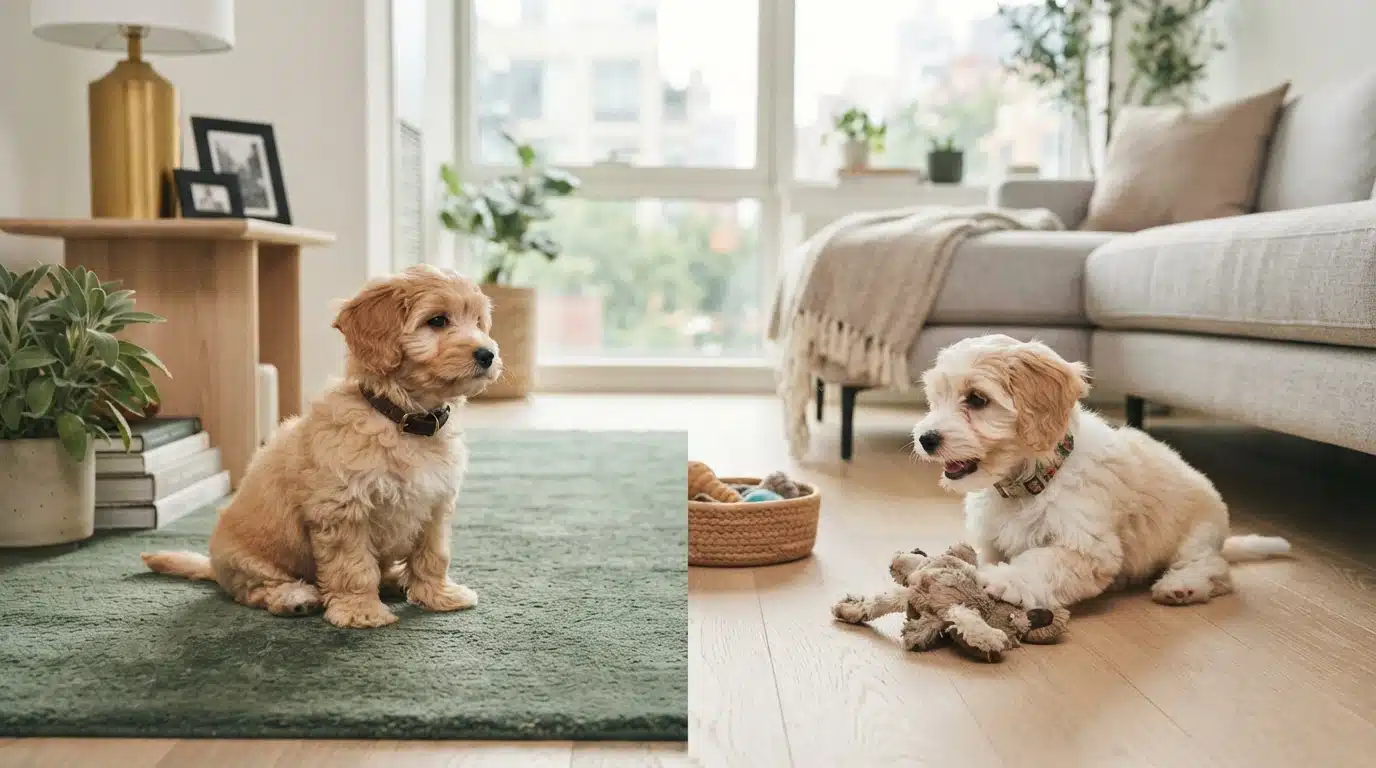
The Havapoo crosses the Havanese with a Poodle, blending companion temperament with Poodle problem-solving drive and a curlier, often lower-shedding coat. In the havapoo vs havanese training speed question, this mix tends to learn cues through pattern-based play but can lose interest in repetitive drills. It suits owners who enjoy training games and mental challenges.
Havanese
The Havanese is a long-established purebred companion breed with an AKC breed standard, a silky double coat, and strong sensitivity to its people. Its learning style is attentive and people-focused, so it responds readily to handler cues and stays engaged through repetition. It fits owners who value predictability and a documented breed standard.
Is a Havapoo Easier to Train Than a Havanese?
Short answer: usually yes, but only by a small margin. Most Havapoos pick up new cues a bit faster than Havanese because the Poodle mix tends to carry sharper focus, while the Havanese brings plenty of smarts but a more independent streak. The honest comparison of havapoo vs havanese training speed comes down to three things: how quickly each puppy links a cue to a reward, what actually motivates them, and how long they can stay tuned in.
What Breed Labels Can and Cannot Tell You
A breed label is a starting point, not a prediction. Both breeds sit in the American Kennel Club’s smarter-than-average range, and both were bred to work closely with people. That shared history matters more than any chart.
What labels can suggest:
- Tendency, not certainty. A Havapoo may lean toward food-driven eagerness. A Havanese may lean toward people-pleasing with opinions of its own.
- Mix variability. Havapoo puppies can favor either parent, so two littermates can train at different speeds.
What labels cannot tell you: your individual puppy’s drive, your consistency, or how your household runs. Training speed is a team result. Any Havapoo puppy is a mix of genes and the first ten weeks you build with it.
Three Parts of the Speed Question
Split the question and the answer gets clearer. Rate each part honestly before you pick a breed.
- Association speed. How fast does the puppy connect “sit” to a treat? Both breeds learn basic cues within days when you use reward-based training for puppies, short sessions, and one cue at a time.
- Motivation. Havapoos often work hard for food. Havanese often work hard for attention and praise. Match your rewards to the dog in front of you.
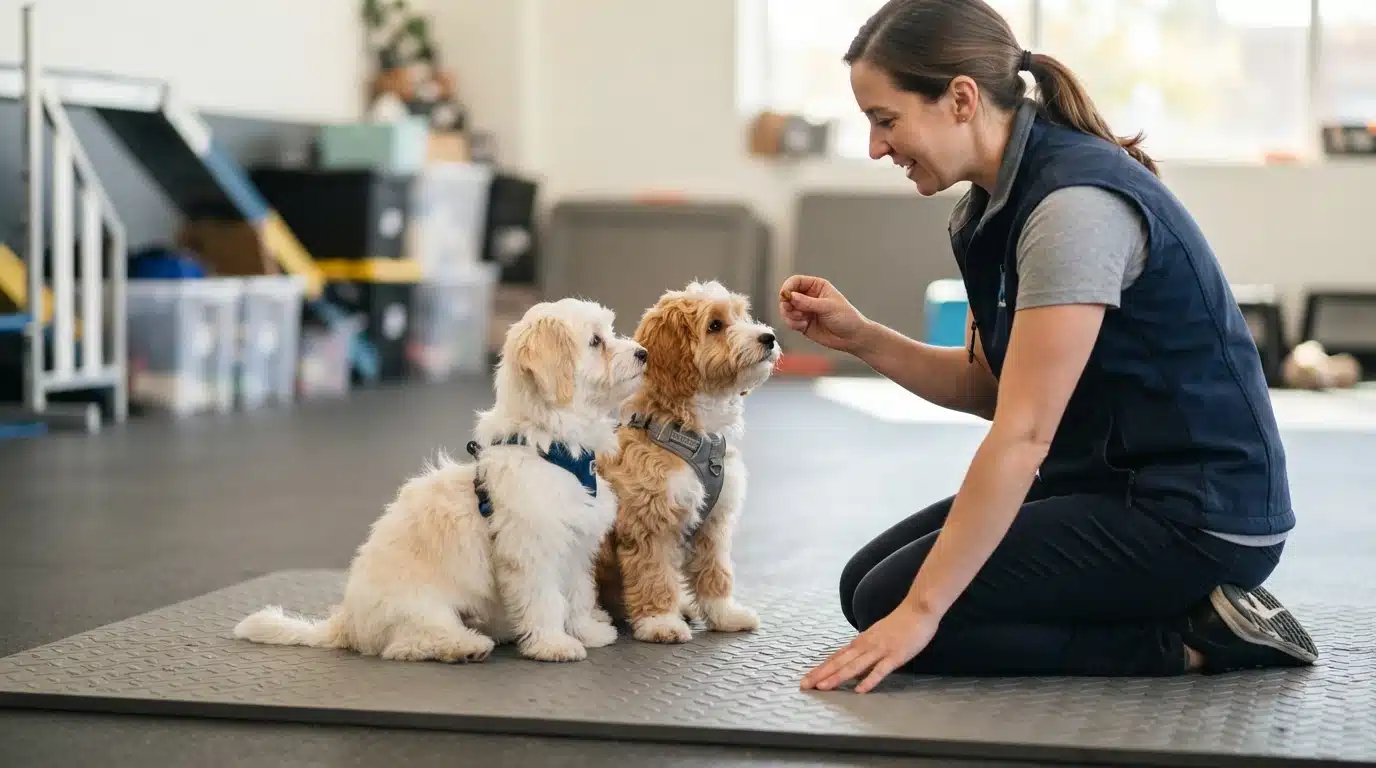
- Focus. This is the real gap. A Havapoo usually holds attention longer, so early recall and leash work go faster. A Havanese excels once sessions stay short and lively.
Whichever puppy you choose, the first weeks of repetition matter more than the label on the paperwork.
Rewards, Attention and Problem Solving
How to Read What Your Puppy Is Motivated By
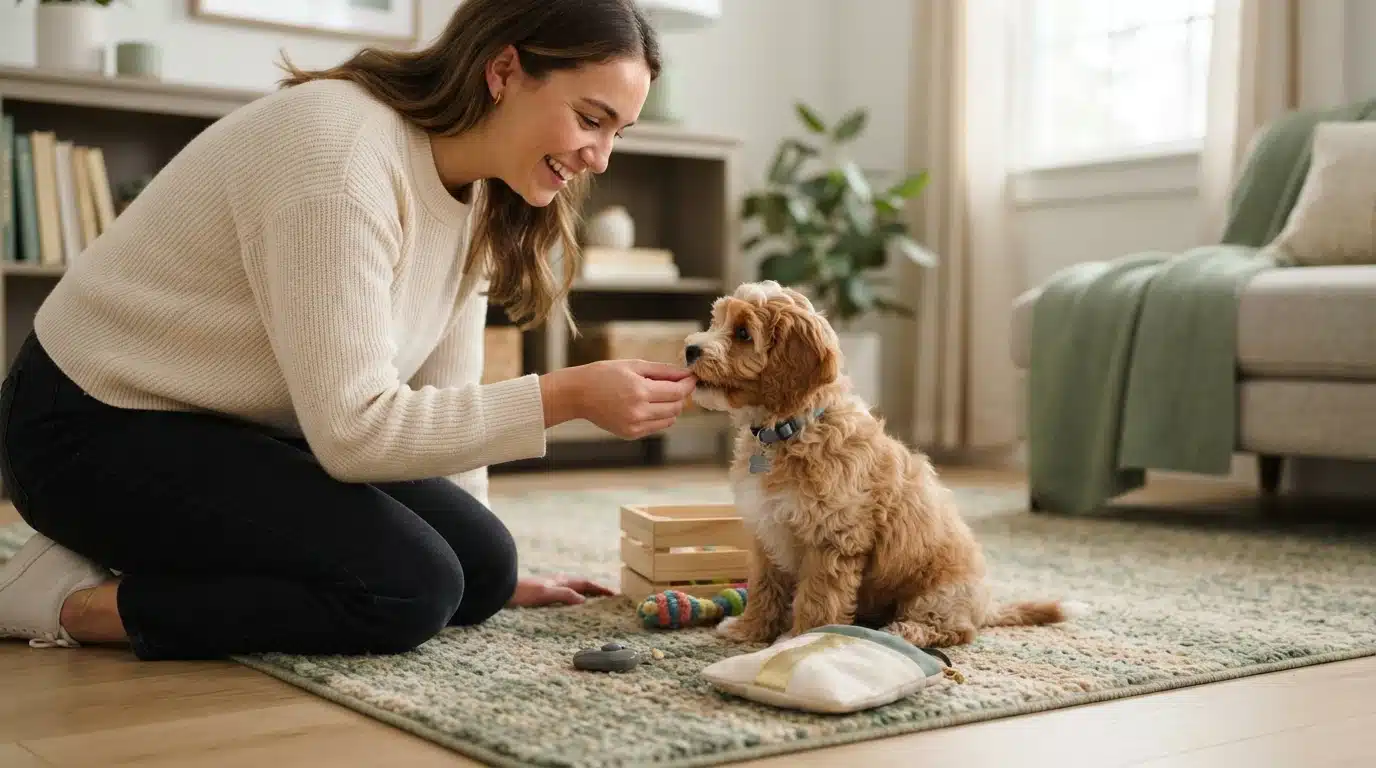
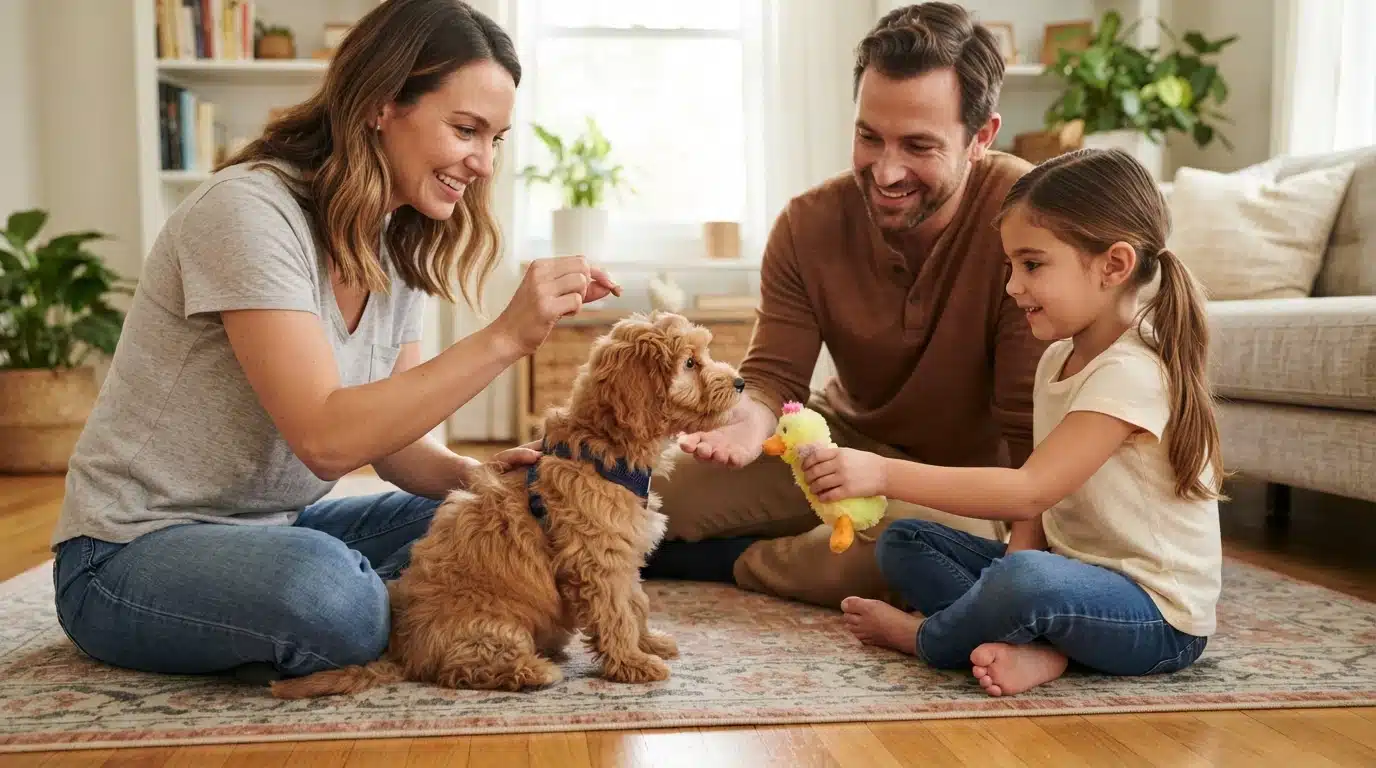
Watch your puppy for a few days before you pick a reward. Food-driven puppies work eagerly for small, soft treats. Others care more about a tossed toy, a quick game of tug, or your excited praise. Both Havapoos and Havanese tend to want your attention, so praise often works as a bonus reward rather than the main one.
Run a simple test. Offer a treat, then a toy, then affection, and note which one makes the puppy perk up fastest. Reward-based training for puppies works best when you rank these rewards and save the top pick for harder skills like recall. A distracted puppy is not stubborn; it usually just has not found the right reward yet.
Session Length, Repetition and Mental Work
Keep sessions short. Three to five minutes, two or three times a day, beats one long block. Puppies lose focus fast, and ending on a win makes them eager for the next round. Repeat each cue across several rooms so the lesson sticks beyond the kitchen floor.
Add mental work too. Snuffle mats, puzzle feeders, and simple find-it games tire a puppy without wear on growing joints. If you are still weighing the two breeds, the daily routine and costs differ a bit, so it helps to see how Havapoo puppy costs break down before you plan your schedule.
House-Training Two Small Breeds
Both breeds house-train on the same clock. Most puppies get reliable between four and six months, and small breeds can take longer because their bladders are small, per the SPCA’s potty training guidance. Neither a Havapoo nor a Havanese is physically “faster.” The family that wins is the one with a tighter routine.
A Repeatable Daily Routine
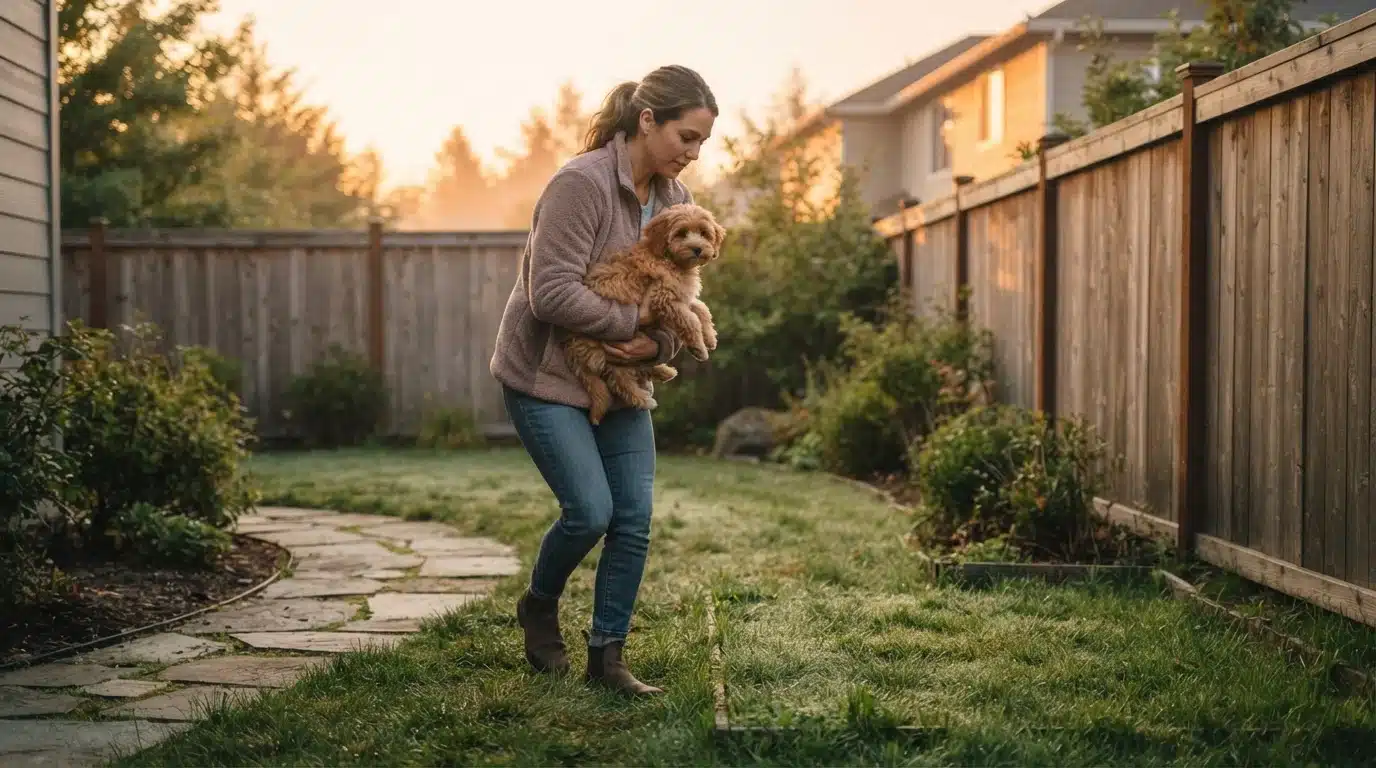
House-training is a timing game, not a talent test. A young puppy can hold it roughly one hour per month of age, so plan on frequent trips from day one, as PetMD’s house-training guide recommends.
Keep the same simple loop every day:
- Out first thing in the morning, after every meal, after naps, and after play
- Go to the same spot and use one cue word
- Reward within seconds of finishing, not when you get back inside
- Supervise or use a crate between trips so accidents cannot rehearse
- Log times for the first week; patterns show up fast
This works identically for both breeds, so choose your dog on temperament and fit, not on a house-training promise. The first-week version of this loop, plus feeding times that make potty timing predictable, is laid out in our first week home guide.
When Accidents Are a Veterinary Question
Sudden accidents in an otherwise reliable puppy are not a training failure. Straining, frequent small puddles, or nighttime leaks can point to a urinary tract infection, and PetMD advises calling your vet when those signs appear. Havanese and Havapoo puppies are equally prone to such issues. Rule out pain or illness first, then return to the routine. Small female dogs in particular can have recurring infections, so treat a relapse as information, not a setback.
Recall, Leash Work and Focus in Public
Whichever breed you pick, public training succeeds or fails on one thing: the environment. Both Havapoos and Havanese are small, social and easily distracted, so the fix is not more reps. It is better places to practice.
Choosing Where to Practice First
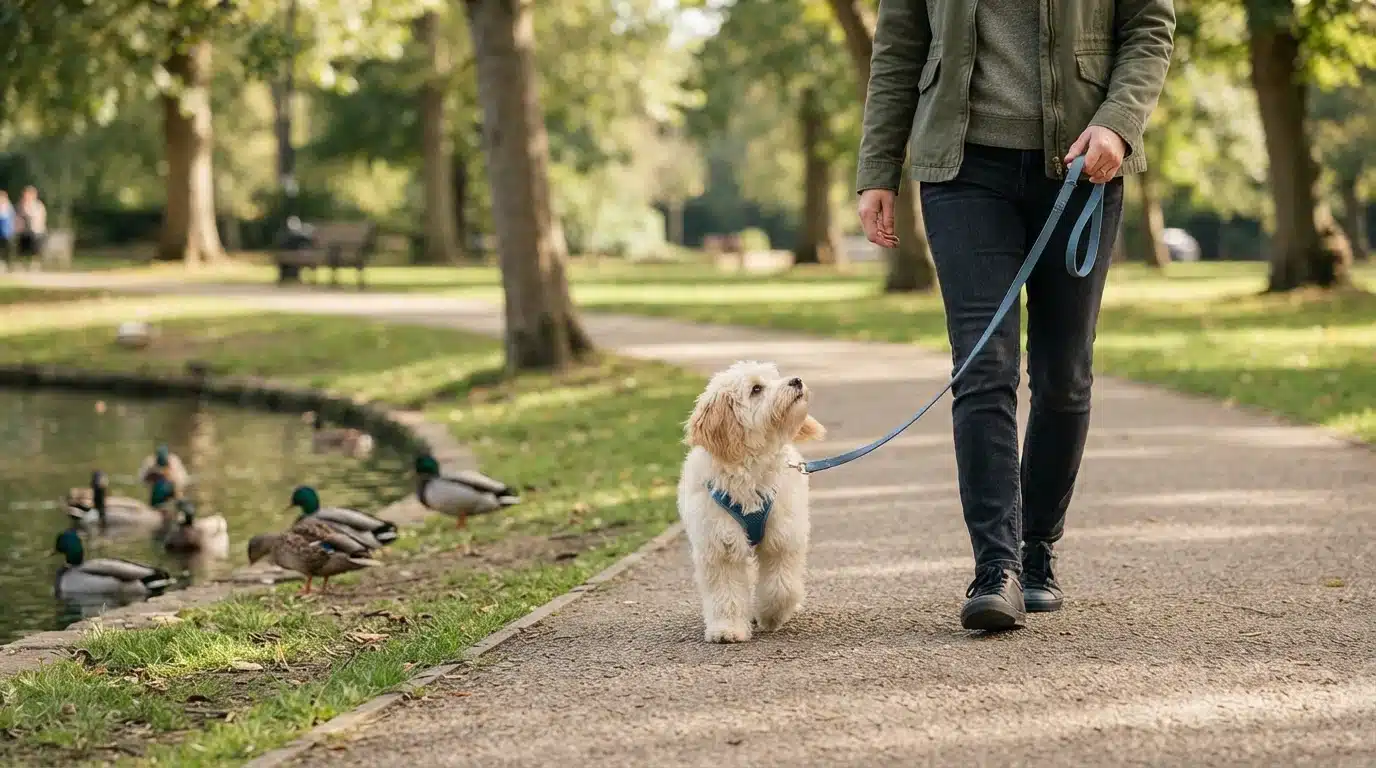
Start where your puppy can succeed. A quiet backyard works for the first week of recall. Move to an empty park corner next, then a busier trail once your puppy turns to its name every time. If it ignores you three reps in a row, the space is too hard. Go back a step. Both breeds learn fast in low-distraction settings but need dozens more reps near dogs, kids and squirrels. Adding one distraction at a time keeps progress steady for either breed.
High-Value Rewards for Busy Places
In the living room, kibble works. On a walk, it usually will not. Save cheese, chicken or a favorite toy for recall and loose-leash practice in public, and pay generously every time your puppy checks in. Rotate rewards so they stay exciting. This applies equally to a food-motivated Havapoo and a people-focused Havanese; the reward just differs. Reward-based training for puppies keeps both breeds eager to work, and short sessions under five minutes hold a small dog’s focus far better than one long drill.
Coat, Grooming and Being Handled
Brushing as a Training Habit
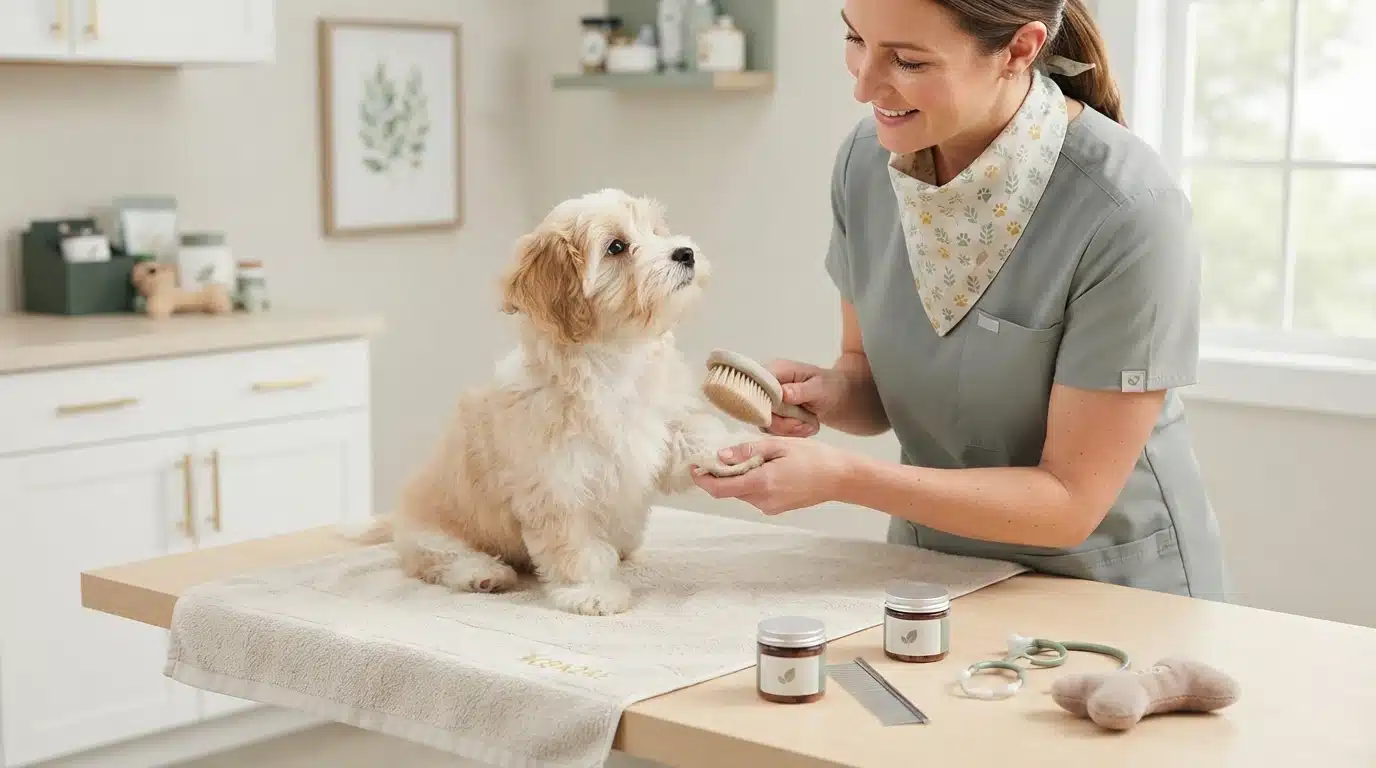
Both breeds have hair that grows long and mats fast, so daily brushing is not optional. The Havapoo often has a curlier, denser coat, which traps tangles a bit more than the Havanese’s silkier drop coat. Either way, a few minutes on the floor with a slicker brush teaches focus, patience and calm handling faster than most formal drills.
Here’s the trick: make brushing the reward, not the punishment. Start with short sessions, feed tiny treats between strokes, and stop before your puppy squirms free. A puppy who learns that grooming means good things will lie still for you, and later for a groomer. Puppies that fight the brush usually missed this step early.
Handling for Vets, Groomers and Nail Trims
Havanese and Havapoos are both people-focused, so neither breed is naturally hard to handle. The difference shows up in preparation, not temperament. Run a five-second handling routine every day: touch ears, paws, tail and mouth, then pay your puppy. Add clippers, toothbrushes and a nail file gradually, one tool at a time.
Because both breeds need professional grooming every few weeks, this work pays off for life. Grooming also adds real cost to your budget, so it helps to review a Havapoo cost breakdown before you bring a puppy home. A calm, handled puppy makes every vet visit and groom appointment easier.
Noise Sensitivity, Separation and Focus Under Stress
Both breeds notice everything. Havanese were bred to be companion dogs, so they bond hard and can struggle when left alone. Havapoos often inherit a similar velcro streak from the Havanese side, though some lines are more easygoing. Either way, stress is the real training speed test. A puppy that panics when you leave, or melts down at a vacuum cleaner, cannot focus on a cue.
Reducing Barking Without Punishment
Barking usually means arousal or worry, not defiance. Yelling adds noise to noise, so it often makes things worse. Instead, reward quiet. Wait for a two-second pause, then mark it with a calm “yes” and a treat. Teach a “settle” mat near you, and give the puppy a frozen chew when triggers appear, like the doorbell or a passing dog. Management matters too: white noise, closed blinds, and exercise before busy hours cut barking at the source. Expect progress in two to three weeks with steady reps, not overnight silence.
Building Tolerance for Time Apart
Start absurdly small. Step behind a baby gate for ten seconds, then return before any whining starts. Build slowly across days: door closed for a minute, then five, then a short drive to the mailbox. Feed part of every meal during these sessions so absence predicts good things. Skip dramatic goodbyes; leave quietly and greet calmly on return. If your puppy panics at any step, drop back one level and hold there for a few days.
Which Should You Choose: Havapoo or Havanese?
Both breeds learn quickly with short, reward-based training for puppies. The right pick depends less on raw speed and more on how your home runs day to day.
Matching the Breed to Your Household
For most first-time owners, either breed works if you commit to the first-week puppy routines in this guide. Choose a Havapoo if you want:
- A wavier coat that sheds less and may need less brushing
- A slightly food-driven partner who often stays glued during recall sessions
Choose a Havanese if you value:
- Purebred predictability in size, coat, and temperament
- A long, soft coat you enjoy grooming as part of the routine
Families with tighter schedules should weigh barking and alone time. Both breeds bond hard, so plan company or training games into your workday. Whichever you lean toward, ask for health-tested puppy parents and meet the parents when you can.
Next Steps at Sage Puppies
Once you know which breed fits, the path is simple. Cassie’s owner-managed matching process walks you through an application, current litter timing, and delivery options, including local pickup in South Jordan, Utah or nationwide puppy delivery. You can browse available puppies to see which litters are open now. Pricing and reservation details live on the site before you commit, so nothing about bringing your puppy home stays vague.

Whichever breed you choose, both learn fast with patient, consistent training. See the Havanese and Havapoo puppies available at Sage Puppies, then fill out the application to start matching with your puppy.
Frequently Asked Questions
Q1: Is a Havapoo easier to train than a Havanese?
Usually yes, by a small margin. Havapoos often learn cues faster, while Havanese stay more focused on people.
Q2: How long should puppy training sessions be?
Three to five minutes, two or three times daily. End each session on a win.
Q3: When do these puppies house-train reliably?
Most puppies become reliable between four and six months with a tight routine, regardless of breed.
Q4: Which breed barks more?
Havanese tend to be more vocal. Reward quiet moments rather than punishing barking.
Q5: Can Havapoo littermates train at different speeds?
Yes. Poodle mix variability means each puppy leans toward a different parent, so rate the individual.
Conclusion
Neither breed wins the training race outright. Havapoos often pick up new cues a little faster and stay glued during recall work, while Havanese bring eager, people-focused attention that holds up well in short, lively sessions. House-training runs on the same four-to-six-month clock for both. What actually sets the pace is your routine: brief reward-based training for puppies, a tight potty loop, daily handling, and patience with barking and time apart. Pick the Havapoo for puzzle-loving energy or the Havanese for purebred predictability, then let the first ten weeks, not the breed label, decide how fast you both learn.