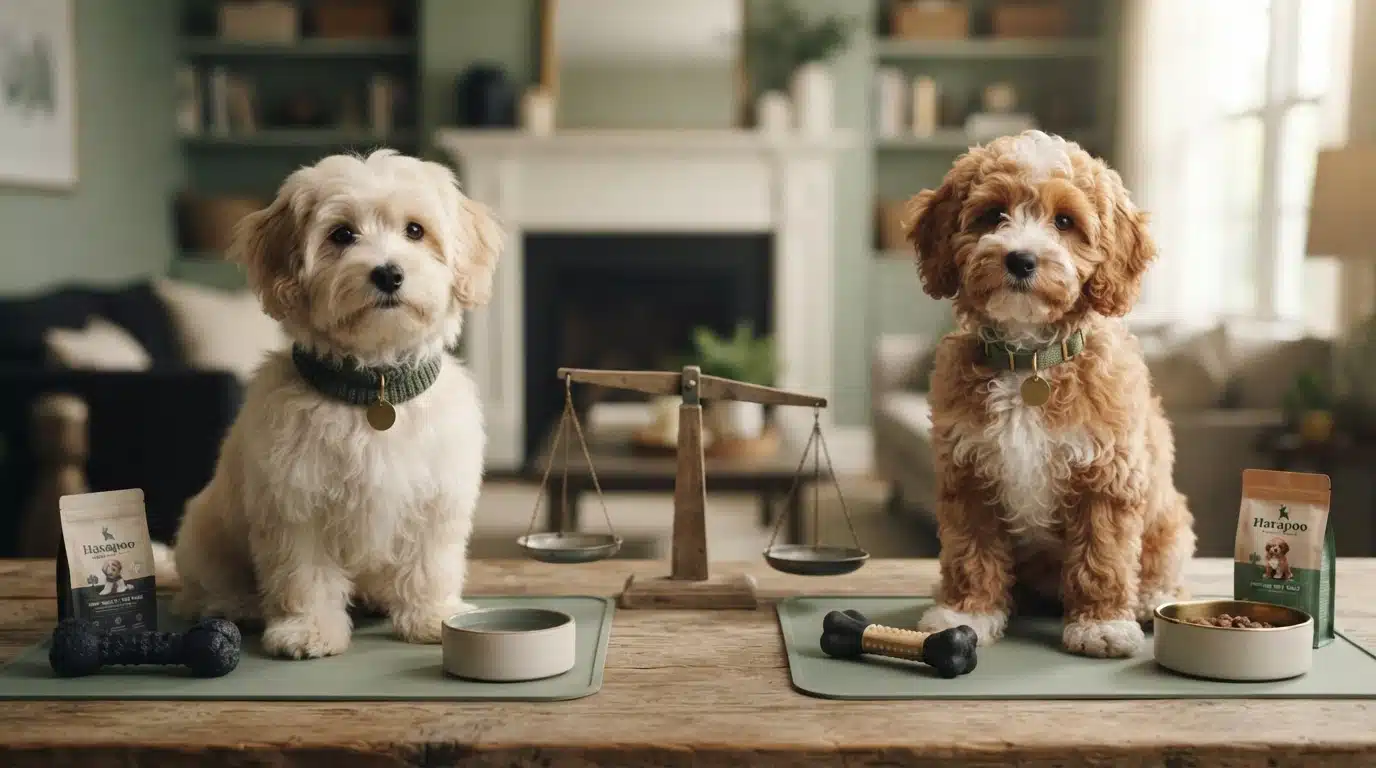
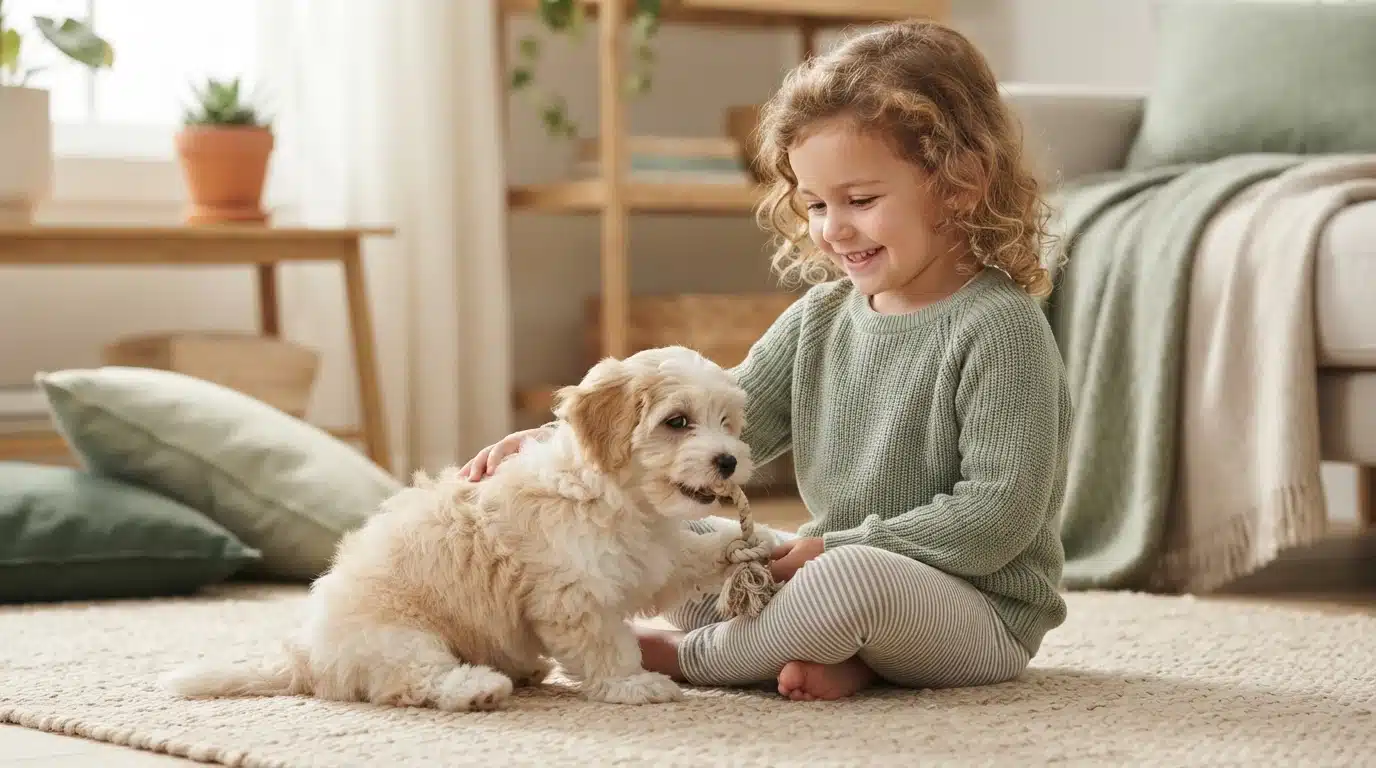
Quick Summary: Havapoo and Havanese puppies need similar daily activity, about 30 to 45 minutes in short sessions, but their play styles differ. Havapoos tend to chase, fetch, tug, and solve puzzles with focused energy, while Havanese puppies prefer social games involving toy carrying, gentle wrestling, and time with their people. Sage Puppies recommends matching the individual puppy’s personality to your household rather than relying only on the breed label.
Two puppies can look nearly identical on paper and still play in completely different ways. A Havapoo’s play style usually pushes games forward, thanks to its busy, problem-solving Poodle streak, while the Havanese play style leans social: carrying a toy back to you, settling into a gentle tug, treating play as together time. That difference shows up every evening in the first ten minutes of a play session.
Most families comparing these breeds research temperament, coat and size, then find little about how each one actually plays. First-time owners want to know what a normal session looks like and which games keep a small puppy happy without overstimulation.
This comparison breaks play down into energy level, style, mental stimulation and toy handling, then maps the best games for Havanese puppies and Havapoos onto a weekly routine. It closes with guidance from Sage Puppies, a Utah program that breeds only Havanese, Havapoo and Cavapoo puppies.
Havapoo vs Havanese Puppies: Play Styles at a Glance
| Havapoo | Havanese | |
|---|---|---|
| Energy level | Moderate, about 30 to 45 minutes of activity spread across the day | Moderate, brisk walks plus backyard playtime are usually sufficient |
| Play style | Fast bursts, repeat-driven, curious and puzzle-focused | Social and carry-based, gentle wrestling, followed by settling close to people |
| Mental stimulation needs | Higher; needs daily sniffing, solving and short training sessions | Moderate; short puzzle and training sessions plus daily human contact |
| Best games for puppies | Food puzzles, hide and seek, tug, fetch with rules, nose work | Tug, gentle fetch, treat hunts, toy-carrying and blanket wrestling |
| Toy handling and safety | Often carries and shreds toys; supervise plush and squeaker toys closely | Likely to carry toys rather than shred them; still supervise size and chew durability |
| Best for | Families wanting a trainable, interactive puppy with a higher mental workload | Families wanting a calmer, affectionate companion focused on people |
How Havapoo and Havanese Puppies Compare
Havapoo
The Havapoo crosses a Havanese with a Toy or Miniature Poodle. It suits families who want a trainable, interactive puppy, because its havapoo play style runs fast and puzzle-focused, with daily sniffing and short training sessions to satisfy.
Key strengths
- Curious, problem-solving play that loves food puzzles, hide and seek, and fetch with rules
- Trainable and responsive in short, repeat-driven sessions
Havanese
The Havanese is Cuba’s companion breed, bred to stay close to people. Its havanese play style is social and carry-based, gentle wrestling and toy-toting followed by settling nearby, which fits families wanting a calmer, affectionate puppy.
Key strengths
- People-oriented play built around tug, treat hunts, and blanket wrestling
- Moderate mental workload met with short puzzle sessions and daily human contact
Energy Levels and Play Intensity Side by Side
How much daily play each breed actually needs
Both breeds land in the moderate range, but they get there differently. A Havanese does well with about 30 to 45 minutes of activity spread across the day, and PetMD notes it can be split into short 10-minute walks or play sessions. The Havapoo needs a similar total, yet the poodle influence often adds a fetch habit, so its havapoo play style leans a little more athletic. Either way, the goal is steady daily movement, not one marathon session. Puppies especially need the total broken up while their joints finish growing.
Short bursts versus longer social sessions
Havanese puppies tend to play in bursts: a few minutes of chase, then a nap on your lap. Their havanese play style centers on people, so short games woven through the day suit them well. Havapoo puppies often hold focus longer, which makes them good candidates for a longer park session or a bigger puppy play routine with a few short walks. If you like weekend outings and dog friends, a Havapoo may match that rhythm. If your days are stop-and-start, the Havanese bursts fit right in.
When high energy actually reads as overstimulation
Zoomies are normal, but there is a line. Watch for nipping at hands, barking that will not settle, or frantic circling after guests arrive. Those are signs the puppy has crossed from play into overstimulation, and more play will not fix it. A Havapoo may show it by grabbing toys and refusing to drop them. A Havanese may show it by clinging and whining. The fix is the same for both: calm time in a quiet space, then resume later. Young pups also need sleep after activity; breed guides on puppy exercise caution that stamina grows faster than joints do.
Matching play volume to your household rhythm
Think in totals, not perfection. A household with school-age kids and a fenced yard covers most of either breed’s needs through ordinary backyard play. An apartment family can meet the same target with two short walks and an indoor puzzle feeder for puppies on rainy days. The honest answer to havapoo vs havanese on energy is that both need daily, moderate activity; the difference is pace, not volume. It helps that Sage Puppies matches each puppy to the family’s routine before go-home day, so the energy you bring home is the energy you planned for.
If your puppy seems constantly restless despite daily play, check the schedule first. Most “hyper” small breeds are simply overtired, not under-exercised.
How Havapoo and Havanese Puppies Differ in Play Style
Havapoo puppies usually bring a bit more drive to play: they chase, retrieve and tug with the persistence of their poodle side. Havanese puppies lean toward social warmth, games that involve you, carrying toys around and short silly bursts of energy. Both are small, affectionate companion dogs, so the difference shows up in how they play, not how much they love playtime.
The short answer: drive versus social warmth
If you picture play as a dial, Havapoos sit slightly closer to “chase it, fetch it, do it again.” The Havanese sits closer to “do it with you, then nap on your lap.” Neither style is better. A busy family that loves backyard fetch may click faster with a Havapoo, while a household that wants a shadow who turns everything into a shared game often loves the Havanese. Both breeds need roughly 30 to 45 minutes of activity a day, split into short sessions, so the real question is which style of fun fits your routine.
Retrieve and prey-drive tendencies in the mix
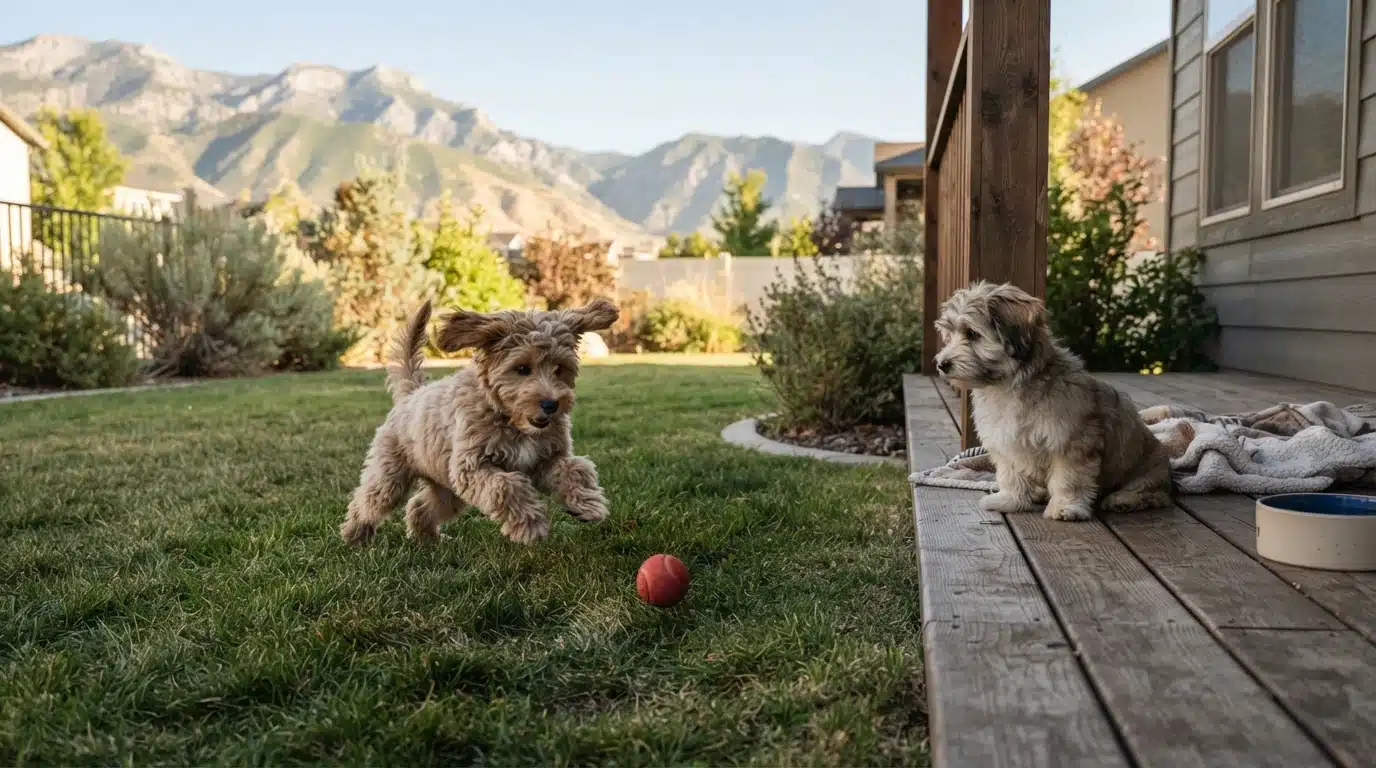
The Havapoo’s poodle heritage shows up in play as a stronger chase instinct. Poodles were originally bred as water retrievers, and that fetch wiring often carries into the mix. Many Havapoo puppies will track a thrown ball, bring it back and drop it at your feet with little coaching.
That drive makes fetch and tug for puppies easy wins. A short game of fetch in the hallway or a tug rope in the living room burns mental energy along with physical energy. Watch for the flip side: a puppy with real chase drive needs an outlet, or it will invent one, usually with shoelaces, cat tails or sibling ankles. Rotating in a puzzle feeder for puppies after a fetch session helps that energy land somewhere useful.
Carry, tumble and settle behaviors in the Havanese
Havanese puppies play like little social butterflies. Their games are usually about connection: a toy dragged past your feet, a soft plush carried from room to room, a body slam followed by a play bow. Historically, Havanese were Cuban companion and circus dogs, and their play still has that performative streak. They learn tricks quickly and often “show off” for an audience.
Their bursts are short. A Havanese might zoom around the coffee table twice, then flop on the cool tile. That settle-and-reset rhythm means havanese puppy toys work best when they invite interaction, like soft squeaky toys or a treat-dispensing ball you roll together. Solo play holds their interest for shorter stretches than a Havapoo’s typically does.
Reading your individual puppy instead of the breed label
Breed tendencies are a starting point, not a script. Within any litter you will find a Havanese who lives for fetch and a Havapoo who would rather gnaw a chew than chase a ball. Lineage matters, but so do the individual puppy’s confidence, energy and early experiences.
Spend time with a puppy before you commit if you can. Watch how it responds to a tossed toy, a squeaker and a calm hand. Ask the breeder which pups push hardest for play and which prefer observation. At Sage Puppies, Cassie matches families based on those observed traits rather than the breed name alone, which is where a small program can outperform a high-volume kennel. Match the puppy’s actual play style to your household, and the breed label matters far less.
Games and Toys That Suit Each Breed
Matching the game to the puppy matters more than most families expect. A Havanese tends to think through a task before committing, while a Havapoo often jumps in with boundless enthusiasm. Once you know the difference, choosing toys and planning sessions gets much easier.
The best games for Havanese puppies
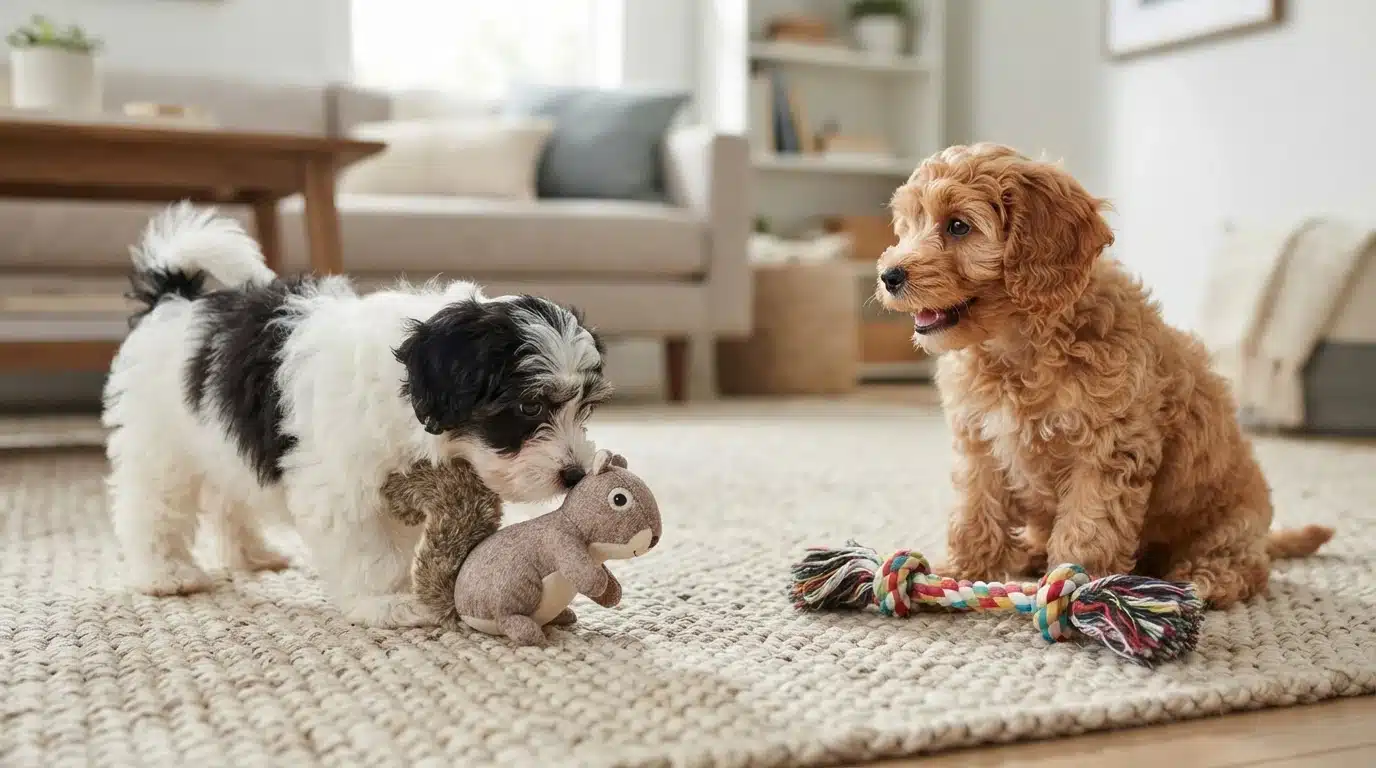
Havanese puppies shine in games that reward cleverness and connection. The best fits are:
- Find-it and hide-and-seek, where treats or family members hide and the puppy works the room
- Short training games, like spin, bow, or target a spot with a paw
- Gentle indoor fetch, rolled rather than thrown so the puppy stays close
- Trick chains, where two or three cues string together into one routine
Keep sessions to about 10 minutes. A Havanese will happily repeat a game for praise, but it loses interest fast when a game feels like drill work. This is where the breed’s signature havanese play style shows up: social, watchful, and eager to perform for you rather than for a ball alone.
Which games Havapoo puppies enjoy most
Havapoo puppies usually want movement first and thinking second. Their favorites:
- Tug of war, played with soft rules like “drop it” and “take it”
- Fetch across the yard, with stops every few throws to reset the excitement
- Chase games, where you jog and the puppy herds your ankles
- Snuffle mats and a puzzle feeder for puppies, which slow down mealtime and add brain work
Because havapoo energy level runs on the playful side of moderate, these sessions fit neatly into the same 10-minute blocks. Mix one thinking game in with the running games, and most Havapoos settle beautifully afterward.
Choosing toys for small, long-coated puppies
Both breeds are small, soft-mouthed, and wrapped in a long coat, so toy choices overlap quite a bit. Pick size-appropriate rubber or soft plush toys that a tiny mouth can grip without straining the jaw. Skip toys with glued-on eyes, loose strings, or stuffing that shreds easily, since a chewed string can tangle in a long coat or worse, get swallowed.
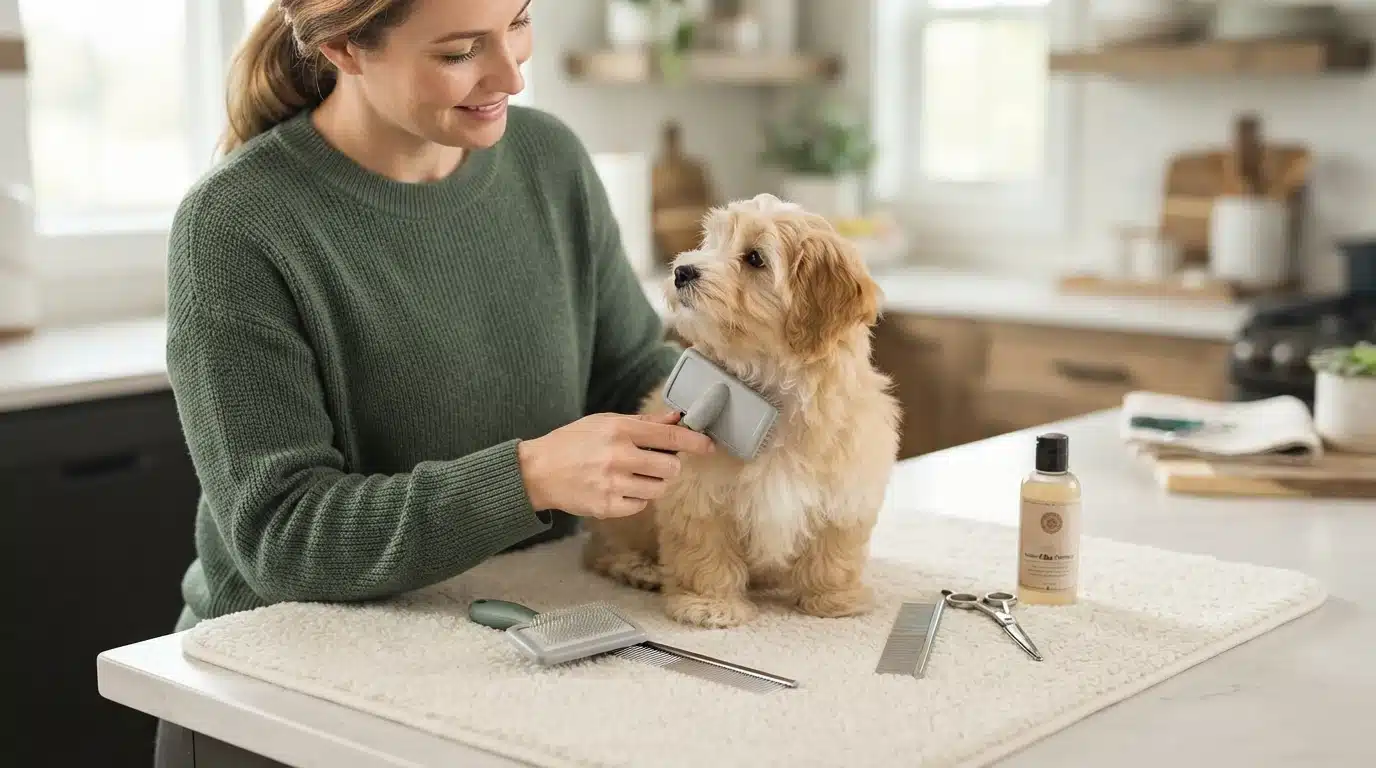
Rope toys are fine for supervised tug, but trim loose ends and brush the coat afterward. A good small breed puppy enrichment setup also includes a couple of rotating toys, so old ones feel new again. For grooming-friendly toy advice, we cover related coat-care habits in our Havapoo vs Cavapoo grooming guide, and the same brushing logic applies to toy-frequent Havanese coats.
Tip: Wash plush toys weekly. Drool, backyard dirt, and long facial hair make a messy combination.
A sample week of play for either breed
A simple puppy play routine keeps both breeds balanced. Here is one that works:
| Day | Focus | Session |
|---|---|---|
| Monday | Puzzle feeder and sniff walk | 10 min, twice |
| Tuesday | Fetch or tug | 10 min, three rounds |
| Wednesday | Trick training | 10 min, twice |
| Thursday | Hide-and-seek indoors | 10 min, twice |
| Friday | Chase and yard games | 10 min, three rounds |
| Saturday | Family play plus brushing | 20 min |
| Sunday | Calm chew and gentle training | 10 min |
Adjust the mix based on your puppy’s mood that day, not the calendar.
Which Should You Choose: Havapoo or Havanese?
Play style is the clearest tiebreaker. Both breeds land in the moderate energy range, so your choice comes down to how you want your puppy to play, not how much.
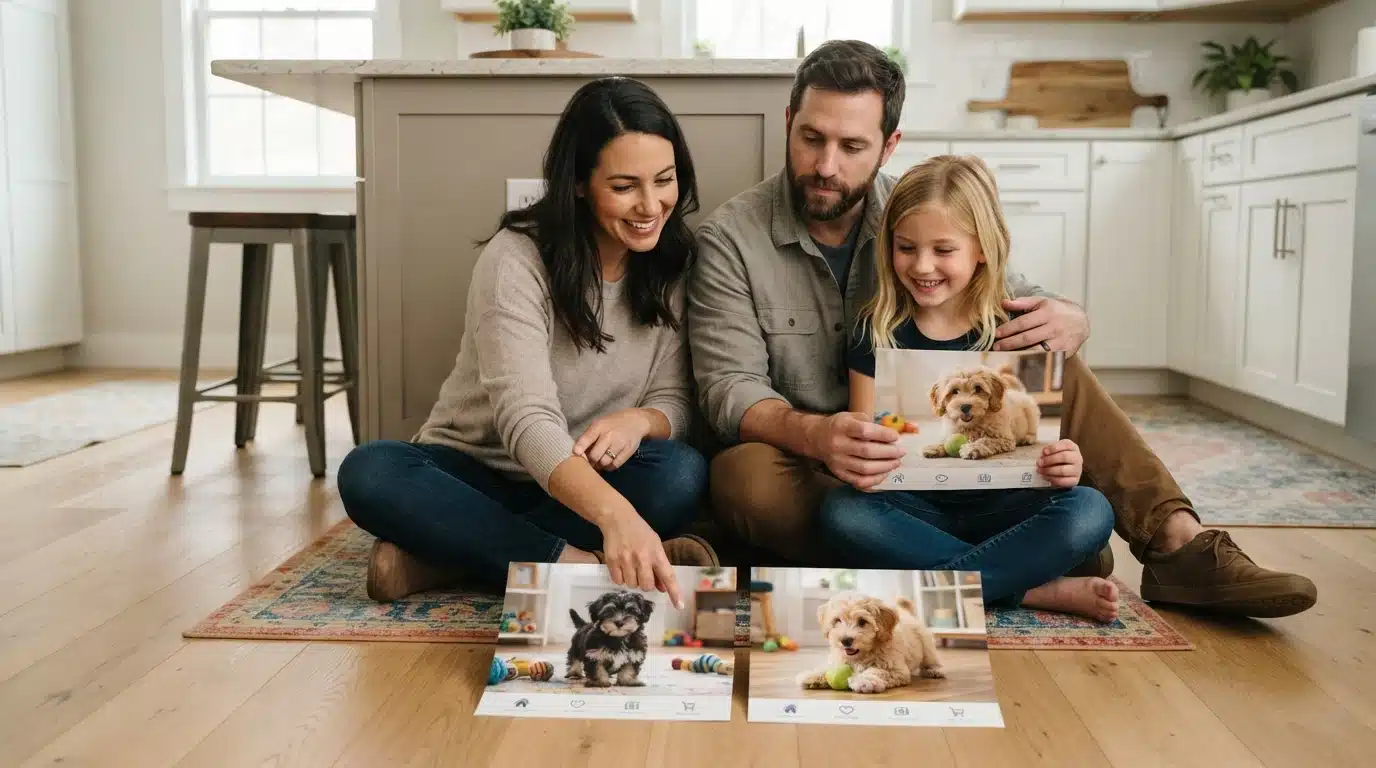
Choose a Havapoo if your household wants a project
Havapoos bring a busy, puzzle-loving brain to playtime. They chase hard, tug hard, and keep inventing new games, so expect to swap toys often and add trick training to the weekly routine. A family that enjoys active sessions, fetch and tug for puppies included, will find this mix endlessly entertaining. Kids who want a rough-and-ready playmate usually click with a Havapoo fast. The trade-off: underworked Havapoos invent their own games, and those often involve your shoes. If you want fuller temperament and care context, this Havapoo vs Havanese overview covers both sides.
Choose a Havanese if your household wants a companion
Havanese puppies play with you, not past you. Their style leans soft: gentle chase, toy carrying, shadowing you from room to room, and short bursts of zoomies that end in a lap. That suits quieter homes, apartment living, and first-time owners who want affection without constant management. The best games for Havanese puppies stay low-key, so a simple play routine works. You still need daily engagement, just less of it in high gear.
Both fit families with time and structure
Neither breed thrives on being ignored. Both need roughly 30 to 45 minutes of daily activity in short blocks, plus consistent enrichment like a puzzle feeder for puppies. Match the puppy to your real schedule, and either choice works. At Sage Puppies, Cassie matches families to puppies based on how they actually live, not just coat color.

Which play style fits your family best? If you are leaning Havapoo or Havanese, Sage Puppies can match you with the right puppy through a simple application, then share play and prep tips so day one goes smoothly. Explore available puppies and apply today.
Frequently Asked Questions
Q1: How do Havapoo and Havanese puppies differ in play style?
Havapoos play with drive: fetch, tug and puzzle games in fast, repeat bursts. Havanese play is social, built on tug, toy carrying and settling beside you. Both need 30 to 45 minutes of daily activity.
Q2: Which games do Havapoo puppies enjoy most?
Tug of war with drop-it rules, yard fetch with resets, chase games and snuffle mats. Mix one thinking game with running games so their busy brains settle afterward.
Q3: What toys suit Havapoo and Havanese puppies?
Size-appropriate rubber or plush toys without glued eyes, strings or loose stuffing. Rope toys work for supervised tug. Rotate a few toys weekly so old ones feel new.
Q4: How long should each play session last?
Keep sessions to about 10 minutes, spread across the day. Puppies tire fast and joints are still growing, so short blocks beat one long session.
Q5: Can I leave my puppy to play alone?
Solo play holds a Havapoo longer, but neither breed is built for it all day. Use a puzzle feeder for short stretches, then follow up with a game together.
Q6: What are signs of overstimulation during play?
Watch for nipping, barking that will not settle, frantic circling, toy guarding or whining. Pause play and give calm time in a quiet space before restarting.
Conclusion
The Havapoo vs Havanese question comes down to play, not energy. Both breeds need roughly 30 to 45 minutes of daily activity in short 10-minute blocks, so the real difference is style. Havapoos chase, tug and solve puzzles with busy, repeat-driven drive. Havanese play is social: toy carrying, gentle tug and short bursts that end in your lap. Pick games that match your puppy, keep sessions short, and watch for overstimulation signs like nipping or frantic barking. Match the individual puppy to your household rhythm, and either breed becomes an easy, joyful fit for a family that shows up to play.