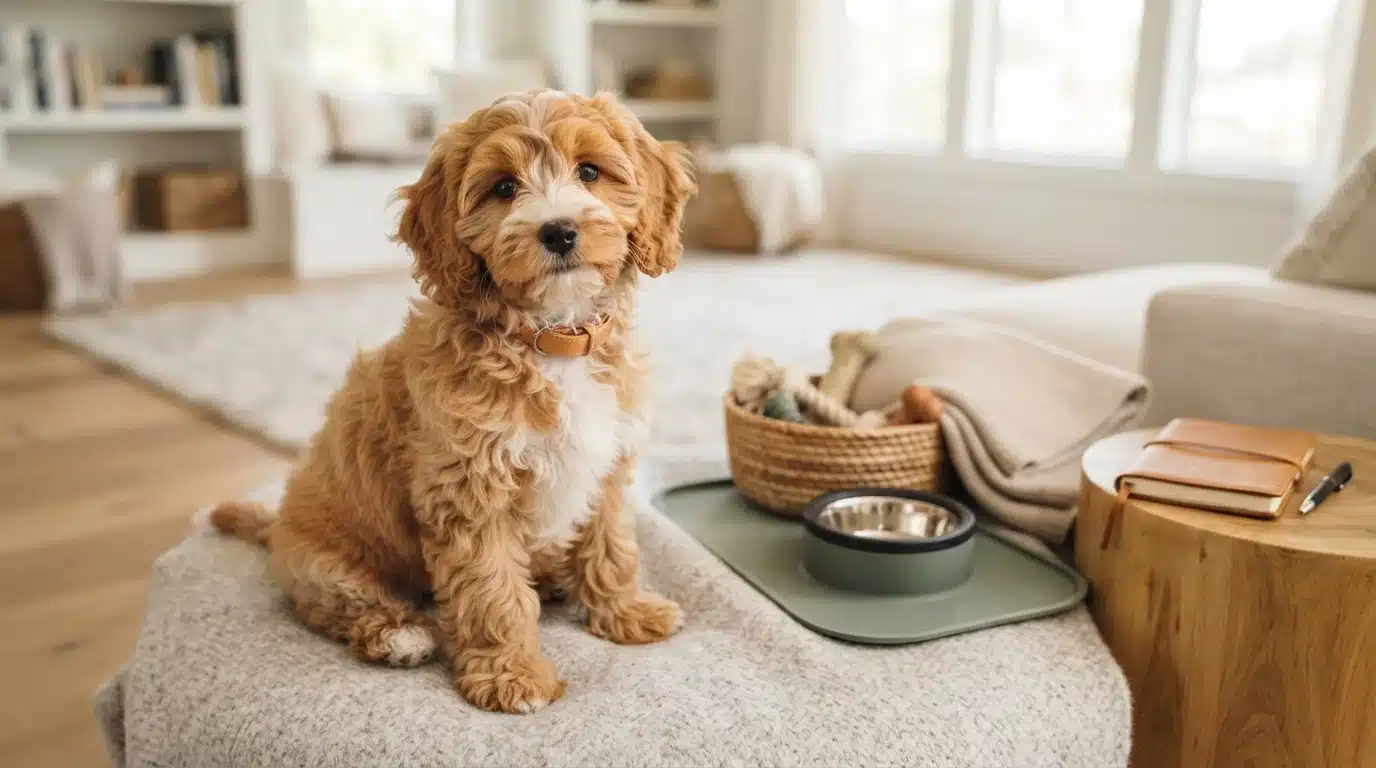
Quick Summary: Prepare for a small breed puppy by choosing an adult-sized crate with a divider, a Y-front harness, shallow bowls, a playpen, basic grooming tools, and identification. Feed tiny puppies four measured meals daily between 6 and 12 weeks, weigh them every week or two, and transition to small-breed adult food gradually between 9 and 12 months. Create a puppy-proofed basecamp with a simple routine for meals, potty breaks, naps, play, training, and grooming, while arranging an early vet visit and following Sage Puppies’ go-home guidance for a smoother first week.
The first night is where small breed puppies lose you. An 8-pound Havapoo needs a crate sized for a 12-pound adult, a harness that fits a narrow chest, and portions measured in tablespoons, not scoops. When the crate is too big or too small, you hear it at 2 a.m., when your puppy turns in a circle and cannot settle.
That gap between guessing and fitting is the problem this guide solves. It walks through small breed puppy essentials before your Havanese, Havapoo or Cavapoo comes home: a supplies checklist, feeding pacing for a tiny stomach, and crate, playpen, harness and carrier plans sized for the adult your puppy will become.
The guidance leans on veterinary and welfare recommendations, paired with the day-to-day experience of raising well-bred companion puppies in South Jordan, Utah.
What Supplies Do I Need Before a Small Breed Puppy Arrives?
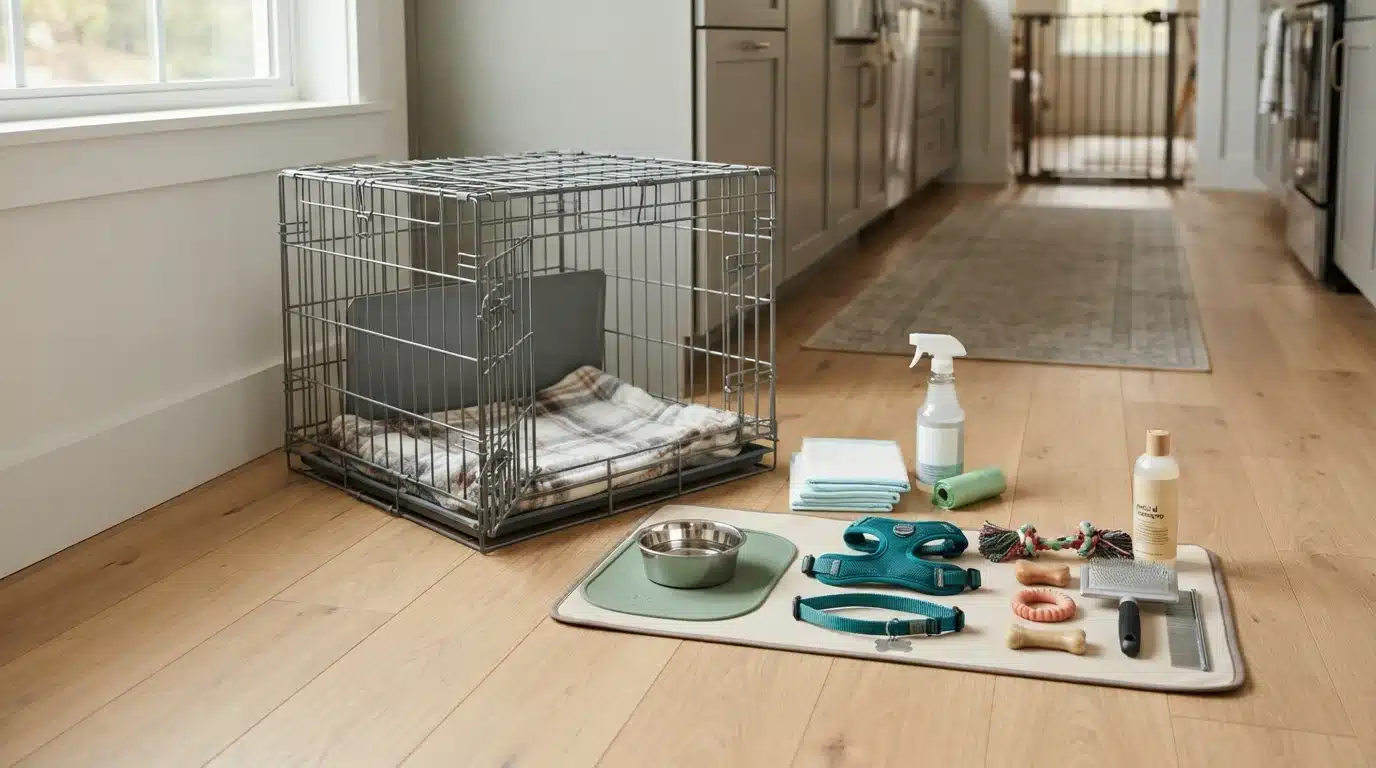
You need nine supply categories before your puppy walks in the door: food and bowls, a correctly sized crate, a playpen or gated room, a harness and flat collar, an ID tag and microchip plan, grooming basics, chew toys, potty and cleanup supplies, and a travel carrier. Small breeds like Havanese, Havapoo and Cavapoo puppies outgrow gear fast, so everything should be bought with the adult dog in mind, not just the 2-pound puppy you bring home.
The Nine Categories That Actually Matter
Use this small breed puppy supplies checklist before pickup day:
- Puppy food (the same brand the breeder started)
- Two shallow bowls: one for water, one for food
- A crate sized for the adult dog, with a divider
- A playpen or puppy-proofed room
- A Y-front harness and a flat buckle collar
- ID tag plus microchip registration
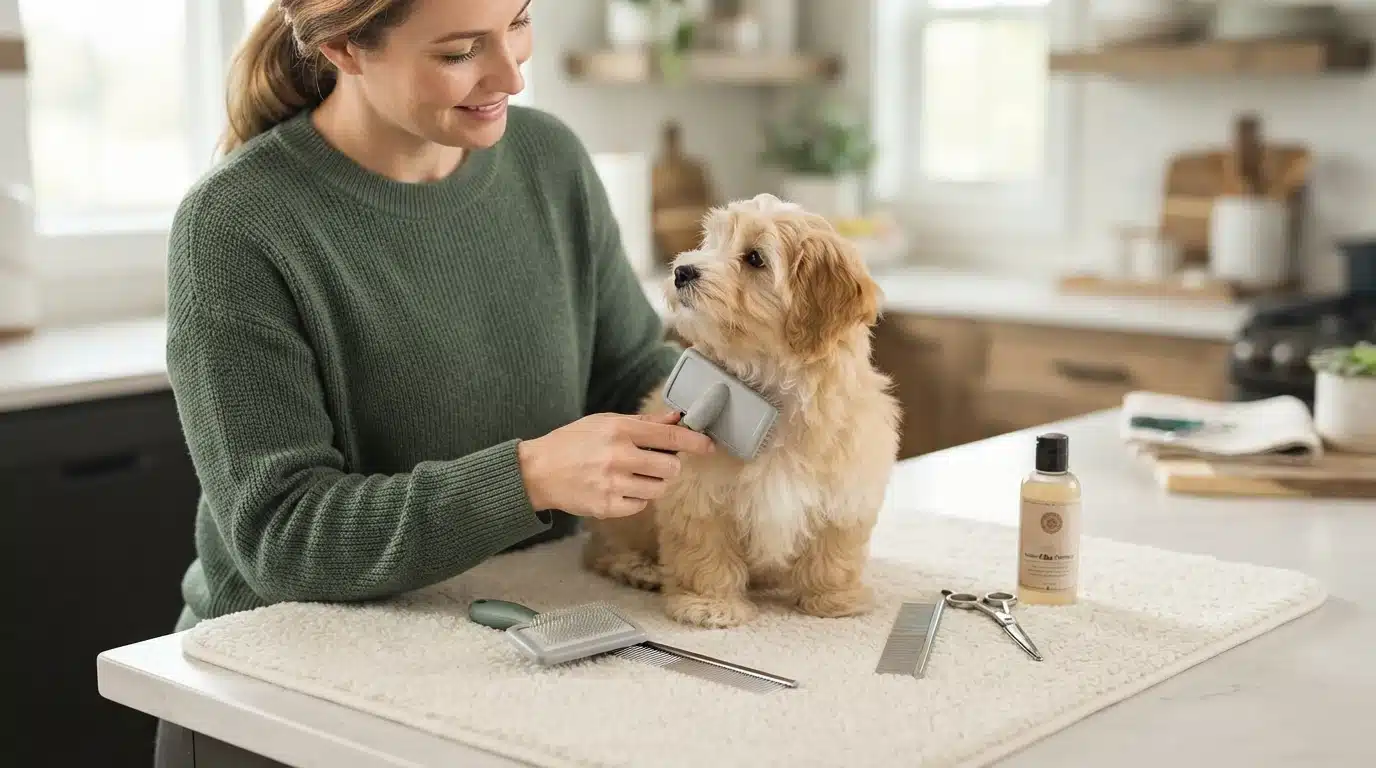
- Slicker brush, comb and puppy shampoo
- Chew toys and a teething ring or two
- Potty pads, waste bags and enzyme cleaner
Feeding Supplies and Kitchen Setup
Start with small-breed puppy food and a shallow dish. Small breeds often need several meals a day to keep blood sugar steady, so ask your breeder exactly how often the puppy is eating before you switch anything. Guidance from PetMD and Chewy’s puppy feeding guide supports frequent meals for tiny puppies. A dedicated feeding spot in the kitchen helps, because measuring portions in tablespoons beats free-feeding a breed that gains weight easily.
Sleep, Containment and Identification
Buy one crate that fits the grown dog and use a divider panel to shrink the space now. For an 8-pound Havapoo, plan for a 12-pound adult. Pair the crate with a playpen so the puppy has room to move without room to wander. Fit the harness snugly on a narrow chest, and register the microchip before travel. You can map this onto the first-week checklist for timing.
What Can Wait Until After Pickup Day
Skip the fancy extras for now. Formal training tools, a full grooming kit, sweaters and a big toy bin can come later. Even the carrier can wait a week unless your puppy is flying home; bought-in-advance supplies are fine, but dogs outgrow enthusiasm faster than gear.
How a Small Breed Puppy Actually Eats
Small breed puppy essentials start at the food bowl. A Havanese or Cavapoo puppy eats a few tablespoons at a time, so how you pace those meals matters more than the bag’s serving chart. This section covers meal timing, portion control and the switch to adult food.
Why Small Stomach, Fast Metabolism
A 2-pound puppy has a stomach the size of a walnut and burns through calories fast. Long gaps between meals can drop her blood sugar, which is a real risk for toy breeds. Small, frequent meals keep her energy steady and her digestion predictable. That also makes house training easier, because potty breaks follow food closely.
A Meal Rhythm You Can Actually Keep
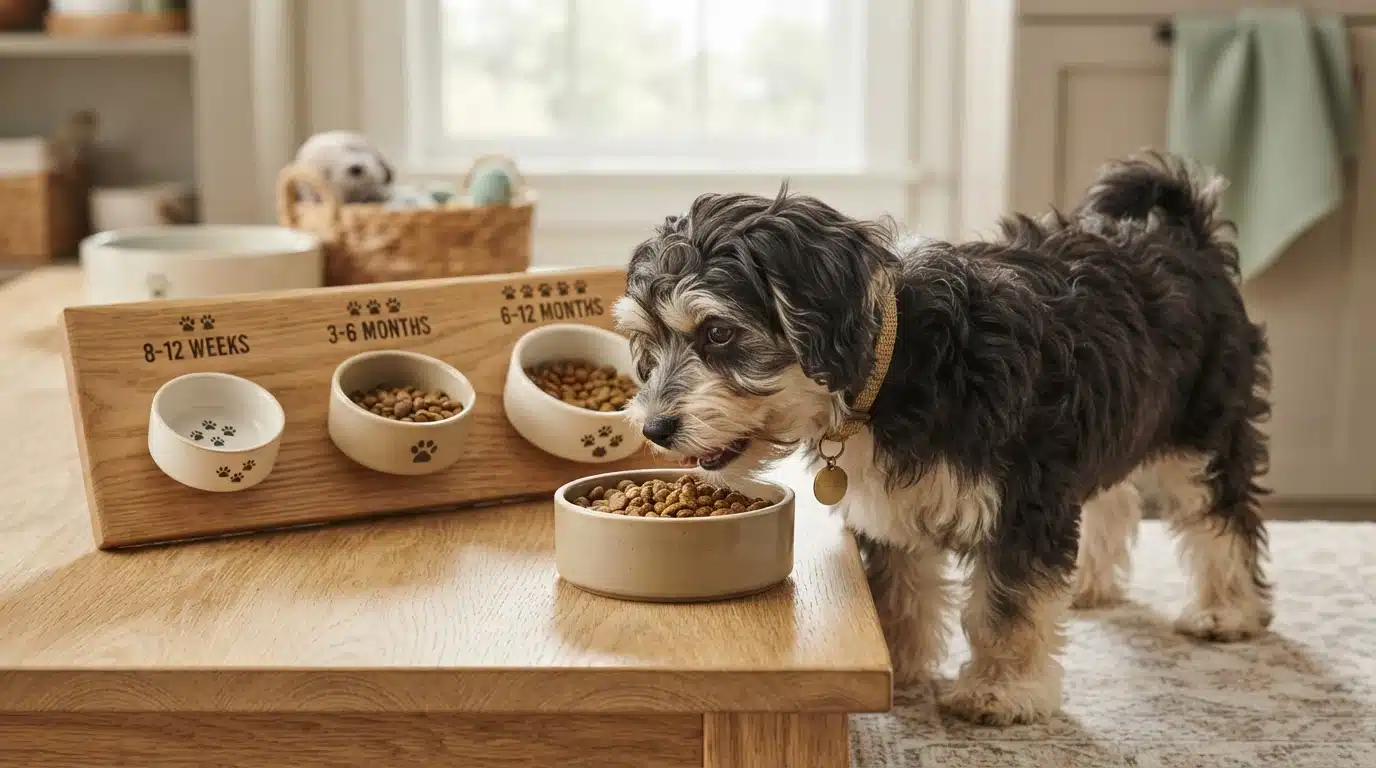
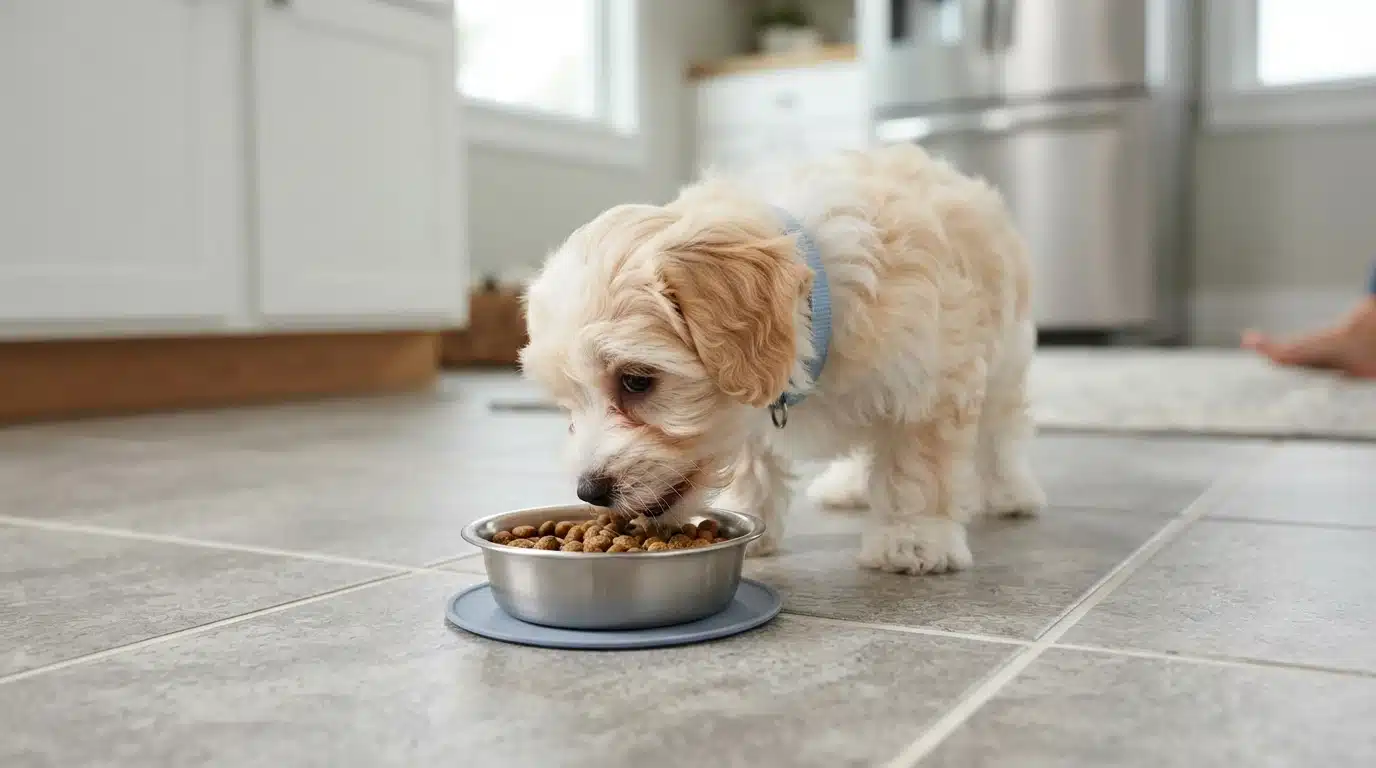
So how often should you feed a small breed puppy? Vets recommend four meals daily between 6 and 12 weeks, then fewer as she grows.
| Age | Meals per day | Sample times |
|---|---|---|
| 8-12 weeks | 4 | 7 a.m., 11 a.m., 3 p.m., 7 p.m. |
| 3-6 months | 3 | 7 a.m., 1 p.m., 7 p.m. |
| 6-12 months | 2 | 7 a.m., 6 p.m. |
Anchor meals to your own day. A final meal about three hours before bedtime helps her sleep through the night. If you want a week-one template, the small breed puppy feeding schedule for week one maps each meal to potty and nap times.
Portions Without a Guessing Game
Measure with a kitchen spoon or gram scale, not a scoop. Start with the amount on your puppy food’s bag, based on her expected adult weight, then adjust weekly. Feel her ribs: you should sense them under a thin fat layer without pressing. Ribs you can see mean feed a bit more; ribs you cannot feel mean cut back. Check her weight every week or two with a kitchen scale.
The Move to Adult Food
Most small breeds switch between 9 and 12 months; larger breeds wait longer. Make the change over about a week: mix 25 percent adult food in, then shift the ratio every two days. A slow transition protects her stomach and keeps her stools firm. Stay on a small-breed adult formula, since the kibble size fits her mouth better than standard pieces.
Gear That Has to Fit: Crate, Playpen, Harness and Carrier
Crate and Playpen Sizing for Puppies Under 12 Pounds
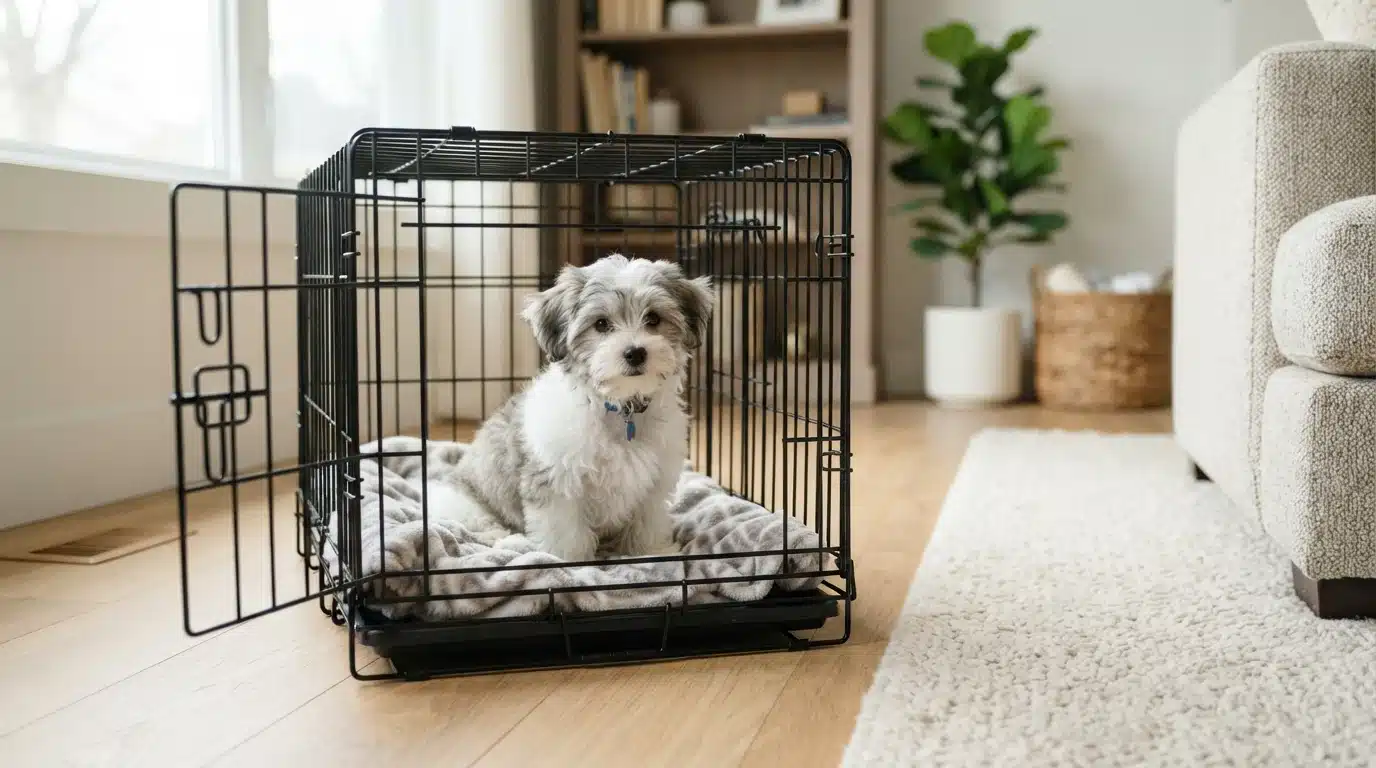
Size the crate for the adult dog, then shrink the space with a divider. A divider panel lets an 8-week-old puppy settle in the back corner while the crate grows with her. For sizing, follow the rule from PetMD’s crate guide: dogs up to 6 pounds fit an 18 x 12 x 14 inch crate, and dogs up to 12 pounds need roughly 22 x 14 x 16 inches.
| Adult Weight | Crate Size |
|---|---|
| Up to 6 pounds | 18 x 12 x 14 inches |
| Up to 12 pounds | 22 x 14 x 16 inches |
If the crate is too big, she will potty in one corner and sleep in the other. Too small, and she cannot turn around.
Playpen Panels and the Indoor Boundary
A wire playpen is the safest middle ground between full freedom and the crate. For a Havanese or Cavapoo, a four-panel pen set at 24 to 30 inches tall works, though Havanese can climb, so a cover helps. Set the pen up in your puppy safe room or basecamp area so naps, meals and potty breaks all happen in one predictable spot.
Harnesses, Collars and Leash Length
Skip the collar for walks with a small breed puppy; a flat collar belongs on the ID tag, not the leash. To check harness fit, use the two-finger test:
- Slip two fingers under every strap.
- They should slide snugly, not wiggle loose.
- Watch for rubbing at the armpits after a short walk.
A narrow chest needs a Y-front harness, not a step-in style that twists. Keep the leash short, four to six feet, so she cannot dart into traffic.
Travel Carrier Fit for Flights and Car Rides
Car rides and flights need different gear. In the car, strap a small crash-tested carrier into a back seat, never the front. For flying, look for an airline approved underseat dog carrier with mesh panels and check your airline’s exact dimension limits before buying. Your puppy should stand, turn and lie down inside it without pressing the top.
That fit-first mindset is one part of the small breed puppy care routine worth planning before pickup day.
Home Setup and Puppy-Proofing for a Tiny, Curious Dog
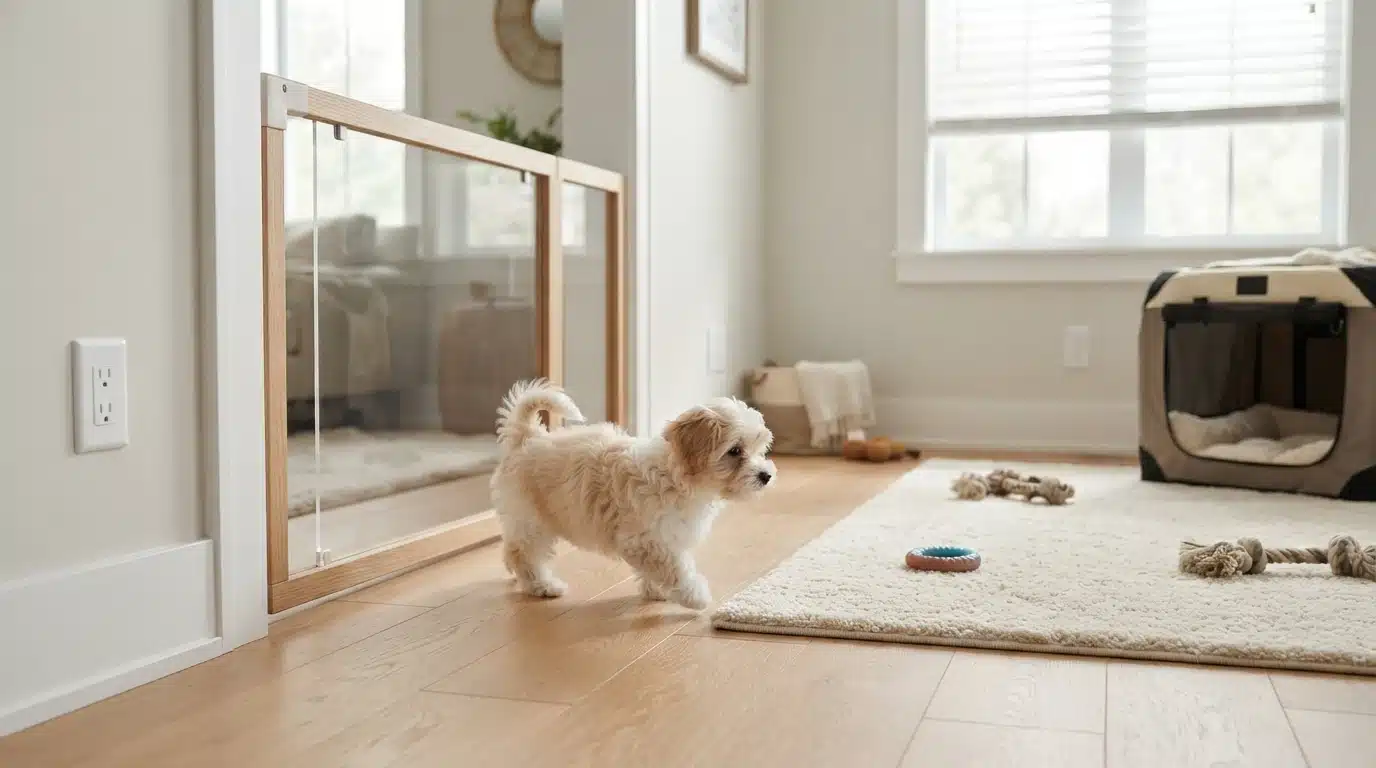
A Havanese puppy can slip through a gap the width of your hand, so puppy proofing a room means getting down on your knees and looking at the world from her eye level. Here’s how to build a safe base, catch the hazards big-dog owners never think about, and set up the first week for success.
Building the Safe Base Area
Pick one small room or a gated corner as her basecamp, a puppy safe room where she eats, sleeps and plays while she learns your routine. Lay washable flooring or a large mat, place the crate in a quiet corner, and keep water within reach. A basecamp setup keeps accidents contained and gives a nervous puppy one predictable spot to settle.
The Small Breed Hazards Owners Miss
Tiny dogs find danger in ordinary rooms. Crawl the floor and check for:
- Gaps and holes: spaces behind stoves, sofas and radiators wide enough for a 2-pound puppy
- Cords and chargers: teething puppies chew, so unplug or cover everything low
- Falling hazards: an open dishwasher door or a tipped chair can crush a tiny frame
- Floor-level toxins: dropped pills, chocolate crumbs, sago palm leaves and cleaning puddles all sit at nose height
Close doors to balconies and stairs, and never leave her unsupervised near recliners, where the mechanism is a classic small-dog trap.
Staging the First Week
Before pickup day, stock the basecamp: crate with divider, pen, bowls, enzyme cleaner for puppy accidents, and a few soft chew toys. Then set a calm routine. Carry her outside to the same potty spot every two to three hours, keep handling short, and let her nap in the crate rather than on your lap all day. Anyone picking up a puppy from us in South Jordan gets a full go-home checklist, but the essentials are simple: quiet, consistency, and a contained space she can call her own. Budget example: a basic pen, mats and gates run about $100 to $150, so plan that into your supplies total.
Grooming, Teething and the Daily Rhythm
Small breed puppy essentials do not stop at food and a crate. Grooming tools, teething relief and a steady rhythm shape how calm your Havanese, Havapoo or Cavapoo is at home.
A Small Breed Grooming Kit That Is Not Overkill
A slicker brush, a metal comb and blunt-tipped scissors cover most Havanese and doodle coats. Add dog toothpaste with a finger brush, puppy nail clippers and cotton balls for ears. Skip clippers and deshedding tools for now; a weekly ten-minute brushing session prevents mats behind the ears and under the legs. Brushing on your lap doubles as handling practice, so future groomers and vets meet a dog that already accepts being touched.
Teething Without the Emergency Cabinet
Puppy teeth start falling out around 12 to 16 weeks, and gums hurt long before then. Offer a frozen rubber chew, a chilled washcloth or a frozen carrot. Check toys for pieces small enough to swallow, since a 2-pound puppy can choke on anything bigger than a marble.
Skip anything harder than your thumbnail. Antlers, hooves and hard nylon bones can crack those tiny teeth.
One Daily Routine, Five Slots
Puppies relax faster when the day has a shape. Build it around five repeating slots and adjust the clock as she grows.
| Slot | What Happens | Why It Matters |
|---|---|---|
| After meals | Outside for potty, then calm time | Digestion is predictable |
| Short play | Two or three five-minute sessions | Energy burns without crash cycles |
| Nap | Back in the crate, roughly an hour | Prevents bitey overtired meltdowns |
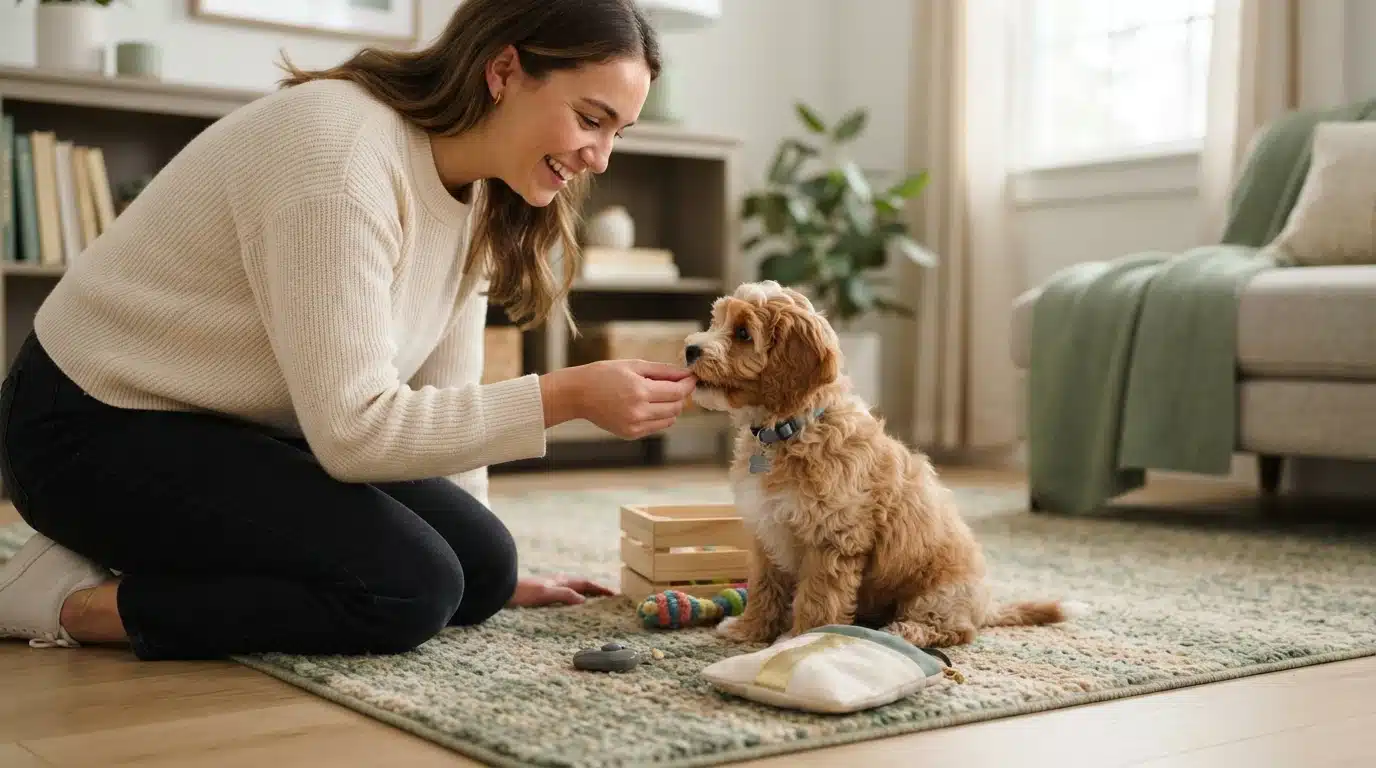
| Training | One-minute name and sit drills | Builds focus before bad habits |
| Grooming | Brush or teeth check on your lap | Normalizes handling early |
Keep naps in the crate so it stays a happy place, not a punishment. If a slot slides by an hour, nothing breaks; just return to the order. The rhythm matters more than the exact minutes, and by 16 weeks most puppies start anticipating each part of the day on their own.
Common Mistakes to Avoid
Buying Adult Gear and Adult Sized Portions
Buying a large crate for a small puppy seems practical, but it invites potty accidents in the far corner. Gear should fit her now, with a divider panel so the crate grows with her. Portioning matters just as much. An adult scoop can double her calories, so measure meals by weight and adjust as she grows.
Skipping the Vet Relationship Until Something Is Wrong
Waiting for a crisis costs you time and your puppy comfort. Book a wellness visit within a few days of arrival, ideally before pickup day. Your vet establishes a baseline weight, confirms the breeder’s vaccine record and flags breed-specific issues early. That first visit also builds trust, so emergencies feel less frightening later. Ask your vet to show you a body condition check, since small breeds hide weight changes well and a monthly hands-on check catches drift before it becomes a problem.
Over-Protecting and Under-Supervising
Puppies need exposure, not isolation. Carrying her everywhere or avoiding new sounds delays confidence and can backfire as fearfulness later. The real risk runs the other way: unsupervised freedom in an unproofed room. Supervise closely in open spaces, and let her explore safely within limits.

If you’re ready to bring home a Havanese, Havapoo or Cavapoo puppy, the right prep starts before pickup day. Visit Sage Puppies to see available litters, review pricing, and start the application. Cassie will help you match a well-bred puppy to your family, then guide you through the first weeks.
Frequently Asked Questions
Q1: What supplies do I need before a small breed puppy arrives?
Nine categories: food, two shallow bowls, a crate with a divider, a playpen, a Y-front harness and flat collar, ID tag and microchip plan, grooming basics, chew toys, and potty pads with enzyme cleaner.
Q2: How long can a small breed puppy stay in a crate at night?
At 8 to 10 weeks, expect one potty break around the midpoint. Keep the crate beside your bed so you hear stirring, and carry her straight out to the same potty spot.
Q3: When should I switch my puppy to adult food?
Most small breeds transition between 9 and 12 months. Mix adult food in at 25 percent and shift the ratio every two days over about a week.
Q4: Should a small puppy wear a collar or harness on walks?
Use a Y-front harness for walks and keep the flat collar for ID tags. Harnesses protect a narrow trachea better than collar pressure.
Q5: What crate size fits a Havapoo or Cavapoo adult?
Plan for roughly 22 x 14 x 16 inches for a dog up to 12 pounds, and use a divider panel so the space fits your 8-week-old now.
Q6: How do I know if my puppy is eating the right amount?
Feel her ribs weekly. You should sense them under a thin fat layer, without seeing them. Weigh her on a kitchen scale every week or two and adjust portions.
Conclusion
Getting small breed puppy essentials right comes down to fit. A crate sized for the adult dog with a divider, four meals a day for a tiny stomach, a Y-front harness that passes the two-finger test, and a contained basecamp cover most of it. Measure portions in tablespoons, weight her weekly, and keep the daily rhythm simple. Plan for the Havanese, Havapoo or Cavapoo your puppy becomes, not just the 2-pound puppy she is today. If you are still mapping out the first-year care schedule, keep it open beside your supplies list, because the two plans work together from week one.