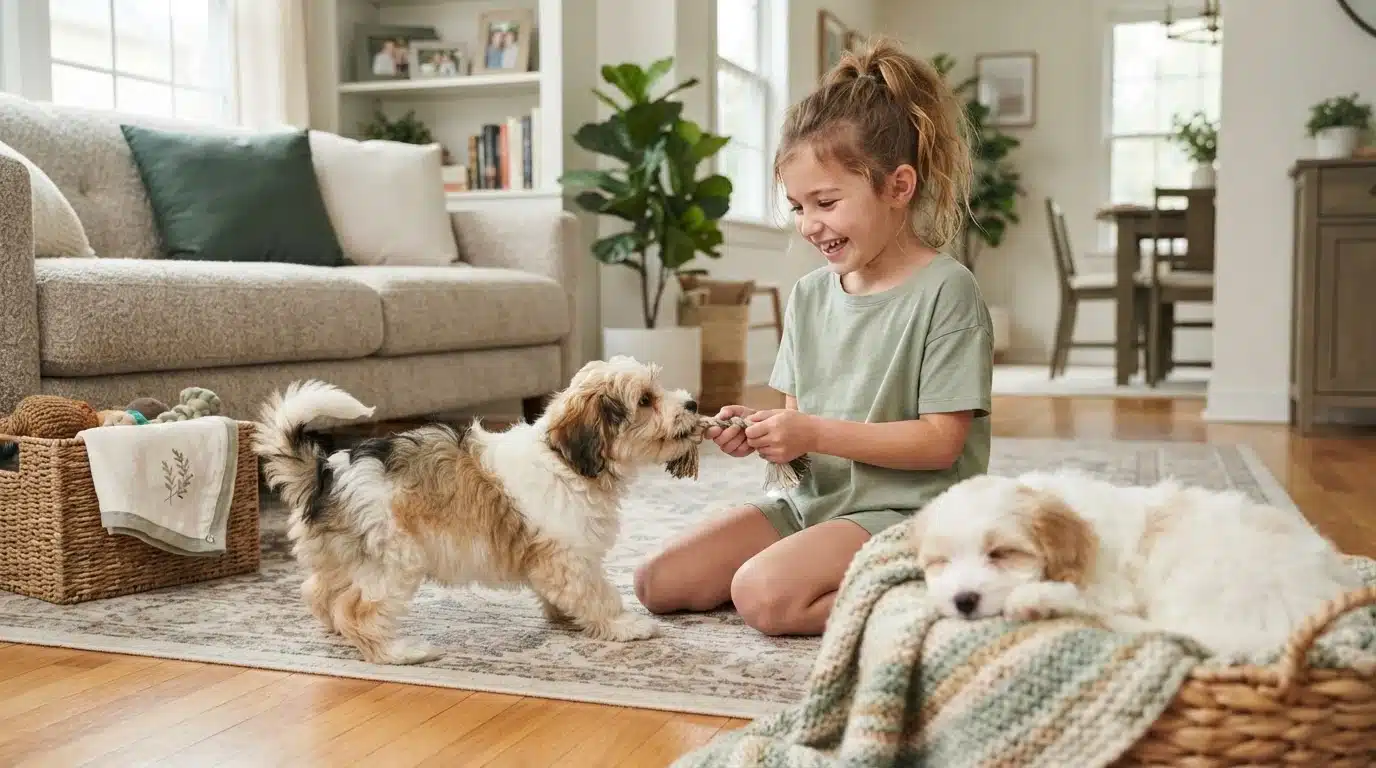
Quick Summary: Havapoos are calmer poodle mixes that need only 30 to 45 minutes of daily activity, brush easily three to four times a week, and suit apartments, retirees, and first-time owners. Cockapoos carry more spaniel energy, want 45 to 60 minutes of walking and play, and need daily brushing thanks to a curlier coat, making them a better fit for active families and outdoor lifestyles, with both breeds living 12 to 15 years and sharing similar training and health considerations.
If you want a small poodle mix that settles on your lap while you read, the Havapoo is the calmer pick. If you want that same family-friendly warmth with more bounce, the Cockapoo brings extra playful energy and a slightly longer coat to manage.
The problem with a Havapoo vs Cockapoo search is that every description sounds the same: affectionate, smart, low-shedding, great with kids. The real differences show up in daily behavior, exercise, and grooming. This guide skips the basics and compares temperament and care side by side, drawing on what we see in our own Havanese-heritage lines at Sage Puppies, so the Havapoo vs Cockapoo choice fits your actual home.
Havapoo vs Cockapoo: Temperament and Care at a Glance
| Havapoo | Cockapoo | |
|---|---|---|
| Typical energy level | Calm to moderate; short bursts of play mixed with long cuddle time | Moderate to high; longer play sessions and a sportier drive |
| Daily time commitment | About 30 to 45 minutes of walking and play, plus plenty of together-time | About 45 to 60 minutes of walking and active play |
| Grooming commitment | Brushing 3 to 4 times a week, professional groom every 6 to 8 weeks | Brushing several times a week to daily, professional groom every 6 to 8 weeks |
| Best household fit | First-time owners, families with gentle kids, apartment living, retirees | Active families, homes with a yard, owners who enjoy training and outings |
| Trainability for first-time owners | Eager to please and quick to pick up routines; very forgiving of beginner mistakes | Smart and willing, but higher energy can test consistency in training |
How Havapoo and Cockapoo Compare
Havapoo
A Havapoo crosses the Havanese with a toy or mini Poodle. It’s bred as a calm, people-oriented companion in the 7 to 15 pound range, well suited to first-time owners, gentle households, and apartment life.

Key strengths
- Calm to moderate energy with plenty of cuddle time
- Eager to please and forgiving of beginner training mistakes
- Needs only about 30 to 45 minutes of daily activity
Cockapoo
A Cockapoo blends the Cocker Spaniel with the Poodle. It comes in toy, mini, and standard sizes, with an outgoing, sportier nature. It fits active families, homes with a yard, and owners who enjoy training and regular outings.
Key strengths
- Smart and willing, with a fun sporting drive
- Moderate to high energy for longer play sessions
- Happy on hikes, at the park, or in a training class
Temperament Compared: How a Havapoo and a Cockapoo Actually Behave at Home
Paper descriptions tell you both breeds are “friendly.” Living with them is different. The Havapoo leans toward quiet devotion, while the Cockapoo brings a sportier, more playful streak from its Cocker Spaniel side. Here is how those differences show up in a real household.

Energy Level and Daily Rhythm
A Havapoo matches your pace. Expect two or three short play bursts a day, then long naps while you work. The breed guide from PetMD describes a companion dog that thrives on human contact rather than hard exercise, and that fits the 30 to 45 minutes of daily activity we covered earlier. A Cockapoo runs a bit hotter. The Spaniel heritage adds fetch obsession, zoomies, and a longer interest in games. Both settle well indoors, but the Cockapoo needs you to schedule play, not just wait for it.
Sociability With Family, Kids, and Strangers
Both mixes greet people warmly. The difference is style. A Havapoo attaches closely and often picks a favorite person, then shadows them around the house. A Cockapoo spreads affection across the whole family and is famously patient with children, which is why many larger families lean that way. Havapoos suit gentler, quieter households; Cassie sees this pattern in the Utah litters she raises, where the calmest puppies come from the calmest homes. Neither breed is a guard dog.
Sensitivity, Barking, and Alone-Time Tendencies
This is where Havapoos need honest planning. PetMD warns that they dislike long stretches alone and may bark or chew without enough attention. Cockapoos share some of this, but usually tolerate a workday better. Both are sensitive to tone, so harsh corrections backfire. If your house is empty eight hours daily, plan a midday visit either way.
Sociability With Other Dogs and Pets
Both mixes usually accept other pets. Havapoos inherit the Havanese’s social nature and tend to defer rather than compete, so introductions with a resident cat or calm senior dog go smoothly. Cockapoos play rougher and match energy with another young dog, which can turn chaotic in a multi-pet home. Slow, neutral-space introductions work for both. For a deeper look at how the Havapoo compares with another poodle mix, see our Havapoo vs Cavapoo comparison.
Care Compared: Grooming, Exercise, Training, and Health
Both mixes are small, smart, and low-shedding, so day-to-day care looks similar on paper. The differences show up in how much brushing your week needs, how hard you work off energy, and which health risks to watch.
Coat Care and Grooming Routines
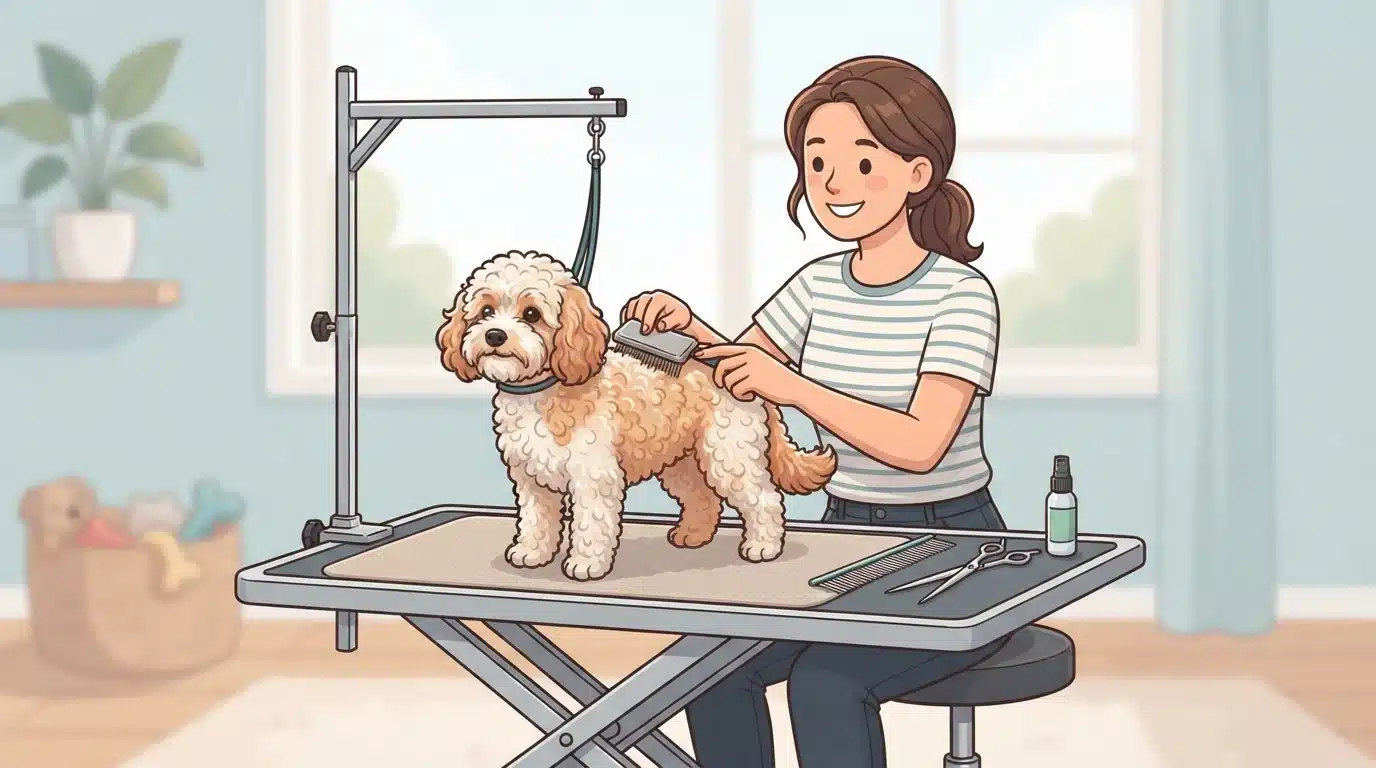
The Havapoo’s coat usually leans wavy or loose, so brushing three to four times a week keeps mats away. The Cockapoo often carries a curlier, denser coat that tangles faster, especially behind the ears and under the legs. Many Cockapoo owners brush daily. Both need a professional groom every six to eight weeks, and both need regular ear checks because floppy ears hold moisture. Cockapoos, with their longer ear flaps, tend to need closer attention there.
Exercise Needs and Activity Style
Remember the daily numbers from earlier: about 30 to 45 minutes for a Havapoo, and 45 to 60 for a Cockapoo. The style differs too. A Havapoo is happy with a stroll, a short play session, and time nearby. A Cockapoo often wants brisker walks, fetch, or puzzle games before it settles. Neither breed suits a leave-alone-all-day lifestyle.
Training, Intelligence, and Learning Style
Both are quick learners, which is a gift for first-time owners. The Cockapoo is famously food-motivated and eager, so basics like sit, recall, and crate training usually move fast. The Havapoo is just as smart but more tuned to people than to treats, so gentle, praise-based training works best. Neither breed responds well to harsh corrections. Short, upbeat sessions, five minutes at a time, beat long drills with either dog.
Common Health Issues and Lifespan
Both mixes generally live 12 to 15 years or more, since small poodle crosses age slowly. Shared risks include patellar luxation (slipping kneecaps) and eye conditions, both common in the parent breeds, and the Havanese side also carries hip and heart concerns to screen for, per the Havanese Club of America. Cockapoos add a higher rate of ear infections because of those long, furry ear flaps. Ask breeders for parent health testing, including patella and eye clearances, and PetMD’s Havapoo guide lists what to expect over time.
Feeding, Veterinary, and Ongoing Costs
Budget roughly the same for either dog: $40 to $70 a month for quality small-breed kibble, plus yearly vaccines and dental care. Add $50 to $90 per professional groom every six to eight weeks, or $600 to $1,000 a year if you use a groomer. Pet insurance for a small mixed breed often runs $25 to $45 monthly. We break down full first-year and lifetime numbers in our Havapoo puppy cost guide, and the same math applies to a Cockapoo. The biggest cost difference is simple: the curlier Cockapoo coat means more brushing time or more frequent grooms.
The best match depends less on looks and more on how your days actually run. Here is how each mix tends to fit four common households.
Havapoo vs Cockapoo in Real Households: Matching the Dog to Your Life
Apartments, Condos, and Close-Neighbor Living
Both mixes can adapt, but the Havapoo settles faster. At 7 to 15 pounds with only 30 to 45 minutes of daily activity, it fits condo life with little fuss. Cockapoos also do well in apartments, though Hills Pet notes larger maxi types suit small spaces less. Their 45 to 60 minutes of exercise still fits city walks. For setup help, see our small apartment puppy setup guide.
Families With Young Children or First-Time Owners
A Cockapoo brings spaniel playfulness that matches busy, noisy homes, but that energy needs an outlet. Skip daily play and it invents games you will not enjoy. A Havapoo stays gentle and people-focused, so it forgives beginner mistakes like inconsistent cues. It suits families who want a calmer dog in the mix rather than a second child.
Active Singles, Couples, and Outdoor Households
Here the Cockapoo pulls ahead. Its 45 to 60 minutes of walking and active play make it a natural hiking and fetch partner, and it keeps going when you do. A Havapoo can join short outings, but hard exercise is not its thing. If your weekends revolve around trails and long park sessions, the Cockapoo keeps pace.
Retirees, Calm Homes, and Therapy-Dog-Style Roles
The Havapoo was built for this setting. Its Havanese side is a calm, people-oriented companion that thrives on company rather than distance runs, which suits retirees and quiet homes. Both mixes can visit as comfort dogs, yet the Havapoo’s steady nature and smaller size make that role easier.

Neither choice is wrong. Match the daily rhythm, not the coat color, and you will get years of easy companionship.
| Life Scenario | Better Fit | Why |
|---|---|---|
| Apartment or condo | Havapoo | Smaller size, lower daily activity |
| Busy family home | Cockapoo | Playful energy matches active kids |
| Hiking and outdoor life | Cockapoo | Higher stamina and drive to play |
| Retiree or calm home | Havapoo | Steady, people-focused temperament |
Match the daily rhythm, not the coat color, and either mix rewards you for years.
The breeder matters more than the breed. A well-raised Havapoo from a careful program will beat a poorly raised Cockapoo every time, so vet the source before you fall for a face.
What a Calm, Health-Focused Program Looks Like
Good programs are small, open, and selective. Puppies grow up in the home, meet everyday sounds and people, and stay with their mother and littermates until eight to ten weeks. The breeder screens you as much as you screen them, shares parent health testing, and answers questions without pushing. The AKC’s checklist for responsible breeders highlights these same marks. A boutique program like Sage Puppies, which raises only Havanese, Havapoo, and Cavapoo litters, fits this pattern.
Red Flags in Poodle-Mix Listings
Watch for listings where money is the only topic, especially cash-only deals. Other warning signs: always having litters ready, no buyer questions, no paperwork, and refusals to show where puppies live. “Miniature” claims with no parent sizes, and photos that look like stock shots, deserve skepticism too. Puppy-mill resellers often hide behind these gaps, so ask for a video call if you cannot visit.
Where to Start Your Search (and What Good Fit Feels Like)
Begin with breed clubs, vet referrals, and local programs you can visit. Then trust the process. A good fit feels unhurried and a little demanding: an application, a conversation, and a breeder who asks about your schedule and household. If it feels like a checkout page, keep looking.
Which Should You Choose: A Havapoo or a Cockapoo?
Both dogs are loving poodle mixes, but they suit very different homes. The right pick comes down to your schedule, your space, and how much activity you genuinely enjoy.
Quick Decision Guide
Pick a Havapoo if you want a calmer, smaller companion that needs about 30 to 45 minutes of daily activity and fits apartment or condo life. Pick a Cockapoo if your household is busier and can give 45 to 60 minutes of walking and active play. Cockapoos are happy, people-oriented dogs at their best surrounded by family, according to Chewy’s breed guide. Both live 12 to 15 years or more, so this is a long-term match, not a short one.
When a Havapoo Is the Clear Match
A Havapoo fits best when quiet matters. Its Havanese heritage produces a soft, people-focused dog that settles easily after a short walk. First-time owners, retirees, and gentle households with kids usually find the routine manageable. If you brush three to four times a week and can book a groom every six to eight weeks, you can meet its care needs without reshaping your schedule. Smaller homes suit it well.

When a Cockapoo Will Fit Better
Choose a Cockapoo when energy is a feature, not a burden. The Cocker Spaniel side brings more drive, so these dogs love fetch, longer hikes, and active kids. They typically have the stamina to keep up with children of all ages, as Dogs for Good notes. Homes with yards or daily outdoor plans will use that energy well.

Still torn between the two? Cassie’s Havapoos are bred for that calm, people-first temperament. See Sage Puppies for available-puppy and pricing details, or start the application to get matched with your companion.
Frequently Asked Questions
Q1: havapoo vs cockapoo temperament
Havapoos are calmer and shadow one favorite person, needing only 30 to 45 minutes of daily activity. Cockapoos are sportier and more playful, spreading affection across the family and wanting 45 to 60 minutes of walking and games.
Q2: Which mix barks less?
Havapoos bark more when left alone too long, since they bond tightly to people. Cockapoos handle a workday a bit better. Both are sensitive to tone, so gentle training keeps noise down.
Q3: Which is easier to groom?
The Havapoo. Its wavier coat needs brushing three to four times a week, while the Cockapoo’s curlier coat often needs daily brushing. Both see a groomer every six to eight weeks.
Q4: Are either mixes good apartment dogs?
Yes, though Havapoos settle fastest at 7 to 15 pounds with lower exercise needs. Cockapoos adapt too, as long as you provide daily walks and play, but maxi-sized types fit small spaces less well.
Q5: Which breed lives longer?
Both typically live 12 to 15 years or more. Ask breeders for patella and eye clearances on the parents, and watch for ear infections in Cockapoos.
Q6: Can I leave a Havapoo home alone all day?
No. Havapoos dislike long stretches alone and may bark or chew. Plan a midday visit, dog walker, or daycare before committing.
Final Thoughts
The Havapoo and Cockapoo share warmth, intelligence, and long lifespans, but daily life differs. The Havapoo suits calmer homes: less exercise, easier grooming, and a steadier temperament built on its Havanese side. The Cockapoo suits busier households that can channel its extra energy into play, hikes, and training. Match the dog to your actual schedule, not the cutest photo, and ask any breeder for parent health testing. Whichever mix you choose, a thoughtful program and honest prep matter more than the label on the puppy.