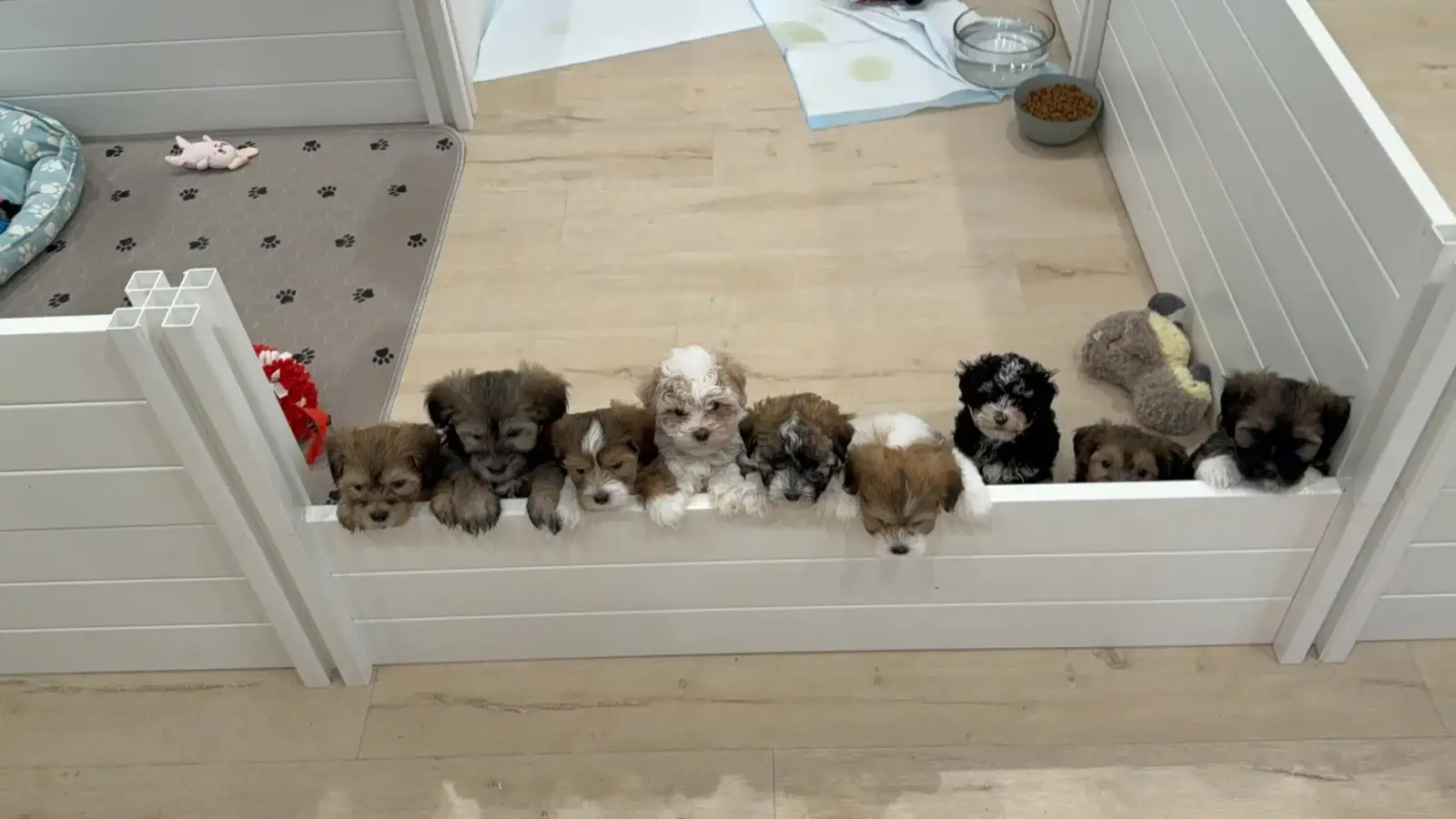
Quick answer: Havapoos, Cavapoos, and Maltipoos are Poodle mixes with different parent breeds. None is a universal winner for families. Compare the actual parents, the individual puppy, your daily routine, and the care you can provide.
A Havapoo combines Havanese and Poodle ancestry; a Cavapoo combines Cavalier King Charles Spaniel and Poodle ancestry; a Maltipoo combines Maltese and Poodle ancestry. Those labels help you understand a puppy’s background, but they do not promise a particular adult size, personality, coat, or ease of training.
Sage Puppies is based in South Jordan, Utah and offers Havanese, Havapoo, and Cavapoo puppies. Maltipoos appear here for comparison; Sage does not offer them.
Havapoo vs Cavapoo vs Maltipoo at a glance
| Mix | Parent background | What to ask |
|---|---|---|
| Havapoo | Havanese and Poodle | Both parents’ adult size, the Poodle’s size variety, and the puppy’s observed temperament. |
| Cavapoo | Cavalier King Charles Spaniel and Poodle | Both parents’ information, relevant health records, and the puppy’s handling and daily routine. |
| Maltipoo | Maltese and Poodle | Both parents’ size, the puppy’s current needs, and a realistic plan for handling and coat care. |
A parent-breed description is a starting point for questions. It is not a temperament test of the mixed-breed puppy in front of you. The American Kennel Club’s profiles describe the Havanese, Cavalier King Charles Spaniel, Maltese, and Miniature Poodle as individual breeds. Use those references to understand ancestry without treating them as a guarantee about a mix.
Compare size using the actual parents
Broad internet weight ranges can hide important differences between pairings. Before reserving, ask for the adult weights of both parents and which Poodle size variety is involved. If the breeder has records from the same pairing, ask what those puppies became as adults and how reliable the estimate is.
Choose equipment for the puppy’s current measurements and adjust it as the puppy grows. Think about who will carry the puppy, how children will handle it, and whether your home has stairs or other practical obstacles. A mix’s name alone does not settle those questions.
Temperament and family fit: ask about daily behavior
Replace “Which mix is the calmest?” with questions about an individual puppy. How does it respond to gentle handling, an unfamiliar person, ordinary household activity, or a change in routine? What has the breeder actually observed, and over what period?
Describe your household honestly: children’s ages, other animals, working hours, activity level, and the time you can give to training. Ask how a proposed match relates to those details. A puppy’s behavior can change as it develops, so observations should inform a care plan rather than promise a fixed adult personality.
All three choices require preparation. Arrange supervision, practice calm handling, and make time for training and companionship. For more questions to consider, see our small-dog family-fit guide.
Coat care and allergies are separate questions
Ask about the actual coat, the brushing tools and technique it needs, and how to plan grooming as it grows. A low-shedding description does not mean a low-maintenance routine. Request guidance for the individual puppy and discuss the ongoing routine with a groomer.
Low shedding also does not establish allergy safety. The American College of Allergy, Asthma and Immunology explains that a breed choice cannot guarantee reduced allergens or prevent symptoms. If someone in your household has a dog allergy, discuss the decision with their allergist before bringing a puppy home.
Which mix is best for a first-time owner?
There is no reliable universal ranking here. A first-time owner benefits from a suitable match, clear care instructions, a workable daily routine, and realistic expectations. Ask who can help with training and grooming questions and what support the breeder actually provides after placement.
Before choosing, write down your available time, budget, handling arrangements, and help during work or travel. The choice should make sense for those needs as well as for the puppy.
Compare the program and written terms before reserving
Ask to see the relevant parent and puppy records, understand how puppies are raised, and review the written purchase and deposit terms. Confirm the exact puppy price and any separate pickup or delivery costs. Our online breeder evaluation guide provides a longer checklist.
The owner-approved general Sage puppy purchase range is $3,500–$4,500. Individual listing prices, guardian arrangements, delivery costs, and ongoing care are separate. For the current Sage process, review Pricing & Reservation and How It Works.
Your next step
Choose a puppy by its background, observed needs, and fit with your home. Start with current Sage puppy availability, review the program and pricing, and complete the puppy application when you are ready to discuss a match.
Use the new puppy supply checklist to plan the practical setup before pickup or delivery.