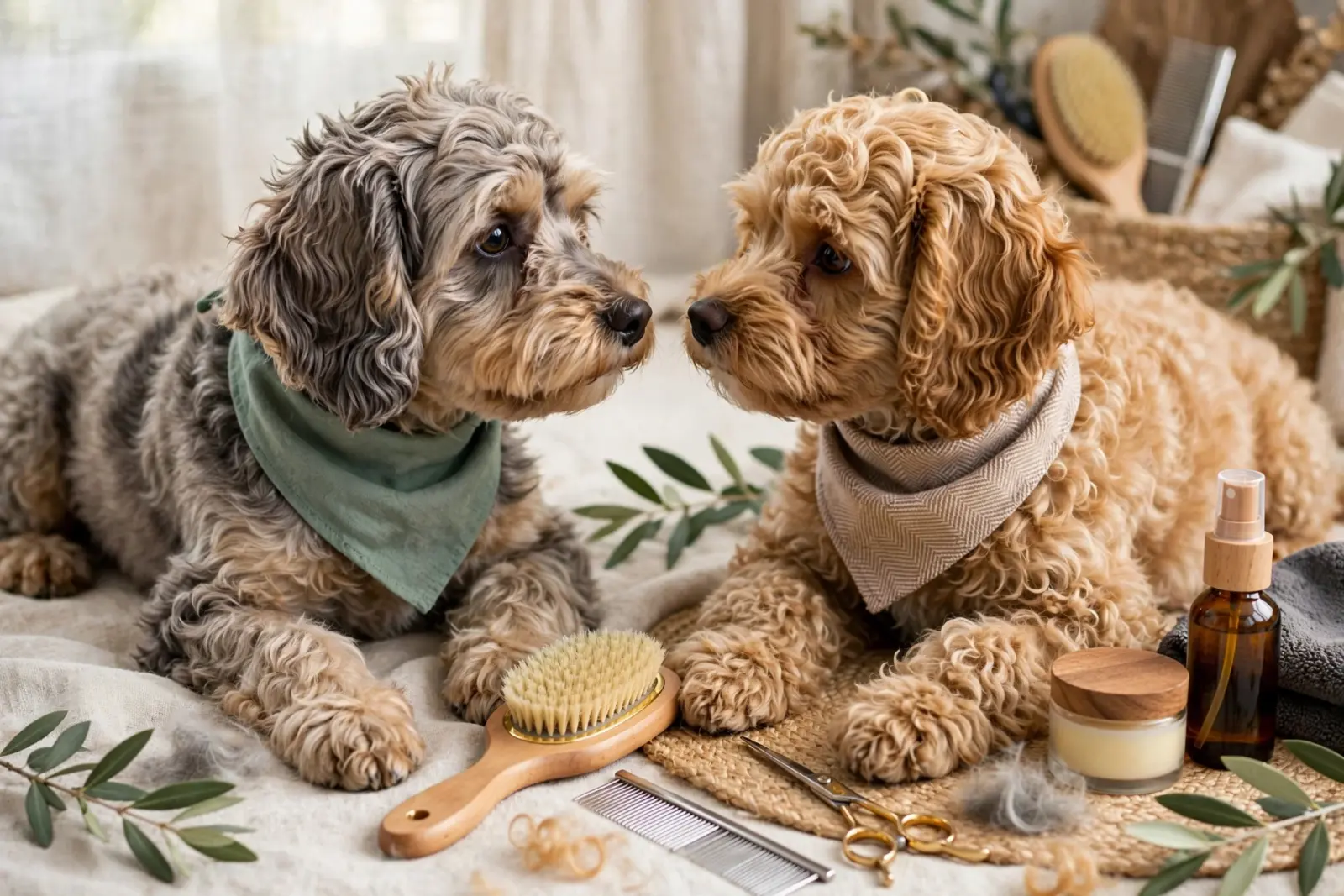
Quick answer: Cavapoo and Havapoo shedding varies with inherited coat traits and individual development. There is no universal lower-shedding winner. Low shedding does not establish allergy compatibility; discuss dog allergies with an allergist before committing. Both mixes need regular coat care.
Use the Cavapoo breed page and Havapoo breed page to compare broader family fit. Our Havapoo coat and allergy guidance explains why shedding and allergy compatibility are separate questions.
If you are comparing Cavapoo and Havapoo shedding, ask about the actual parents’ coats and the individual puppy. Visible hair loss, grooming work and allergy compatibility are separate questions. Coat photos cannot settle an allergy decision.
Most families compare these two small mixes for one reason. They want a sweet, cuddly dog that does not leave hair on every blanket or make allergy issues worse. That is why Havapoo Shedding, Cavapoo Shedding, and the real Shedding Differences matter more than broad breed descriptions.
This guide keeps the focus tight. We are looking at how Havapoo Shedding compares in daily life, how Cavapoo Shedding can vary by coat, and what grooming work each one asks from you. We work with qualified puppy families comparing Havapoos and Cavapoos, so this is a practical, buyer-first look built around real coat outcomes, not wishful marketing.
Havapoo vs Cavapoo: Shedding and Allergy Basics
| Havapoo | Cavapoo | |
|---|---|---|
| Shedding level | Varies with inherited traits and the individual coat | Varies with inherited traits and the individual coat |
| Coat texture | Wavy to curly, often soft and fluffy | Wavy to curly, sometimes silkier and looser |
| Allergy fit | Not established by breed; discuss with an allergist | Not established by breed; discuss with an allergist |
| Grooming maintenance | Brush several times weekly; groom every 4–8 weeks | Brush several times weekly; groom every 6–8 weeks |
| Best for | Buyers wanting a small, low-shedding companion with a plush coat | Families wanting a gentle companion and manageable grooming routine |
How Havapoo and Cavapoo Compare
Havapoo
The Havapoo is a Havanese–Poodle mix. Coat texture and care needs vary by dog; a soft or curly coat does not establish suitability for an allergic household. See AAAAI’s dog-allergy guidance and discuss personal concerns with an allergist.
Cavapoo
The Cavapoo is a Cavalier King Charles Spaniel-Poodle mix with a low-shedding coat, but straighter coats can drop more hair. It suits families who want a gentle, friendly small dog and can keep up with regular brushing and grooming.

Which One Sheds Less in Real Life?
There is no universal Cavapoo-versus-Havapoo shedding ranking. Ask about both parents’ coats and adult relatives where known. Puppy coats can change, and lower visible shedding can still mean substantial brushing and professional grooming.
Why coat texture matters more than the breed label
Dogs do not trigger allergies from hair alone. The main issue is allergen protein in dander, saliva, and skin oils. The American Academy of Allergy, Asthma and Immunology says no dog is fully hypoallergenic, even if it sheds less according to AAAAI. That is why two Cavapoos can shed very differently, and two Havapoos can too.
A quick rule of thumb:
- Tight curly coat – usually the lowest visible shedding
- Loose wavy fleece coat – often low shedding, but needs regular brushing
- Straighter or silky coat – more likely to drop hair around the house
Less shedding does not mean low grooming. The lower-shed coats often need more brushing, combing, and trims.
| Coat type | Real-life shedding | Grooming load | Allergy compatibility |
|---|---|---|---|
| Tight curls | Lowest visible hair | Highest | Cannot be inferred from coat texture |
| Wavy fleece | Low to moderate | Medium to high | Cannot be inferred from coat texture |
| Straight or silky | Moderate | Medium | Cannot be inferred from coat texture |
What buyers should expect from mixed-breed coat variation
Both breeds are mixes, so coat outcomes are not fixed. A puppy can favor either parent side, and littermates may not match. Research on dog allergens also shows wide dog-to-dog variation, even within breed groups. One NIH-backed study found dog allergen levels vary by dog traits and home factors, and another national survey found dog allergen was detected in 100% of sampled U.S. homes, even homes without dogs in this NIH/PMC report.
What that means for buyers:
- Do not shop by breed name alone.
- Ask about the parents’ coat types and past litter patterns.
- Ask for photos of the puppy dry and brushed out, not just after a bath.
- Expect a coat change between puppy fluff and the adult coat.
- If allergies are serious, plan an in-person test visit when possible.
If your top goal is the least visible shedding, pick the puppy with the curlier, denser coat – not just the cuter label.
Also Read: 5 Best Small Breed Puppies for Allergy Sufferers (2026)
Allergy Sensitivity: What Low Shedding Can and Cannot Do
Why allergy reactions are about more than fur
Low shedding helps with cleanup. It does not mean a dog is allergy-safe.
People react to proteins found in dander, saliva, urine, and skin oils, not just loose hair. Hair often acts like a carrier that spreads those allergens around your home. The NIH-backed NCBI overview explains that animal allergy triggers come from dander, saliva, sweat, skin oil, urine, and feces, while Mayo Clinic notes that pet allergies are reactions to proteins in skin cells, saliva, or urine, with fur mainly carrying them from place to place NCBI’s animal allergy overview and Mayo Clinic’s pet allergy guide.
That matters when you compare Cavapoo vs Havapoo:
- A lower-shedding coat may leave less visible hair on floors and sofas.
- It may also spread less loose coat debris during the day.
- But the dog still licks, sheds skin cells, and carries allergens on bedding, rugs, and clothing.
So the honest answer is simple: low shedding can reduce mess, but it cannot promise fewer allergy symptoms.
| What low shedding may do | What it cannot do |
|---|---|
| Leave less hair on furniture | Remove dander proteins |
| Make brushing mess easier to control | Stop saliva allergens |
| Help keep floors looking cleaner | Guarantee an allergy-friendly home |
| Lower visible coat fallout | Prevent asthma or nasal symptoms |
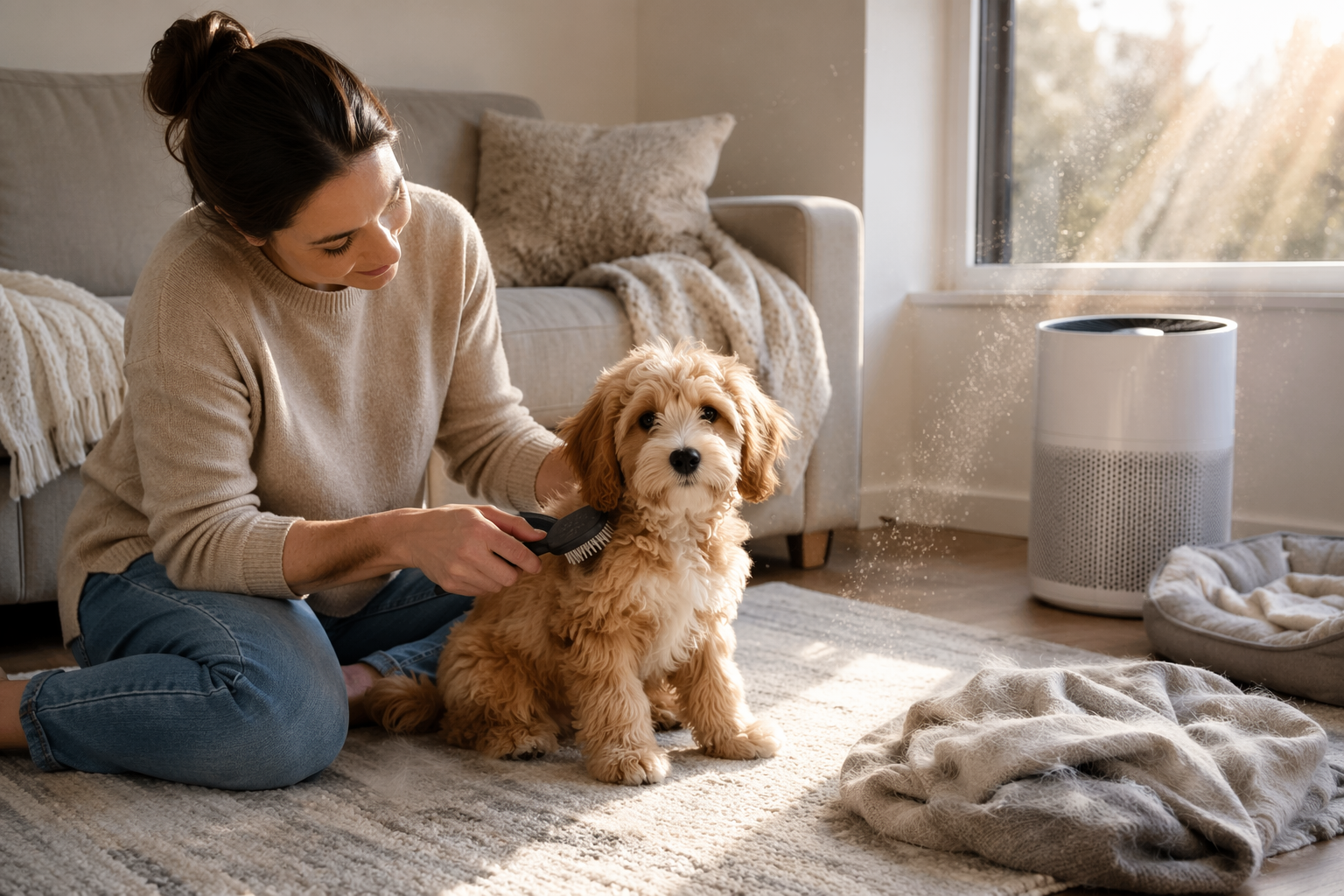
If anyone in your home has asthma, eczema, or strong pet reactions, treat “low shedding” as a grooming trait, not a medical promise.
How to test whether a puppy is likely to fit your home
An allergist can advise on medical assessment and whether contact with a dog is appropriate. A breeder visit or brief symptom-free exposure cannot establish long-term allergy compatibility.
Use this simple process:
- Talk with an allergist first if symptoms have been moderate or severe.
- Discuss allergies with an allergist before arranging contact with a dog; a puppy visit is not a medical compatibility test.
- Do more than one visit if possible. Some reactions show up later.
- Hold, pet, and sit indoors with the dog, where allergens collect more.
- Notice symptoms for 24 hours after contact, including sneezing, itchy eyes, cough, rash, or wheeze.
- Ask about grooming routine, because coat care affects how much loose hair and debris build up in the home.
- Plan home controls before pickup, like HEPA filtration, no-dog bedroom rules, and washable bedding.
A few practical checks help too:
- Ask whether your family reacts more to saliva contact than loose hair.
- Avoid assuming one Cavapoo or Havapoo will react exactly like another.
- Be extra careful with children who already react to cats, dogs, or dust.
A careful breeder can tell you about coat type and grooming needs. They cannot promise that a puppy will be hypoallergenic.
Also Read: Cavapoo vs Havapoo: Which Designer Doodle Is Better?
Grooming and Coat Maintenance: The Hidden Cost of Low Shedding
Low shedding sounds easy. It is not. Cavapoos and Havapoos often drop less hair around the house, but that loose coat still has to go somewhere. It usually stays trapped in the curls or waves, which raises the risk of tangles and mats.
Why brushing matters even when the dog barely sheds
Dogs with soft doodle-style coats need brushing because less shedding often means more coat retention. The AKC notes that brushing still matters even for dogs that are not big shedders, and long or curly coats are more prone to matting without regular care according to AKC.
For Cavapoos and Havapoos, that means:
- Loose hair gets caught in the coat
- Small knots turn into tight mats fast
- Mats often hide behind ears, under legs, and around the collar
- Skipped brushing can lead to a short shave-down at the groomer
A simple home routine works better than long catch-up sessions:
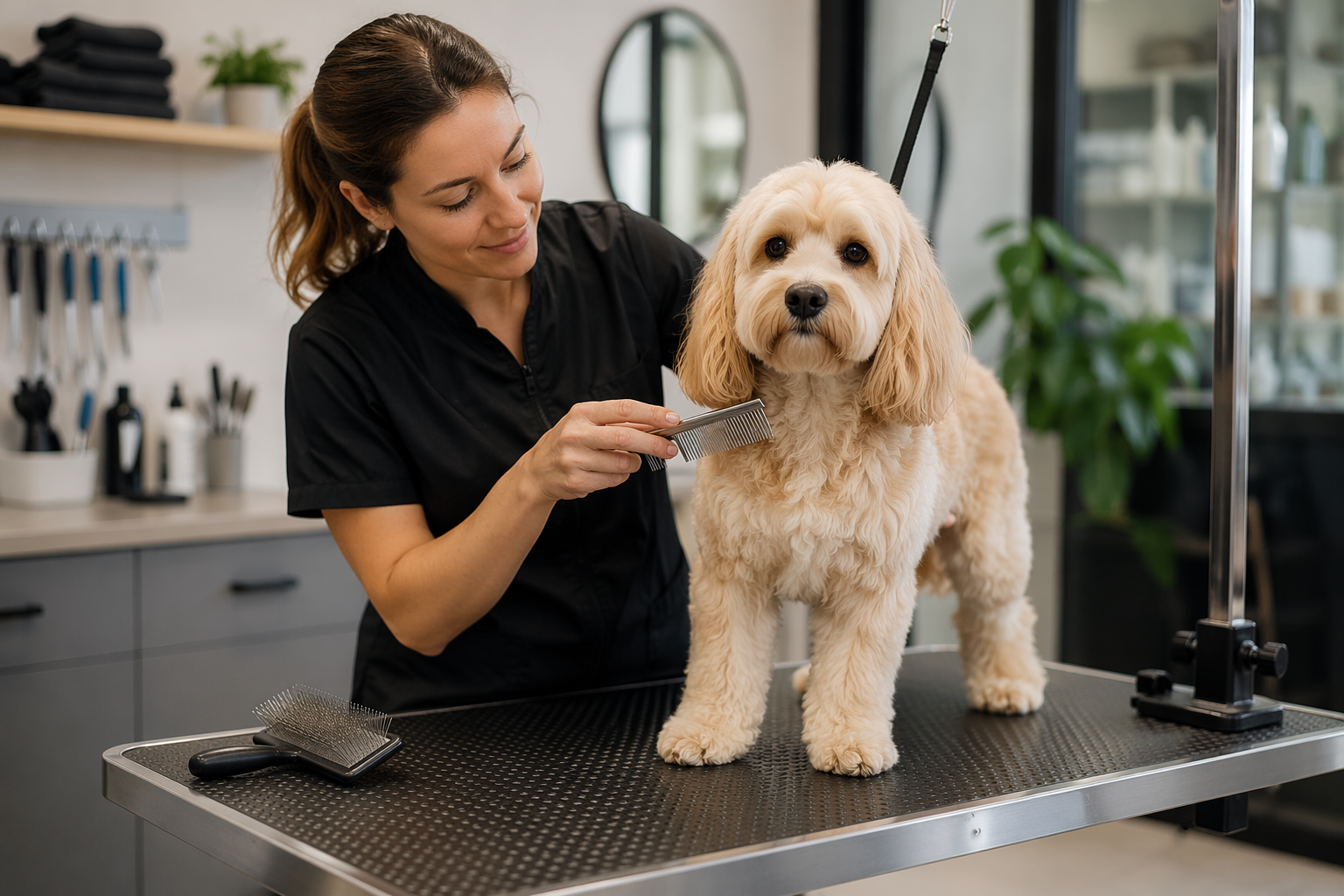
- Brush 3 to 5 times a week for wavy coats
- Brush daily for curlier or denser coats
- Use a slicker brush first
- Follow with a steel comb to check for hidden snags
- Book professional grooming every 4 to 8 weeks
| Coat type | Shedding look at home | Brushing need | Grooming demand |
|---|---|---|---|
| Looser wavy coat | More stray hair on floors | Moderate | Moderate |
| Dense curly coat | Less visible hair at home | High | High |
| Cottony mixed coat | Low visible shedding, tangles fast | High | High |
Low shedding does not mean low maintenance. It usually means the hair stays on the dog instead of your sofa.
How grooming routines affect allergy comfort at home
Brushing helps coat care, but it can also help with home comfort. Pet allergies come from proteins in dander, saliva, and urine, not just fur, and no dog is truly hypoallergenic per Mayo Clinic. So a lower-shedding Cavapoo or Havapoo may still trigger symptoms.
Good grooming habits can still reduce what builds up indoors:
- Brush on a regular schedule
- Wipe paws and face after outdoor play
- Wash bedding often
- Keep mats from trapping dander and saliva
- Bathe only as advised by your groomer or vet, so skin does not dry out
A smart allergy-friendly routine looks like this:
- Brush the dog in an easy-clean area
- Vacuum right after grooming
- Wash hands and change shirts after brushing
- Keep the dog out of the main sleep space if allergies are a concern
If your family has dog allergies, discuss the decision with an allergist before reserving or arranging exposure. Neither coat type nor a brief visit can guarantee a symptom-free home.
Also Read: Cavapoo vs Havapoo vs Havanese: Which Small Breed Is Best?
Which Should You Choose for a Cleaner, Easier Home?
Choose a Havapoo if your top priority is the lowest visible shedding
If your main goal is less loose hair, compare the actual dogs’ coat characteristics and realistic grooming routines. A breed label alone does not establish which puppy will shed less.
That does not mean allergy-safe. Pet allergies come from proteins in dander, saliva, and urine, not just fur, as the NIEHS explains. So a Havapoo may look cleaner day to day, but an allergic family member can still react.
A Havapoo often fits best if you want:
- Less visible hair on furniture
- A coat that can look tidy between cleanups
- A smaller dog that often leaves less obvious mess
- A home where brushing time is easier than constant vacuuming
The trade-off is coat care. Hair that stays in the coat has to come out somewhere, and that usually means more brushing, combing, and grooming appointments.
| Best fit for a Havapoo | Why it matters |
|---|---|
| You hate seeing dog hair | Loose hair often gets trapped in the coat |
| You can keep up with brushing | Less shedding often means more coat maintenance |
| You want a neater-looking home | Lower visible shedding helps daily cleanup |
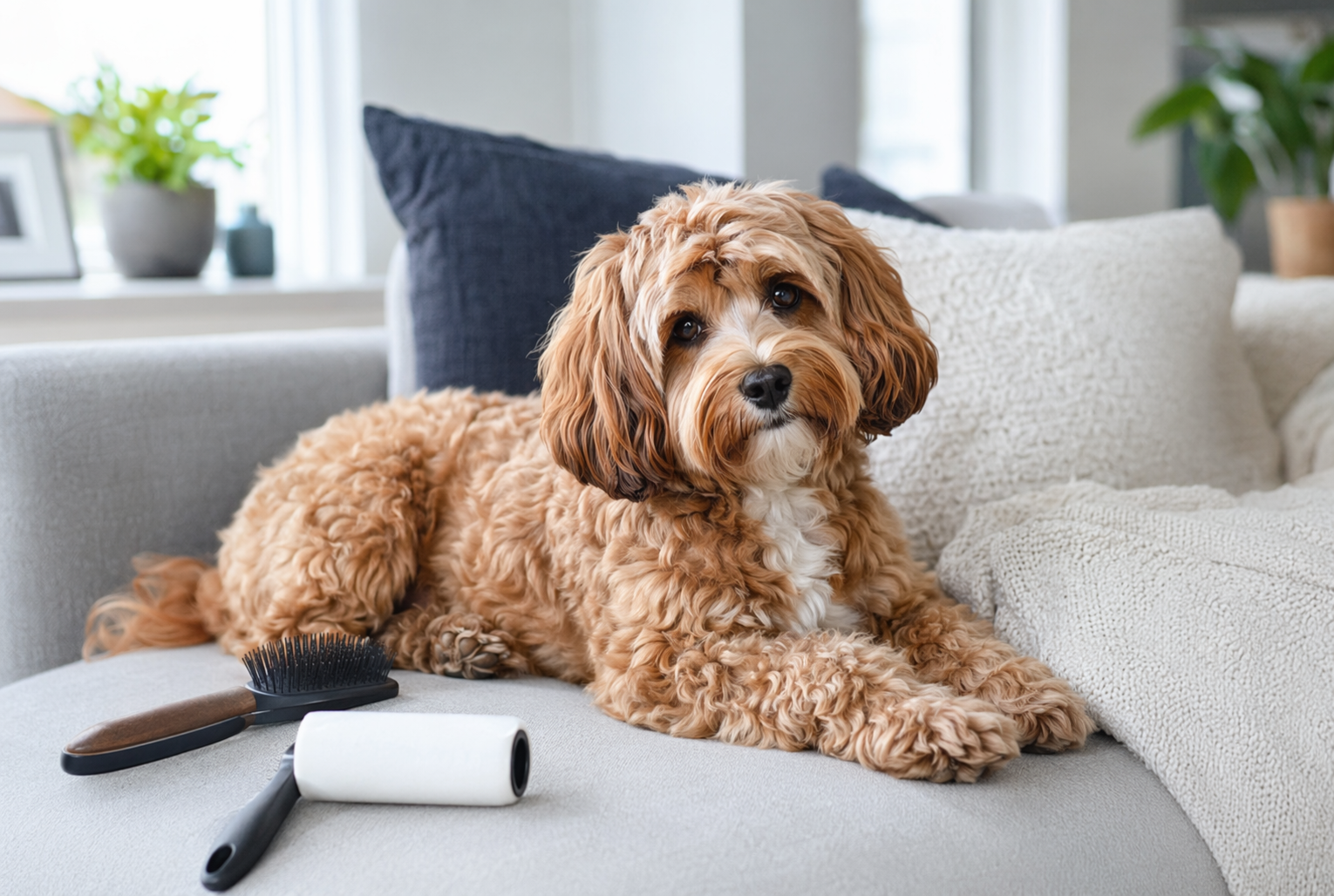
If “cleaner home” means less visible hair, compare the individual coat and your ability to maintain it. Neither mix is a universally safer choice for an allergic home.
Choose a Cavapoo if you want low shedding with a gentle companion profile
Pick a Cavapoo if you want low shedding plus a soft, easy family vibe. Many Cavapoos still shed lightly, especially compared with heavier-shedding breeds, but coat results can vary more from puppy to puppy.
That matters because no dog is truly hypoallergenic. The AAAAI notes that all dogs produce allergens, even dogs marketed as hypoallergenic.
A Cavapoo often makes sense if you want:
- Low shedding, but you can accept some stray hairs
- A sweet, people-focused dog for kids or first-time owners
- A balance between coat softness and manageable cleanup
Choose Cavapoo if your home priority list looks like this:
- Temperament first
- Shedding second
- Grooming commitment still expected
If you want the cleaner-looking coat outcome, lean Havapoo. If you want low shedding with a very gentle companion feel, Cavapoo is a strong choice.

Still unsure which coat fits your home best? Sage Puppies helps families compare Cavapoo and Havapoo puppies with real guidance on shedding, grooming, and allergy trade-offs. You can review available puppies, learn how pickup or nationwide delivery works, and start a clear, family-first application when you feel ready.
Frequently Asked Questions
Q1: What are the main differences in shedding between Cavapoo and Havapoo?
Shedding varies in both mixes. The actual parents, inherited coat characteristics and adult development are more informative than a Cavapoo or Havapoo label; there is no guaranteed lower-shedding winner.
Q2: Are Havapoos or Cavapoos more suitable for allergy sufferers?
Neither mix is guaranteed allergy-compatible. Discuss dog allergies with an allergist before committing; do not use curl, shedding or a puppy visit as proof of long-term tolerance.
Q3: How does the grooming and coat maintenance compare for Cavapoo vs Havapoo?
Cavapoos often need more brushing if the coat is dense, fluffy, or wavy-curly. Havapoos can mat too, especially behind the ears and legs, but many are easier to keep tidy. Plan for brushing, routine trims, and face cleaning either way.
Q4: Which breed is easier to keep clean in a family home?
A shorter pet trim may make coat upkeep more manageable in either mix. Your groomer can tailor brushing and appointments to the individual coat. A trim does not make a dog allergen-free.
Q5: Does puppy coat predict adult shedding?
Not perfectly. A soft, fluffy puppy may mature into a wavy or curlier adult coat. Ask about the parents’ coat types, shedding levels, and grooming needs. At places like Sage Puppies, that background helps families choose a better fit.
Conclusion
Cavapoo and Havapoo are both lower-shedding than many small dogs, but neither is a safe pick for a person with strong dog allergies. Dog allergy comes from proteins in dander, saliva, and urine, not just loose hair, and NIEHS explains that all dog breeds can trigger symptoms.
The practical difference is this:
- Havapoo often fits families who want a slightly steadier low-shed coat pattern
- Cavapoo may shed a bit more if the Cavalier side shows up strongly
- Both need regular brushing, clipping, and skin care to keep loose coat and dander under control
Research also found no evidence that certain breeds are truly hypoallergenic. So your best choice is not the dog with the best label. It is the puppy with the right coat type, breeder honesty, and grooming plan for your home.