Quick Summary: Both Havanese and Coton de Tulear dogs can learn with patient, reward-based training. This guide does not establish that one learns faster or house-trains a month earlier. Assess the individual dog’s motivation, health and response to short sessions. Build toilet habits and comfortable separation gradually, and seek help when fear, distress or a medical concern interferes.
The useful question is how you will teach the puppy in front of you. Breed background can prompt questions, but it cannot tell you whether a particular puppy prefers food, play or attention, how soon toilet habits will be reliable, or how long it can comfortably be alone.
Compare the training task before comparing breeds
Break “easy to train” into practical skills: responding to a name, gentle handling, toileting, resting and coping with short separations. A puppy may learn one skill quickly and need more help with another.
Ask the breeder what the individual puppy has practiced and what was observed. A general label such as “eager to please” is not a measured learning-speed result. This article is not a head-to-head training trial.
Havanese and Cotons are companion breeds with individual differences. Neither is a safer default for a busy household simply because a breed description suggests a faster first year.
| Training question | Havanese | Coton de Tulear |
|---|---|---|
| Preferred reward | Observe the individual dog | Observe the individual dog |
| Potty reliability | Individual progress; no fixed age | Individual progress; no fixed age |
| Distractions | Build difficulty gradually | Build difficulty gradually |
| Alone time | Supported individual plan | Supported individual plan |
Find rewards the individual dog actually values
Offer an appropriate small food reward, a short game or calm attention and observe what helps the puppy engage comfortably. Do not assume Havanese always prefer praise or that Cotons are universally more food-driven.
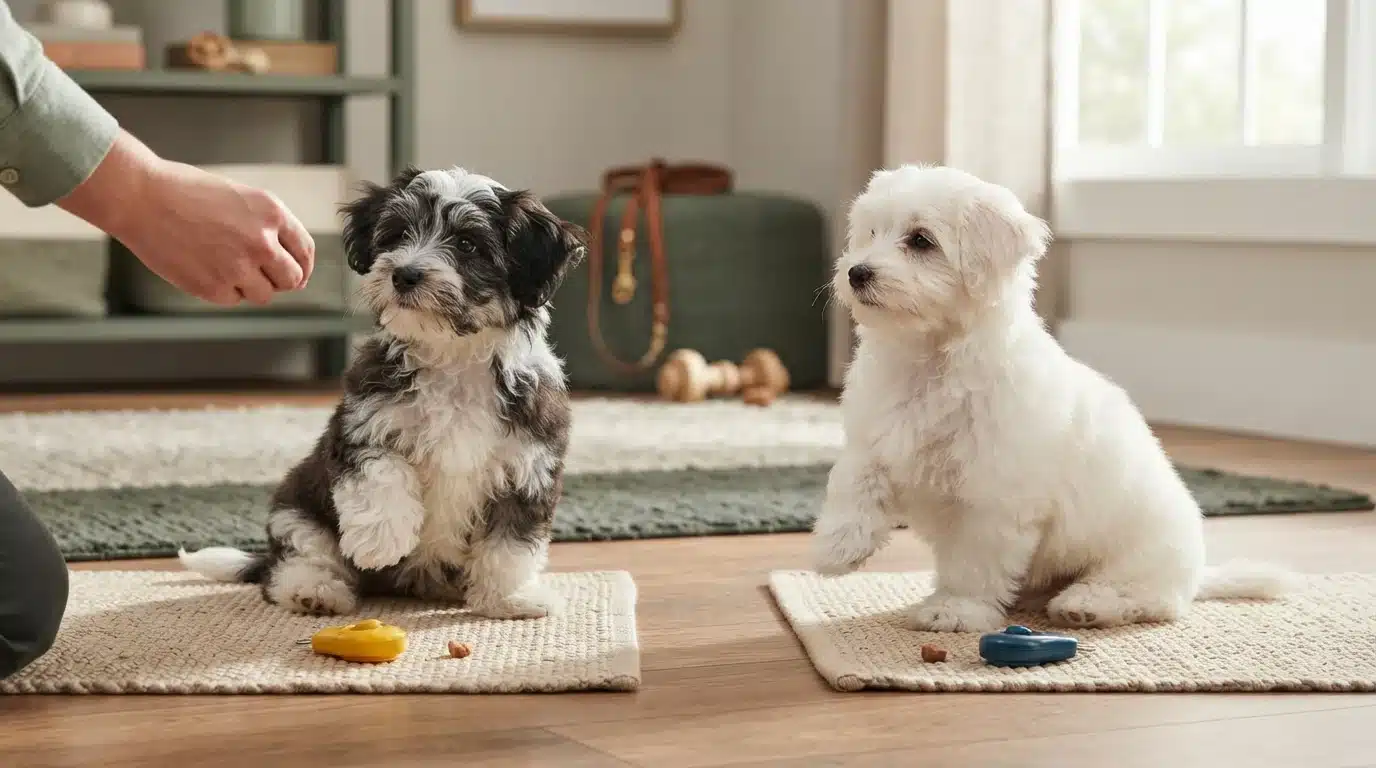
The AVSAB humane-training guidance supports reward-based methods. Keep sessions brief and understandable, reward the behavior you want and reduce the difficulty when the puppy struggles.
Train first in a quiet setting, then introduce modest distractions gradually. Adults should use consistent cues and supervise children. Avoid repeating a cue louder or treating hesitation as deliberate defiance.
Build toilet habits without a breed deadline
Provide frequent appropriate toilet opportunities, especially around waking, meals and play, and reward the desired location. Supervise or use a comfortable safe area when you cannot watch closely. Clean accidents calmly.
Track the actual puppy’s eating, sleeping and elimination pattern. A diary can reveal that a gap between breaks is too long without assuming every puppy of the same breed should follow one timetable.
Neither a six-to-seven-month Havanese promise nor a seven-to-eight-month Coton promise is supported here. New accidents, straining, discomfort or unusual frequency deserve veterinary advice rather than a label of stubbornness.
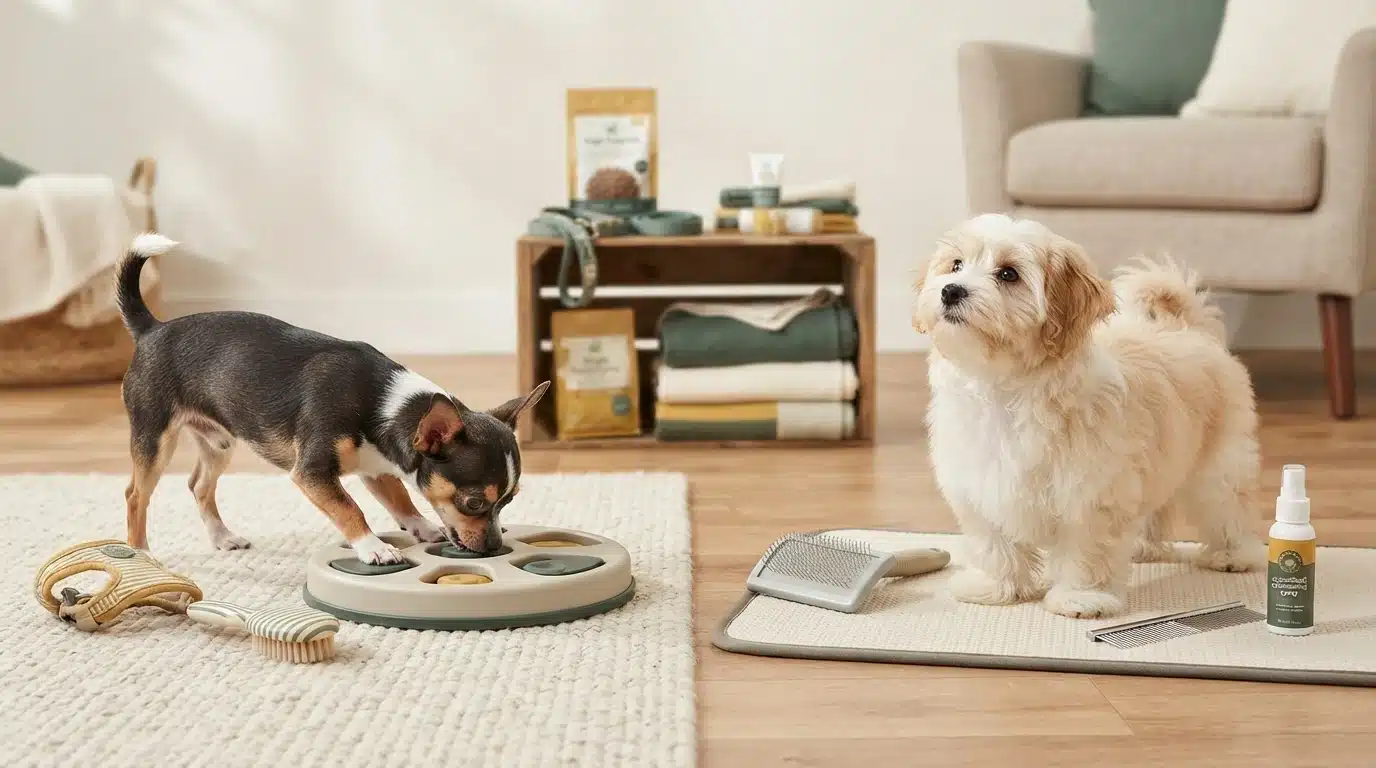
For daily-care context, the Havanese care guide can help organize questions. Adapt any example routine to the individual dog.
Use rest areas and separation practice thoughtfully
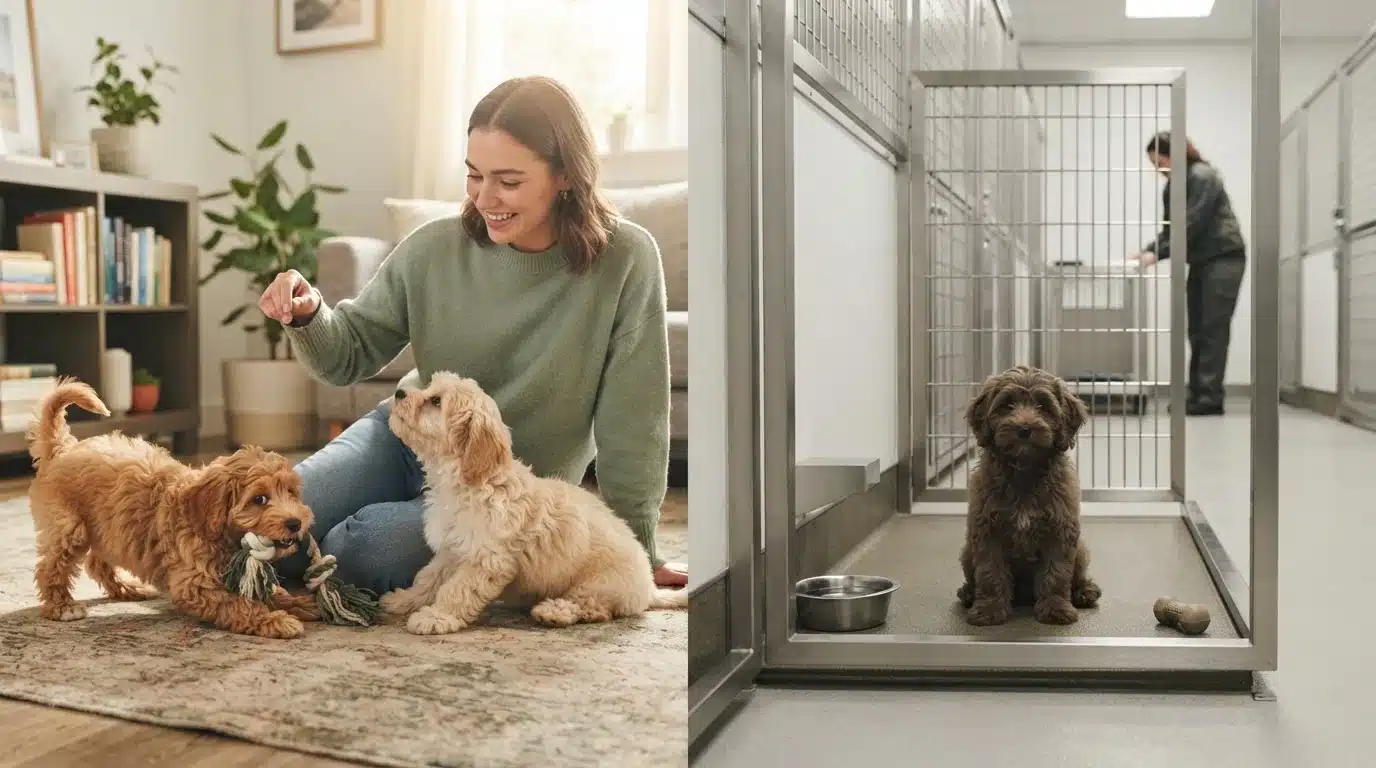
Introduce a safe resting area positively while someone is nearby. A crate or pen should be appropriately fitted, comfortable and suitable for the dog; neither is mandatory treatment for every training difficulty.
Begin separations short enough for the puppy to remain comfortable. Some starting points may be seconds rather than five or ten minutes. Increase only when the dog’s response supports it, and arrange care for absences it cannot yet manage.
The AAHA separation guidance cautions that confinement can worsen distress in some dogs. Persistent panic or escape attempts need professional assessment, not a forced progression toward a promised number of hours.
An adult dog’s ability to remain alone cannot be guaranteed from its breed. Work schedules need actual support arrangements rather than reliance on a two-to-four-hour prediction.
Recognize discomfort and ask for help early
Read behavior in context. Moving away, freezing or declining to participate may mean the task is too hard, the setting is uncomfortable or the puppy needs rest. Food acceptance alone does not prove comfort.
Pause, simplify and reward a manageable step. Avoid shouting or physical corrections. Ask a veterinarian about pain, health changes or persistent fear, and seek a qualified reward-based trainer for a plan you can implement.
Progress is useful information, not a competition between breeds. Record what worked, how the puppy responded and the next small step. Change the setup when learning stalls rather than escalating pressure.
Choose for the care and training time you can provide
Ask who will provide daytime breaks, practice, grooming and supported separation. Both breeds need a household prepared to learn alongside the dog. A patient first-time owner can succeed without being promised a faster breed.
Consider coat care, individual behavior, suitable parent records and practical support as well as training. Observe the actual puppy where appropriate, while remembering that one meeting cannot predict adult behavior.
Sage Puppies offers Havanese, Havapoo and Cavapoo puppies from South Jordan, Utah, not Cotons. Review current availability and pricing and reservation information, then use the application to explain your daily routine.
Frequently asked questions
Which breed learns faster?
This guide does not establish a reliable comparative ranking. Judge the individual dog and the specific skill.
Will a Havanese house-train by seven months?
There is no guaranteed age. Track progress, provide suitable breaks and ask a veterinarian about concerns.
Are Cotons always more difficult?
No. That general ranking is not established here; health, environment, experience and teaching all matter.
Should rewards differ by breed?
Choose rewards the particular dog values and can receive safely, rather than assigning food or praise by breed.
How long can either stay alone?
There is no guaranteed breed-based duration. Build comfortable separation gradually and arrange appropriate care.
What if training seems frightening or painful?
Stop the pressure and consult a veterinarian or qualified reward-based behavior professional.