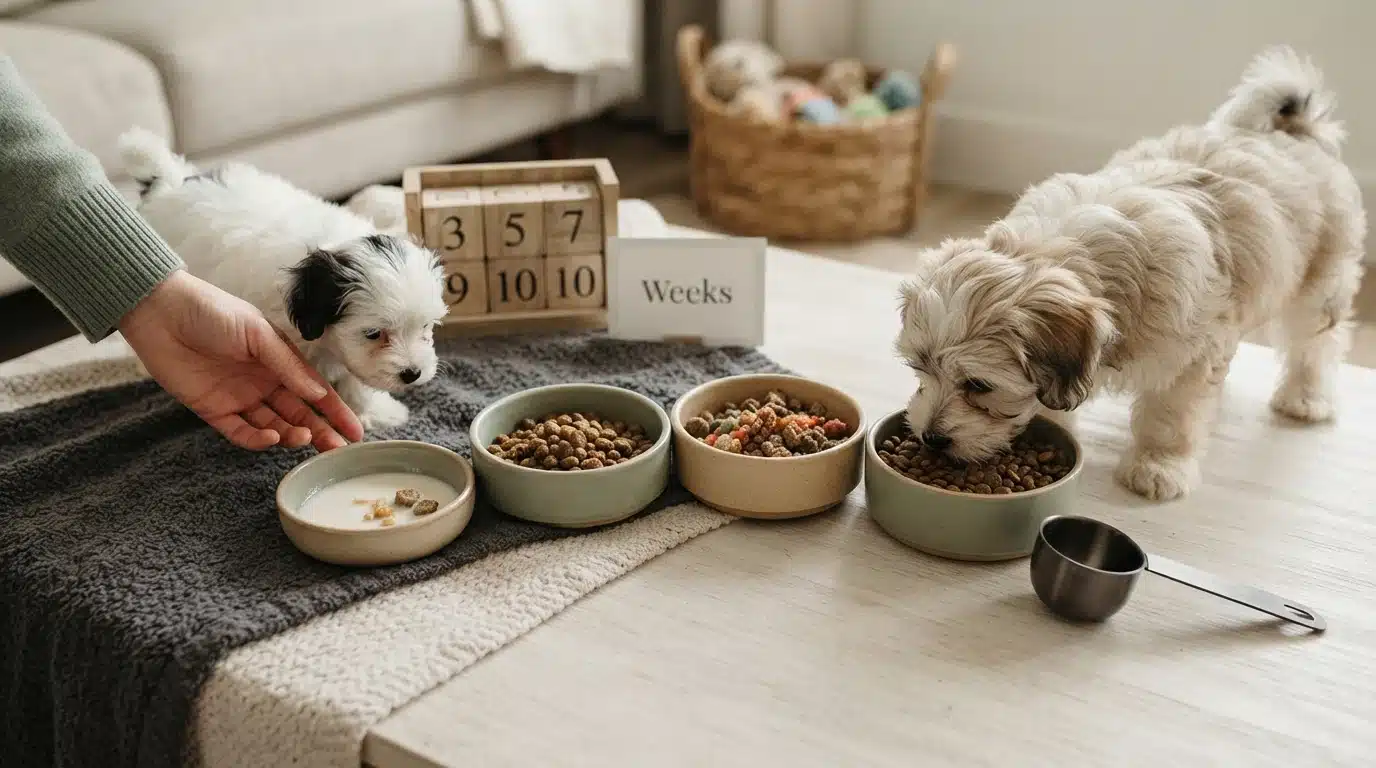
Quick Summary: Havanese puppies usually experience fear periods around 8 to 12 weeks and again between 6 and 14 months, when familiar sounds, sights, places, or handling may suddenly seem threatening. Respond by adding distance, staying calm, offering comfort on the puppy’s terms, and continuing short, positive socialization below the puppy’s comfort threshold. Most fear periods pass with gentle exposure, but growing fear, prolonged distress, sudden aggression, or physical changes should be discussed with a veterinarian because pain or illness may be involved.
The day after your Havanese puppy arrives home, the vacuum cleaner that never bothered him sends him flat to the floor, tail tucked. An hour later he is barking at a shadow on the wall. Nothing about him changed overnight, but his brain did, because the havanese puppy fear period has started. This is a normal stage when a puppy suddenly treats familiar sights and sounds as threats, and how you respond over the next few weeks shapes his confidence for life. This guide covers when the puppy fear period typically hits, which stress signals to watch for, how to tell real comfort from a situation he is merely tolerating, and exactly what to do, and what to avoid, during each scary moment. It draws on veterinary behavior guidance and the daily experience of raising Havanese, Havapoo and Cavapoo litters, so you can handle the Havanese fear period calmly instead of worrying that something is wrong with your puppy.
When Do Havanese Puppies Go Through Fear Periods?
Havanese puppies go through two main fear periods: a first window around 8 to 12 weeks, when new sights and sounds suddenly feel threatening, and a second juvenile window roughly between 6 and 14 months, when a confident adolescent may start barking at things that never bothered him before. Both are normal developmental stages, not signs of a badly bred or badly trained puppy. Knowing when these windows open helps you respond with patience instead of worry. This timeline also applies to Havapoo and Cavapoo puppies, since they inherit similar developmental patterns from their small companion-breed parents.
The First Window: Around 8 to 12 Weeks
The first fear period lands right when most puppies go home, which is why your normally playful Havanese may suddenly freeze at a garbage can or refuse to walk on a new surface. This timing is no accident: the puppy socialization period is still open, so experiences now leave strong impressions in both directions. The AVSAB advises starting gentle, positive socialization before a puppy is fully vaccinated, because waiting for shots to finish means missing much of this window. Your job in these weeks is simple: keep new experiences short, upbeat and voluntary.
The goal is exposure your puppy chooses to engage with, never situations you push him into.
The Second Window: The Juvenile Months, Roughly 6 to 14 Months
The second window usually shows up near adolescence, and it often surprises owners who thought the hard part was over. Your sweet young Havanese may suddenly bark at unfamiliar dogs on the sidewalk, or a once relaxed puppy may start trembling at the groomer’s table. Triggers that got a reaction at 10 weeks often resurface now, plus new ones tied to adolescence itself. The good news is that these reactions are typically temporary. If you respond calmly and keep the world predictable, most dogs move through this stage in a few months, though individual timing varies quite a bit.
How Do You Know If Your Havanese Puppy Is in a Fear Period?
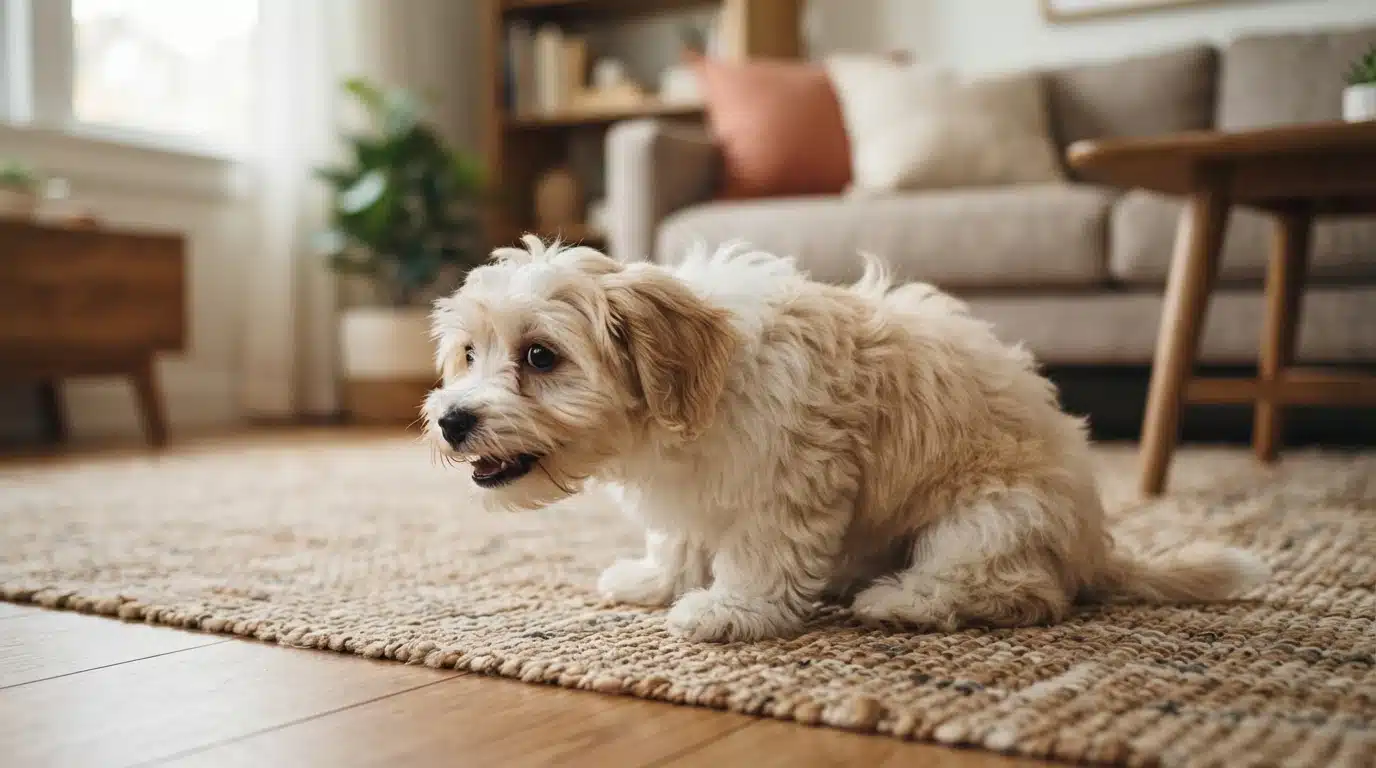
A Havanese puppy fear period shows up as sudden worry about things that seemed fine last week: a lowered body, pinned ears, a tucked tail, retreating, or barking at ordinary sights and sounds. A study of puppy fear behaviors found that posture change, retreat, and barking are the most reliable indicators of mild to moderate fear. If new reactions appear during the usual windows, around 8 to 12 weeks and again in adolescence, you are probably seeing a fear period rather than a personality change.
The Body Language Checklist
Run through these signals when something startles your puppy:
- Lowered posture or crouching, often with the head dropped low
- Tucked or lowered tail, even when the tail is normally up and playful
- Pinned-back ears and wide eyes, sometimes showing the whites
- Retreating or freezing instead of approaching to investigate
- Barking or growling at a trigger that drew no reaction before
- Trembling, panting, or lip licking when it is not hot and no food is nearby
Research reviews list these same signals as core fear markers in dogs, including trembling and panting. Watch the whole picture, not one cue. How to train a Havanese puppy step by step starts with reading these signals, so nothing new here needs special equipment.
The Quiet Signs Owners Usually Miss
Loud barking gets attention. The quiet signs often go unnoticed, and they matter just as much:
- Turning the head or body away from a person or object
- Repeated yawning that has nothing to do with sleepiness
- Lip licking with no food in sight
- Sniffing the ground suddenly, a common way dogs self-soothe
- Shaking off as if wet, right after a mild trigger
- Refusing treats, because a worried puppy stops eating
- Clinginess or hiding behind your legs or under furniture
Dogs Trust lists head turning, lip licking, and yawning among the easiest stress cues to miss. Because Havanese tend to be sensitive and people-focused, they often show these softer signals instead of loud ones. A puppy that “went quiet” at the groomer or on a walk may have been coping, not relaxing.
Track what triggers each reaction. A simple note on your phone works: date, trigger, and what your puppy did. Patterns appear within a week or two, and that record makes it easy to see whether things improve as the window passes.
What Triggers Fear, and Why Havanese Seem Especially Sensitive
During a Havanese fear period, ordinary things can suddenly look threatening. The triggers fall into three groups.
Sensory, Social and Handling Triggers
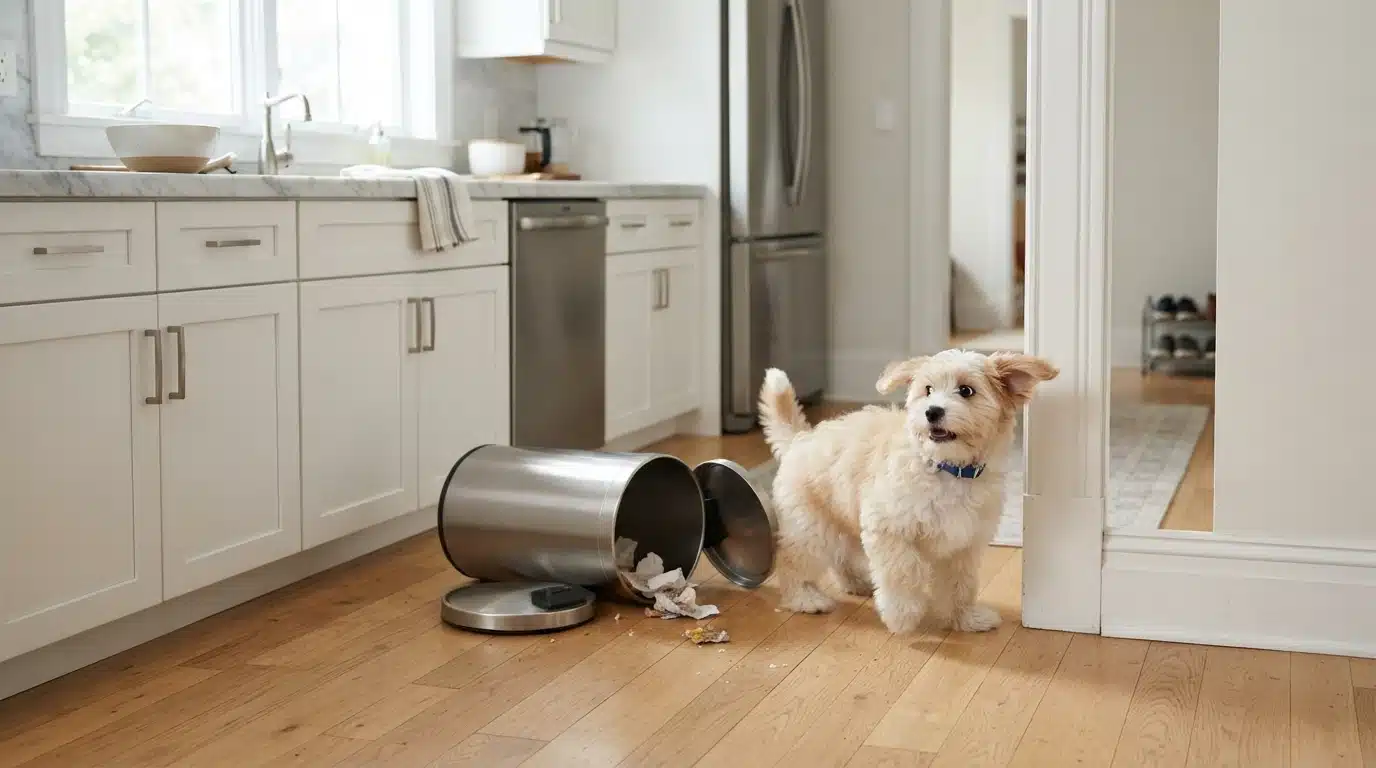
Sound leads the list: vacuum cleaners, dropping pans, thunder, traffic, or a door slam. Sight follows close behind. Trash cans that moved overnight, a person in a hat, or a large dog across the street can all earn a startled reaction. Surfaces and places count too. Tile floors, stairs, and car rides may feel new and unsafe all at once.
Handling triggers matter just as much for a small breed. Nail trims, brushing, baths, vet exams, and being picked up can trigger freezing or squirming, especially if a single rough handling moment went badly. The American Veterinary Society of Animal Behavior notes that poor or missing socialization during the first three months raises the risk of lasting fear and avoidance problems, so calm exposure matters as much as avoiding scary events (AVSAB position statement).
Why Small Companion Breeds Show It So Plainly
Havanese, Havapoos and Cavapoos are bred to bond tightly with people. That sensitivity is a feature, not a flaw. It also means the world registers loudly: a change in your tone, a new route, or a houseguest all land harder. Small bodies make big dogs, tall doorways and lifted arms genuinely imposing. Watch closely and respond calmly, and the phase passes without leaving a mark.
What to Do in the Moment Your Havanese Puppy Is Scared
When your puppy startles, freezes, or bolts behind your legs, stay calm and work the moment in five steps. The goal is simple: make the scary thing smaller, then let your puppy recover at her own pace.
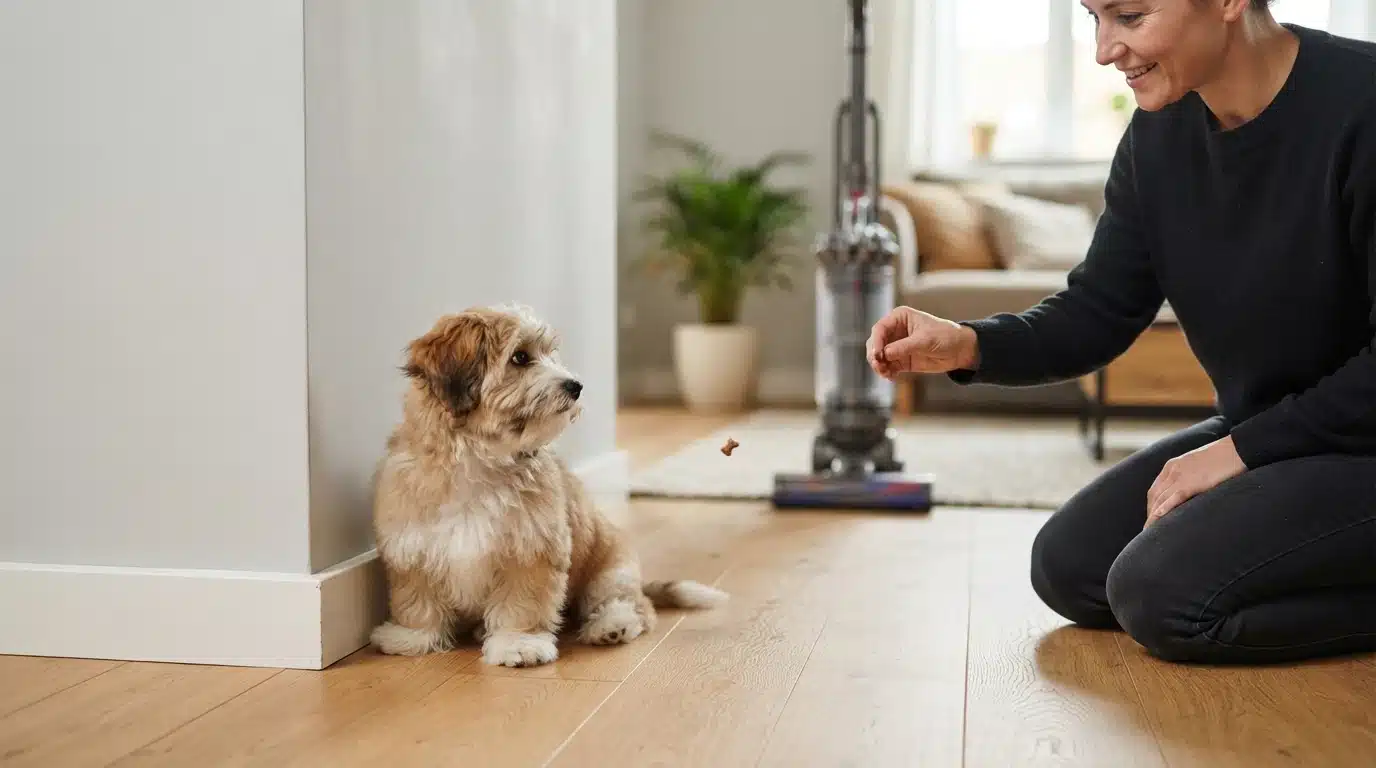
The Five-Step Calming Routine
- Pause and add distance. Move your puppy away from the trigger until her body softens. Even ten feet can change everything.
- Stay neutral. Keep your voice quiet and your movements slow. Your calm body tells her the world is safe.
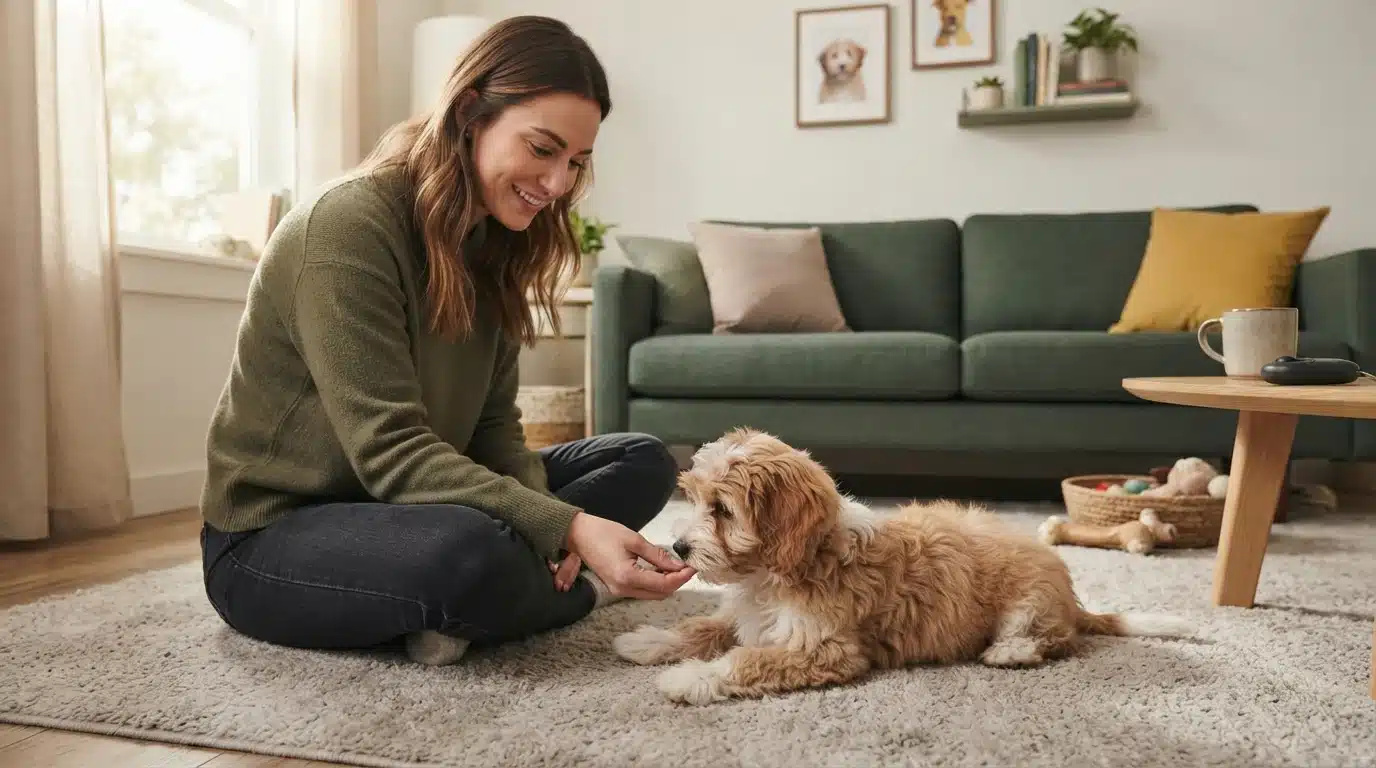
- Let her choose contact. Offer gentle petting if she leans in, but let her retreat if she wants to. Comforting a scared dog does not reward the fear, so reassure freely.
- Toss a treat behind her. Food she can take is a good sign she is settling, and it starts a positive link with the trigger.
- End on an easy win. Guide her back past the trigger at a comfortable distance once she is loose and curious again.
If your puppy refuses food, hides hard, or shakes for more than a few minutes, stop the session and let her rest. Recovery matters more than progress.
What Not to Do With a Scared Havanese
Do not force her toward the thing that scared her. Flooding a puppy usually deepens the fear instead of fixing it. Skip scolding, loud “it’s fine!” chatter, and dragging her by the leash, since all three add pressure. Avoid soothing only when she is panicked and ignoring her when calm; the pattern confuses her. Steady routines, consistent feeding times, and predictable days lower the number of scary moments in the first place, which is the approach behind the Cornell Riney Canine Health Center’s guidance on fearful dogs. Raise the challenge slowly across days, not seconds.
Building Confidence: Socialization and Training Through Fear Periods
Is your puppy comfortable or just tolerating the situation? Watch for these signals before you push forward.
Comfort signals:
- Soft, loose body and relaxed mouth
- Eats treats readily and snaps back to you for more
- Approaches the new thing on her own
- Normal tail carriage, easy movement
Tolerance signals:
- Stiff body, closed mouth, wide eyes
- Takes treats roughly or refuses them
- Holds still and stares, or leans away
- Whining, yawning, lip licking, scratching
If you see tolerance signals, increase the distance to the trigger and lower the intensity. Return only when comfort returns.
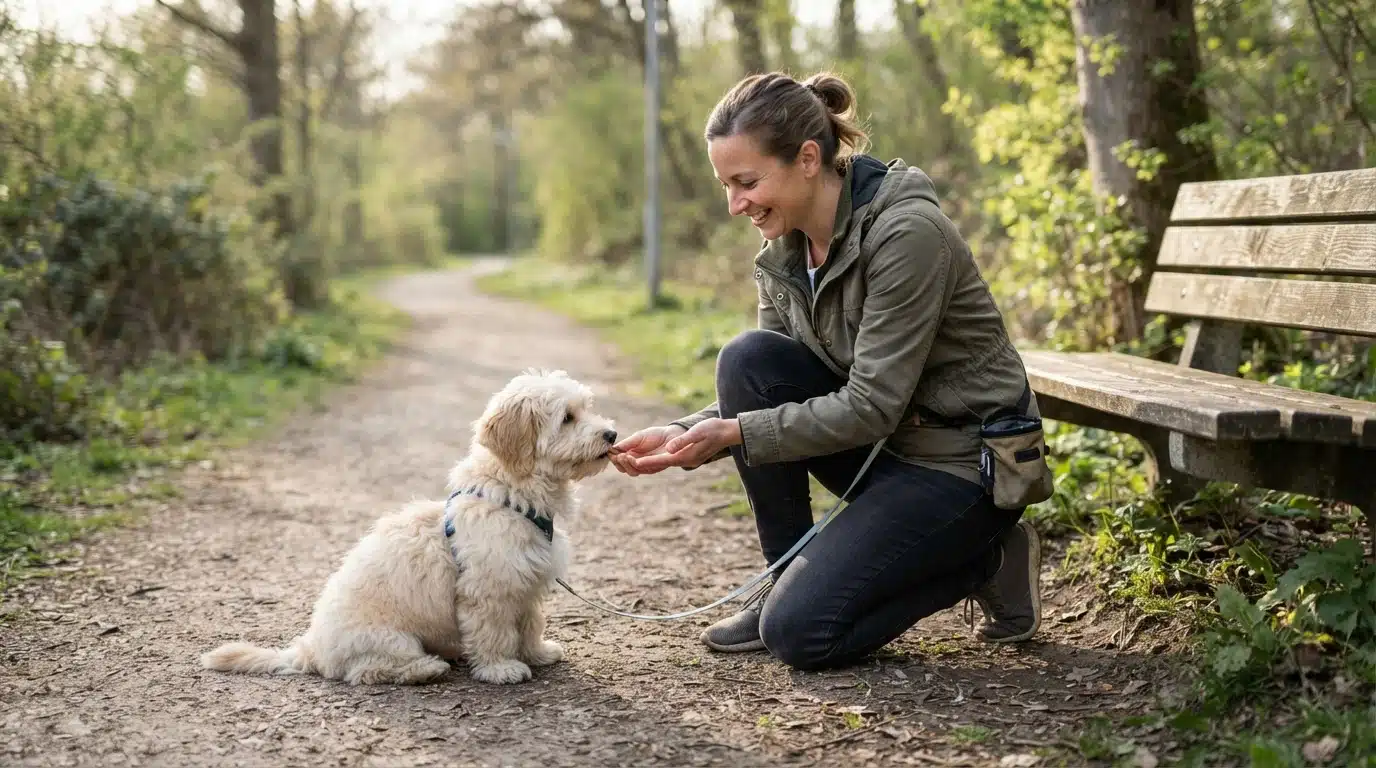
Building a Gradual Exposure Plan
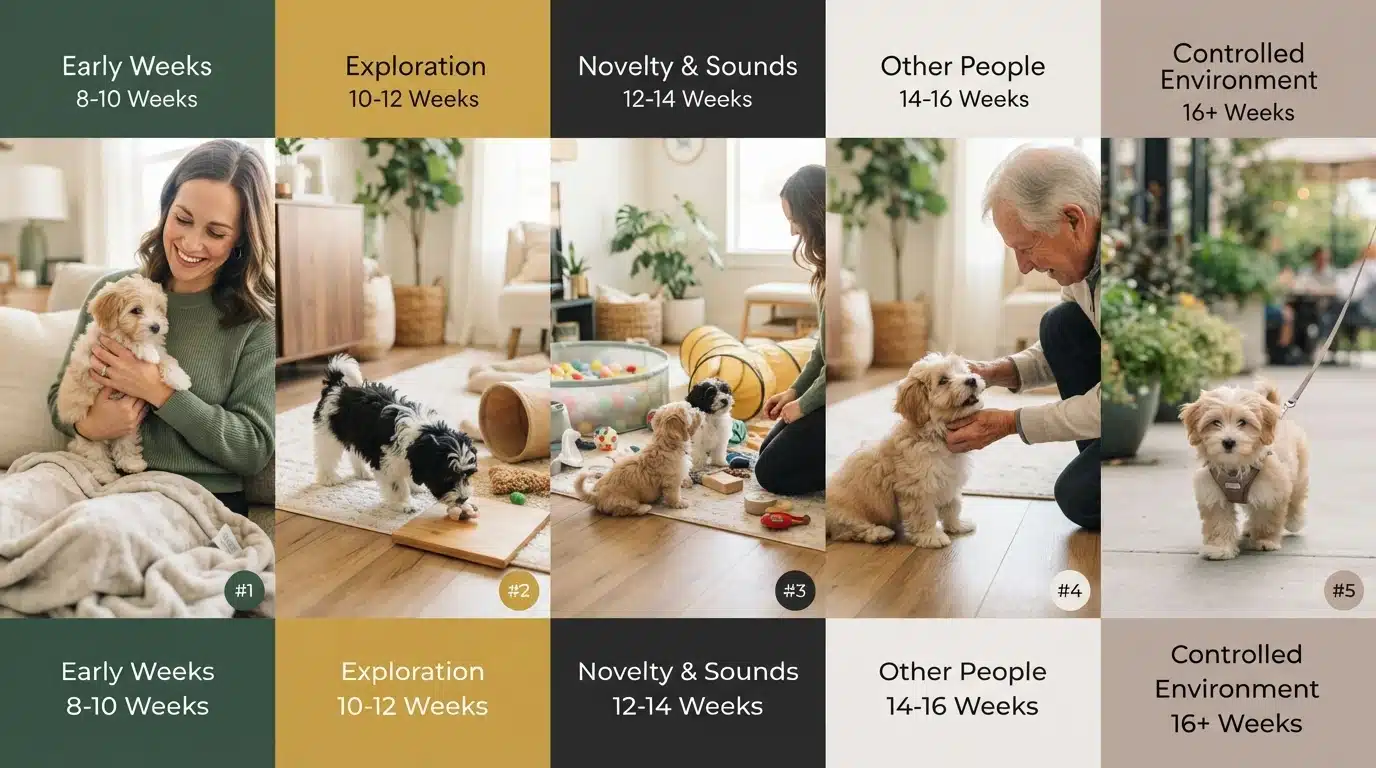
Socialization never stops during a fear period; it gets smaller and slower. The AVSAB position is that the first three months shape a puppy’s outlook for life, so keep puppy socialization going at a pace your puppy can handle. Work below her threshold: start far from the trigger, let her notice, then reward calm looks. Move closer only after several easy repetitions. Pair each new experience with food or play, and end sessions while she is still having fun. Our week-by-week socialization schedule shows how to space new sights, sounds, and surfaces without overwhelming a sensitive puppy.
Training Adjustments for Fear Period Weeks
Fear periods call for short, easy sessions. Drop the difficulty: go back to cues she knows well, use high-value treats, and keep practice under five minutes. Skip corrections entirely, since harsh methods can add fear and make reactions worse. Keep handling gentle, especially around paws and ears where Havanese dogs often need grooming prep. If a session goes badly, end it, rest, and rebuild with something simple tomorrow. Confidence comes from many small wins, not one big test.
Setting Up a Home That Makes Fear Periods Easier
A Retreat Spot, Visitors and Household Noise
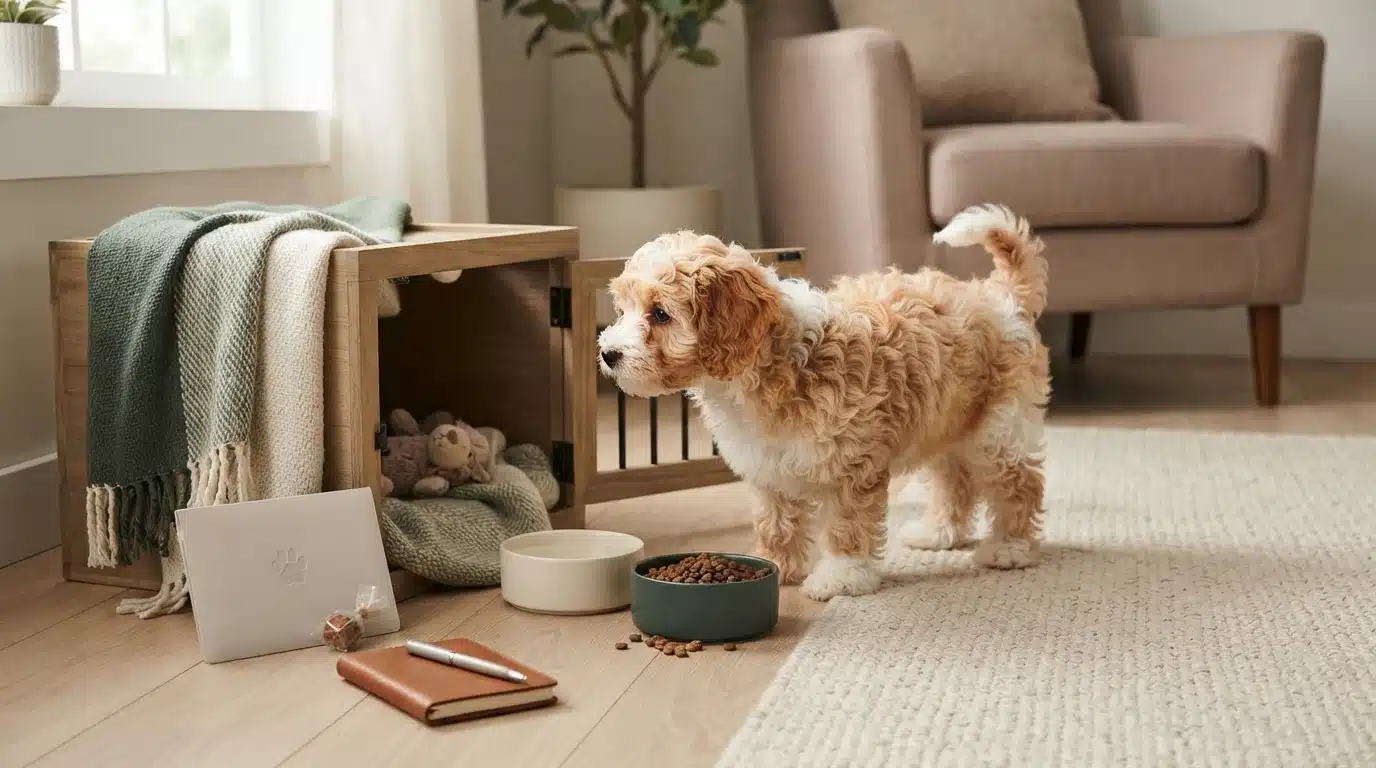
Give your puppy one safe place, such as a crate or a quiet corner with a mat, and let no one bother him there. He decides whether to come out, and that choice matters more than you think. During the Havanese fear period, ask visitors to ignore the puppy at first. Sitting sideways, tossing a treat without eye contact, lets him approach on his own terms. Keep the TV and daily noise at normal levels, but skip loud gatherings, vacuum marathons and power tools for a few weeks. If a noise startles him, stay calm and go about your day. Puppies read your face, so a relaxed owner teaches them the world is safe.
Routine, Rest and the Episode Log
Predictable meals, potty breaks and naps lower a puppy’s baseline stress. Overtired puppies startle far more easily, so protect nap time in that retreat spot. Keep a simple log of each fearful moment: date, trigger, distance and how long recovery took. After a week, patterns appear, and you’ll know which sounds need gentler work. Write down new puppy questions as they come up, because a written record also gives your vet solid facts if anything needs a closer look.
When Fear Periods Turn Into Something Your Vet Should Look At
Most puppy fear passes with time and gentle exposure. Some behavior does not, and it is worth ruling out pain or illness before you treat it as a training issue.
Warning Signs Worth a Call
Call your vet when you see any of these, since they point beyond a normal fear period:
- Sudden aggression, growling or snapping at touch, especially around a sore spot
- Fear that keeps growing instead of easing over weeks
- Freezing, hiding or trembling that lasts most of the day
- Physical changes alongside the fear: appetite loss, limping, accidents, vomiting
- Reactions outside the usual windows, not near 8 to 12 weeks or adolescence
Pain often hides behind fear, and dogs mask discomfort well. Cornell’s canine health center notes that anxiety can even mask pain behaviors during an exam, so knowing the signs of pain in dogs helps you describe what you see at home. Ohio State’s behavior team also recommends evaluating these warning signs to rule out a deeper problem.
What to Say When You Call
Keep the call short and specific. Your vet needs three things:
- A timeline: when the behavior started, what improved, what got worse
- Concrete examples: what triggers the reaction, how long recovery takes, what your puppy does before and after
- A short video of the behavior at home, since puppies often act calm in the clinic
Bring a written list so nothing gets missed. If pain is ruled out and the fear still concerns you, ask for a referral to a certified behavior professional rather than waiting it out.

Noticing new startles or hiding in your puppy can feel worrying, but a fear period is a normal stage you can guide well. Sage Puppies raises Havanese, Havapoo and Cavapoo puppies with steady, positive exposure from the start. Want help preparing for the weeks ahead? Visit Sage Puppies for guidance and honest support.
Frequently Asked Questions
Q1: When do Havanese puppies go through fear periods?
Expect two windows: the first around 8 to 12 weeks, often right when your puppy comes home, and a second juvenile window between roughly 6 and 14 months. Timing varies by individual, and both stages are normal.
Q2: How do I know if my Havanese puppy is in a fear period?
Watch for sudden worry about familiar things: a lowered body, tucked tail, pinned ears, retreating, freezing, or barking at objects that drew no reaction before. If new reactions appear during the usual age windows, it is likely a fear period.
Q3: What signs show a Havanese puppy is scared or anxious?
Look for trembling, panting, lip licking, yawning, head turning, sniffing the ground, refusing treats, hiding, or clinginess. Read the whole picture together, since quiet signals often appear before loud barking does.
Q4: How long does a fear period last?
The first window usually spans a few weeks, while the adolescent phase can stretch across several months. Keep experiences short and positive, and most puppies move through without lasting effects.
Q5: Can I comfort my scared puppy, or will it reward fear?
Comfort freely. Reassurance does not reward fear; it helps your puppy settle. Let her choose contact, keep your voice calm, and stop if she wants space.
Q6: Should I socialize my puppy during a fear period?
Yes, but slower and smaller. Work below her threshold, add distance from triggers, pair new sights with treats, and end sessions while she is still comfortable.
Q7: When should I call the vet about fearful behavior?
Call if fear keeps growing, lasts most of the day, includes sudden aggression, or comes with appetite loss, limping or vomiting. Reactions outside the usual windows also deserve a check for pain.
Wrapping Up
A Havanese puppy fear period is a normal stage, not a broken puppy. Expect the first window around 8 to 12 weeks and a second during the juvenile months between 6 and 14 months. Read the whole body language picture, from tucked tails to quiet lip licking, instead of reacting to one cue. In the moment, add distance, stay calm, and let your puppy choose contact. Keep socialization going at a smaller, slower pace, and tell comfort from tolerance before you push forward. Most important, know when to call the vet: growing fear, day-long distress, sudden aggression, or physical changes deserve a check for pain. Handle the weeks gently and predictably, and this phase passes, leaving a more confident dog behind.