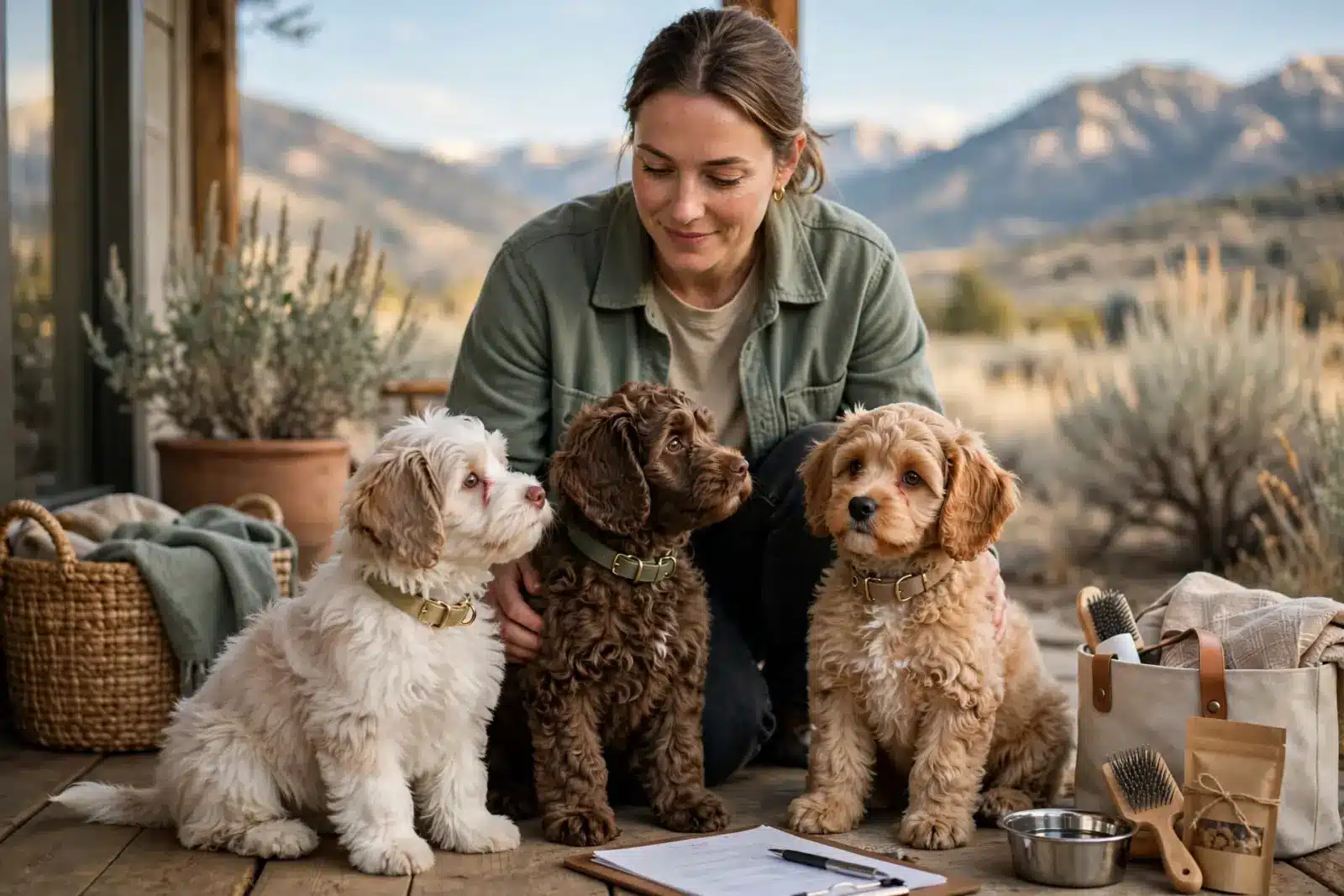
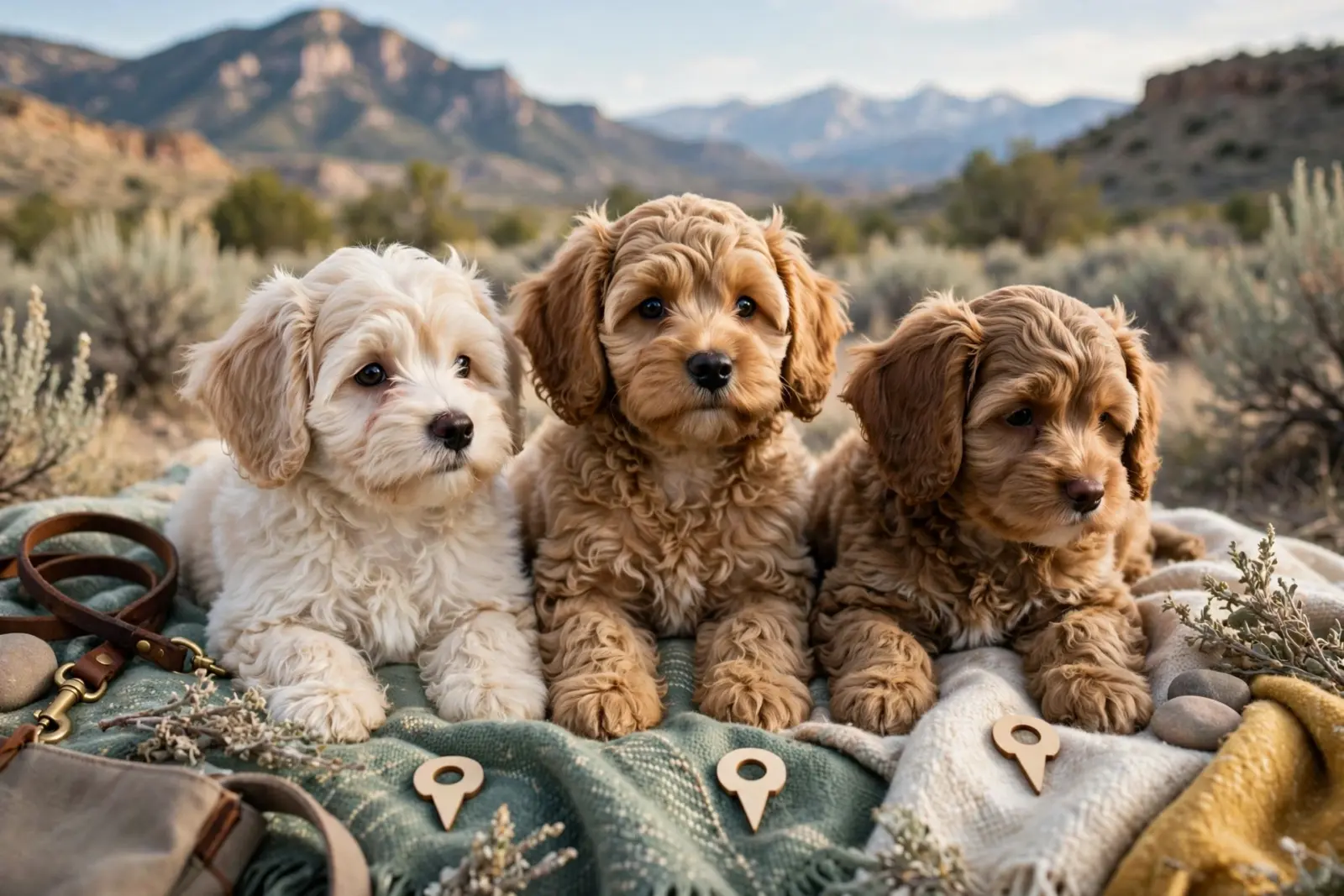
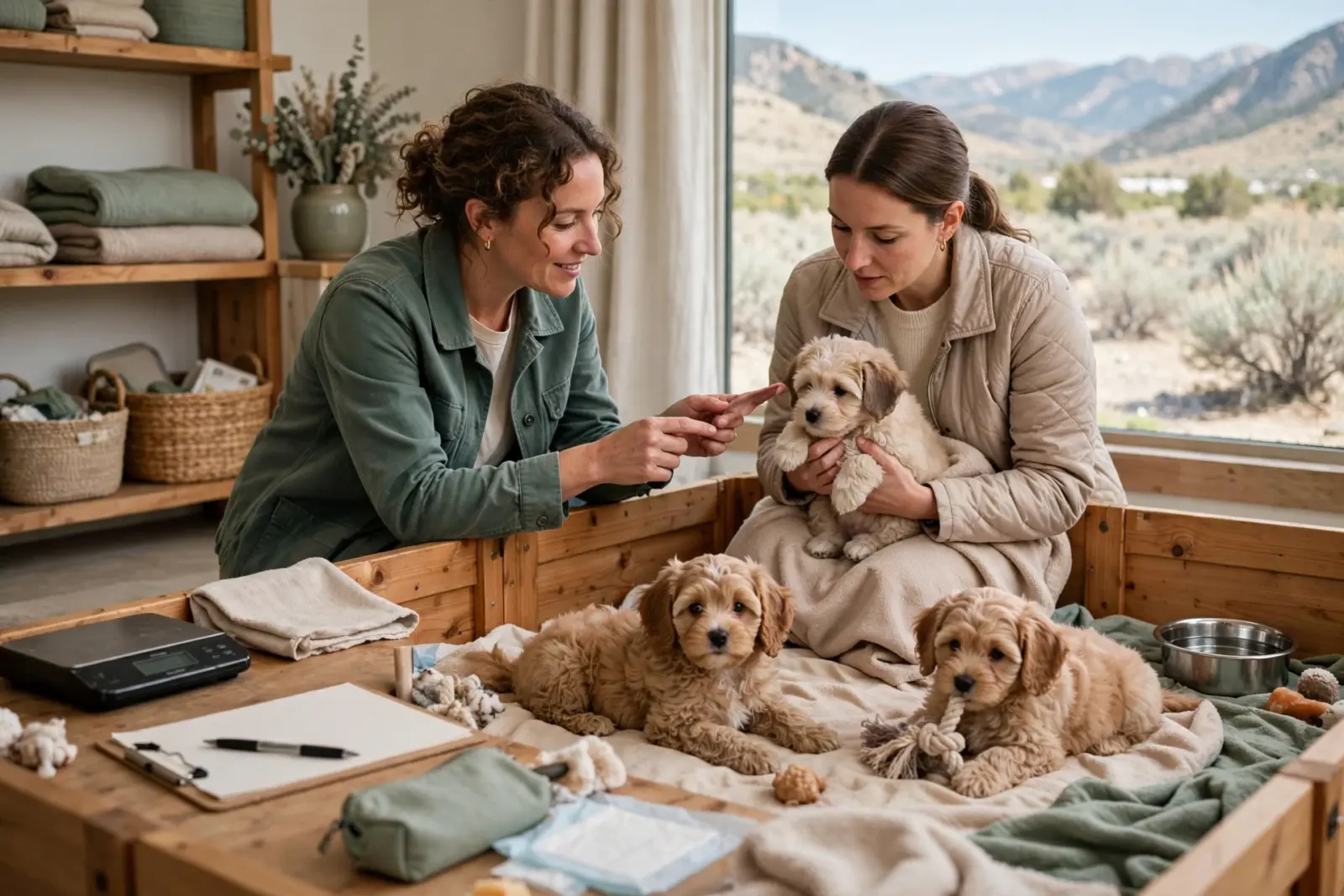
Quick Summary: A calm, structured start helps children and new puppies build trust safely. Assign one adult to lead the routine, puppy-proof shared rooms, plan the first 72 hours, and keep every puppy-child interaction supervised while teaching quiet hands, short holds, and plenty of crate naps. Sage Puppies says this consistent approach helps Havanese, Havapoo, and Cavapoo puppies settle into family homes while preventing rough handling and bites.
The night before pickup, most families realize the crate is in the living room but nobody has decided who lifts the puppy at the door, where the four-year-old may sit, and what happens when the puppy eats at 6 a.m. while the kids are already up. That gap between buying supplies and assigning jobs is where chaotic first weeks come from. This puppy preparation checklist fixes it by working through your child’s view: what kids actually use, which rooms they share with the puppy, and who does what in the first 72 hours. The result is a puppy readiness checklist plus a simple puppy preparation checklist you can run the week before pickup. It draws on veterinary socialization and bite-prevention guidance and on Cassie Milar’s experience placing Havanese, Havapoo and Cavapoo puppies with Utah families.
Before You Start: Agree on the Family Rules First
Puppies thrive on predictability, and so do kids. Before pickup day, hold a short family meeting and settle three things: who runs the routine, where the puppy rests, and what the house rules are. It is the fastest step on any puppy preparation checklist, and the one families skip most often.
Assign One Adult to Own the Daily Routine
Choose one adult as the puppy’s primary person. Kids can help with feeding, potty trips, and play, but a child should never be the sole caregiver. The adult decides when meals happen, when naps happen, and when training starts. If both parents share the job loosely, the puppy learns nobody is really in charge.
Pick the Puppy’s Retreat Spot Before the Puppy Is Here
Set up a crate or pen in a quiet corner away from the busiest kid traffic. Decide now that this spot is the puppy’s alone. If your family is still weighing what to ask a breeder before you commit, the questions that reveal a well-started puppy are worth working through first.
Set Three House Rules Kids Can Repeat
Keep it simple enough for a four-year-old to recite. For example: quiet hands around the puppy, never bother her while she eats or sleeps, and stay seated on the floor for holding. Practice the words out loud a few times before the big day, then repeat them the moment rules slip.
Step 1: Gather the Supplies Your Kids Will Actually Use
Most puppy checklists assume an adult is doing the shopping. Yours should split into two piles: things you set up before pickup day, and things your kids will hold, fill, and carry.
The Adult Essentials: Gates, Crate, Bowls, ID, and Vet Records
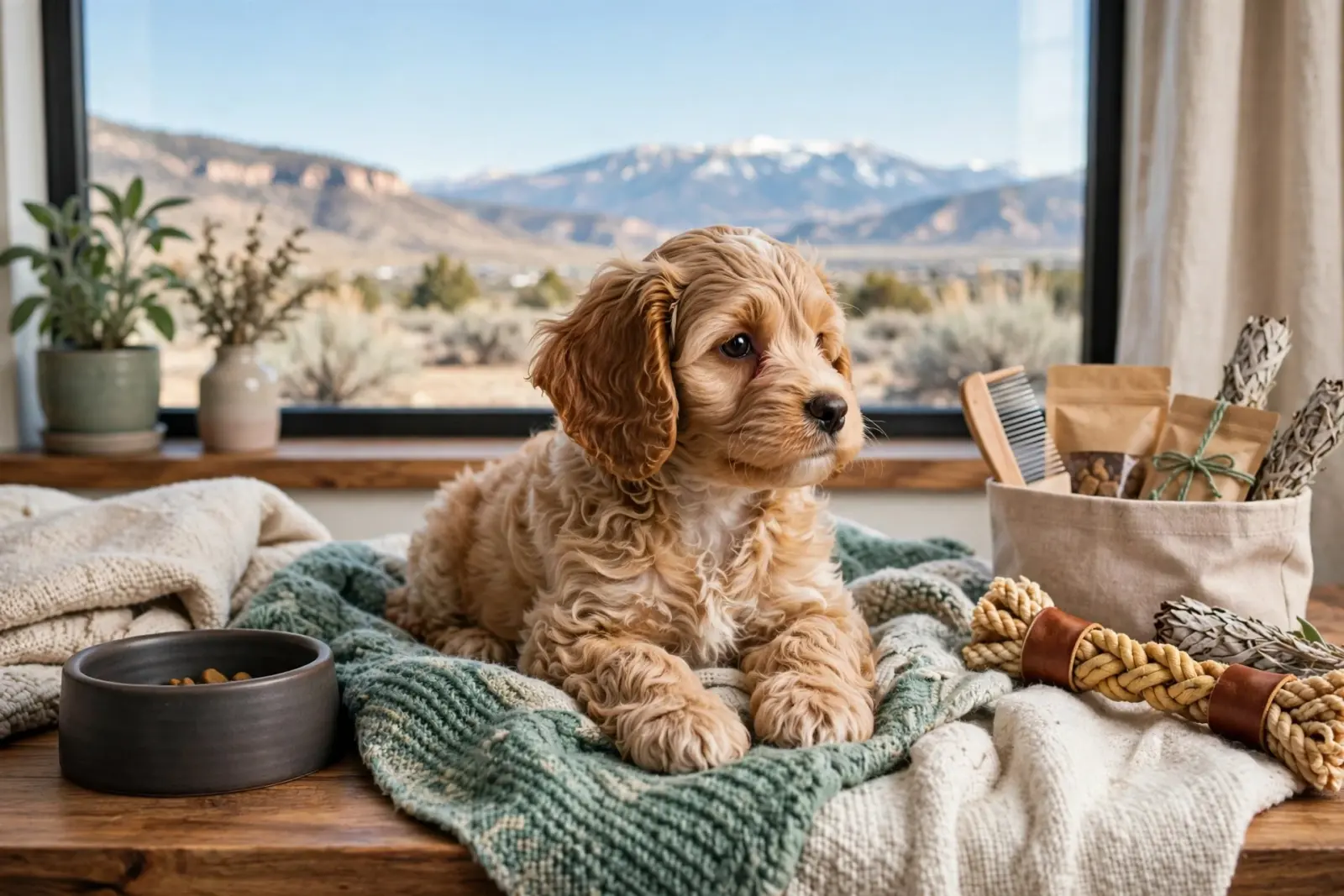
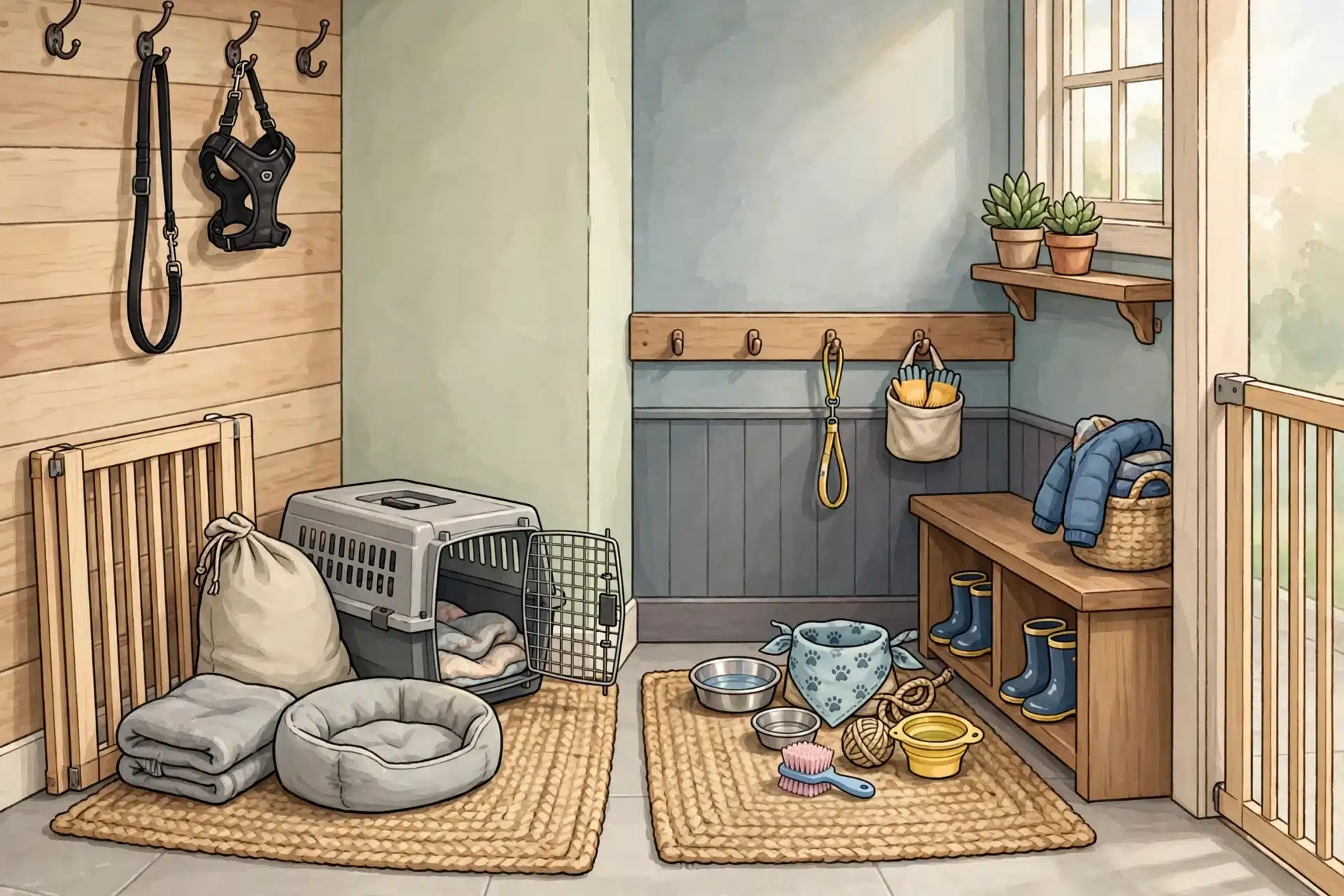
Start with the basics from any solid new puppy checklist: a crate sized for a small breed, baby gates for the rooms in Step 2, stainless steel food and water bowls, a flat collar with an ID tag, a six-foot leash, and puppy food that matches what the breeder fed. Add a folder for vet records and vaccine dates, since your first appointment happens within days of pickup. Keep the folder where kids cannot reach it.
Child-Friendly Add-Ons That Reduce Rough Handling
The right extras give kids a job without putting the puppy at risk. A soft-bristle brush sized for small hands works, as does a treat pouch the child fills while you hand out rewards. A low hook by the door holds the leash at kid height, so walking starts with a clip, not a chase. The AAHA’s new dog guide suggests tossing treats into the crate to build good associations, which is a task even a four-year-old can own.
Skip the Items That Look Helpful but Are Not
Some gear promises more than it delivers. Retractable leashes teach kids to let a puppy run to the end of the line, which rewards pulling. Chains and prong collars are wrong for a tiny breed’s throat. Skip wheeled pet strollers too, because they stop a child from learning calm ground manners. Families planning ahead for what to ask a breeder before pickup often find the best answers on pages like questions to ask before buying a family-raised puppy. Then buy less, and buy it well.
Step 2: Puppy-Proof the Rooms Where Kids and Puppies Overlap
Puppies explore with their teeth, and children drop things. Walk each shared room at your child’s height and remove anything chewable, swallowable, or valuable before pickup day.
The Playroom: Where Excitement Peaks
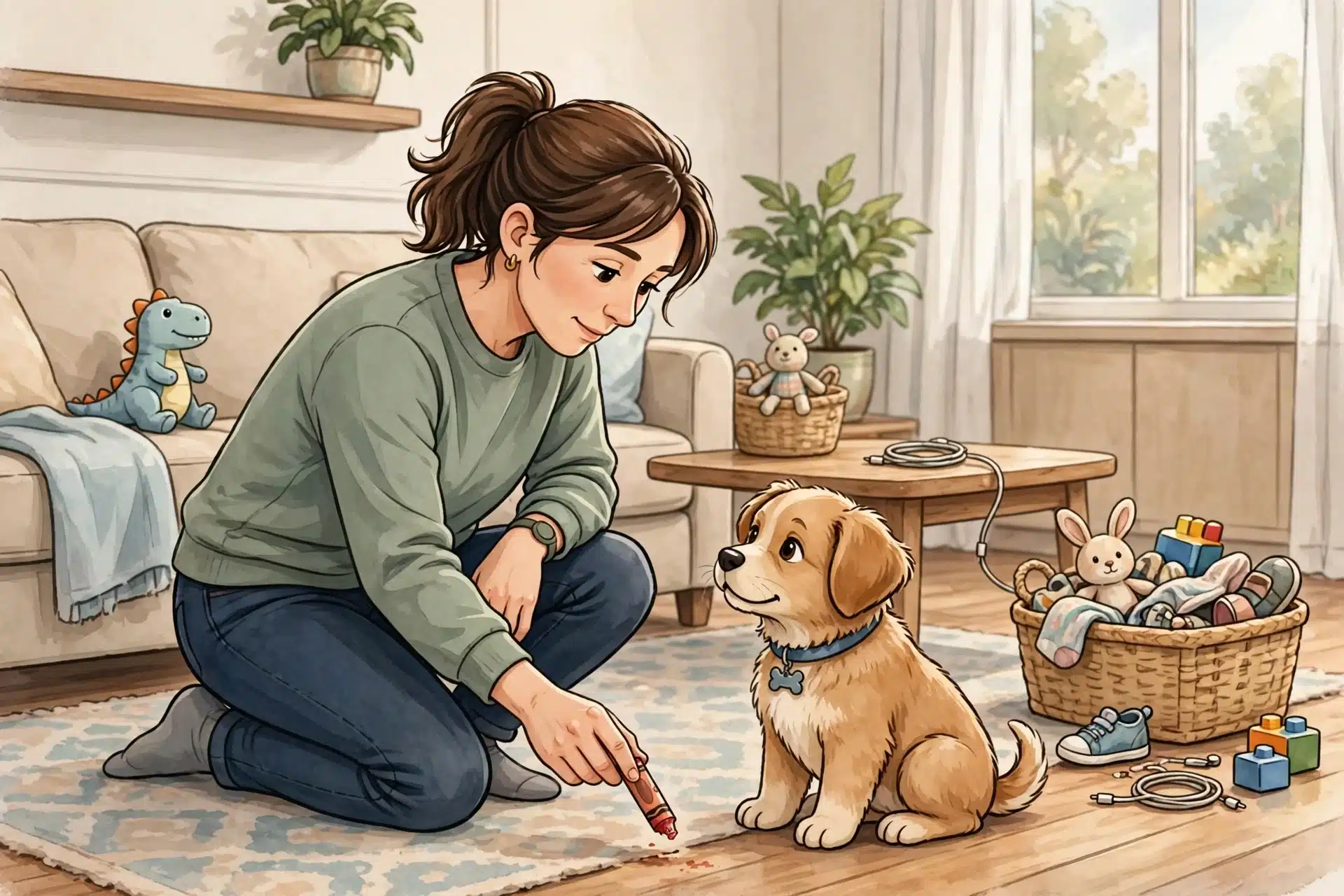
Kids and puppies meet here, so this room needs the strictest rules. Clear the floor of small toys, Lego bricks, craft supplies, and anything under two inches wide, because a swallowed piece means an emergency vet visit. Store toys in bins with lids, and gate the room so the puppy only enters during calm, supervised play.
The Kitchen: The Most Dangerous Shared Room
Kitchen floors hold dropped food, trash cans, and cleaning supplies at puppy level. Secure the trash can with a locking lid or tuck it behind a cabinet latch. Sweep before letting the puppy in, since a grape or a chicken bone on the tile is a real hazard. Some human foods are toxic to dogs, and the ASPCA lists chocolate, grapes, and onions among the worst offenders, so teach kids that floors are not for feeding.
Bedrooms and Nighttime Rules
Decide now whether the puppy sleeps in a child’s room, and usually the answer is no for the first weeks. A crated puppy in an adult’s room settles faster and avoids overnight tangles with sleeping kids. Keep chargers, hair ties, and sock piles off bedroom floors, then post the family rules where everyone can see them.
Step 3: Plan the First 72 Hours Hour by Hour
The first three days set the tone. Puppies who arrive to a quiet house, a set potty spot, and one clear routine settle in days faster than puppies who meet a noisy crowd. Write the schedule below on the fridge before pickup day, because tired parents forget rules fast.
Pickup Day: One Calm Entrance
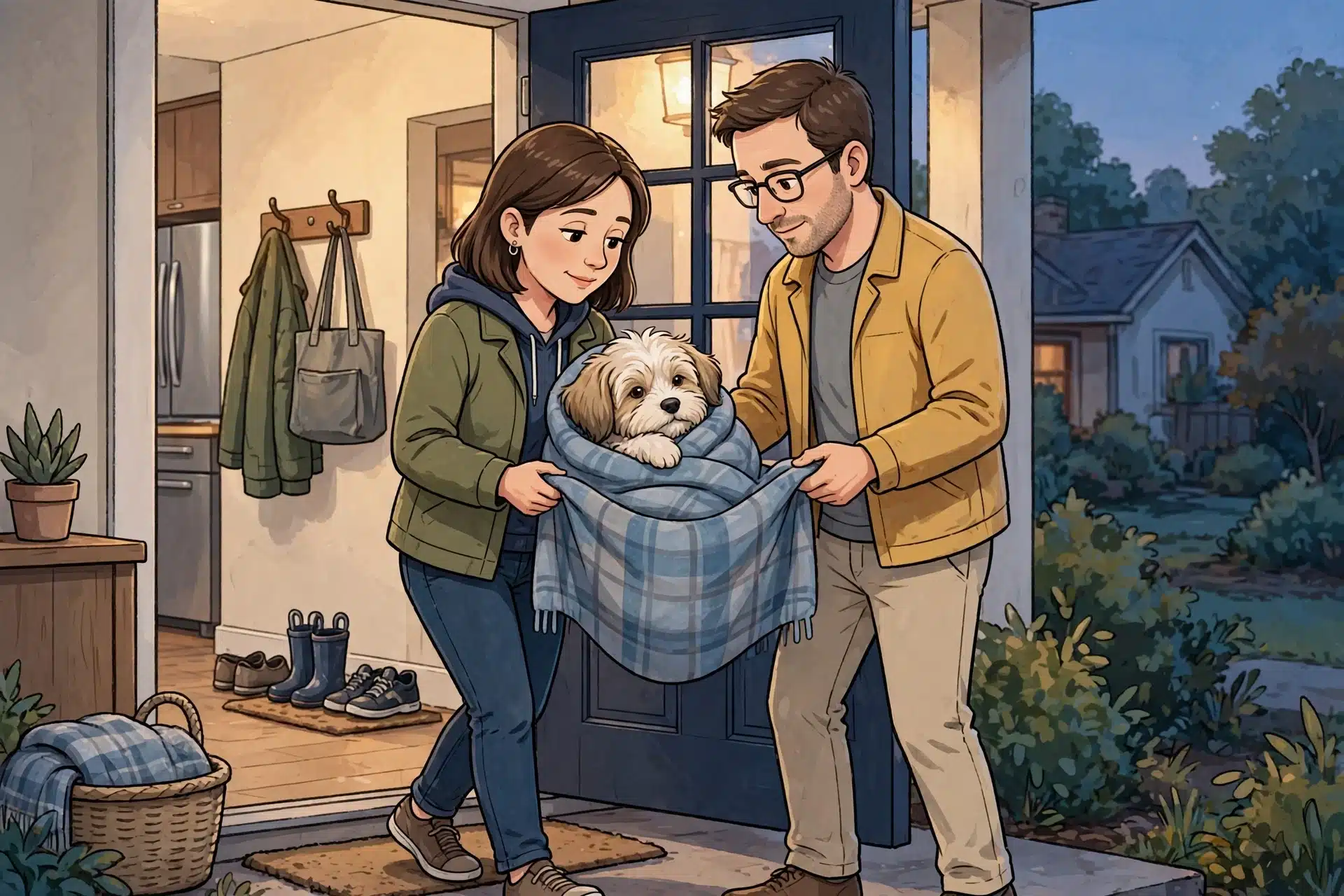
Keep the pickup crew small. One adult drives, one adult holds the puppy, and everyone else waits at home. Have the kids sit quietly on the couch and let the puppy come to them. A slow walk to the yard for a first potty break, then a short sniff of the crate. Loud greetings and a yard full of friends can wait until the puppy has slept and eaten. If your breeder sends food home, keep the puppy on it.
Who Holds the Puppy and When
Hand out holding turns like snacks: short and on a timer. A two-minute sit-and-hold on the floor is the right size for a four-year-old. No carrying while walking, no holding on couches, and no wakes-a-sleeping-puppy rule breaks. Adults supervise every hold for the first week. If the puppy wiggles or whines, the child sets it on the floor calmly. That teaches kids to read the puppy instead of chasing it.
Meals, Sleep, and the Crate Routine From Night One
Feed breakfast, a lunch meal if the breeder’s schedule includes one, and dinner at set times, then carry the puppy outside within ten minutes of each meal. Puppies sleep 18 to 20 hours a day, so enforce naps in the crate after each play block. For night one, place the crate in your bedroom so your puppy knows you are nearby, and expect one potty trip around 2 a.m. A consistent first-night crate routine builds the habit; one week of it and most small-breed puppies sleep through.
Step 4: Introduce the Puppy to Your Children Safely
The first meeting sets the pattern your kids will follow for years. Keep it short, calm, and adult-led.
The First Meeting, Minute by Minute
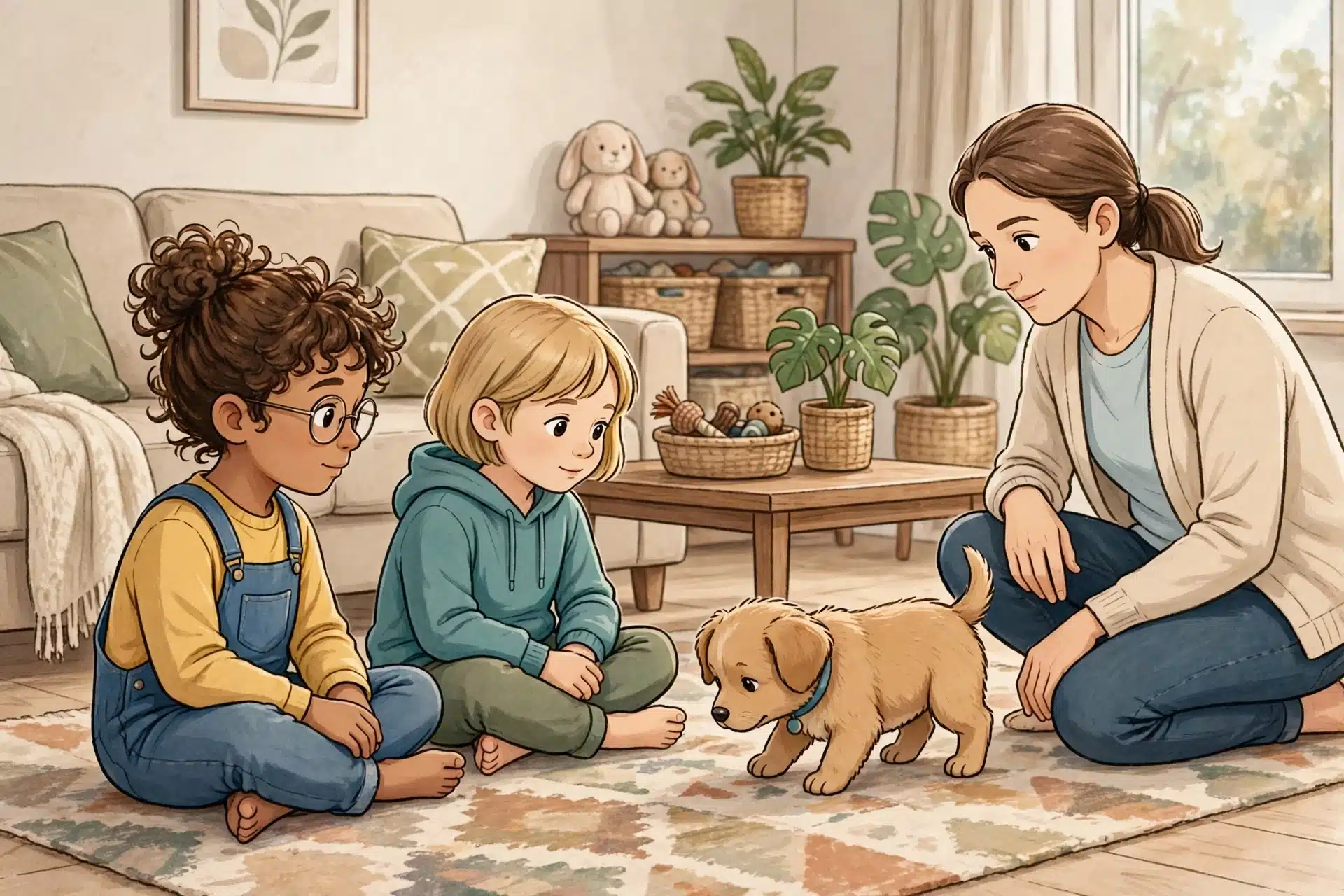
Have each child sit still on the floor, hands relaxed in their lap. One adult brings the puppy over on a leash and lets it sniff each kid. That’s it for minute one. If the puppy settles, kids can offer a treat with a flat palm. Stop the moment anyone gets wiggly or loud. Two or three calm minutes beat twenty excited ones.
Let the Puppy Set the Pace
A puppy that hides, yawns, or turns away is saying “not yet.” Give it space instead of chasing. The American Veterinary Society of Animal Behavior stresses gentle, positive exposure during early socialization, so let your puppy approach people rather than the reverse. Kids earn trust by being boring. Reward-based handling works far better than corrections, a point AVSAB’s guidance makes directly.
If the puppy nips or mouths, redirect it to a toy. Never scold a child or hold the puppy still. Both teach the wrong lesson.
Make the Introduction Repeatable for Years
Treat the first meeting as a script you’ll reuse. Every visit, every cousin, every playdate follows the same steps: kids sit, adults hold the leash, the puppy chooses to approach. Short, supervised sessions repeated daily build a dog that trusts children. When you’re working out what to do after pickup day, the first-night and prep guide covers the same calm-start approach.
Step 5: Teach Kids to Handle the Puppy Without Hurting It
The Gentle Touch Basics to Practice
Sit on the floor with your child and show each rule on the puppy’s body. Pet with an open hand, stroking the shoulders and chest. Never pull the tail or ears, squeeze, or hug. Leave the puppy alone when it is eating, chewing, or asleep in its crate, because startled dogs snap first and think later. Practice with a stuffed animal first if your child is under five. The AVMA advises never leaving a small child alone with any dog, so supervision is the rule, not a suggestion.
Holding a Small Breed Puppy Safely
A Havapoo or Cavapoo adult may top out under 15 pounds, so kids can carry the puppy, but only correctly and briefly. Teach the two-hand hold: one hand under the chest, the other supporting the rear. Sit first, stand later. Never let a child carry the puppy on stairs, in a crowd, or while running, and no piggyback rides or carrying under one arm. Because small puppies are fragile and wiggly, an adult should do every lift until the child’s hold is steady for a week straight.
When a Child Gets Too Rough, or the Puppy Nips
Set a consequence your child can predict: rough play ends immediately, and the puppy goes to its crate for a nap. Never punish the puppy’s nipping by hitting or yelling; instead, stop the game and turn away, which teaches that teeth end the fun. If the puppy nips your child, calm both sides, then review how the nipping started. Most bites to children follow play the dog read as rough, per this pediatric study, so the fix is usually a calmer game, not a scary correction. Once everyone is settled, restart with gentle handling rules. For more structured socialization practice, see this puppy socialization checklist.
Step 6: Build the Family Routine and Supervision Schedule
The Daily Rhythm Kids Can Follow
Post a simple chart on the fridge: potty, feed, play, nap, repeat. Kids do best with jobs tied to the clock, not to moods. A five-year-old can carry the water bowl; a nine-year-old can lead the leash to the yard. Puppies sleep 18 to 20 hours a day, so guard the crate naps after each play block. An overtired puppy nips more, and tired kids handle it badly.
Close, Then Gradually Widening
Week one, someone watches every puppy-child moment. Even a calm 8-pound puppy and a loving kid need eyes on them, because young children should never be left alone with any dog, as the AVMA advises. Week two, let your child hold the leash during potty trips while you stand nearby. Week three, allow short solo play with the door open. Widen the freedom only after a week of gentle hands and quiet voices.
A Weekly Family Check-In
Once a week, gather for ten minutes. Ask what worked, what felt hard, and who needs a break. Swap chores so no child carries the same job forever, and adjust the routine as the puppy grows. Small breeds socialize best early, between 3 and 14 weeks, so use check-ins to plan one new, positive experience for the coming week.
Common Mistakes to Avoid in the First Two Weeks
Mistakes That Stress the Puppy Early
The biggest error is too much everything. Visitors, handling, and play sessions flood a new puppy before it has settled. Puppies sleep 18 to 20 hours a day, so skipping crate naps after each play block leads to a nippy, overtired pup. Another common slip is punishing potty accidents instead of taking the puppy outside on a schedule. Keep the first week quiet, and let your puppy approach new things at its own pace.
Mistakes That Put Kids at Risk
The riskiest habit is leaving a child and puppy alone “for just a minute.” Young children should never be left alone with any dog, no matter how small or sweet, as the AVMA advises. Also correct kids who hug tightly, grab ears or tails, or wake a sleeping puppy to play. Show them safe petting on the back or shoulders, and respect the puppy’s space during meals and naps.

Your checklist is ready, and so is the right puppy for it. Sage Puppies matches families with Havanese, Havapoo and Cavapoo puppies raised for gentle homes with kids. Browse Sage Puppies, review the application, and take the first step toward your puppy’s homecoming.
Frequently Asked Questions
Q1: What supplies do kids need before bringing home a new puppy?
Give each child a soft-bristle brush, a treat pouch to fill, and a low leash hook by the door. These let kids help without risky tasks like feeding or carrying during the first weeks.
Q2: How do I introduce a new puppy to my children safely?
Have each child sit quietly on the floor with hands in their lap. One adult leads the puppy on a leash, lets it sniff each child, and ends the visit at the first sign of wiggles or noise.
Q3: How do I teach kids to handle a puppy without hurting it?
Practice the two-hand hold: one hand under the chest, the other supporting the rear. Sitting only, no carrying on stairs, and gentle stroking on the shoulders, never hugs or tail pulls.
Q4: Should my puppy sleep in my child’s room?
Not at first. A crated puppy in an adult’s room settles faster, avoids overnight tangles, and learns the crate is a safe retreat away from kid traffic.
Q5: When can kids be left alone with the puppy?
Not in week one, ideally longer. Supervision stays the rule until a full week of gentle hands and calm play, and young children should never be left alone with any dog.
Q6: What do I do when a puppy nips my child?
Stay calm, stop the game, and turn away so teeth end the fun. Then review what triggered the nipping and restart with slower, gentler handling.
Conclusion
A new puppy and young kids can mix well, but only when adults set the structure first. Agree on one adult who owns the routine, puppy-proof the shared rooms, and run a calm first 72 hours with short, supervised holding turns. Teach gentle hands, enforce crate naps, and widen your child’s freedom only after a week of calm play. None of it needs fancy gear, just clear rules kids can repeat. Done this way, your Havanese, Havapoo or Cavapoo grows into a trusted family dog, and your children learn care that lasts.