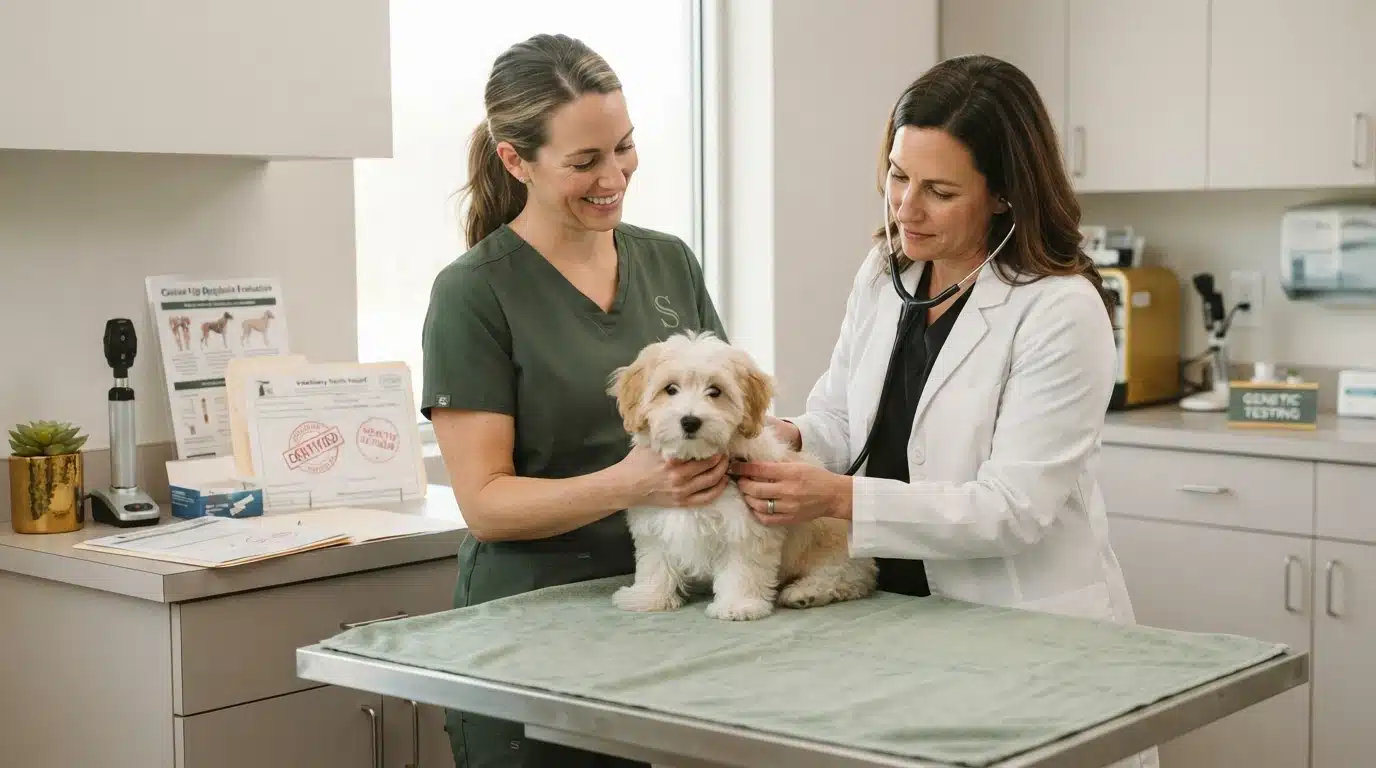
Quick Summary: The strongest health evidence for a puppy combines DNA testing, which identifies inherited gene variants, with OFA certificates, which document a veterinarian’s physical findings for hips, patellas, heart, eyes, and other conditions. Neither test guarantees lifelong health, so buyers should request both, check the parents’ results in OFA’s public database, confirm the test type and age, and ask for the puppy’s vaccination and deworming records before paying a deposit. Sage Puppies states that it provides both DNA and OFA records for Havanese, Havapoo, and Cavapoo parents so families can verify the claims themselves.
You have a Havapoo in mind. Two breeders sent paperwork, and both used the phrase health-tested. One sent a DNA panel with a barcode. The other sent OFA certificates with exam numbers. Here is the honest answer up front: in the debate over OFA vs genetic testing, neither paper proves your puppy will stay healthy, but each proves something different. OFA records what a veterinarian physically measured. DNA records what a lab found in the genes. The strongest buyers ask for both, plus the puppy’s own exam records. Most families are handed this paperwork weeks before they ever meet the puppy, so it pays to know what each document can and cannot promise, how to look it up yourself, and what to require before you pay a deposit. This guide walks through all of it, breed by breed.
OFA Certificates vs DNA Tests: What Each One Actually Proves
| OFA certification | DNA genetic panel testing | |
|---|---|---|
| What it proves | That a dog’s joints, patellas, heart, eyes, or thyroid were examined by a qualified vet or specialist and met OFA’s published criteria at a set age | Whether the dog carries, is affected by, or is clear of specific named variants within the panel offered |
| What it cannot prove | That a puppy will never develop a condition, or that a CHIC number means every result was normal | Polygenic conditions like hip dysplasia, patellar alignment, heart structure, or eye health, which are not a single gene |
| Age requirements | Hips and elbows at 24 months; patellas, cardiac, and thyroid at 12 months; earlier results are preliminary only | None. A DNA swab can be taken at any age, including on a young puppy |
| How you verify it | Search the dog’s registered name in the public OFA database, or ask the breeder for the certificate number and the parent dog’s OFA number | Request the lab report by name, check the reported variants against the lab’s list, and confirm the tested dog is the parent or puppy in question |
| Conditions covered | Hip and elbow dysplasia, patellar luxation, cardiac disease, eye disease, thyroid, respiratory function, plus breed-specific DNA results | Single-gene conditions the lab sells markers for, plus breed-relevant markers such as chondrodysplasia and color and coat traits |
| Practical cost and timing | Radiographs and exams are scheduled and submitted by a vet; results take time to review and appear in the database | Mail-in swab with results posted online, typically faster to obtain than orthopedic certification |
OFA Certificates and DNA Testing: An Introduction to the Two Kinds of Proof
When you compare OFA vs genetic testing, you are comparing two different kinds of evidence, not two versions of the same one. Meet both contenders first.
OFA certification
The Orthopedic Foundation for Animals keeps a public registry of clinical health screenings: X-rays, physical exams, and specialist eye and cardiac checks. It proves a vet examined a dog’s hips, patellas, heart, eyes, or thyroid and met OFA’s published criteria at a set age. Families buying health-tested puppies near me usually start here.

Key strengths
- Records come from hands-on exams by qualified vets and specialists
- Results live in a searchable public database anyone can check
DNA genetic panel testing
A DNA test is a mail-in swab analyzed by a lab to find specific genetic variants a puppy or parent carries, including single-gene conditions and markers like chondrodysplasia. In the OFA vs DNA tests question, it answers what genes say, not how joints or hearts actually look. Because swabs work at any age, breeders of Havanese, Havapoo, and Cavapoo puppies often run panels early.
Key strengths
- No age requirement, so puppies can be tested young
- Results typically arrive faster than orthopedic certification
What OFA and DNA Testing Each Measure
An OFA certificate and a DNA test answer different questions. An OFA certificate records a veterinarian’s physical evaluation of one dog at a specific age, such as hip or heart screening. A DNA panel reads that dog’s genes for inherited diseases. Knowing the difference between OFA vs genetic testing helps you judge breeder paperwork correctly.
What an OFA Certificate Actually Records
The Orthopedic Foundation for Animals maintains a public database of health screening results, including hips, elbows, patellas, cardiac exams, thyroid panels, and CAER eye examinations. A certificate records what a licensed veterinarian saw on that day. A hip rating reflects an X-ray read by three specialists. A cardiac result reflects a stethoscope exam or an ultrasound.
That means an OFA certificate measures physical condition, not genes. A dog with clear hips can still carry a gene for something OFA never screened. Ratings can also change, because hips and elbows are only final at 24 months. Earlier results are preliminary, and the score can shift as the joints mature.
An OFA record is strong evidence for what it covers, and it can be verified in the public database by anyone. It is not a full picture of the dog’s inherited disease risk on its own.
What a DNA Panel Can and Cannot Tell You
A DNA panel reads a dog’s genetic code. Labs such as the UC Davis Veterinary Genetics Laboratory screen for known disease markers, and those results can even be submitted to the OFA database. A swab can be taken at any age, including on a young puppy.
The panel tells you which mutations the dog carries or has inherited. It cannot tell you whether joints formed well or whether a heart murmur exists today. It also only covers conditions someone built a test for. A clean panel does not rule out every inherited problem.
Used together, the two fill each other’s gaps. We explain how to read both when reviewing health-tested puppies for sale near me, and our guide to red flags in puppy health testing shows what missing paperwork usually means.
Is a DNA Health Test Enough Proof of a Puppy’s Health, or Do You Need OFA?
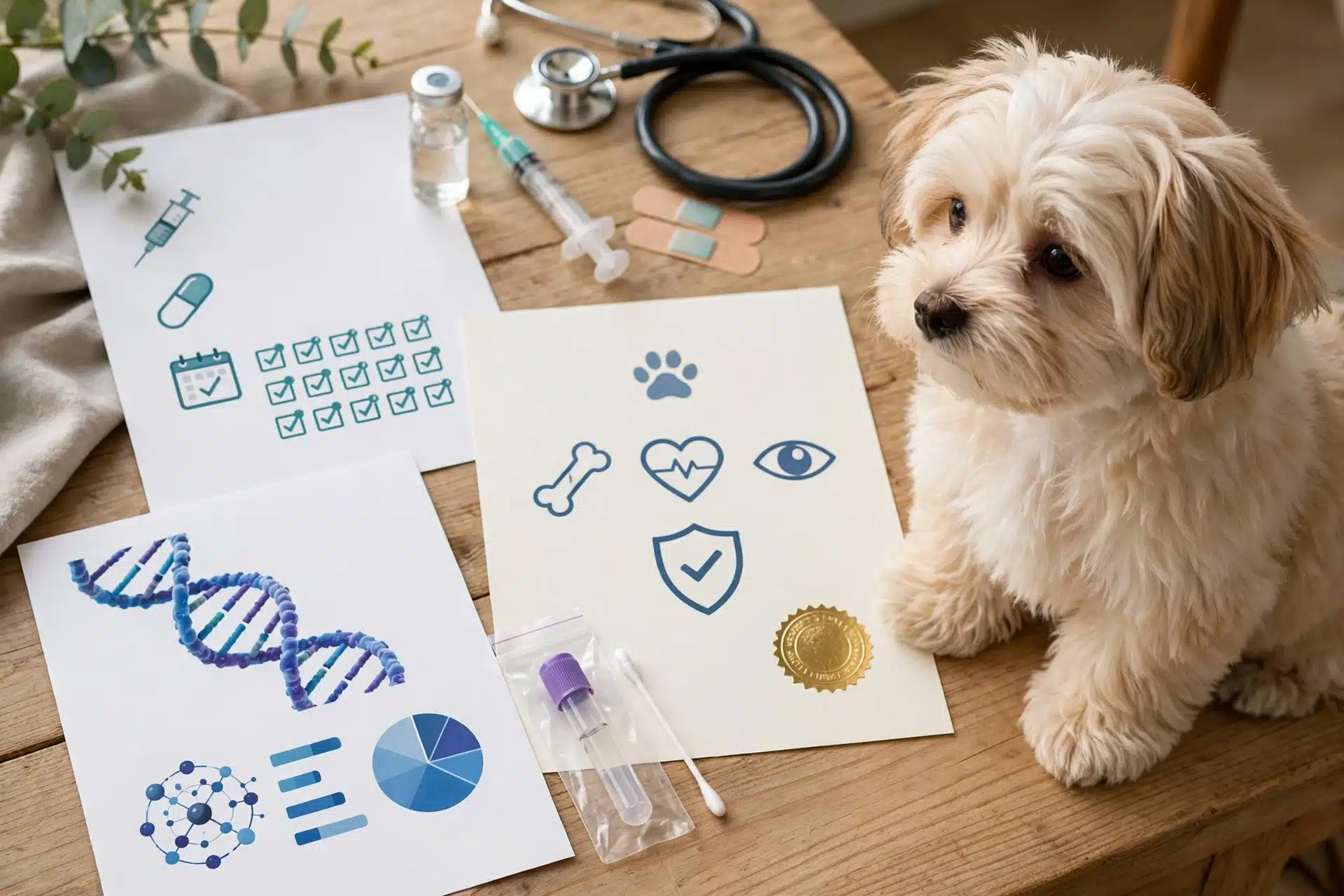
No. A DNA health test answers one narrow question: which inherited gene variants a dog carries. It says nothing about the physical conditions a puppy can develop, like loose kneecaps, hip dysplasia, or heart disease, because those are shaped by structure and development, not just genes. Most responsible breeders use both, and a complete paperwork packet usually includes three record types:
- DNA test results for inherited gene variants the parents can pass on
- OFA certificates showing screened hips, knees, heart, and eyes
- Vaccination and deworming records from the puppy’s regular vet visits
The Three Record Types Buyers Mix Up
Buyers often treat these documents as interchangeable, but they prove different things. Genetic screening reports list gene variants a dog inherited, which helps predict what the puppy could pass to offspring. OFA certifications, including hip, elbow, and cardiac screening, confirm the dog’s actual body structure and organ function were examined and rated by a professional. Vaccination and deworming records show routine care happened on schedule.
A breeder who shares only one category leaves gaps. For example, a clean DNA panel says nothing about whether the sire’s hips are structurally sound, and OFA scores don’t reveal whether a dog carries a gene variant for a condition like progressive retinal atrophy.
Key point: “Health-tested” should mean DNA results and OFA screenings, not just one or the other.
When DNA Testing Is the More Useful Proof
DNA results shine when the risk is purely inherited. Doodle breeds like Havapoos and Cavapoos can inherit conditions from either parent breed, so a full genetic panel on both parents helps predict what a puppy could carry. It also flags carriers – dogs that seem healthy but can pass on a variant. For structural issues like hip or patella problems, though, only hands-on OFA screening and eye exams give real answers. DNA testing complements OFA, it doesn’t replace it.
How to Verify a Puppy’s OFA Certificate Before You Buy
You can verify a puppy’s OFA certificate before buying by searching the OFA database yourself in about ten minutes. Ask the breeder for the sire and dam’s registered names, enter them at ofa.org, and compare what you find against the paperwork you were shown. If the results do not match, walk away.
A Ten-Minute OFA Database Check
Follow these steps before you put down a deposit:
- Ask the breeder for the registered names of both parents and the puppy, plus any OFA or CHIC numbers.
- Go to the OFA’s public search page and type each name in.
- Compare the breed, the owner’s location, and every test on file with what the breeder claimed.
- Check the results were done by a licensed vet and that final hip and elbow ratings show the dogs were at least 24 months old.
- Screenshot or save the records for your own file.

A breeder with real paperwork will hand over names and numbers quickly. Anyone who dodges that request is telling you something. Sage Puppies, for example, shares documented parent testing with families during the matching process, so buyers can confirm records on their own rather than take anyone’s word.
What a Missing or Mismatched Record Means
A blank search result can mean two things. The dog was never tested, or it was tested under a different name, like a kennel name instead of the call name the breeder used. Ask which name was registered. If the answer changes twice, stop asking.
A mismatch matters more. Wrong breed, wrong owner state, or a missing patella or cardiac exam means the certificate you saw does not belong to this puppy’s parents. Paperwork can be copied or borrowed, but a live database entry with matching details cannot. Trust the database, not the PDF.
What the Requirements Look Like for Havanese, Havapoo, and Cavapoo
Before you pay a deposit, ask which tests apply to the exact mix you want. The answer changes by breed, so here it is directly: a breeder should show OFA hip, patella, cardiac, and eye results for the parents, plus breed-specific DNA panels.
The Parent Club Standard to Ask For
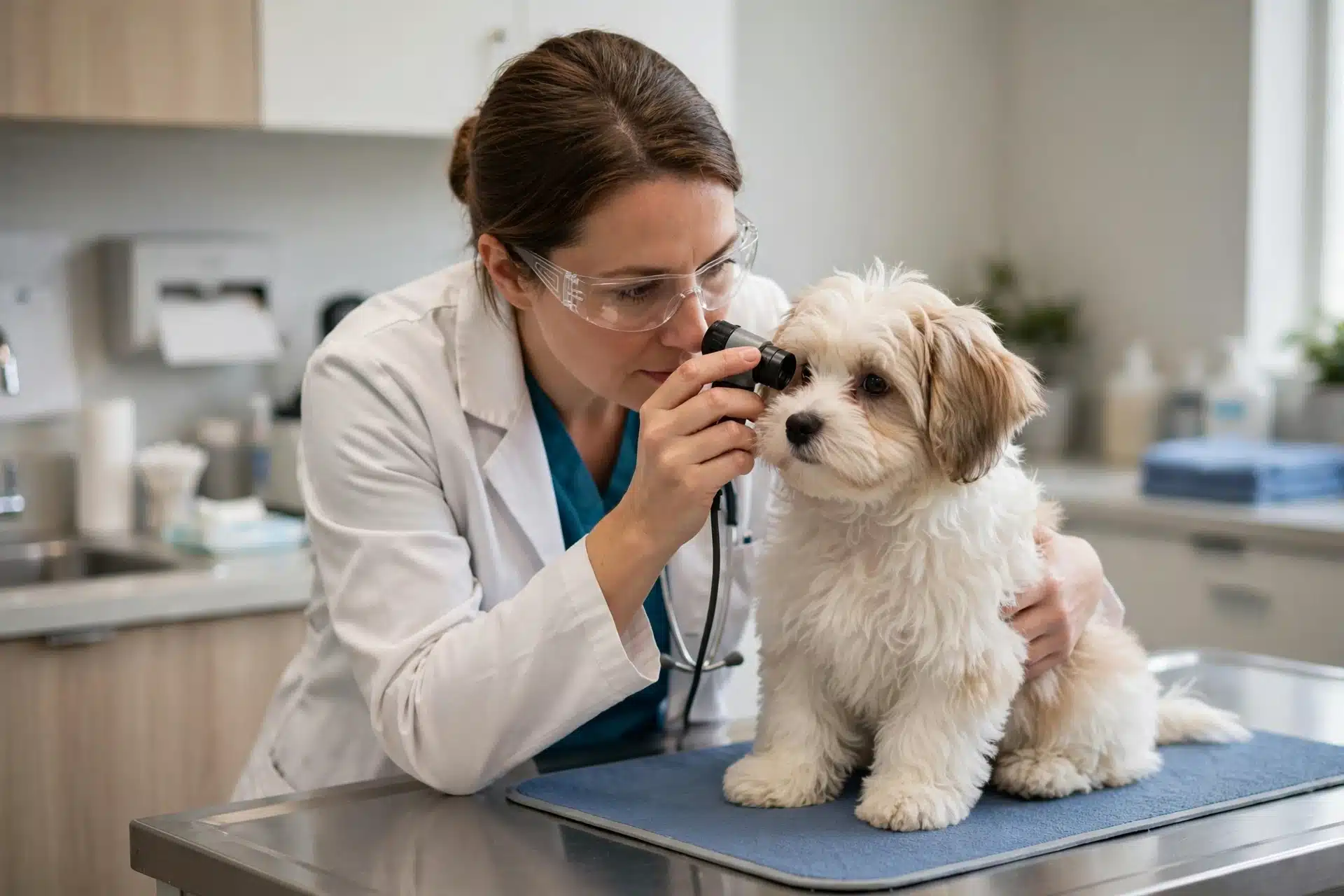
A purebred Havanese parent should have four things on file:
- OFA hip evaluation
- OFA patella rating
- Cardiac exam
- Annual CAER eye exam
A CHIC number from the OFA database confirms the sire and dam completed that list, though a dog can earn one without passing. Dogs need 24 months for final hip ratings and 12 months for patellas and cardiac. On any Havanese puppy page, such as our Havanese health test guide, match each claim against the public record rather than a screenshot.
Havapoo and Cavapoo: Which Parent Programs Apply
Crossbreeds have no single club checklist, so the tests come from both parents. A Havapoo should inherit Havanese hip, patella, cardiac, and eye clearances on one side, plus Poodle DNA screening. A Cavapoo needs the same structure with a Cavalier parent, where cardiac exams matter even more because mitral valve disease runs in the breed.
Ask which program tested each parent, then verify. For breed-specific questions, our Havapoo and Cavapoo breeder checklists list the paperwork to request before you commit.
Cost, Timing, and Practical Realities for Buyers
Why the Timeline Shapes What You See
Genetic results come back fast. A cheek swab can return breed and disease markers within a few weeks, and breeders can swab a dog at any age. Orthopedic proof moves slower. Final hip and elbow ratings only happen at 24 months, and that wait shapes which dogs a program can breed and which litters show finished paperwork. Preliminary X-rays give an early read, but they can change once the dog matures. So a young sire with only prelims is not a red flag by itself; a five-year-old dam without final ratings is. Ask what stage each parent’s results reflect, and match your expectations to the dog’s age.

Labeled Cost Examples, Not Market Averages
Testing has a price tag on both sides. The OFA’s own fee schedule charges $35 for preliminary hips and $15 for submission, while final hip evaluations and CHIC recording add $25 per dog, before your vet’s exam and sedation fees. DNA panels vary by lab and panel size. These costs are part of why health-tested puppies cost more upfront. Sage prices each litter at $3,500 to $4,500, and what the price includes should be itemized, not vague.
Which Should You Choose: OFA Certificates or Genetic Testing?
The honest answer is that neither one is enough on its own. Genetic testing catches inherited diseases that a physical exam will miss. OFA certificates confirm the physical traits DNA can’t see, like hip structure, patellas, heart, and eyes. The best breeders use both, because together they cover the two halves of a dog’s health story.
The Rule to Use When a Breeder Offers Only One
If a breeder only shows DNA panels, ask what happened to hips, patellas, cardiac, and eyes. If they only show OFA results, ask which inherited diseases the parents were screened for, because OFA never tests genes. A single tool is a starting point, not proof. When a breeder says testing “isn’t necessary” for one side of that pair, that is the answer you needed.
Never accept a promise of future testing as a substitute for results that already exist.
Five Questions to Ask Before You Pay a Deposit
- Were both parents DNA tested, and can I see the actual lab reports?
- Which OFA exams did each parent pass, and at what age?
- Are any hip or elbow results preliminary rather than final at 24 months?
- Are the parents listed in the public OFA database under their registered names?
- Does the paperwork match the puppy you are being sold, breed and litter included?
Written answers matter more than friendly ones. A confident breeder will send documents the same day. Hesitation, excuses, or screenshots with names cropped out deserve the same suspicion as no paperwork at all.
Where Sage Puppies Stands on This
Sage Puppies requires both halves for its Havanese, Havapoo, and Cavapoo parents: DNA screening for inherited conditions alongside OFA results for structure, heart, and eyes. Every litter page itemizes which tests each parent completed, so you can verify the claims yourself in the OFA database before a deposit is due.

Reading breeder paperwork gets easier once you know what each document proves. Sage Puppies shares both DNA results and OFA records for every Havanese, Havapoo, and Cavapoo litter, so you can verify before you commit. See current litters at Sage Puppies.
Frequently Asked Questions
Q1: Is a DNA health test enough proof of a puppy’s health, or do I need OFA?
No. DNA shows inherited gene variants only. OFA confirms physical structure, heart, and eyes. Ask for both, plus the puppy’s vaccination and deworming records.
Q2: What health tests should a breeder provide before selling a puppy?
Request DNA panels on both parents, OFA hip, patella, cardiac, and CAER eye results, and routine vet records. For Havanese parents, a CHIC number confirms the list was completed.
Q3: How can I verify a puppy’s OFA certificate before buying?
Search both parents’ registered names at ofa.org. Match breed, owner, exam types, and ages. Final hip ratings require 24 months; trust the database over screenshots.
Q4: What is a CHIC certificate, and does it guarantee healthy results?
No. CHIC only confirms a dog completed the required tests. A dog can earn CHIC with failed results, so read each score.
Q5: Are preliminary OFA results a red flag?
Not by themselves. Dogs under 24 months can only have prelims. Worry instead if an older dam lacks final hip ratings.
Conclusion
OFA certificates and DNA panels answer different questions, so neither replaces the other. OFA proves a vet examined a dog’s hips, patellas, heart, and eyes; DNA shows which inherited variants the parents carry. The strongest proof uses both, plus the puppy’s vaccination and deworming records. Verify claims yourself by searching parent names in the public OFA database, and match each test to the dog’s age, since final hip ratings only exist at 24 months. Ask which tests apply to your exact breed mix, because Havanese, Havapoo, and Cavapoo requirements differ. Breeders with real paperwork share names and numbers quickly, and that openness is the clearest sign you have found a health-tested litter worth your deposit.