Quick Summary: Finding a family-raised puppy works best when buyers follow a set order: define what family-raised care actually means in daily life, then verify readable health records, a real home visible on video, and written pricing terms before paying anything. A serious breeder expects a real application with specific answers about your home and schedule, and only places a deposit after the match is confirmed in writing. The article uses Sage Puppies, a small South Jordan Utah program raising Havanese, Havapoo and Cavapoo puppies, as its working example, noting their written application flow, $3,500 to $4,500 price range, and options for both local pickup and nationwide delivery.
You have typed “family-raised puppies near me” into a search bar, opened six tabs, and noticed every breeder uses the same words. Raised underfoot. Loved like family. The phrases blur together, so the real question becomes simpler: which program will actually answer your first message, and what should you do the moment it does?
That is where a clear plan for family-raised puppies near me, how to start matters more than another photo gallery. This guide walks you through your first week in order: what to ask before you apply, how to verify health testing and raising practices, and how to move from shortlist to reserved puppy without second-guessing every step.
It draws on the day-to-day experience of Sage Puppies, a small Utah program that raises Havanese, Havapoo, and Cavapoo puppies in a family home in South Jordan. Treat each step here as a checkpoint. If a breeder cannot pass one, keep looking. This approach works whether you buy locally or have a puppy delivered nationwide.
Step 1: Define What ‘Family-Raised’ Must Mean for Your Family
“Family-raised” sounds warm, but it means different things to different breeders. Before you search family-raised puppies near me, how to start is simple: write down what the term must actually look like in daily care, then hold every breeder to your list.
From Label to Daily Care Checklist
Turn the label into five concrete questions. Where do the puppies sleep at night? How many hours a day are they near people? Who handles them, and how often? What sounds, surfaces and household routines do they meet before eight weeks? And where does the mother live?
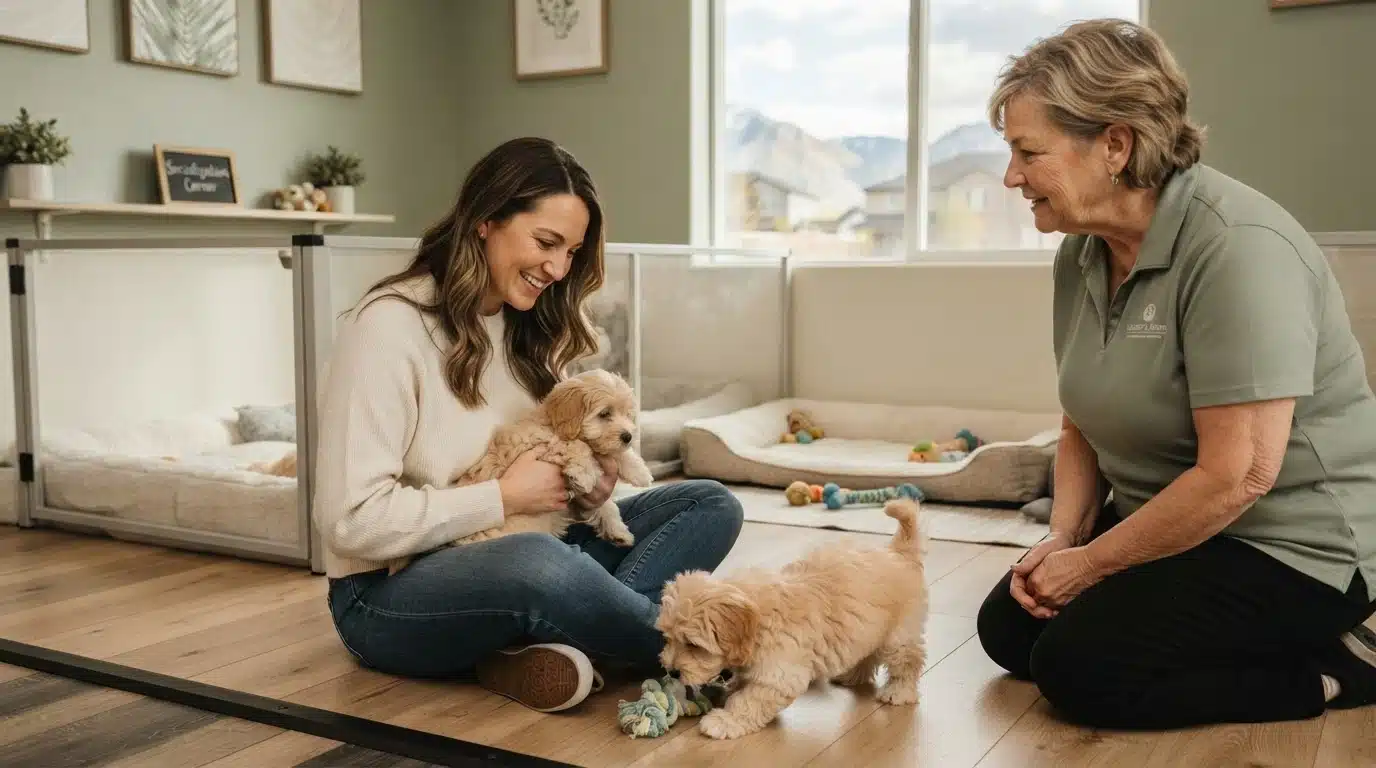
A real family-raised puppy grows up in a kitchen or living room, not a separate kennel building. It meets kids, vacuums, doorbells and car rides as normal life. The AKC lists home environment and socialization among the signs of a responsible breeder, so these answers should come easily and without hedging.
Write your checklist before you contact anyone. It keeps you comparing daily care instead of falling for a nice photo.
What the Label Does Not Prove
Even a genuine home-raised setting does not guarantee health or honesty. The label says nothing about parent health testing, vet care, how many litters the mother has had, or whether the breeder screens you as a buyer. Good breeders interview you too, because a placement should fit both sides.
So treat “family-raised” as the floor, not the finish line. Ask for proof: health test results for both parents, a written contract, and a visit or video call showing where the puppies actually live. Sources like OFA’s breeder interview checklist and Embark’s questions to ask breeders cover the verification side in depth.
Anyone searching family-raised puppies near me, how to start smart means asking for evidence early. Our guide on what makes family-raised puppies different walks through that standard in detail.
Step 2: Verify the Program Before You Contact Anyone
Anyone searching for “family-raised puppies near me how to start” eventually hits the same wall: every breeder’s website sounds warm, and a few are hiding something. So verify before you send a single message. Three checks do most of the work: readable health records, a verifiable identity and location, and written terms. Run them in that order, because each one filters out a different kind of problem program.

Health Records You Can Actually Read
Ask for the puppy’s health record before you talk price, and look for specifics rather than a shiny certificate. A usable record shows the vaccine brand, the date given, the lot number when available, and the vet or clinic that administered it. Deworming entries should list the product and date, not just “dewormed.”
The American Veterinary Medical Association publishes core vaccine guidance for puppies, including the typical start around six to eight weeks with boosters every few weeks, so you can check any record against a real schedule.
Red flags are easy to spot once you know them: photos of records with edited dates, vaccines given “by the breeder” with no clinic name, or a refusal to share anything until you pay a deposit. A program with nothing to hide sends records first.
Ask for the records in writing. Programs that stall on this step rarely improve after you commit money.
Identity, Location, and Practical Logistics
Next, confirm the program is who and where it says it is. A video call at the breeder’s home tells you more than a dozen curated photos: you see where puppies live, how the mother acts, and whether the space matches the story. Programs that only offer to “meet you halfway” or ship without ever letting you see the home deserve extra scrutiny.
Check the address against a map, confirm the state, and ask who handles delivery if you are not local. For families in Utah, an in-person visit is the simplest verification there is. Sage Puppies, for example, runs its program from South Jordan and invites matching families into that process directly. Wherever you look, the principle holds: a real address, a real person, and a real home you can see.
Terms You Should See Before Paying Anything
Finally, get the terms in writing before any money moves. You want the total price, the deposit amount and whether it is refundable, what happens if the puppy becomes unavailable, and how pickup or delivery works. A written contract covering these basics protects both sides, and honest programs provide one without being asked twice. Small boutique programs often publish their process openly, so if terms only appear after you pay, treat that as your answer and keep looking.
Step 3: Submit a Real Application, Not a Shopping Cart
A serious breeder will not sell you a puppy the way a store sells a toaster. If you can click “buy now” and pay without anyone asking about your home, your schedule, or your experience, that is a red flag, not a convenience. The application is where the whole relationship starts, so treat it like a real conversation. Write it honestly and expect questions back.

What Your Application Should Say
Keep it truthful and specific. Breeders read dozens of these, and vague answers blend together.
Cover the basics first:
- Who lives in your home, including kids and ages
- Your work schedule and how long the puppy would be alone
- Your yard or walking setup, and whether you rent
- Any past dogs and what happened to them
- Why you want a Havanese, Havapoo, or Cavapoo in particular
You do not need a perfect life to pass. A first-time owner with a small apartment and a good plan beats a house with a fence and no time. The application exists so the breeder can match the right puppy to your real day, not your best day. That matching step matters more with family-raised puppies near me how to start questions than most buyers expect. For a look at how this flows into a reservation, see Sage Puppies’ reservation process.
How the Breeder Should Respond
A good breeder replies like a person, not an automated form. Expect a follow-up call or email within a few days. They should ask their own questions, explain wait times honestly, and tell you which specific litter or dam could fit your timeline.
They should also answer yours without dodging. Ask about health testing on the parents, how the puppies are raised in the home, what socialization looks like week by week, and what happens if a match falls through. Clear, unhurried answers are the point of the application stage. If a breeder pushes a deposit before you have spoken with anyone, slow down. No responsible program needs that pressure, and the ones worth your money would rather wait than guess.
The response itself tells you almost as much as the puppy’s paperwork does. Someone who takes your answers seriously will take the placement seriously too.
Step 4: Understand the Waitlist, Matching Window, and Go-Home Day
Anyone searching family-raised puppies near me how to start will eventually hit the same fork: a waitlist for a future litter or a puppy already available. Knowing what each path promises protects your deposit and your expectations.

What a Waitlist Deposit Actually Buys You
A waitlist spot is interest, not ownership. Joining one does not hold a specific puppy or guarantee a particular litter, selection position, or go-home date. Before you pay anything, ask the breeder in writing what the deposit holds: a named puppy, or a place in line for a future placement. Get the refund, transfer, and cancellation terms too, because deposits are often non-refundable once accepted.
With a program like Sage Puppies, a reservation only exists after your application is reviewed, matching is discussed, and your deposit is accepted with written confirmation of what is being held. The deposit then counts toward the purchase price, which sits in the $3,500 to $4,500 range depending on the puppy. You can compare the details on the pricing and reservation process page before committing.
From Match to Go-Home Day
Once you are matched, the clock runs on four things: paperwork, remaining balance, puppy readiness, and your travel plan. Puppies typically go home around eight weeks of age or later, once the breeder confirms they are eating well and developing on track. Ask for the exact go-home window in writing rather than a rough month.
Then confirm logistics early. Local Utah families usually arrange pickup in South Jordan, while out-of-state families should request a separate travel quote, because delivery costs are priced separately. Keep the carrier introduction calm and short, and pack the food the puppy already eats so the first 24 hours feel familiar.
Step 5: Prepare Your Home and Family for the First Week
Your puppy arrives small, curious, and quick. A few days of setup now prevents most first-week problems, so work through the house room by room before pickup day.
Supplies and Safe Spaces
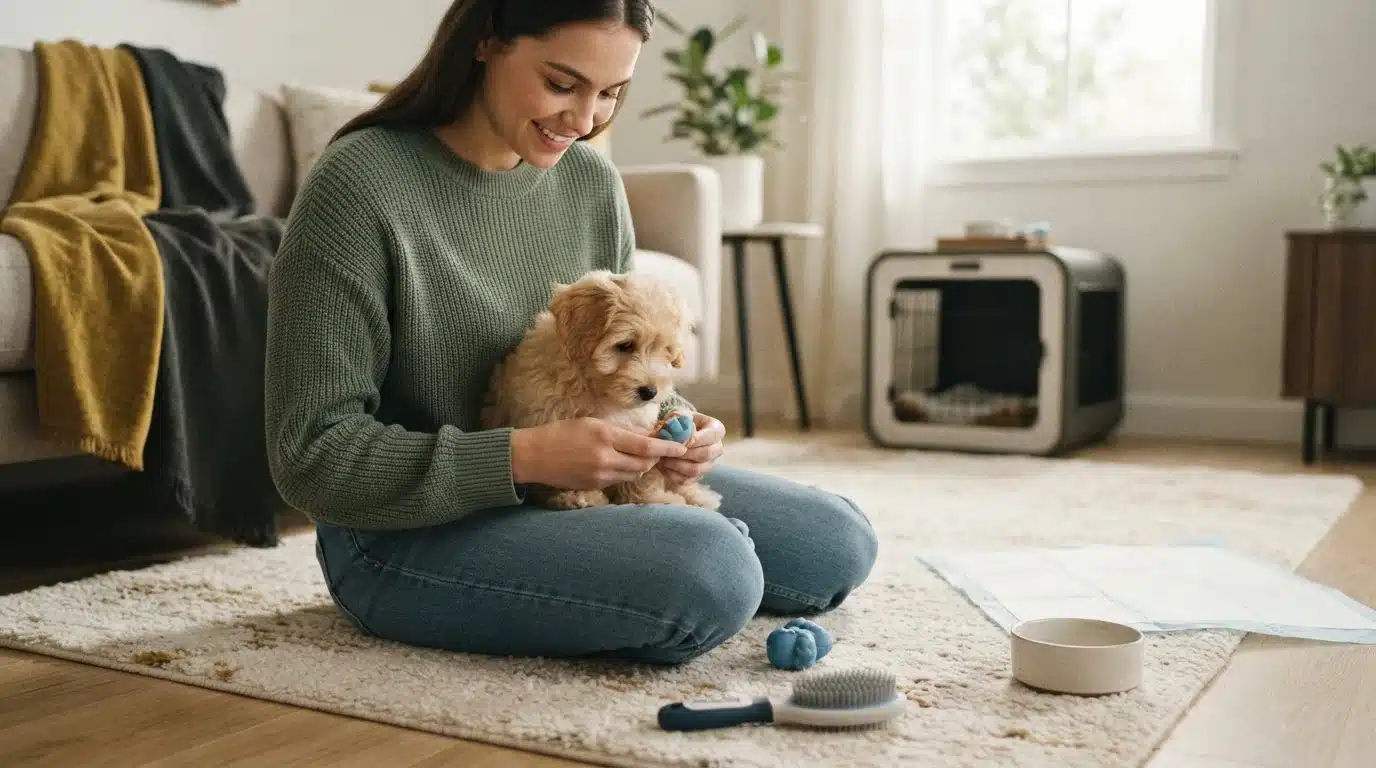
Get the basics on hand early: a crate, a soft bed, a flat collar with an ID tag, a leash, food and water bowls, and a few chew toys. The food matters most. Ask which puppy food your breeder uses and buy the same kind, because a sudden switch can upset a young stomach. Most checklists also call for grooming basics and stain cleaner for the inevitable accidents, as PetSafe’s new puppy checklist points out.
Then puppy-proof. Crawl low and look for anything a puppy might chew or swallow: loose cords, socks, houseplants, kids’ toys, and trash cans. Lock cleaners and medications in high cabinets, since everyday products can be toxic to dogs. A room-by-room walkthrough, like Petco’s puppy-proofing guide, helps you catch hazards you’d otherwise miss.

Travel and Arrival Day
Plan the ride home before the big day. Small breeds travel best secured in a crate or carrier lined with a towel, not loose on a seat or a lap. Bring paper towels, water, and the food you already bought. Skip big meals right before the drive; a light snack reduces motion sickness. For Utah families driving down to South Jordan, our guide to bringing a puppy home in the car covers the route and timing in detail.
At home, keep the first hours quiet. Show your puppy one room, its crate, and the potty spot outside. Let the kids sit on the floor and let the puppy come to them. Short, calm introductions build trust faster than a houseful of excited greetings.
Common Mistakes to Avoid When You Start Your Search
First-time buyers rarely lose money on the big decisions. They lose it on the small shortcuts: paying a stranger too fast, or taking home a puppy without health records.
Pressure, Payments, and Promises
A seller who pushes urgency is showing you the first red flag. “Someone else wants this puppy today” is a sales line, not a fact. Slow down anyway.
The FTC warns that scammers lean on adorable photos and demand money up front, before you ever see the puppy. Payment method matters more than the amount. Wire transfers, gift cards, crypto, and payment apps are hard to reverse, so honest breeders rarely ask for them; the FTC’s pet scam guidance covers these tactics in detail.
Free shipping can be another trick. Scammers add fake airline crates and insurance fees after you pay, then the puppy never arrives.
A real program moves at a pace you control. Sage Puppies uses a written application and deposit flow, so you can read the terms before any money changes hands. If a seller resists that kind of clarity, keep looking.
Skipping the Vet and the Records
Some families fall for a cute face and skip the paperwork. That mistake costs more later.
Ask for the puppy’s vet exam, vaccination dates, and deworming history before you commit. A breeder should hand these over gladly. If the answers are vague, or the “vet” turns out to be a phone call, treat it as a deal-breaker.
Then plan your own visit. Book a checkup with your vet within the first few days at home, and bring the records so your vet can compare notes. For what a healthy setup looks like in person, this breeder visit checklist walks through it.
Early questions feel awkward. They are also how good families end up with healthy puppies.

Ready to meet your puppy? At Sage Puppies, Cassie’s family-raised Havanese, Havapoo and Cavapoo litters come with a clear application and honest matching, so your first week starts calm instead of chaotic. Start your application today and take the first real step toward bringing your puppy home. Wisely Bred. Beautifully Loved.
Frequently Asked Questions
Q1: family-raised puppies near me how to start
Start by writing your own definition of family-raised care, then verify three things before contacting anyone: readable health records, a real home you can see on video, and written pricing terms. After that, submit a thoughtful application and only place a deposit once the match is confirmed in writing.
Q2: When should I submit my application?
Apply as soon as you know your timeline, even before a litter is announced. Most boutique programs plan pairings months ahead, and your answers help the breeder match you with the right puppy rather than the next available one.
Q3: How much should I expect to pay?
Small breed puppies from family programs commonly run several thousand dollars. Sage Puppies, for example, prices puppies between $3,500 and $4,500, with the deposit counting toward that total. Always ask for the full price in writing before paying.
Q4: Are waitlist deposits refundable?
Often not, so ask first. Before paying, get written confirmation of what the deposit holds, plus the refund, transfer, and cancellation terms. A legitimate program answers these questions plainly instead of rushing you toward payment.
Q5: How do I avoid puppy scams?
Refuse wire transfers, gift cards, crypto, and payment apps. Ask for a video call showing the puppy and its home, demand health records before any money moves, and walk away from anyone claiming another buyer wants your puppy today.
Q6: Can I get a puppy delivered out of state?
Yes, most family programs arrange delivery nationwide, usually as a separate quoted cost. Ask who travels with the puppy, how the trip works, and what paperwork comes along before you commit to a go-home date.
Q7: What age do puppies go home?
Most puppies go home around eight weeks or later, once the breeder confirms they eat well and develop on track. Ask for the exact go-home window in writing rather than a rough estimate of the month.
Conclusion
Starting your search comes down to order, not luck. Define what family-raised must mean in daily care, then verify health records, the breeder’s home, and written terms before any money moves. Next comes a real application, honest answers on both sides, and a deposit only after the match is confirmed in writing. That sequence filters out pressure tactics and vague promises while keeping good programs in the running. The same steps work whether you pick up in Utah or arrange delivery nationwide. If you want a deeper look at what sets a genuine home environment apart, this guide to what makes family-raised puppies different covers the standard in detail. Take the checkpoints one at a time, and the right puppy usually follows.