Quick Summary: DNA tests and vet exams answer different questions, so buyers need both: parent DNA and OFA records show inherited and structural health risks, while a hands-on exam confirms the puppy’s current heart, eyes, knees, weight, and vaccine status. Verify breeder records through official registries and dated veterinary notes, then have your own vet examine the puppy within 72 hours of pickup. Sage Puppies supports this layered approach by providing parent DNA results, screening records, and puppy exam details before buyers commit.
A breeder can hand you a DNA panel marked clear on every variant and still be offering a puppy whose parent never had a patella checked. Both documents can be fully legitimate. So when buyers ask which one matters more in a DNA test vs vet check puppy decision, the honest answer is: rely on both. DNA screening predicts inherited variants; a veterinary exam tells you what is true about this puppy on the day you meet. The confusion is real, especially for first-time families browsing health tested puppies for sale near me, because the paperwork arrives unlabeled and covers very different things. Some buyers over-trust a genetic panel. Others assume a clean vet visit settles everything. Neither habit protects your puppy. This comparison breaks down what each method screens for, what each one structurally cannot see, what the Havanese Club of America and OFA actually require, and how to verify a breeder’s records before you commit.
DNA Testing vs Vet Checks for Puppies: At a Glance
| DNA health screening | Veterinary health check | |
|---|---|---|
| What it screens for | Specific known disease variants such as PRA-PRCD, and for crosses, breed composition | Current health, heart and lung sounds, eyes, teeth, patellas, hips, and vaccines at the time of visit |
| What it cannot detect | Complex or multifactorial conditions, structural joint problems, current illness, or most polygenic traits | Carrier status for genetic variants, or disease that develops later in life |
| When it is done | Any age once a sample can be swabbed, often at breeder or owner request | Repeatedly across the first year of life, plus at breeding age for parent dogs |
| Typical cost | Roughly $50 to $300 per dog depending on panel depth and laboratory | Routine exam and vaccines in the roughly $75 to $250 range; radiographs and specialist panels cost more |
| Who performs it | A testing laboratory, with a swab collected by the breeder, owner or a vet | A licensed veterinarian, sometimes a board-certified ophthalmologist for eye exams |
| Best for | Predicting inherited variant risk before symptoms appear | Confirming that a specific puppy is healthy now and tracking real growth |
How DNA Screening and Vet Checks Compare
DNA health screening
A lab reads a cheek swab and looks for known genetic variants, such as the one behind progressive retinal atrophy. It predicts inherited risk before symptoms appear, so breeders and owners of Havanese and doodle crosses often run it before a puppy goes home. Cost runs roughly $50 to $300 per dog.
Veterinary health check
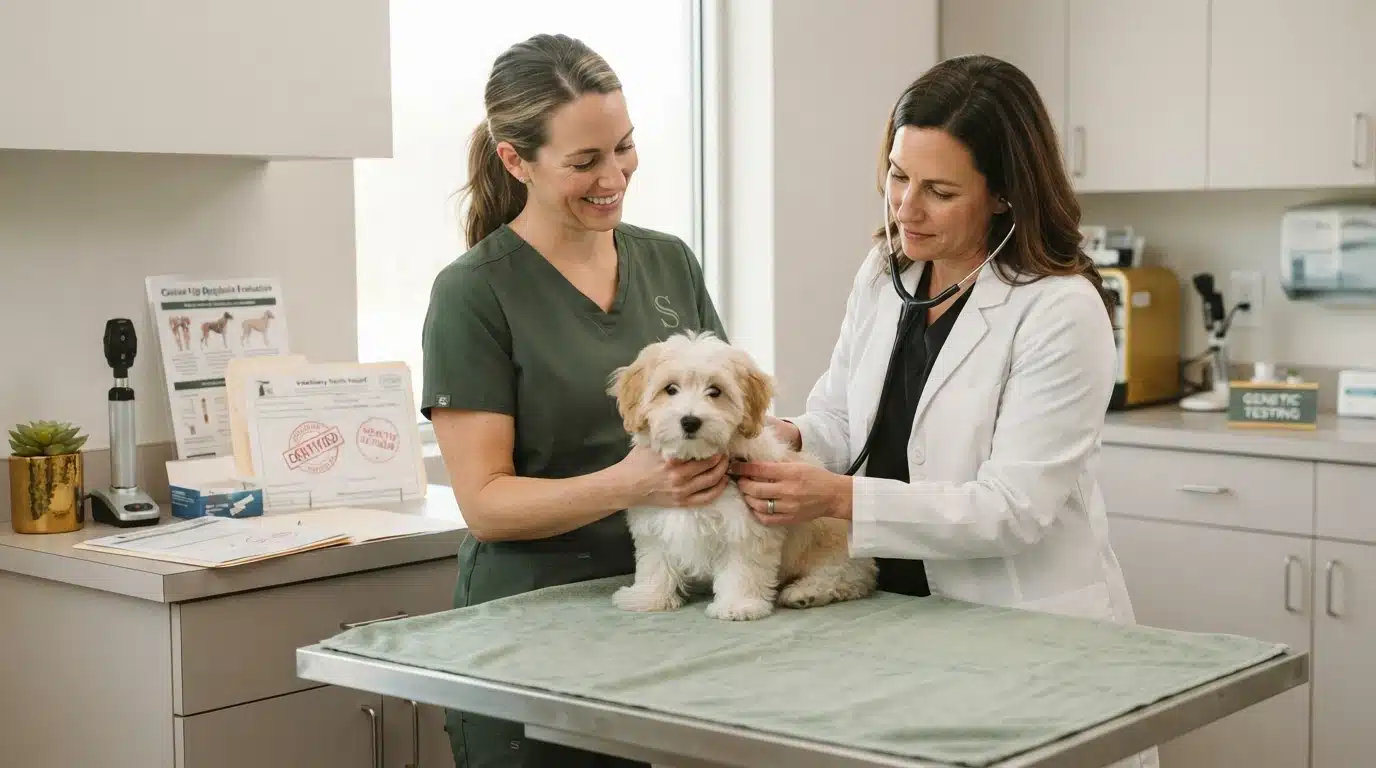
A licensed vet examines your puppy hands-on: heart and lungs, eyes, teeth, patellas and hips, plus that visit’s vaccines. This is the tool for confirming a specific puppy is healthy right now, and parent dogs get the same exams at breeding age. Routine visits fall in the $75 to $250 range.
What DNA Screening Actually Tests in a Small Breed Puppy
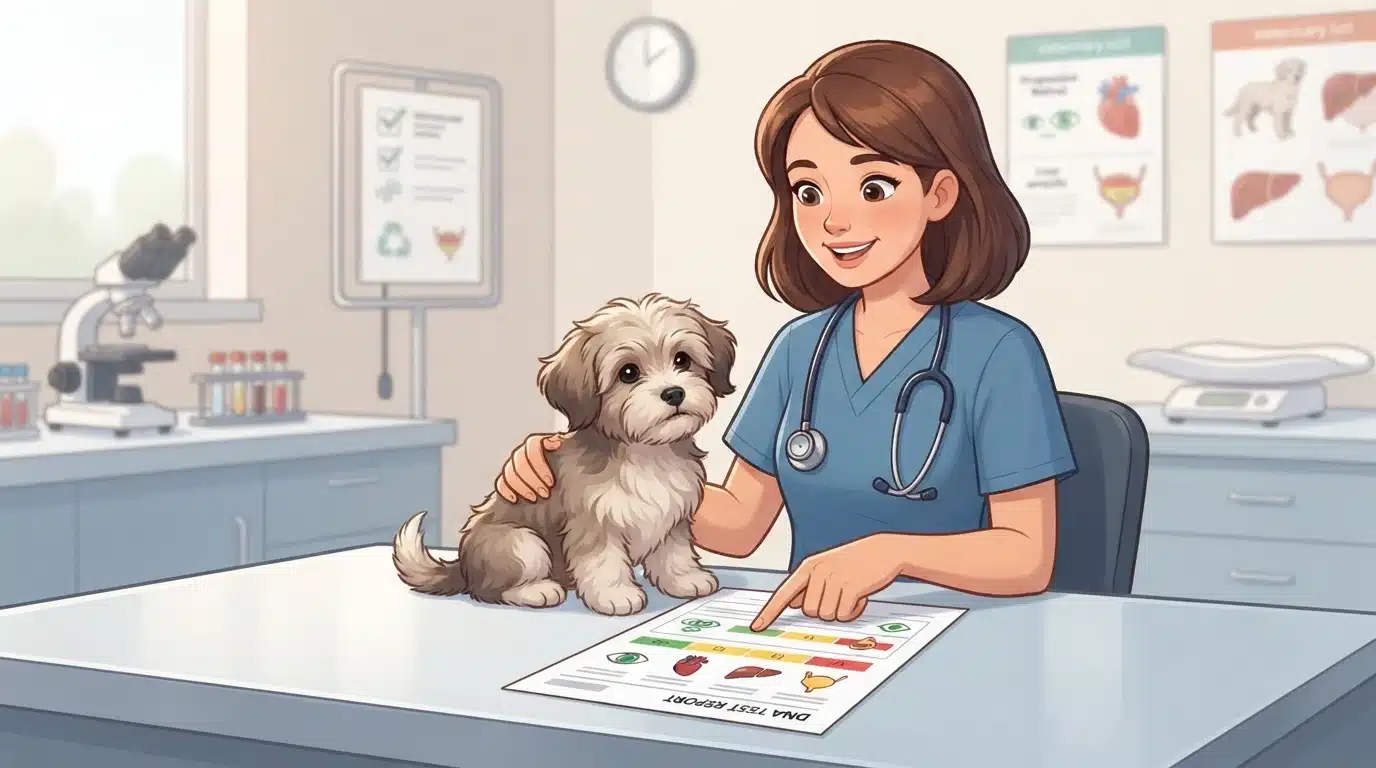
A DNA test reads a puppy’s genes for known disease variants, not its current health. For Havanese, Havapoo and Cavapoo puppies, that usually means progressive retinal atrophy testing, plus variants for heart, liver and bladder conditions. In a dna test vs vet check puppy comparison, this is the key split: DNA predicts inherited risk, while an exam measures the puppy in front of you. Results come back in three forms.
Reading Clear, Carrier and Affected Results
- Clear: the puppy carries no copies of the variant and should not develop that disease.
- Carrier: one copy is present. Carriers usually stay healthy themselves, but they can pass the variant on, which matters for breeding.
- Affected or at-risk: two copies mean the puppy is expected to develop the condition, as with PRA-prcd.
Why Panel Depth Varies So Much Between Breeders
Some breeders run a wide breed-specific panel; others test only one or two variants, or skip DNA entirely and lean on a vet visit. The lab, panel size and whether parents were tested all shape what “health tested” means in an ad. Ask which laboratory ran the panel and how many variants it covered, and verify parent results when possible. That’s the spirit of a good pre-payment checklist.
The Blind Spot: Complex Traits and Structure
DNA cannot see everything. Conditions such as patellar luxation, hip and elbow problems, heart murmurs and eye disease from multiple genes depend on structure and physical exams. A clear panel never replaces a hands-on vet check.
What a Veterinary Health Check Confirms and When It Must Repeat
A vet exam tells you how a puppy looks and acts today. It cannot tell you what its genes carry. Knowing which one answers your question keeps the two records straight.
What a Puppy Exam Covers at Each Visit
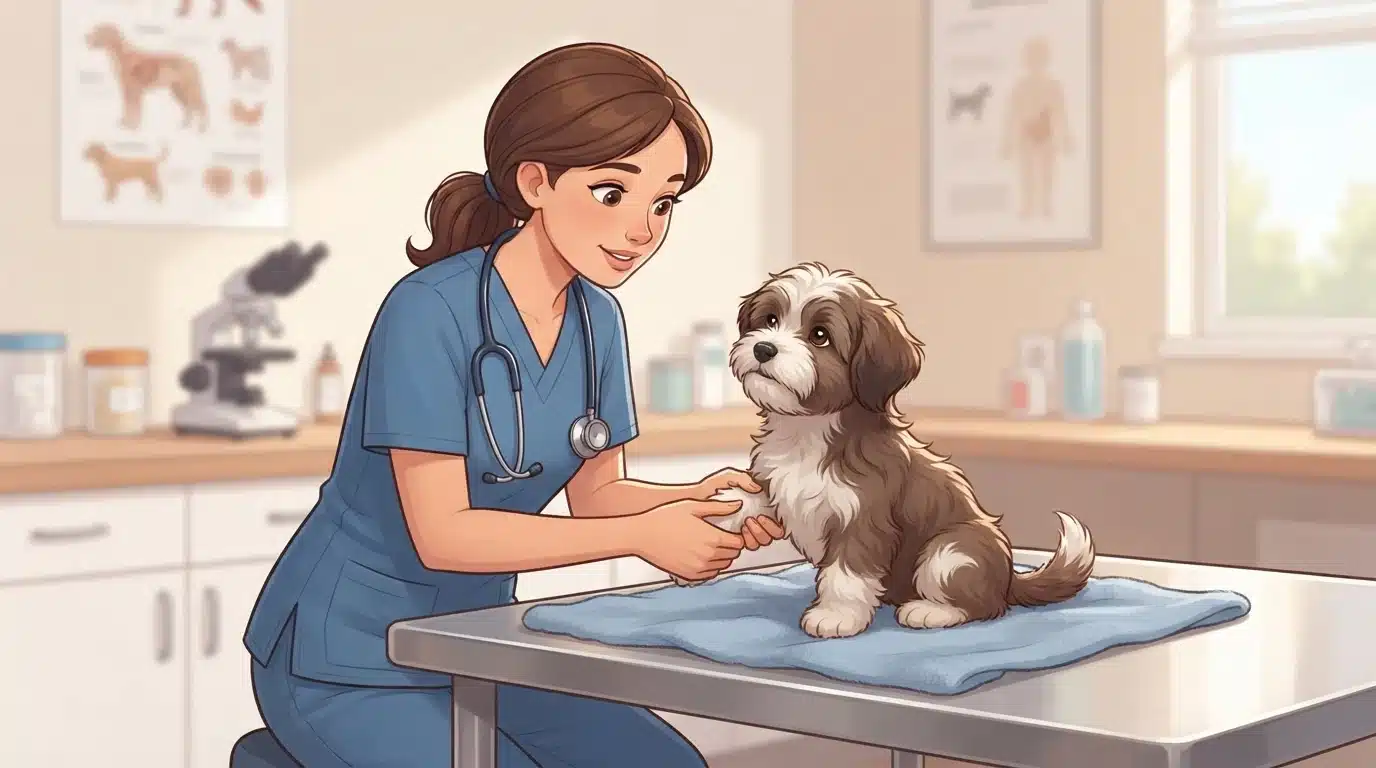
A puppy wellness exam checks heart and lung sounds, eyes, ears, teeth, skin, coat, weight and body condition. The vet also palpates the knees for patellar luxation, a common issue in small breeds like the Havanese. Visits line up with the vaccine schedule, usually starting near eight weeks, with boosters every few weeks until about sixteen. Ask which findings were normal and which got a recheck.
Why One Clean Certificate Is a Snapshot, Not a Verdict
A health certificate records what the vet saw on one day. It does not promise the puppy stays free of problems, and it differs from a health guarantee, which covers specific future conditions. Conditions such as hip dysplasia or progressive retinal atrophy can appear months or years later, so one clean exam never closes the file. Book a follow-up within a few days of bringing your puppy home.
The Parent Screening Picture
Parents give you the long-term odds, so their records matter more than the puppy’s single exam. For Havanese, breed club guidance lists patellar luxation, eye and cardiac screening among the tests needed for a CHIC number. Many results live in public OFA records, and dogs must reach 12 to 24 months before certain certifications count. Good breeders, including Sage Puppies, share these parent results openly, so ask for registry numbers rather than summaries.
Should You Rely on DNA Screening or a Vet Exam?
Rely on both, because they answer different questions. DNA screening looks at inherited risk written into a dog’s genes. A vet exam checks the puppy in front of you today. Neither can replace the other, so use a layered decision rule:
- Layer 1: DNA results on the parents for inherited variants such as progressive retinal atrophy.
- Layer 2: Parent screening records, like OFA certifications for hips, knees and eyes.
- Layer 3: The puppy exam, a hands-on wellness check with your own veterinarian before the puppy comes home.
A Layered Decision Rule for Buyers
Treat the three layers as checkpoints, not options. Start with parent DNA and registry records, because those predict inherited disease risk. Then confirm the parents’ clinical screening, since OFA certifications often wait until a dog is 12 to 24 months old. Finally, book your own puppy exam within the first few days. A breeder’s paperwork tells you what was checked; your vet tells you how the puppy is actually doing.
When a DNA Result Changes the Decision
A DNA result changes things when it shows the parents carry the same disease variant, or when a breeder cannot produce test records at all. Carrier status in one parent is usually fine. Matching carriers, or missing results, means the puppy has a real chance of developing the condition.
When the Vet Exam Changes the Decision
The exam catches what DNA cannot. Ask your vet to check for a heart murmur, patellar luxation, eye clarity, bite alignment and weight. These are hands-on findings, common in small breeds, that no gene panel reports. If the exam finds a concern, get it documented before final payment.
Breed Requirements for Havanese and Havapoo Families
Each breed carries its own list of expected health screens. Knowing that list helps you judge a breeder’s paperwork instead of trusting a claim.

What Havanese Breed Guidance Actually Requires
For purebred Havanese, the Havanese Club of America lists OFA hips, OFA patellas and annual eye exams as the tests behind a CHIC certificate. CHIC numbers confirm the tests were done and published, not that every result passed. A CHIC record puts results in the public domain, so you can look them up yourself.
Crossbred Puppies and the Missing Standard
Havapoos and Cavapoos have no parent club, so no CHIC requirement exists. Good breeders borrow the standards of both parent breeds instead. That means hip, knee and eye screening on each parent, plus DNA panels covering breeds in the mix. Ask which breed list the program follows and why.
Common Documentation Mistakes to Correct
Three errors come up often. First, buyers accept a “vet checked” note as proof of parent screening. Second, they accept a screenshot with no registry number behind it. Third, they skip checking eye exams are current. Programs like Sage Puppies document each layer separately, which mirrors the questions on its Havanese health test guide.
Cost, Timing and the Practical Burden on Buyers
Price Ranges and Who Typically Pays
Breeders usually carry the DNA testing and parent screening costs, which is one reason puppy prices reflect those records. Buyers pay for the puppy exam, vaccines and any follow-up visits, typically the $75 to $250 routine range. At health tested puppies programs like this, ask which costs are already built in.

Turnaround Time and What That Changes
DNA panels often return in one to three weeks, while OFA certifications wait until a dog is 12 to 24 months old. That timing gap means puppy-age parents may lack final certifications, so plan your questions accordingly.
Using Your Own Veterinarian as a Second Reader
Treat breeder paperwork as a starting point, not a verdict. Schedule a puppy wellness exam within a few days of pickup, and bring the health records so your vet can confirm findings independently.
Verifying Records and Spotting Thin Documentation
Good breeders welcome verification, so the fastest check is simply asking and looking. What health records should I request from a puppy breeder?
- Parent DNA panel results for inherited variants like progressive retinal atrophy
- Parent screening records, including OFA certifications for hips, knees and eyes
- The puppy’s vet exam notes and vaccine dates
- Registration or pedigree paperwork
- A health certificate dated close to pickup
A Verification Routine You Can Run in Ten Minutes
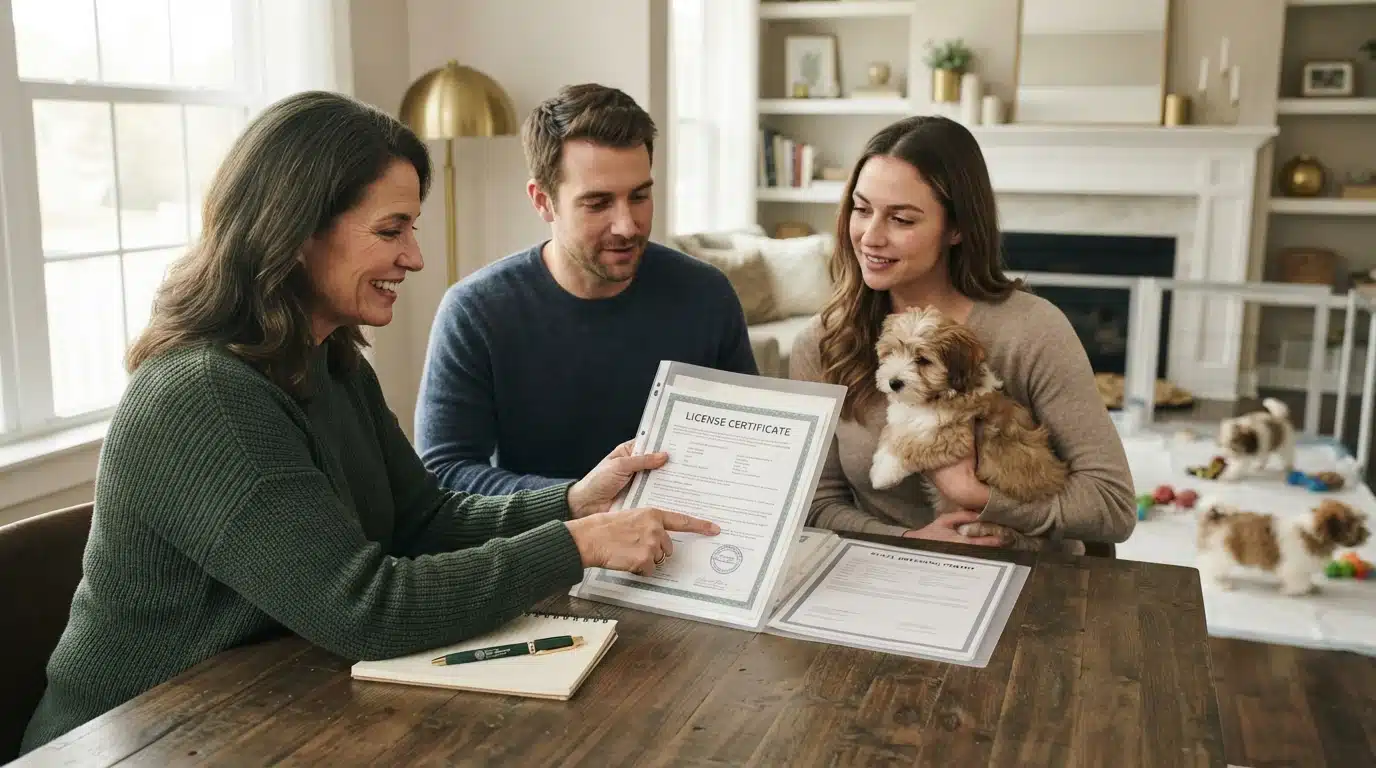
Ask for each document by name, then check it yourself. Many DNA and OFA results live in public registries, so search the parent’s registered name on the OFA site and compare dates and findings against what the breeder sent. Match vaccine dates to the puppy’s age, since boosters follow a set schedule. If a claimed result cannot be found publicly, ask which laboratory ran it.
Documentation That Raises Questions
Treat vague paperwork as a signal. A “vet checked” note without a clinic name, a photo of results instead of a certificate, or OFA promises for parents under 12 months all deserve follow-up. Remember that certain certifications cannot exist yet for young dogs, so a missing hip score on a two-year-old parent is fair to question, but a missing one on a young dam may not be.
Questions to Send Before You Pay a Deposit
Send a short email and keep the replies. Ask which variants the parents were tested for, whether either carries a reportable result, and what the patellar luxation exam showed. Ask for your veterinarian to review the puppy exam before final payment. A breeder who answers plainly, as any careful program should, earns trust faster than one who sends a guarantee instead of records.
Which Should You Choose: DNA Screening or a Vet Exam?
Choose both. These tools answer different questions, so the real decision is which one to ask for first. DNA results come from the parents before you buy. The vet exam happens after your puppy is home.
Who Should Lean Which Way
Lean on DNA screening when inherited disease matters most to you, such as progressive retinal atrophy in Havanese lines. Ask for parent DNA results and OFA certifications before you reserve. Lean on the vet exam once you have a puppy in hand, because a hands-on wellness check catches heart murmurs, hernias and patellar issues no panel predicts. First-time owners often over-rely on the phrase “vet checked.” Ask what was checked, by whom, and when.
What to Do in the First Two Weeks Home
Book your own vet visit within 72 hours, even if the breeder’s vet already cleared the puppy. Bring vaccine records and any health certificate. Your vet confirms weight, ears, teeth, knees and heart, then sets the vaccine schedule. Keep the stool sample conversation on the list too, since parasites are common and treatable. If something worries you, call the breeder the same day.
A puppy exam confirms today’s health. Parent DNA and OFA records predict tomorrow’s risk. You need both, in that order.
Where Sage Puppies Comes Into This
At Sage Puppies, health testing sits in layers: parent DNA panels, parent screening records, then a puppy exam before the puppy ever leaves us. We give buyers the paperwork, so your own vet can verify rather than start from zero.
Ask for all three layers from any breeder you compare, in writing.

Still sorting out what a breeder’s health claims really mean? Ask us. We share each puppy’s DNA testing, parent screening records and exam details up front, so you can verify before you commit. Visit Sage Puppies to start your application and meet our Havanese, Havapoo and Cavapoo families.
Frequently Asked Questions
Q1: Should I rely on DNA screening or a vet exam?
Rely on both. DNA screening predicts inherited variants such as progressive retinal atrophy; a vet exam confirms how your puppy is today. Neither can see what the other sees, so use them as layers.
Q2: Can a DNA panel replace patella or hip checks?
No. Patellar luxation and hip problems are structural and polygenic, so they only show up in hands-on exams and OFA certifications, never in a gene panel.
Q3: What does “vet checked” actually mean?
It should mean a licensed vet examined the puppy on a specific date. Ask what was checked, which clinic, and request the dated notes.
Q4: What records should I ask for before paying a deposit?
Parent DNA results, parent OFA screening records, the puppy’s exam notes, vaccine dates and a health certificate dated close to pickup.
Q5: Are OFA certifications available for young parent dogs?
Not always. Hip and some other certifications require the dog to be 12 to 24 months old, so young parents may lack final scores.
Q6: Do Havapoo and Cavapoo breeders follow CHIC requirements?
No parent club exists, so no CHIC standard applies. Good breeders instead follow both parent breeds’ screening lists.
Conclusion
DNA tests and vet checks answer different questions. A DNA panel predicts inherited risk, like progressive retinal atrophy, from parent results. A puppy exam confirms heart, knees, eyes and weight today. One is not a substitute for the other.
Judge any breeder by three layers: parent DNA results, parent screening records such as OFA and CHIC listings, and the puppy’s own wellness exam. Ask for registry numbers instead of screenshots, and book your own vet visit within a few days of pickup. Breeders who document each layer separately, as careful programs do, make that verification easy.