
Quick Summary: Delaware puppy buyers should judge breeders on proof, not polished listings: ask for OFA-verifiable parent health testing, the puppy’s vaccination and deworming records, and a written health disclosure that Delaware law requires at sale. The guide walks through five steps, from confirming who actually bred the puppy to reading the contract before paying a deposit, and warns that legal compliance is a floor rather than a sign of quality. It notes that many “local” Delaware puppies arrive by transport van from out of state, so buyers should verify the breeder’s identity and see video of where the litter was raised. Sage Puppies, a home-raised Havanese, Havapoo, and Cavapoo program in South Jordan, Utah, is held up as an example of the transparency standard, offering nationwide delivery with documented records.
A Delaware puppies for sale listing can look perfect: a nearby town, a polished photo, a deposit button. Yet none of that tells you who raised the puppy, how the parents were cared for, or what health records come with her.
That is the problem this guide solves. Many first-time buyers judge a breeder by appearance alone, and the ones who cut corners count on it.
Below, you will find a practical evaluation workflow built for Delaware families. You will learn which questions to ask, which documents to request, and how the state’s seller-disclosure rules work. We draw on years of experience in small-companion breeding and health-tested bloodlines, so each step favors real evidence over a nice website. The same standards apply to every Delaware puppies for sale ad you see. A confident breeder welcomes them; a careful buyer always asks, because that is how smart Delaware puppies for sale searches end in a healthy, well-raised puppy.
Before You Start: Define What You Need From a Breeder
A clear list of needs turns puppy shopping into a fair comparison. Decide what matters before you talk to anyone, and every conversation gets easier to judge.
Write Down Your Non-Negotiables
Pick three to five things you will not bend on. Common ones include health testing on both parents, puppies raised inside the home, a written health record, and a small breed that fits your space and schedule. Note your budget, your timeline, and whether you need delivery or can pick up in person. Breeders who raise Havanese, Havapoo, or Cavapoo puppies at home, the way we do at Sage Puppies, should be able to answer each of these without hesitating.
Use the Same Questions With Every Seller
Ask every seller the identical questions, in the same order. Write the answers down the same day. A short checklist and a simple comparison sheet keep facts separate from feelings, which is exactly what a sales pitch is designed to blur. This is the core of a fair breeder comparison.

Step 1: Verify Who Bred the Puppy and Where It Was Raised
Before you fall in love with a photo, confirm who is actually behind the puppy. Some listings come from real families. Others come from resellers or brokers who never met the mother. In Delaware, where many “local” puppies arrive on transport vans from out of state, this check matters more than anywhere else.
Ask for the Breeder’s Identity and the Puppy’s Raising Location
Start with two direct questions: Who bred this puppy, and where has it lived since birth? A legitimate breeder answers both without hesitation. You should hear the breeder’s full name, the town where the litter was raised, and a plain description of the home setting.
Then ask to see it. Most honest breeders will share a video call or short videos of the puppy moving around its living space. Watch for signs the puppy is genuinely house-raised: family furniture, children’s toys, everyday noise. A puppy kept in a kennel building or shuffled between locations will show a very different backdrop.
Red flag: If the seller says they “work with several breeders” or cannot confirm where the puppy was born, you may be talking to a broker. Ask who legally holds the mother.

Look for Direct, Consistent Communication
How a seller communicates tells you as much as what they say. Ethical breeders, like the home-raised program at Sage Puppies, keep one point of contact from your first question through pickup or delivery day.
Watch for these patterns:
- Specific answers about the parents’ health testing and daily routine
- Questions back, because a careful breeder screens you too
- Consistent details across texts, calls, and written documents
Hesitation, changed stories, or pressure to send a deposit quickly should end the conversation. A good breeder welcomes your doubts and gives you time.
Step 2: Evaluate Parent Health Testing and the Puppy’s Veterinary Records
A friendly website and a clean kennel tell you a breeder cares. Health records tell you whether their breeding program actually protects your puppy. This step takes an extra afternoon, and it catches problems that no visit or video call will reveal.
Request Parent Test Results, Not Just a Health Claim
Many breeders say their dogs are “health tested.” Ask what that means, in writing. A real answer includes two things: the specific tests performed and the results themselves.
For the small companion breeds Delaware families usually consider, look for:
| Parent | Typical Tests to Ask About | Why It Matters |
|---|---|---|
| Havanese | Patella exam, hearing test, annual eye exam, cardiac check | Screens for kneecap, eye, and heart issues |
| Poodle crosses (Havapoo, Cavapoo) | Hip and patella scores, eye exam, genetic panel | Doodles inherit risks from both parent lines |
| Both parents | DNA tests for known breed conditions | Rules out conditions puppies could inherit |
Then ask for proof. Results registered with OFA, the Orthopedic Foundation for Animals, can be verified online at no cost. If a breeder sends photos of test certificates, check that the names match the actual parents and the dates are recent. Annual eye exams are a common gap, so ask about them directly. For a deeper list of what to request, see these questions about health-tested puppy parents.
Review the Puppy’s Individual Care History

The parents matter, but so does the puppy’s own record. Before you reserve, ask for a document showing:
- Vaccination dates given, not just “up to date on shots”
- Deworming schedule with product names and dates
- A veterinary exam performed by a licensed vet, not the breeder alone
- Any past concerns, from soft stools to a minor injury, noted honestly
Review it with your own veterinarian. Most will do a quick phone review before pickup, and some will flag a red flag you might miss. Keep the original document. You will want it at your puppy’s first visit.
One note on Delaware law: sellers must provide a health certificate for each dog sold, so a missing record is not a small oversight. Treat it as a reason to keep looking.
Step 3: Assess Early Care, Temperament, and Puppy Readiness
Ask for Specific Examples of Daily Socialization
Good breeders do more than say puppies are “well socialized.” They can describe a normal day. Ask what the puppies hear, see, and handle from birth to eight weeks. You want answers like “they met the mail carrier,” “the kids carry them to the couch,” or “we played household sounds during meals.”
This matters because early experiences shape adult temperament far more than anything you can do in the first week home. Puppies raised only in a kennel or garage often startle at vacuums, stairs, and car rides.
Listen for names, too. A breeder who calls each puppy by name and describes individual quirks is paying close attention. At Sage Puppies, each Havanese, Havapoo, and Cavapoo puppy grows up inside the family home, so that kind of detail comes naturally.
Discuss the Breeder’s Observations and Timing
Next, ask the breeder what each puppy is like. A thoughtful breeder will tell you which puppy is bold, which one is a snuggler, and which one watches first and joins later. That honesty helps you match temperament to your household instead of picking the puppy that rushed the gate.
Also talk timing. Puppies should stay with the litter until at least eight weeks, because those final weeks teach bite control and social skills. A breeder pushing an early pickup is a warning sign.
Ask what’s underway already: litter box habits, crate exposure, or grooming touches. A well-started puppy simply continues what it knows, and you can see how this fits into the wider Delaware breeder comparison.
Step 4: Read Delaware Sale Disclosures and the Contract Before Paying
Before any money changes hands, slow down and read the paperwork. Delaware’s Pet Warranties law sets a minimum standard for what a seller must tell you, but your contract fills in everything the law leaves open. Both documents matter, and both deserve a full read before you sign or pay a deposit.
Check the Written Information and Health Disclosure
Under Delaware law, a dog sale must include a written disclosure signed and dated by both seller and buyer at the time of sale. The seller states in writing that the puppy has no known disease, illness, or congenital or hereditary condition that affects or could affect its health, or discloses any known issue. If the puppy has not had a veterinary exam before the sale, that fact must also be disclosed in writing, according to Delaware’s seller disclosure statute.
The sale record should also list the breed, sex, and color of the puppy, vaccination and deworming dates and types, and any vet treatment the puppy received while with the seller, per the full Pet Warranties chapter. Match these details against the records the breeder showed you earlier. Any gap is a question worth asking.
Understand the Law Without Assuming It Replaces a Contract
The statute also gives you remedies if problems surface: a vet statement of illness within 20 days, or a congenital condition within two years, can entitle you to a refund, an exchange, or vet fee reimbursement. But legal compliance is a floor, not proof of quality. A good contract goes further, covering spay and neuter terms, return policy, health testing on the parents, and what happens if you cannot keep the dog.
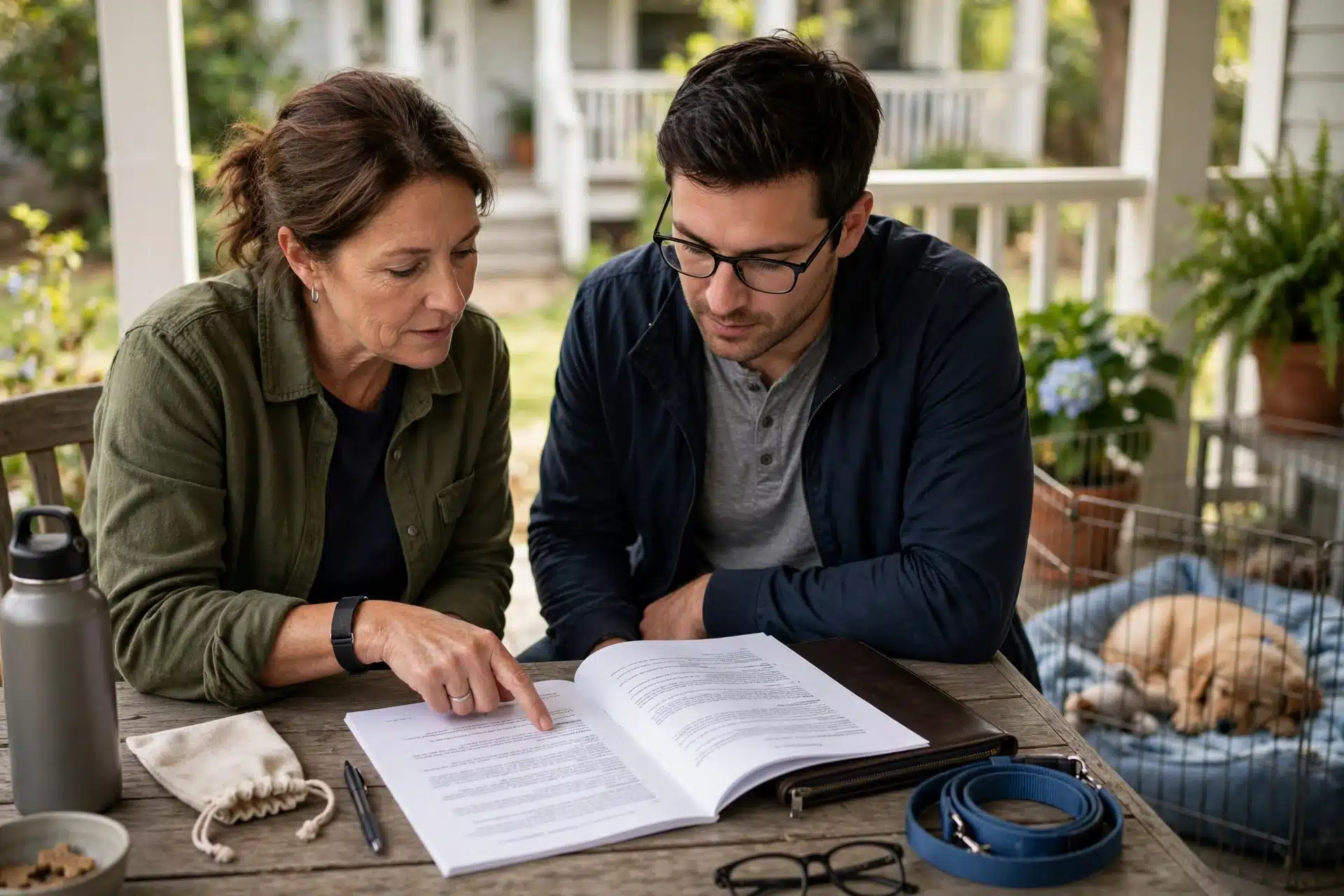
Ask for a copy of the contract and disclosure before you pay. A confident breeder will send both without hesitation and explain each clause. If you get pressure to pay before you see them, treat that as your answer and keep looking.
Step 5: Confirm the Handoff, Pickup, or Delivery Plan
Get the Handoff Details in Writing
A good breeder will spell out the handoff before you pay the balance. Ask for the date, time, and exact location in writing, whether that is the breeder’s home, a public meeting spot, or a flight nanny at the airport. Delaware buyers often meet out of state, so confirm who pays travel costs and what happens if a flight is delayed. Get the total cost in the same message. A breeder who resists putting these details in writing is showing you how they handle problems later.
If you would rather skip the logistics entirely, some programs offer direct delivery; you can see how one nationwide delivery and pickup process is structured before you commit.
Make Sure the Puppy Is Identifiable in the Records
Your paperwork should match one specific puppy, not a litter. Before handoff, confirm the records list the puppy’s sex, date of birth, color, and any microchip number, plus the dam and sire if the breeder provides it. Check that vaccination dates and deworming entries line up with the puppy’s age. Take a photo of the documents at pickup so you have copies before you leave. If anything looks off, such as a vaccine given too early, ask questions on the spot. Clear identification also protects you if your new puppy ever gets lost.
Common Mistakes to Avoid When Comparing Breeders
The most common error is trusting a clean website over a real conversation. Photos prove nothing about health testing or how puppies are raised.
Watch for these pitfalls:
- Ignoring written contracts and health records. A breeder who resists documentation is a red flag, not a formality to skip.
- Comparing only price. A lower fee often means skipped vet checks, little socialization, or no support after pickup.
- Visiting once, late. By then you’re attached. Ask questions before you fall in love.
- Confusing legal compliance with quality. Meeting Delaware’s disclosure rules is the floor, not proof of careful breeding.
- Rushing the decision. Pressure to send a deposit same-day rarely ends well.
A good breeder welcomes your questions, shares parent health results, and explains how puppies are raised in the home. That transparency is exactly what you should expect, whether you’re comparing local Delaware options or programs that offer nationwide delivery like Sage Puppies.
Slow down. The right match is worth the extra week.
A good breeder doesn’t just tell you the right things. They show you. Ask for proof of parent health testing, the puppy’s vet records, and a written health disclosure. Then watch how they respond. Clear, complete answers signal care. Hesitation or vague promises are a reason to walk away.
This is exactly why we built our process around transparency: health-tested Havanese, Havapoo, and Cavapoo parents, early socialization in our home in South Jordan, Utah, and documented records for every puppy. Whether you pick up locally or choose nationwide delivery, you see the same information.
Compare breeders on what they can prove. See how our available puppies work, and if a program can’t show you the answers, keep looking.

If our evaluation checklist matched what you want in a breeder, see how we work at Sage Puppies. Every Havanese, Havapoo, and Cavapoo comes from health-tested parents, raised in our South Jordan home, with pickup or nationwide delivery. Browse available puppies or start an application today.
Frequently Asked Questions
Q1: how to evaluate Delaware puppy breeders
Ask to see the parents’ health testing, visit or request a video tour of the home, check the puppy’s vet records, and ask how puppies are socialized. Written disclosures and references matter too.
Q2: Should I buy from a Delaware breeder or out of state?
Both can work well. Delaware may require travel, so many families buy from trusted home-based programs, like Sage Puppies in Utah, that offer nationwide delivery with clear pickup or flight details.
Q3: What paperwork should a breeder provide?
Expect vaccination and deworming records, a vet exam summary, a written health disclosure, and a sales contract you can read before paying.
Q4: How early can a puppy leave its mother?
Small companion breeds should stay with their mother and littermates until at least eight weeks, which supports better temperament and confidence.
Q5: What red flags should I watch for?
Be cautious with breeders who refuse video calls, won’t share parent health testing, always have “instant availability,” or push pressure-based sales tactics.
Conclusion
Evaluating a Delaware breeder comes down to three things: honest health documentation, clear disclosure of how puppies are raised, and your own questions answered without hesitation. Delaware’s seller-disclosure rules give you a legal floor, but they confirm compliance, not quality. Paperwork, parent health testing, and a clean home environment tell you the rest. Watch for breeders who rush the process or dodge questions, because those are the clearest warning signs. For families seeking a small companion breed, compare your options against the standards in this guide, and see how a home-raised Havanese, Havapoo, or Cavapoo program measures up on our available puppies.



