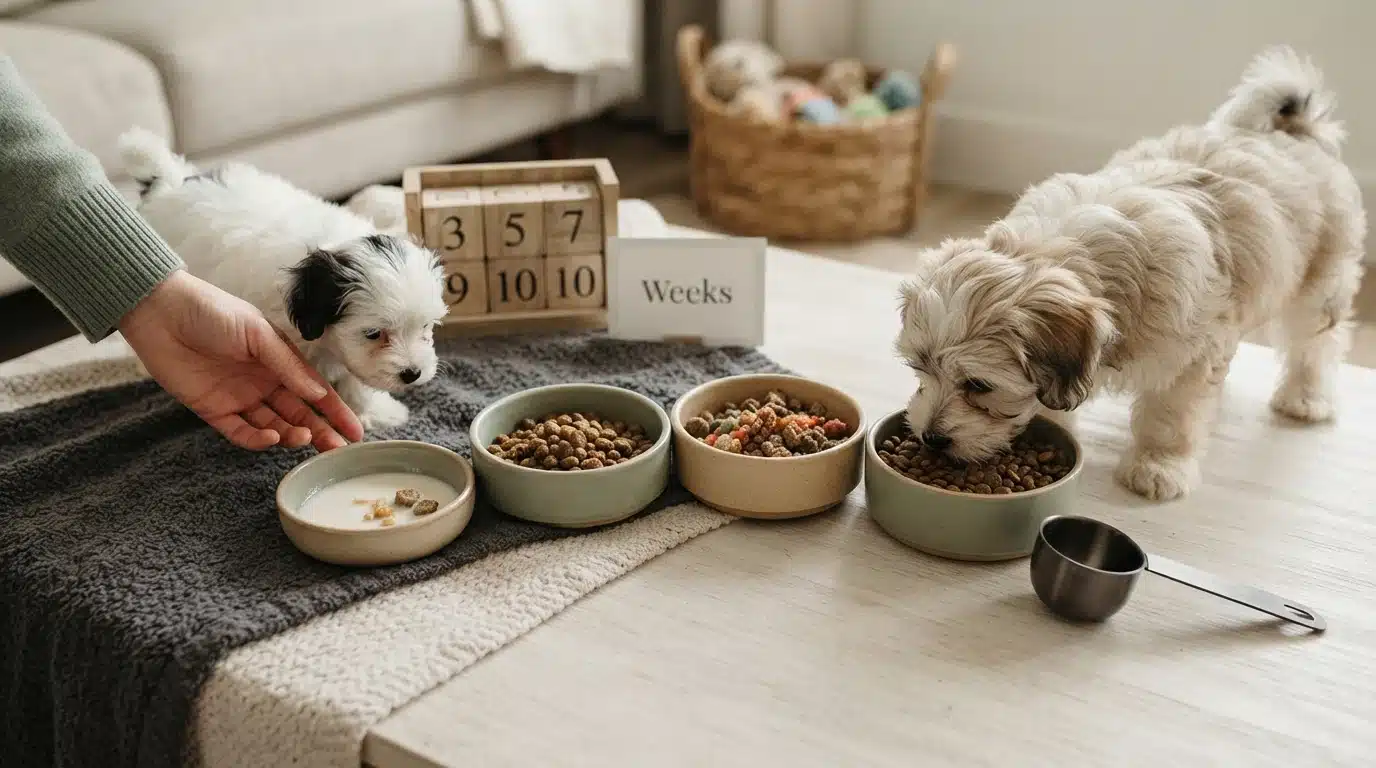
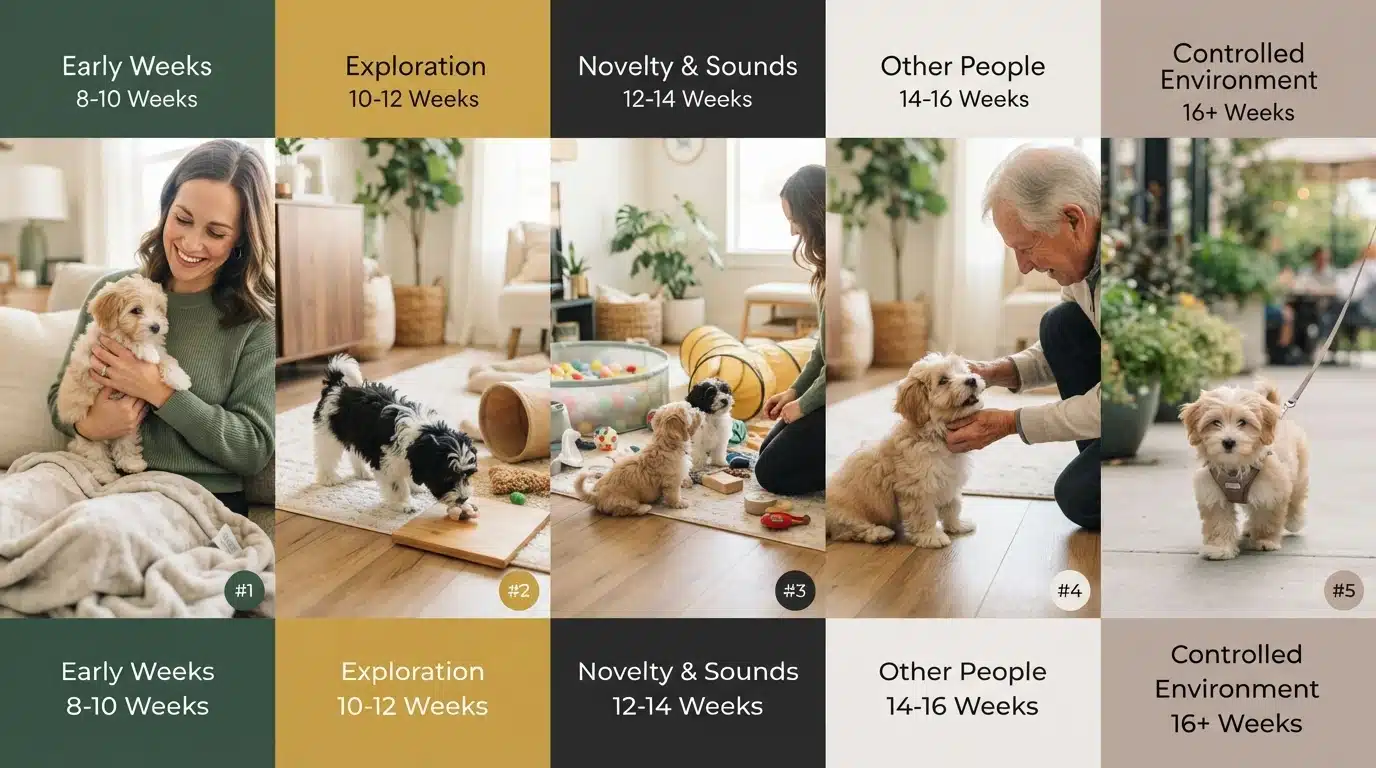
Quick Summary: The first eight weeks with a Cavapoo puppy revolve around steady routines, plenty of sleep, gentle training, and closely scheduled vet visits. Progress moves from potty and crate training to vaccinations, safe socialization, teething, grooming, and basic commands, while puppies need 18 to 20 hours of sleep daily. Keep exposures calm and clean until the vaccine series is complete around 16 weeks, and reward good behavior consistently as progress arrives in bursts with normal setbacks.
The first 72 hours with an 8 week old Cavapoo rarely match the tidy photos breeders post. There is a 3 a.m. cry, a chewed rug corner, and a puppy who does not know your voice yet. This guide walks you through a Cavapoo puppy week by week, so you know what is normal and what needs a vet. You will see sleep, teething, potty training, socialization, and grooming unfold in order, with clear warning signs at each stage. It draws on documented experience from our South Jordan, Utah program, where families pick up locally or have their Cavapoo delivered nationwide.
The First 72 Hours: What an 8-Week-Old Cavapoo Can Actually Do
What to Expect During the First 8 Weeks: A Quick Map
Your Cavapoo’s first eight weeks at home follow a loose pattern: week one is sleep, potty breaks and settling in; week two brings crate training and early routines; week three opens the socialization window; weeks four and five add teething, chewing and short training sessions; week six is often a first vet follow-up; and weeks seven and eight bring bigger walks, longer attention spans and more independence. Think of it as slow growth with sudden leaps. Each week gets its own full breakdown below.
How Old Should a Cavapoo Puppy Be When It Comes Home?
A Cavapoo puppy should be at least 8 weeks old before leaving its mother and littermates. Those final weeks matter because puppies learn bite control, confidence and basic social skills from their mom and siblings. Puppies separated earlier tend to nip harder and stress more. Most responsible breeders, including small programs like ours, hold to the 8-week minimum, and some keep puppies a bit longer.
Sleep, Crying and the First Night
An 8-week-old Cavapoo needs 18 to 20 hours of sleep in a 24-hour period, spread across night sleep and short daytime naps, according to Vets4Pets. Expect crying the first night or two. Keep the crate nearby, take one calm potty trip if the crying is urgent, and stay boring.
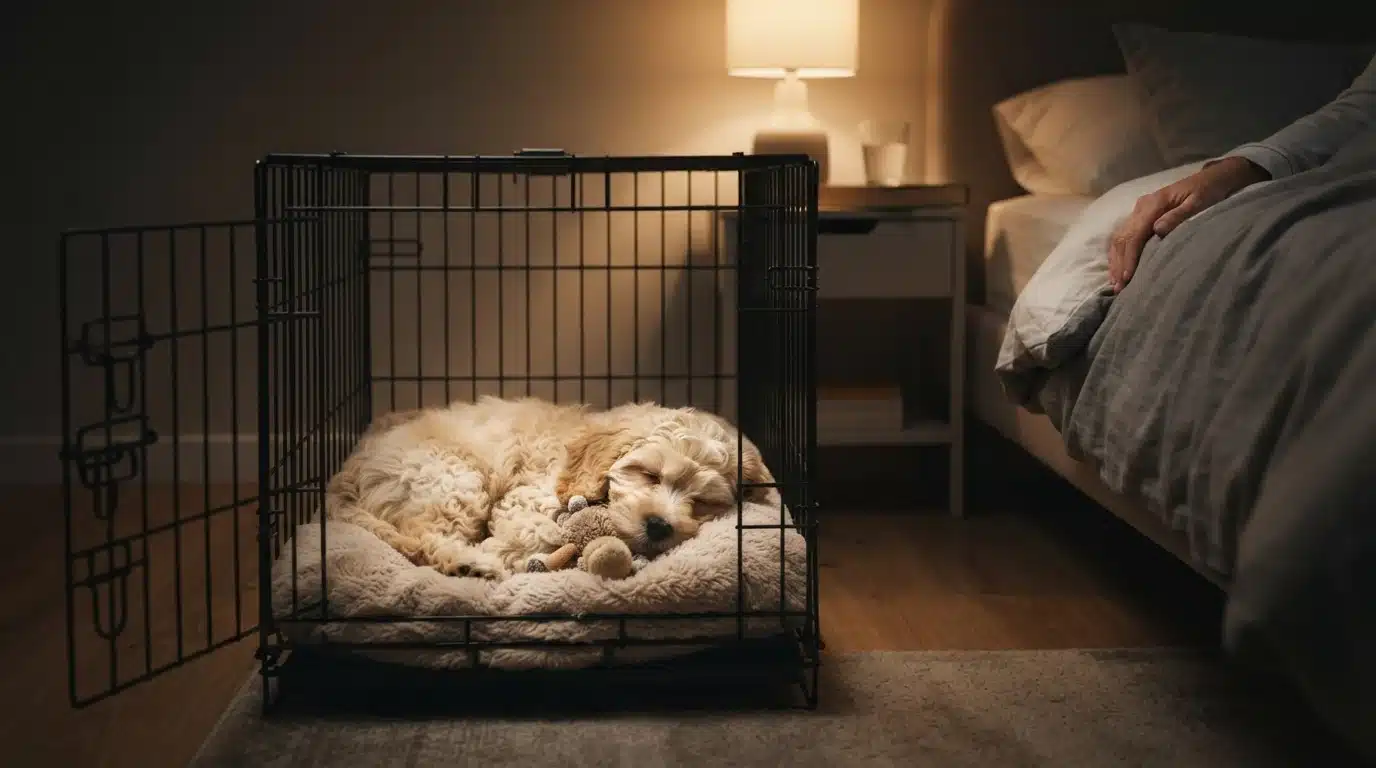
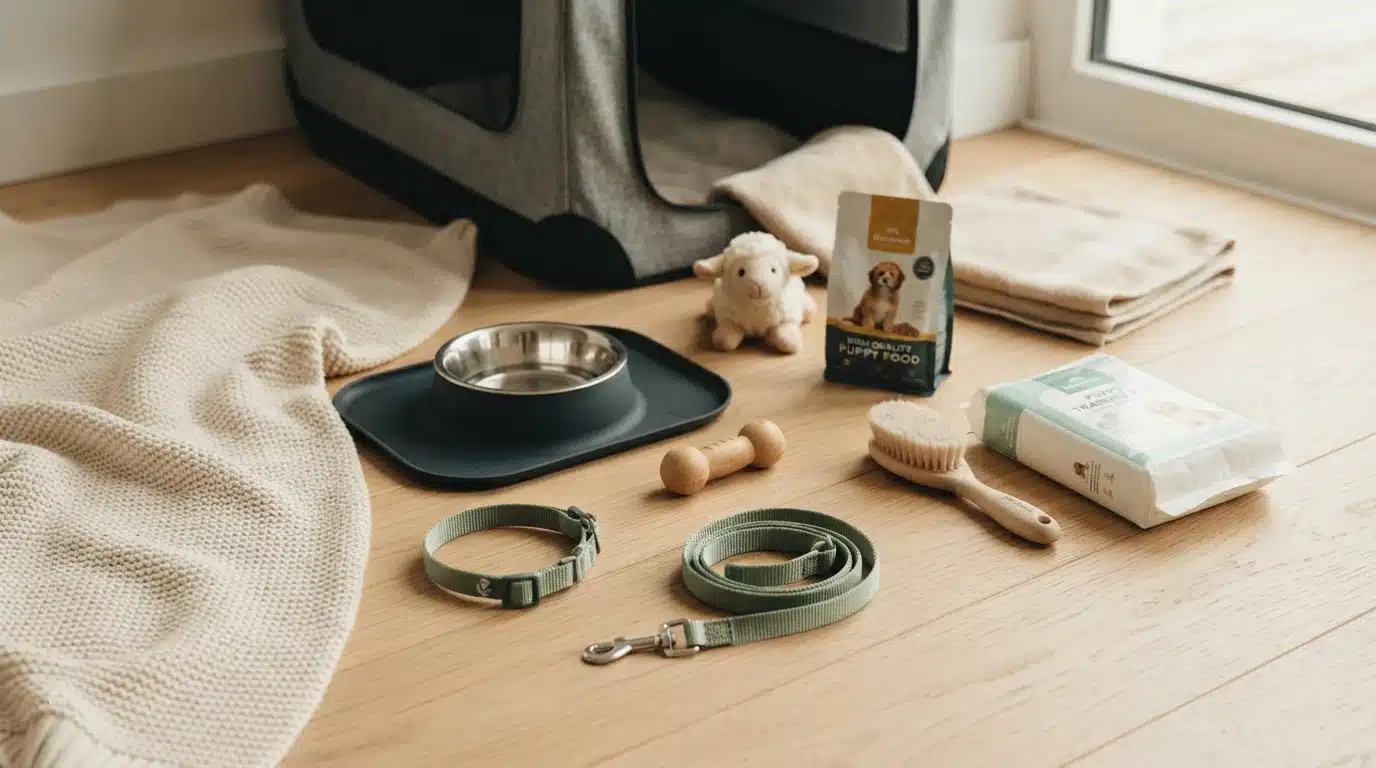
Our first night and puppy prep guide walks through the crate setup, feeding schedule and potty plan we recommend before pickup.
Week One: Building the Routine That Holds Everything Else
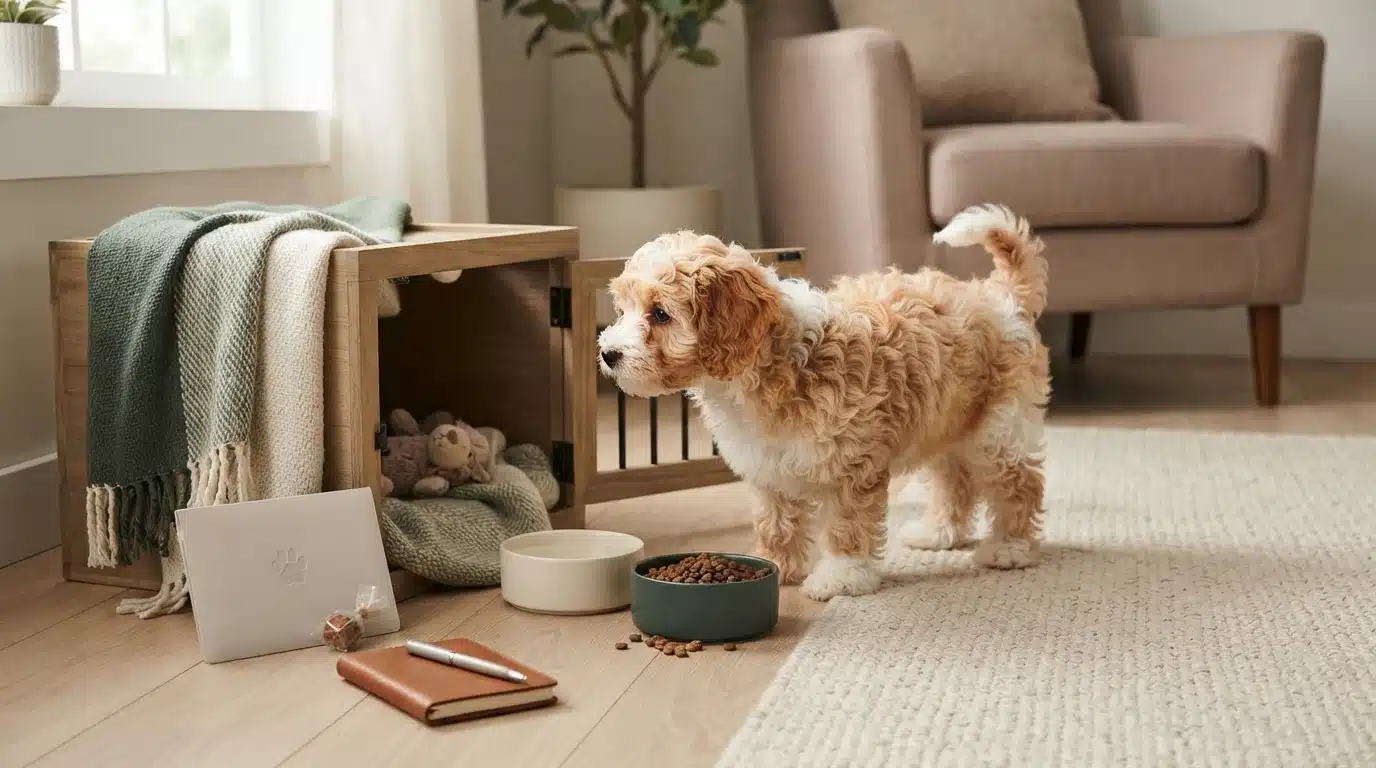
Your first job in week one is simple: keep everything boring. An 8 week old Cavapoo settles fastest when meals, potty trips and naps happen in the same order each day. The routine matters more than perfection, so pick a pattern you can repeat on tired mornings too.
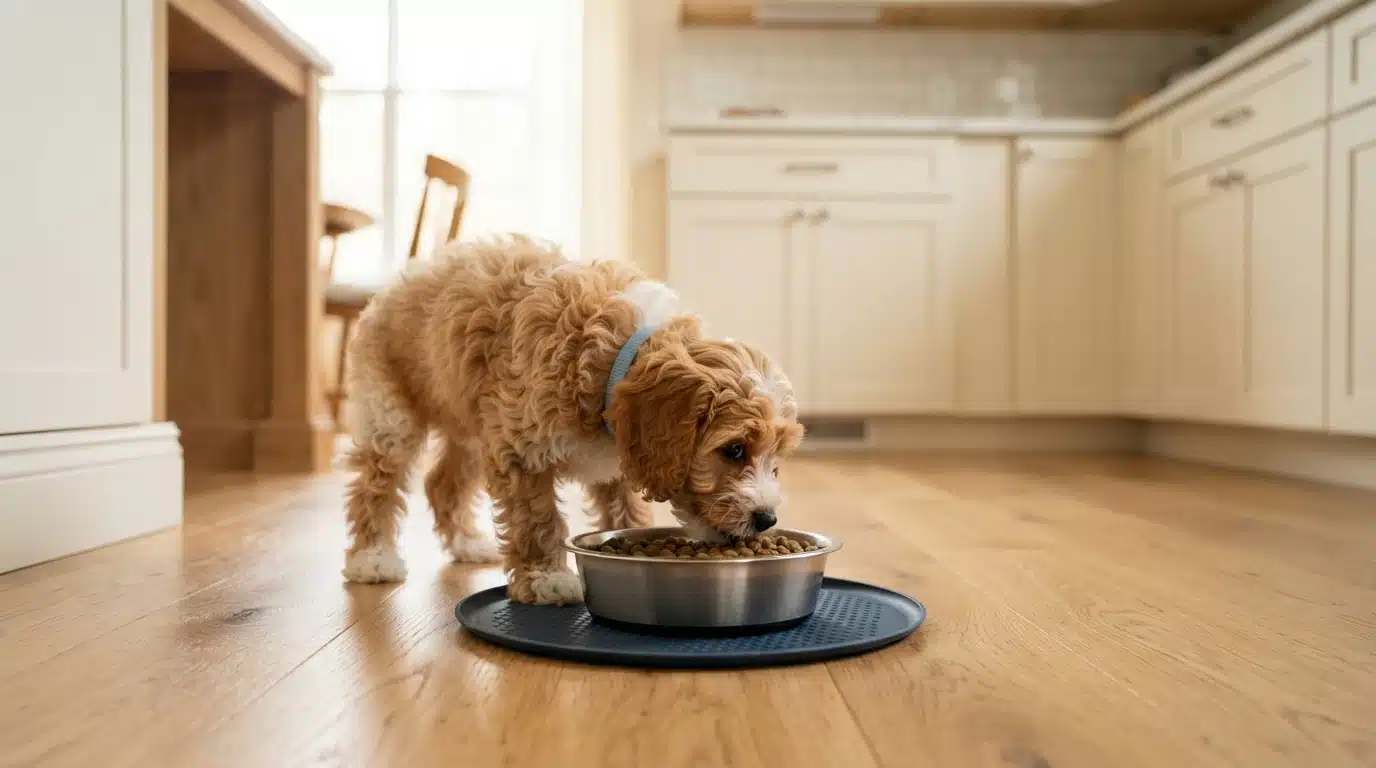
Meals, Water and the Rhythm of the Day
Feed three meals a day at roughly the same times: morning, midday and evening. The AKC’s feeding fundamentals note that small dogs often stay on three meals through twelve weeks, and a toy-sized Cavapoo is no exception. Ask what your puppy was eating before pickup and keep the same food for now, because switching brands in week one invites stomach trouble. Offer water with meals and after play, then lift it about two hours before bedtime so overnight potty trips stay manageable. Our Cavapoo feeding and portion guide breaks down amounts by age and weight.
The Potty Spot and Why Location Matters More Than Schedule
Pick one outdoor potty spot and return to it every time. Scent does the training for you; a patch of grass that smells like yesterday’s success becomes today’s signal. Carry the puppy out on the way to the spot at first, and go out after every nap, meal and play session. Stay calm and quiet until the job is done, then praise briefly.
Three Skills Worth Rushing in Week One
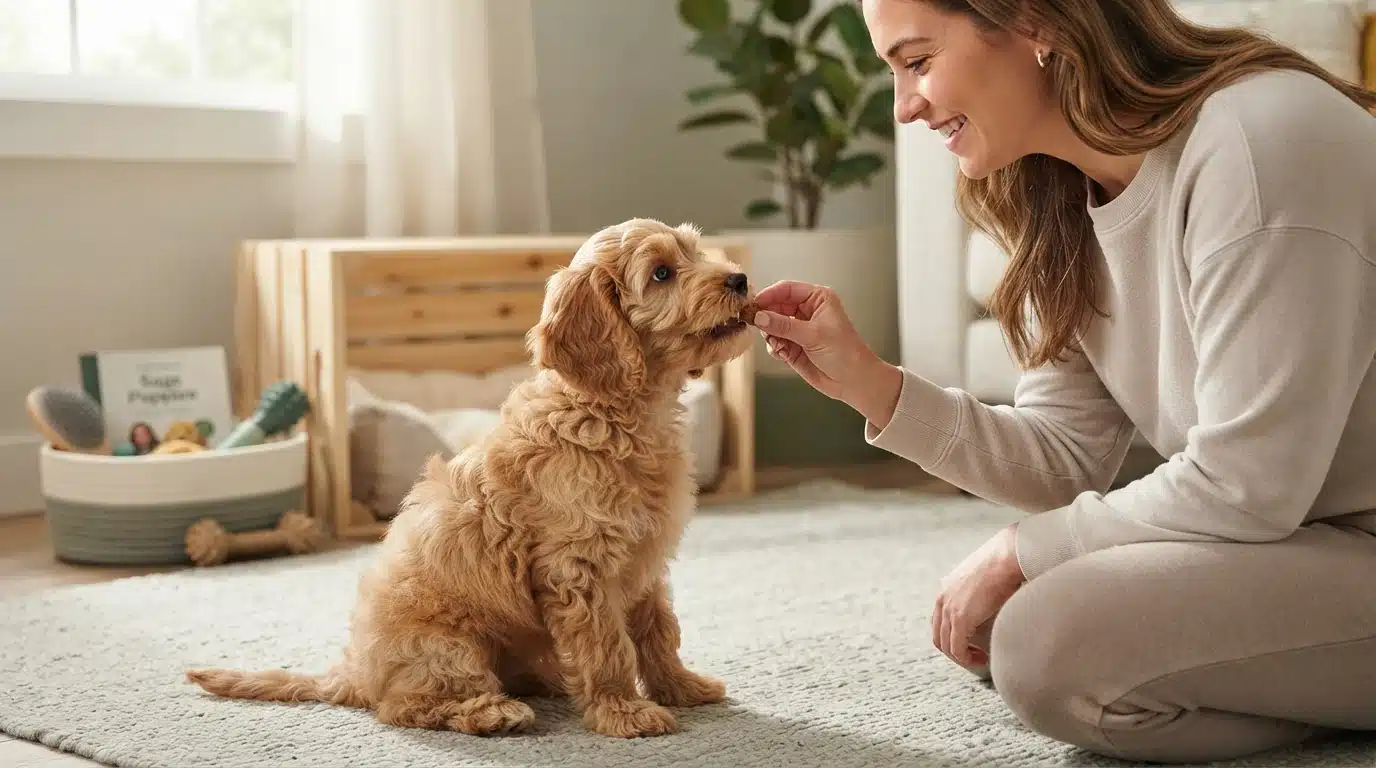
Three things pay off fast when practiced now. First, name recognition: say the puppy’s name before food touches the bowl. Second, a calm crate entry with a treat tossed inside. Third, handling: touch paws, ears and belly for a few seconds daily so grooming later feels normal.
Week Two: House Training Progress and the First Veterinarian Visit
Week two is when your 8 week old Cavapoo starts getting the hang of potty training, and it’s time to book the first vet visit. Plan to bring: health records from your breeder, a stool sample, the food you’re using, a favorite toy or treat, and your list of questions in a carrier with a towel inside.
What Happens at the First Vet Visit
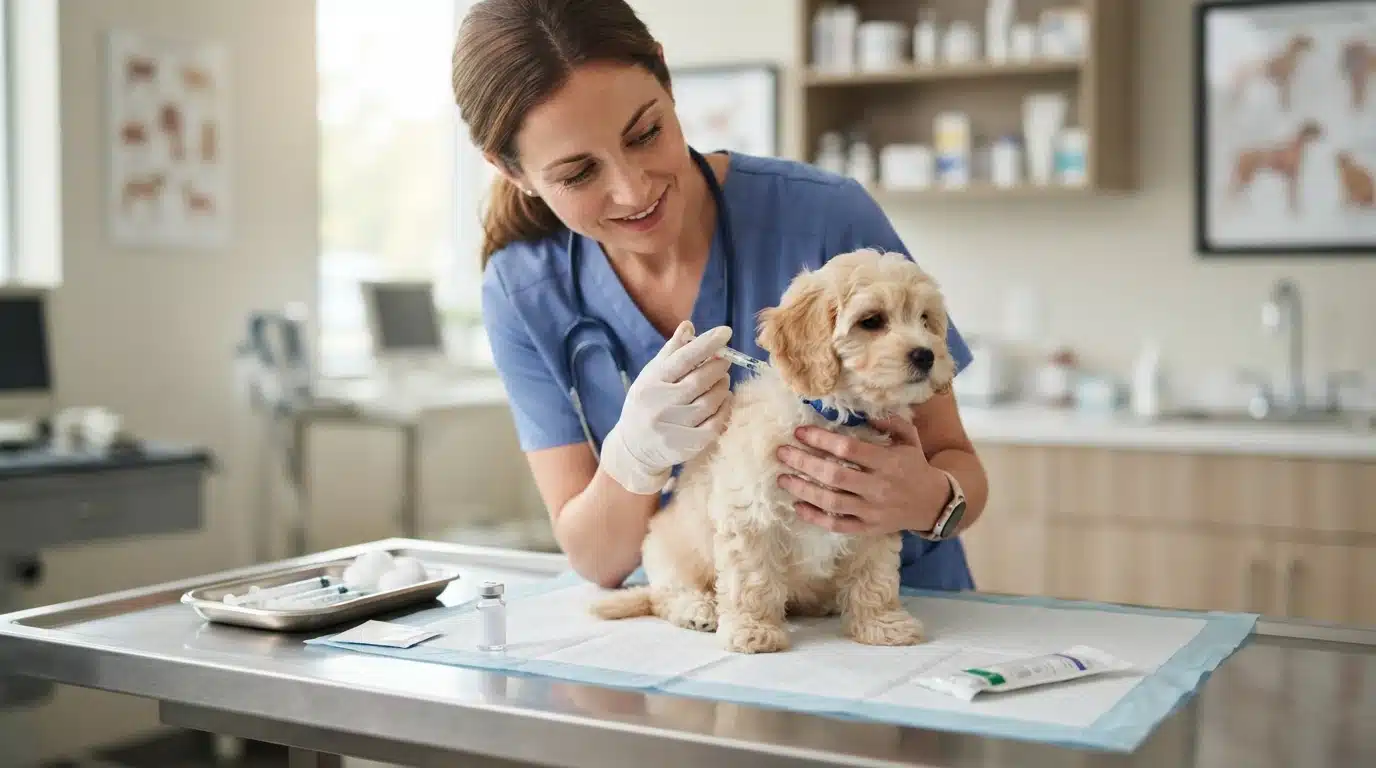
The vet checks weight, heart, lungs, eyes, ears, teeth, skin and the puppy’s belly. They review your puppy’s vaccination schedule, give the next round of core vaccines, and talk through deworming, parasite prevention and spay or neuter timing. Most visits last 30 to 45 minutes. Ask about safe socialization before shots are finished.
Records to Bring From Your Breeder
Bring the vaccination and deworming record, a health certificate if your puppy traveled, and any vet notes from the breeder’s clinic. These show which shots are done and when the next ones fall due. Breeders should hand these over without asking. Our buyers get a full health packet with pickup or delivery, so tell your vet exactly what came home with your puppy. A good checklist for the visit lives in our first vet visit guide.
When Accidents Happen in Week Two
Accidents are normal at this age. Bladder control is still developing, so watch for sniffing, circling or whining and carry the puppy outside right away. Clean messes with an enzymatic cleaner, never ammonia, and stay calm. Punishing a puppy this young only teaches it to hide. Consistency beats speed here.
Week Three: Vaccines, Deworming and the Growing Vaccine Series
Your puppy’s first shots are usually done by now, and the second round is coming up. Week three is when the vaccine series becomes routine, so it helps to understand what each visit is actually for.
How the AAHA Core Vaccine Schedule Actually Works
Puppies need at least three doses of a core combination vaccine, given between 6 and 16 weeks old, spaced 2 to 4 weeks apart. Rabies comes once, at 12 to 16 weeks, as required by law in nearly every state. The American Animal Hospital Association lists distemper, adenovirus, parvovirus, parainfluenza and leptospirosis among the core set. The full AAHA core vaccine recommendations explain why so many doses are needed: antibodies from the mother can block early vaccines, so boosters keep going until that protection fades. Deworming often rides along at each visit.
Where Puppies Should and Should Not Go Right Now
Full protection is not in place until after the final dose at 16 weeks, so carry an unvaccinated puppy into the vet clinic when you can. Safe spots include homes with vaccinated dogs and puppy classes that require shots. Avoid dog parks, pet stores and grassy areas where unknown dogs roam, because parvo survives for months. UC Davis vaccination guidelines note rabies timing in this same window. The socialization clock is ticking, so build positive experiences in clean places instead.
Week Four: Socialization and the Case for a Small, Safe World
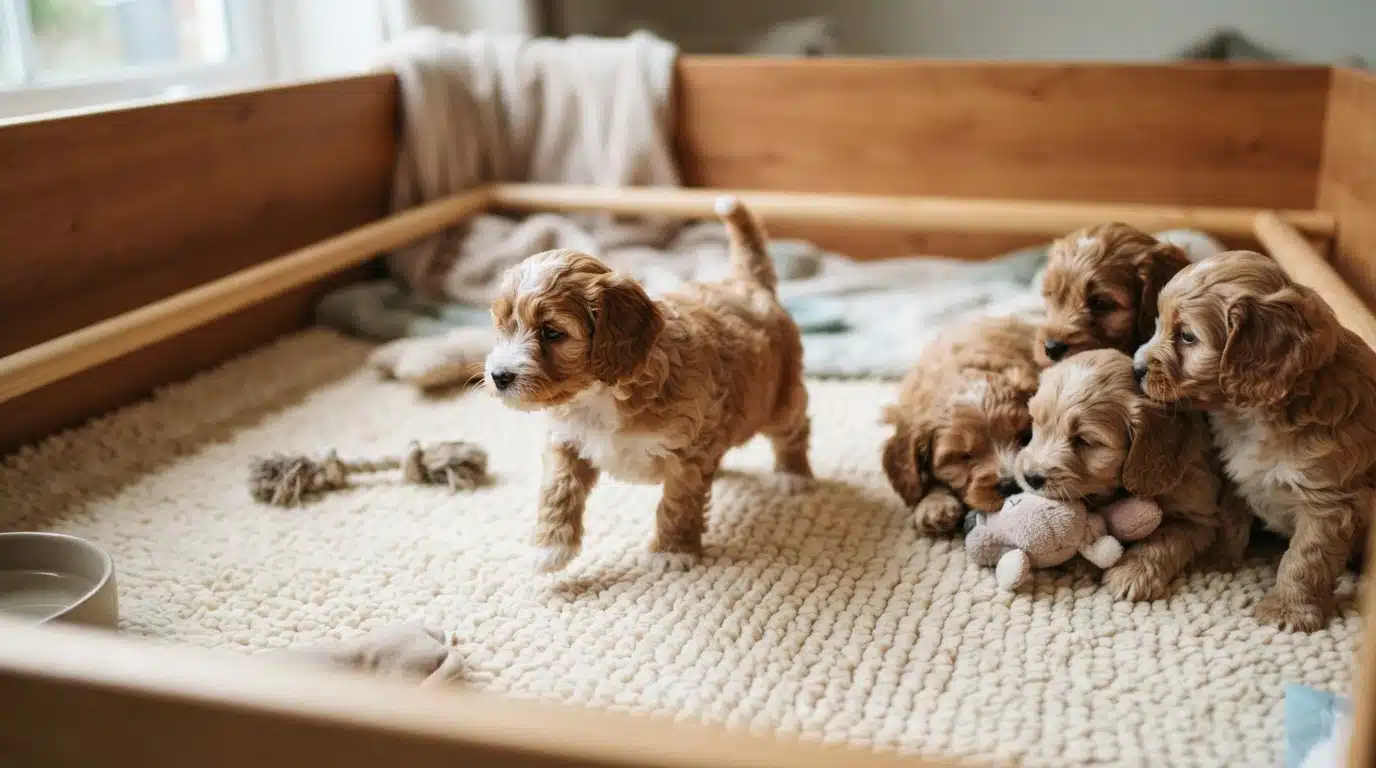
At four weeks, a Cavapoo puppy is just waking up to the world. Eyes and ears work well now, and the puppies totter around the whelping area meeting their littermates in earnest. This is when the socialization window opens, and it shapes how your puppy will handle people, sounds and new places for the rest of its life.
What Socialization Actually Is (and Is Not)
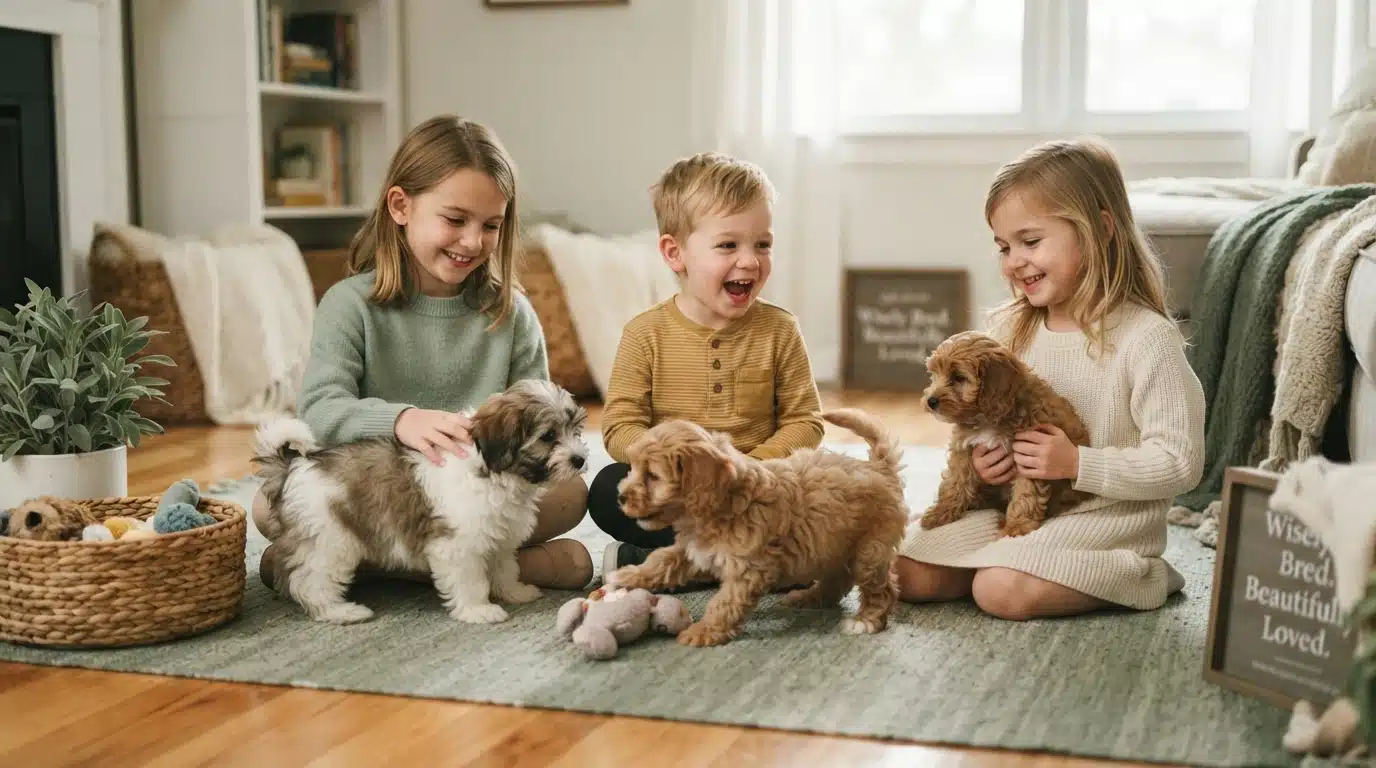
Socialization means gentle, positive exposure to new sights, sounds, surfaces and handling. It is not a parade of strangers, loud rooms or crowded dog parks. AVSAB’s position statement notes the first three months are when sociability outweighs fear, so quality beats quantity. A puppy that meets a few calm people on varied footing learns more than one overwhelmed by noise.
The Cavapoo-Specific Exposures That Matter
For a Cavapoo, the useful list is short and practical. Different floor textures, soft brushing, brief towel handling, a clipper held near (not on), and light touches on paws, ears and mouth. Grooming intro now pays off later, since that coat needs regular care. Puppies are most responsive to new experiences between 3 and 14 weeks, per the AVMA’s review, so breeders who work these steps early hand you an easier start.
Small-Breed Caution in a Big-Dog World
A four-week Cavapoo weighs only a pound or two. Before full vaccination, keep exposure to known, clean environments: home, the breeder’s space, carried trips. Avoid public grass, pet store floors and unknown dogs. Small worlds first; the wider one can wait a few weeks.
Weeks Five and Six: Teething, Chewing and the Coat Change
At five weeks, a Cavapoo puppy has a full set of 28 baby teeth and is already chewing on everything, including littermates. Weeks five and six shape how your puppy bites, tolerates handling and feels about being groomed, so the habits you reward now follow your dog home.
The Teething Timeline and What It Does to Your Home
Puppies get all 28 baby teeth by about 8 weeks of age, per a USDA dental chart. Those teeth start falling out around 3 to 5 months, so the sharpest chewing phase peaks right after your puppy comes home. Expect gnawed shoelaces, chair legs and phone chargers unless you give teeth a better target.
Offer a rotation of soft rubber chews and frozen washcloths, and swap them in whenever your puppy targets furniture. Sore gums also make mouths fussy, so keep handling gentle and never punish a nip your puppy cannot yet control.
Starting Grooming Before Your Puppy Objects
Breeders handle this window well. At Sage Puppies, short brushing sessions, toe touches and a quiet blow-dryer started in the litter mean your puppy arrives already used to the routine.
At home, brush a few minutes daily and praise calm behavior. Touch paws, ears and the muzzle every day so the first real groom is boring, not frightening.
Weeks Seven and Eight: Training Milestones and the Two-Month Check
A Realistic Week Seven and Eight Milestone Checklist
By week seven, a well-started puppy should sit briefly for food, follow you a few steps, and settle in a crate for short stretches. Expect decent potty progress outdoors, not perfection. NAME should come when called in a quiet room, and gentle handling of paws, ears, and mouth should draw only mild protest. The AVMA notes the socialization window stays open through 14 weeks, so keep stacking calm, positive exposures now rather than waiting for full vaccines.
The Two-Month Veterinary Visit
Week eight usually brings the puppy’s second combination vaccine dose, another quick check of ears, heart, and weight, and a conversation about deworming. The AAHA canine vaccination guidelines treat the 6 to 16 week series as core protection, so keep each appointment on schedule. Most visits run 30 to 45 minutes. Book the visit now if you haven’t already; two-month appointments fill fast, and staying current keeps the 16-week finish line on track.
What Changes After the Eight-Week Mark
Growth speeds up and sleep needs slowly drop below the 18 to 20 hours an 8 week old Cavapoo still needs. Teething chewing intensifies toward the 3 to 5 month tooth-loss phase, so rotate sturdy chews. Formal training can begin, short sessions, heavy praise. Puppy classes may accept pups after the first vaccines. The daily rhythm you built now carries you into adolescence; keep it consistent and the next two months feel far calmer.

The first 8 weeks go smoother when you start with a well-bred puppy. Sage Puppies raises Cavapoos with early socialization and hands-on care, so you begin with a confident start. Ready to meet yours? See current Sage Puppies availability or start an application today.
Frequently Asked Questions
Q1: What should I expect during the first 8 weeks with a Cavapoo puppy?
Expect a steady build: week one is sleep and potty routines, week two adds house training and the first vet visit, week three opens socialization, weeks four and five bring teething and chewing, and weeks seven and eight deliver short training wins. Progress comes in leaps, not a straight line.
Q2: How old should a Cavapoo puppy be when it comes home?
At least 8 weeks old. Puppies learn bite control and confidence from their mother and littermates, and early separation often leads to harder nipping and more stress.
Q3: How much sleep does an 8-week-old Cavapoo puppy need?
About 18 to 20 hours per 24 hours, split between night sleep and short daytime naps. Protect nap time the way you protect meals.
Q4: Where can my puppy safely go before vaccines are finished?
Stick to clean, known places: your home, vaccinated friends’ homes, or puppy classes requiring shots. Skip dog parks, pet stores and public grass until the series ends near 16 weeks.
Q5: When should teething chewing peak?
Chewing peaks right after pickup and again near 3 to 5 months, when baby teeth fall out. Rotate soft chews and frozen washcloths to save your furniture.
Conclusion
The first eight weeks follow a predictable shape once you know it. Week one is routine and rest, week two brings house training and the first vet visit, week three opens the socialization window, weeks four through six add teething, grooming and safe exposures, and weeks seven and eight deliver early training wins plus the two-month check. An 8 week old Cavapoo needs sleep, structure and patient repetition more than anything fancy. Keep feeding, potty and crate rhythms steady, stay current on the vaccine series, and reward calm behavior every day. Expect leaps and setbacks together, because both are normal. Do those small things consistently, and your Cavapoo puppy’s first eight weeks set up a confident, well-adjusted companion.