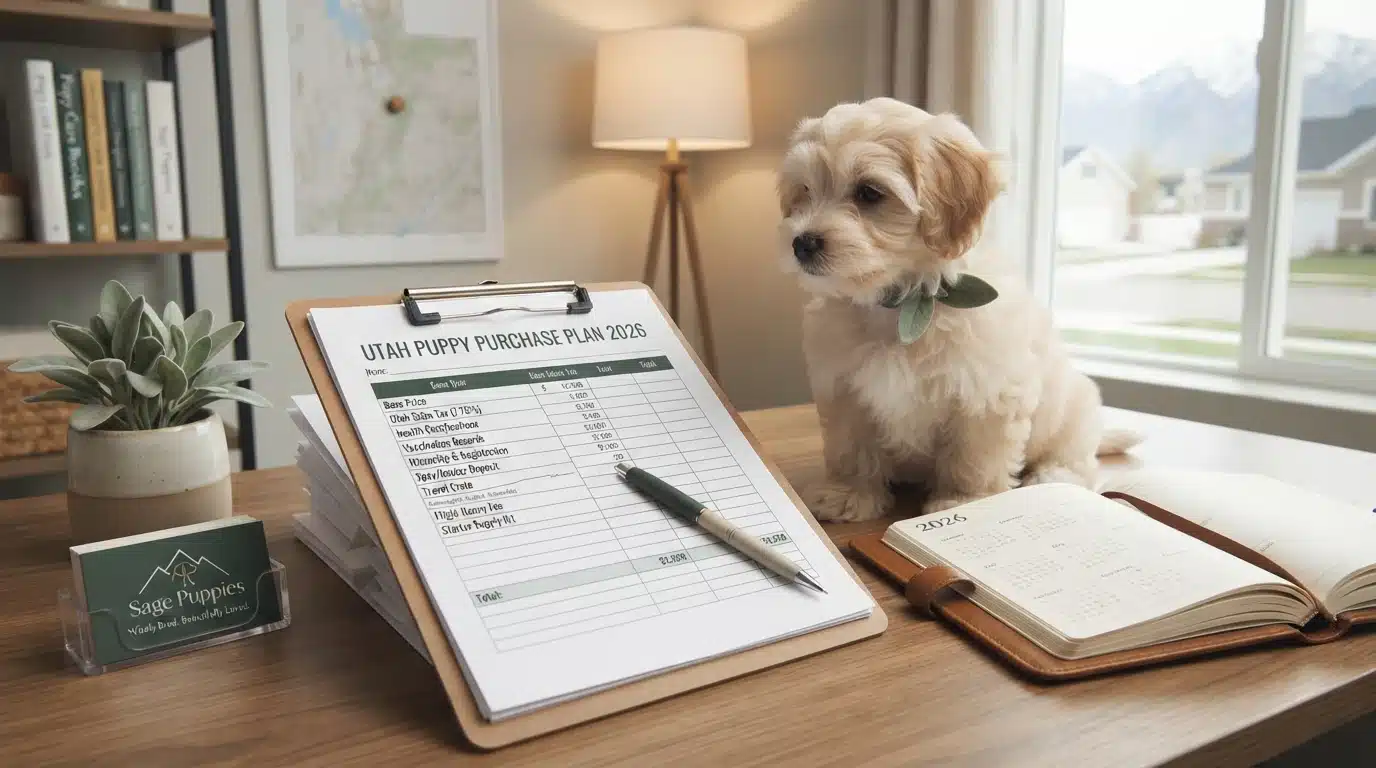
Quick Summary: Utah shelters win on cost and speed, with adoption fees from $47 to $500 covering spay or neuter, a microchip, and initial vaccines, plus same-day walk-in adoption. Breeder purchases, like Sage Puppies in South Jordan offering Havanese, Havapoo, and Cavapoo pups for $3,500 to $4,500, buy predictability: known size and coat, parent screening and DNA records, and a planned application-based match, but cost more and mean waiting weeks to months. Either way, ask for three separate documents before paying: the puppy’s own exam and vaccine record, the parents’ clinical screenings, and the parents’ DNA variant tests, since shelters supply only the first. Plan another $1,000 to $2,000 for first-year costs like vaccines, food, and a crate.
Two Utah families can both bring home a puppy this year and end up with very different paperwork. One pays a Utah shelter’s adoption fee of $150 or less, with spay/neuter and a microchip already done. The other pays $3,500 to $4,500 to a Utah breeder for documented lineage and a planned match. Neither route wins outright. Shelter adoption beats breeders on cost, speed, and included vet care, while a breeder purchase makes sense when small-breed temperament and known parent history matter more than price.
Most Utah puppy adoption options are rarely compared side by side, so families decide on anecdotes. This guide breaks the choice into six checkable dimensions: cost, breed predictability, health records, waiting time, support after handoff, and first-year puppy costs, with questions to ask before you pay.
Breeder Purchase vs Shelter Adoption in Utah: At a Glance
| Sage Puppies | Utah Humane Society | |
|---|---|---|
| Acquisition cost | $3,500 to $4,500 per puppy | Pay-what-you-can to $500 for dogs; $175 for cats |
| Breed predictability | Three small breeds only: Havanese, Havapoo (Havanese and Poodle), Cavapoo (Cavalier and Poodle) | Mixed-breed and purebred dogs; specific small-breed availability varies by location and season |
| Health documentation | Parent clinical screening records and puppy exam records provided as separate documents | Spay or neuter, microchip, and initial vaccinations included in the adoption fee |
| Selection process and wait time | Application-based owner matching with local pickup in South Jordan, Utah and delivery available | Open-door shelter with walk-in visits and adoption events, no breeder waitlist |
| Support after handoff | Written purchase contract terms and a matching conversation before placement | Post-adoption resources and on-site veterinary clinic services |
The Two Options in Focus: Sage Puppies and Utah Humane Society
Utah puppy adoption options really come down to two routes: a planned breeder match or a shelter adoption. Here is who each path suits.
Sage Puppies
A boutique breeder program in South Jordan offering only Havanese, Havapoo, and Cavapoo puppies, placed through an application and owner-managed matching process at $3,500 to $4,500. It fits families who want a predictable small breed with documented parent screening records.
Key strengths
- Three small breeds only, so coat and size stay predictable
- Parent screening records and puppy exam records kept as separate documents
- Local pickup or delivery, plus written contract terms before handoff
Utah Humane Society
A Utah shelter and clinic with open-door dog adoption, from pay-what-you-can up to $500, including spay or neuter, a microchip, and initial vaccinations. It suits flexible families happy to meet mixed-breed dogs of any background, season, or size.
Key strengths
- Walk-in visits and adoption events, no waitlist
- On-site veterinary clinic and post-adoption resources
- Fee covers core first-year medical care
What a Utah Puppy Costs: Adoption Fee vs Breeder Price
The money gap between the two routes is wide, and most of it is visible before you ever fill out an application. Shelters post their fee schedules online, and reputable breeders publish prices too. Here is how Utah puppy adoption options stack up side by side.
| Utah source | Typical dog fee | What the fee covers |
|---|---|---|
| Humane Society of Utah | Pay what you can to $500 (cats $175) | Spay or neuter, microchip, initial vaccines |
| Salt Lake City area shelters | About $100 to $200 | Spay or neuter, vaccines, microchip, health check |
| Municipal animal services | From $47 to $87 | Adoption fee, microchip, rabies voucher |
| Boutique breeder program | $3,500 to $4,500 | Documented lineage, health testing, planned match |
Published Utah shelter fees you can verify before you visit
Check the shelter’s website before you drive over. Fees change with promotions, and some run waived-fee events. A Rover roundup of Utah adoption costs lists examples such as $200 for puppies under six months and $75 to $150 for adults. Heber City’s Animal Services page posts exact figures, including $87.25 for unaltered dogs. Every fee should include spay or neuter, a microchip, and initial shots. Ask if anything is extra.
Where the breeder price actually goes
A $3,500 to $4,500 puppy is not just a dog with a higher sticker. The price funds parent health testing, prenatal care, early socialization, and the breeder’s time matching you with the right litter. Our Utah puppy pricing breakdown shows how a quote turns into real expenses. Breed-specific work adds more, since Havanese lines carry CHIC testing requirements.
The first-year budget beyond the acquisition price
Whichever route you choose, plan for the same early costs: vaccines, food, a crate, grooming, and a vet visit in the first week. Budget roughly $1,000 to $2,000 for that first year on top of the fee.
Breed Predictability: What Each Route Can Actually Promise
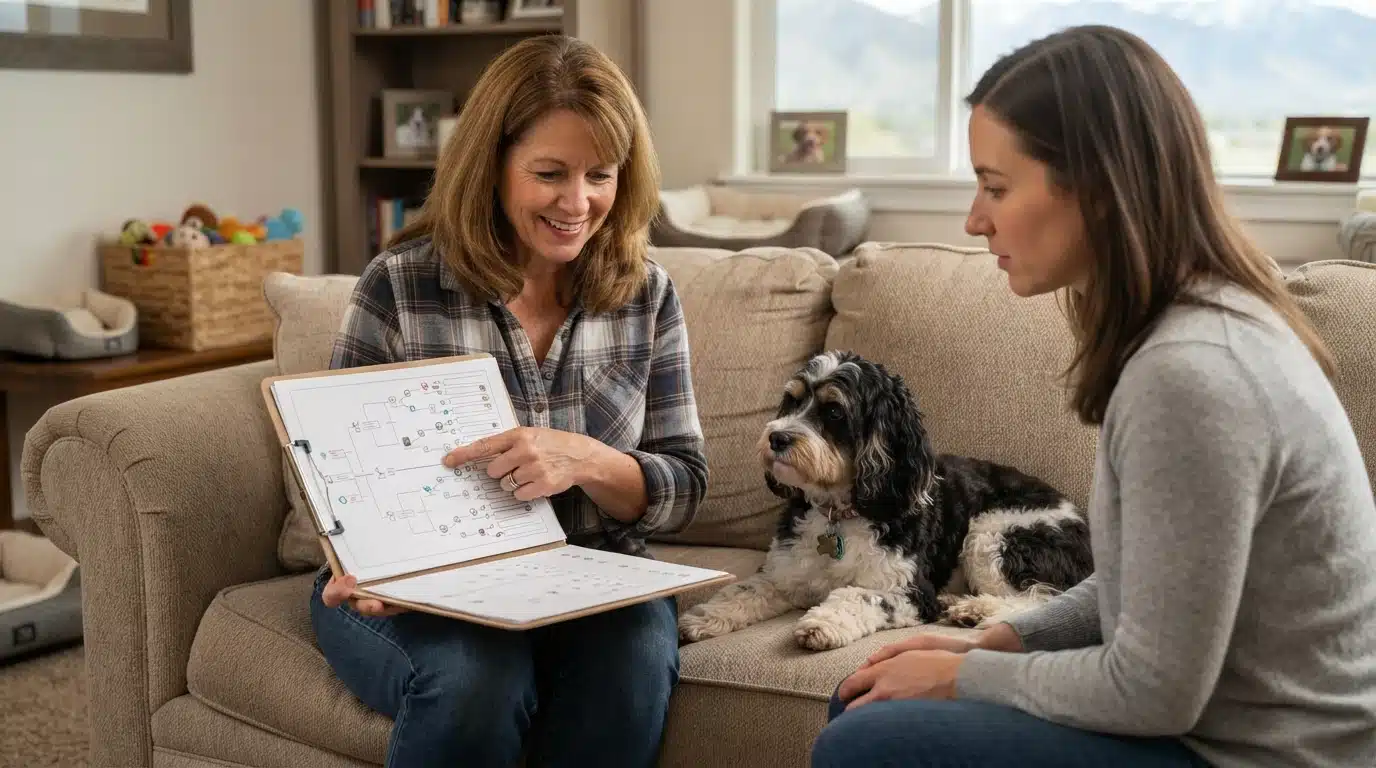
A breeder can tell you, before the puppy is born, roughly how big it will get, what coat it will carry, and what temperament to expect. That promise comes from paperwork, not guesswork. Breeders who track ancestry can show a puppy’s parents, its pedigree, and any health testing behind both. Poodle mixes such as Havapoos and Cavapoos add another layer: first-generation pairings are planned on purpose, so a buyer knows exactly which two breeds meet. Estimates stay estimates, but they rest on records someone can hand you.
Shelters work differently. Most dogs arrive with no history at all, so staff label them by look and size. Those labels, sometimes called “lab mix” or “shepherd mix,” are educated guesses. DNA studies have found shelter labels often miss or misstate a dog’s main breed, sometimes wildly. That suits families who want a surprise and a good dog on any terms. It frustrates families who need a predictable adult size for an apartment or a low-shedding coat for allergies.
Utah shelters can promise a spay or neuter, vaccines, a microchip, and a behavior observation. They cannot promise breed, size, coat, or ancestry, because no one documented them. For documented Havanese and doodle lines, an application-based breeder match starts with the same records a vet would ask for.
Health Documentation: Three Records That Are Not the Same Thing
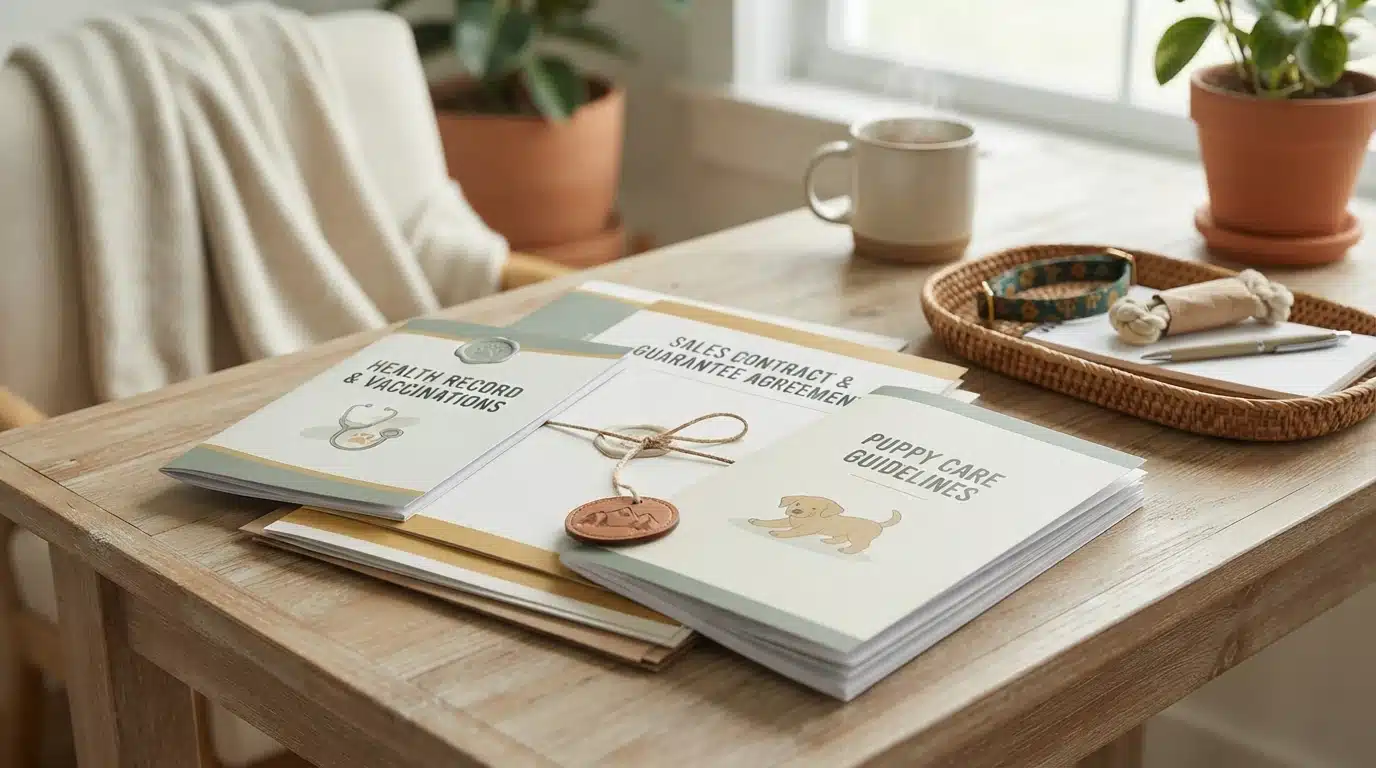
Ask any breeder or shelter for “health papers” and you will get very different stacks. Before you pay anything, request three separate records: 1) the puppy’s own exam and care record, 2) the parents’ clinical screening results, and 3) the parents’ DNA variant test results. Each one proves something different, and none of them covers the other two.
Separating the puppy record from the parent record
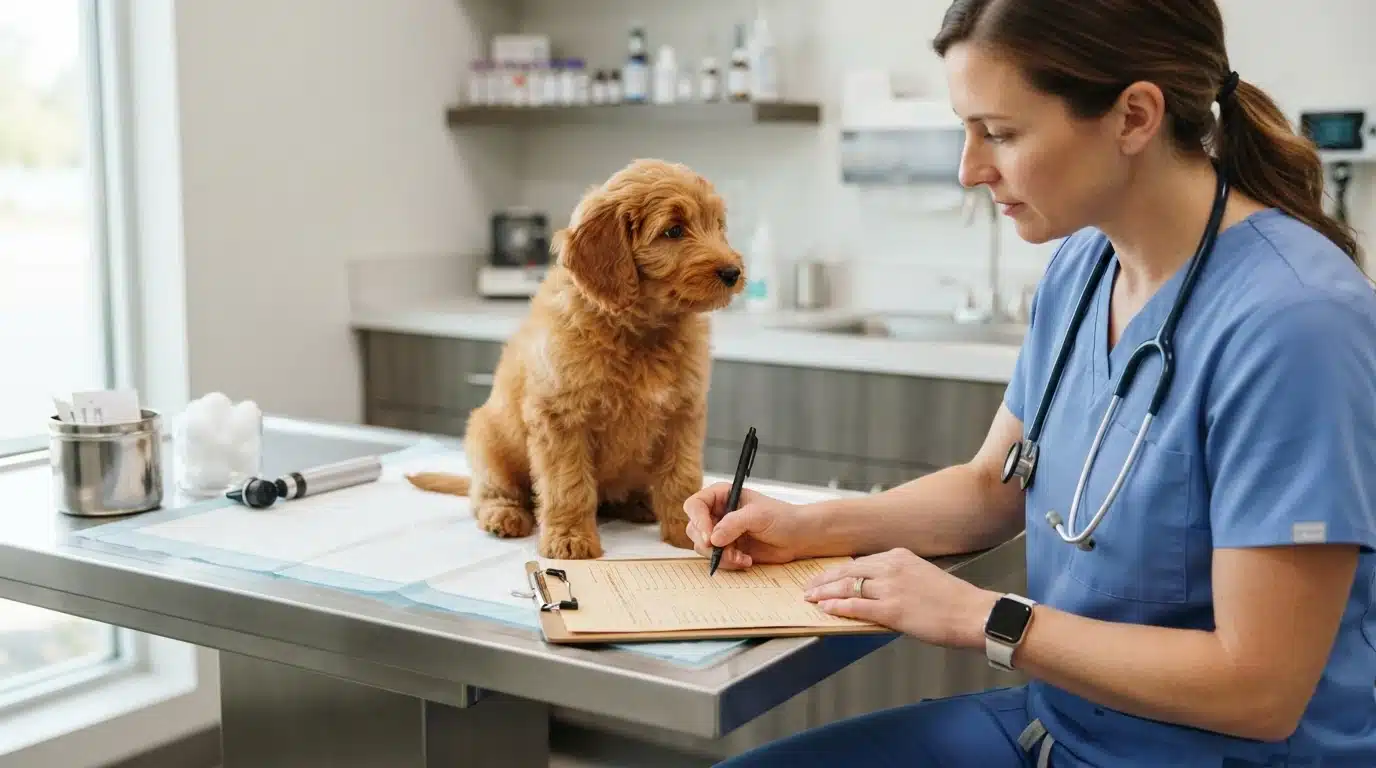
The puppy’s record covers its own first weeks. It should list the veterinary exam date, vaccines given, deworming, and any treatment for parasites. It says nothing about the puppy’s genetic future.
Parent screening is the opposite. It tells you about hereditary risk, not how the puppy has been cared for. A breeder can hand over a flawless puppy exam sheet while saying nothing about the parents’ hips, knees, or eyes, so ask for each category by name. For a closer look at how two breeders document health and price, the comparison of health and price between Sage Puppies and Blue Star Pups walks through both stacks line by line.
Reading canine health-program requirements accurately
CHIC is a screening registry run by the OFA, which works with each breed’s parent club. A dog earns a CHIC number when it has been screened for every disease the parent club recommends and the results are posted publicly, whatever those results show. A CHIC number is proof of testing, not of passing.
For Havanese, the current CHIC components are an annual eye exam, a hip x-ray, and patella (kneecap) certification. BAER hearing testing was removed from the requirements in the breed club’s 2025 health statement, so an older four-test checklist is out of date. Check the Havanese Club of America’s health and testing guide for details.
What shelter records actually establish
Shelter paperwork usually confirms what happened at the shelter. You will see vaccine dates, deworming, a health check, and proof of spay or neuter. What you rarely get is a tested pedigree, because the parents’ history is often unknown. That is a fair trade at a $150-or-less adoption fee, as long as you read it for what it is: solid care documentation, not genetic screening.
Selection Process and Wait Times
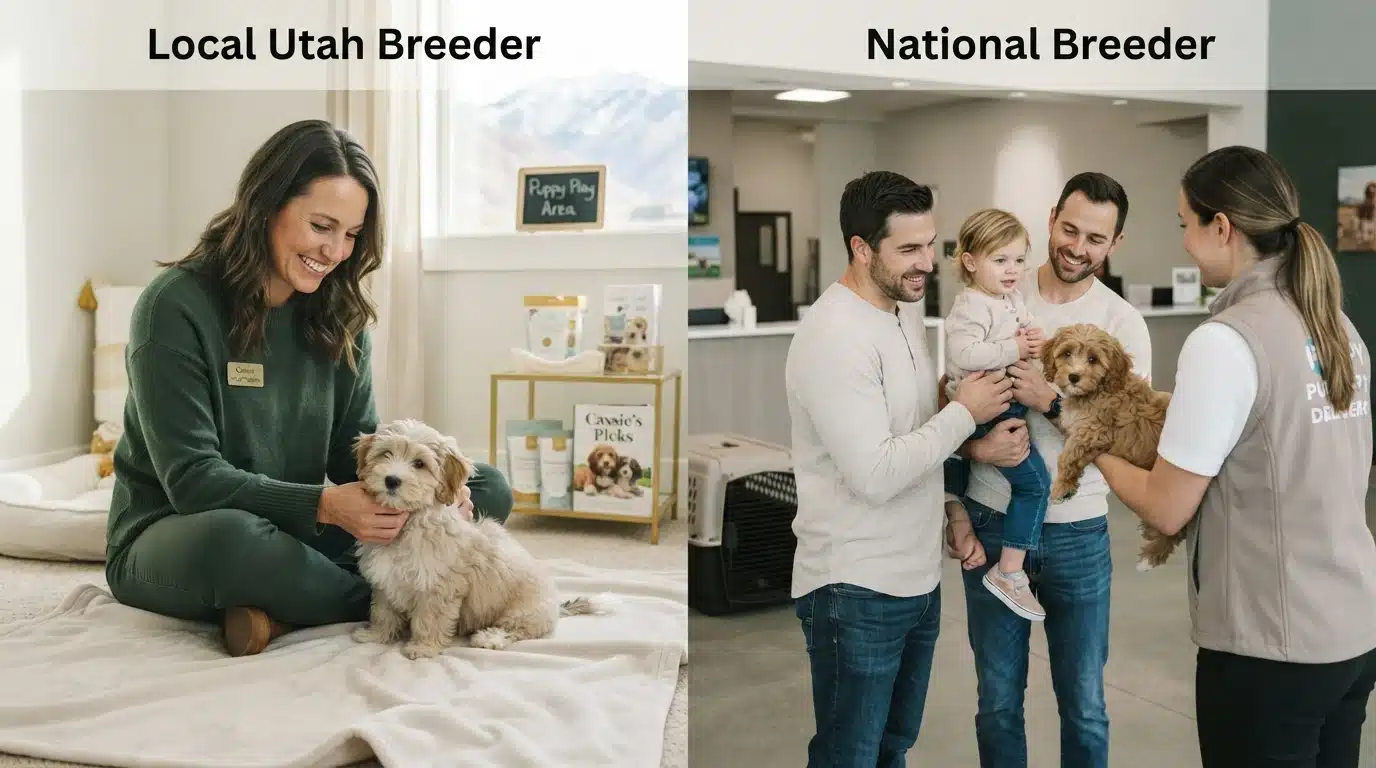
The timeline question has a short answer. A breeder usually takes weeks to months because you apply, get matched, and wait for a planned litter. Shelter adoption can happen in a single visit: walk in, meet a dog, apply, and go home the same day. Some Utah rescues do require a home visit or a longer review, but many shelters are set up for same-day adoptions.

Application, matching, and what a breeder asks you
A breeder’s process starts with a written application. Expect questions about your home, work schedule, yard, kids, and prior pets. Some breeders ask for a vet reference or a phone call. Good breeders also screen you as hard as you screen them, because they want the right fit, not just the first deposit.
Matching comes next. You may pick from an available litter or join a waitlist for a planned pairing. Waitlists for popular small breeds often run several months, and timing depends on when a dam comes into season. If you want a specific temperament, coat type, or size, that patience buys predictability. An application-and-match model, like the one Sage Puppies uses, places puppies only after the family fits.
How shelter walk-in adoption actually works
Shelters work in reverse. The dogs already exist, so you browse online listings or visit in person. At many Utah shelters you can walk in during posted hours, meet adoptable dogs, and complete paperwork on the spot. Salt Lake County’s adoption center, for example, is open Tuesday through Saturday, 10:00 AM to 5:00 PM, per its adoption page.
The tradeoff is selection. You choose from whoever arrives that week, and puppies go fast. Popular breeds and young dogs may be gone within hours of listing. If the shelter has your match today, adoption beats any waitlist. If it does not, you either wait for intakes or revisit the breeder route. Both paths end with a dog; only one lets you plan the dog in advance.
Support After Handoff and the First Ninety Days
What each route provides after the puppy arrives
A good breeder stays reachable. Most offer a phone or text line for questions about feeding, house training, and the first vet visit, and many contracts include a return clause if the match fails. Ask before you commit: who answers, how fast, and for how long. A smaller program can often give you the puppy’s early habits in detail, since it raised the litter itself.
Shelters help differently. Staff can share what they saw during the dog’s stay, and most Utah shelters include starter vaccines, a microchip, and spay or neuter in the fee, so follow-up vet care replaces breeder follow-up. Rescue groups sometimes add a trial period. Either way, line up a veterinarian within the first week, because that person becomes your main support source.
Socialization expectations for the first weeks at home
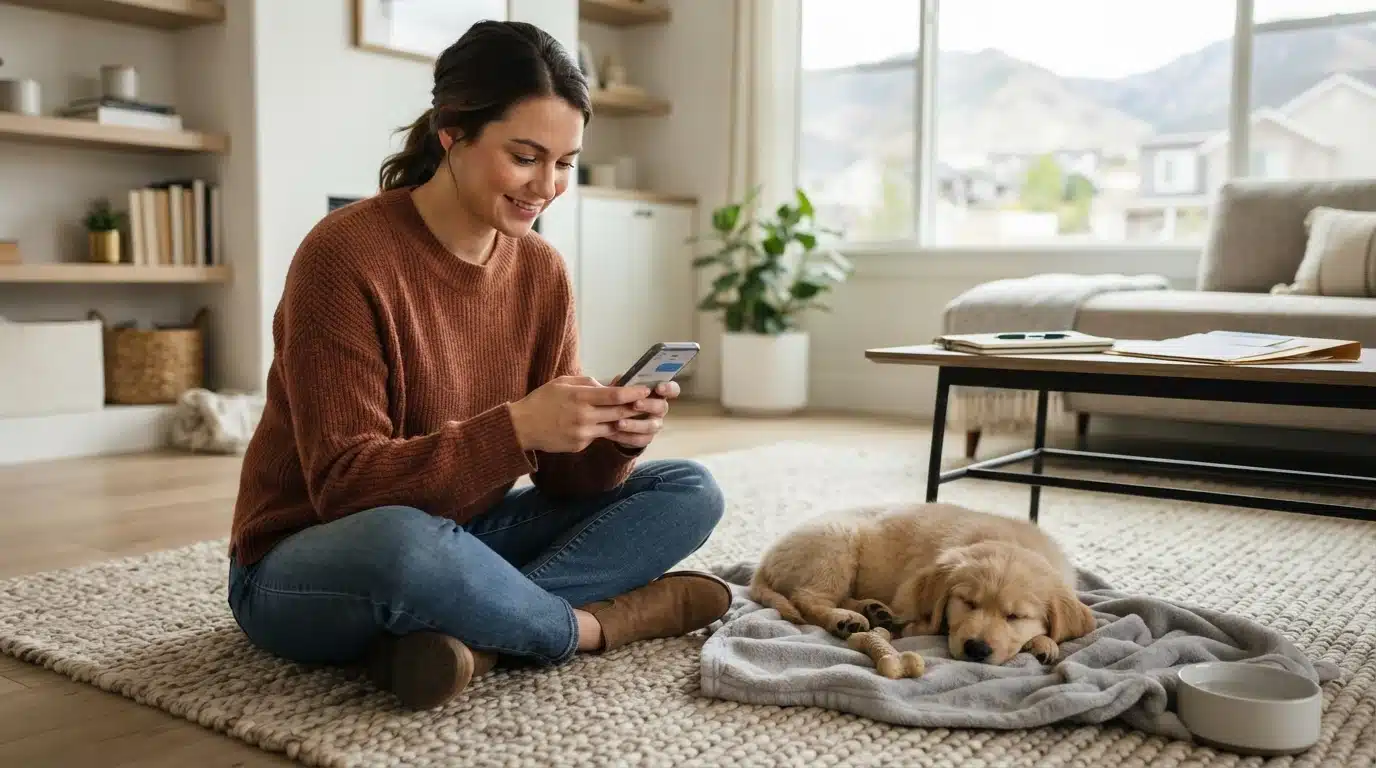
Timing matters more than the route you chose. The AVSAB position statement says the first three months of life are the main window for a puppy to learn that new people, places, and sounds are safe. Your first ninety days sit inside it, so use them.
Start small. Carry your puppy past traffic, let it meet calm adults and gentle kids, and play recordings of doorbells and vacuums. Penn State’s extension notes the window runs to roughly 12 to 14 weeks, so pace matters. Pair each new thing with treats, and keep sessions short and upbeat. Ask your vet about puppy classes; AVSAB guidance supports classes starting at 7 to 8 weeks with at least one vaccine set on board.
Callout: Shelters and breeders both hand you a blank slate. The first twelve weeks decide how it fills in.
Should You Buy a Puppy From a Breeder or Adopt From a Shelter in Utah?
Buy from a breeder when you want a predictable size, coat, and temperament, and adopt from a shelter when you want a lower fee and a dog that already needs a home. Neither route is better in general. The right choice depends on your budget, your timeline, and how much uncertainty you can live with.
Choose adoption when these conditions apply
Adoption fits if most of these describe you:
- Your budget for the dog itself stays under about $500, including the fee.
- You are open to a mixed breed or an adult dog.
- You want spay or neuter, vaccines, and a microchip already handled.
- You have time to visit shelters in person, since many Utah dogs are placed quickly.
- You accept some guesswork about adult size and health history.
Choose a breeder when these conditions apply
A breeder fits if most of these describe you:
- You need a known breed or cross, such as a Havanese, Havapoo, or Cavapoo, for allergies, apartment size, or family fit.
- You want to see the parents’ health testing before you commit.
- You prefer a planned match over a same-day decision.
- You can pay $3,500 to $4,500 and wait for a planned litter.
- You want breeder support after pickup.
A verification checklist that works for both routes
Whichever route you pick, ask for three separate records before money changes hands:
- The puppy’s own record: exam notes, vaccines given, and dates.
- The parents’ screening results: eye, hip, or heart clearances where the breed has them.
- The parents’ DNA results: variant tests for breed-specific conditions.
Shelters can supply the first item. Responsible breeders supply all three. Ask for them in writing, and walk away from anyone who stalls.

Still weighing both routes? Sage Puppies can help you decide whether a planned match fits your family and budget. Start an application at Sage Puppies and get honest answers about Havanese, Havapoo, and Cavapoo litters before you commit a dollar. Wisely Bred. Beautifully Loved.
Frequently Asked Questions
Q1: Should I buy a puppy from a breeder or shelter in Utah?
Pick a breeder for predictable size, coat, and documented parent testing; pick a shelter for a low fee, included vet care, and a same-day match.
Q2: What three health records should I ask for before paying?
The puppy’s exam and vaccine record, the parents’ screening results, and the parents’ DNA variant tests. Responsible breeders supply all three.
Q3: How long does a breeder waitlist usually take?
Expect weeks to months, depending on when a planned litter arrives.
Q4: What does a $150 shelter fee actually cover?
Spay or neuter, a microchip, and initial vaccines, plus a basic health check.
Q5: What should I budget the first year beyond the price?
Plan roughly $1,000 to $2,000 for vaccines, food, a crate, grooming, and an early vet visit.
Conclusion
Both Utah routes can land a healthy puppy; they just answer different questions. Shelter adoption wins on cost, speed, and included vet care, with fees from $47 to $500. A breeder purchase buys predictability: known breed, documented parent testing, and a planned match for $3,500 to $4,500.
The comparison comes down to three checkable things. First, what the fee actually covers, from spay or neuter to screening records. Second, breed predictability, which only documented lineage can offer. Third, health paperwork, treated as three separate records: the puppy’s exam history, parent screenings, and DNA results. Shelters supply the first; responsible breeders supply all three.
Ask for each record in writing, verify fees on the shelter’s site before you visit, and walk away from anyone who stalls.