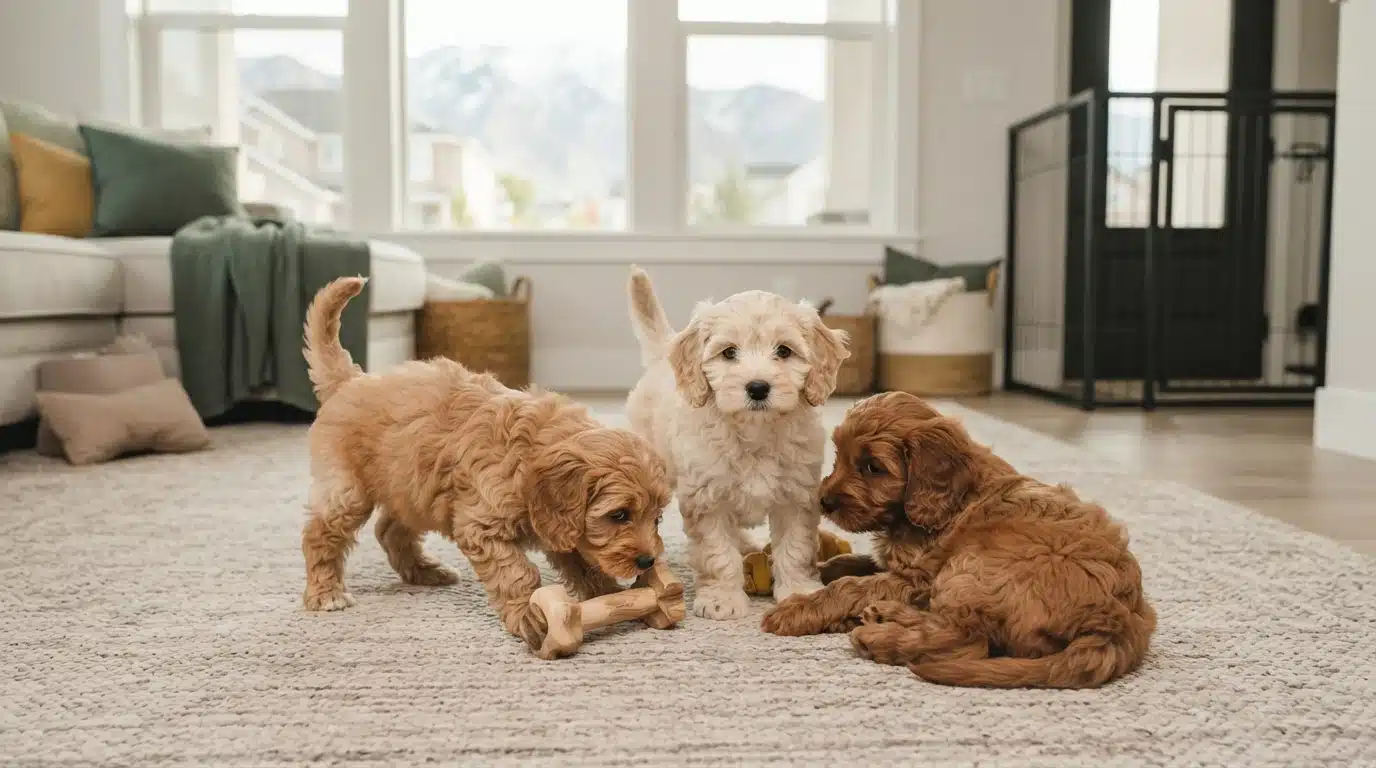
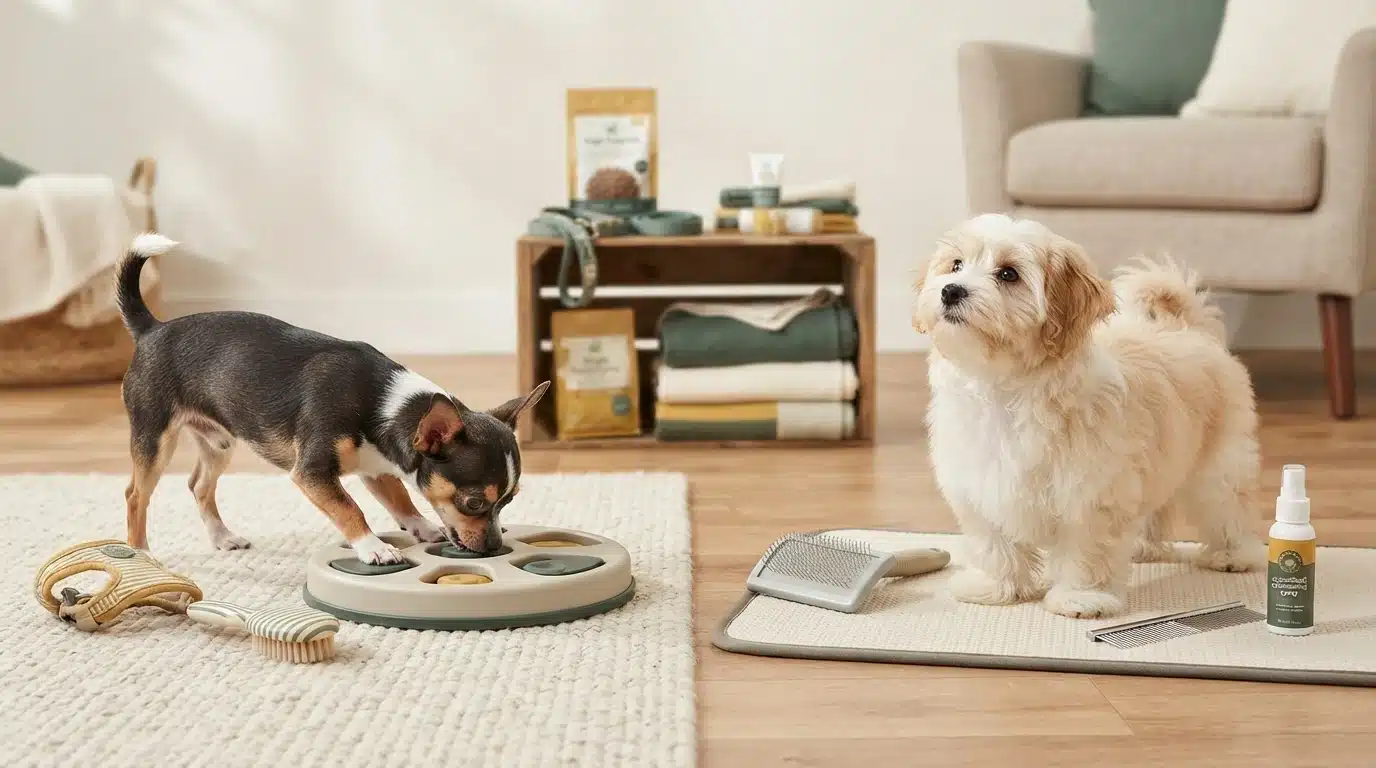
Quick Summary: Bringing home an 8-week-old Cavapoo means messy nights, constant potty trips, and a coat that needs early brushing to prevent mats. The first 30 days break into clear phases: a small puppy zone and the breeder’s feeding schedule for days 1-3, trigger-based potty training and crate conditioning in week one, a vet visit within 72 hours plus the start of the 8-to-16-week vaccine series, controlled socialization outings between weeks 2 and 3, and short grooming sessions with weekly ear and nail checks by week four. Sage Puppies, a Utah breeder program, built this guide around those breed-specific steps so first-time families skip the generic advice and follow a plan matched to a small Cavapoo’s needs.
You bring home your 8-week-old Cavapoo on a Tuesday, and by Saturday night the house feels anything but calm. Accidents, midnight whining, and nipping ankles are all normal parts of a Cavapoo first month, but knowing that rarely settles a tired family at 11 p.m. The challenge is that generic puppy advice skips what matters most in these early weeks: the vet window, the short socialization window, and a coat that needs gentle care from day one. This guide walks you through a Cavapoo’s first 30 days in clear phases, so you know what each week should look like and why. It comes from Sage Puppies, a small Utah program that raises Cavapoo puppies for first-time families, with practical steps drawn from breeder experience and a breed-aware plan rather than blanket promises.
Step 1: Plan the First 72 Hours for a Calm Transition
The first three days set the tone for the whole cavapoo first month. Your puppy leaves everything familiar, so your job is simple: keep the world small, the routine steady, and the excitement low. A little planning before pickup makes that much easier, whether you are driving home locally or arranging delivery.
Set Up One Small Puppy Zone, Not a Whole House
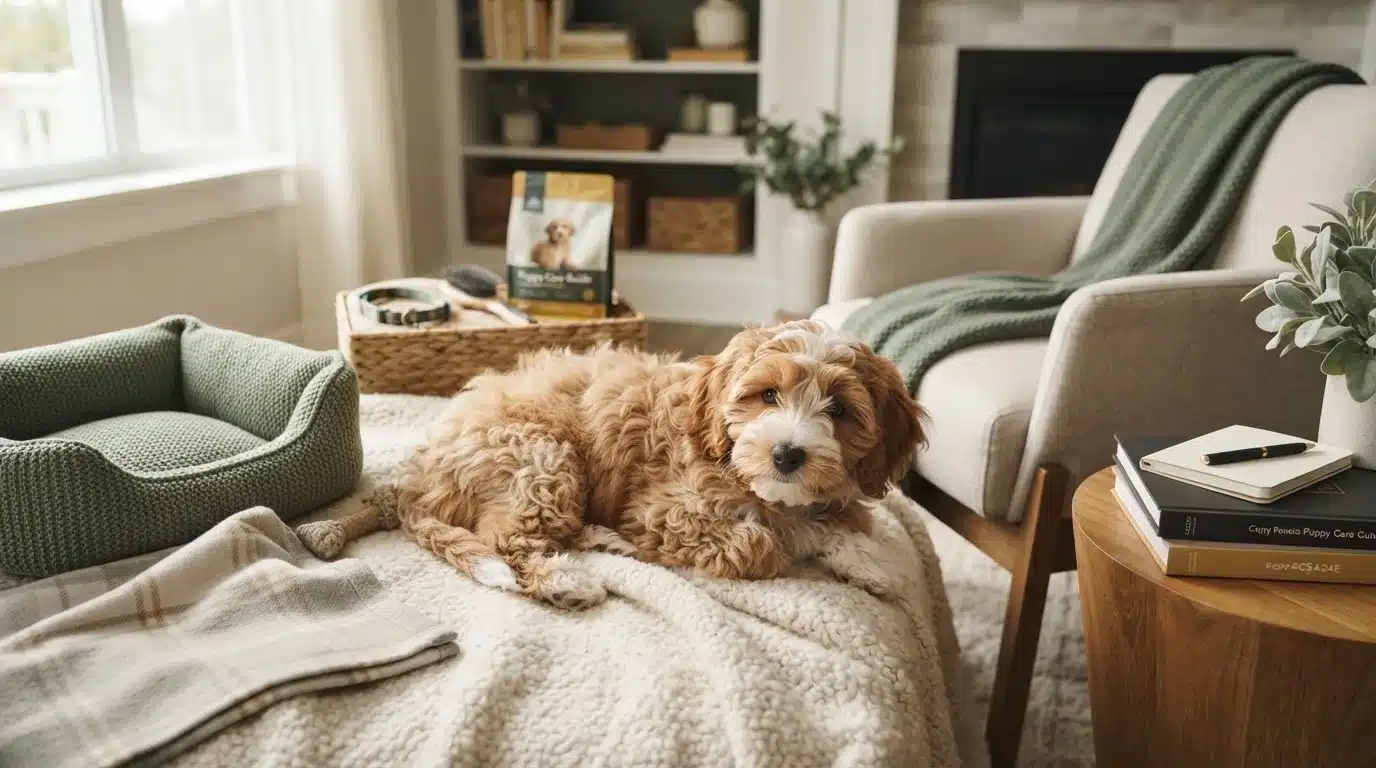
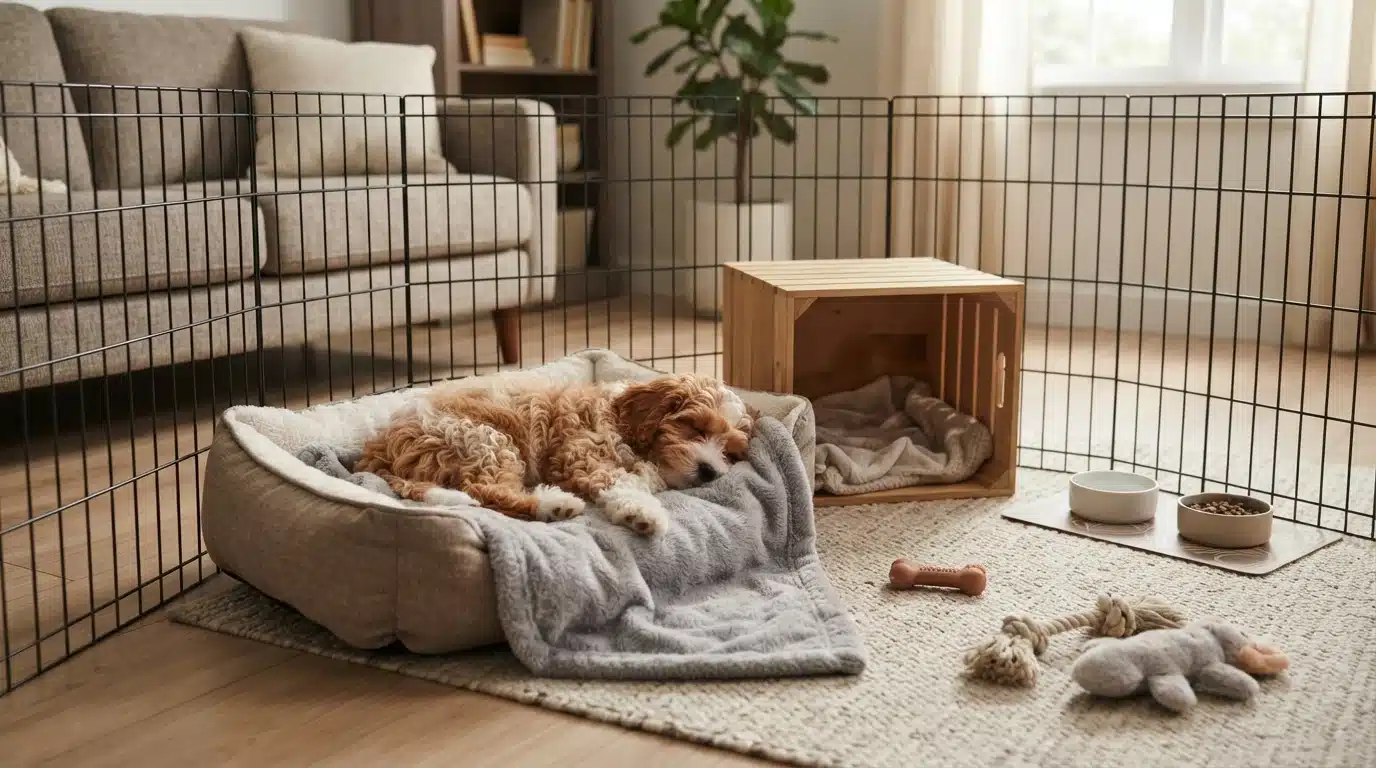
Pick one room and set up a playpen or gated corner with a crate, water, and a few toys. A whole house feels huge to an 8-week-old puppy, and too much space invites accidents and overwhelm. The zone should have a potty area nearby, easy-to-clean floors, and no cords or small objects within reach. Let your puppy explore one room at a time over the first week. Slow access builds confidence faster than free rein, and it makes house training far simpler because you can supervise every moment.
Match the Breeder’s Schedule for Food, Potty, and Sleep
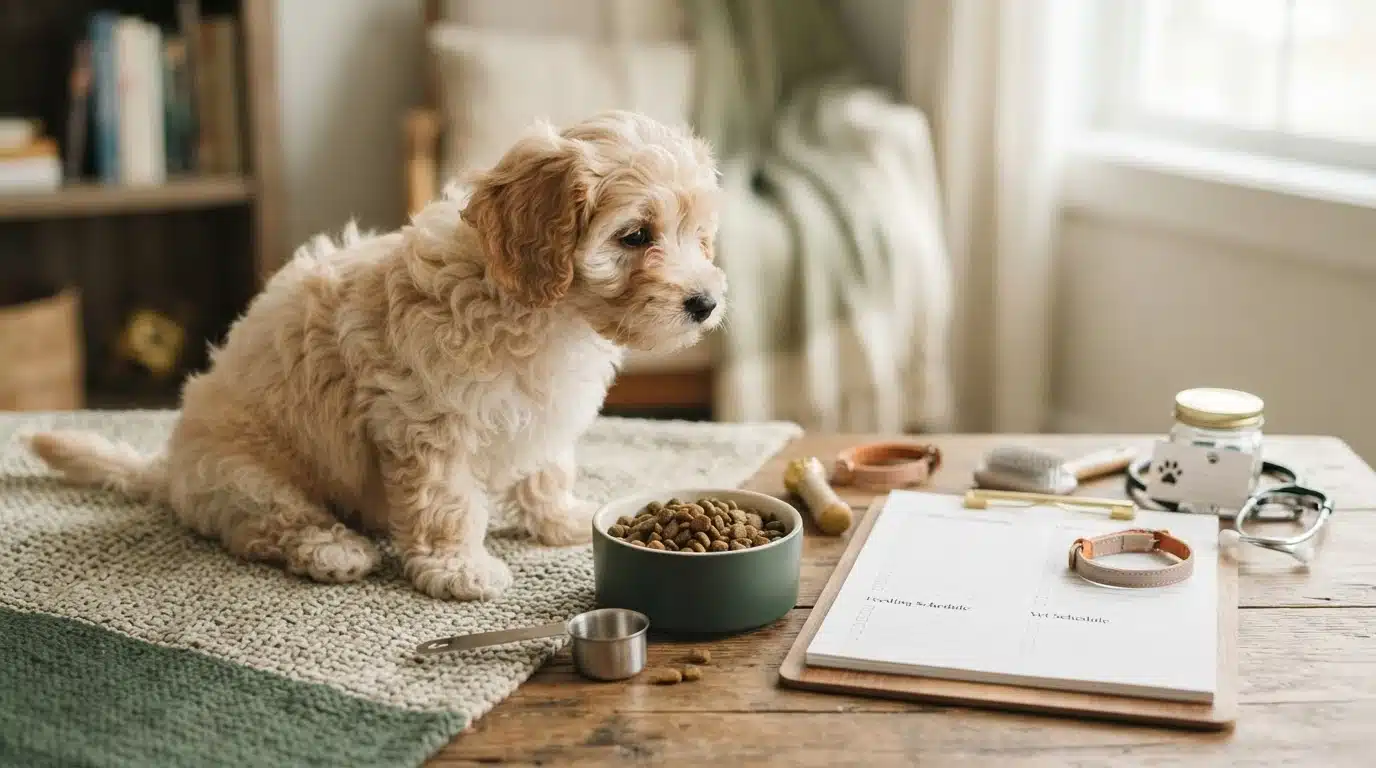
Ask your breeder what food the puppy eats, how much, and at what times, then keep that exact schedule for at least the first week. Abrupt food changes cause upset stomachs, so if you plan to switch brands, transition gradually over seven to ten days. Keep potty breaks on the same rhythm too: after eating, after naps, and right before bed. Sage Puppies sends each puppy home with feeding notes so the first days match what the puppy already knows.
Expect Whining, Naps, and a Disrupted First Night
The first night is usually the hardest. Whining is normal, not a sign something is wrong. Puppy needs reassurance, a warm bed, and a potty trip or two, then short stretches of sleep. Expect a tired household by morning, and plan a quiet second day.
Step 2: Build a Feeding and Potty Schedule in Days 4 to 7
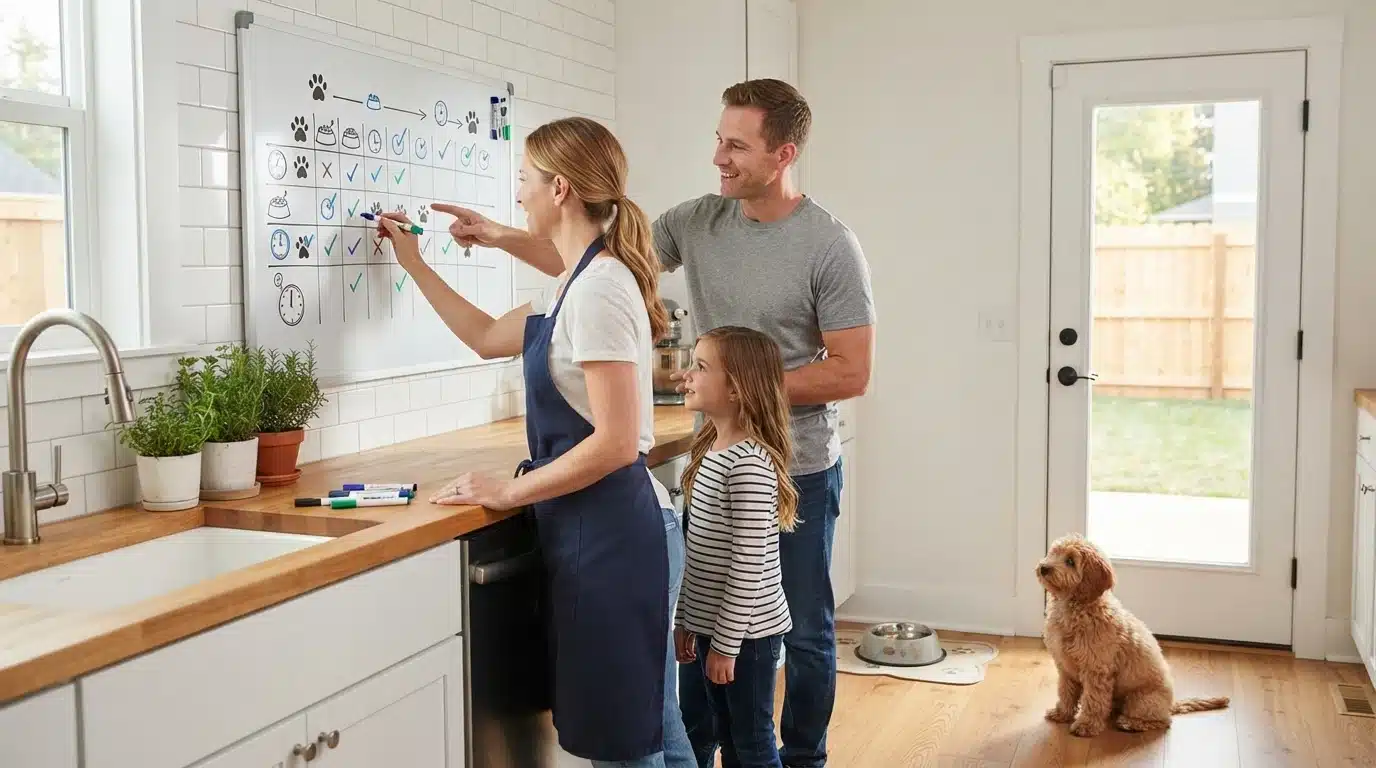
By day 4, your puppy knows the basics of your home. This is the week to turn chaos into rhythm. A Cavapoo puppy thrives on predictability, and three habits formed now shape the whole Cavapoo first month: when food goes down, when potty trips happen, and where sleep happens.
Feed a Small-Breed Puppy Schedule, Not an Adult Dog Schedule
Small breeds burn through energy fast, so free-feeding does not work. Puppies need three to four meals a day until around six months, on a consistent schedule. Adult dogs eat twice daily; an 8-week-old Cavapoo cannot skip meals that way.
Feed at the same times daily, for example 7 a.m., noon, and 5 p.m. Most breeders send puppies home eating a specific food, so keep that brand for now and switch gradually later if you choose to change. Pick up the bowl after 15 minutes so meals stay cues, not grazing sessions.
Tip: A meal always ends with a potty trip. Food moving through a puppy is the most reliable bathroom timer you own, so use it.
Trigger-Based Potty Trips Beat Time-Based Ones
Blanket “every hour” rules miss the real signals. Take your puppy out after waking, after eating, after drinking, after play, and right before sleep. Those five triggers catch most of what a young puppy can hold.
The signs are quick: sniffing, circling, and wandering toward a quiet corner. Watch for them and you can beat most accidents. Go to the same spot each time, and reward with calm praise within a few seconds of finishing. Keep trips short and boring at night; play happens after potty, never during it.
Decide How (and How Long) to Use a Crate This Week
A crate is a den for sleep and short breaks, not punishment or a daytime cage. Keep sessions under two hours while your puppy is this young, and always pair the crate with something good, like a stuffed chew toy.
Modern guidance supports gradual crate conditioning rather than long confinement. The ASPCA’s crate training guidance walks through the slow buildup, and matching those steps this week prevents whining habits from forming later. If your puppy cries for more than a few minutes, shorten the next session instead of letting it cry it out.
Step 3: Book the First Vet Visit and Plan the Vaccine Window (Days 5 to 14)
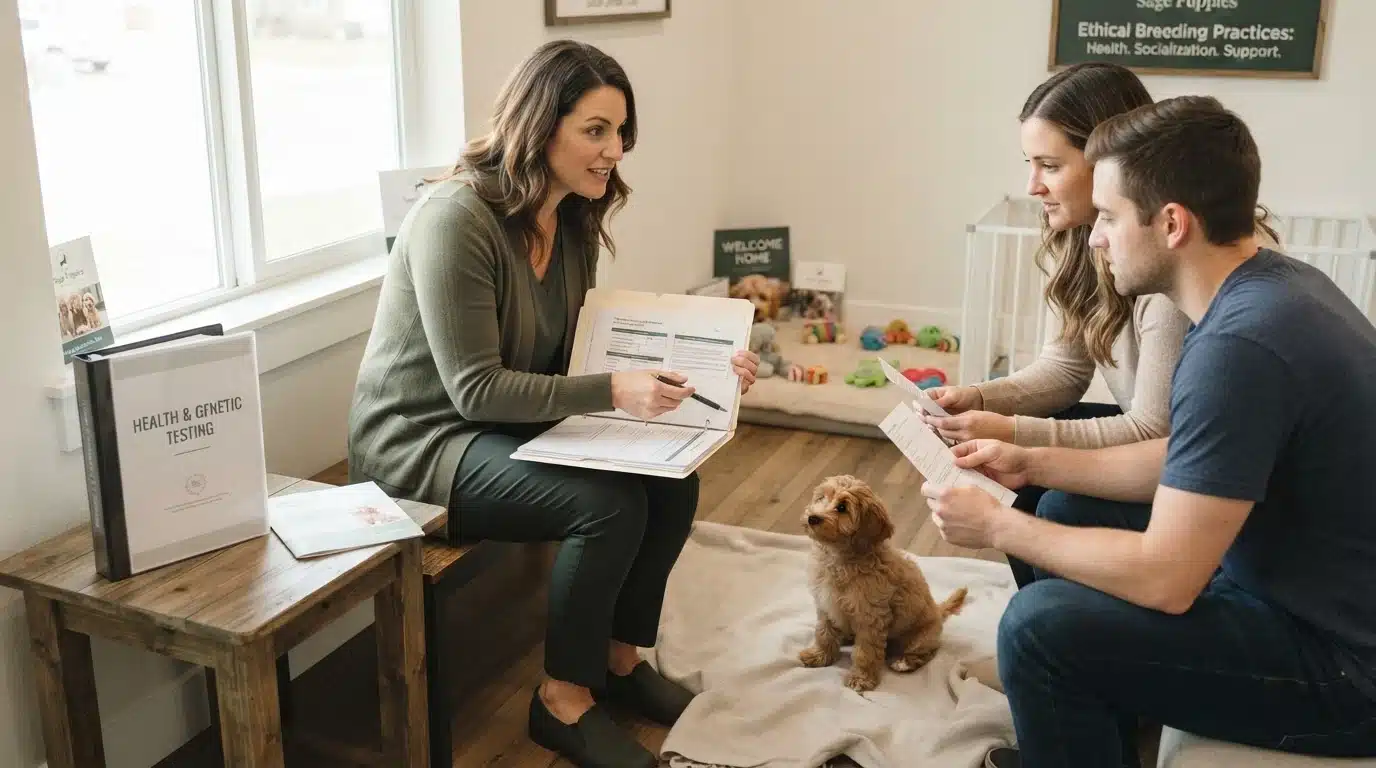
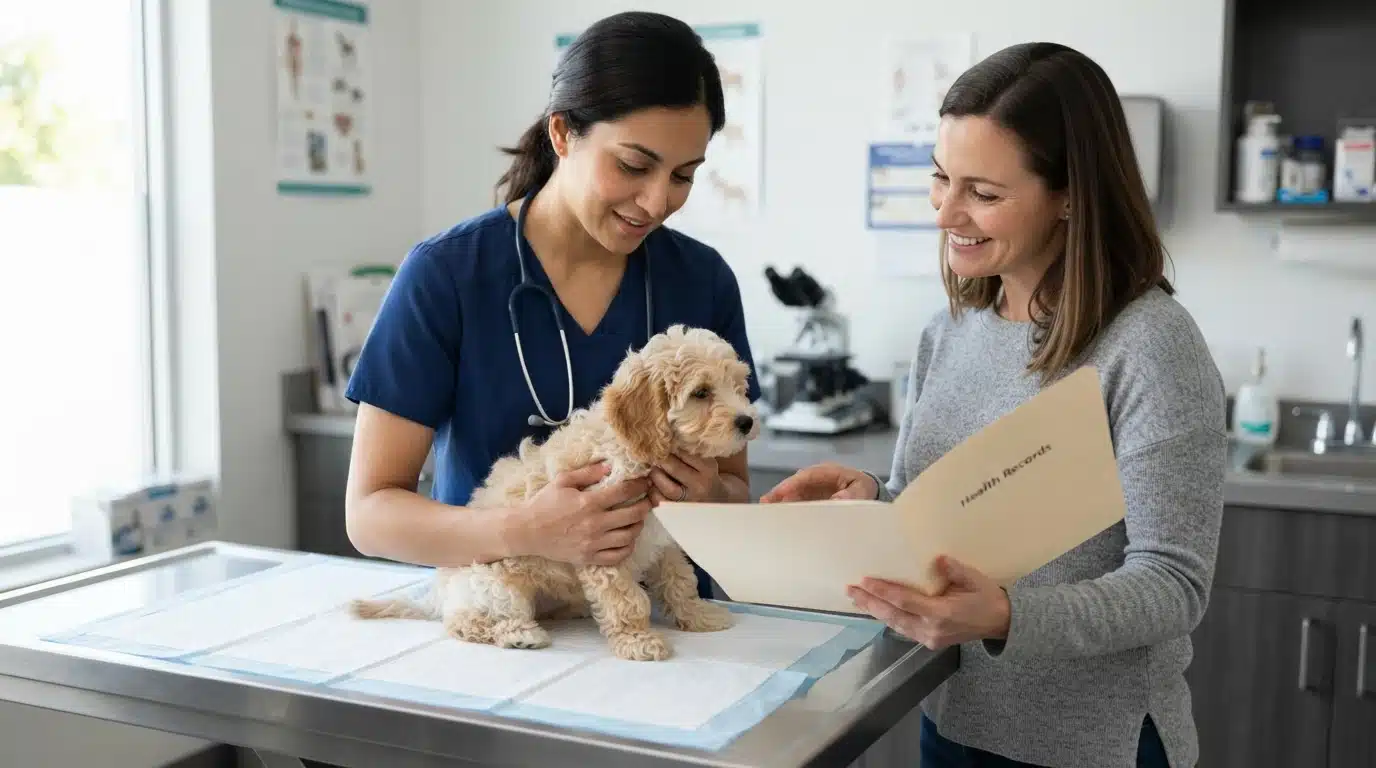
Call a vet within your first few days home. Puppies often need to be seen within 72 hours, and good clinics book out a week or more, so the call itself is the task. Bring your puppy’s health records from the breeder and ask which shots are still due. If your puppy came through Sage Puppies, the go-home packet lists what was already given and when the next dose falls.
What to Bring to the First Puppy Vet Visit
Pack a few things and the appointment runs smoother. Bring the health records, a stool sample from that morning, your food brand, and any supplements or dewormer already given. A checklist for your puppy’s first vet visit keeps you from forgetting the small stuff. Expect a nose-to-tail exam, a weight check, and a talk about the vaccine plan.
How the 8 to 16 Week Vaccine Series Usually Runs
Core combination shots, often labeled DA2PP or DHPP, start at 6 to 8 weeks and repeat every 2 to 4 weeks until at least 16 weeks, per UC Davis vaccination guidelines. A rabies shot follows at 12 to 16 weeks and is legally required in most states. Your puppy likely arrived mid-series, so your vet simply continues the timeline.
Decide What Your Vet, Not the Internet, Should Answer
Forums argue about food brands and dewormers. Save those debates for your vet, who has actually seen your puppy. The internet is useful for schedules and warnings, but dose questions, breed-specific coat or heart concerns, and anything about vomiting or lethargy belong in an exam room, not a comment thread.
Step 4: Open Up the Socialization Window in Weeks 2 and 3
Between 3 and 16 weeks, your puppy builds the mental blueprint for everything new. Miss it, and strange sounds, surfaces and people stay scary for life. Weeks 2 and 3 at home sit right in that window, so socialization now matters more than waiting for the shot series to finish. The AVSAB position statement holds that behavioral problem prevention justifies early socialization even before full vaccination.
Use Carried and Controlled Outings Before Full Walks
Ground walks can wait, but exposure cannot. Carry your Cavapoo on outings to a quiet parking lot, a pet-friendly hardware store, or your kid’s soccer sideline. Let her watch traffic, bikes, and strangers from your arms. The idea is simple: new sights and sounds, minus the germs. Studies summarized by the AVMA literature review note that outside activity is fine when limited to areas not used by unvaccinated animals. At home, swap in textures: tile, carpet, grass, a wobbly cushion, an umbrella opening nearby. Pair each with treats.
Run Daily Handling and Bite-Redirection Practice
Cavapoos end up at groomers every six weeks or so, so handling practice pays off fast. Each day, touch paws, ears, tail, and muzzle for a few seconds, then reward. Open her mouth gently. Run a toothbrush along her gums. Now redirect the needle teeth: when she nips, yelp softly, end play, and hand her a chew toy instead. Nipping peaks around week 10, so this habit built now saves your forearms later.
What to Defer Until the Vaccine Series Is Complete
Skip dog parks, pet store floors, and public grass until the series finishes around 16 weeks, because those spots carry parvo and distemper risk. Hold off on hikes. Puppy classes can start early, though; one vaccine set plus deworming, given at least seven days before class, is the AVMA’s minimum. Ask your clinic which local surfaces it trusts.
Step 5: Add Grooming, Coat Care, and Ear Checks in Weeks 3 to 4
Your Cavapoo’s wavy or curly coat starts to change around 12 to 16 weeks, and that is when puppy fluff begins to mat if you ignore it. Weeks 3 and 4 at home are the time to build the routine before the adult coat arrives. The good news: at this age, everything is short, gentle, and mostly about teaching your puppy that being handled is no big deal.
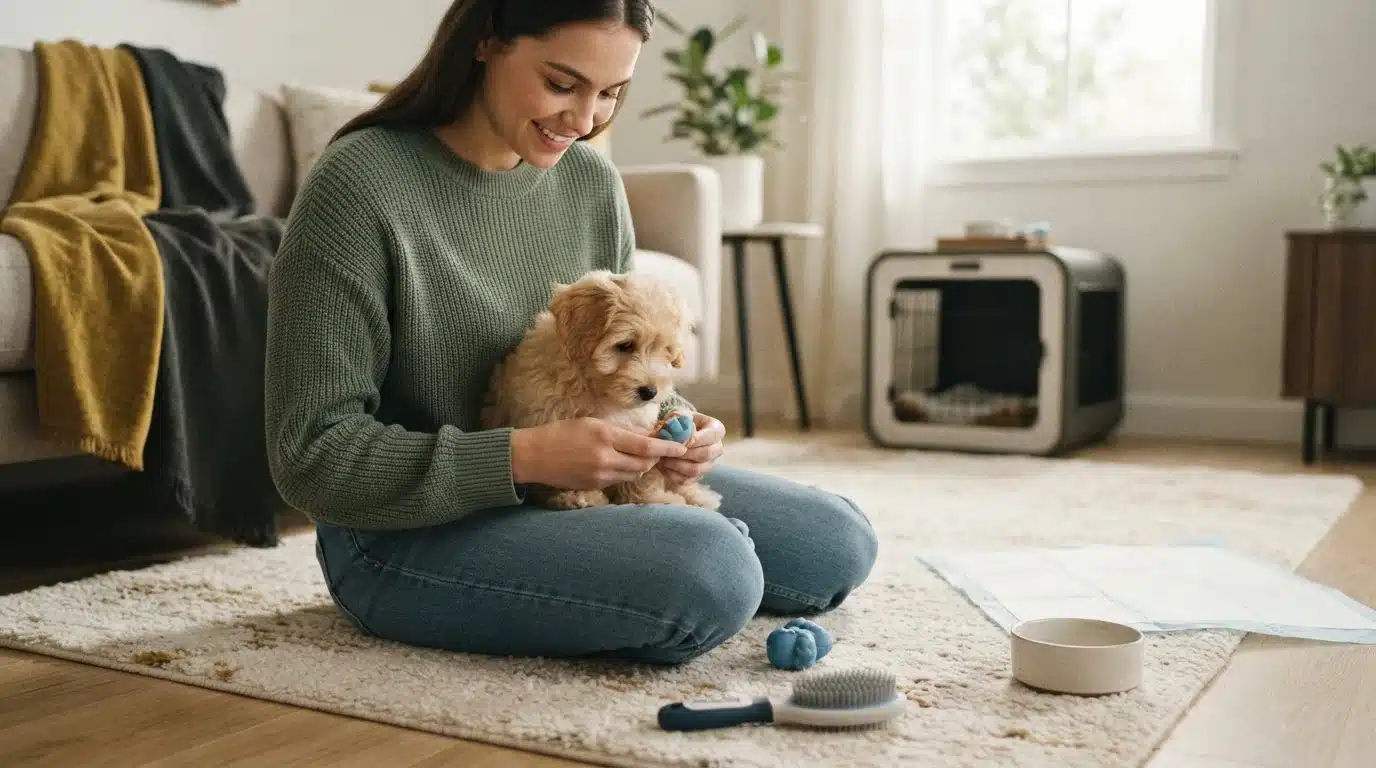
Start With Short, Low-Stress Brushing Sessions
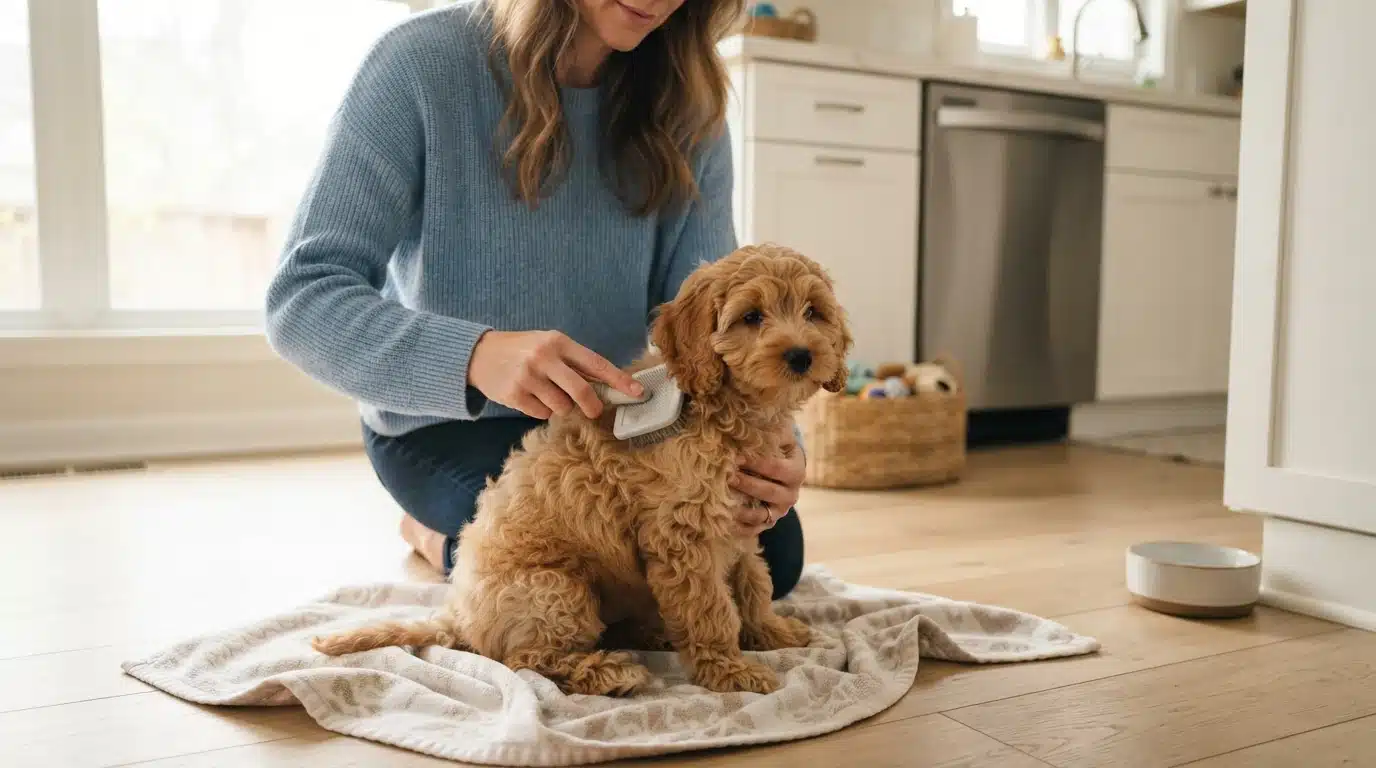
Keep sessions to two or three minutes at first. Use a soft slicker brush or comb, and go slow along the back, chest, and behind the ears, where mats form first. Brush a few strokes, give a treat, and stop while your puppy still wants more. Aim for brushing several times a week rather than one long ordeal, since the coat will eventually need regular home brushing to stay ahead of tangles. If you want a deeper picture of how this coat type behaves, the Cavapoo coat guide on our site explains what the adult coat will feel like.
Make Ear and Nail Care a Weekly Habit Now
Cavapoos inherit floppy, hair-filled ears from the Cavalier side, and that setup traps moisture. Once a week, lift the ear flap, check for redness or odor, and wipe the outer ear with a vet-approved cleaner. Never push a swab into the canal. Touch your puppy’s paws daily, then trim one or two nails each week with blunt puppy clippers. Tiny trims keep you away from the quick and keep the whole thing calm.
When to Book the First Professional Groom
Most groomers want a puppy to be fully vaccinated, so plan the first appointment around 12 to 16 weeks, a few weeks after your last core shot finishes. Book a “puppy intro” trim: bath, tidy, nails, and a light face and feet cleanup. Grooming guides for Cavapoos suggest this early visit builds comfort with the table, dryer, and clippers before a full haircut. After that, expect a professional trim every 4 to 6 weeks to keep the coat mat-free. Call your groomer now; good books fill up.
Step 6: Settle Into Month-End Habits and Decide Next Steps (Days 22 to 30)
Audit What’s Working and What’s Loosening
By day 22, you can see your own patterns. Grab a notebook and rate the basics honestly: potty trips, meal times, crate naps, nipping responses. What slips? Potty routines usually loosen first, because a tired family starts waiting “just one more minute.” If accidents have crept back in, tighten the schedule rather than blaming the puppy. A consistent plan by age works better than reaction, and our guide to a puppy potty training schedule by age shows how the outings should shorten as your puppy grows. Fix the weak habit this week, while the pattern is still fresh.
Add the First Real On-Leash Walks and Longer Crate Stays
Your Cavapoo is now 11 to 12 weeks old, so short walks on your own sidewalk become fair game. Keep them to five or ten minutes. Small breeds tire fast, and soft growing joints need gentle distances. Skip public grass and dog parks until the shot series finishes around 16 weeks. The goal now is leash manners and calm sniffing, not mileage.
Crate time can stretch too. Aim for two to three hour daytime stretches and a full night, if mornings allow. Feed one meal inside the crate so it stays a good place.
Book the Second Vaccine and the Next Vet Check
Call your clinic now and book the next combination shot, due 2 to 4 weeks after the last one, since AAHA guidelines repeat DA2PP doses until at least 16 weeks. Ask about the rabies timing at the same visit, then put both dates on the calendar before the week fills up.

The first 30 days set the tone, and you don’t have to figure them out alone. If you’re still choosing a puppy, Sage Puppies matches families with well-bred Cavapoos and walks you through prep before go-home day. Start the application today, and your first month can feel planned instead of chaotic.
Frequently Asked Questions
Q1: first 30 days with a cavapoo puppy
Expect a small world at first: one puppy zone, the breeder’s feeding schedule, and trigger-based potty trips. Book a vet visit within days, then build socialization and gentle coat care through week four.
Q2: When should I take my Cavapoo to the vet for the first time?
Call within your first few days home. Many clinics want puppies seen within 72 hours, so bring health records and a stool sample and let your vet continue the vaccine series.
Q3: Can my Cavapoo puppy go for walks before vaccinations?
Ground walks in public areas should wait until the series finishes around 16 weeks. Carry your puppy on outings instead, so she sees traffic and strangers without germ risk.
Q4: How often should I brush a Cavapoo puppy?
Start with two or three minute sessions several times a week, focusing behind the ears and chest. Short, happy sessions now prepare her for the coat change around 12 to 16 weeks.
Q5: How long can a Cavapoo puppy stay in a crate?
Keep daytime sessions under two hours in the first weeks, building to two or three hour stretches by month’s end. Pair the crate with a stuffed chew toy, never punishment.
Q6: When is the first professional groom?
Plan a “puppy intro” trim around 12 to 16 weeks, after full vaccination. Most groomers require it, and the early visit builds comfort with the dryer and clippers.
Q7: How do I stop Cavapoo puppy nipping?
When she nips, yelp softly, end play, and hand her a chew toy instead. Nipping peaks around week 10, so consistent redirection now saves your forearms later.
Conclusion
The first 30 days follow a clear arc: keep the world small, set a feeding and potty rhythm, book the vet early, use the socialization window, and start gentle coat care before the adult coat arrives. None of it requires perfection. It requires consistency, short sessions, and a plan matched to a small breed puppy rather than generic advice. Routines will slip in week three or four; tightening them quickly matters more than blaming the puppy. If you want breed-specific support beyond this timeline, the Cavapoo breed guide on our site covers what makes this cross special. Follow the phases here, and your puppy’s first month becomes calm, predictable, and genuinely enjoyable for the whole family.