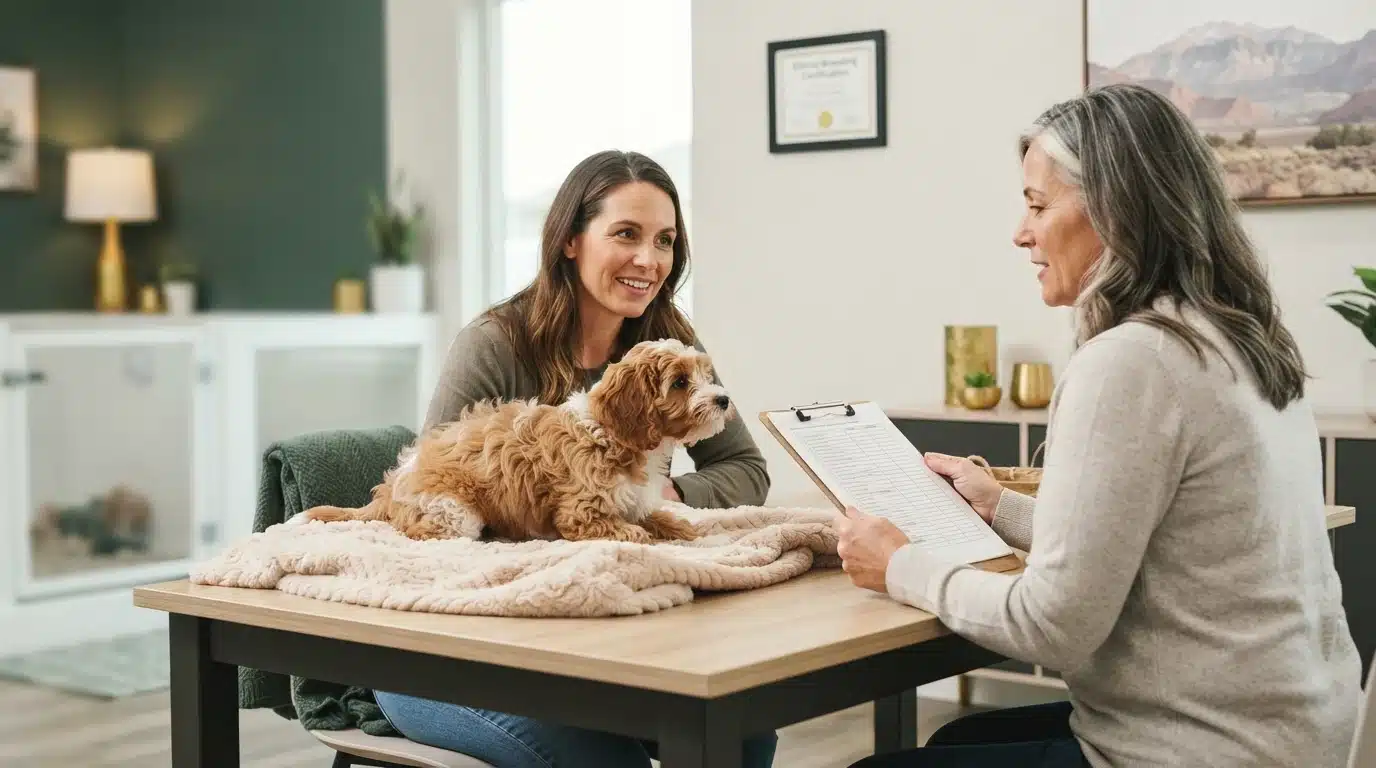
Quick Summary: Cavapoo puppies need daily mental enrichment, not just exercise, because boredom often leads to chewing, barking, and other unwanted behavior. A practical routine includes two or three brief training sessions, sniffing games, food puzzles, and safe chews, with toys rotated weekly and food rewards counted within the puppy’s daily ration. Sessions should match the puppy’s age and temperament, last only a few minutes, and end with calm settling, so success looks like better sleep, quieter evenings, and chewing its own toys rather than household items.
A ten-week-old Cavapoo can destroy a plush lamb in four minutes, then bark at the sofa for an hour. That is not stubbornness. It is an underworked brain hunting for a problem to solve, and your belongings are the closest option.
Cavapoo puppy enrichment matters because this crossbreed inherits a sharp mind from both parent breeds. Poodles were bred to retrieve and think; Cavalier King Charles Spaniels were bred to be attentive companions. Together they produce a puppy that needs real mental stimulation, not just a longer walk.
This guide gives you a category-based framework you can start today. You will find sniffing games, food puzzles, toy rotation plans, and training games, each staged by age from eight weeks through adolescence. Every suggestion comes with safety limits and clear signs it is working.
The advice here draws on documented breeder experience with Cavapoo litters and on current canine behavior research, so you can separate evidence from guesswork and build a routine that fits a real household.
Why Enrichment Is Different From Exercise for a Cavapoo Puppy
A tired body is not a tired brain. Exercise burns energy, but cavapoo puppy enrichment builds thinking skills through problem solving, scent games, and short training sessions. Your puppy can nap all day after a long walk and still dig through the trash, because the mental need was never met. Both matter, yet they solve different problems.
What the Welfare Research Actually Says About Enrichment
Animal welfare scientists define enrichment as changes to an animal’s surroundings that encourage natural behaviors and improve well being. Studies of kennelled dogs found enrichment, especially toys and human contact, reduces stress behaviors such as pacing and barking. Research reviews on dog enrichment back this up. Think of it as mental nutrition, not a workout.
Why Small, People-Oriented Breeds Stall Without Cognitive Work
Cavapoos were bred to be companion dogs, so they watch you closely and learn fast. That intelligence needs a job. Without one, an adolescent puppy invents its own work: shredding, barking at windows, mouthing hands. Puzzle feeders and five-minute training sessions fill that gap far better than another lap around the block.
Signs Your Cavapoo Puppy Is Under-Mentally-Stimulated
Watch for patterns, not single bad days:
- Chewing shoes or furniture after walks, not before
- Repetitive barking or whining with no trigger
- Pacing, spinning, or digging at carpets
- Grabbing items to start a chase game
- Restlessness at bedtime despite exercise
Track mental stimulation alongside growth milestones, since needs shift each month.
How Do I Keep a Cavapoo Puppy Mentally Stimulated?
You keep a Cavapoo puppy mentally stimulated by mixing short training sessions, food puzzles, sniffing games, and safe chewing into every day. Mental work tires a puppy faster than a long walk, and a predictable routine stops most chewing and barking before they start.
- Morning: a five-minute training session before breakfast.
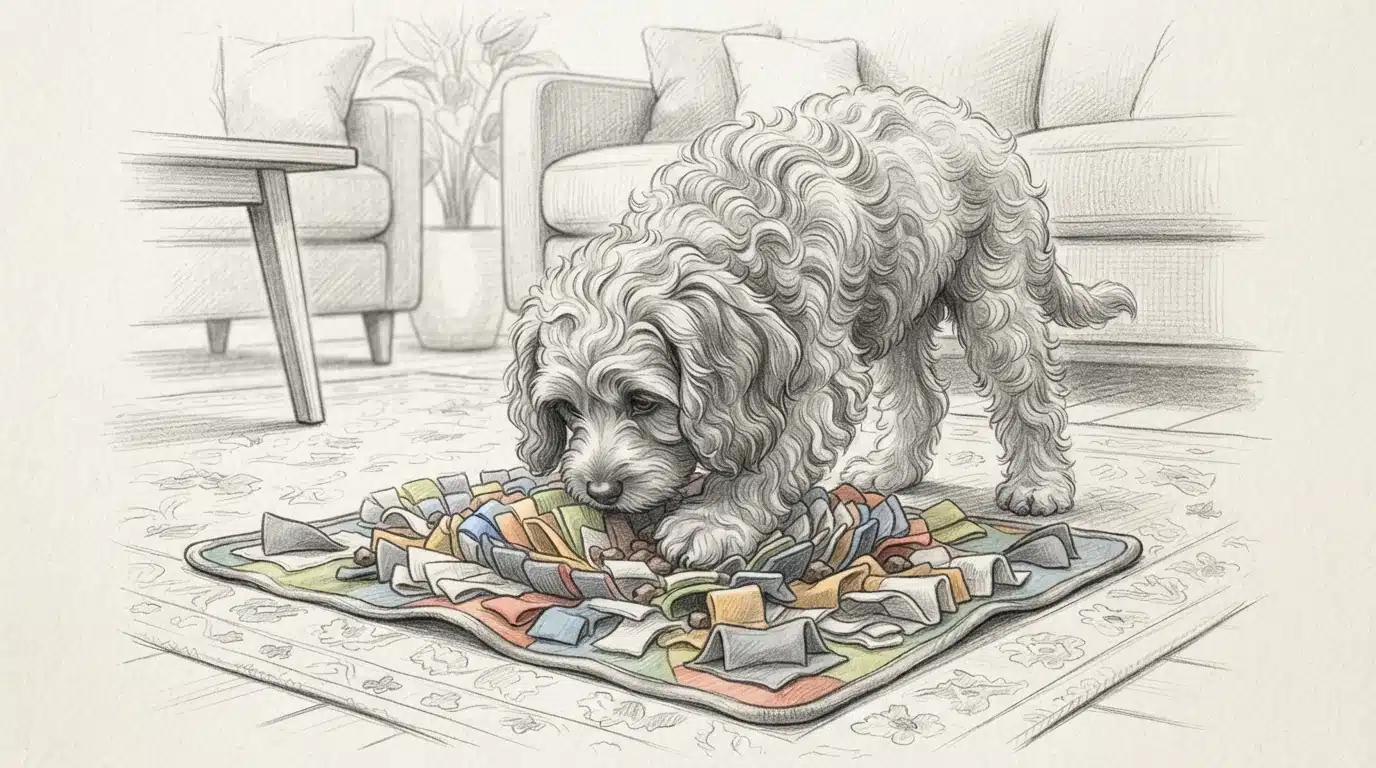
- Midday: a cavapoo puppy puzzle feeder or snuffle mat for one meal.
- Afternoon: a short sniffing walk where the puppy leads with its nose.
- Evening: a calm chew or lick mat during the family wind-down.
A Sample Daily Enrichment Routine for 8 to 14 Week Old Puppies
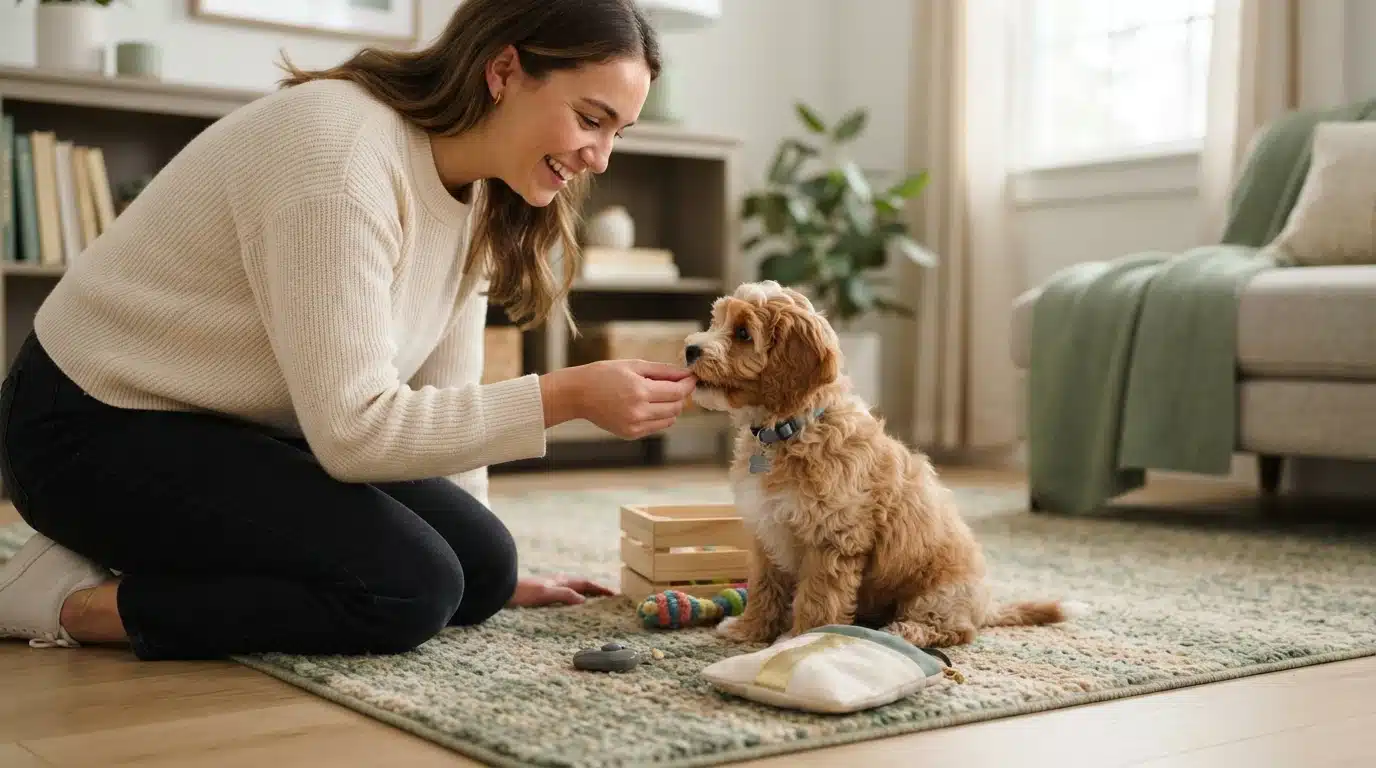
Puppies this age learn fast but tire fast, so keep blocks short. Aim for three to five minutes of focused work, several times a day. Teach one cue at a time, such as “sit” or “touch,” and reward with small pieces of the daily food ration rather than extra treats. Pair new sounds, surfaces, and gentle handling with food so the socialization window works for you. End every block with a calm-down routine in a set spot so your puppy learns to settle on cue.
Rotating Activities So the Week Never Repeats Itself
Puppies ignore toys they see every day. A cavapoo puppy toy rotation works better: keep most toys out of sight and swap in three or four every few days. Change the difficulty of puzzle feeders as your puppy improves, and trade one food bowl meal for a snuffle mat or a frozen lick mat. New walking routes count too, because different smells do the enrichment work for you.
How to Know Whether Enrichment Is Working
Look for a puppy that naps after activity, settles in the evening, and chews its own toys instead of your baseboards. Success is calm behavior, not a busy schedule. If your puppy is still frantic at bedtime, shorten sessions and add rest instead of adding more.
Scent-Based Enrichment: The Highest-Value Category for a Companion Breed
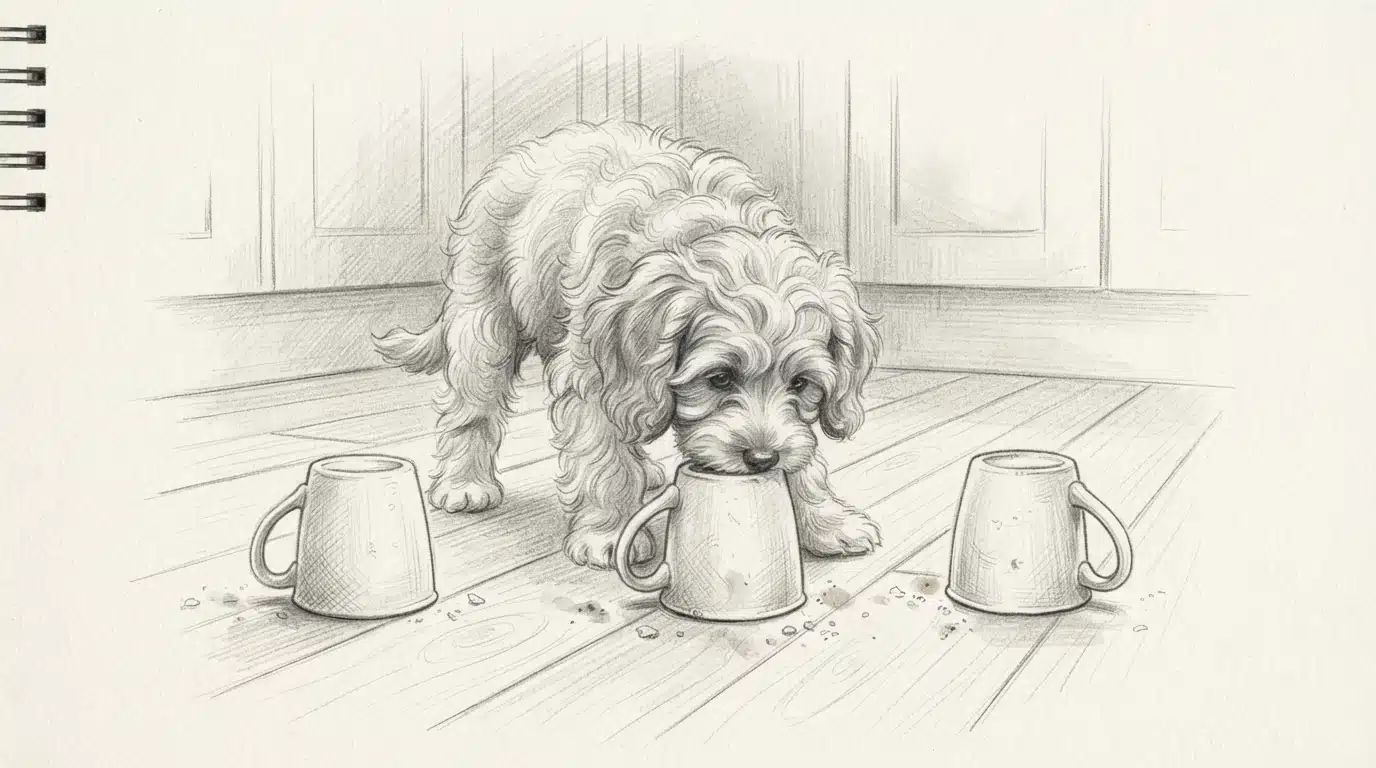
A Cavapoo’s nose does most of the work its busy mind wants done. Ten minutes of sniffing tires a puppy more than a long walk, and it fits easily into a small home. Good scent games to play at home: 1. Muffin tin search – hide treats under tennis balls in the cups. 2. Cup shuffle – let your puppy watch you swap three cups, then ask which one hides the treat. 3. Towel roll – wrap kibble in a rolled bath towel for your puppy to unroll. 4. Find-it – toss a treat behind a chair and say “find it.”
Setting Up Indoor Scent Games With Household Items
Start with the muffin tin, cup shuffle, and towel roll because each needs nothing but kitchen supplies. Hide the treat at first so your puppy wins fast, then make finds harder over a week. Keep sessions to five minutes and end on an easy win. Use part of the daily kibble ration for these games so treat calories stay in check.
Scent Trails, Mailbox Searches and Scent Marking Games
Outdoors, drag a treat along the ground to lay a short trail, then let your puppy work it from the start. A mailbox search, where your puppy checks the box for a hidden treat, turns a daily chore into a game. Both build confidence in new places. Stay nearby and keep the first trails short and easy.
Progressing a Cavapoo From Beginner to Advanced Scent Work
Once basic games feel easy, add more cups, longer trails, or a box-hide among several empty boxes. If your puppy loves it, structured scent work for dogs, taught with positive reinforcement training, gives the skill a real outlet. Watch for calm settling after sessions – that is the signal the work is landing.
Food-Based Enrichment: Puzzles, Foraging and Slow Feeding
Choosing a Cavapoo-Sized Puzzle Feeder
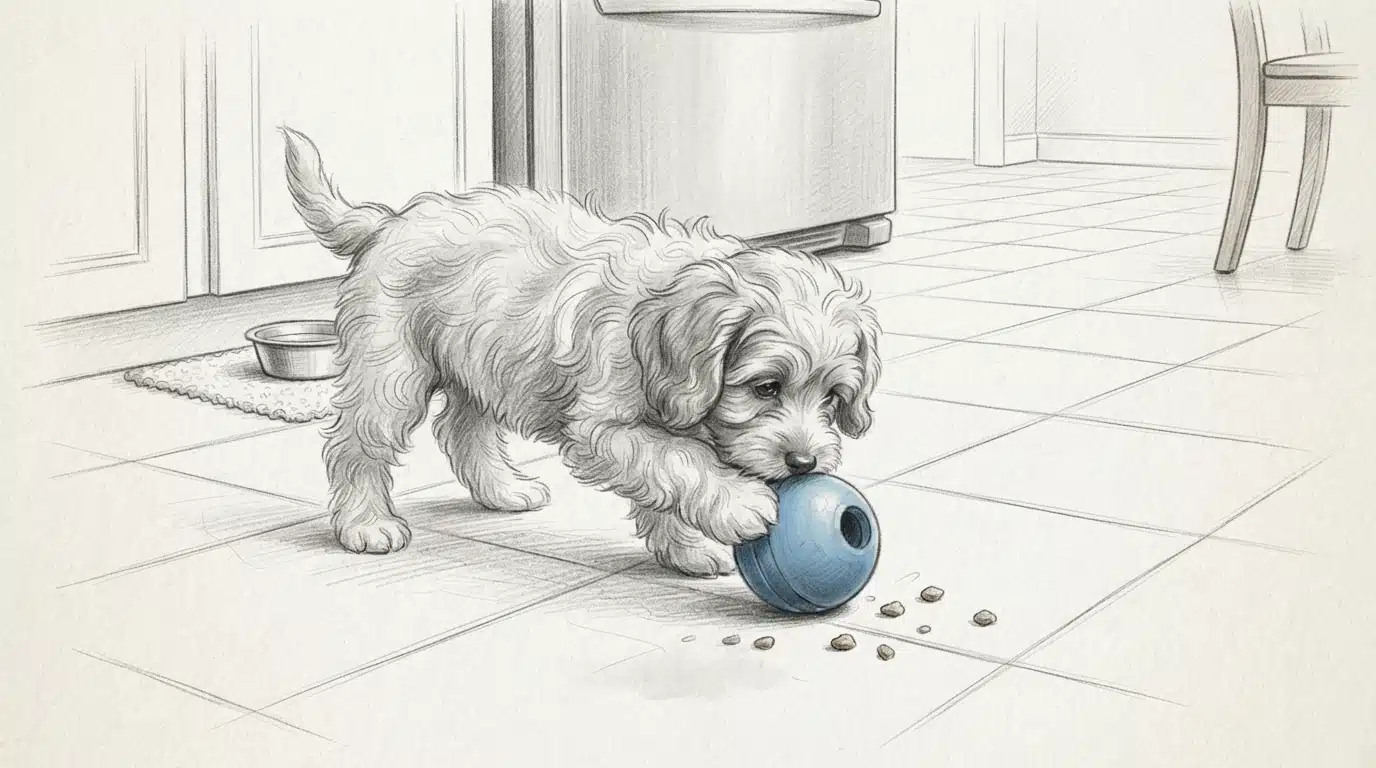
For a Cavapoo puppy, the right cavapoo puppy puzzle feeder is small, simple and safe:
- Size first: pick a toy sized for dogs under 15 pounds; oversized feeders frustrate small muzzles.
- Start easy: choose level 1 designs with wide openings or rolling kibble dispensers before trying sliding lids.
- Check materials: hard rubber or BPA-free plastic survives chewing better than thin vinyl.
- Washable: dishwater-safe parts matter, since puppies drool generously.
DIY Foraging Substitutes That Cost Almost Nothing
You can build foraging games from items already in your home. Scatter kibble across a towel, then roll it into a loose log. Muffin tins with tennis balls hiding food underneath work well too. An egg carton with a few pieces of kibble in each cup gives a puppy ten minutes of sniffing and problem solving. Rotate two or three setups so the game stays novel, and swap them out once your puppy solves each one quickly.
Food Enrichment Cautions for Young Puppies
Treat calories count toward the daily ration. Vet guidance from the ASPCA suggests keeping extras under ten percent of daily calories, so measure food out of meals rather than adding on top. Avoid puzzles with small detachable parts a puppy could swallow, and supervise until you know how your pup handles each toy. Skip anything with sharp edges, and clean feeders regularly.
Training Sessions That Double as Enrichment
How long should a puppy training session be? For a Cavapoo puppy, keep it to two or three minutes, several times a day. Short bursts beat one long block because young puppies tire and tune out fast. End while your puppy still wants more, and the next session starts with energy.
Designing Sessions for a Two to Five Minute Attention Span
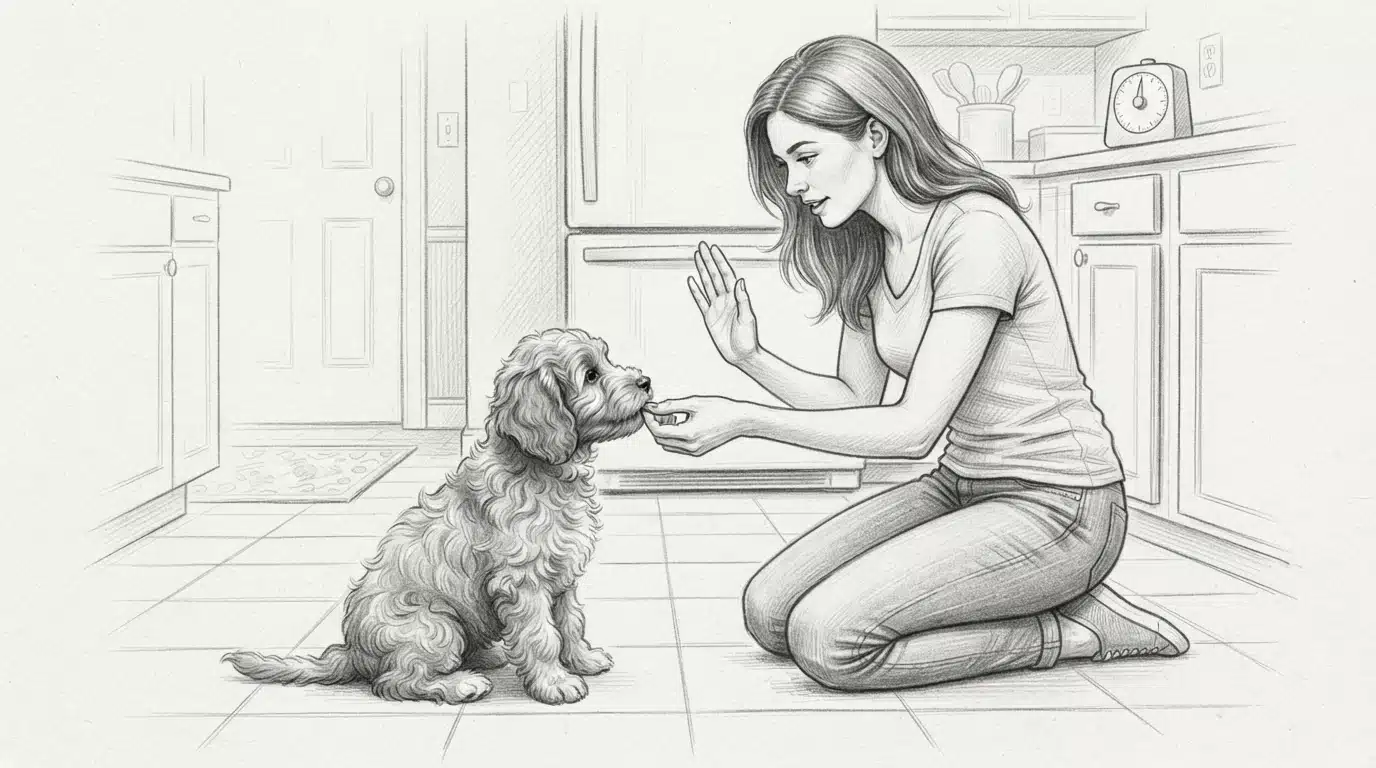
Plan each mini-session around one skill: name response, a sit, or a loose leash step. Set a timer if you tend to push on. Three one-minute reps spread across the day teach more than a ten-minute block, and studies of session length back this up for puppies in particular. Chewy’s training guide notes puppies may only manage a couple of minutes of focus at a time.
Capture Training and Marker Work as Everyday Enrichment
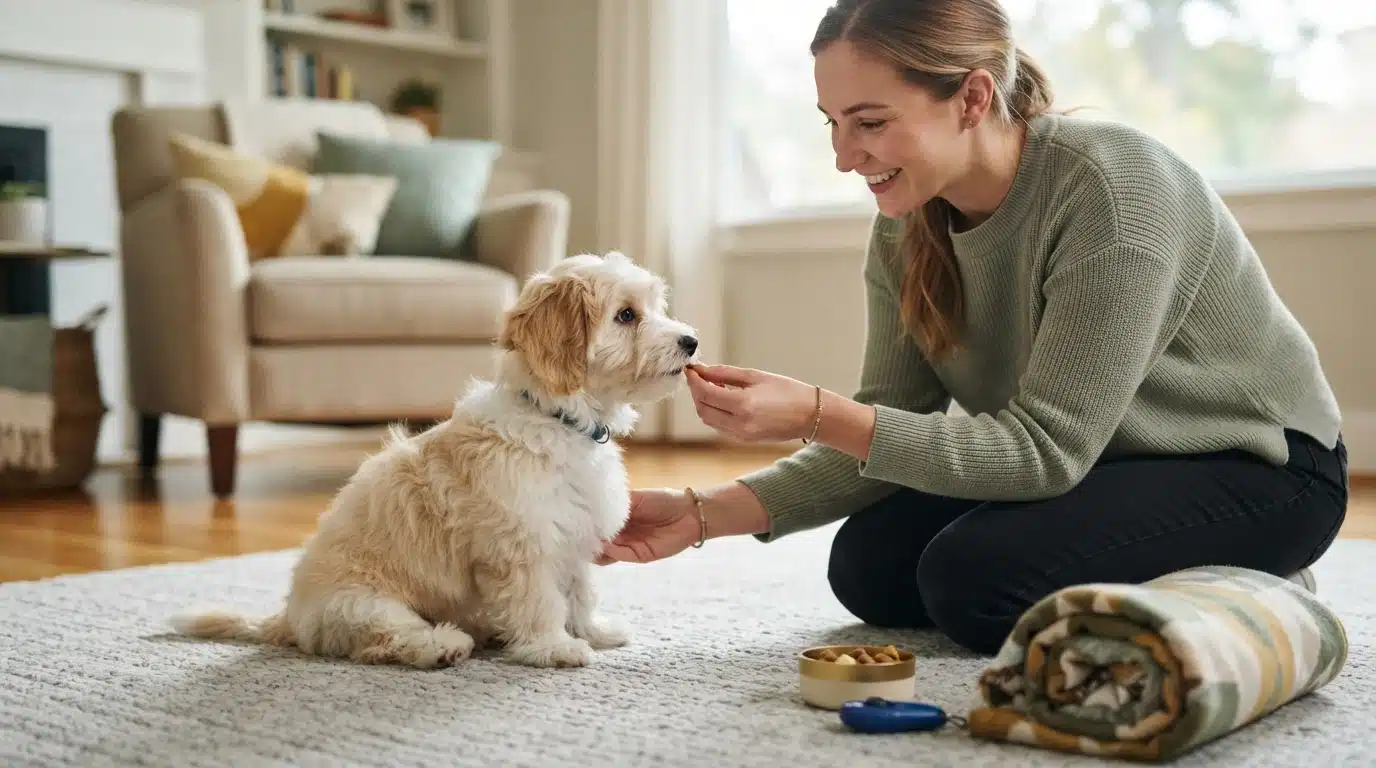
A marker word, like “yes,” tells your puppy the exact moment she earned a reward, which builds clear communication. Then use capturing: mark and reward your puppy whenever she offers a behavior on her own, such as lying down quietly. Problem-solving through free choices works the brain, and marker training turns daily life into enrichment. Our guide to beginner training for small breed puppies walks through the first cues.
Calm-Down Skills: Settle, Mat and Place
Calm behavior is a skill, not a personality trait. Teach a settle by rewarding relaxed body language: soft eyes, loose hips, a sighing exhale. Next, add a mat or bed as the place cue, paying your puppy for choosing it. Start beside you during dinner, then build duration slowly. A reliable settle gives your Cavapoo an off switch, which matters in a small companion breed expected to rest calmly in apartments, cars and waiting rooms.
Play, Toy Rotation and Safe Physical Fun
Structured Interactive Play With Take and Drop Cues
Tug and fetch teach more than muscle. Add “take it” and “drop it” to each round, and reward every release with a treat and another throw. That trade keeps the game going, so your puppy learns that letting go pays. Two or three short sessions a day beat one long, wild romp.
A Toy Rotation System That Stops Chewing Obsession
Most Cavapoo puppies fixate on one toy because it never leaves. A cavapoo puppy toy rotation fixes that. Keep three or four toys out and store the rest in a bin. Swap the sets twice a week so old toys feel new again. Include one chew, one soft toy, one tug, and one puzzle-style option in each set. Research on chew toys suggests they can improve chewing behavior overall, and a steady rotation gives your puppy a fresh outlet instead of your shoes (PMC study). Watch for guarding; if your puppy stiffens over a toy, trade up with a better treat rather than grabbing.
Play Area Safety for a Small Breed Puppy
Puppy-proof a small room before free play. Block gaps behind furniture, lift dangling cords, and remove anything smaller than a ping-pong ball. Pick toys sized for dogs under 15 pounds, since oversized options frustrate small muzzles. Supervise tug so heads and teeth stay clear, and stop play if your puppy pants heavily or limps. Short, calm finish – a drink, a piddle, then rest.
Matching Enrichment to Your Puppy’s Age, Energy and Temperament
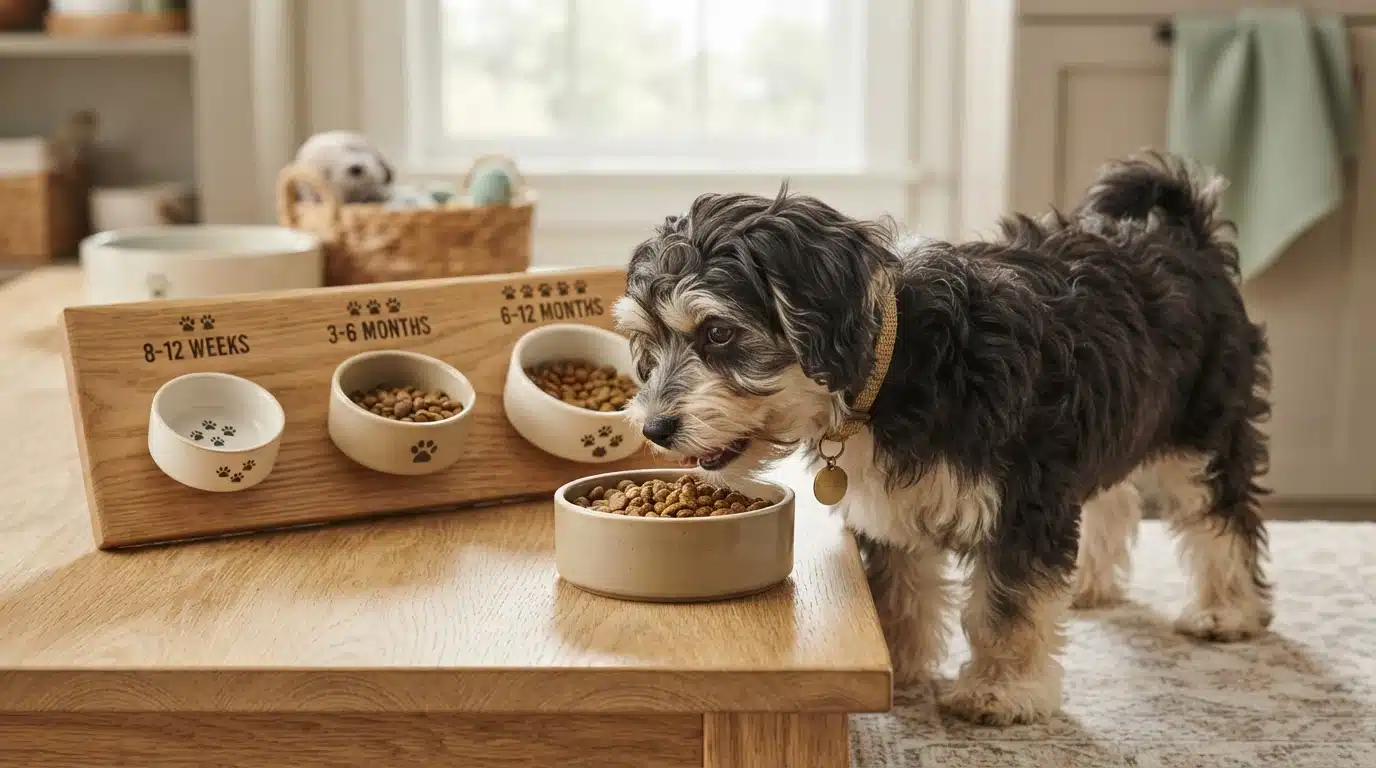
How much enrichment does a Cavapoo puppy need by age? Match it to the stage:
| Age | Daily mental stimulation |
|---|---|
| 8 to 12 weeks | Several 1 to 3 minute sessions |
| 3 to 6 months | Two or three 5 minute sessions plus play |
| 6 to 18 months | Structured games, longer training, chew outlets |
8 to 12 Weeks: Short, Simple and Repetitive
Young puppies tire fast and learn fast. Use brief sniffing games, a snuffle mat, and one- or two-cue training repeated often. Keep every session under three minutes, then let your puppy nap, because sleep is when learning sticks.
3 to 6 Months and the Adolescent Stretch
This is the stretch where an adolescent puppy behavior problem usually starts: energy rises faster than impulse control. Add a puzzle feeder at harder levels, practice cues around distractions, and rotate toys weekly to keep novelty high, since mental work tires puppies faster than physical exercise, as Cornell’s canine health team notes.
Adjusting for Temperament and Individual Needs
Watch your puppy, not the calendar. A bold pup may want extra problem solving; a shy one benefits from gentle scent games that build confidence. Studies of enrichment effects in dogs support tailoring activities to each dog’s response, and a calmer puppy after a session tells you it worked.
Common Enrichment Mistakes to Avoid
Mistakes That Backfire and Their Fixes
Most enrichment problems come from good ideas applied too fast. The Ohio State veterinary medical center notes that puzzle toys should be fun and manageable, which is exactly where owners slip.
| Mistake | Why It Backfires | Quick Fix |
|---|---|---|
| Starting with hard puzzle feeder difficulty | Frustration, giving up, chewing the toy | Begin at level 1, then level up weekly |
| Skipping the sniffing games stage | Overlooks a Cavapoo’s easiest outlet | Add one scent game before new toys |
| Too many sessions | Overtired pups get nippy and wired | Keep sessions short, end with a calm down routine |
| Extra treats on top of meals | Weight gain, unbalanced rations | Count treat calories inside the daily ration |
| Toy rotation chaos | Boredom returns, novelty fades | Rotate a few toys weekly, rest the others |
| Enrichment instead of exercise | Physical needs stay unmet | Pair mental work with walks and play |
If a game causes stress rather than interest, stop and simplify. Progress beats perfection every time.

A bored Cavapoo chews, whines and nips. The play plans in this guide fix that with a few short daily sessions. Want a puppy already started on gentle enrichment? See the available Cavapoo puppies at Sage Puppies, or ask us anything first.
Frequently Asked Questions
Q1: How do I keep a Cavapoo puppy mentally stimulated?
Mix short training sessions, food puzzles, sniffing games, and safe chews each day. Keep blocks to a few minutes, rotate toys weekly, and end with calm settling.
Q2: How much mental stimulation does a Cavapoo puppy need?
Several brief daily sessions work best: one to three minutes at 8 to 12 weeks, growing to two or three five-minute blocks by 6 months.
Q3: Can I use my puppy’s meals for enrichment?
Yes. Use part of the daily kibble ration in puzzle feeders or snuffle mats so treat calories stay under ten percent.
Q4: What scent games work in a small home?
Muffin tin searches, cup shuffle, towel rolls, and find-it all need only kitchen items and five minutes.
Q5: How do I know enrichment is working?
A puppy that naps after activity, settles in the evening, and chews its own toys is the clearest signal.
Conclusion: A Routine Built for Your Own Puppy
Start small: two or three brief sessions a day, one scent game, and a simple cavapoo puppy puzzle feeder. Rotate a few toys weekly, keep treats inside the daily ration, and always end with a calm down routine. Adjust by age and by your puppy’s own response, not the calendar. Success looks quiet, not busy: naps after activity, settled evenings, and toys chewed instead of shoes. With steady cavapoo puppy enrichment, a bright little companion breed gets the mental work it was bred for, right inside an ordinary home.