
Quick Summary: Before buying a puppy in Maryland, review seven key documents: the purchase contract, vet records, parent health testing, breeder license, bill of sale, and identification papers. Match every detail across all pages to confirm they describe the same dog and terms. Maryland law requires a written bill of sale and vet-signed health certificate, but a contract alone doesn’t prove health or licensing claims. Ethical breeders like Sage Puppies share parent health records and clear terms freely, so request everything early and verify deadlines before signing or paying.
A puppy can arrive with a tidy folder of paperwork, and that folder still might not tell you much. The real question is simple: do the contract, health records, and puppy identification all describe the same dog and the same terms you agreed to?
Families shopping in Maryland often hear conflicting advice about a Maryland breeder contract, vet records, health guarantees, and licensing. A polished page or a warm phone call does not prove what was promised, what was documented, or what you must do after pickup. Maryland puppy laws also set baseline duties for sellers, and those rules matter.
This checklist covers seven puppy adoption documents to request and read before you sign or send a deposit, with details to compare and questions to ask. We chose these categories for transaction proof, puppy identity, health history, seller credentials, and post-sale duties. Confirm current state and county rules with official agencies or legal counsel; this guide is practical information, not legal advice.
Seven Puppy Documents to Review
| Document | Best for | What to check | Who provides it | When to review |
|---|---|---|---|---|
| Written puppy purchase agreement or breeder contract | Understanding agreed responsibilities and health terms | Puppy identity, price, remedies, deadlines, signatures | Breeder or seller, signed by both parties | Before deposit or signature |
| Puppy’s veterinary health record and examination paperwork | Checking the puppy’s documented care history | Dates, treatments, exam notes, puppy identity | Seller and/or veterinary clinic | Before purchase and at veterinary handoff |
| Health certificate or written good-health statement | Understanding a written health representation | Issuer, date, exam scope, puppy identity | Seller and/or licensed veterinarian | Before signing and again at transfer |
| Parent health-testing documentation | Reviewing documented inherited-health screening | Parent identity, test, date, result verification | Breeder, testing organization, or registry | During breeder evaluation, before deposit |
| Breeder or kennel license and registration details, if applicable | Checking applicable seller credentials | Agency, credential number, status, applicability | Seller and issuing agency | Before committing or sending a deposit |
| Bill of sale, deposit receipt, and payment terms | Documenting the financial transaction | Names, puppy, amounts, dates, payment terms | Seller, with buyer retaining payment proof | At each payment and final transfer |
| Puppy identification, transfer, and handoff records | Connecting records with the puppy transferred | Identification, transfer details, handoff inventory | Seller and relevant registry or microchip provider | At pickup or delivery |
What to know about puppy purchase documents in Maryland
Before you fall for a face, gather the puppy adoption documents that tell you how that puppy was actually raised. Each paper serves a different job: a contract records the agreed terms, veterinary records document real care, and credential paperwork helps verify a seller’s status where licensing applies.
Here’s the catch: Maryland rules depend on the type of seller and local requirements. Not every breeder needs the same license, and no signed contract replaces the protections state law already gives you.
So treat the checklist below as a set of precise questions to ask, not a rubber stamp. Request each document early, read it closely, and keep copies of every final, signed version. Careful review now prevents stressful surprises later.
1. Written puppy purchase agreement or breeder contract
The contract is the central written record of what buyer and seller agreed to. Read the full agreement before paying or signing, and make sure the puppy and terms are clearly identified. Never assume a clause is standard or that a verbal promise changes written terms.

Highlights
- Confirm the puppy is identified by name or description, date of birth if known, sex, and any available identifying number.
- Check the total price, deposit treatment, balance due, pickup or delivery arrangements, and any stated fees.
- Read the health terms and note deadlines, required veterinary steps, exclusions, and the process for making a claim.
- Check whether the agreement addresses return or rehoming if the family can no longer care for the dog.
- Keep a complete copy signed by both parties, including any attachments or incorporated policies.
Specs
- Best for: Understanding agreed responsibilities and health terms
- What to check: Puppy identity, price, remedies, deadlines, signatures
- Who provides it: Breeder or seller, signed by both parties
- When to review: Before deposit or signature
Pros
- Creates a shared written record of the transaction.
- Makes deadlines and buyer responsibilities easier to identify.
Cons
- Terms differ by seller and require careful reading.
- A contract cannot by itself prove that health or licensing claims are accurate.
It ranks first because it gathers the seller’s and buyer’s written obligations in one place, though a contract’s title alone does not guarantee fairness or that all legal requirements have been met.
Last updated: September 30, 2026
Also Read: What Iowa Puppy Contracts Should Include Before You Sign
2. Puppy’s veterinary health record and examination paperwork
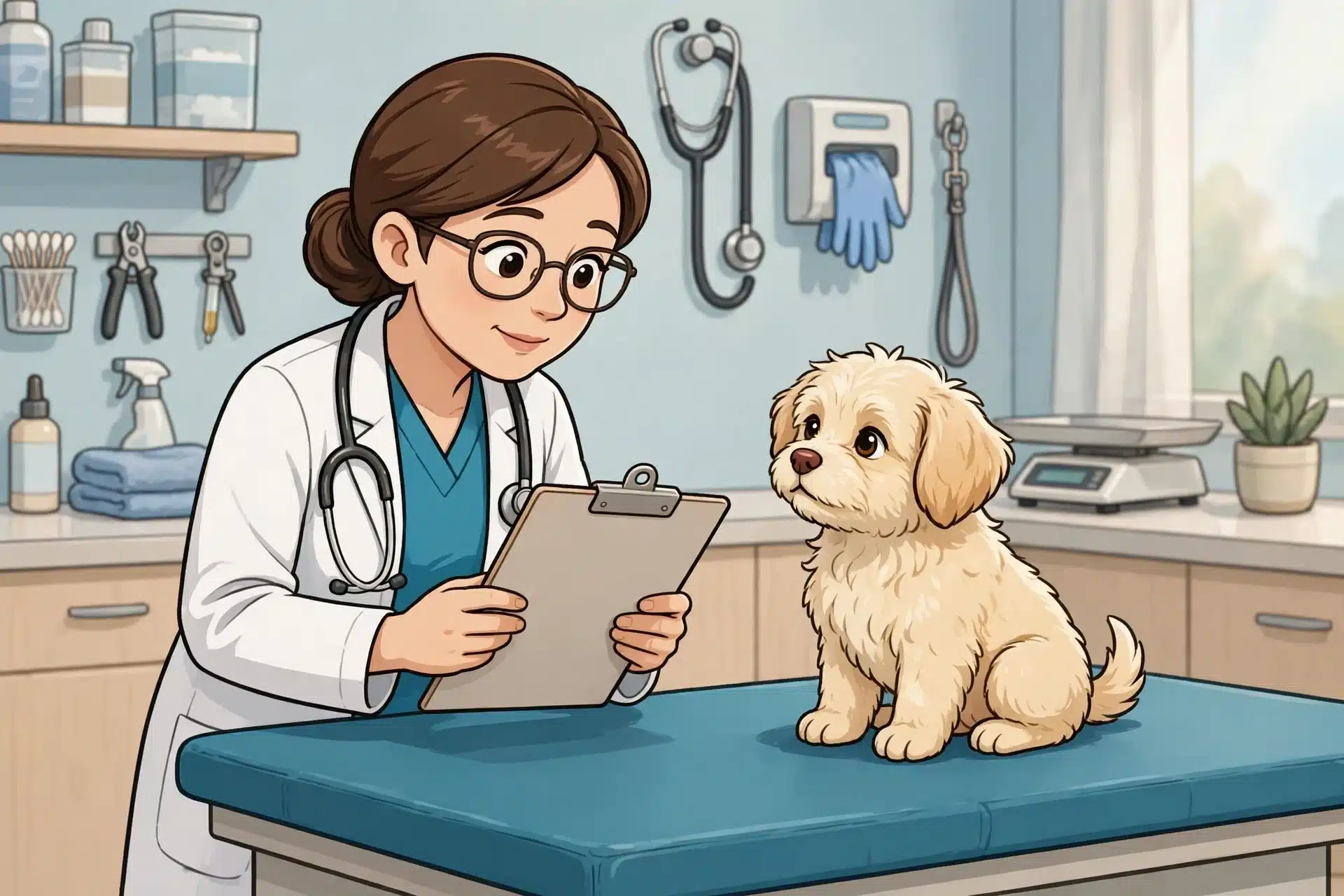
A puppy’s veterinary record is a timeline of care, not a promise about future health. Ask for a dated record of veterinary visits, vaccinations, deworming, medications, and any noted concerns. Review the dates, the puppy’s identifying details, the clinic involved, the treatments listed, and any follow-up instructions.
Highlights
- Check the puppy’s name or description and the dates of the documented visits.
- Look for vaccination and parasite-control details, including dates and products when stated. Most puppies finish their shot series around 16 weeks, so a young puppy should show partial progress, not a complete set, according to the AVMA’s vaccination guide.
- Review any exam findings, medications, recommendations, and planned follow-up.
- Ask whether the record is a clinic-issued record, a breeder’s care log, or both.
- Bring copies to your veterinarian and keep the originals or clear digital copies.
Specs
- Best for: Checking the puppy’s documented care history
- What to check: Dates, treatments, exam notes, puppy identity
- Who provides it: Seller and/or veterinary clinic
- When to review: Before purchase and at veterinary handoff
Pros
- Helps the next veterinarian understand prior care.
- Can surface questions that should be answered before transfer.
Cons
- A care record is only as complete as the entries it contains.
- It does not predict every future health condition.
Missing entries deserve a direct question. Ask the seller to explain gaps or notes you do not understand, then book an exam with your own veterinarian promptly after transfer, following your contract and Maryland law on timing.
This ranks here because it gives concrete, already-recorded information and keeps care continuous with the puppy’s next vet. Just remember it covers the puppy only, not the parents’ health testing or the seller’s written health promises.
Last updated: September 30, 2026
Also Read: Guides – Sage Puppies
3. Health certificate or written good-health statement
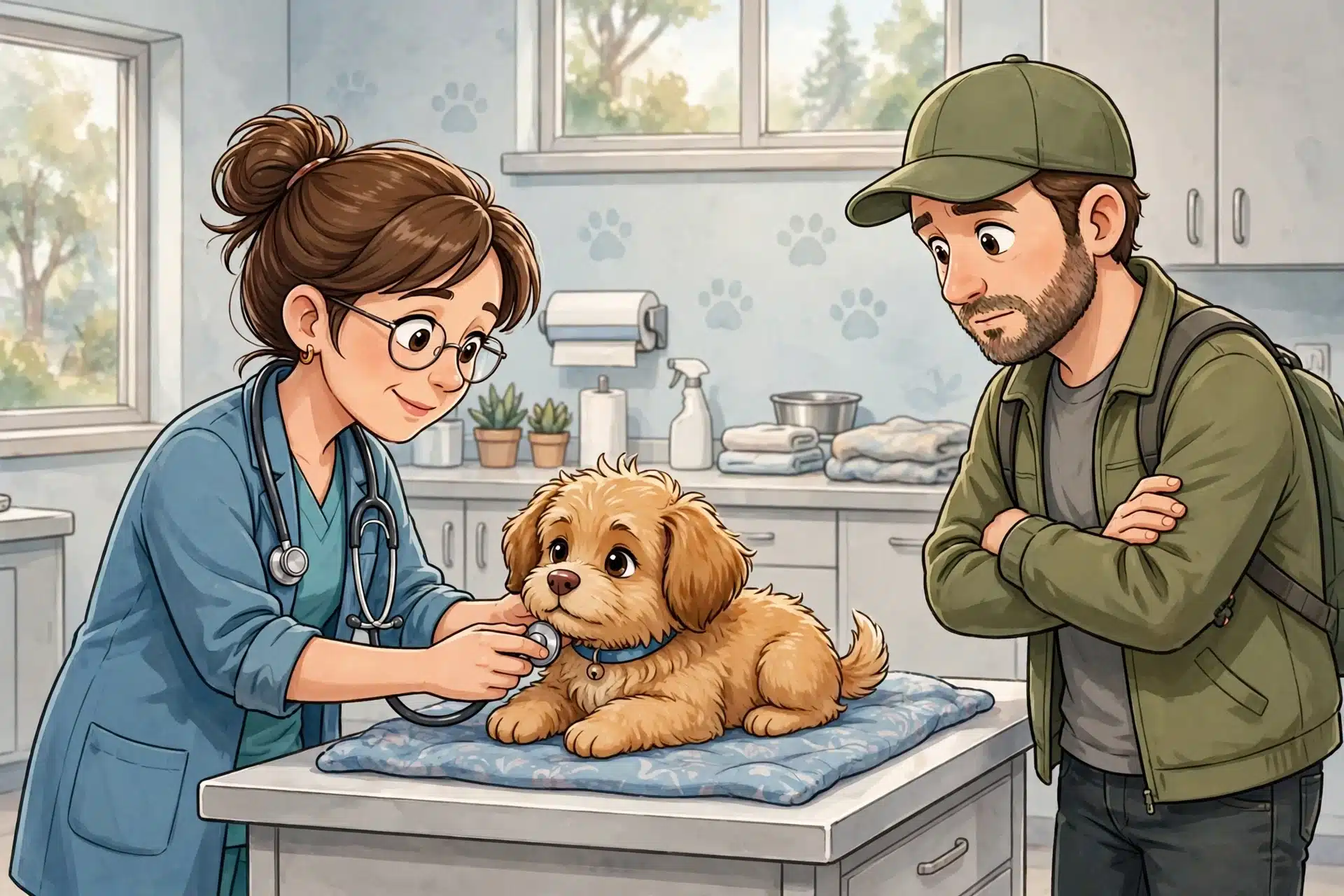
The phrase “health certificate” can mean two very different papers. One is signed by a licensed veterinarian after an exam. The other is just a seller’s own statement, which carries no veterinary weight, so ask who signed it before you rely on it.
Highlights
- Confirm the document date and the puppy’s identifying details. Under Maryland’s health certificate rules, a valid certificate must show the date, the animal’s description, vaccinations, and a veterinarian’s signature.
- Identify the issuing party. A certificate from a vet is not the same as a seller’s good-health guarantee, even when both look official.
- Read any disclosed health concerns, exclusions, or limits on what the certificate covers.
- Ask how it connects to your purchase agreement, including any vet visit deadline after sale.
- For legal coverage questions, check current Maryland law or talk with a qualified professional.
Pros
- Clarifies what health information is being represented in writing.
- Shows whether a veterinarian actually examined the puppy.
Cons
- The label alone does not prove who examined the puppy.
- No statement is a promise the puppy will never get sick.
It ranks here because telling a documented vet exam apart from a seller’s promise is a step many buyers skip.
Last updated: September 30, 2026
Also Read: How to Compare Maryland Breeder Response Times Before Choosing a Puppy
4. Parent health-testing documentation
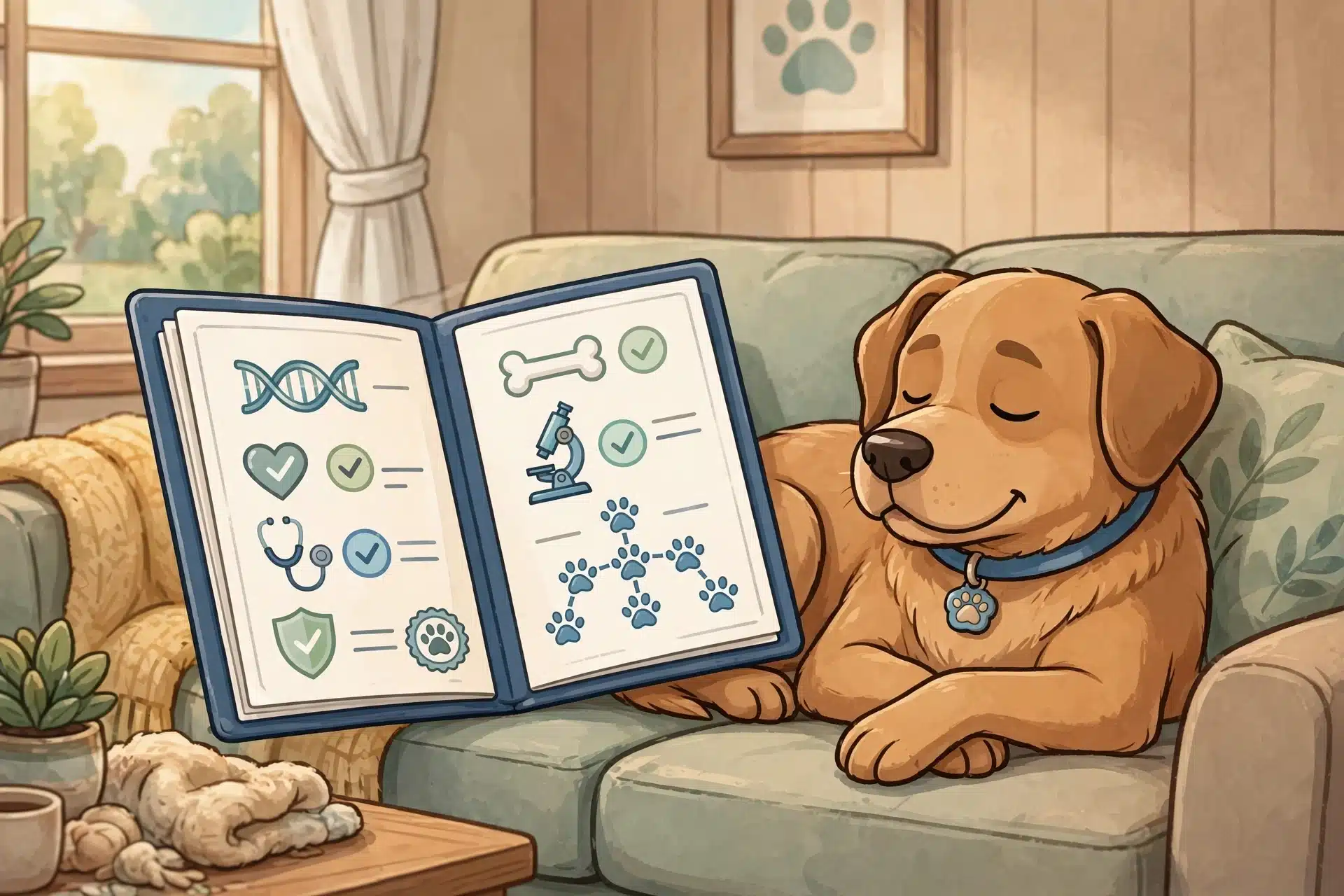
A puppy’s vaccine record tells you nothing about inherited disease. That is why parent health-testing documentation matters. It shows which parent was tested, which condition was screened, and whether the result is final. Ask how each test relates to the breeds in your puppy’s background.
Highlights
- Match each result to the sire or dam by registered or other identifying name.
- Ask what condition each test addresses and whether the result is final or preliminary.
- Check whether results can be confirmed directly with the issuing registry or laboratory.
- For mixed-breed puppies, ask how the breeder selected tests relevant to both sides of the puppy’s ancestry.
- Discuss any results or family-history questions with your veterinarian.
Specs
- Best for: Reviewing documented inherited-health screening
- What to check: Parent identity, test, date, result verification
- Who provides it: Breeder, testing organization, or registry
- When to review: During breeder evaluation, before deposit
Pros
- Provides more specific context than an unsupported health claim.
- Allows buyers to ask informed questions about the parents.
Cons
- Tests vary by breed and do not eliminate all health risks.
- A result needs to be matched to the correct parent and interpreted appropriately.
Ask for proof of screening such as OFA certificates, and confirm entries yourself. You can verify results in the public records maintained by the Canine Health Information Center, and the OFA’s guidance for prospective owners recommends requesting proof of screening before you commit. It ranks here because a broad “healthy parents” claim is not evidence; specificity is.
Last updated: September 30, 2026
5. Breeder or kennel license and registration details, if applicable
A license question needs nuance. Maryland requirements can depend on the seller’s activities, so ask which credential applies to their operation and verify it with the responsible agency. A missing license is not always a red flag, and a license alone never proves quality.

Highlights
- Request the credential name, issuing authority, number, and renewal status if applicable.
- Confirm the credential directly with the agency instead of relying on a screenshot.
- Check county or municipal rules as well as state and federal requirements when relevant.
- Ask the seller to explain which rule applies if no license is required.
- Treat this as one part of due diligence, alongside care practices and health records.
Specs
- Best for: Checking applicable seller credentials
- What to check: Agency, credential number, status, applicability
- Who provides it: Seller and issuing agency
- When to review: Before committing or sending a deposit
Under Maryland law, a seller who keeps six or more unspayed female dogs for breeding, or sells six or more litters a year, needs a kennel license from the local licensing agency. Smaller home programs may fall under different rules, so ask rather than assume.
Pros
- Encourages independent verification instead of accepting an unconfirmed claim.
- Prompts you to consider local requirements as well as state rules.
Cons
- Requirements vary and may not apply uniformly.
- A valid credential alone does not establish care quality.
It ranks here because it answers the common credential question without assuming every Maryland breeder faces the same licensing threshold.
Last updated: September 30, 2026
Also Read: 10 Red Flags to Avoid When Visiting a Local Puppy Breeder
6. Bill of sale, deposit receipt, and payment terms
Keep a dated transaction record that matches the purchase agreement and names the puppy. The bill of sale and payment records show what you bought, from whom, and for how much. Maryland sets record-keeping rules for pet sellers, so a careful receipt is a fair expectation when you buy a puppy.

Highlights
- Check that the puppy description matches the contract and health documents.
- Confirm the total price, payment dates, deposit, and outstanding balance.
- Read cancellation or refund terms in the actual agreement, not a verbal summary.
- Use a payment method that leaves a clear transaction record.
- Save receipts, signed forms, and any written changes in one secure folder.
Specs
- Best for: Documenting the financial transaction
- What to check: Names, puppy, amounts, dates, payment terms
- Who provides it: Seller, with buyer keeping payment proof
- When to review: At each payment and final transfer
Pros
- Makes payment history easy to confirm.
- Helps reveal mismatches between the receipt and contract.
Cons
- A receipt does not replace a complete purchase agreement.
- Refund rights depend on the written terms and applicable Maryland law.
It ranks here because it makes the financial terms easy to verify, especially when a deposit and final payment happen at different times.
Last updated: September 30, 2026
Also Read: Puppy Care Blog & Resources | Sage Puppies
7. Puppy identification, transfer, and handoff records
The final check ties every paper to the puppy you actually take home. Match names, descriptions, and ID numbers across all documents, and confirm nothing gets left behind at pickup.

Highlights
- Match the puppy’s physical description and any identification number across every page.
- Ask how to update owner details on a microchip; the AAHA Universal Pet Microchip Lookup Tool helps you find the right registry.
- Review any transfer forms, since registries like the United All Breed Registry often require the new owner to submit them.
- Get a written list of records, supplies, and care instructions handed over.
- Save the seller’s contact information for questions after arrival.
Specs
- Best for: Connecting records with the puppy transferred
- What to check: Identification, transfer details, handoff inventory
- Who provides it: Seller and relevant registry or microchip provider
- When to review: At pickup or delivery
Pros
- Reduces confusion about which records belong to which puppy.
- Creates a useful starting point for post-transfer updates.
Cons
- Registration or identification paperwork does not establish health by itself.
- Some transfer steps may need to be completed by the new owner.
It ranks last because it closes the loop, confirming every record follows the right puppy home.
Last updated: September 30, 2026
How to review puppy documents before you buy
Use these five checks to judge any paperwork a Maryland breeder hands you:
- Match every page to one puppy. The contract, vet records, and microchip number should all name the same dog, date of birth, and seller.
- Know what each document proves. A health certificate is a vet exam on one day. Parent testing covers genetics. Neither replaces the other.
- Get gaps fixed in writing. Missing pages? Ask for corrected copies before you sign or send more money.
- Verify credentials yourself. Confirm any license or registration with the issuing office, and check your county’s rules instead of guessing statewide ones.
- Circle the deadlines. Note when your post-purchase vet exam must happen and what the contract asks of you. For legal questions, rely on current official guidance.
Keep signed copies, receipts, and messages in one folder.
If you’re comparing breeders outside Maryland, weigh the same standards anywhere. Sage Puppies, based in South Jordan, Utah, shows health testing on parent dogs and shares its application and delivery process up front for Havanese, Havapoo, and Cavapoo families nationwide.

A puppy from a program that already has its paperwork in order saves you hours of checking. At Sage Puppies, you get health records, parent testing details, and clear written terms before you commit. Browse our available Havanese, Havapoo, and Cavapoo puppies, then apply – pickup in South Jordan or delivery to Maryland.
Frequently Asked Questions
Q1: What documents should I review before buying a puppy in Maryland?
Ask for a bill of sale with disclosure terms, a signed health certificate from a licensed vet, vaccination and deworming records, a microchip record, parent health testing results, and any written health guarantee.
Q2: Are Maryland puppy breeders required to provide health records?
Yes. Maryland law requires sellers to give a written bill of sale and a health certificate for each dog, signed by a licensed veterinarian within a set period before sale.
Q3: How can I verify a Maryland breeder’s license and credentials?
Check the Maryland Department of Agriculture’s kennel license listings, ask for the USDA license number if applicable, and confirm vet references directly.
Q4: Do these rules apply to out-of-state breeders delivering to Maryland?
Federal rules cover shipping breeders, but Maryland disclosure laws protect buyers here. Request all paperwork before delivery day.
Q5: Can I get a refund if a vet finds a health problem?
Maryland’s pet disclosure law allows refunds or exchanges within set timeframes for certain conditions. Get every guarantee in writing.
Q6: What if a breeder refuses to show parent health testing?
Walk away. Ethical breeders, including programs like Sage Puppies, share parent health records freely because they have nothing to hide.





