Quick Summary: Small breed puppies like Cavaliers, Havanese, and Pugs are good for first-time owners because they are friendly, adaptable, and manageable in size. However, each breed has specific grooming, exercise, and training needs, so owners should choose based on their routine and ability to care for the puppy’s particular traits. Matching a puppy’s temperament and care requirements to your lifestyle makes raising a first dog easier and more enjoyable.
Choosing your first puppy gets easier when you focus on fit, not just size. Some Small Breed Puppies are calm, trainable, and easy to live with. Others look perfect in photos but need more grooming, more attention, or more patience than a new owner expects.
That is where many first-time owners get stuck. Small Dog Breeds can vary a lot, even when they are close in size. One puppy may be quick to learn but need daily brushing. Another may have a simple coat but struggle if left alone too long. Cute does not always mean easy, and the best Small Breed Puppies for one home may be a poor match for another.
This guide ranks the 7 best Small Breed Puppies for first-time owners and explains why each one stands out. You will see what makes each breed beginner-friendly, what challenges to expect, and how to match a puppy to your space, schedule, and comfort level.
We built this list with real first-home life in mind. We gave top weight to companion-focused temperaments, moderate exercise needs, and easy-to-manage size. We also looked at trainability, grooming, apartment fit, and how well each breed tends to handle the normal ups and downs covered in any good Puppy Adoption Guide.
Quick Comparison
| Breed | Best for | Temperament | Grooming | Exercise |
|---|---|---|---|---|
| Cavalier King Charles Spaniel | First-time owners wanting a gentle, affectionate family companion | Friendly, gentle, and highly people-oriented | Moderate brushing and regular coat care | Moderate daily walks and play |
| Havanese | Owners who want a sociable, adaptable lap companion | Cheerful, bright, and affectionate | Regular brushing to prevent mats | Moderate daily activity and play |
| Bichon Frise | Families who want a lively, low-shedding companion | Merry, gentle, and affectionate | High-maintenance coat care | Moderate daily play and walks |
| Toy Poodle | Owners who want a smart, responsive companion | Friendly, alert, and playful | Regular professional or at-home coat care | Daily activity plus mental stimulation |
| Shih Tzu | Owners who want a devoted indoor companion | Outgoing, affectionate, and trusting | Daily brushing if kept in full coat | Short walks and indoor play |
| Pug | Owners who want an easygoing, affectionate house dog | Charming, loving, and amusing | Low-maintenance coat care | Moderate, with climate awareness |
| Yorkshire Terrier | Owners who want a tiny dog with a lot of character | Spunky, affectionate, and energetic | Regular coat care and maintenance | Moderate daily activity and play |
What to know about small breed puppies
Small breed puppies can be a great first dog, especially if you live in an apartment, condo, or smaller home. Their size often makes daily care feel less overwhelming. That said, small does not always mean easy. Some little dogs are calm and eager to please. Others need more training, grooming, or attention than new owners expect.
The best choice comes down to fit, not just looks. A first-time owner should think about energy level, barking, shedding, trainability, and how the puppy handles being alone for short periods. Those details shape your day-to-day life far more than size alone.
Before you pick a breed, focus on what you can handle with confidence.
- How much exercise can you give?
- How often can you groom?
- Do you want a clingy dog or a more easygoing one?
A cute puppy is easy to choose. A puppy that matches your routine is easier to live with for years.
1. Cavalier King Charles Spaniel
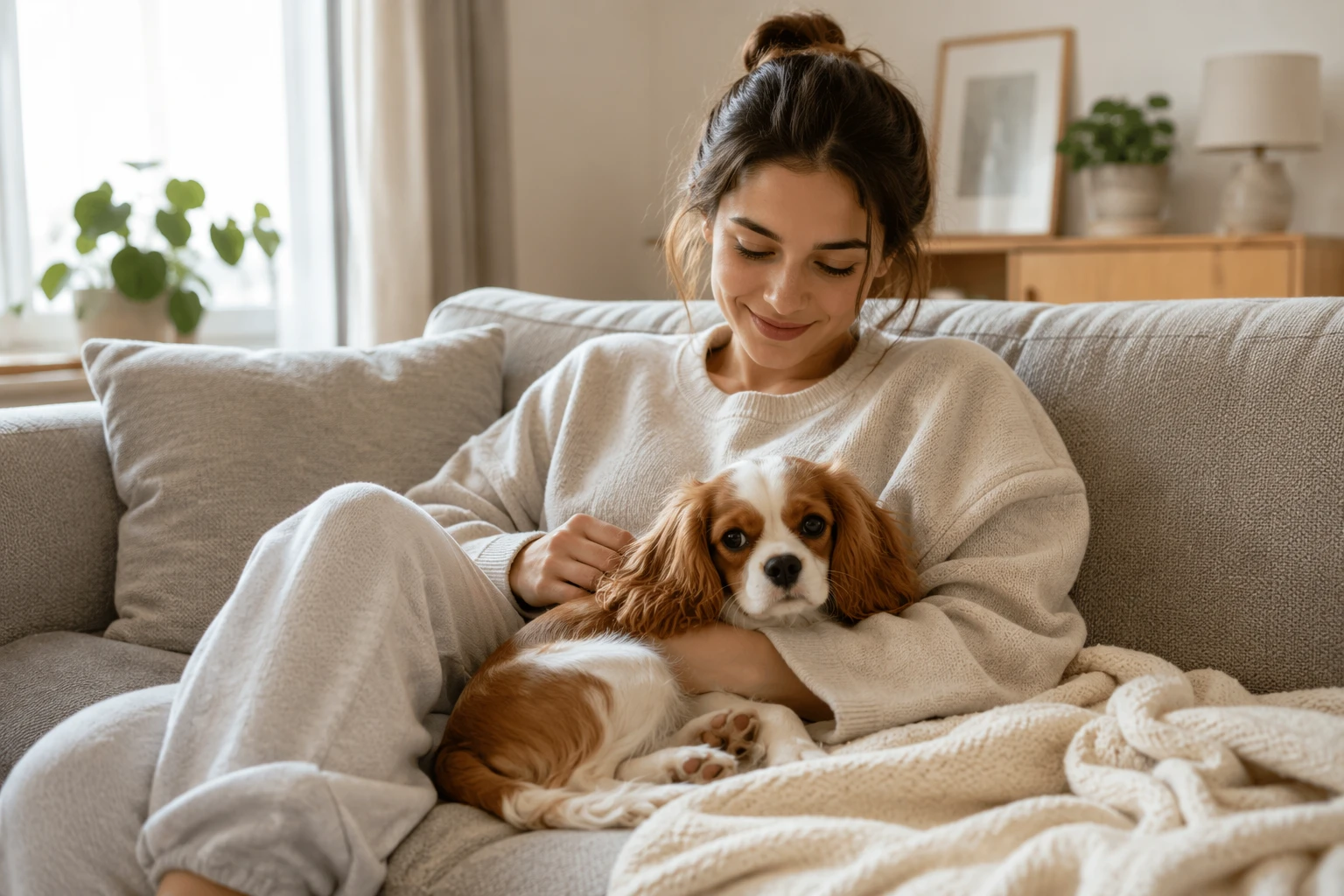
The Cavalier King Charles Spaniel is one of the safest picks for first-time owners. It is gentle, people-focused, and usually easy to live with if you want a loving small companion puppy close by each day.
Highlights
- Friendly and affectionate, with a soft nature
- Moderate exercise needs that fit a simple routine
- Usually eager to please and easier to train than many toy breeds
- Great for homes that want a calm lap companion
Specs
- Best for: First-time owners wanting a gentle, affectionate family companion
- Temperament: Friendly, gentle, and highly people-oriented
- Grooming: Moderate brushing and regular coat care
- Exercise: Moderate daily walks and play
- Trainability: High for a toy breed
Breed groups describe Cavaliers as gentle, affectionate, and non-aggressive in the AKC breed standard. The Kennel Club breed profile also notes up to 1 hour of exercise per day and grooming more than once a week.
Pros
- Affectionate and easy to love
- Usually adaptable in homes and apartments
- Strong companion fit for novices
Cons
- Can dislike being left alone too long
- Coat and health care need steady attention
- Not ideal for very independent owners
It ranks first because it offers the most balanced beginner experience in small dog breeds.
Last updated: July 23, 2026
Also Read: 7 Best Small Breed Puppies for Apartment Living in 2026
2. Havanese
The Havanese is a cheerful, adaptable little dog that loves being with people. For first-time owners, it often hits a sweet spot: friendly, bright, and lively without feeling like too much. According to the AKC’s Havanese guide, this breed does well in both city and suburban homes and responds best to positive training.
Highlights
- Cheerful and sociable with strong companion instincts
- Adapts well to apartments, suburbs, and smaller homes
- Smart and usually quick to learn with praise and rewards
- Moderate exercise needs fit simple daily routines
Specs
- Best for: Owners who want a sociable, adaptable lap companion
- Temperament: Cheerful, bright, and affectionate
- Grooming: Regular brushing to prevent mats
- Exercise: Moderate daily activity and play
- Trainability: High with positive reinforcement
Pros
- Very people-oriented and charming
- Often good in smaller homes
- Typically a strong family companion
Cons
- Can be sensitive to being left alone
- Coat care is not low-maintenance
- Needs steady early routines – the breed standard describes a long, silky coat that needs upkeep
It ranks just behind the Cavalier because it is just as companion-focused, but a bit more hands-on in grooming and alone-time needs.
Last updated: July 23, 2026
Also Read: 10 Small Breed Puppies That Stay Friendly And Easygoing
3. Bichon Frise
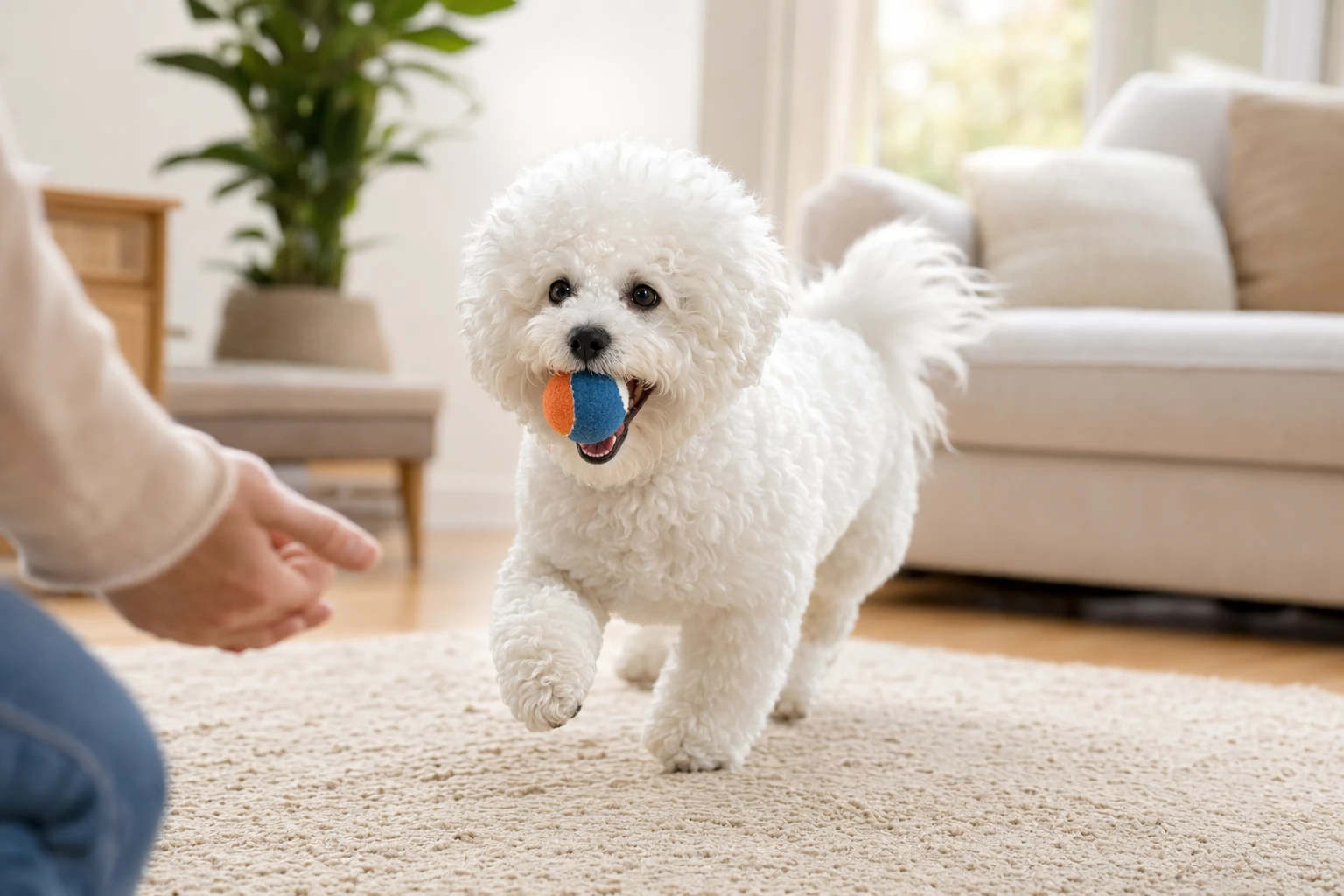
The Bichon Frise is a cheerful, sturdy little companion with a playful streak. It fits many first-time homes well, especially if you want one of the small dog breeds that sheds less and stays close to people. According to the AKC breed guide, Bichons are social, adaptable, and often do well in apartments and family homes.
Highlights
- Bright, cheerful, and highly social
- Often well suited to families and smaller living spaces
- Low shedding compared with many small breed puppies
- Responsive to positive training and eager to engage
Specs
- Best for: Families who want a lively, low-shedding companion
- Temperament: Merry, gentle, and affectionate
- Grooming: High-maintenance coat care
- Exercise: Moderate daily play and walks
- Trainability: Very good with positive reinforcement
Pros
- Low-shedding coat, noted by AKC’s small dogs that don’t shed list
- Friendly with people and pets when socialized
- Fun, engaging, and eager to learn
Cons
- Needs steady brushing and regular grooming
- Can get noisy or anxious when bored
- Coat care is a real commitment
It ranks third because it is one of the best small dog breeds for first-time owners if you can keep up with grooming.
Last updated: July 23, 2026
Also Read: 10 Unique Care Tips For Small Breed Puppies In Urban Settings
4. Toy Poodle
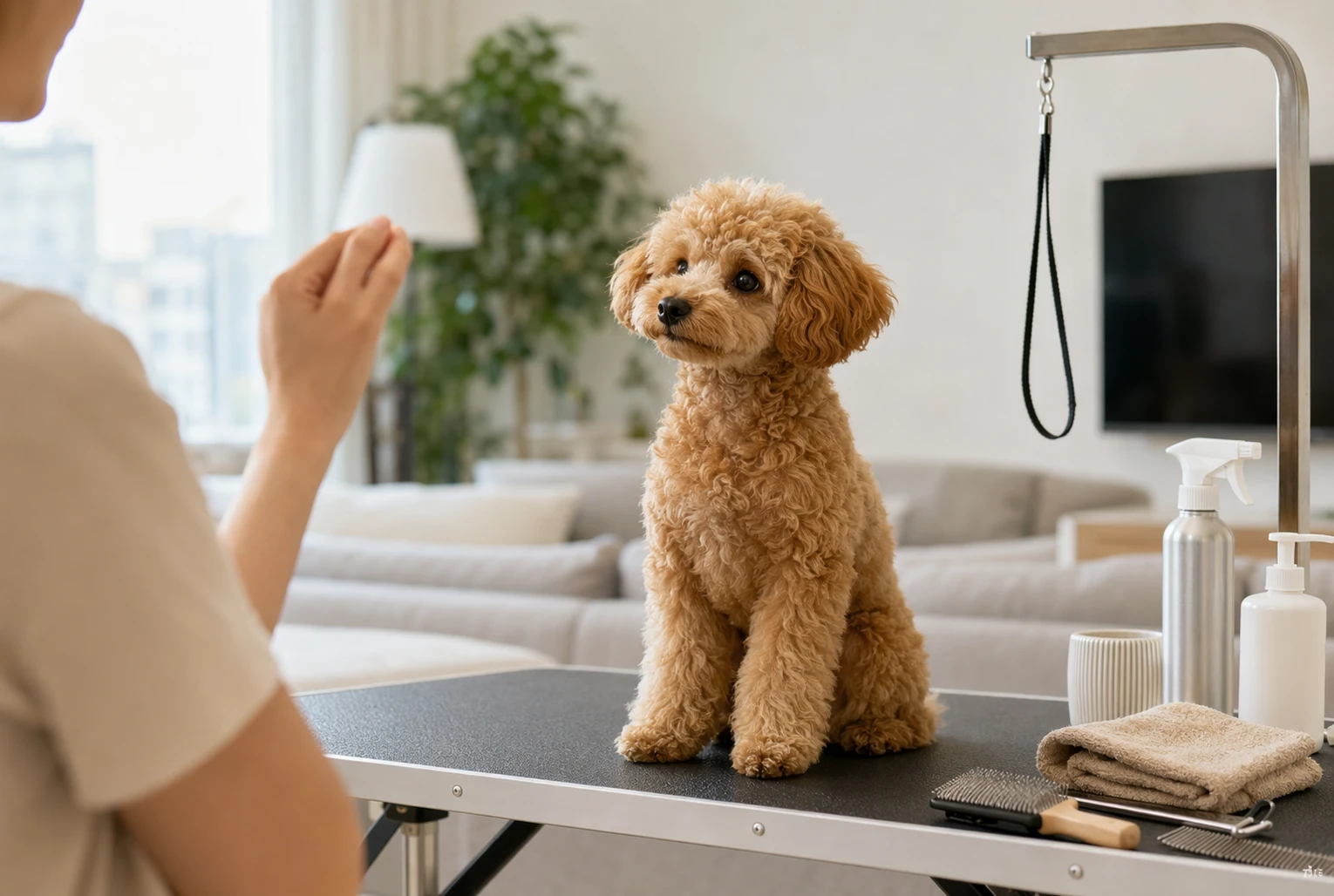
Toy Poodles pack a lot into a tiny body. They are bright, polished, and deeply responsive, which makes them a strong fit for first-time owners who want a dog that truly pays attention.
Highlights
- Exceptionally intelligent and quick to learn
- A standout among easy to train small dog breeds
- Small enough for apartment living and travel
- Low shedding coat, but grooming is ongoing
Specs
- Best for: Owners who want a smart, responsive companion
- Temperament: Friendly, alert, and playful
- Grooming: Regular professional or at-home coat care
- Exercise: Daily activity plus mental stimulation
- Trainability: Excellent
The AKC notes Toy Poodles are elegant athletes with a curly, low-allergen coat, and the breed standard places them at 10 inches or under. They also do well with structured routines, since Poodles are highly intelligent and eager to please.
Pros
- Highly trainable and engaging
- Adaptable to many lifestyles
- Low shedding
Cons
- Grooming can take real time
- Needs mental work to stay balanced
- May be too active for very passive owners
It ranks fourth because its brains help beginners, but only if you stay consistent with training, stimulation, and coat care.
Last updated: July 23, 2026
Also Read: 10 Adorable Havapoo Colors You Need To See 2026 Guide
5. Shih Tzu
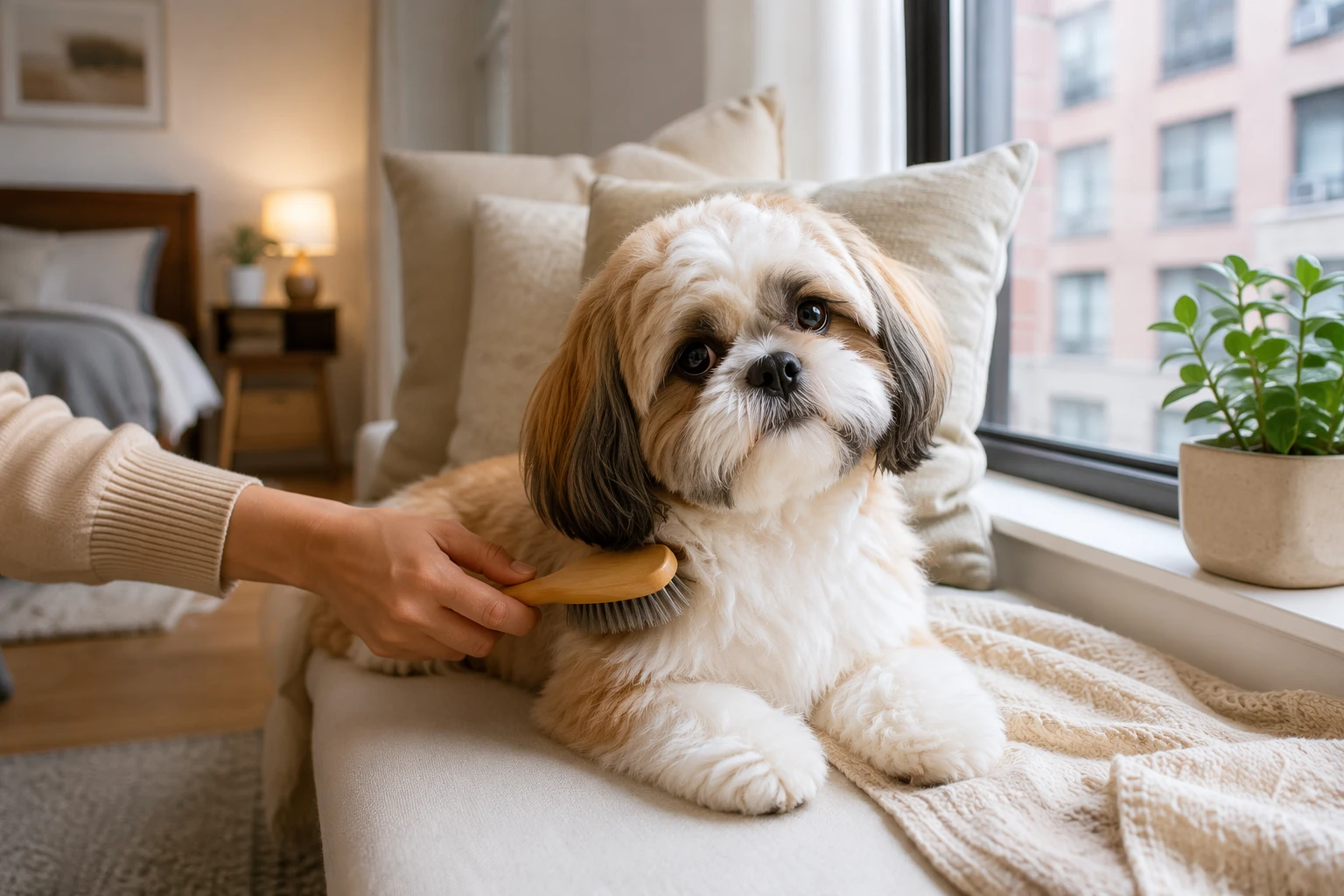
Shih Tzus were bred to stay close to people, and that still shows today. For first-time owners who want a loving indoor puppy with a calm, trusting nature, this is one of the most appealing small dog breeds.
Highlights
- Affectionate and very people-focused
- Comfortable in apartments and smaller homes
- Happy with short walks and indoor play
- A strong fit if you want a true lapdog
Specs
- Best for: Owners who want a devoted indoor companion
- Temperament: Outgoing, affectionate, and trusting
- Grooming: Daily brushing if kept in a full coat – the AKC notes daily brushing is often needed
- Exercise: Short walks and indoor play – PetMD says many are satisfied with a 30-minute walk plus home play
- Trainability: Moderate
Pros
- Excellent companion temperament
- Works well in small living spaces
- Often very affectionate with family
Cons
- Coat care is a real time commitment
- Training can take patience because they may be stubborn
- Not a wash-and-go choice in any puppy adoption guide
It ranks fifth because the companionship is excellent, but grooming and training ask more from beginners than some other small breed puppies.
Last updated: July 23, 2026
Also Read: Home
6. Pug
Pugs are compact, affectionate, and full of charm. They make many first-time owners happy because they are easy to live with, love being close to people, and usually do well with moderate activity. AKC describes the breed as loving and sturdy, but AKC also notes that hot, humid weather and overeating can be real concerns.
Highlights
- Friendly, playful, and very companionable
- Short coat with simple care
- Usually happy with moderate daily activity
- A solid pick for people who want a sturdy toy breed
Specs
- Best for: Owners who want an easygoing, affectionate house dog
- Temperament: Charming, loving, and amusing
- Grooming: Low-maintenance coat care
- Exercise: Moderate, with climate awareness
- Trainability: Good with patient, positive methods
Pros
- Very affectionate and socially easy
- Simple coat care
- Good fit for many relaxed households
Cons
- Heat sensitivity matters
- Can gain weight quickly
- May need more health oversight than some small dog breeds
It ranks sixth because it is beginner-friendly in temperament and grooming, but health and heat issues matter more than with some other small breed puppies.
Last updated: July 23, 2026
7. Yorkshire Terrier
Yorkshire Terriers are tiny, confident puppies with a lot of spark. They suit first-time owners who want a lively companion, not just a quiet lap dog, and who can stay steady with training. The AKC notes that Yorkies are feisty, affectionate, and trainable with regular structure and socialization in this breed guide.
Highlights
- Very small and easy to carry or travel with
- Bold, affectionate, and fun to live with
- Can do well in apartments with routine, play, and walks
- A strong fit for owners who like energetic toy breed puppies
Specs
- Best for: Owners who want a tiny dog with a lot of character
- Temperament: Spunky, affectionate, and energetic
- Grooming: Regular coat care and maintenance
- Exercise: Moderate daily activity and play
- Trainability: Good, but consistency matters
Pros
- Very portable and compact
- Full of personality
- Can adapt well to smaller homes
Cons
- May be stubborn or independent
- Coat care takes time – Yorkies have hair-like coats that need frequent upkeep, according to the AKC’s lifestyle overview
- Can be too bold for very timid new owners
It ranks seventh because a Yorkie can be a lovely first dog, but it needs patient, steady guidance.
Last updated: July 23, 2026
How to choose the right small breed puppy
Start with your real day, not the puppy photo you liked most. The best fit is the breed you can handle on busy weekdays, quiet weekends, and normal family stress.
Use these criteria to narrow your choice:
- Daily schedule – If you work long hours, pick a puppy that can handle short alone periods a bit better, and line up help for potty breaks, meals, and play. A puppy walker, family member, or doggy daycare plan matters.
- Grooming time – Low shedding does not mean low work. Many small breeds still need brushing, baths, and regular trims. If you want less coat care, be honest now.
- Energy level – Small dogs are not all the same. A calm lapdog suits a quieter home. A lively toy breed needs more play, training, and mental work.
- Trainability plus sensitivity – A smart puppy can still be hard for a first-time owner if it is very sensitive or stubborn. Look for a puppy you can guide with steady, gentle routines.
- Home life – Apartments can work well, but barking, exercise, and social time still count. Think about neighbors, kids, visitors, and how often you leave home.
- Breeder foundation – Put health-tested parents and early socialization near the top of your list. That gives your puppy a stronger start.
For many first-time owners, Sage Puppies stands out because its Havanese, Havapoo, and Cavapoo puppies are home-raised, socialized early, and matched through a clear, family-first process. That makes choosing easier, especially if you want a small companion with a solid start.

If you want a small puppy that feels easier to raise, start with a breeder that sets the dog up well from day one. Sage Puppies offers home-raised Havanese, Havapoo, and Cavapoo puppies from health-tested parents, with early socialization and a clear, family-first process. You can review available puppies, learn about pickup or nationwide delivery, and take the next step with more confidence instead of guessing your way through it.
Frequently Asked Questions
Q1: What are the top 7 small breed puppies suitable for first-time dog owners in the US?
Good beginner-friendly picks often include Havanese, Cavalier King Charles Spaniel, Bichon Frise, Maltese, Pug, Shih Tzu, and Miniature Poodle. These breeds are usually social, trainable, and size-friendly for apartments. Energy, grooming, barking, and health needs still vary a lot.
Q2: How do I choose the best small dog breed for my lifestyle as a first-time pet owner?
Match the puppy to your real routine, not your ideal one. Focus on energy level, grooming needs, trainability, noise, kid fit, and alone time tolerance. Write down your schedule first. Then compare breeds honestly, especially if you live in an apartment.
Q3: What are the key considerations when buying a small breed puppy in the US?
Look at health testing, parent temperament, early socialization, breeder transparency, contract details, and pickup or delivery process. Ask what the puppy has already experienced at home. A careful program like Sage Puppies should explain each step clearly and welcome questions.
Q4: Are small breed puppies easier to train than large breed puppies?
Not always. Small puppies are easier to carry, but some can be harder to housetrain or quicker to bark. Training success depends more on consistency, routine, and breed traits than size. Start crate training, potty breaks, and short lessons right away.
Q5: Which small puppy breeds do best for apartment living?
Breeds that usually adapt well include Havanese, Shih Tzu, Maltese, and Cavalier King Charles Spaniel. The best apartment dog is one whose exercise and noise level fit your building. Daily walks, indoor play, and early manners matter more than square footage.
Q6: How much should a first-time owner budget for a small breed puppy?
Plan for more than the purchase price. Most first-year costs include food, grooming, vaccines, supplies, training, vet visits, parasite prevention, and emergency savings. A simple checklist helps:
- upfront puppy cost
- monthly care
- grooming
- training
- surprise medical expenses
Cheap upfront prices can lead to expensive problems later.